The city of contrasts and hidden gems

Sometimes, the best adventures start off with a whim—one moment you’re scrolling through Instagram, 60s of a reel that says “Hey, come to Petra!” in one of those “Habibi, come to Dubai!” kinda vibe, and the next you’re like “Yeah, why the heck not?”. That’s exactly how I ended up booking a flight to Jordan. So, armed with my bags, flight tickets, and the wrong set of shoes, i set off on what would be one of the greatest adventures of my life.
Jordan is like that bloke at the bar who looks all serious and dangerous on the outside but turns out to be an absolute sweetheart once you get to know him. One moment, you’re wandering through the ancient ancient, rock-carved city of Petra, living your inner Indiana Jones/Lara Croft fantasies, the next, you’re floating effortlessly in the Dead Sea like an overconfident pool noodle. From the Mars-like landscapes of Wadi Rum to the chaotic, charming, and surprisingly modern streets of Amman, Jordan is a delightful mix of history, and adventure ( with the best hummus you’ll ever eat. Period.)
Welcome to Amman!
Let’s start off in Amman, the capital of Jordan. Remember when I said surprisingly modern? Picture this: You’ve just landed at Queen Alia International Airport at ass o’clock in the morning (because, of course, the only flight I could find arrived at 4 AM). As you’re driving toward the city center, the first thing you see after five minutes on the road is… IKEA. I mean, sure, the sign is in Arabic—Jordan’s official language—but come on, that blue and yellow is recognizable anywhere. The closer you get to the city, more familiar brands start popping up – Mcdonalds, KFC, Popeyes. Even big name hotels like The Four Seasons, The St. Regis, The Ritz. Of course more budget options like the Nomads Hostel and AirBnb rentals are also available. But you get the point. Amman? It’s just like any other capital city really.
One Day in Amman
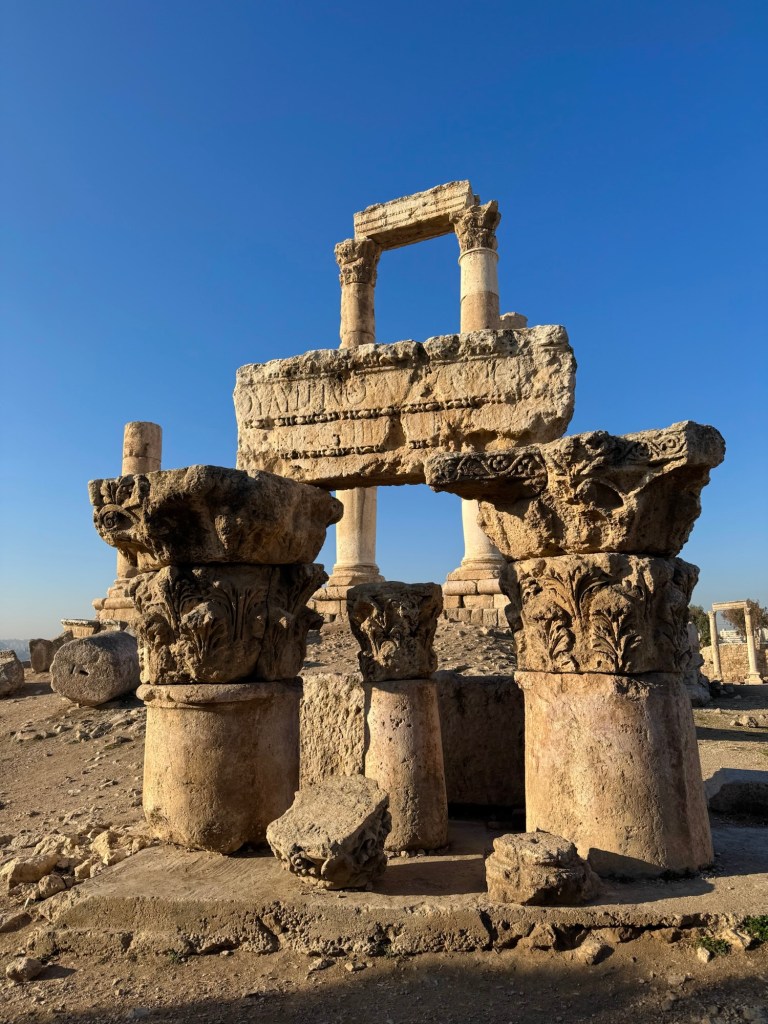
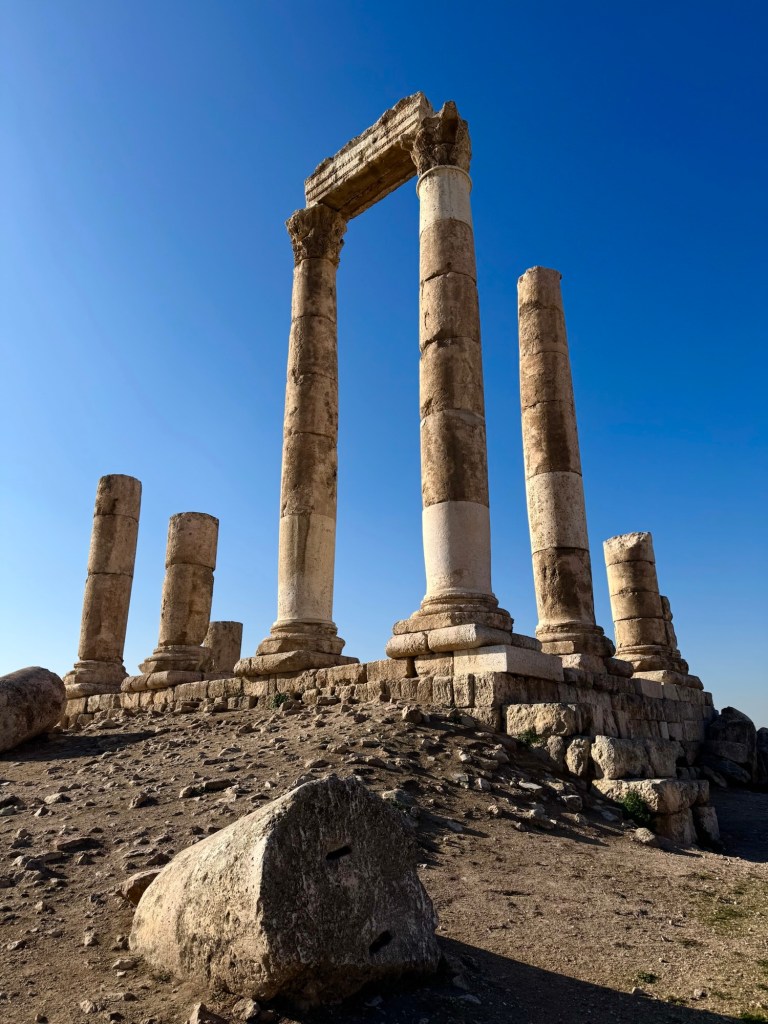
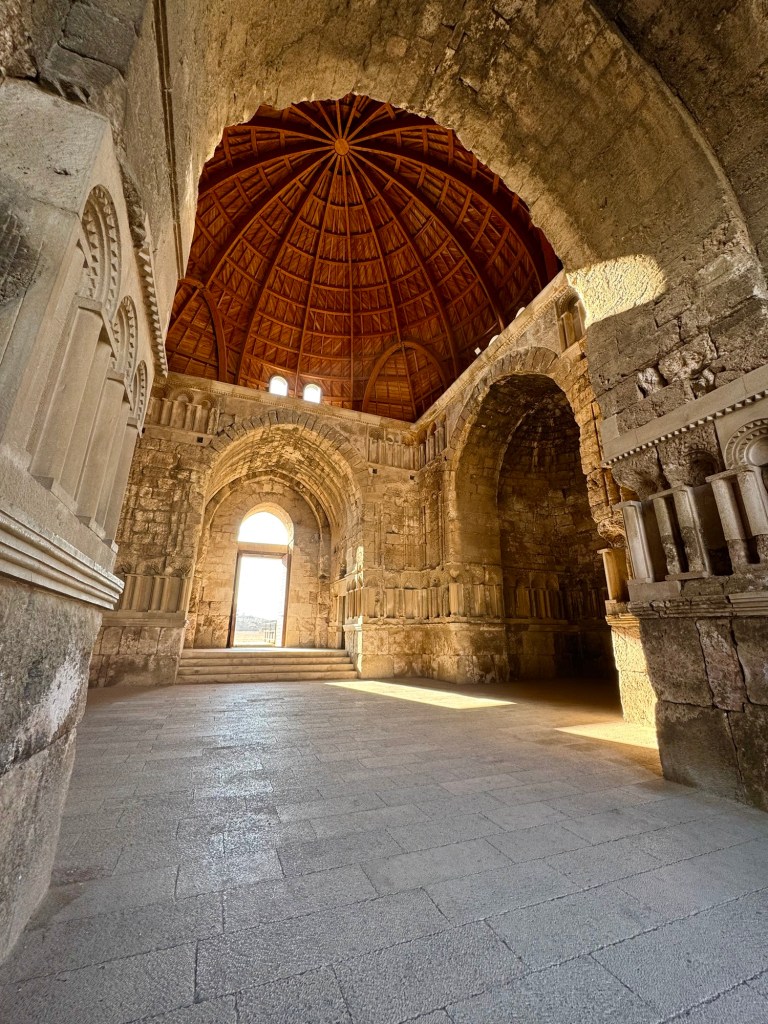
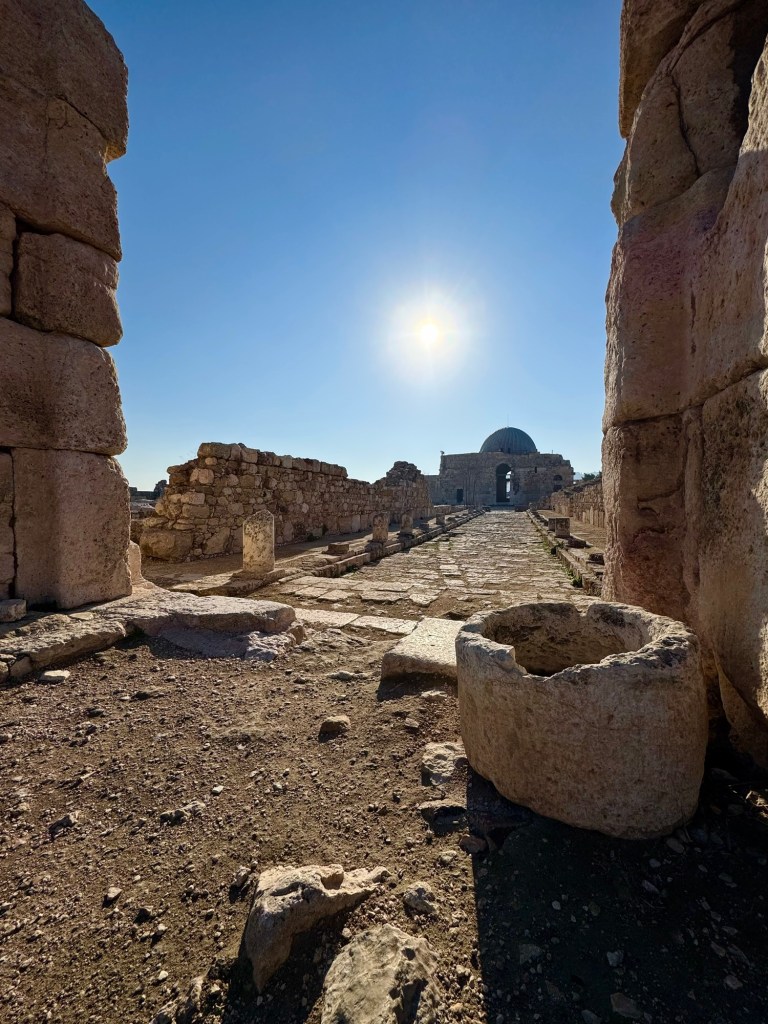
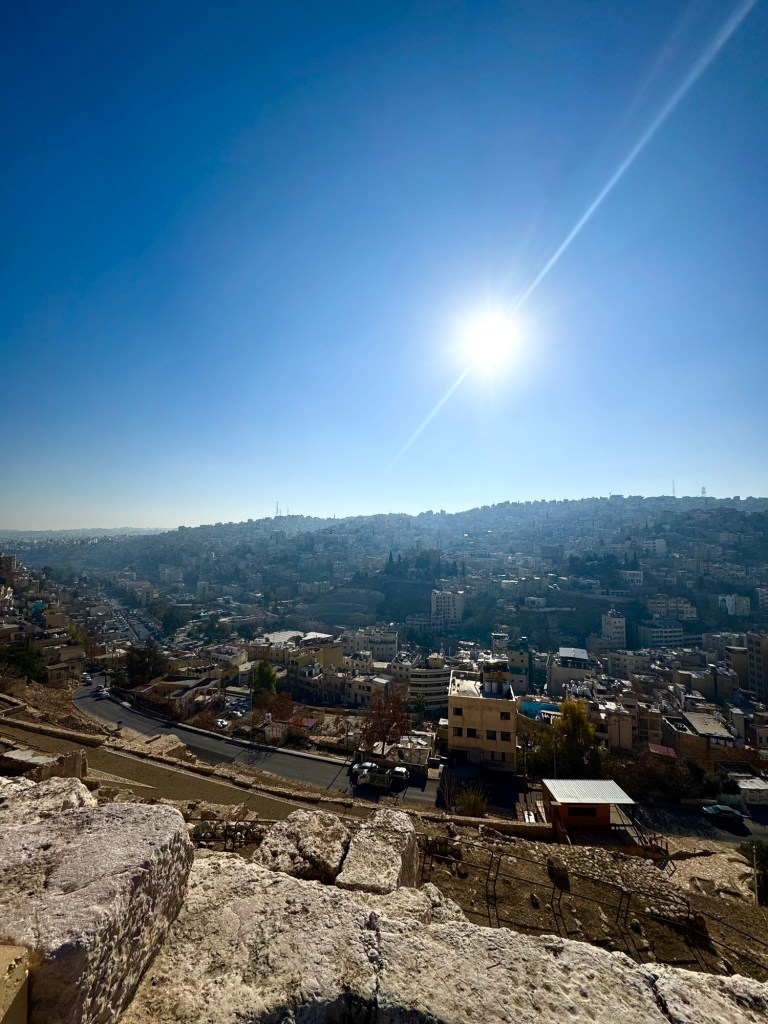
With only one day in Amman, and running on 2 hours of sleep, I had to make every moment count. I started my morning at the Amman Citadel, perched on a hill with breathtaking city views and ancient ruins like the Temple of Hercules and the Umayyad Palace. Arriving early is a good idea, especially during peak season, to avoid the crowds. I thankfully had no such thing, as unfortunately tourism in Jordan was directly impacted by the regional conflicts around the Jordanian border, so it felt like i had the entire place to myself. Within the Citadel grounds, I made a quick stop at the Jordan Archaeological Museum, a small yet fascinating building just a short walk from the temple.
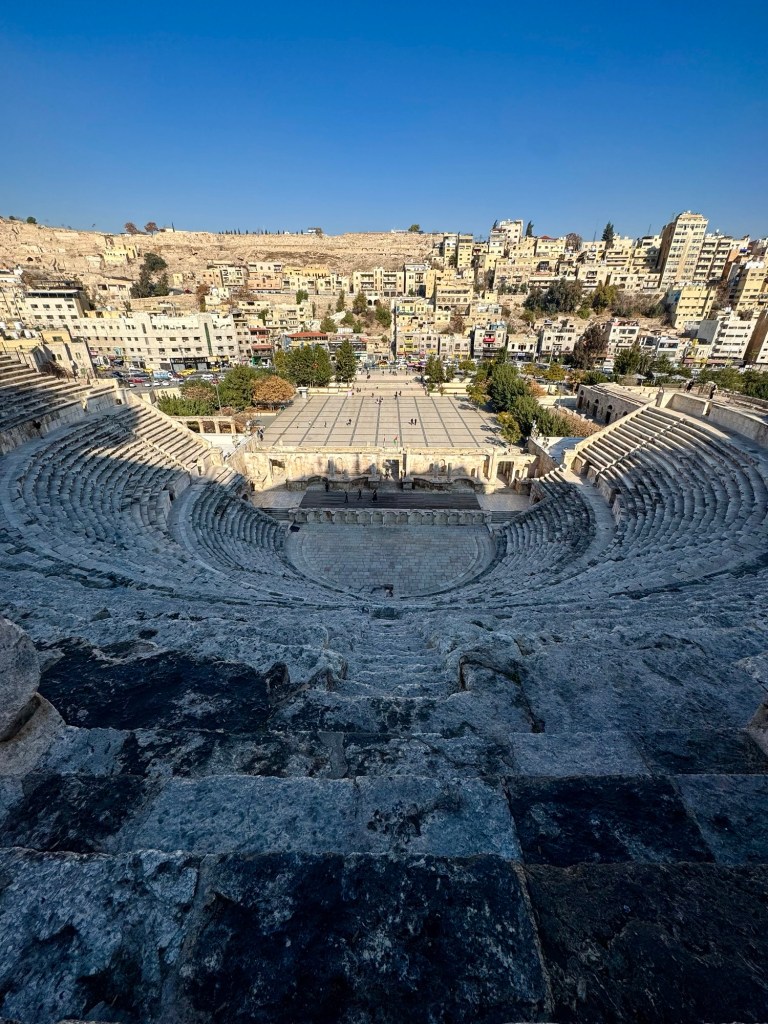
Next, I headed down to the Roman Theater, a stunning 2nd-century amphitheater still in use today. Climbing to the top is worth it for the panoramic view, but be careful—the worn stone steps can be quite slippery. From there, I took a short 10–15min UBER to the Jordan Museum, home to an impressive collection of artifacts, including prehistoric tools, Nabatean sculptures, and some of the famous Dead Sea Scrolls. Photography is strictly prohibited inside the scrolls’ chamber to protect their integrity, and security is tight—so stash your cameras and phones away, you’ve been warned, there’s nothing as embarrassing as being whistled at in public for not following very clear instructions.
For food, Hashem Restaurant was an absolute must. Their falafel and hummus were nothing short of life-changing, and that’s coming from someone who never cared much for pureed chickpeas before. The hospitality? Impeccable. Locals also insisted I try the kunafa from Habibah Sweets, just down the street. I wanted to, I really did—but after two hours of sleep, a full stomach, and food coma creeping in, I had to tap out and call it a day, especially since I had an early start for Petra the next day.
Here Comes the Deets
Alright, time for the burning questions— and probably the reason you clicked on this post in the first place. Let’s dive into some of the most common questions I got before, during, and after my trip:
- Is Jordan is Unsafe?
A lot of people assume that because Jordan sits right in the heart of the Middle East—bordering Syria to the north, Iraq to the east, Saudi Arabia to the south, and Israel and the occupied Palestinian territories to the west—it must be unsafe. But in reality, Jordan is one of the safest and most stable countries in the region. The government prioritizes security, especially in tourist areas, since tourism is a major part of the economy. I personally felt completely safe the entire time. - Do the people there speak English?
Oh absolutely. While Arabic is the official language, English is widely spoken, especially in cities and tourist areas. Most Jordanians, particularly younger generations, speak excellent English, so communication is rarely an issue. - Is it expensive to visit?
Jordan can be pricey compared to some neighboring countries, but there are ways to travel on a budget. Staying in hostels, eating at local restaurants, and using public transportation can help keep costs down. Uber is also surprisingly affordable for getting around the city. One major money-saver is the Jordan Pass – which I personally used, as it includes visa fees and free entry to multiple attractions. - What is the weather like in Jordan?
Summers can be scorching hot, so spring and autumn are the best times to visit for mild, pleasant weather. I went in January (winter) and experienced sunny daytime highs of 15–25°C and chilly nights dropping to 0–5°C, both in the city and the desert. Locals told me I got lucky—winter often brings rain and even occasional snow. So, if you’re visiting in the colder months, pack accordingly! - How do you get around in Jordan?
In Amman, I either walked or took an Uber. Google Maps is somewhat reliable, but take it with a grain of salt and a dose of common sense—if it directs you toward a trash heap, just don’t. As for getting to Petra, Wadi Rum, Aqaba, or Jerash, that’s a bit more complicated, so I’ll be covering those in their own posts. Stay tuned!
Jordan Pass
The Jordan Pass is an incredibly convenient and cost-effective way to explore Jordan while also covering your visa fees. Issued by the Jordanian Ministry of Tourism, it must be purchased online before arrival and grants free entry to over 40 sites, including Petra, Wadi Rum, Jerash, and the Amman Citadel. One of its biggest perks is that it waives the 40 JOD visa fee, provided you stay in Jordan for at least three nights. The pass comes in three tiers, with the only difference being the number of days you can visit Petra. No need for a printed copy—just show it on your phone at ticket booths, and you’re good to go.
At the airport, Jordan Pass holders have a separate line for immigration, making the process quick and seamless—just wait your turn, flash your confirmation, wait a little while they verify you’re legit, and you’re off. However, keep in mind that this is NOT a fast pass or skip-the-line ticket—something I’ve seen some travelers awkwardly realize at both Petra and Jerash. More information, including a full list of included attractions can be found on their website.
Did I Miss Out? Probably.
Now, my itinerary might not be for everyone—my interests lean heavily toward history. At this point, I can practically hear past visitors to Amman raising their pitchforks, yelling, “But you missed Rainbow Street!” “Amman has so much more to offer!” “What about the nightlife?!” And honestly? Fair points. But hey, priorities. That said, I’d love to hear about your experiences! Drop your recommendations, share your stories, and who knows? Maybe they’ll make it into my itinerary the next time I find myself back in this incredible city.
 Shenanigans Abroad
Leave a Reply