The Valley of the Moon

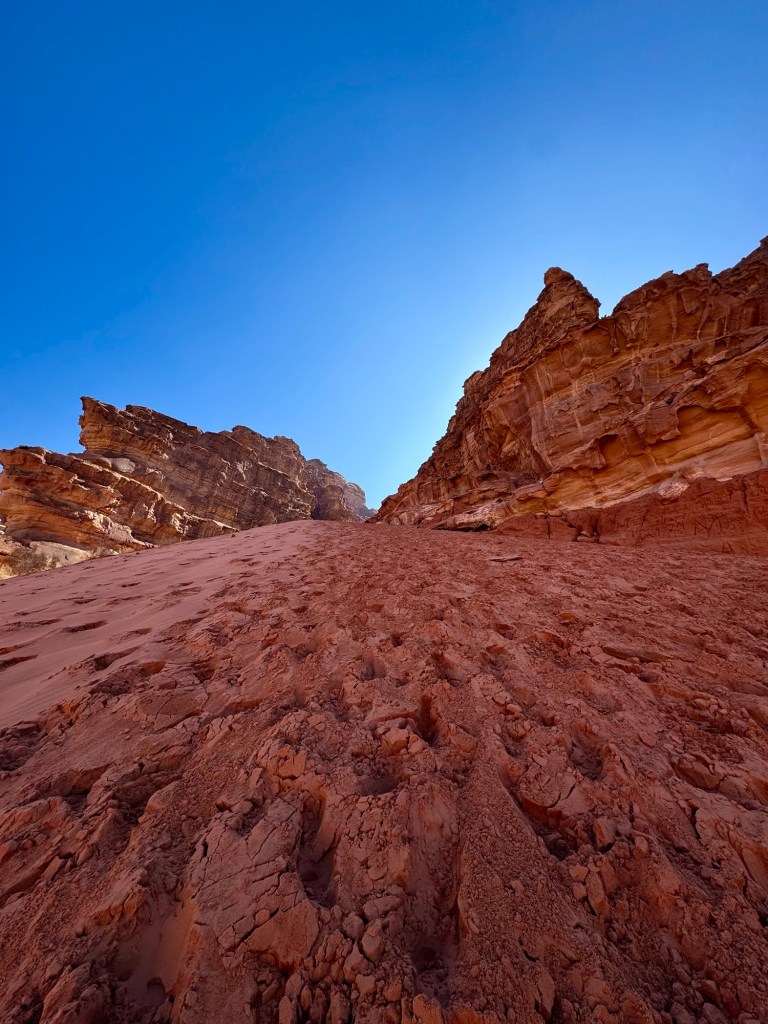
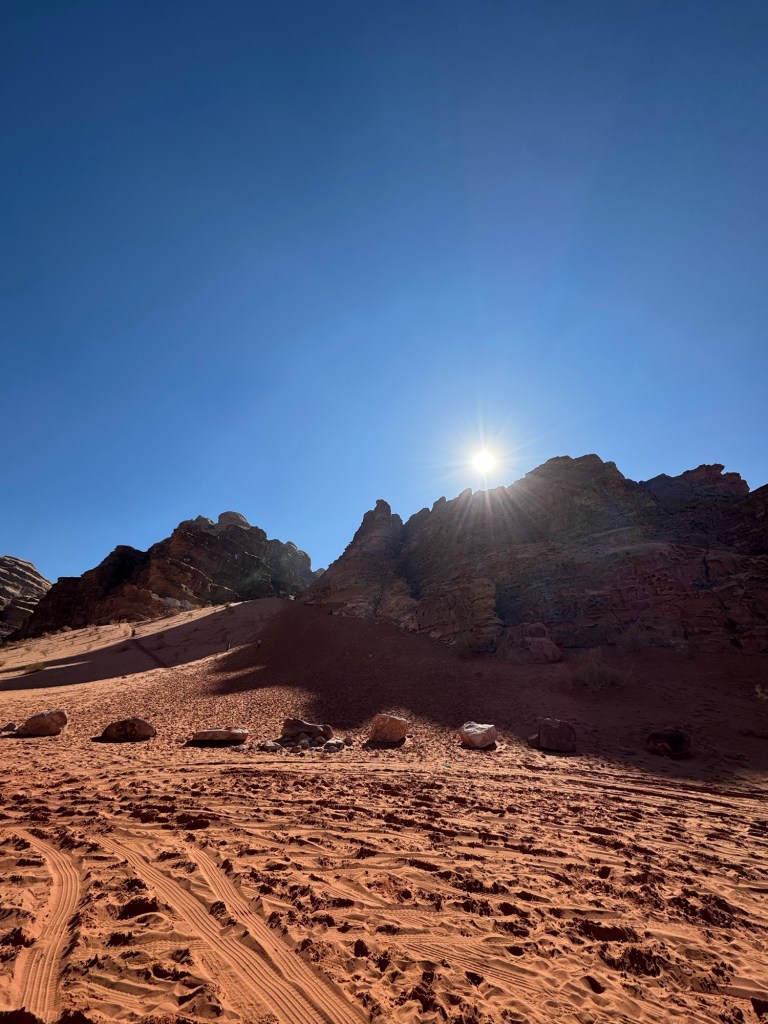
Wadi Rum—often called the “Valley of the Moon”—is a vast, surreal expanse of towering sandstone mountains, sweeping red dunes, and weathered rock formations that seem almost otherworldly.
Its dramatic, alien-like landscape has made it a popular filming location for major movies, including Lawrence of Arabia, Dune, and Disney’s Aladdin. With its striking scenery, it’s easy to see why filmmakers continue to be drawn to this timeless wilderness.
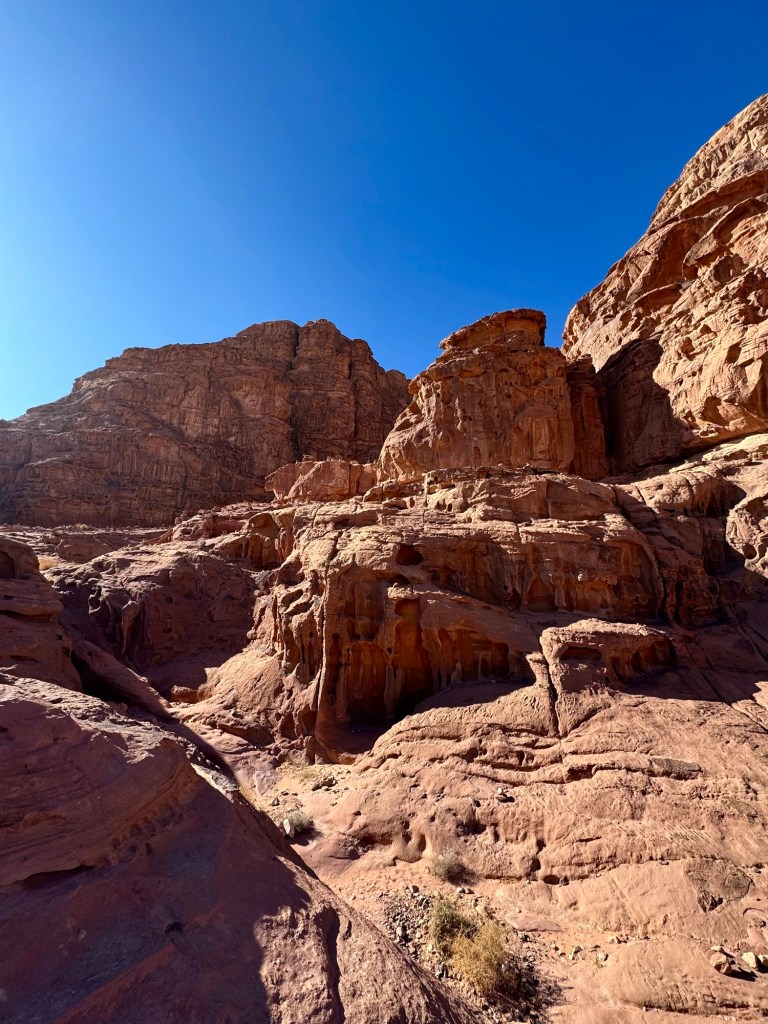
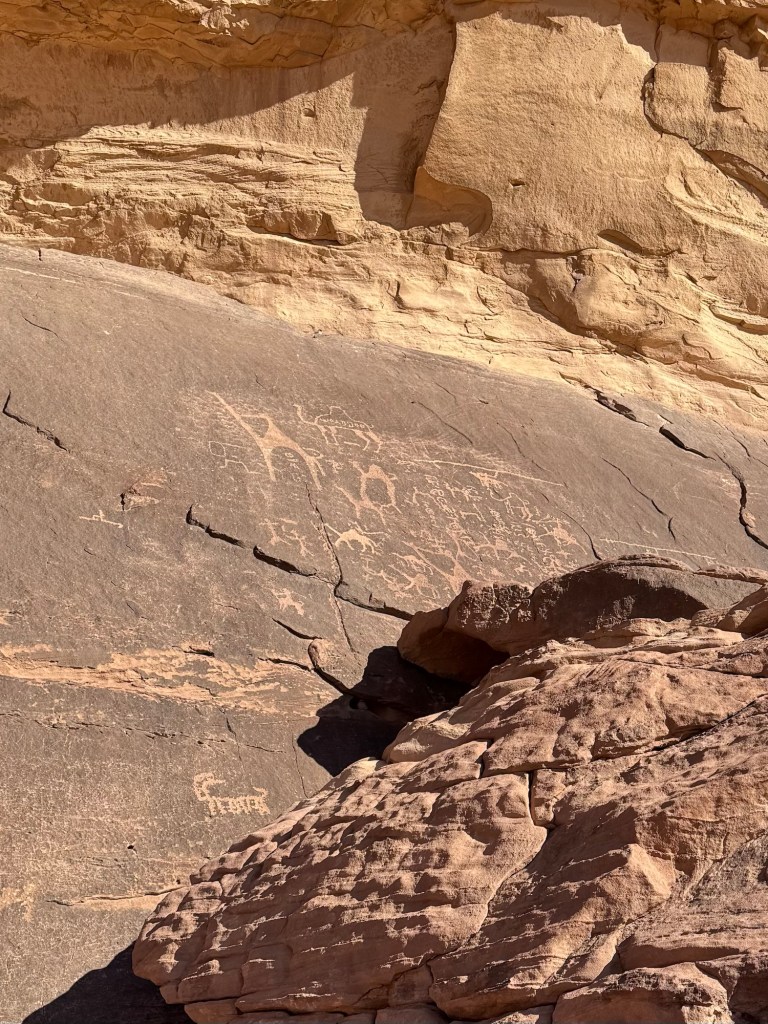
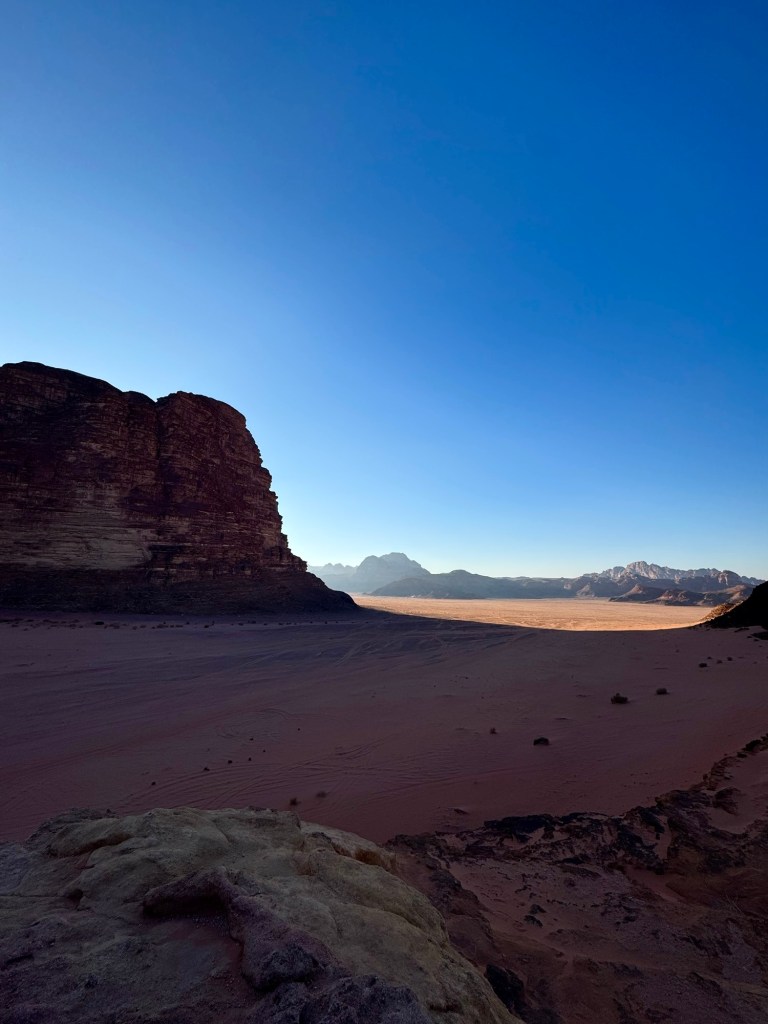
Carved by wind and time, jagged cliffs and deep canyons contrast against the endless desert floor, creating a scene that feels more like Mars than Earth. The shifting hues of the sand and rock—from deep reds to golden yellows—change with the light, especially at sunrise and sunset, when the desert glows in fiery tones. Scattered petroglyphs and ancient inscriptions hint at the people who once traversed this land, adding to its mystique. A UNESCO-protected site, Wadi Rum is an untouched wilderness where time seems to stand still. But Wadi Rum isn’t just a destination—it’s an experience.
The Journey Here
No matter where you’re coming from—Amman, Petra, or Aqaba—the journey to Wadi Rum is fairly straightforward.
- By Car
The drive from Amman takes around 4 hours via the Desert Highway (Highway 15), with well-marked signs leading to Wadi Rum Village. Be mindful of speed bumps, occasional checkpoints, and long stretches without gas stations.
It takes 1.5–2 hours via the King’s Highway and Desert Highway from Petra (Wadi Musa) to Wadi Rum, and the shortest drive is from Aqaba, it is the closest major city, and the drive takes 1 hour via Desert Highway. - By Bus
There are no direct buses from Amman to Wadi Rum, but you can take a JETT Bus to Aqaba (4 hours) and then a taxi or local bus to Wadi Rum.
A daily tourist minibus departs Petra around at 6:00–6:30 AM , the ride takes about 2 hours and costs around 10 JOD ($14), and public minibuses run irregularly from Aqaba to Wadi Rum but are less reliable than taxis. - By Taxi/Private Transfer
From Amman, no cab will take you to Wadi Rum, but many tour operators and hotels offer private transfers, which can be more convenient, especially for groups. Expect to pay around 100–150 JOD ($140–210) for a one-way trip. Should you be staying at a camp in Wadi Rum, some will also offer an airport transfer if you’re going straight from the airport to the camp. (confirm with your camp in advance)
A taxi or private car hire from Petra to Wadi Rum costs 35–50 JOD ($50–70), and you can usually find cabs right outside the Petra Museum, and a taxi from Aqaba costs 20–30 JOD ($28–42), depending on your bargaining skills.
Arriving at Wadi Rum
After an eventful morning at Petra, I headed to Wadi Rum by cab, arriving at the Wadi Rum Visitor Center after a 2-hour drive. Upon arrival, all visitors must check in and pay an entry fee (or present your Jordan Pass for free entry).
If you’ve booked a desert camp, your hosts will typically arrange a 4×4 pickup from Wadi Rum Village. If you haven’t booked in advance, you can arrange a tour here, including 4×4 Jeep tours, camel treks, hiking excursions, and overnight stays (subject to availability).
Although these options are available at the Visitor Center, I highly recommend booking your tours in advance. As with any popular tourist destination, scams are prevalent in the area, so proceed with caution if you choose to book on-site.
Right outside the visitor center, you’ll find a stunning view of the Seven Pillars of Wisdom, a massive rock formation named after T.E. Lawrence’s famous book—a great photo spot before heading deeper into the desert.
The Stay
A trip to Wadi Rum wouldn’t be complete without spending a night in the desert—whether in a traditional Bedouin camp, a luxury bubble tent, or even camping under the stars.
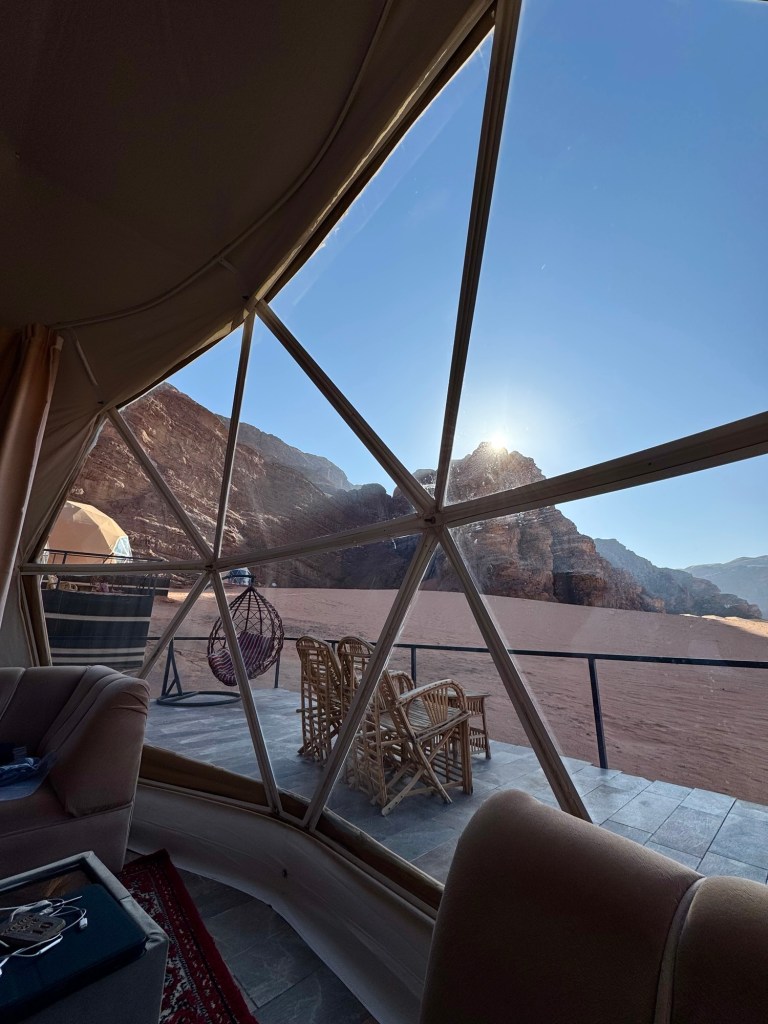
I stayed at Hasan Zawaideh Camp, a mid-range option, booking one of their Martian tents for the night. The hospitality was great, and the camp had all the basics—decent Wi-Fi, air-conditioned rooms, clean towels, and toiletries. You can also book your tours and activities directly with the camp, including jeep tours, stargazing, hiking, and climbing expeditions. I opted for their 6-hour jeep tour, and the entire package (1-night stay +full board + jeep tour) cost me 120 JOD, which was quite reasonable.

A Wild Ride
After a quick lunch, I was picked up by my guide—one of the local Bedouins—for my sunset desert tour.
I wasn’t exactly convinced when I first hopped onto the back of the jeep—the bench opposite mine wasn’t even properly attached and was barely hanging on by a single hinge. As we sped through the desert, bench and I held on for dear life, feeling like a piñata flung around in the back of a moving jeep. At one point, my guide attempted to tie the bench down with a rope—which promptly came undone with a single bump. With each jolt, I watched the bench defy gravity like Elphaba in Wicked and wondered if I would be next.
But as soon as we left the camps and entered the vast wilderness, all my worries faded.
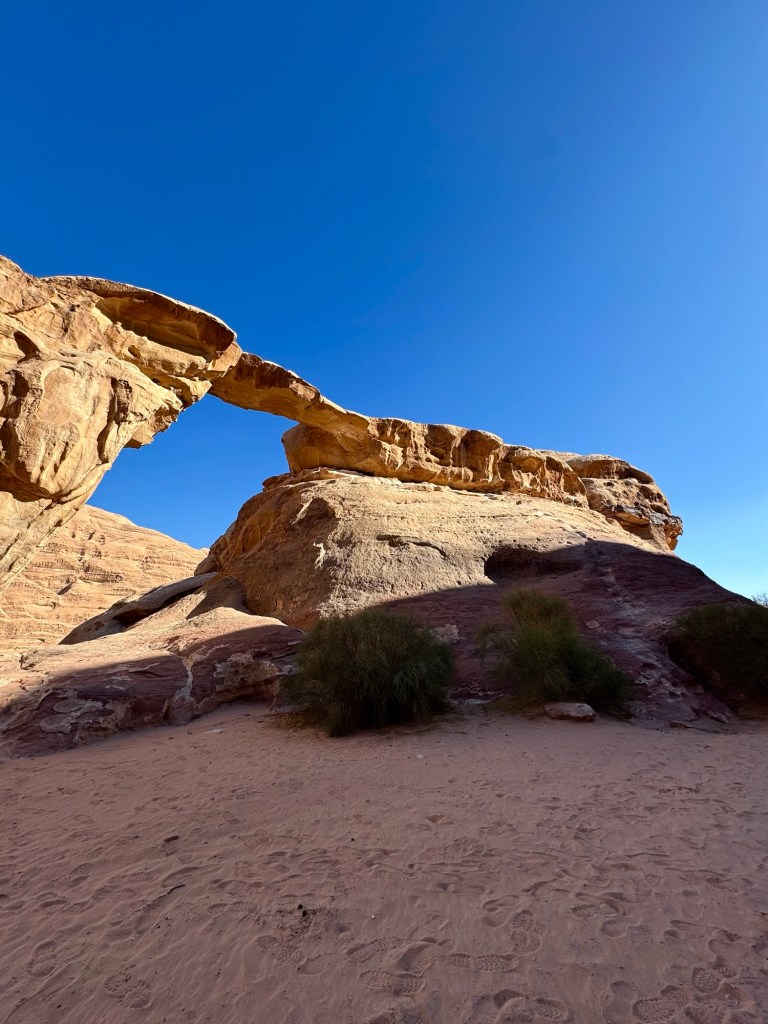
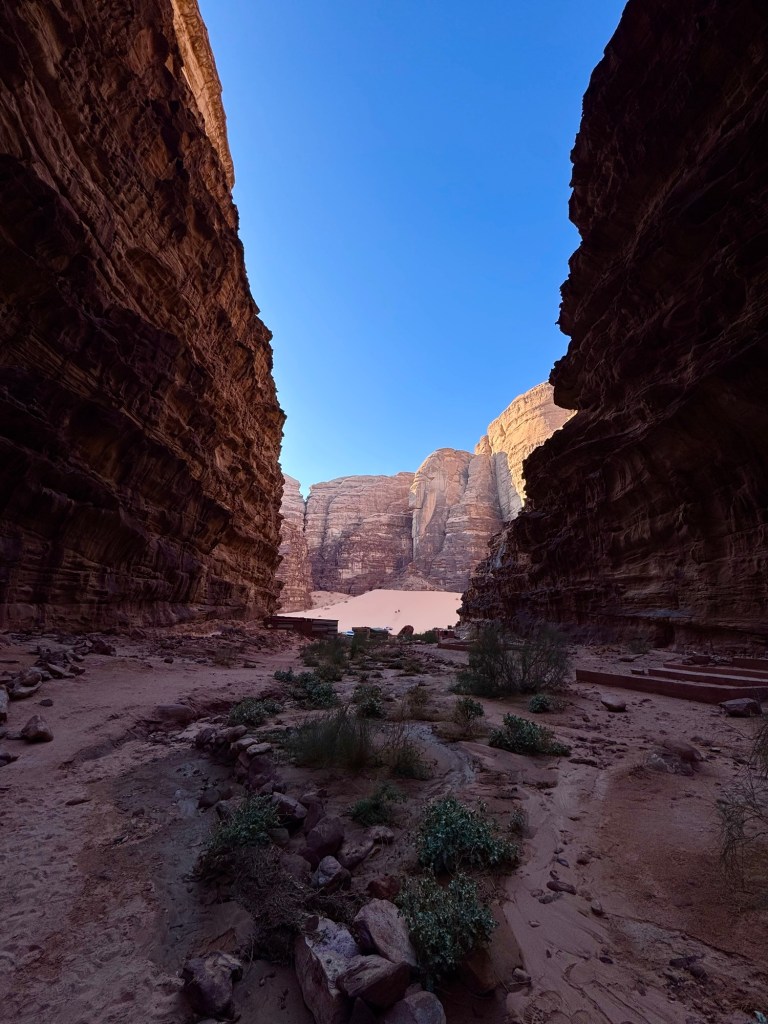
Cruising through the rosy sands, you’ll be brought to several spots like the Red Sand Dunes, Um Fruth Rock Bridge, Lawrence’s Spring, and Khazali Canyon where you can see some Nabatean, Thamudic and Islamic inscriptions covering the Jebel Khazali’s inner walls. Most tours will also include visiting sites that were used as the filming locations to movies like Dune and Aladdin,
Bedouin guides don’t act as traditional tour guides—they know their way around Wadi Rum and drive you from spot to spot, but don’t expect detailed explanations. Most of them speak little English and will briefly point out sights before disappearing into one of the many Bedouin tents scattered around. I actually liked this—it gave me the freedom to explore at my own pace.
How you experience Wadi Rum is up to you, you could hike the cliffs and climb the rocks for the best views, or stay in your jeep and snap photos, your guide will adapt the tour to your style.
I think my guide got the impression that I was one of those adventurous types, and I don’t blame him—I do dress rather athletically by default. But for me, it’s more about comfort and practicality than actual athleticism—the most exercise I get in daily life is probably doing sit-ups to get out of bed or sprinting after the last bus.
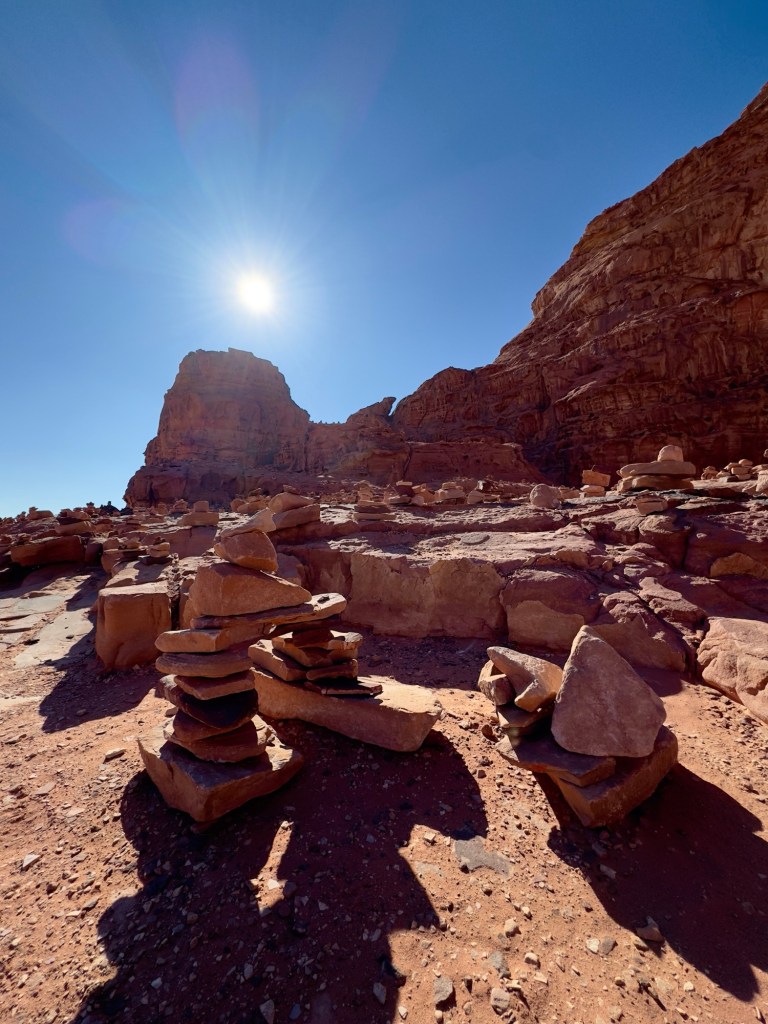
He took me to all the high viewpoints, and each time he dropped me off with a knowing look, it felt less like a choice and more like a test of pride. So, rolling up my imaginary sleeves, I scrambled up dunes, cliffs, and rocks, sweating like a sinner in church—but the views were absolutely worth it.
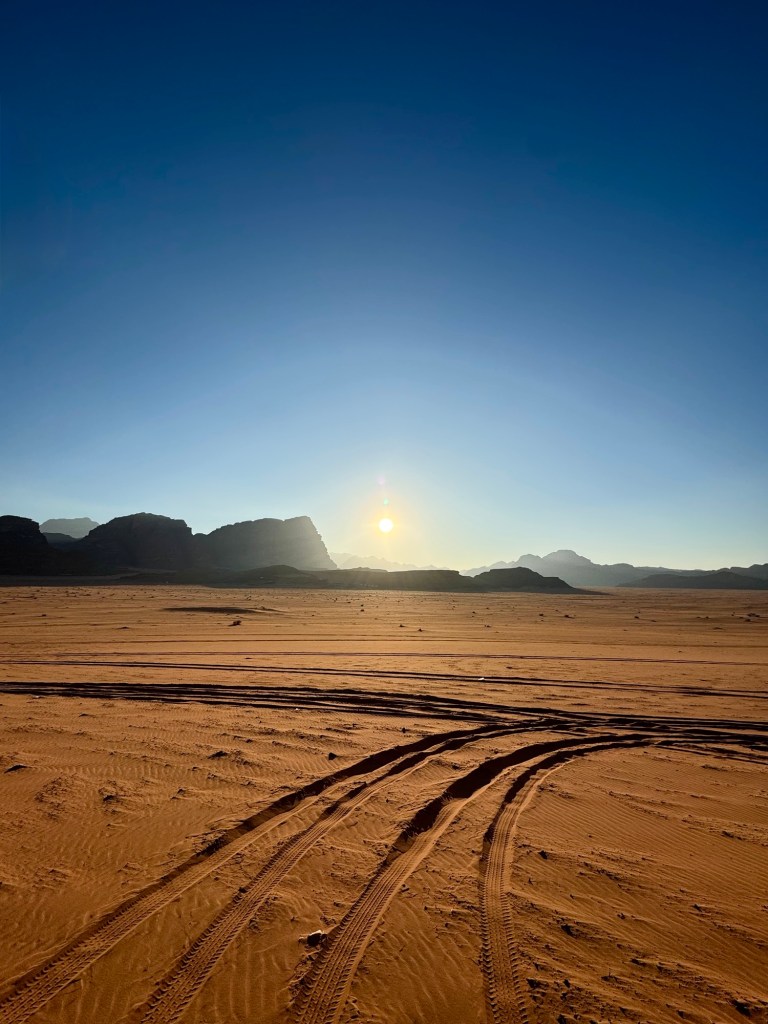
As my tour ended, we drove to the sunset spot. More and more jeeps converged on the rocky outcrop, and as the sun dipped below the horizon, the desert transformed into a warm, glowing masterpiece. The sky darkened, the moon emerged, and it was time to head back for dinner.
A Bedouin Feast
Dining in Wadi Rum isn’t just about the food—it’s an experience that immerses you in Bedouin hospitality, culture, and the magic of the desert night sky. The highlight of most camp dinners is Zarb, a traditional Bedouin barbecue cooked underground. Meat (usually lamb or chicken), along with vegetables and rice, is placed in a metal rack inside a deep, sand-covered pit and slow-cooked for hours, resulting in tender, smoky, and flavorful dishes. Food is served communally and enjoyed around the campfire.
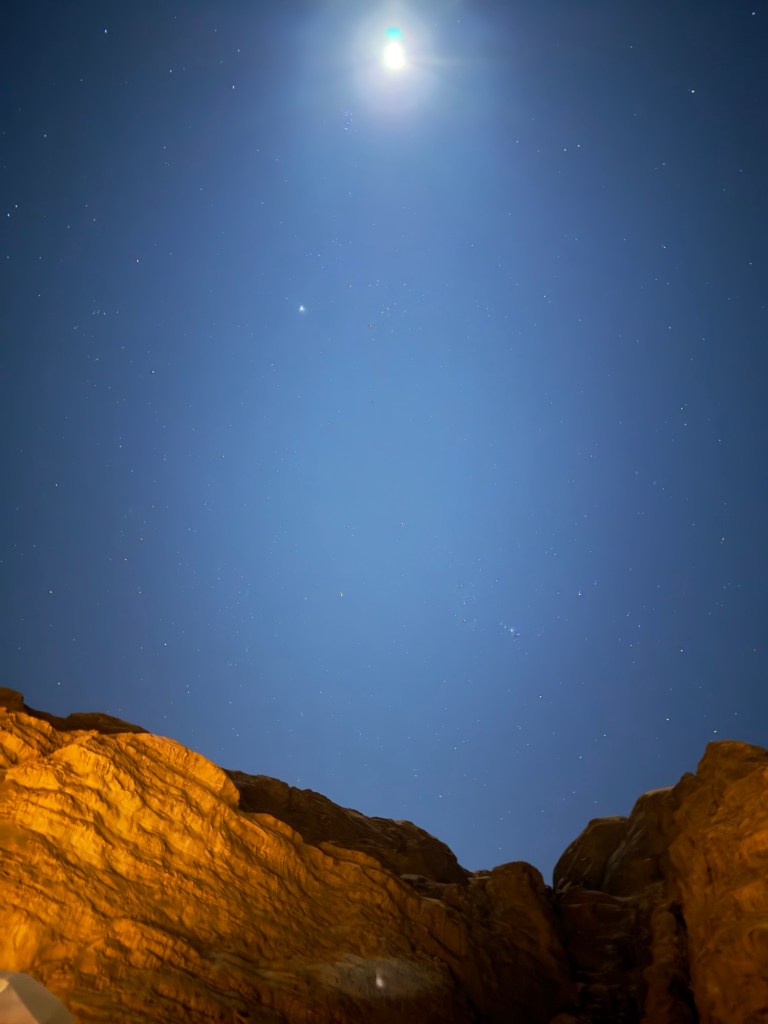
After dinner, most camps serve sweet Bedouin tea, infused with sage or cardamom. It’s the perfect way to relax by the fire, share stories with fellow travelers, and admire Wadi Rum’s spectacular night sky, free from light pollution.
With a full belly and a warm cup of tea, I retreated to my bubble tent, gazing at a sky bursting with stars—the perfect way to end the night.
A Bittersweet Goodbye
Waking up to the sight of the desert at sunrise is truly a one-of-a-kind experience. But all good things must come to an end. Packed and ready, I was driven back to the Wadi Rum Visitor Center after check out, meeting my GYG driver for the return to Amman—all the while watching the desert fade in the distance, feeling like I had left a piece of myself in the sands.
Back at my hotel, it was time to recharge and refresh for a new adventure the next day—swapping the desert sands for the ancient ruins of Jerash and Umm Qais.
 Shenanigans Abroad
Leave a Reply