A Testament of Devotion
A Rocky Start
My two week journey into the land of the Pharaohs began from Amman Queen Alia International Airport, and boy did we get off to an amazing start.
Heavy fog led to a six-hour flight delay, followed by frustrating flight assistance from EgyptAir while trying to rebook my connecting flight from Cairo to Aswan—which, of course, was delayed too. By the time I finally reached my hotel, I was absolutely pooped.
But I was not about to let all this get in the way of a trip I have literally been dreaming of since I first opened the golden tome of Egyptian History and Myths as a snotty-nosed brat. So, off to bed for a two-hour nap, and I was out of the hotel again at 4 am for a four-hour ride to the Abu Simbel Temples. Why so early? Well, for the same reason I always do—to get there at opening and avoid the crowds. And you bet there’ll be crowds the minute the gates open
Getting to Abu Simbel
While the four-hour road trip from Aswan to Abu Simbel is an option, you can also take a flight with EgyptAir, which runs every hour or so from Aswan International Airport to Abu Simbel Airport. The flight takes just 45 minutes, followed by a short taxi ride to the temples. If you prefer to stay closer, there are hotels and resorts nearby, allowing you to arrive the day before and wake up just in time for the temple’s opening. Staying overnight can be costly, but if you’re willing to splurge, it’s definitely an option. Otherwise, many hotels and agencies in Aswan offer bus tours—a cheaper but less flexible alternative.
As usual, I found my driver through GYG, which has been a lifesaver for trip planning. And when I say planning, I mean the full-on Excel sheet treatment—timestamps, booking details, prices, and even the conversion rate at the time of purchase. Suffice to say, I like planning.
Favoritism Much Mate?
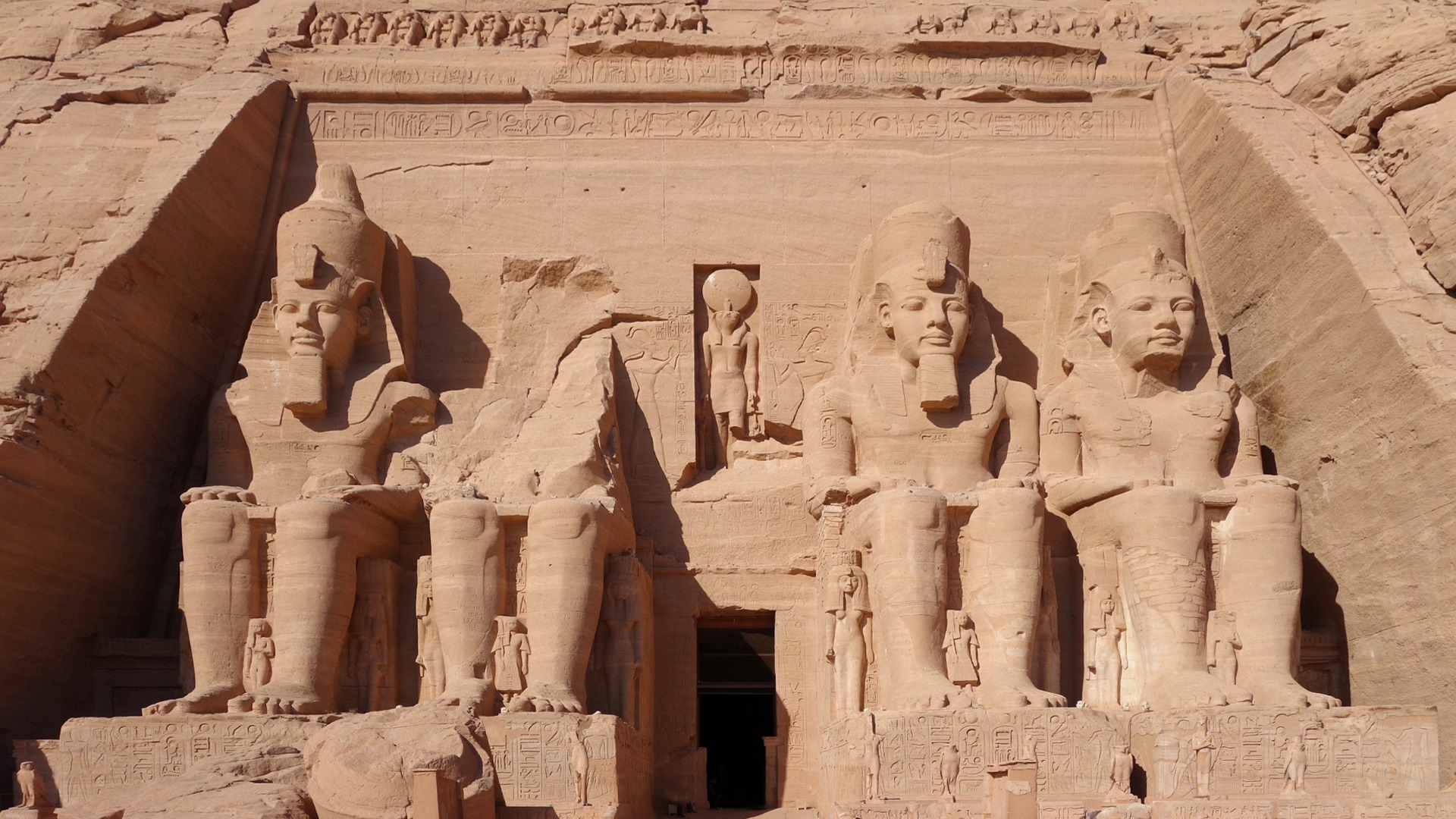
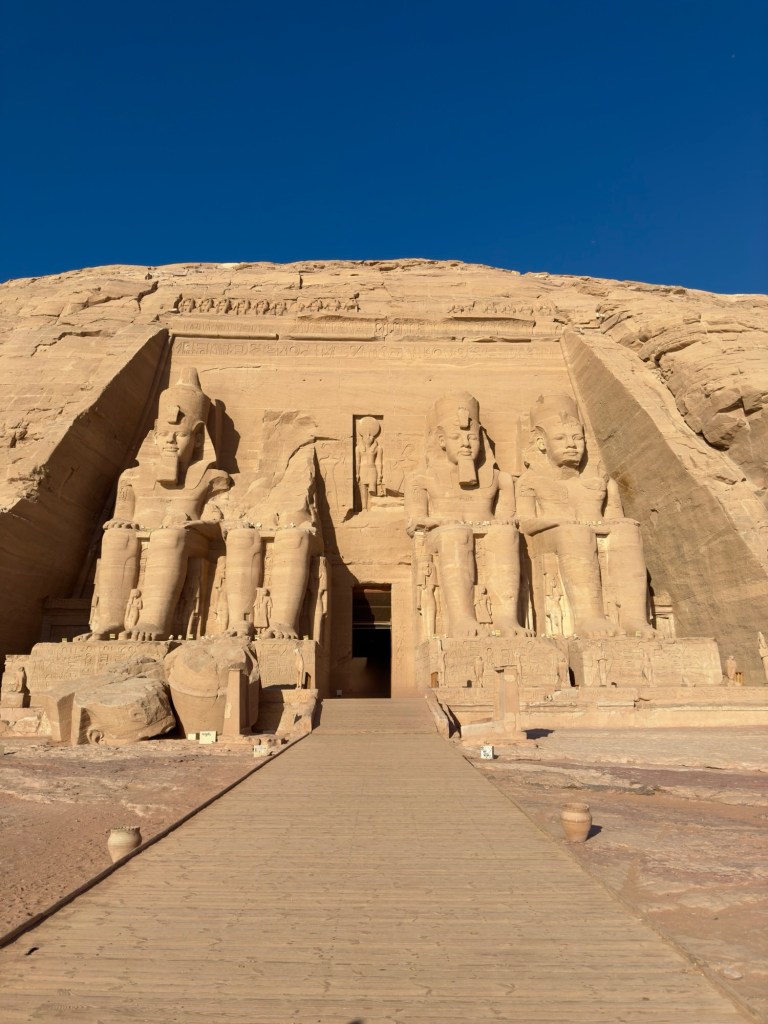
Four hours on the road and many tea breaks later, I found myself standing before one of the greatest displays of devotion (ahem favoritism ahem) in pharaonic history. Why? Because the Abu Simbel Temples—two massive rock-cut structures in southern Egypt, near the Sudanese border—were built by Pharaoh Ramses II in the 13th century BCE. He dedicated them to himself, the gods, and his Great Royal Wife and queen, Nefertari.
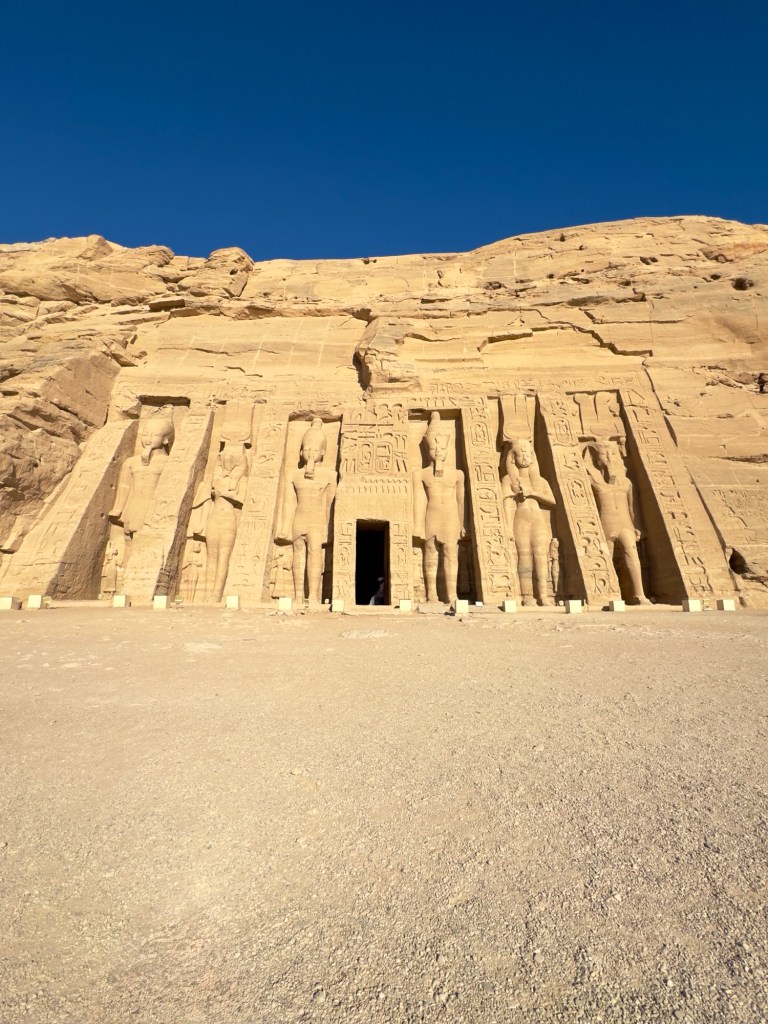
Despite having around 200 wives and consorts—and well over 100 children—Ramses II built and dedicated a temple to Nefertari alone, honoring her with titles during her lifetime such as Nefertari Meritmut (Beautiful Companion, Beloved of Mut) and The One for Whom the Sun Shines and so on. The Small Temple of Hathor and Nefertari can be found right next to The Great Temple of Ramses II, both located within the Abu Simbel historical site.
I went without a guide this time but was unintentionally ‘guided’ by a very enthusiastic local Egyptologist—alongside a lovely older couple who more or less adopted me as their unofficial photographer for the day. The history and stories were captivating, but what fascinated me most during his guide was the incredible story behind the relocation of these temples.
The Great Relocation and Solar Alignment
Imagine watching one of Egypt’s most iconic temples disappear beneath the waters of a massive lake. That was nearly the fate of the Abu Simbel Temples, built by Ramses II over 3,000 years ago. When the Aswan High Dam was constructed in the 1960s, the rising waters of Lake Nasser threatened to submerge these ancient masterpieces forever. In a race against time, UNESCO launched an ambitious project to relocate the temples piece by piece, marking this project as one of the greatest engineering feats in history.
Between 1964 and 1968, a team of experts carefully cut the temples into over 1,000 massive blocks, each weighing up to 30 tons. These pieces were then moved 65 meters higher and 200 meters back to a new, specially built artificial hill—preserving not just the temples, but also their famous solar alignment phenomenon. The entire project cost around $40 million, but it saved one of Egypt’s most treasured sites from vanishing beneath the water. At the site, you can even occasionally spot small metal studs in the ground or on the walls with a number on it, indicators identifying each piece of the massive 1000 piece megalith puzzle.
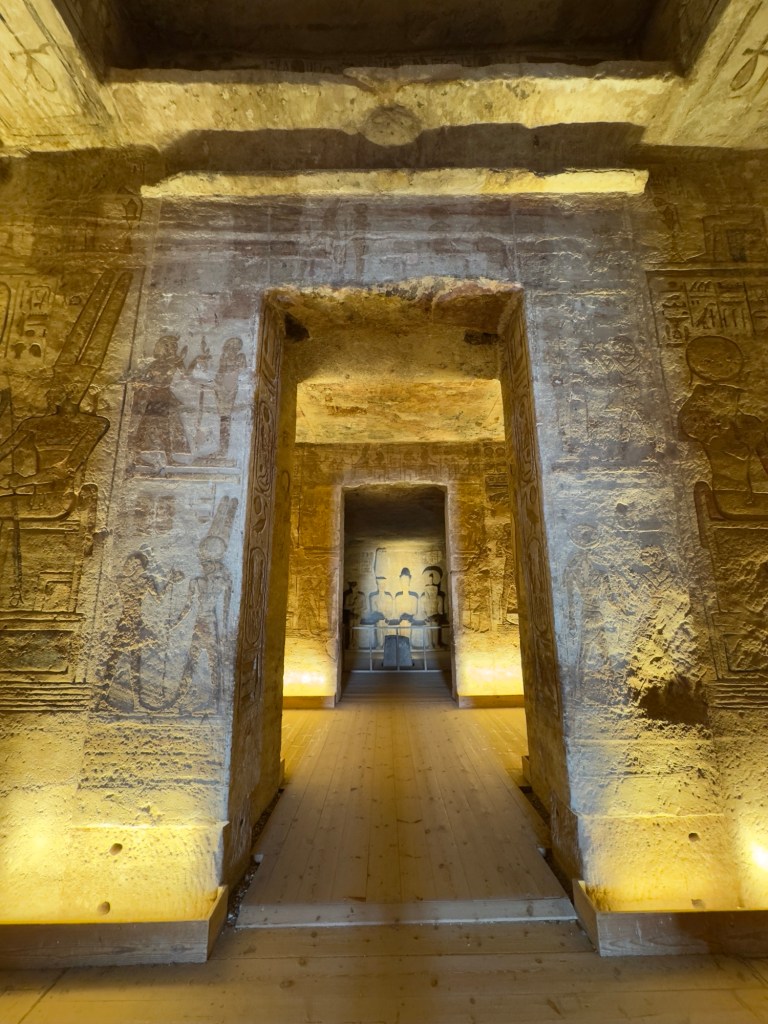
What makes Abu Simbel truly unique is its solar alignment, a stunning event that happens twice a year—on February 22 and October 22. On these mornings, the rising sun shines directly into the Great Temple of Ramses II, illuminating the statues of Amun-Ra, Ra-Horakhty, and Ramses II in the inner sanctuary, while Ptah—the god of the underworld—remains in shadow, symbolizing his eternal darkness.
Even after the temple’s relocation, engineers preserved this alignment, though the effect now occurs one day later than originally intended. If you plan to witness this phenomenon, my “guide” (or, as I called him, monsieur marketing —he is quite persuasive) advised arriving by 4 AM to secure a good viewing spot for alignment that starts around 5:30–6:00 AM. Tickets for this event have a different price, which you can find and book in advance on the official Egypt Monuments website.
The Temples
Guides are only allowed up to the temple entrances, so once inside, you’re left to explore on your own. This is where my photography skills kicked in for the lovely elderly couple as they couldn’t bring in their guide. Guides usually point out key areas via photos or photobooks (which they’ll try to sell you afterward), but inside, you’re free to soak in the grandeur at your own pace.
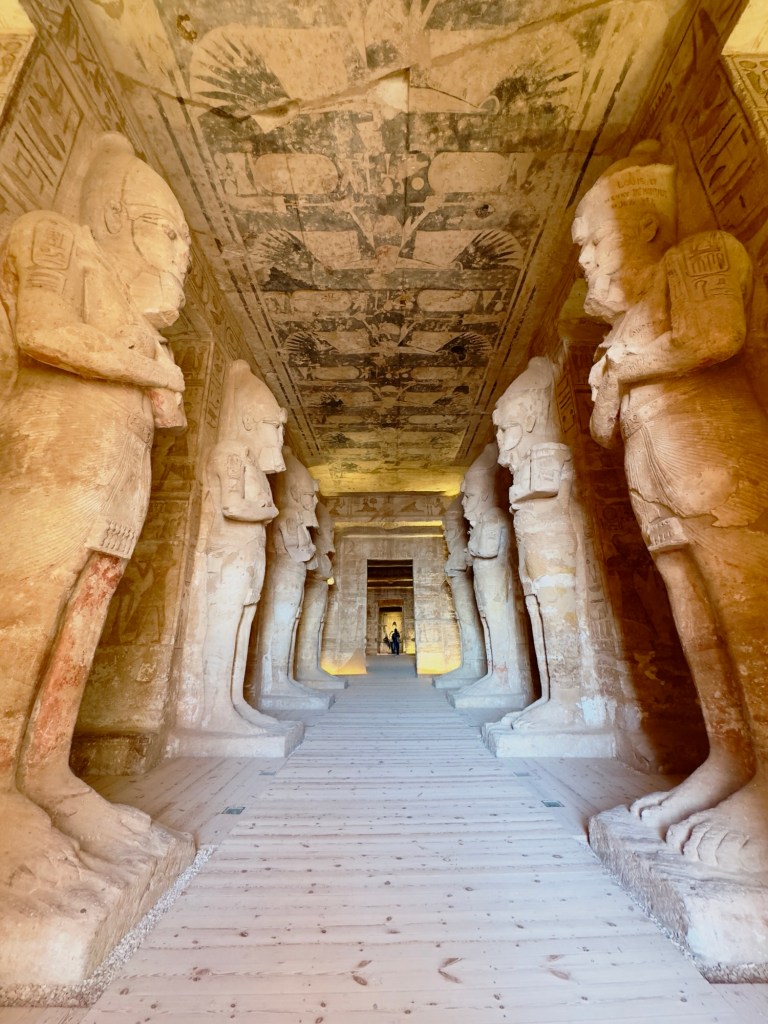
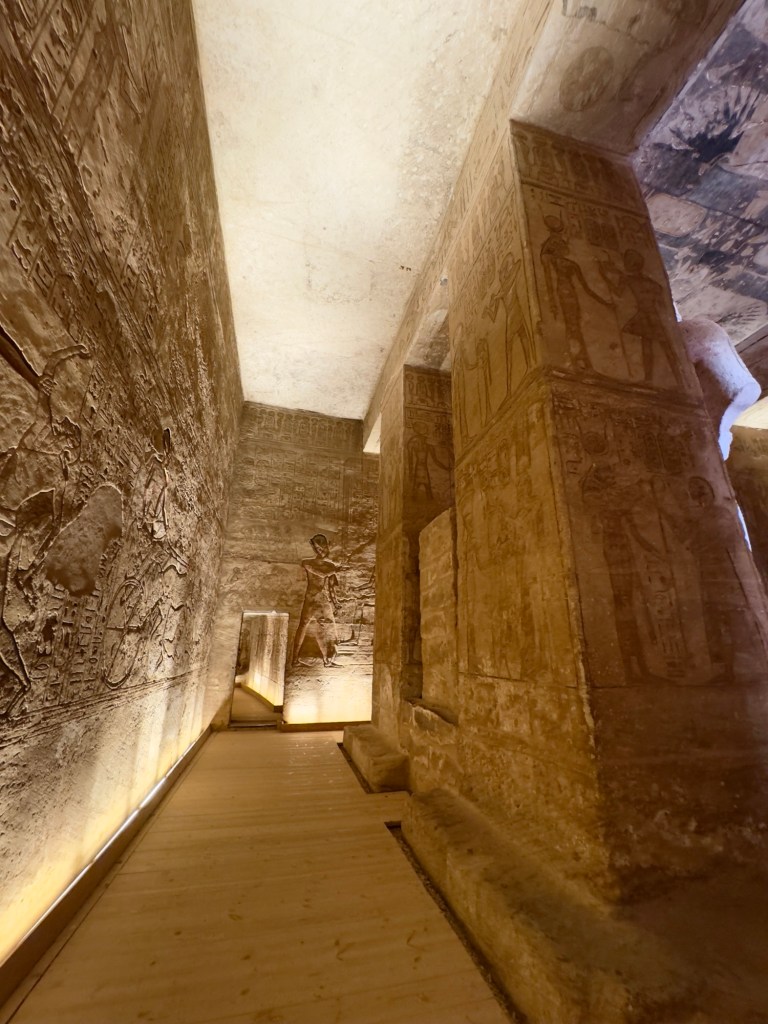
It is hard to describe the sense of awe or almost reverence that comes upon you the minute you cross the entrance of these temples. Stepping into the Great Temple of Ramses II, you are dwarfed by the four colossal statues of the pharaoh, their gaze unwavering through time. Inside, towering Osirid statues line the vast hall, while the walls pulse with ancient battle scenes, including Ramses’ triumph at Kadesh. Deeper still, the inner sanctuary houses four seated figures—Amun-Ra, Ra-Horakhty, Ramses II, and Ptah. On the days of solar alignment, this is where the sunlight pierces the chamber, illuminating all but Ptah, the god of darkness.
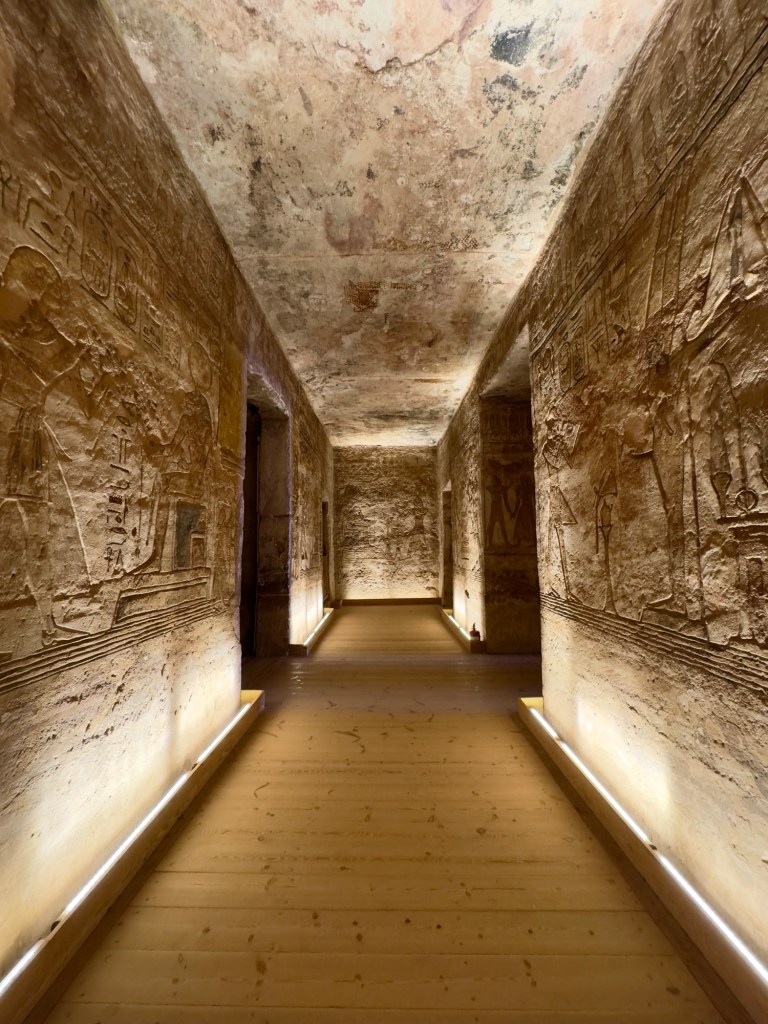
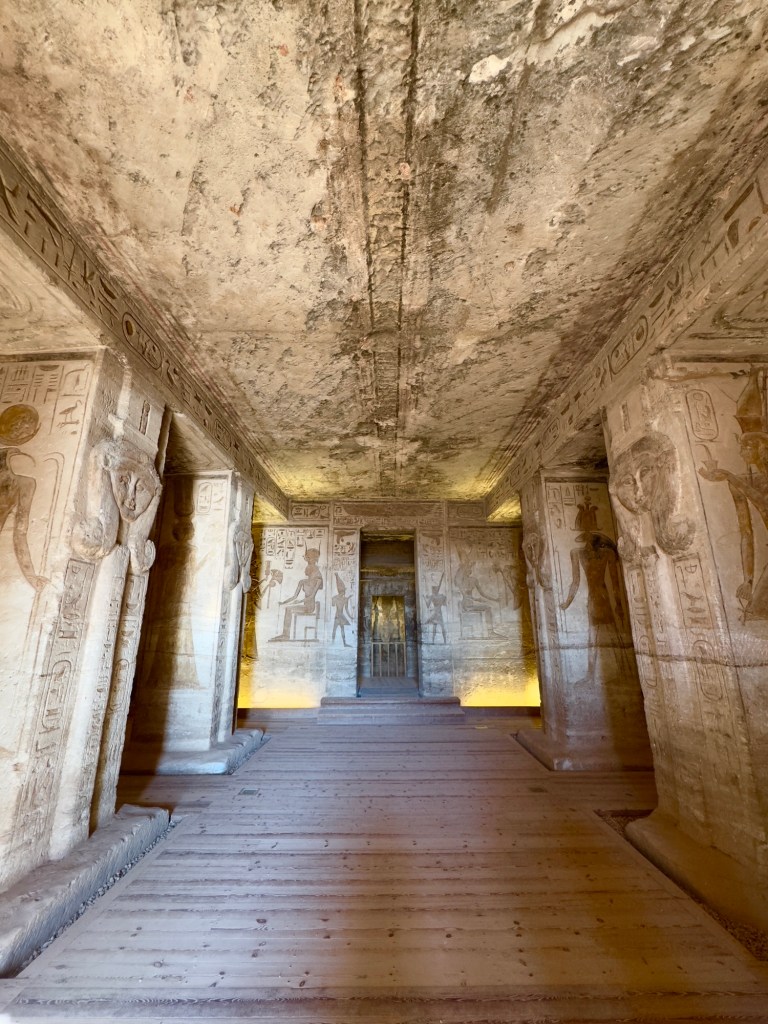
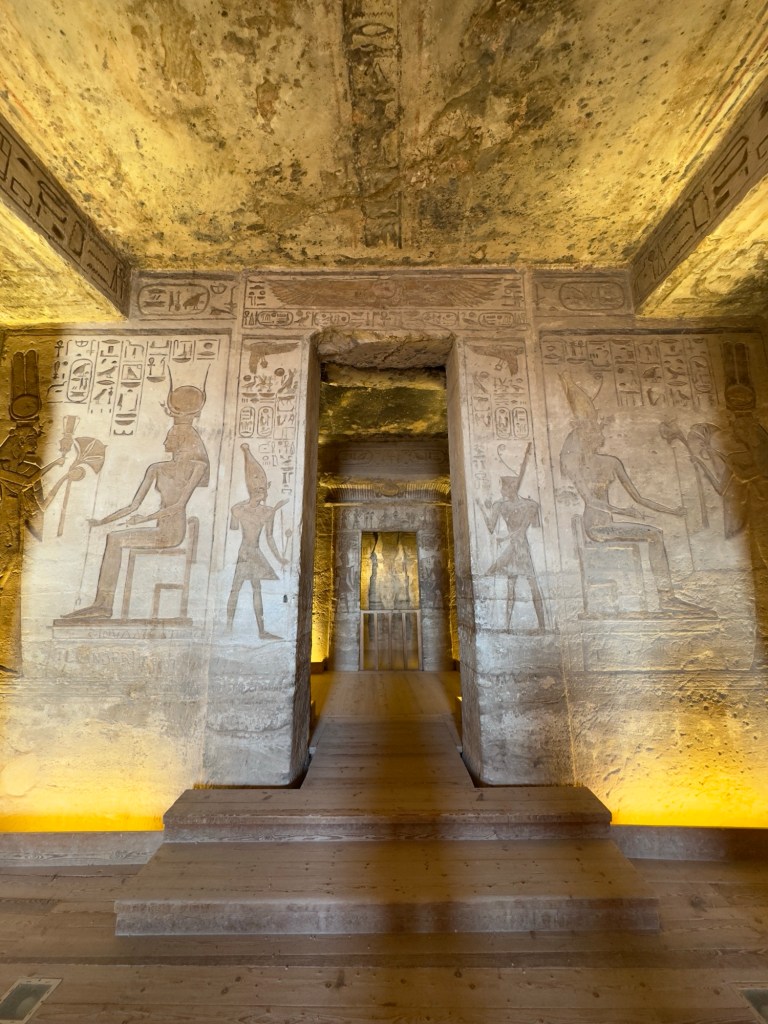
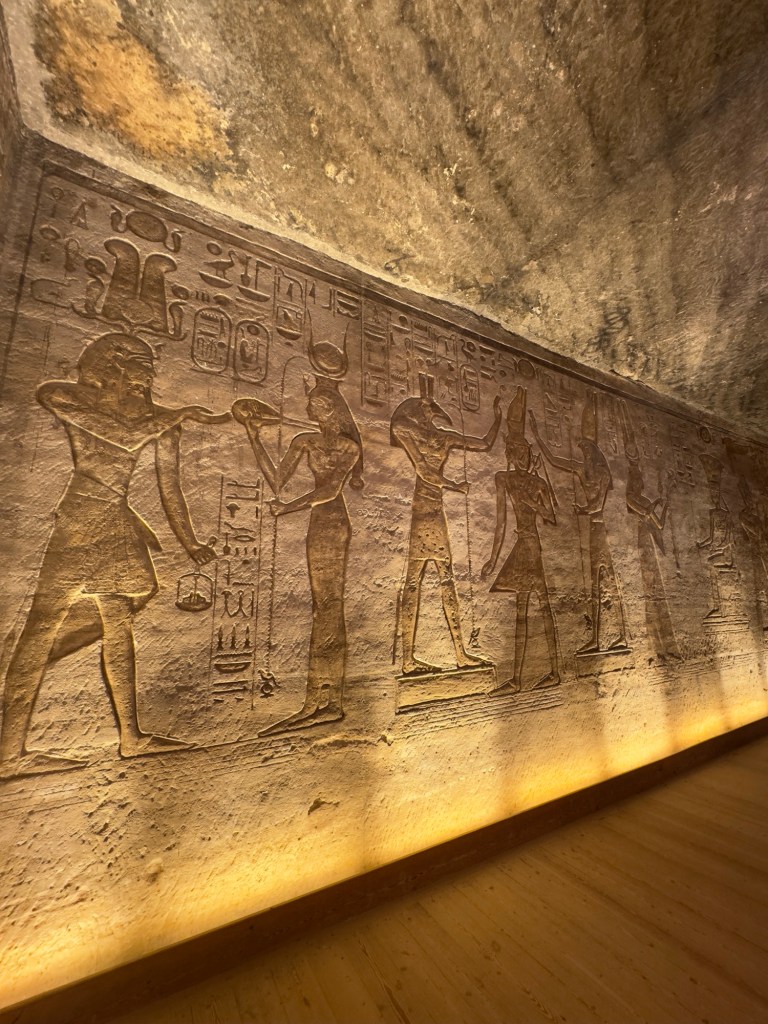
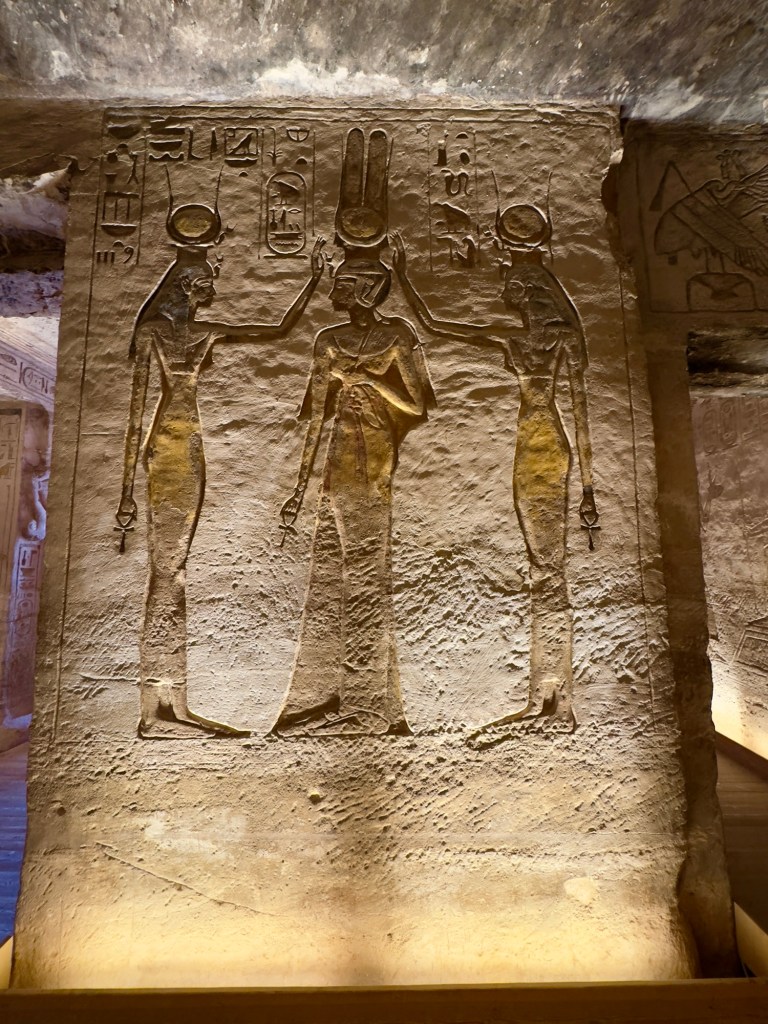
At the Temple of Nefertari, grace replaces grandeur. The entrance, flanked by six statues of Ramses and his queen, is rare in its equal tribute. Inside, Hathor-headed pillars watch over delicate carvings of Nefertari offering to the gods, her form radiating divine favor. Unlike the Great Temple’s power, this space hums with devotion—both to the gods and to the queen who was loved enough to be immortalized in stone.
It very hard not to be impressed when you’re physically standing there, just thinking to yourself, “How the heck did they do this back in the day?”.


The Farewell Gift
After about two hours of exploring, my unofficial ‘guide’ surprised me with a tip—perhaps for being a good sport and taking great photos of his clients, which I found absolutely hilarious. In return, I tipped him back, considering I had unknowingly been guided by him for most of the visit.
As a gesture of goodwill, the ‘tip’ was a 1 Egyptian Pound banknote, featuring an image of Abu Simbel Temple on one side. Laughing, he even joked that it was more of a bribe—so the old couple and I would stop bombarding him with questions. Hilarious.
With that, I left my unexpected tour buddies behind and set off back to Aswan, where the mystical Philae Temple of Isis awaited.
 Shenanigans Abroad
Leave a Reply