The Land of Gold
Where Am I Again?
Tucked along the banks of the Nile, Aswan has long been Egypt’s southern gateway. In ancient times, it was the last major stop before reaching the gold-rich lands of Nubia—meaning pharaohs, merchants, and opportunistic invaders alike all passed through, usually with a cartload of ivory, incense, and, most importantly, gold. Because let’s be real, what’s Ancient Egypt without a little gold?
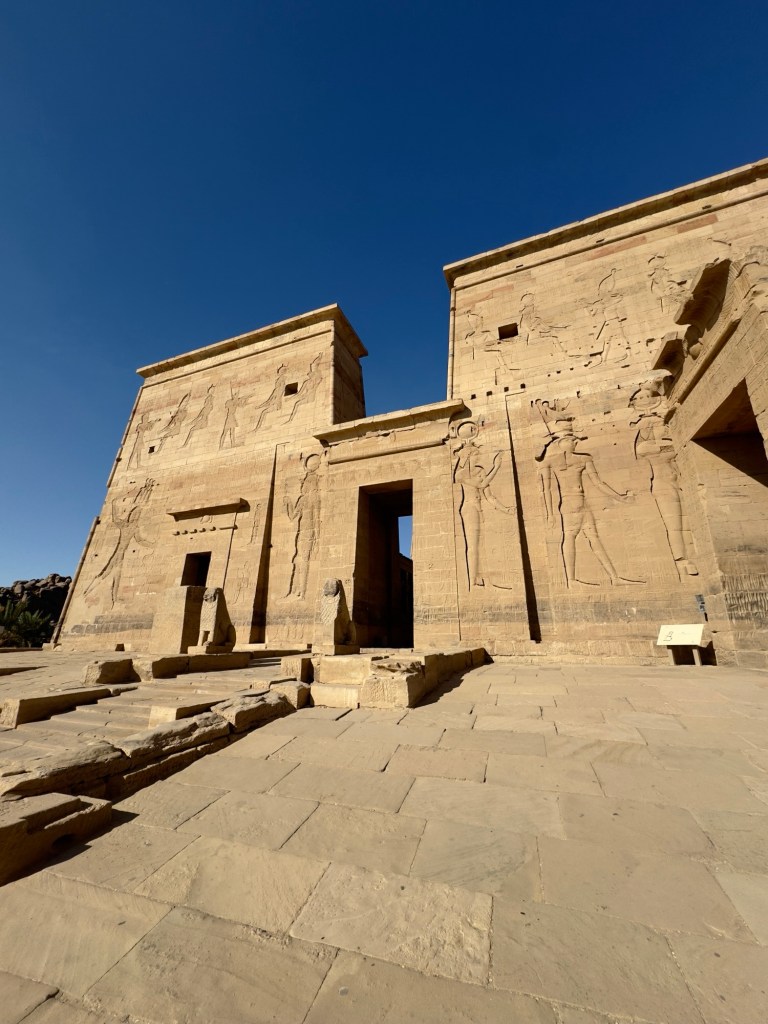
Today, Aswan remains a place where history feels tangible. The Philae Temple, dedicated to Isis, stands as a testament to devotion and resilience, having been relocated piece by piece to escape rising waters like the Abu Simbel Temples. The Unfinished Obelisk, still embedded in bedrock, offers insight into the craftsmanship of ancient stonemasons. And the massive Aswan High Dam, a modern engineering feat, reshaped Egypt’s landscape much as the pharaohs once did.
Seeing Aswan in the daylight is a bit of a luxury—one I did not initially have. Arriving at ass o’clock in the morning, then waking up again some 2 hours later at 4 AM for a jaunt to Abu Simbel, meant my first proper view of Aswan was through bleary eyes and dark skies. But once the sun was actually out and I had some too much tea in my system, the city revealed itself in all its colorful glory. Unlike much of Egypt’s architecture, which leans toward muted earth tones, the Nubian villages here explode in vibrant blues, yellows, pinks, and greens. These homes don’t just look good—they reflect a deep cultural heritage that’s been shaped by the Nile for centuries.


Philae Temple: A Journey Across Time (and Water)
To reach the Philae Temple, you first need to get to Shellal Marina, about 15 minutes from the city center. Here, a fleet of small motorboats awaits, ready to ferry tourists across the river. The boat fees? Negotiable, of course. Expect an initial price that’s a little on the ambitious side, but with some haggling (or patience for a group to join in), you can get a better deal. Tour groups usually have this ride included, but tipping is still very much expected.
Now, most will tell you that visiting early in the morning is best to avoid the crowds, allowing for a quieter, more atmospheric experience. I, however, arrived around 1 PM, and it was blissfully empty—turns out, most tour groups were already making their exit. Yay me. Then again i was visiting in one of the low tourist seasons, and was cutting it close to the winter closing hours at 3pm.
The Legend and Layers of Philae
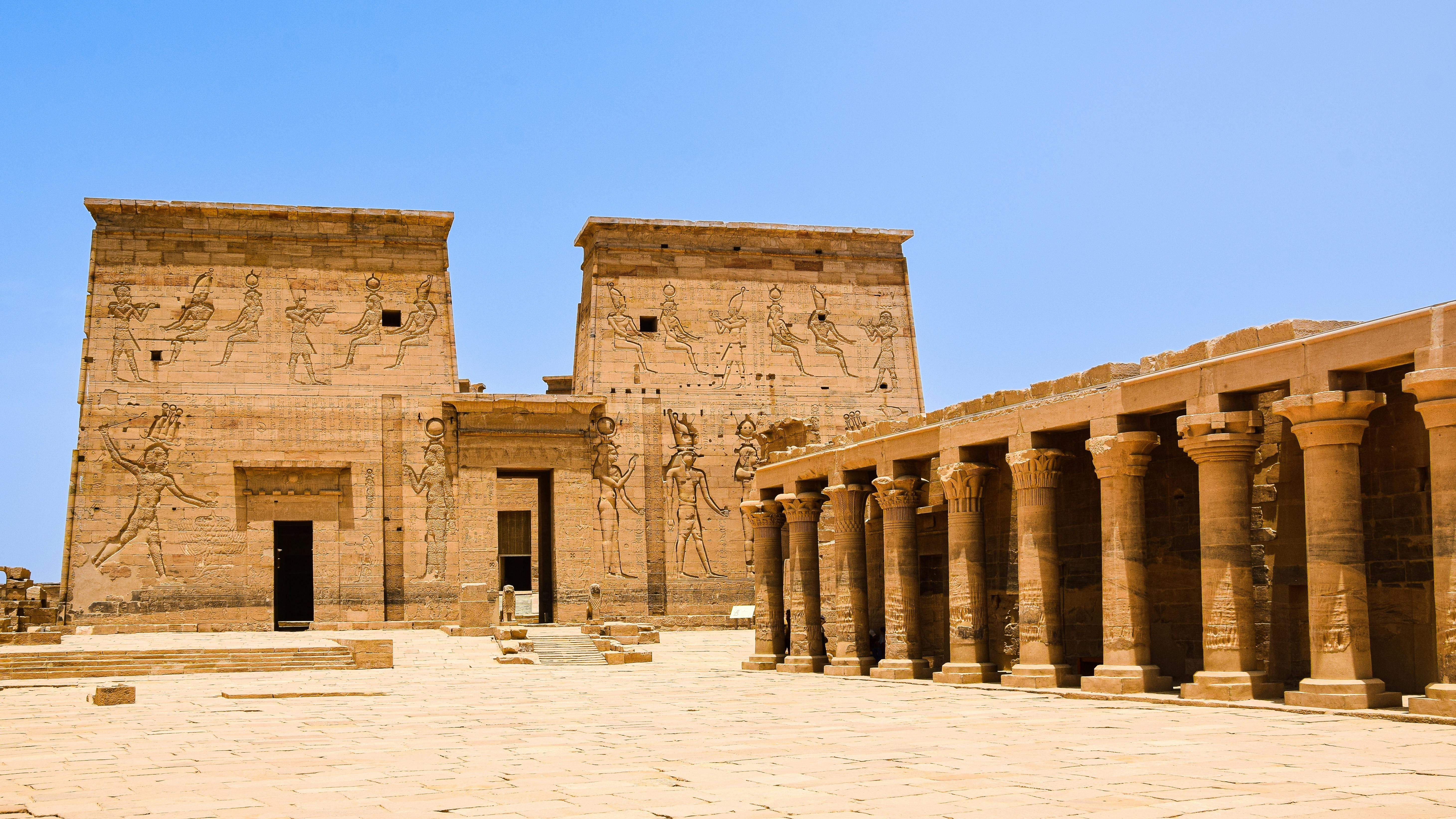
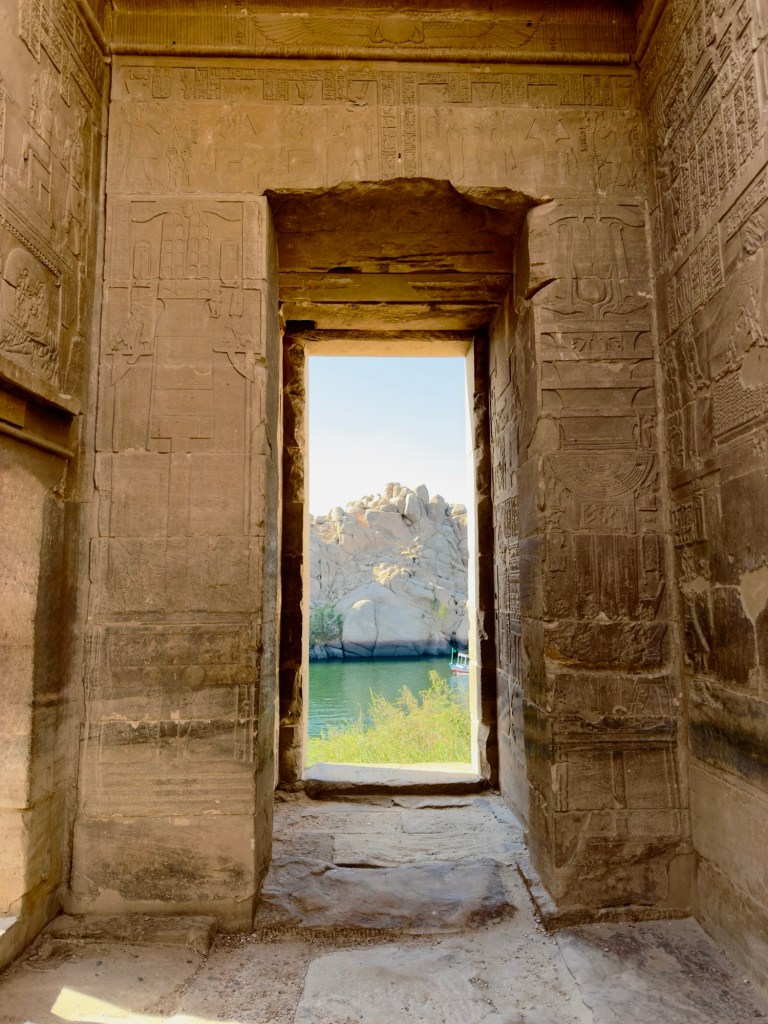
Together with my guide from GYG, i was led into the mythical Philae Temple. Philae Temple is dedicated to Isis, the goddess of magic and healing. The temple’s design even tells her story—its windows are said to represent pieces of her husband Osiris’s body, which his jealous brother Set had helpfully scattered across Egypt. Nothing says sibling rivalry like dismemberment.
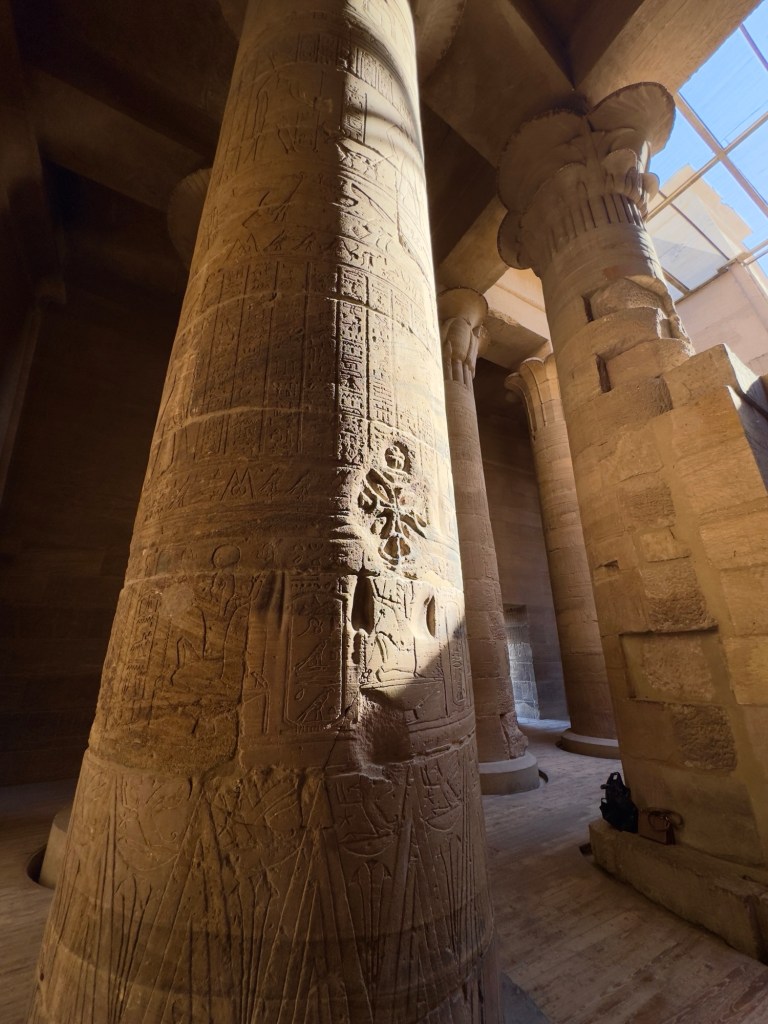
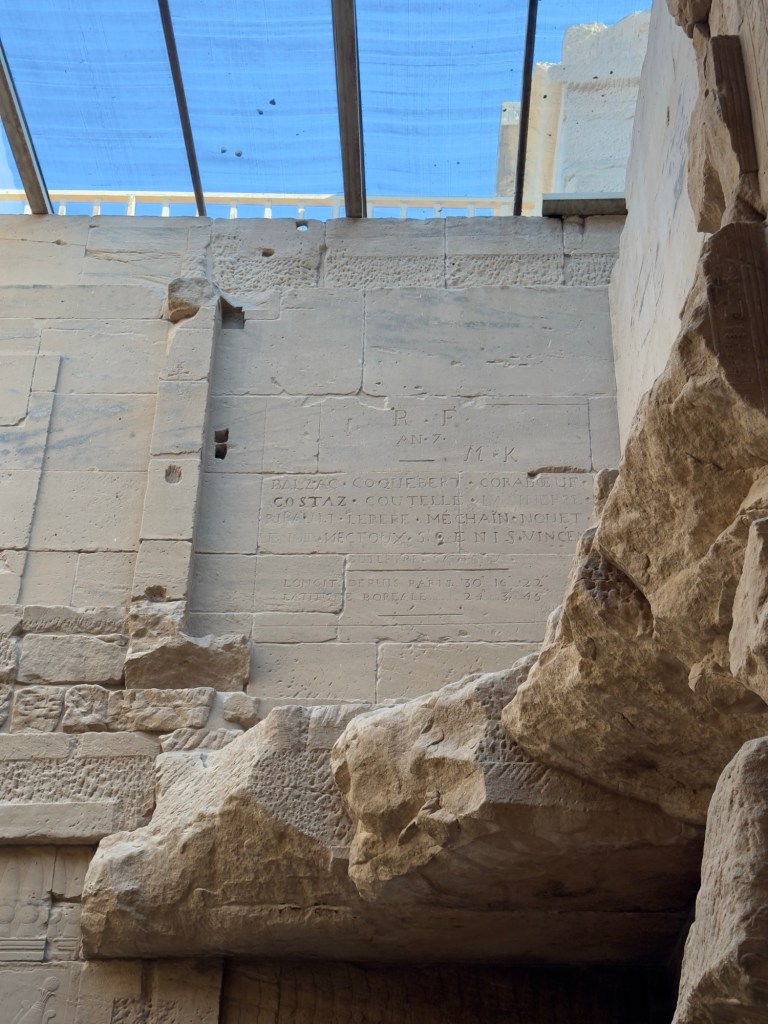
Beyond mythology, Philae has its fair share of “historical graffiti.” Napoleon’s scholars, who documented (ahem, looted) Egypt, left their mark here, as did early Christians, who repurposed the temple and etched crosses into its walls. You’ll also notice a lot of scratched-out faces—ancient gods defaced in the name of religious transformation. History is nothing if not ironic.
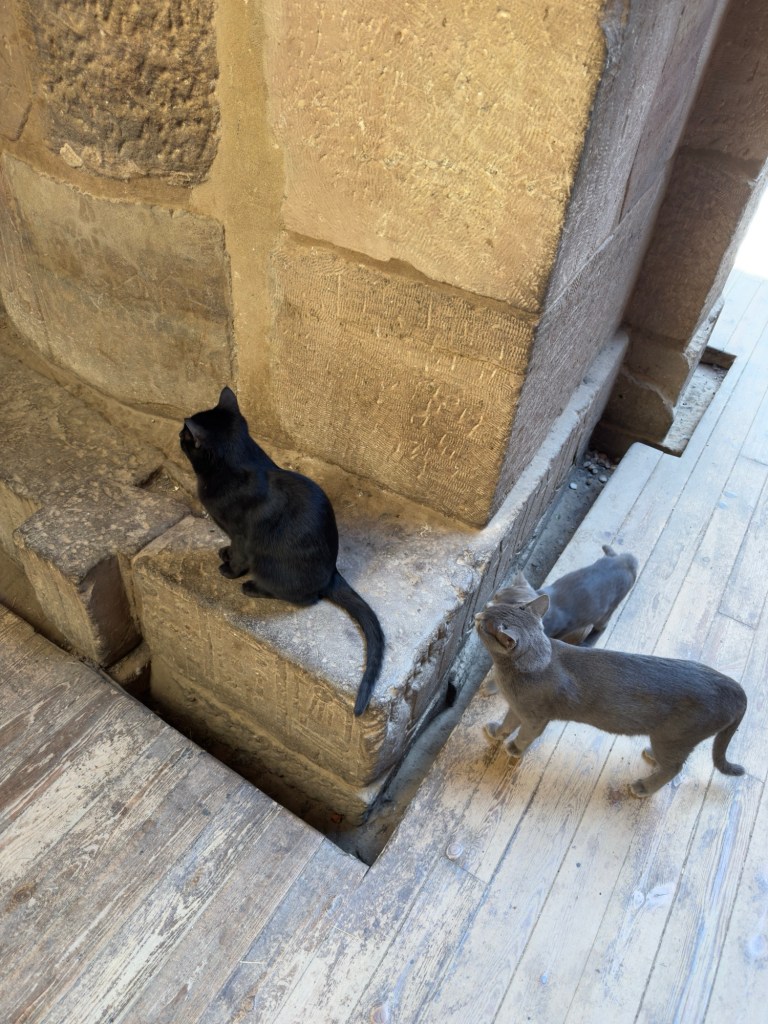
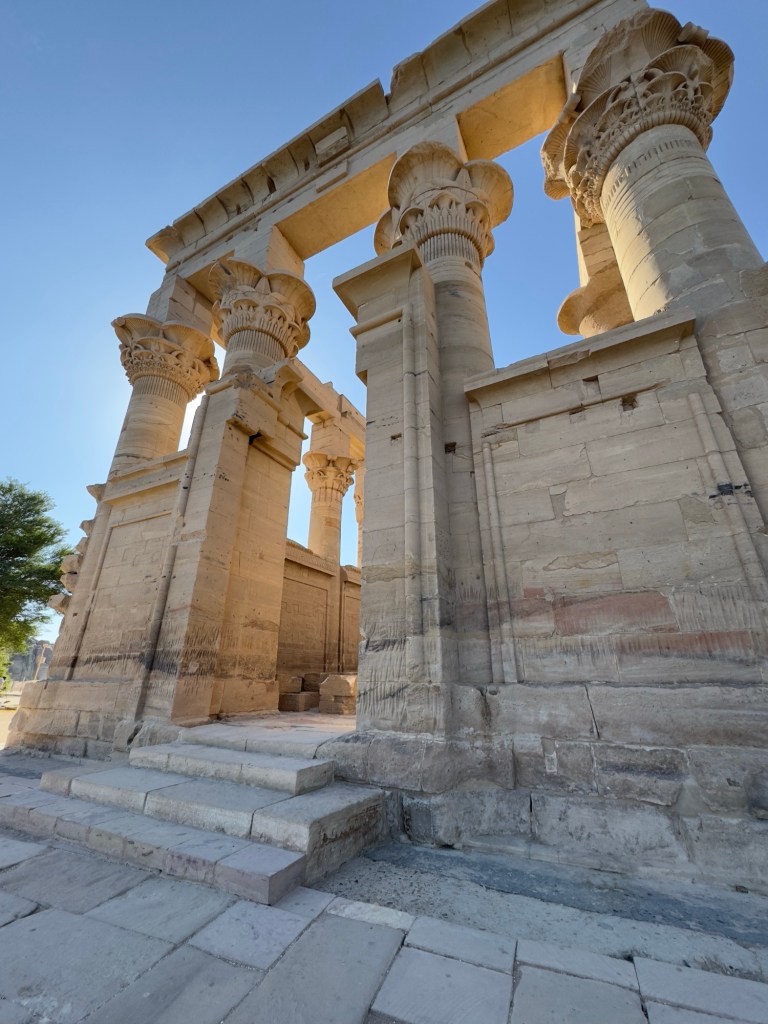
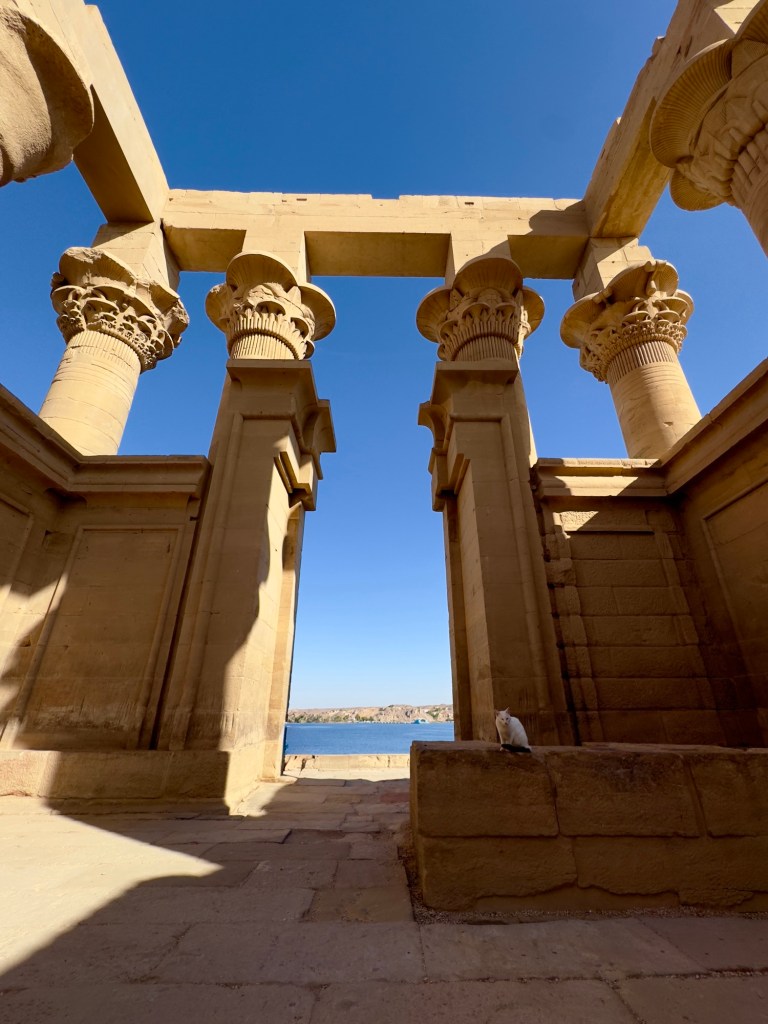
Philae isn’t just about the temple—it has other impressive structures scattered across the complex, like the Mammisi (Birth House) and Trajan’s Kiosk, also known as “Pharaoh’s Bed.” This picturesque Roman-era pavilion is perfect for dramatic Nile-side photoshoots. And let’s not forget about the actual stars of the visit, guardians of the temple, the ‘pièce de résistance’ – the cats.
Shut Eye Time, For Now
Aswan has plenty to offer beyond its temples, with a mix of history, culture, and stunning landscapes. A visit to the Unfinished Obelisk provides a glimpse into ancient Egyptian engineering—it was commissioned during the reign of Queen Hatshepsut but abandoned after an unfortunate crack appeared during construction, proving that even the best-laid plans of pharaohs can go awry. The Nubian Museum is another must-see, offering a deep dive into the vibrant history and culture of the Nubian people, who have called this region home for millennia. If you’re up for a bit of exploration, the Tomb of the Nobles provides a fascinating look at the final resting places of Aswan’s elite, complete with hieroglyphs and stunning views of the Nile. And for a more leisurely experience, a felucca ride at sunset is said to be one of the most serene ways to take in the beauty of the river, or at least that’s what i heard from fellow travelers. I personally couldn’t wait to hop straight into bed rather than onto a boat.
After a surprisingly delicious seafood dinner at a random restaurant near my hotel, I turned in early. Because, of course, the next day involved yet another early start—this time en route to Luxor, with three pit stops along the way.
No rest for this history-loving, only has so many ALs in a year, sleep-deprived traveler i guess.
 Shenanigans Abroad
Leave a Reply