Where the Legend Was Born
From Father to Son
We’ve gone to the land of mythical bulls and labyrinths. We’ve stepped foot into the sacred land of the games. And now we’ll visit the lands that gave birth to the legend that is Alexander the Great.
But behind the legend, there’s another legendary figure just as important. His father, Philip II, whose own legacy stands proud in the annals of ancient Greek history. It was Philip who laid the groundwork for Alexander’s later conquests and reputation, reshaping Macedonia into something far greater than the fragile frontier kingdom it once was.
Philip II of Macedon was a visionary king whose 23 year reign transformed Macedonia into the dominant power of the Greek world. From his royal seat at Aigai (modern Vergina), where he built grand palaces and was ultimately buried in a richly adorned tomb, to the cosmopolitan capital of Pella, Philip reshaped everything. His military reforms, especially the creation of the Macedonian phalanx, redefined warfare. His strategic mind and diplomatic cunning united Greece under Macedonian leadership. His emphasis on education shaped his son, who grew up in Pella under the tutelage of none other than Aristotle, and went on to become the legend we all still know today.
Honestly, I could go on and on about the history of these two men who shaped what could be called Greece’s golden age. We’re talking about the man who united Greece, and then his son who essentially conquered half the known world. But that deserves its own post entirely. For now, we need to move on and actually get on the road, otherwise we’ll never make it to Aigai and Pella, ainnit?
The Journey There
Getting to Aigai and Pella isn’t as simple as just hopping onto a bus and being dropped off at the doorstep. There are no direct buses, so the obvious, most convenient methods are either by car or by joining a tour. After much research, and after asking both my hostel receptionist and the almost-too-friendly old proprietor of a random restaurant I ended up in, everyone agreed: the easiest way to visit both places in a single day is by car or tour.
Pella, at least, is straightforward. There are regular inter-city buses operated by KTEL Pellas. The catch? Their website is only in Greek, Google Translate mangles it into nonsensical mess, and the timetable isn’t actually shown on their site. Instead, the information you actually need is hidden away on the KTEL Macedonia website, which at least has both English and Greek versions.
Aigai (Vergina) is another story entirely. From Thessaloniki, you first need to take a bus or train to Veria, and from there, a bus to Aigai. The one-way journey alone can take two to three hours. Add the time needed to actually explore the museum, royal tombs, maybe the royal palace, and then get back to the city… yeah, it makes sense why locals looked at me as if i suddenly grew three-heads like Cerberus when I asked if it was possible to do as a day trip via public transport. They know their system better than I do, and after weeks of riding Greek buses, I’ve learned that “two to three hours” never actually means two to three hours.
So I looked up my least favorite thing to do. Urgh, Tours.
Don’t get me wrong, i like a guided tour every now and then, but i just don’t like it when it’s done in groups of 20 or more and we’re being herded from spot to spot like sheep being fed snippets of information being read from call cards like an unfortunate presentation project.
Personal preference aside, there are plenty of combined tours from Thessaloniki that visit both Aigai and Pella together. On the map, the two towns are relatively close, but only if you’re driving. I found a reasonably priced option via my trusty non-sponsored app, GetYourGuide. And honestly? I highly recommend it. The tour was well organized, well timed, and quite frankly, even as someone who thoroughly dislikes tours, I actually enjoyed this one.
The day began at 8am sharp at the designated meeting point in front of the Statue of Venizelos in Thessaloniki’s city center. Pro tip: this statue is apparently the meeting spot for tours, because when I got there, at least eight different groups were gathering. Six of them were with the same operator as mine. Finding the right guide felt like a mini-challenge in itself. Eventually, I found my “fun-sized guide” (her words, not mine), and off we went. First stop: the Archaeological Site of Pella.
From Glory to Ghost Town
Pella was the capital of the ancient Kingdom of Macedon during its prime, especially under Philip II and Alexander. It replaced Aigai as the royal seat in the late 5th century BCE and became the birthplace and childhood home of Alexander himself. Under Alexander’s conquests, it blossomed into a cosmopolitan hub. But after the Roman conquest of Macedonia, and a series of earthquakes and floods, Pella faded into obscurity and was eventually abandoned.
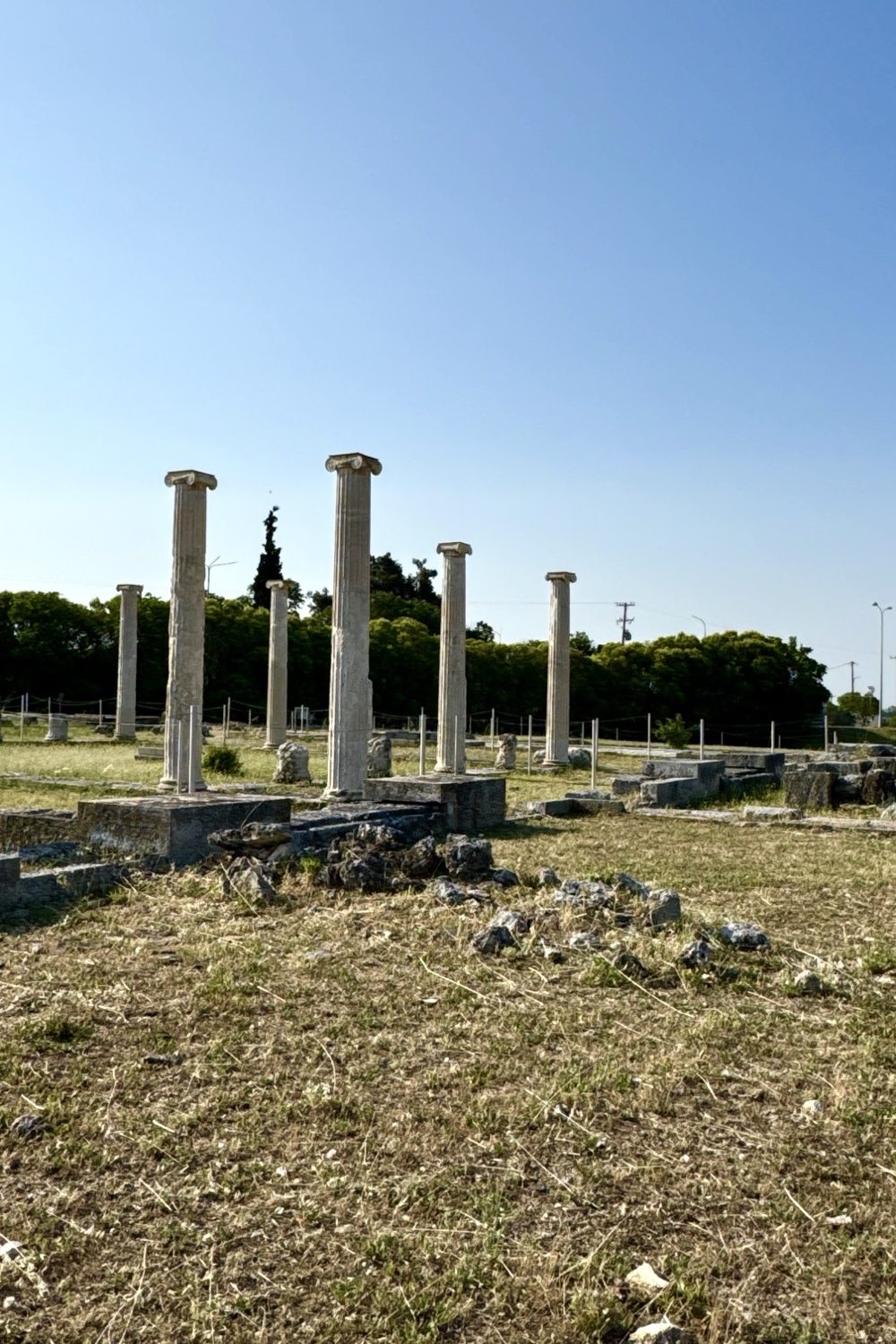

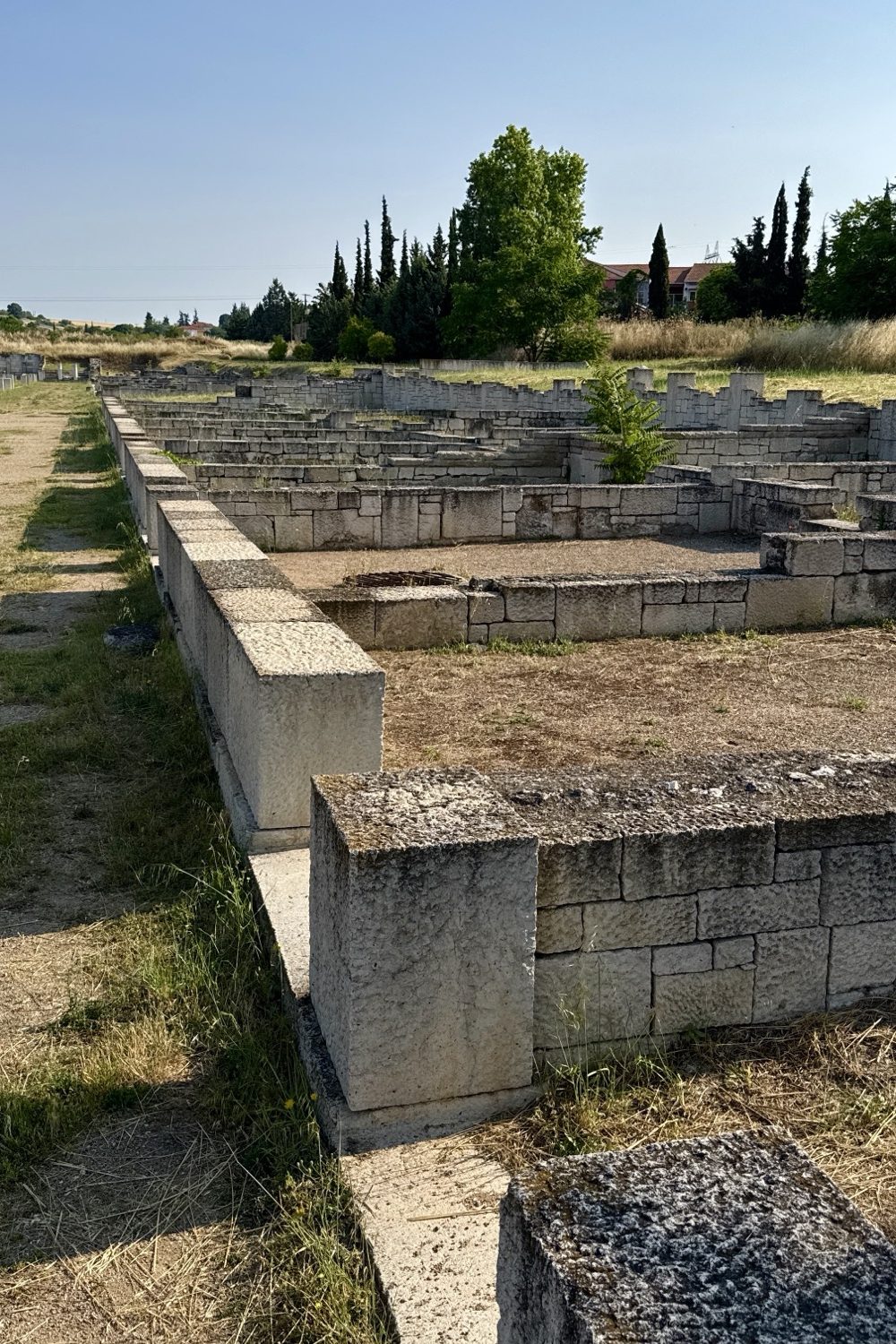
Today, there’s little left but foundations. Yet standing among the ruins, you can imagine the magnificence of the city. The site is peaceful and open-air, surrounded by farmland with wide, walkable paths. Unlike Athens or Delphi, it’s refreshingly quiet and un-touristy, making it easy to feel connected to history.
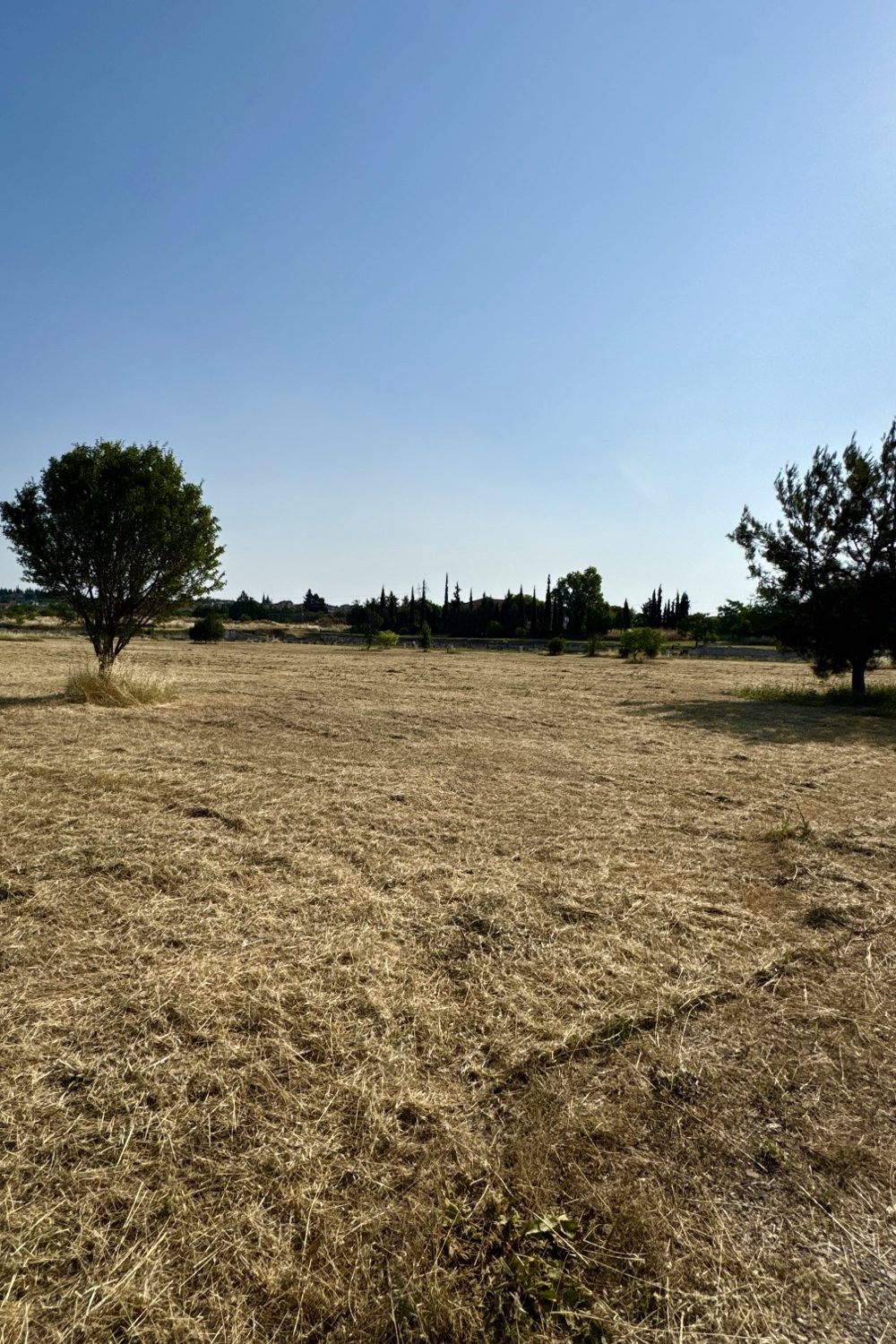
The highlight is the Agora, not because it’s particularly well preserved, it isn’t, but because of its sheer scale. Covering about 70,000 square meters, it was the largest and most advanced of its time, laid out on a grid plan (the Hippodamian system), making it incredibly modern for the era.
Standing there, you can barely see from one end to the other. I don’t recommend actually walking across, though, not because it’s far, but because the space is overgrown with weeds and tall grass. Take to the stoas around the Agora instead, once lined with shops, administrative offices, and storage rooms.
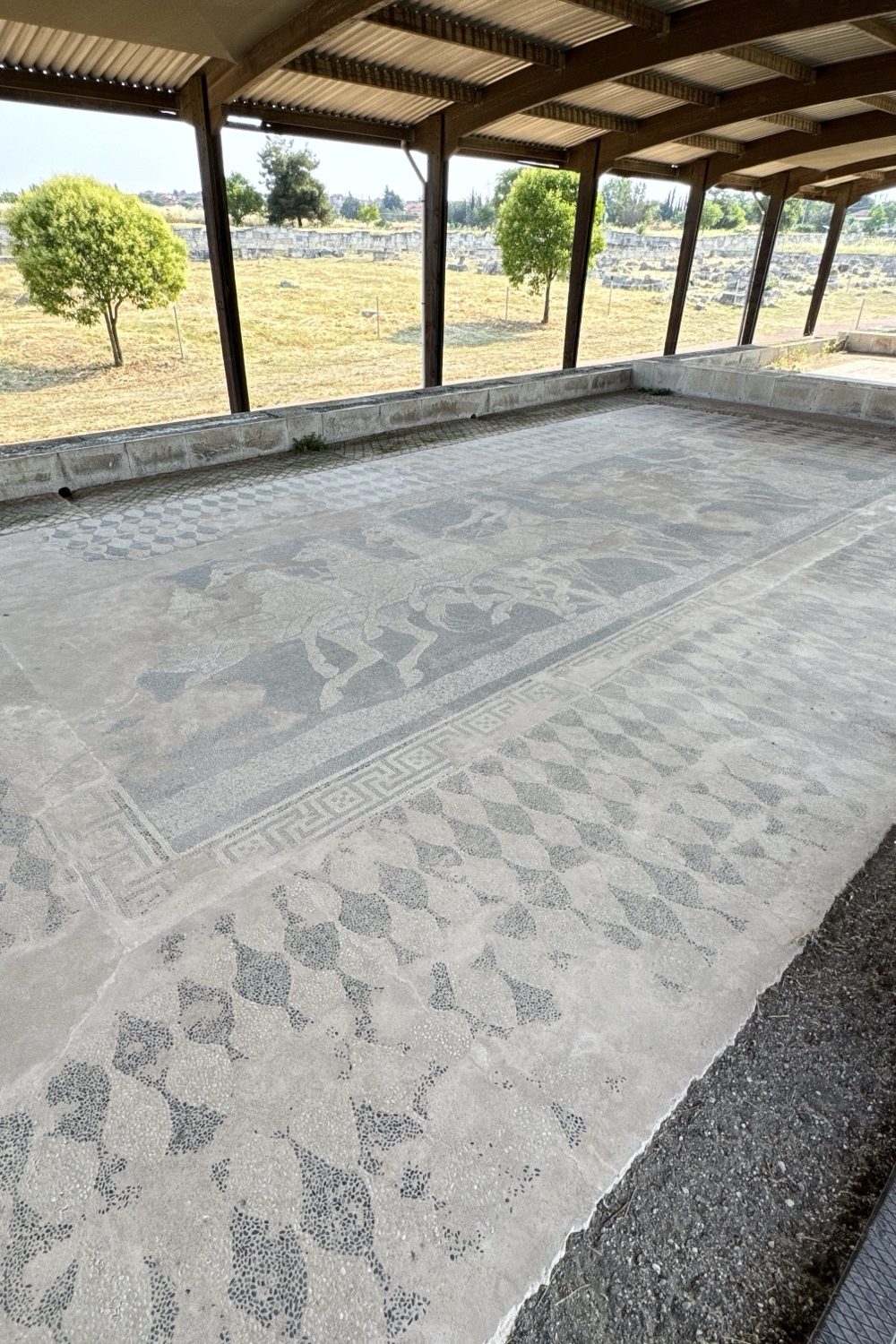
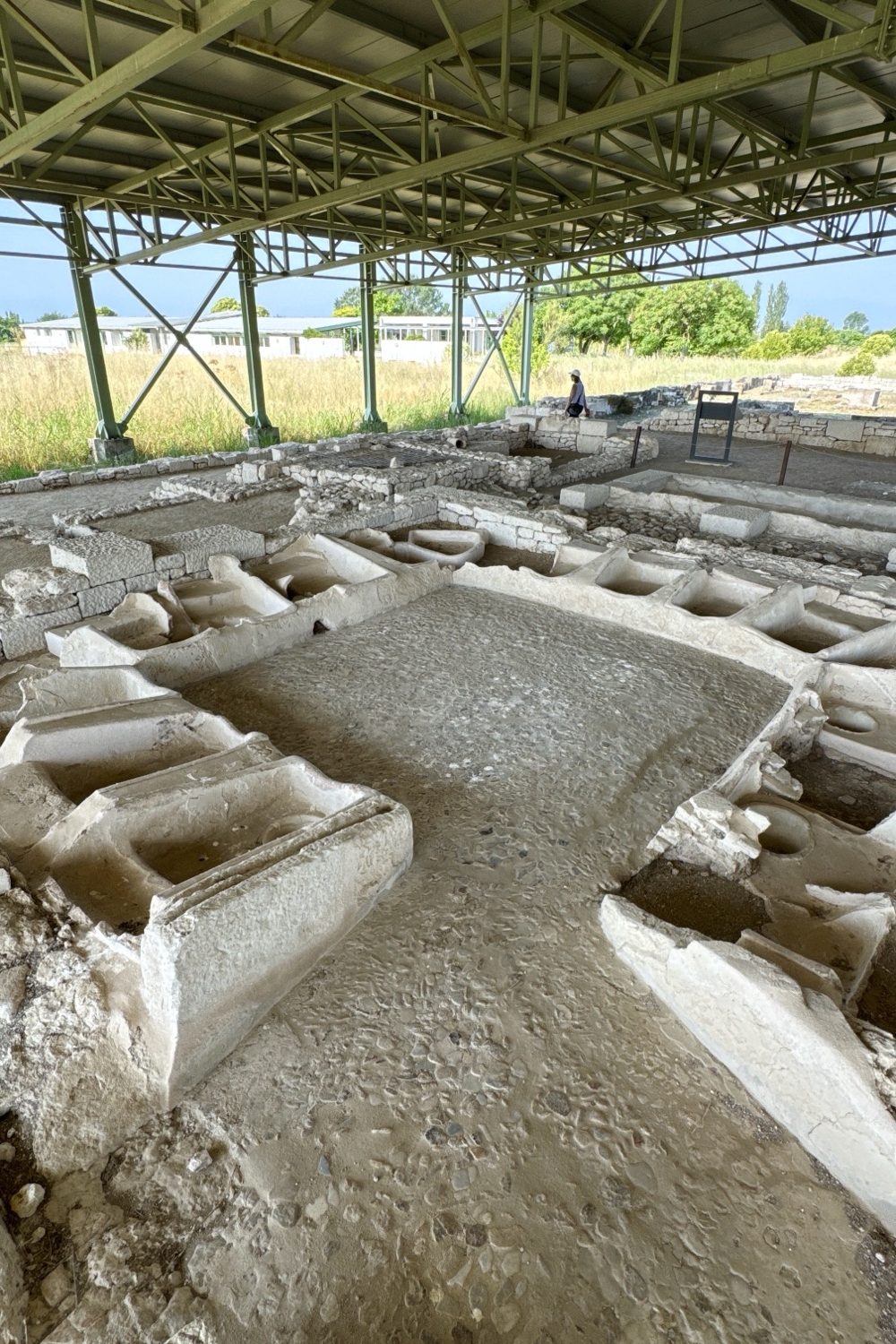
Nearby are private houses, lavish elite residences with peristyle courtyards and stunning mosaics (that can also be found at the museum). The Sanctuary of Aphrodite gives a glimpse into the city’s spiritual life, blending Eastern and Greek traditions. Public baths and infrastructure hint at just how sophisticated life here once was. A detour to the potters’ houses reveals well-preserved pipes, pottery, and infrastructure, right beside the construction site for a brand-new visitor center. For now, though, there’s just a small ticket booth (€10 entry) and some basic facilities.
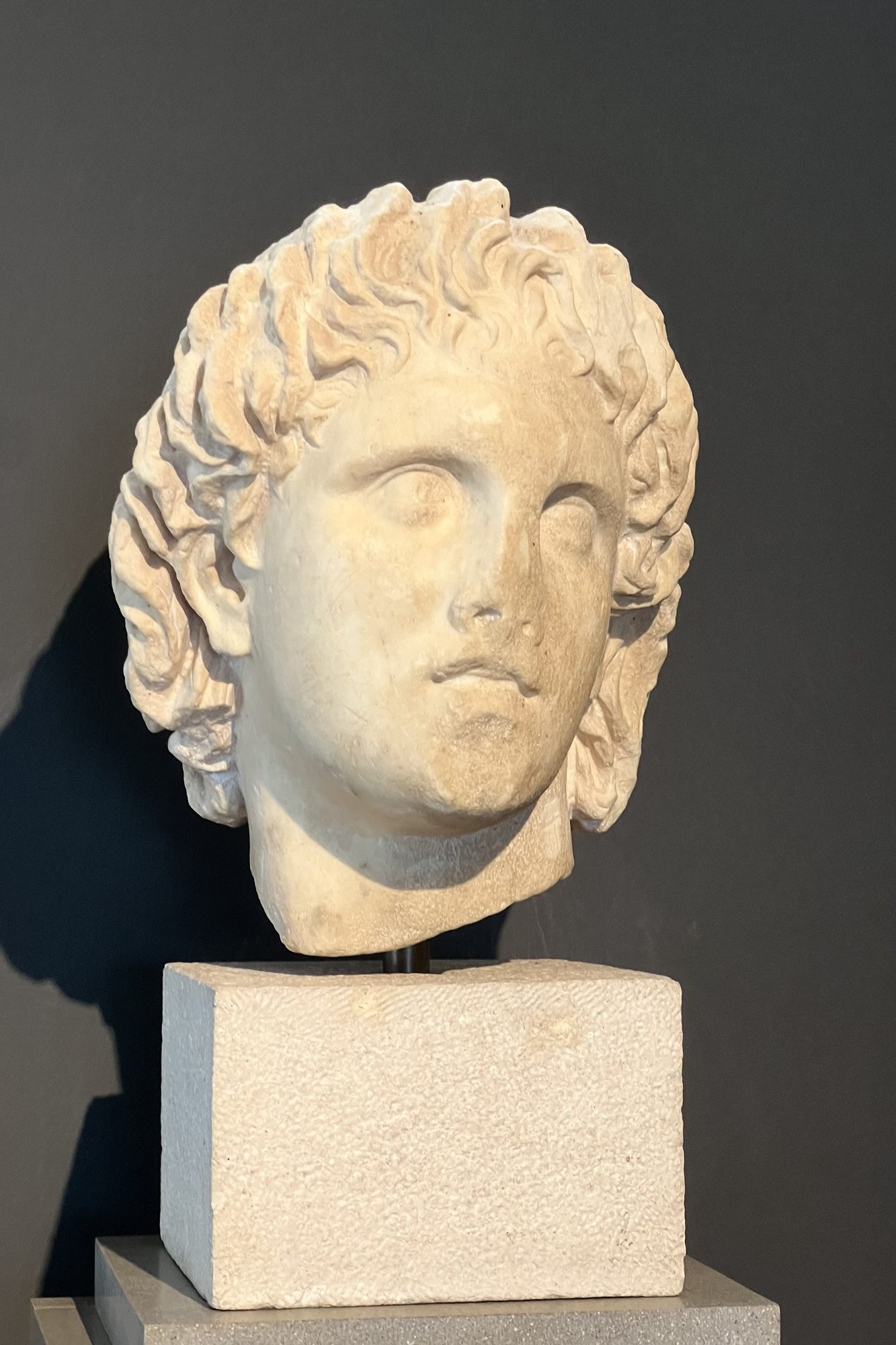
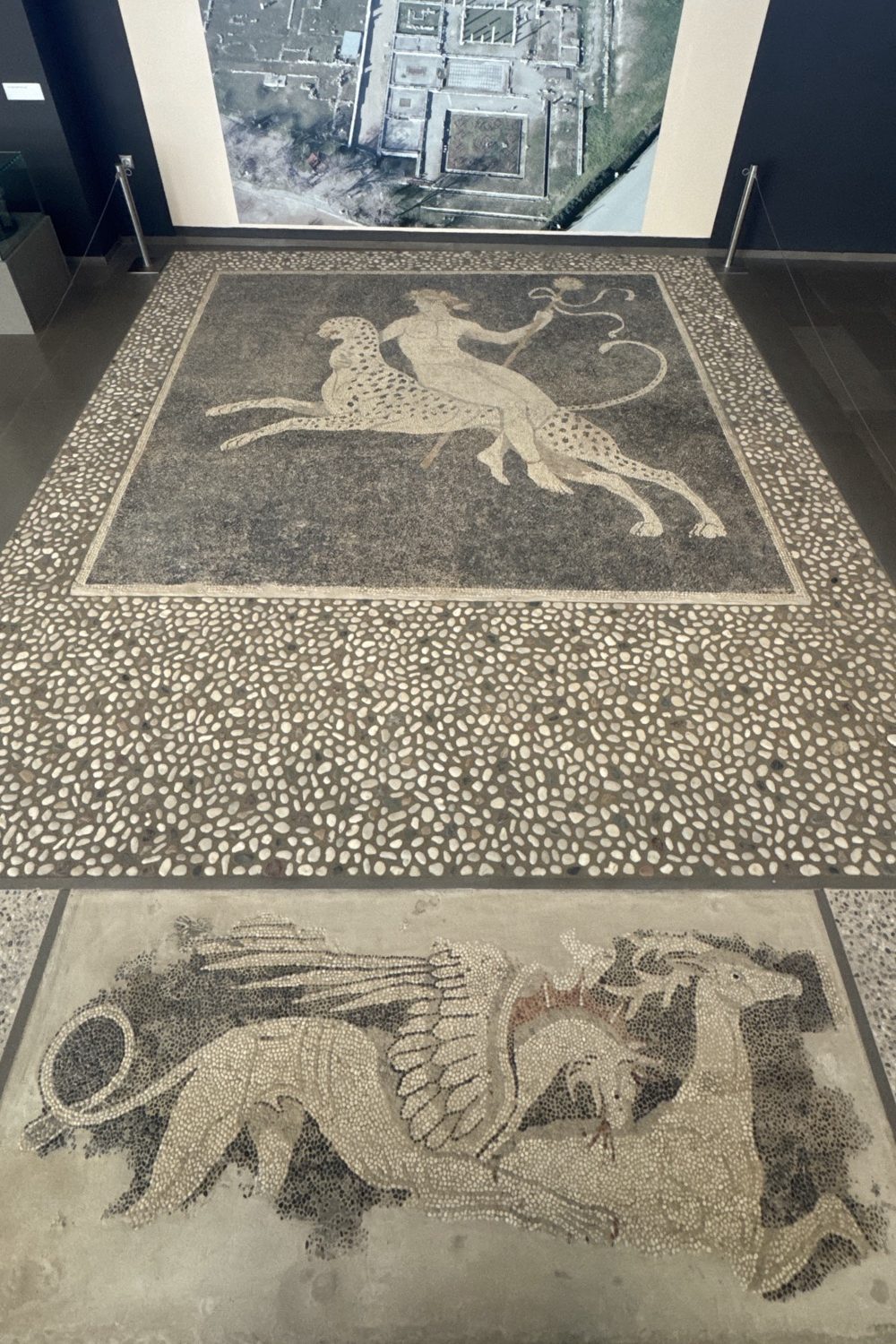
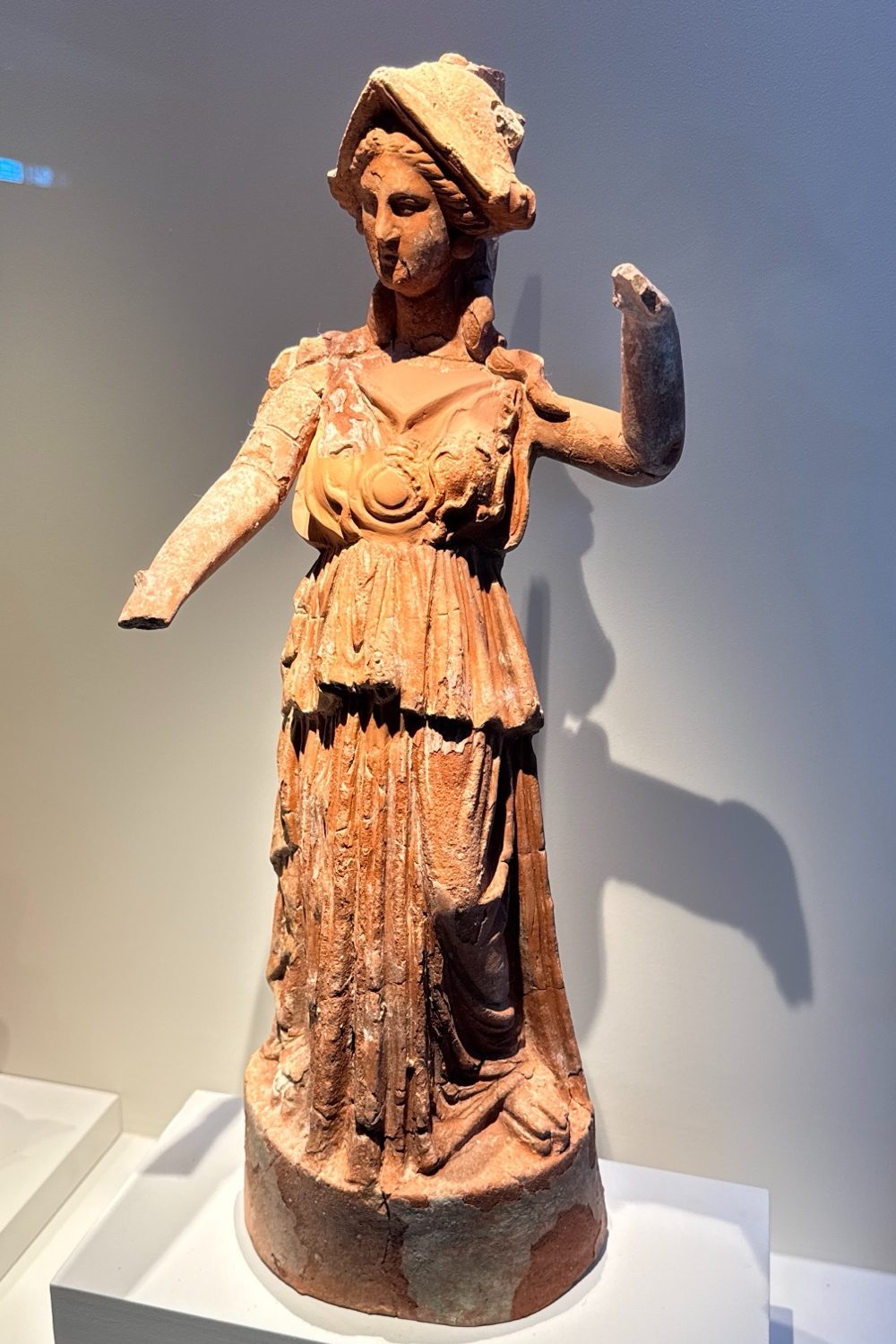
No visit is complete without the Archaeological Museum of Pella, just next door. The modern building houses an impressive collection of artifacts, many unearthed from the site itself. The first thing you encounter is the massive 8-meter-long mosaic of “The Abduction of Helen.” It’s joined by other masterpieces like “The Stag Hunt,” “Dionysus on a Panther,” and “The Lion Hunt,” thought by some to depict Alexander himself. The museum also showcases reliefs, altars, pottery, glassware, sculptures, busts, cursed inscribed tablets, and coins, offering a vivid picture of life in ancient Pella.
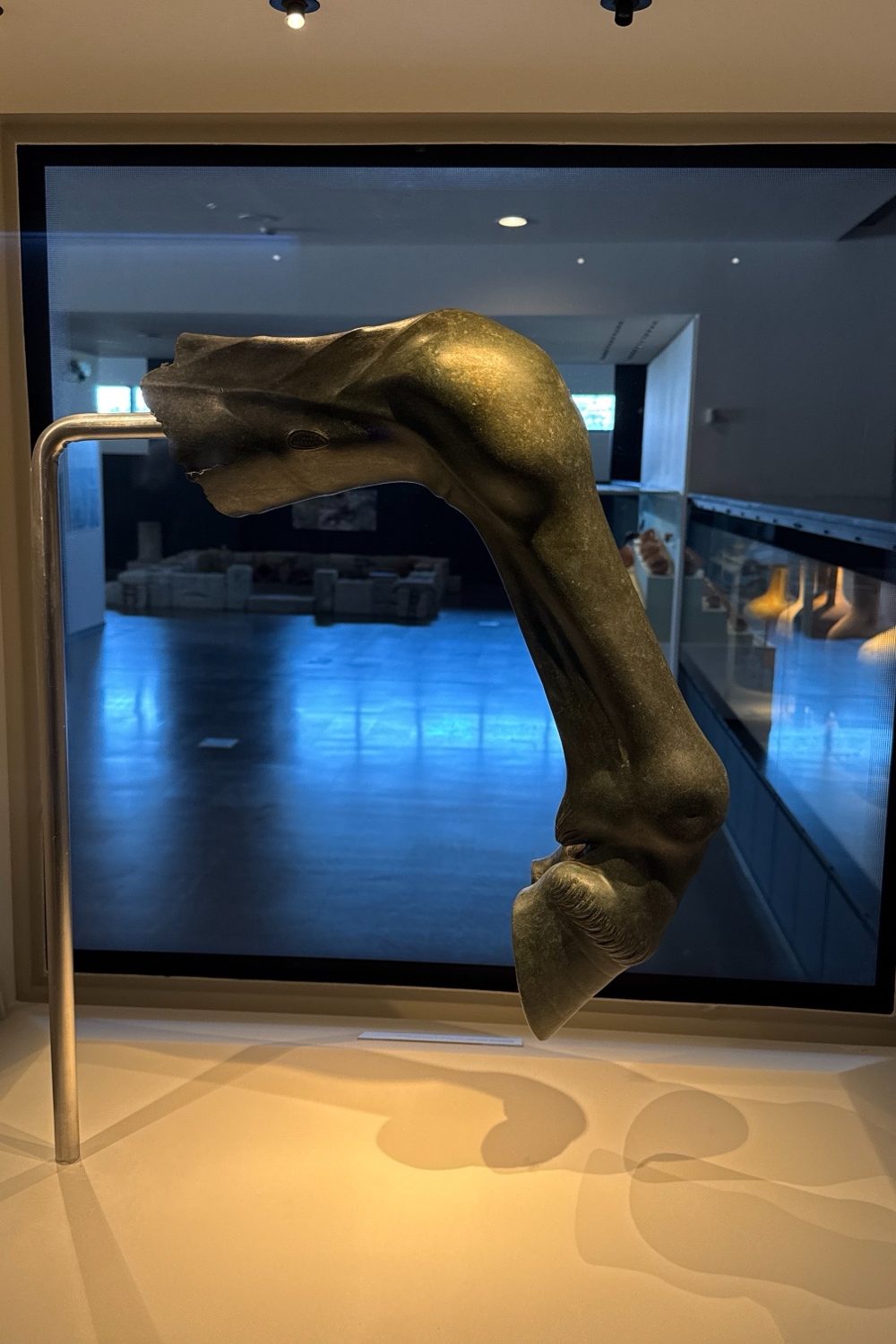
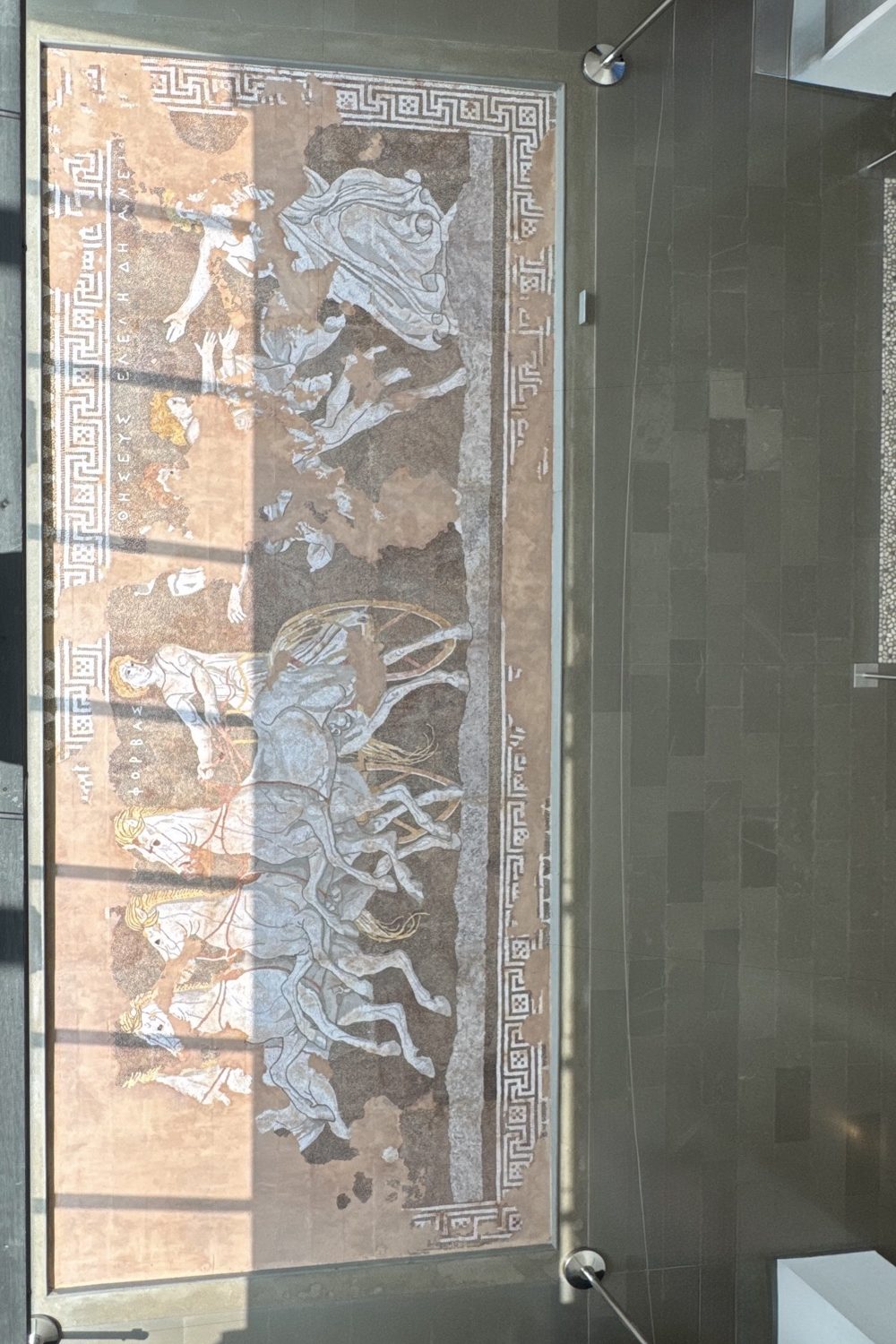
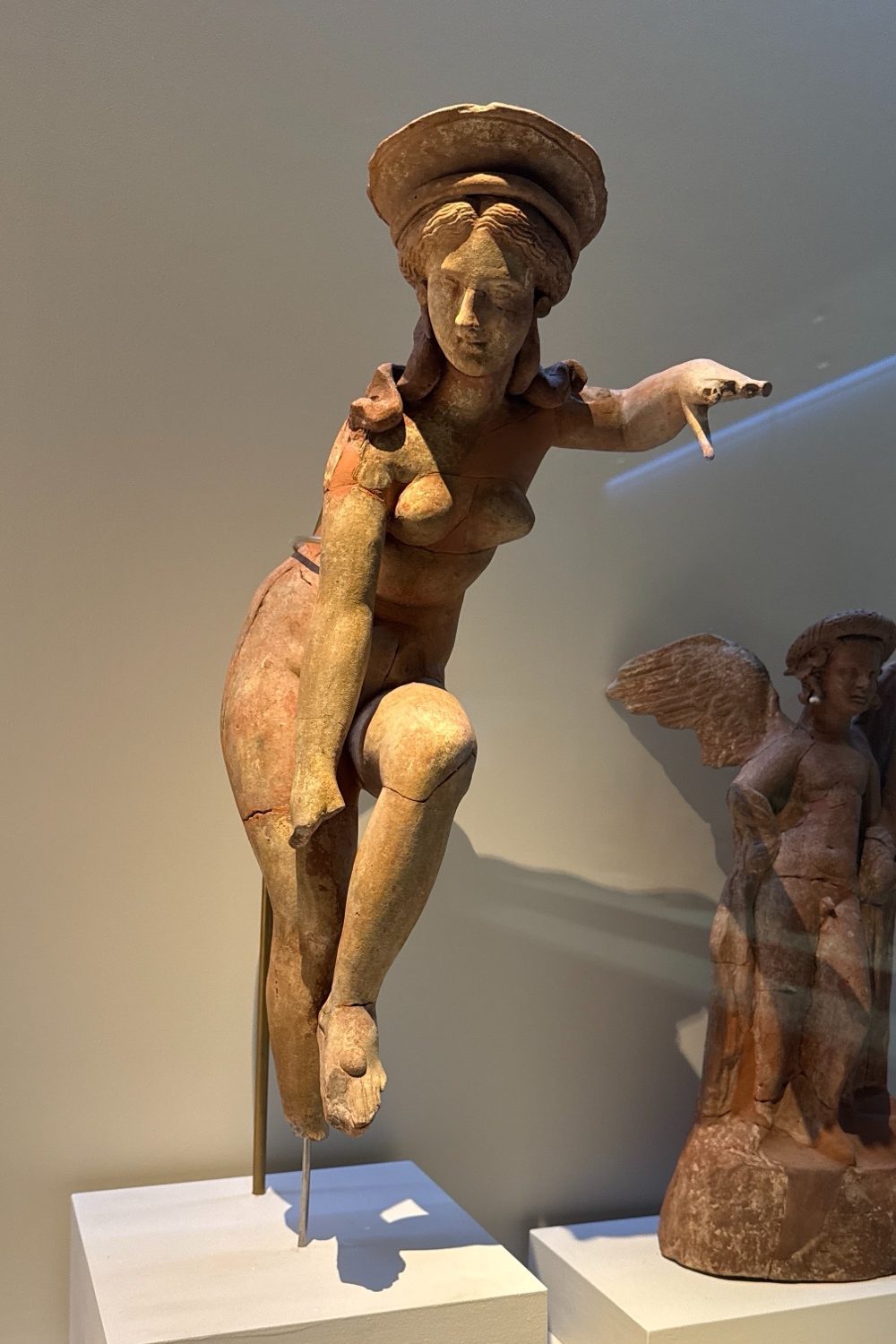
After about an hour exploring the museum, we moved on to Aigai, or modern-day Vergina.
Gold, Gold and More Gold
Aigai was the original capital of the Macedonians, the birthplace of their royal dynasty, and most famously, the burial site of Philip II. But first, we stopped at the Polycentric Museum of Aigai, which spreads its exhibits across multiple sites in the ancient city: the Royal Tombs, the Theatre, the Royal Palace, and the necropolis. Entry is €20, and your ticket covers them all, so don’t lose it.
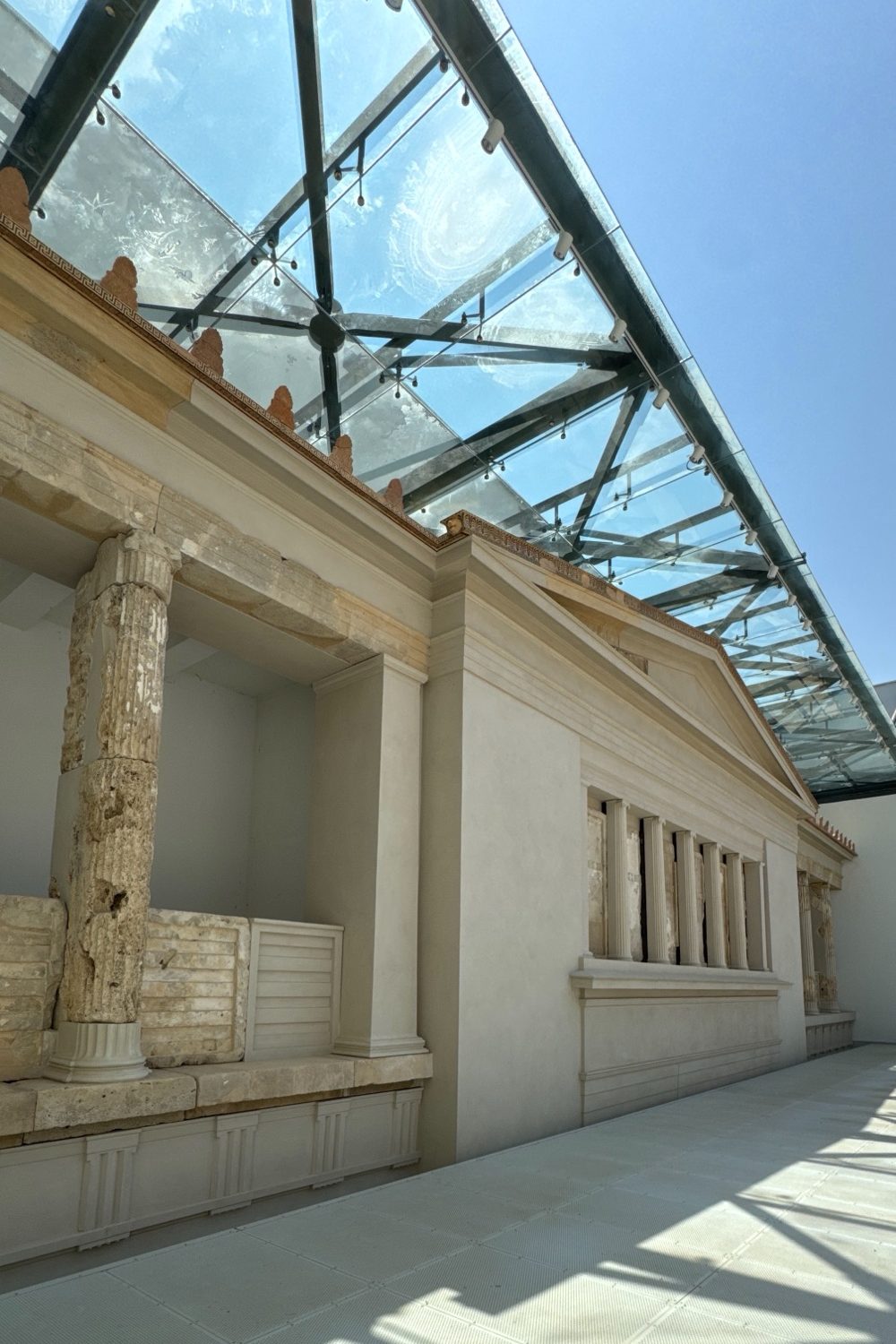
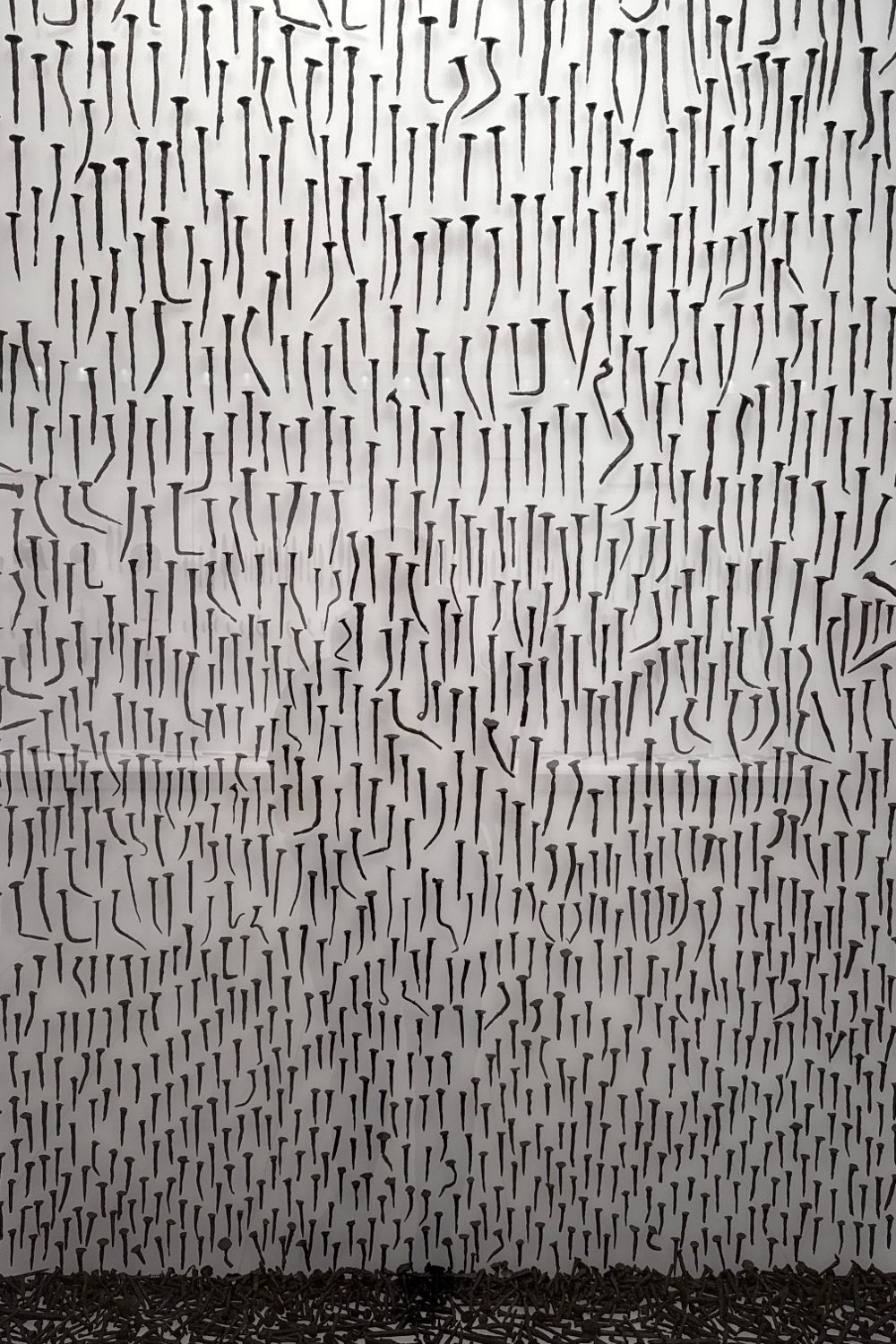
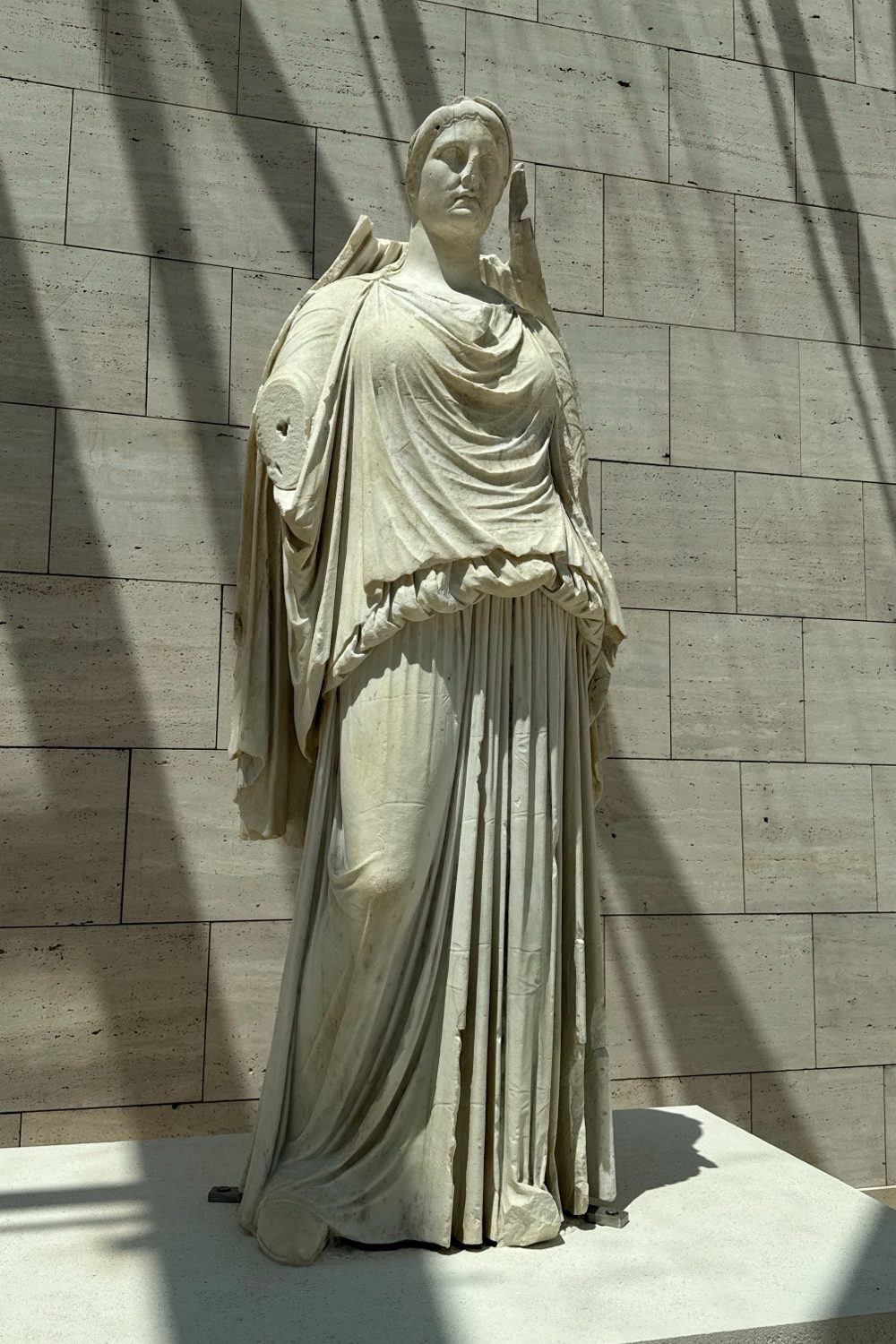
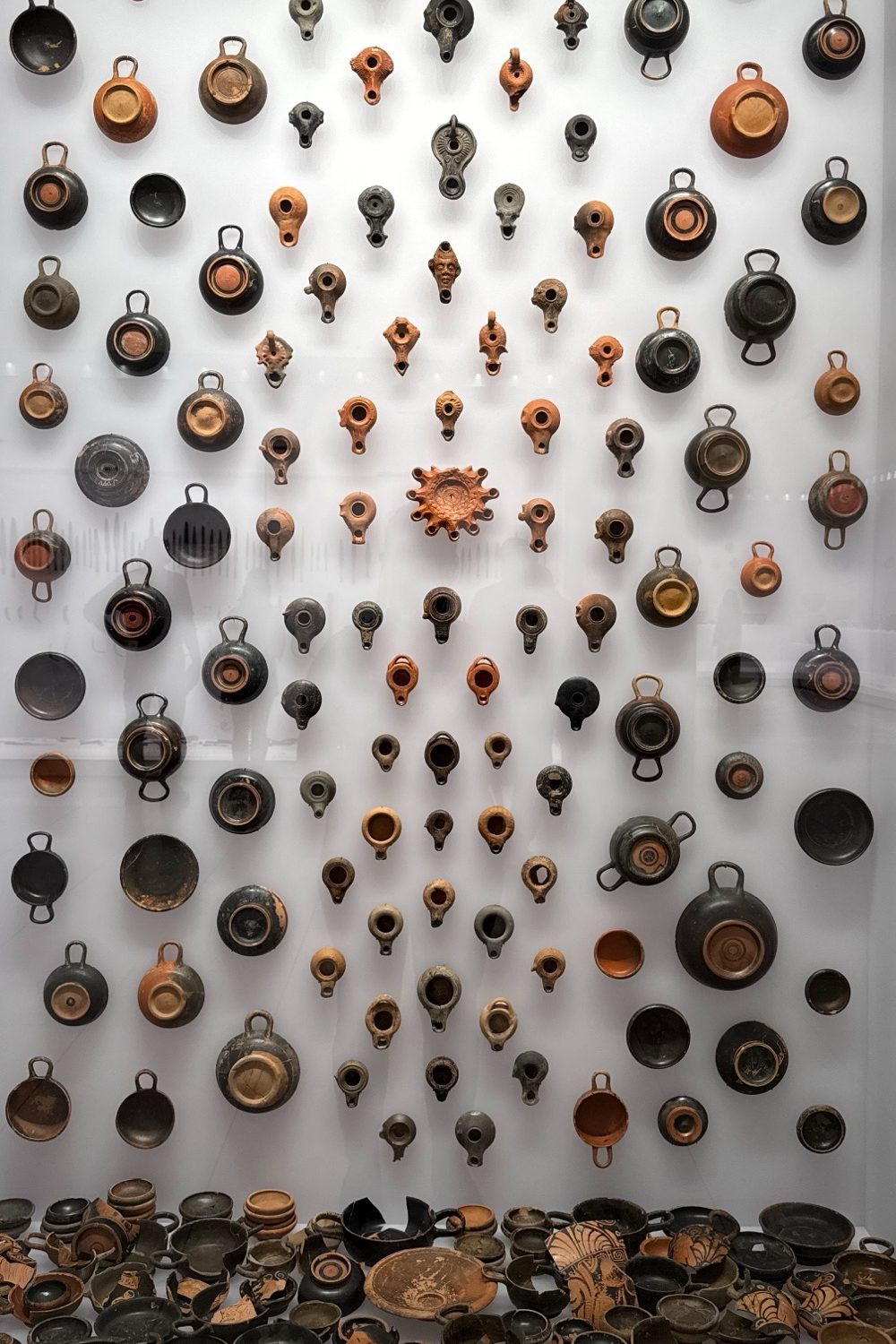
The museum itself houses over 500 objects, arranged thematically: Royal Authority, Public & Political Life, Religion & Rituals, Daily Court Life, and Death & Memory. Here you’ll find diadems, armor, ceremonial weapons, inscriptions, decrees, offerings, statues, pottery, funerary steles, and more, arranged being glass cases that make me wonder if the curators has OCD or simply has good aesthetic sense as they were just *chef’s kiss*.
And of course, front and center, Alexander himself: a giant LCD display at the lobby maps out his conquests, from Corinth to Luxor, Alexandria, Babylon, and beyond.
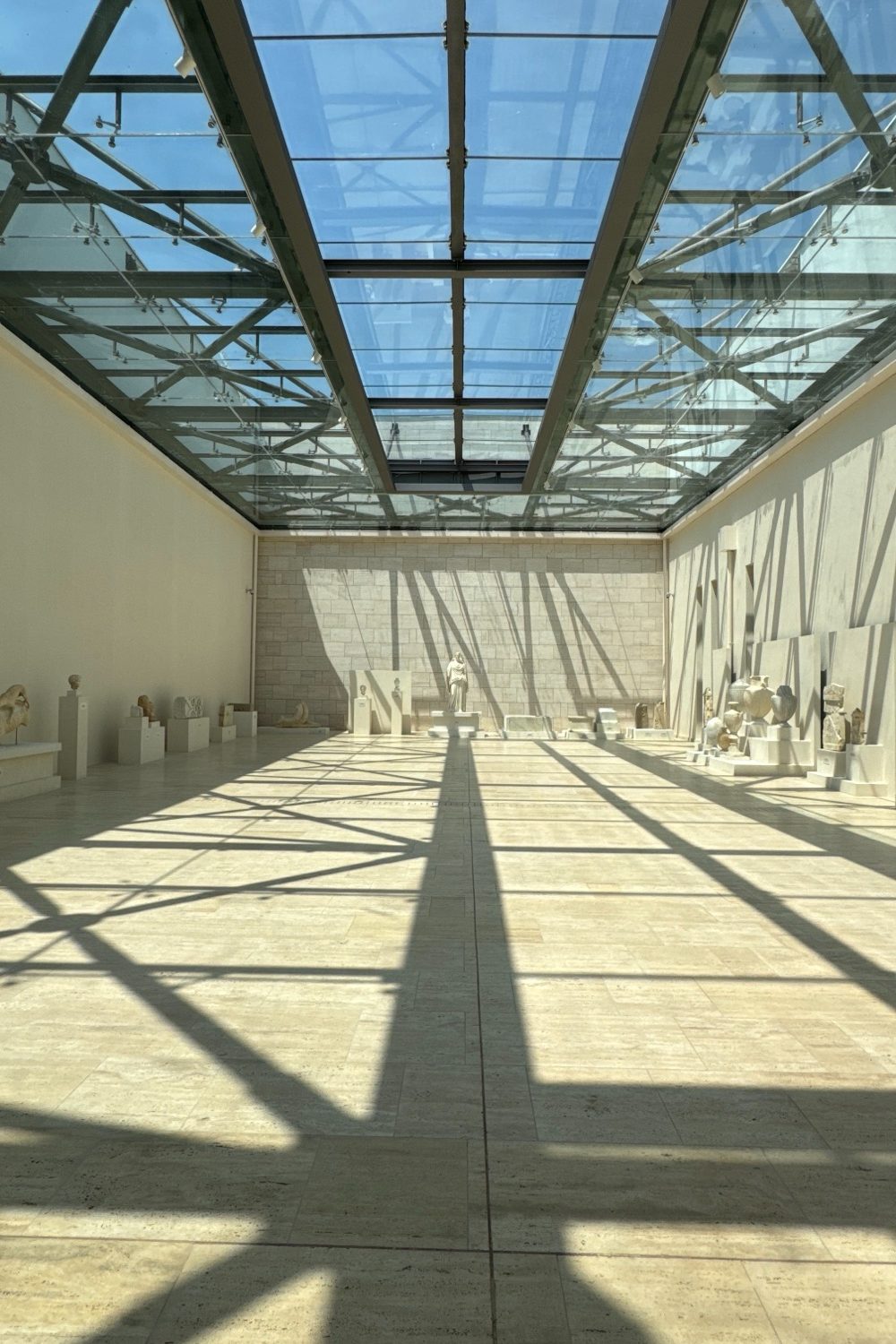
The museum is located just outside the city, or roughly a 20min walk from the Royal Tombs, so if you’re planning to take a bus from Veria, speak to the bus driver if they’d drop you off on the main street in front of the museum entrance, rather than walking from the city, and then back again.
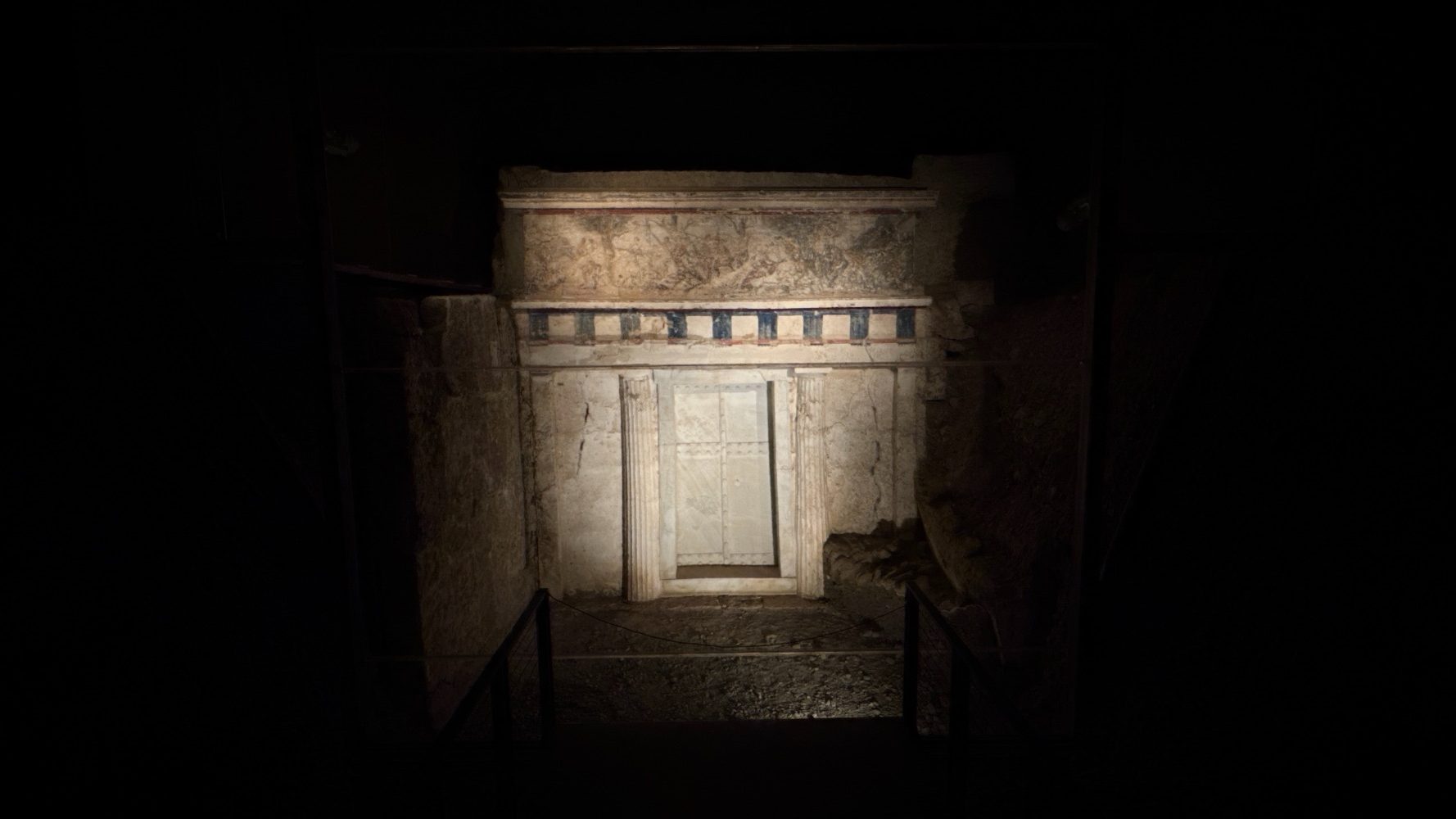
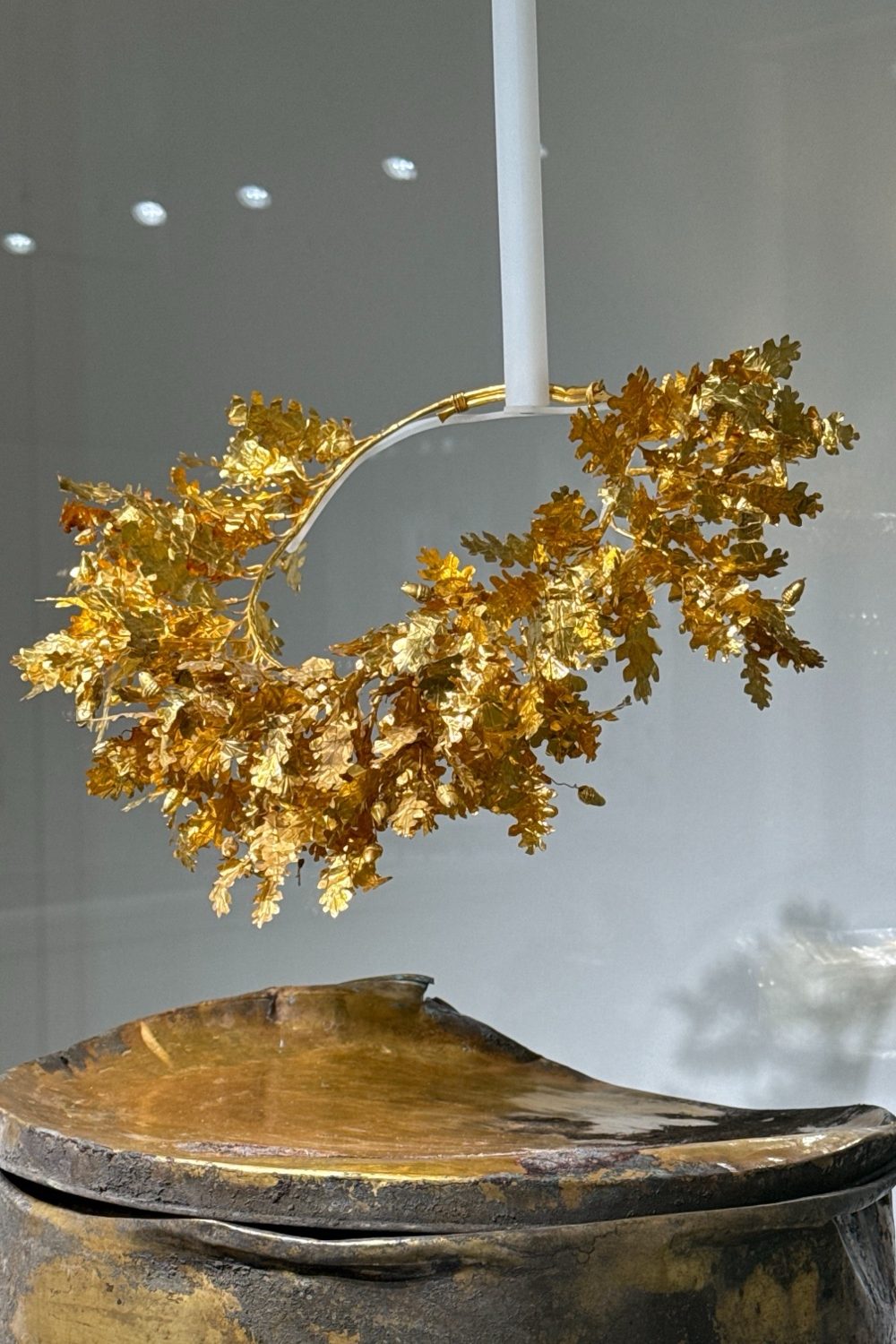
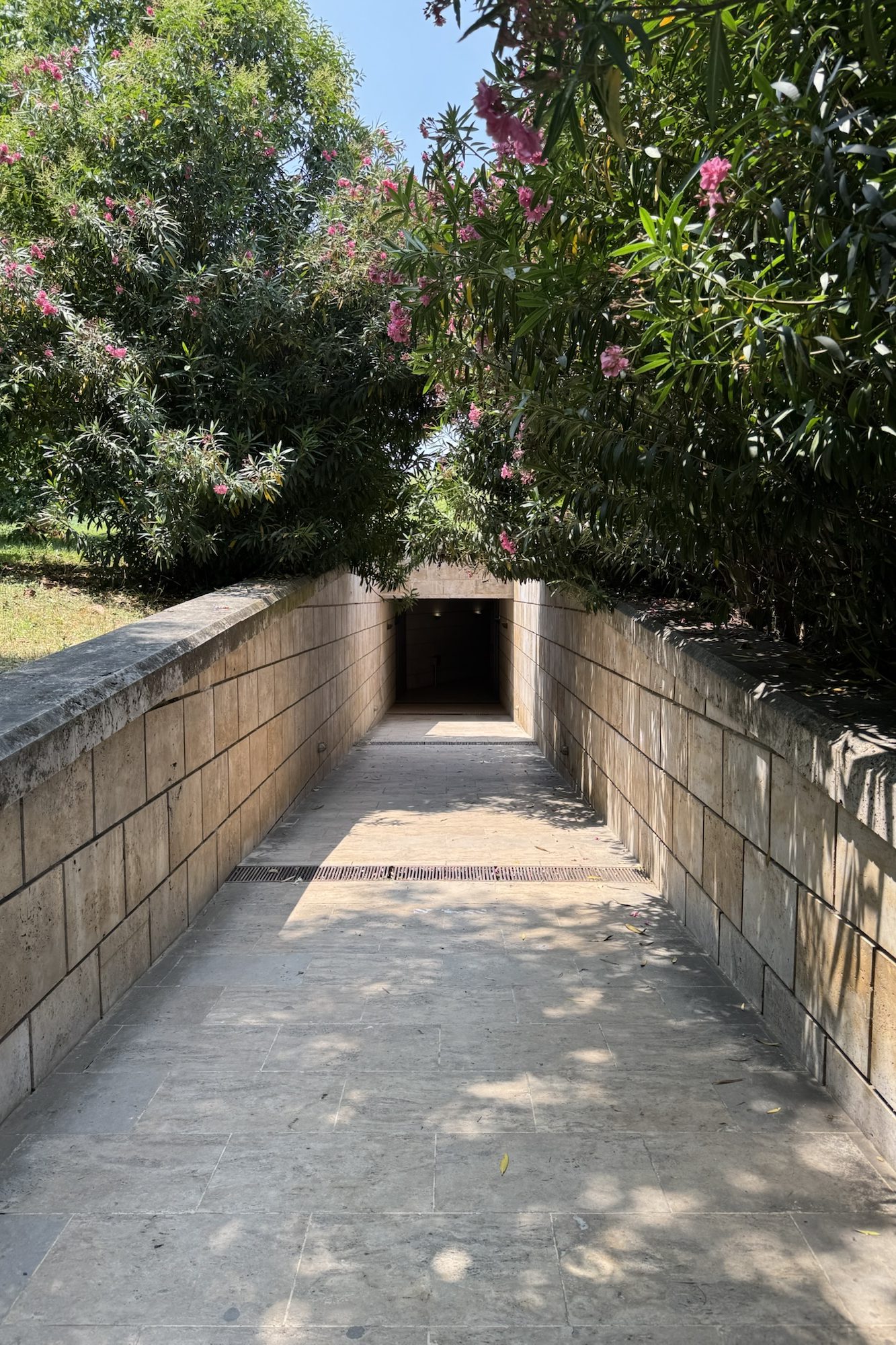
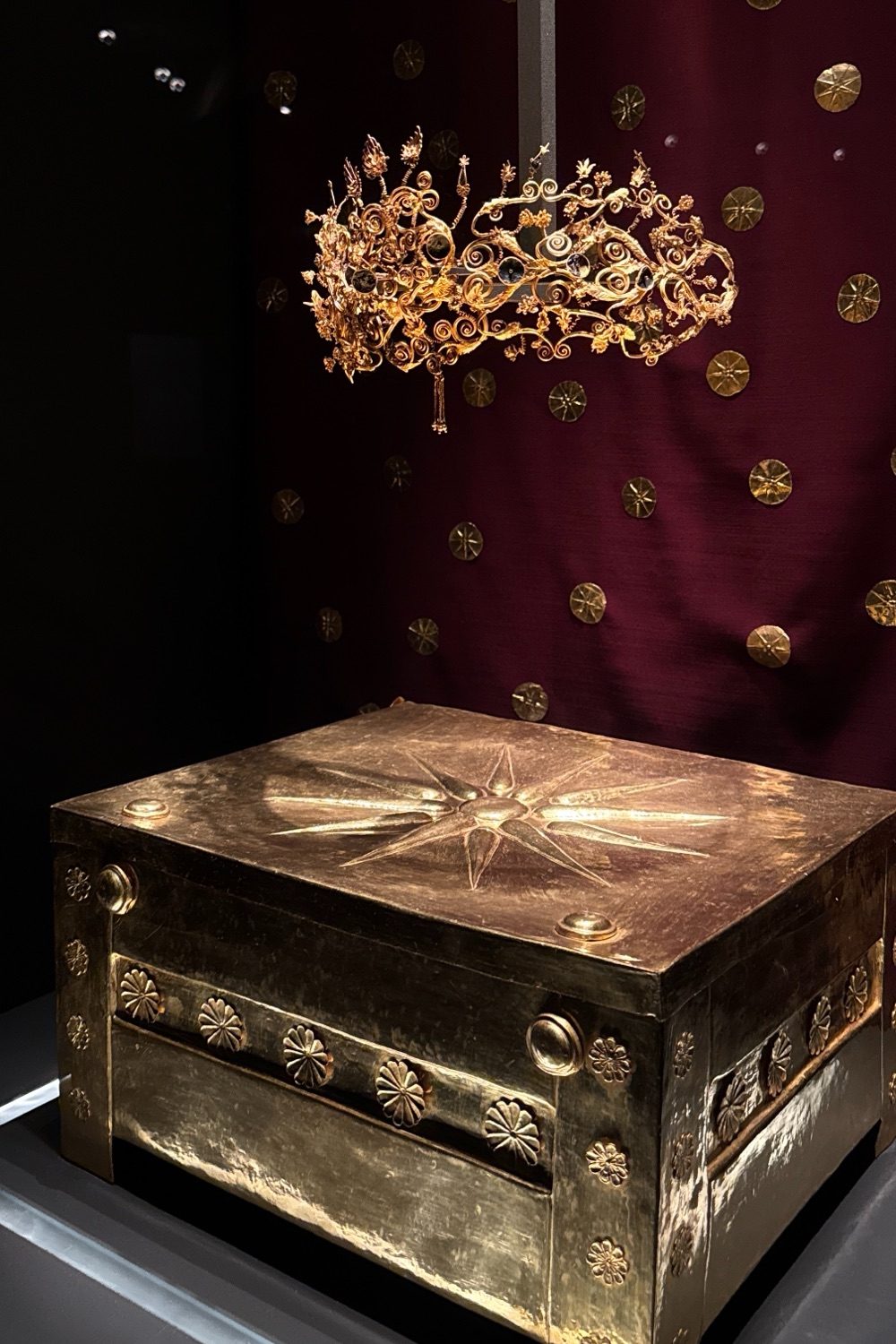
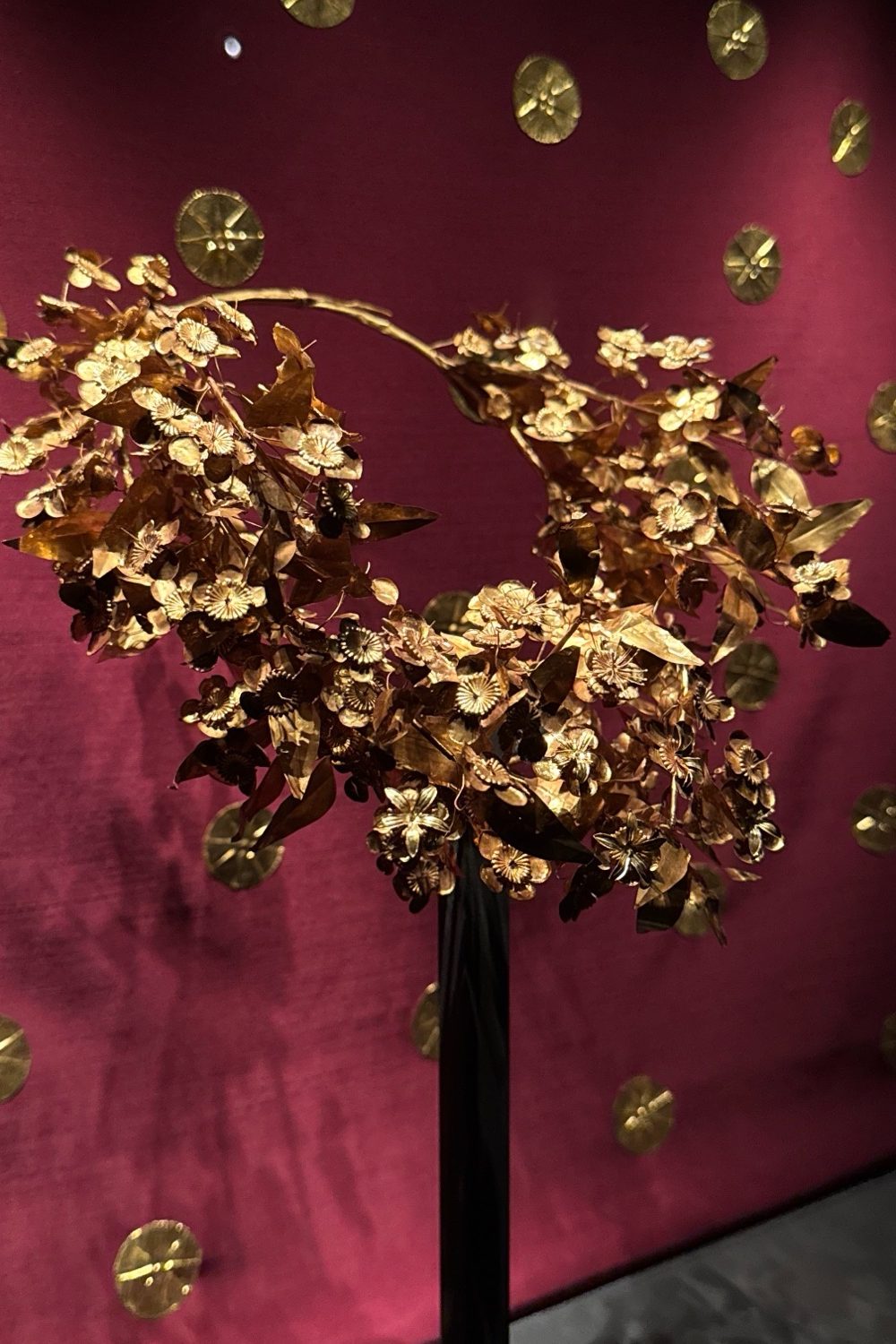
Then it was on to the Royal Tombs, one of the most extraordinary archaeological discoveries in Greece. Tomb II, believed to belong to Philip II, contains treasures beyond imagination: a marble sarcophagus, a golden larnax with the Vergina Sun emblem, a gold oak-leaf crown, weapons, and ceremonial armor. The tomb is exceptionally preserved, with vibrant frescoes still intact.

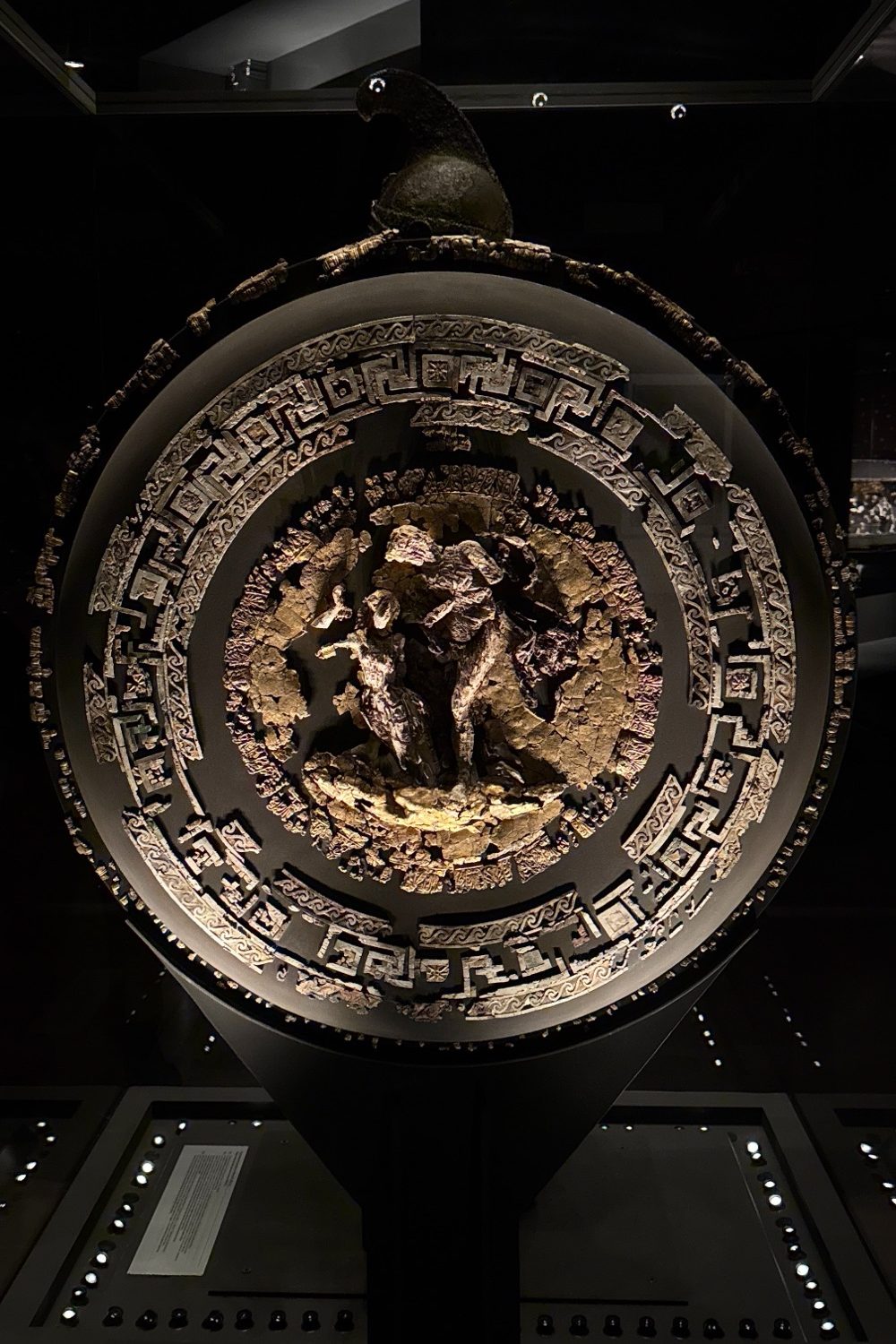
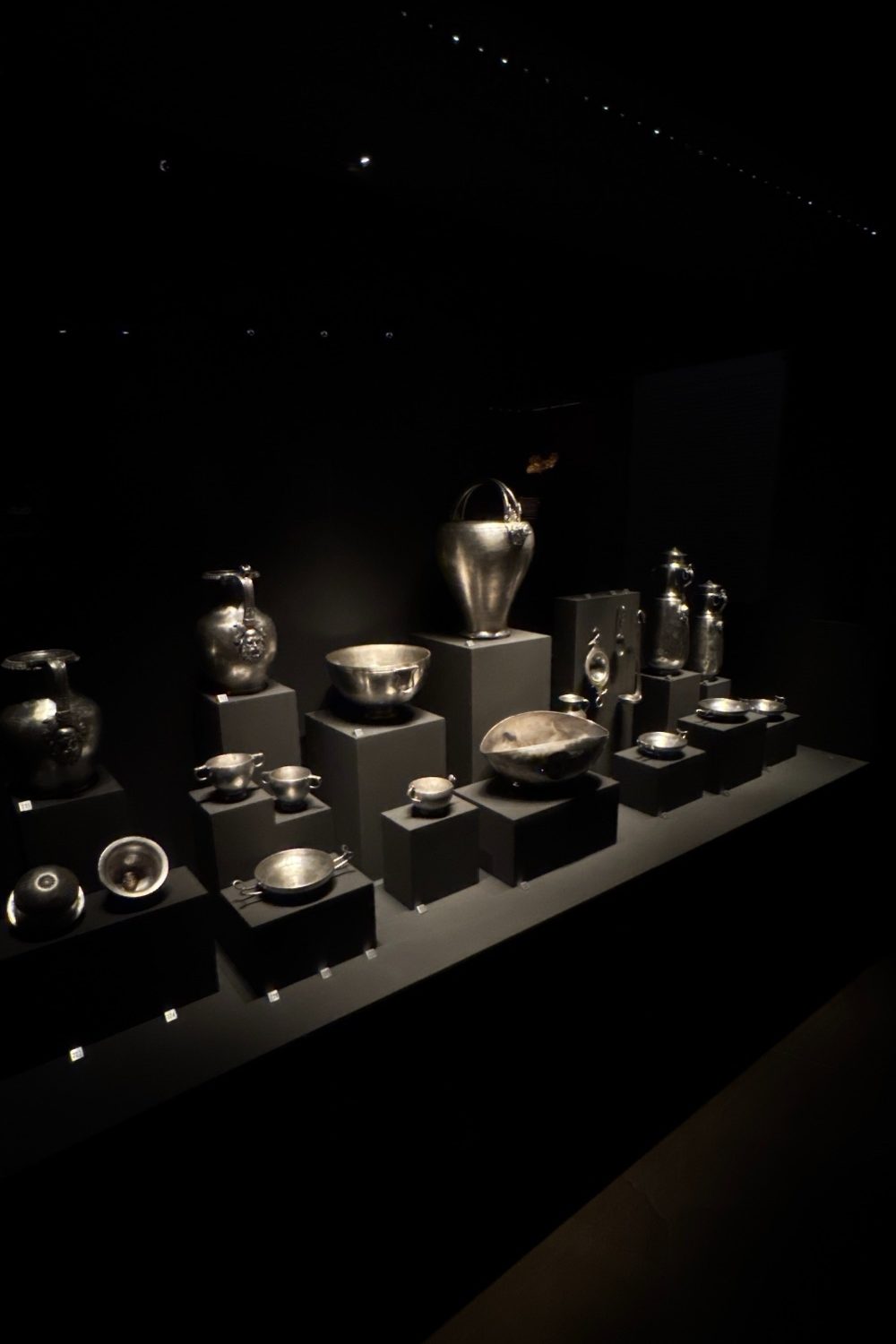
Nearby, Tomb III (the “Prince’s Tomb”) is thought to belong to Alexander IV, son of Alexander and Roxana, and contained fine silver vessels and weaponry. Tomb I, though heavily damaged, may have belonged to a queen (some say Cleopatra, Philip II’s last wife), and features fragments of the haunting “Abduction of Persephone” fresco. Together, these tombs are breathtaking, with artifacts like a full set of Macedonian armor, another golden larnax, and a nearly 1kg gold oak-leaf crown on display. Yep, that’s a lot of gold.
It gets chilly inside, even in summer, so pack a light layer.
Most of the group opted for a leisurely lunch afterwards or were just entering the tombs after lunch, as per the proposed itinerary by the guide. Me? I decided to unintentionally hike up to the Royal Palace.
Why you might ask? Well, as is with most of the royal palaces i’ve been to thus far on this Greek odyssey, this royal palace is no different from the others as its located on top of, you guessed it, a darn hill.
So according to Google-sensei, the Royal Palace of Aigai and Theatre is located a short 15mins walk away from the Royal Tombs. Like a normal person i was like “Oh yeah that’s doable.”.
What it didn’t say (or what i didn’t look out for in small font) was that it’s a 30–45° incline on gravel, under the blazing Greek sun, with me gasping for air in battered sneakers. I feel like ancient sites like this should come with disclaimers in bold, font size 50 letters in italics: “HIKE INCLUDED.”
But alas, this was no longer a matter of will or will not. Oh no. Now, my men. It’s now a matter of pride, glory, HOME -ahem-
I may or may not have had EPIC the musical on repeat during my hike. Hey, i needed some sorta motivation alright.
Anyways, i made it to the Royal Palace. PSA though, while the technically speaking the Ancient Theater of Aigai is landmark on its own, it isn’t something you have to go out of your way to add to your itinerary, you’ll naturally come upon it on the way up to the palace, and there isn’t exactly a lot of TLC that goes into its upkeep, so most of the steps/seats are overgrown with grass and weeds.
Back to the Royal Palace, as with most of these royal palaces, not only is it a great vantage point for looking down on the peasants, it was also a political and ceremonial hub, reflecting the power and ambitions of the Macedonian dynasty. Today, its ruins are still vast and monumental, revealing what was considered to be one of the largest buildings of classical Greece, supposedly three times the size of the Parthenon, covering a whopping 15 thousand square meters.
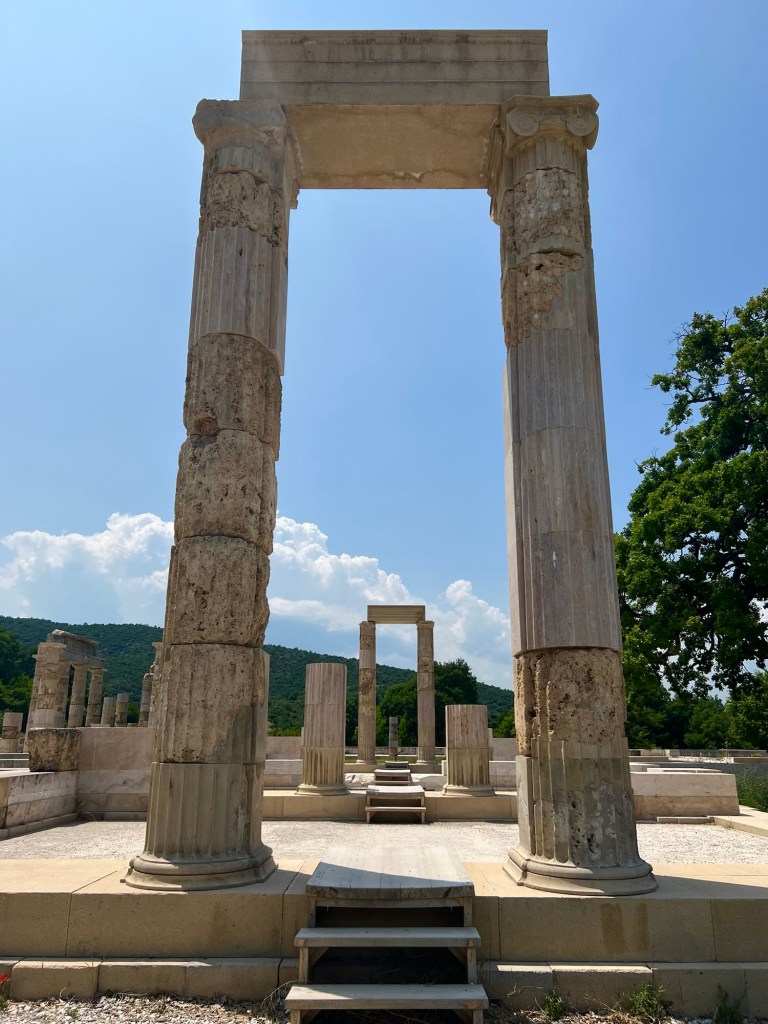
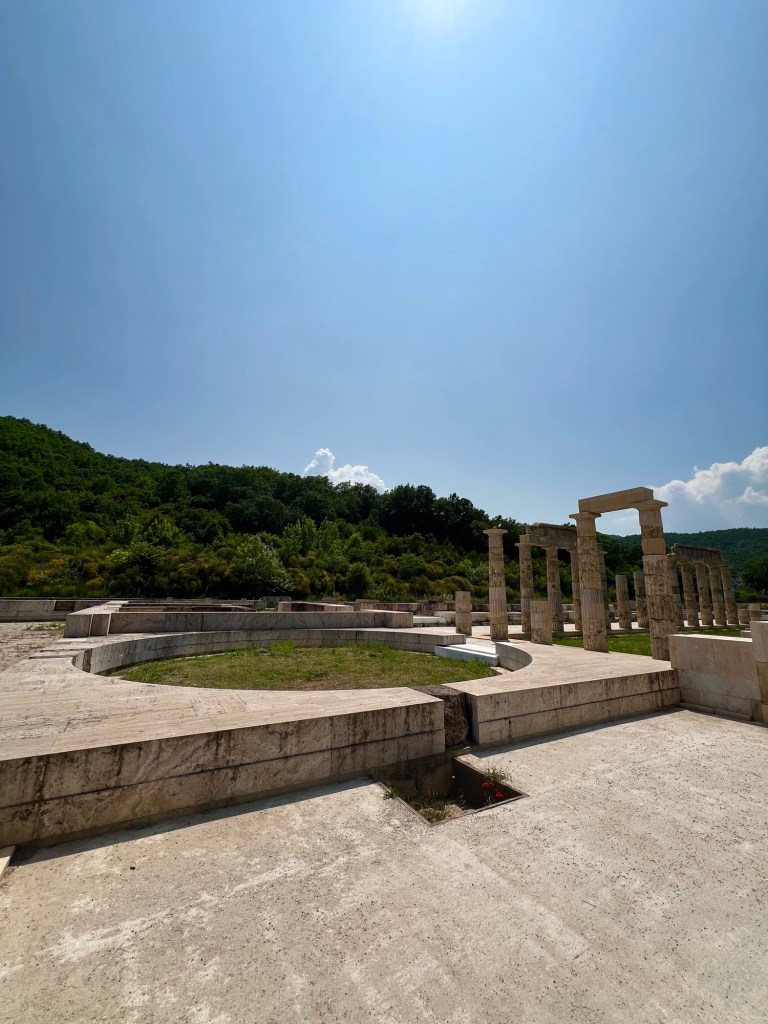
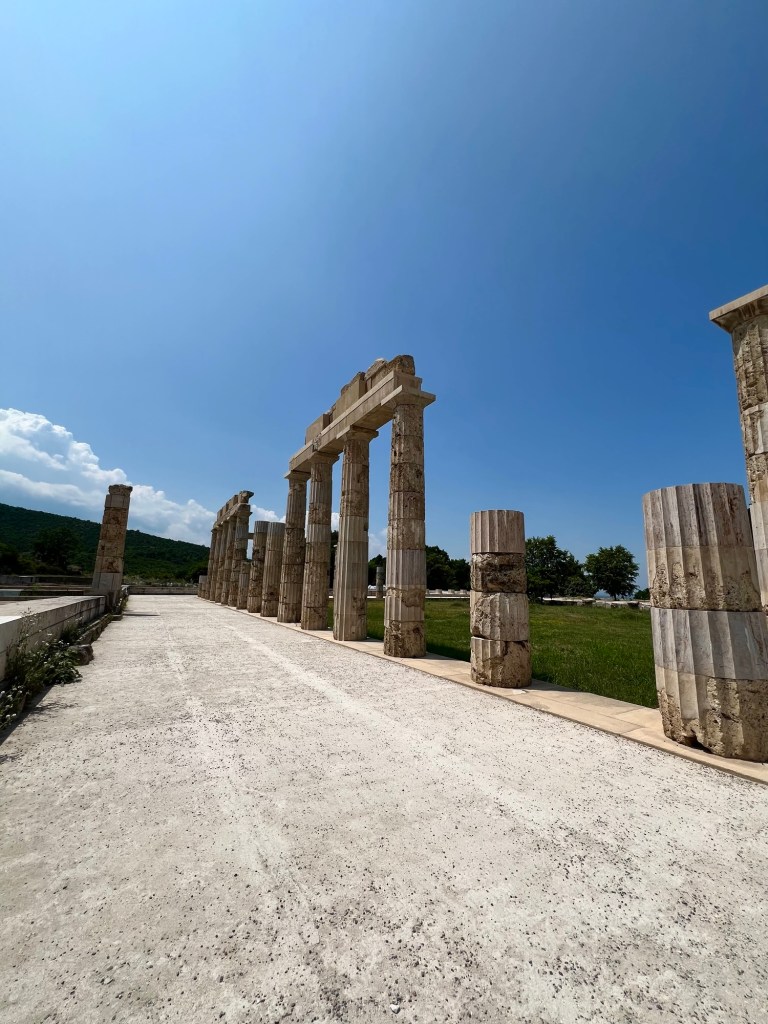
That said, information on-site is sparse, signage is minimal. It’s not always clear where visitors are allowed to step, and barriers are badly needed. Still, the central peristyle courtyard is walkable, and you get a real sense of the scale and ambition of Macedonian royalty.
Maybe due to the fact that it is not exactly a well visited site, there were probably only 3 custodians on site, one of which will watch you like a hawk and practically stalk your every step. Not that i actually minded my stalker though, as he was more than happy to give me an brief guided tour of the grounds seeing that i was their first, and hopefully not the only, visitor of the day, which i found quite sad, as the restored site was a thing of beauty, you can spot him in one of the pictures below.
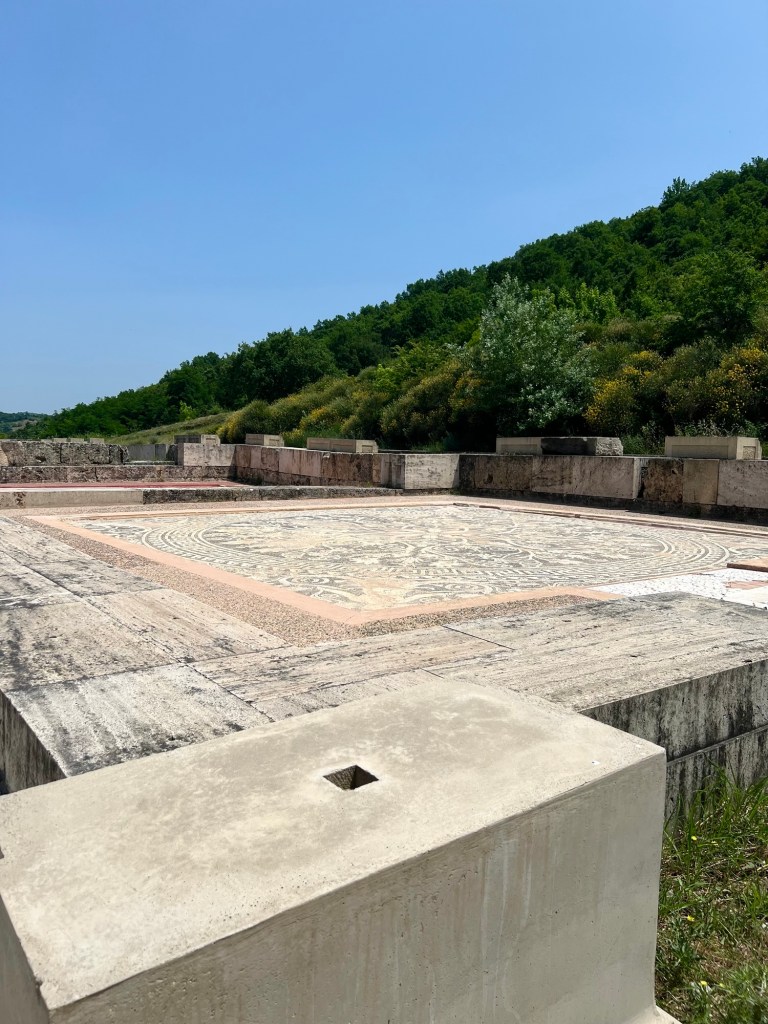
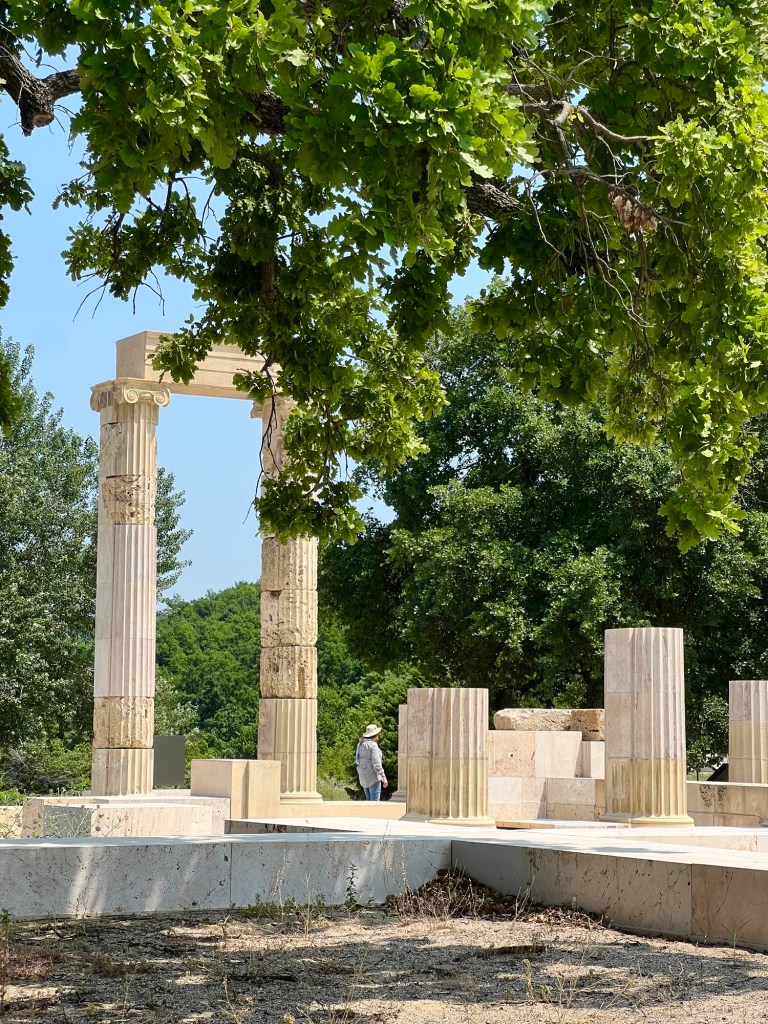
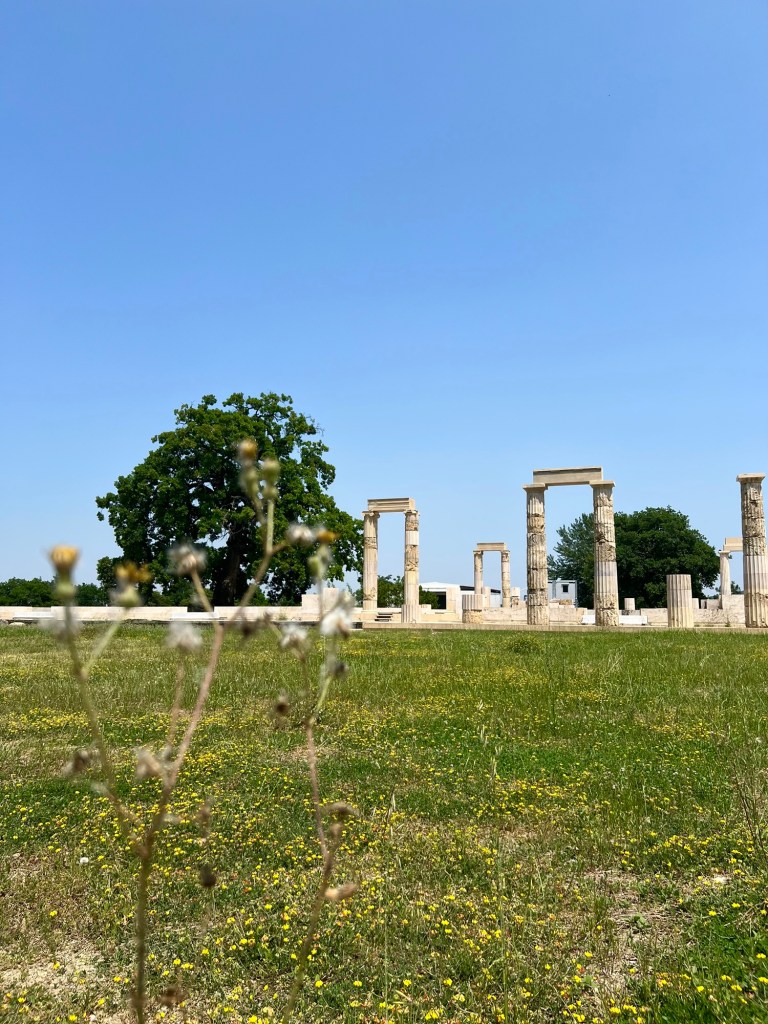
But i would say the main areas you’re not allowed to approach are the ‘rooms’ with the mosaic floors, admiring them from afar would have to suffice but it would probably been a more impressive viewing experience if they installed steps like they did at the Archeological Site of Pella so as to be able to view the stunning mosaic floors from higher ground.
If you’re coming here as part of a tour like i did, and would also like to check out the Royal Palace of Aigai, i would recommend checking with your guide first how much time is allocated for your time in Aigai (Vergina). It took me roughly 15-20 mins to get up to the Palace, and slightly less than 15 to get back down. Even though i would have loved to stay on site for at least an hour or more, i pretty much only had 30mins at the palace cause i spent too much time at the Royal Tombs. So unless you have i would say at least 1.5hours at Aigai, I’d recommend prioritizing the Royal Tombs. The palace is spectacular, but unless you’re a ruins enthusiast, it’s not as essential.
What if…?
Eventually, it was time for me to head back down the hill and rejoin the group for the ride back to Thessaloniki. Cruising past quiet fields and grazing animals, it’s surreal to think of the empires and legends born in this land. What if things had gone differently? We’ll never know.
But what’s for certain, is that i skipped lunch, dinner was next on the agenda, and my stomach was growling like Scylla awaiting its next meal. So back to Thessaloniki it was, to find dinner, and the city that was named after Alexander’s half sister: Thessalonike.
 Shenanigans Abroad
Leave a Reply