History in Layers
Back In The Day
Greece’s second-largest city, Thessaloniki, has been a crossroads of cultures for more than 2,300 years. It was founded in 316 BCE by Cassander of Macedon, who named it after his wife, Thessalonike, the half-sister of Alexander the Great.
Over those 2,300 years, the city passed through the hands of multiple empires.
Under the Romans, Thessaloniki grew into one of the empire’s most important provincial capitals, boasting grand forums, arches, and solid infrastructure. With the Byzantines, it became the empire’s second city after Constantinople, its skyline dotted with domed churches, mosaics, and fortifications, many of which survive today as UNESCO World Heritage Sites. During the Ottoman era, the city transformed into a bustling multicultural hub, enriched by Turkish, Balkan, and Sephardic Jewish communities (the latter arriving after the Jews were expelled from Spain in 1492).
In modern times, Thessaloniki still wears its layered history proudly. You’ll stumble across the White Tower on the waterfront, the Arch of Galerius and Rotunda from Roman days, Byzantine churches like Agia Sophia, Ottoman baths and markets, and lively boulevards lined with both neoclassical and contemporary architecture. Add to that its thriving café and nightlife culture , plus its reputation as a beloved university city, and you’ve got a place buzzing with life.
The Way There
Getting here from Athens is easy. Driving is always the most straightforward option, but there’s also the train, bus, plane, and even a ferry. As the second-largest city in Greece, Thessaloniki is well connected to most parts of the country and serves as a major transport hub for northern Greece and beyond, with buses and overnight trains running across the borders into North Macedonia and Bulgaria, a popular route for backpackers and overland travelers.
If you’re driving, expect about a 5–6 hour journey (slightly longer if you’re on the bus, since it makes frequent stops). The fastest ways are by train or plane. SkyExpress runs regular flights from Athens International, but while the trip takes just about an hour in the air, the tickets can get pricey. The next best option is the train, run by Hellenic Trains. The ride takes about five hours, the trains are modern and comfortable, and it’s smooth sailing as long as you book your tickets early, they do sell out fast.
There’s also the ferry, though it’s infrequent and best paired with a stopover on the island of Chios. From there, you transfer to another boat heading to Thessaloniki. I didn’t personally try this route, but I did meet travelers who had. Reviews were mixed: one couple paid around €70 for the trip, while another solo traveler forked out €150. No clue what caused that massive price gap, but it seems like a bit of a gamble.
The most economical options are the bus and train. Train fares fluctuate depending on the season , I paid €68.80 for a return, while the bus costs roughly €65. After being on buses for so long, I opted for the train for a change of scenery (and a slightly less sore butt). The whole journey was seamless, comfortable, and I only arrived with a 30-minute delay, which isn’t too bad by Greek standards.
As for accommodation, you’re spoiled for choice. Thessaloniki has everything from budget hostels to high end hotels. A quick PSA though: since it’s a big university city with a lively youth scene, do check your hostel descriptions carefully. I accidentally booked myself into a semi-party hostel and let’s just say… sleep was not on the agenda.
The Sights
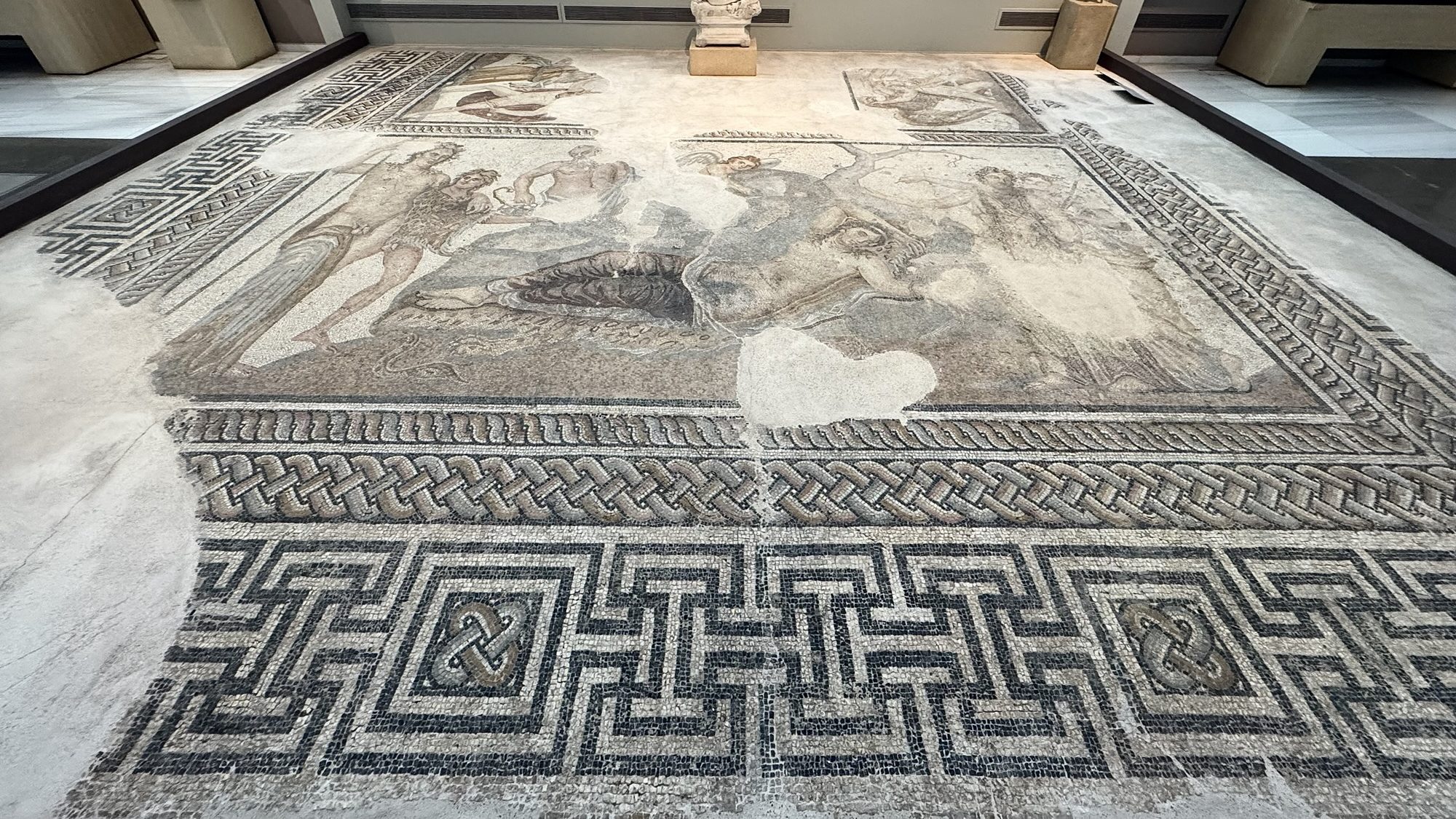
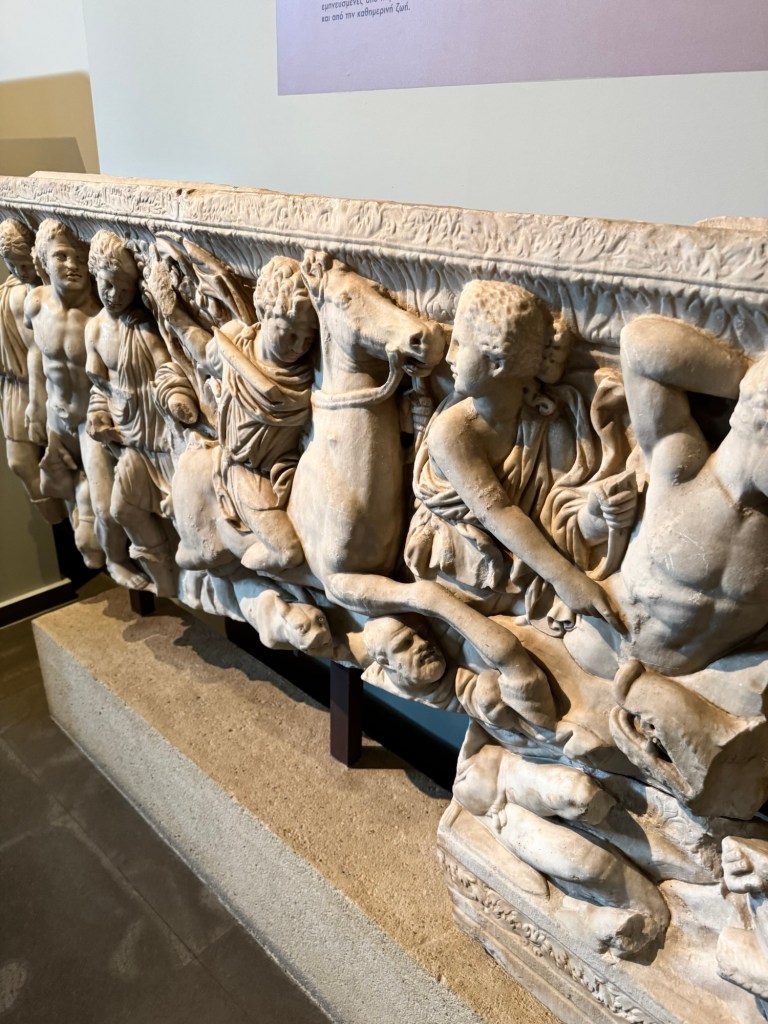
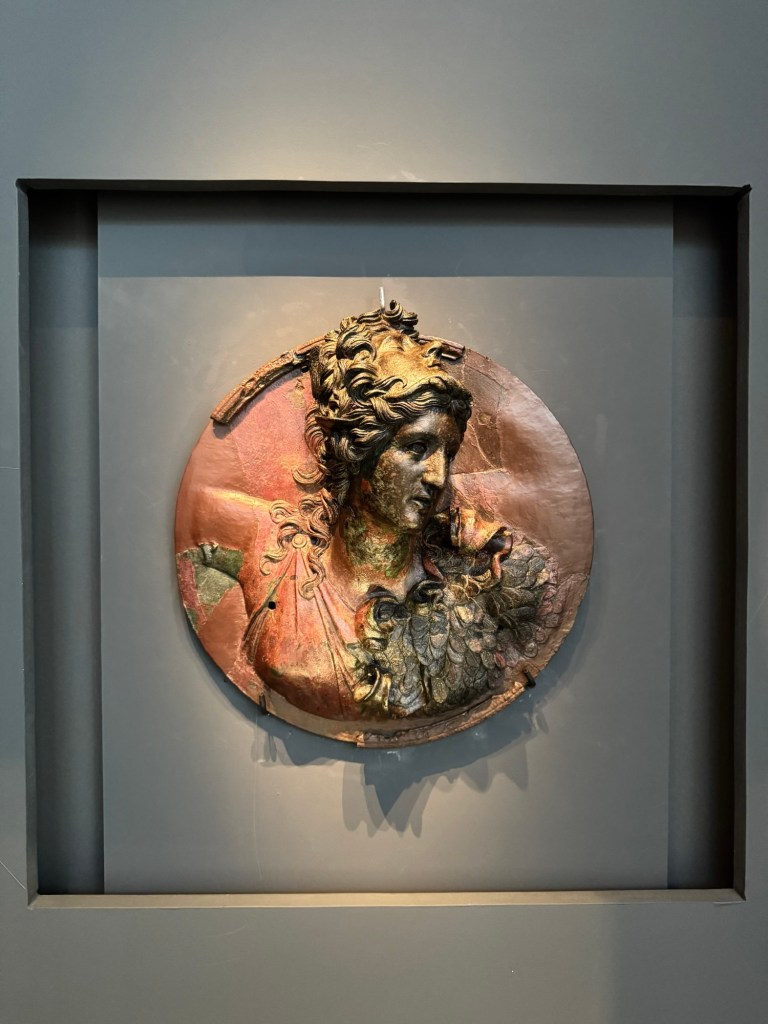
Now, no trip to a city is complete without a museum visit, at least not for me. Museums are the butter to my toast, the milk to my cereal, the Bonnie to my Clyde. And in Thessaloniki, the star is the Archaeological Museum of Thessaloniki, the largest of its kind in northern Greece.
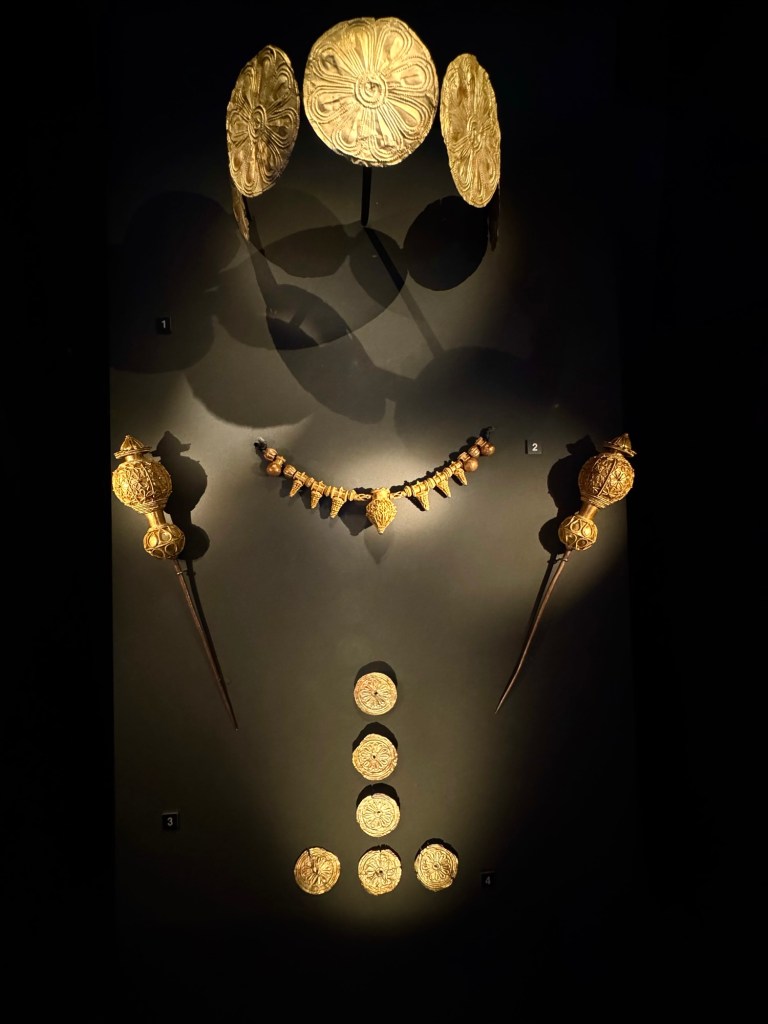
Its collection spans Macedonia’s prehistoric, classical, Hellenistic, and Roman eras, with a special focus on the Macedonian kingdom and the city’s long history. Translation: there’s a lot of gold.
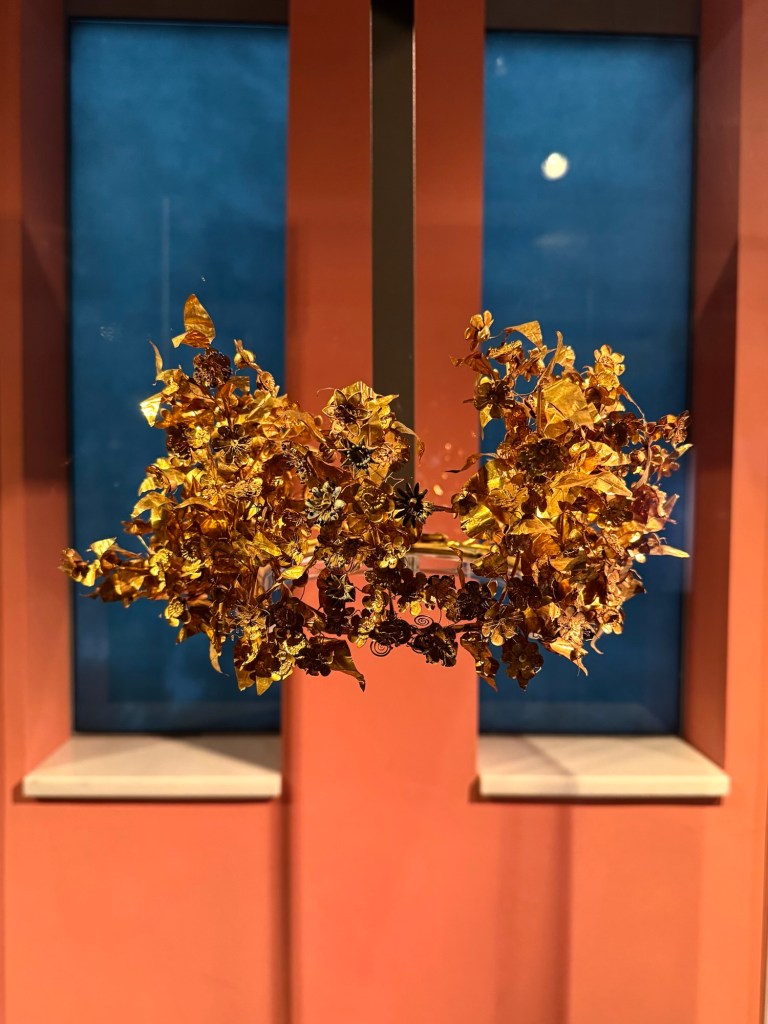
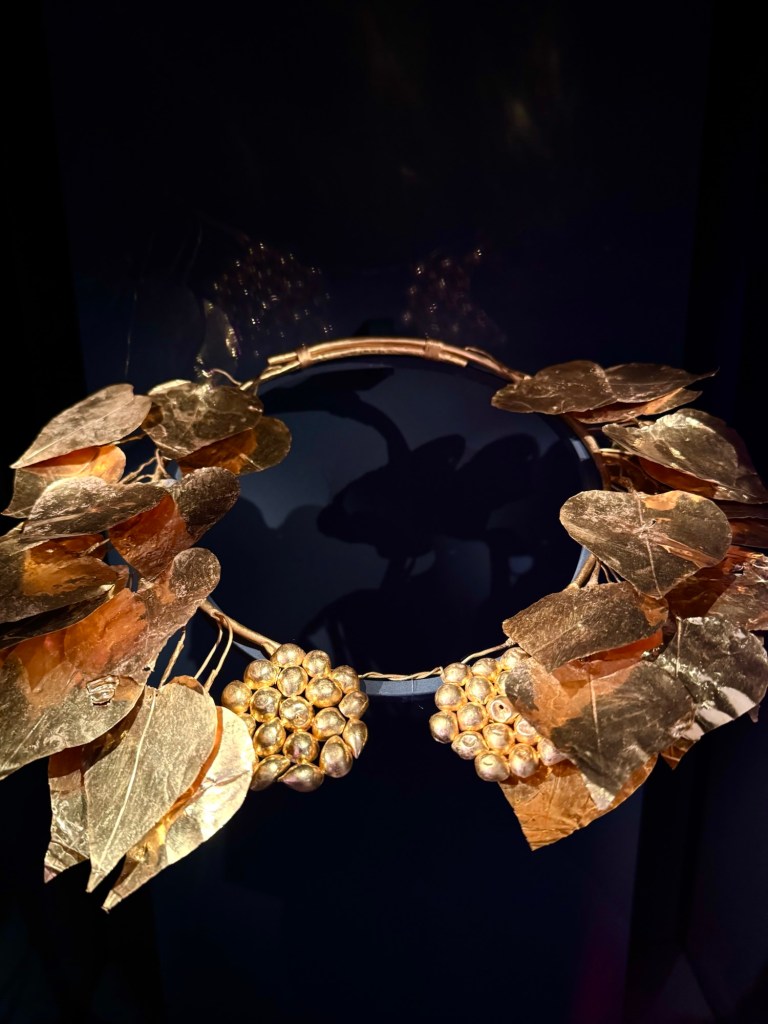
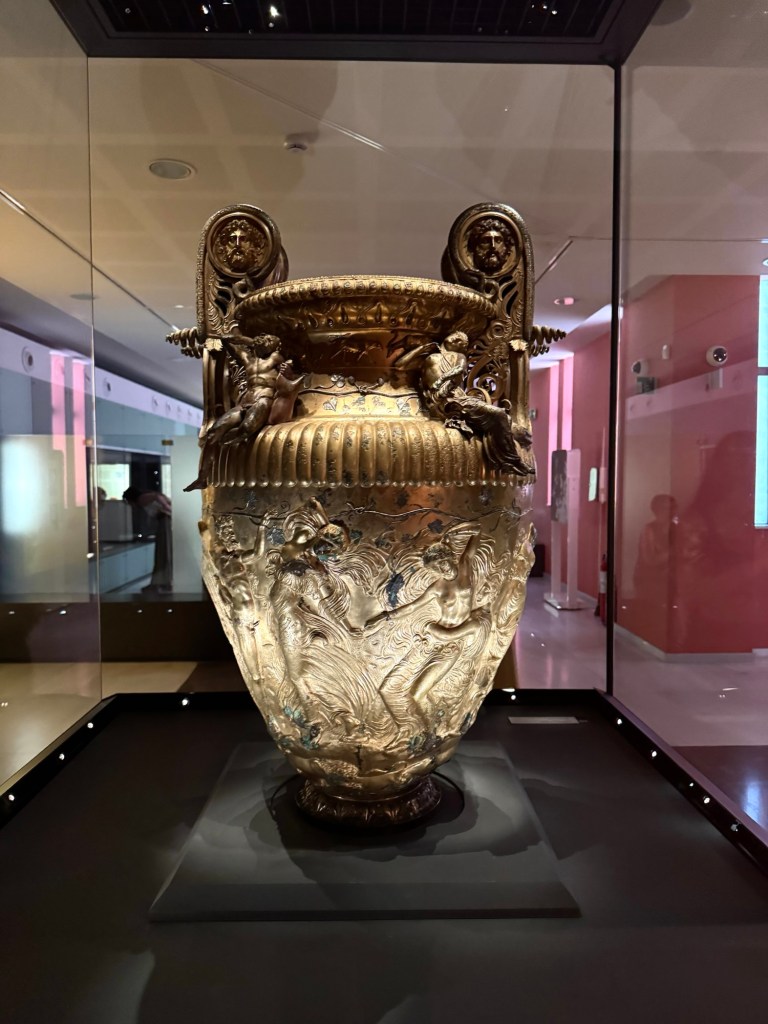
I’m talking dazzling wreaths, diadems, and ornaments rivaling the treasures in Aigai. These pieces showcase the craftsmanship of Macedonian workshops and mostly come from sites around Vergina, Sindos, and other ancient cemeteries. The ones directly linked to the royal tombs, though, are kept at Aigai.
In the same neighborhood, you’ll also find the Museum of Byzantine Civilization, the War Museum of Thessaloniki, and the Museum of Contemporary Art (MOMus). Sadly, I didn’t get around to these during my short stay, I was mainly using Thessaloniki as a base for day trips to Vergina and Pella, the old stomping grounds of Alexander the Great.
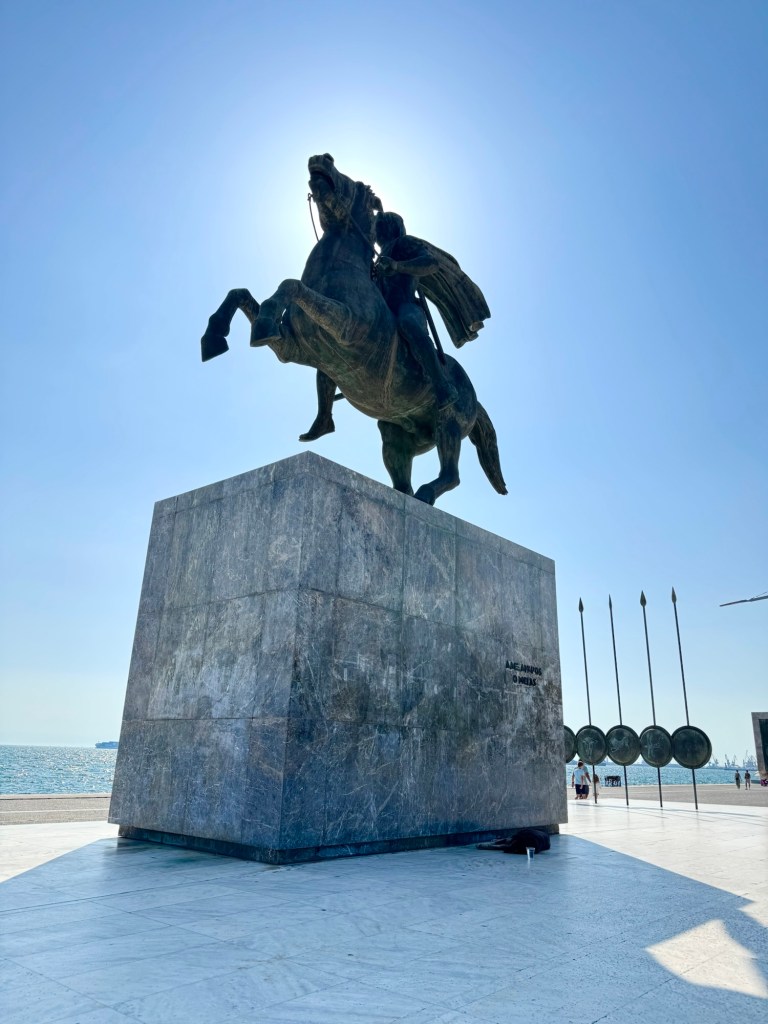
Thankfully, the city itself has plenty of open-air monuments that don’t come with closing hours. Just a few minutes’ walk from the museum stands the massive statue of Alexander the Great on his legendary warhorse, Bucephalus. He gazes eastward, toward the lands he conquered, with a frieze of the Battle of Gaugamela at his side. Set right by the sea, it’s also a stellar spot to catch the sunset.
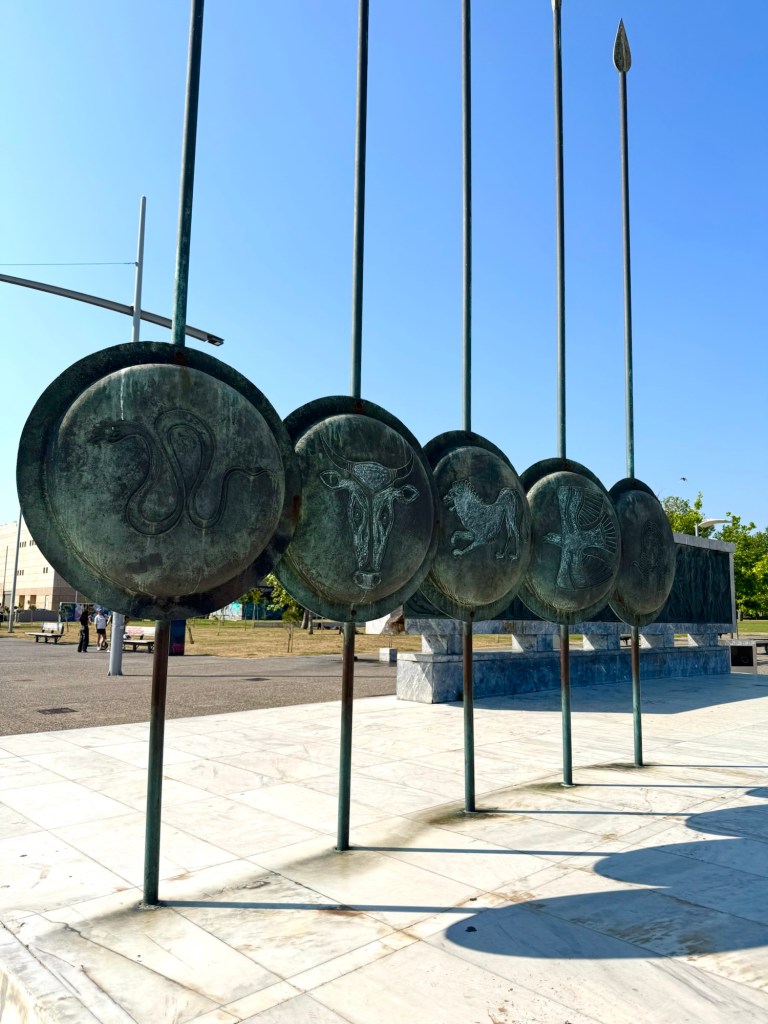
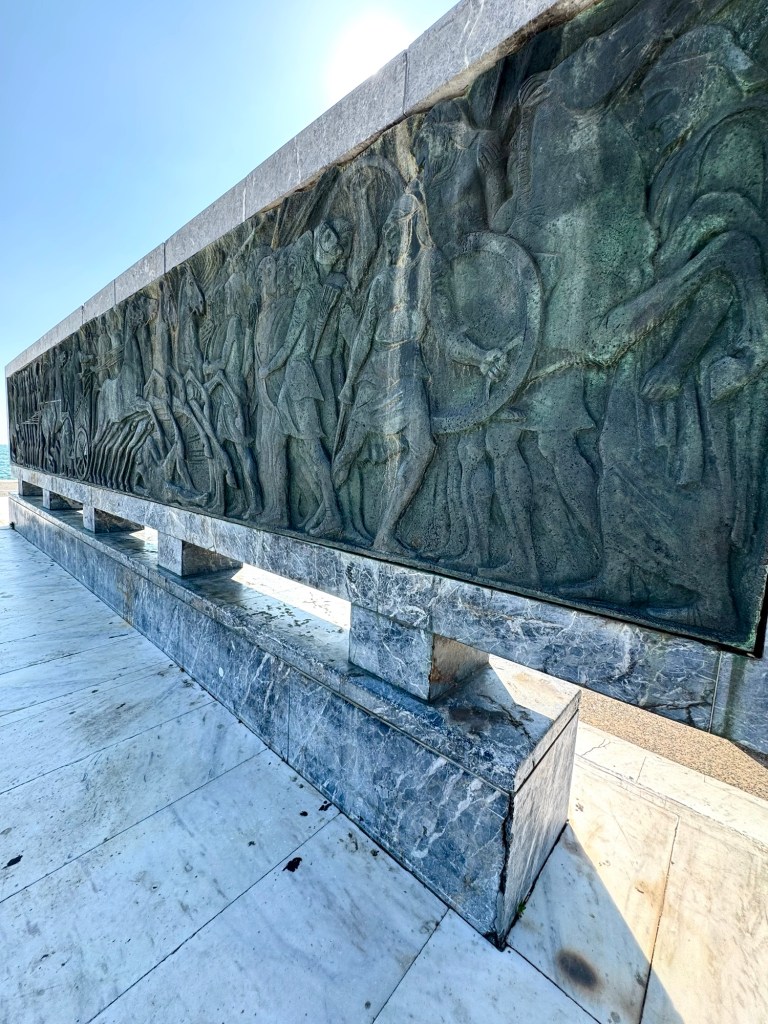
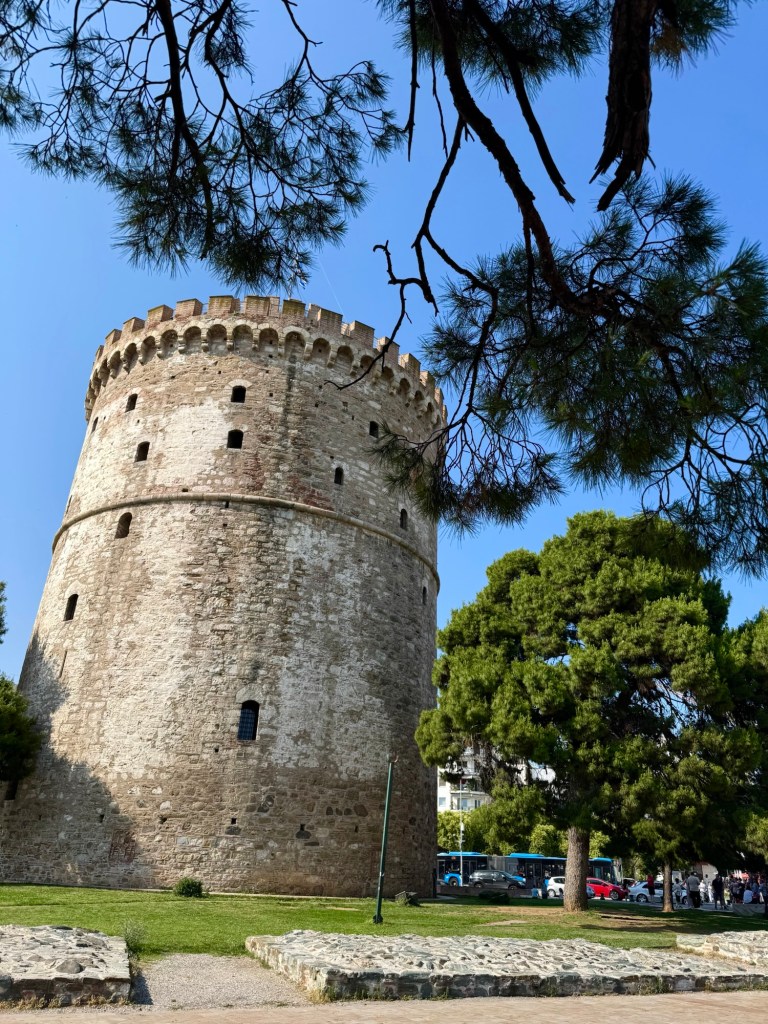
A short stroll away sits the White Tower of Thessaloniki, both a monument and museum on the waterfront. The present tower replaced an older Byzantine fortification mentioned as early as the 12th century. After the Ottomans captured Thessaloniki in 1430, they rebuilt the tower to strengthen the city’s defenses. Later, it gained a darker reputation as a notorious prison and execution site, most infamously for the Janissaries during their revolt.
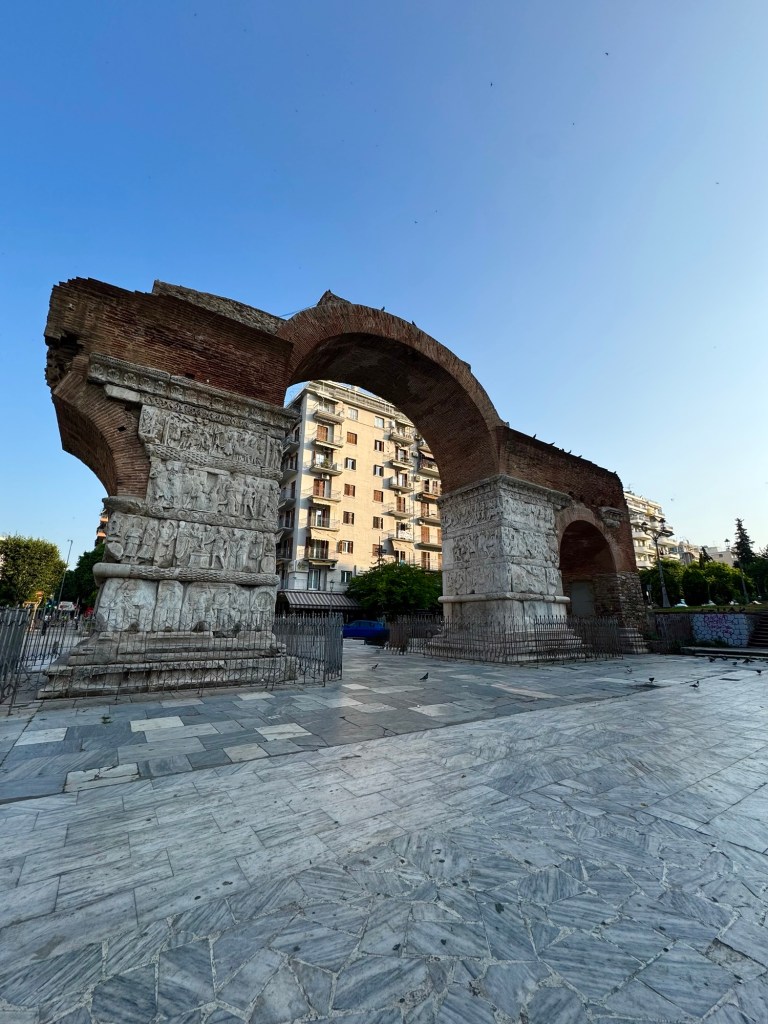
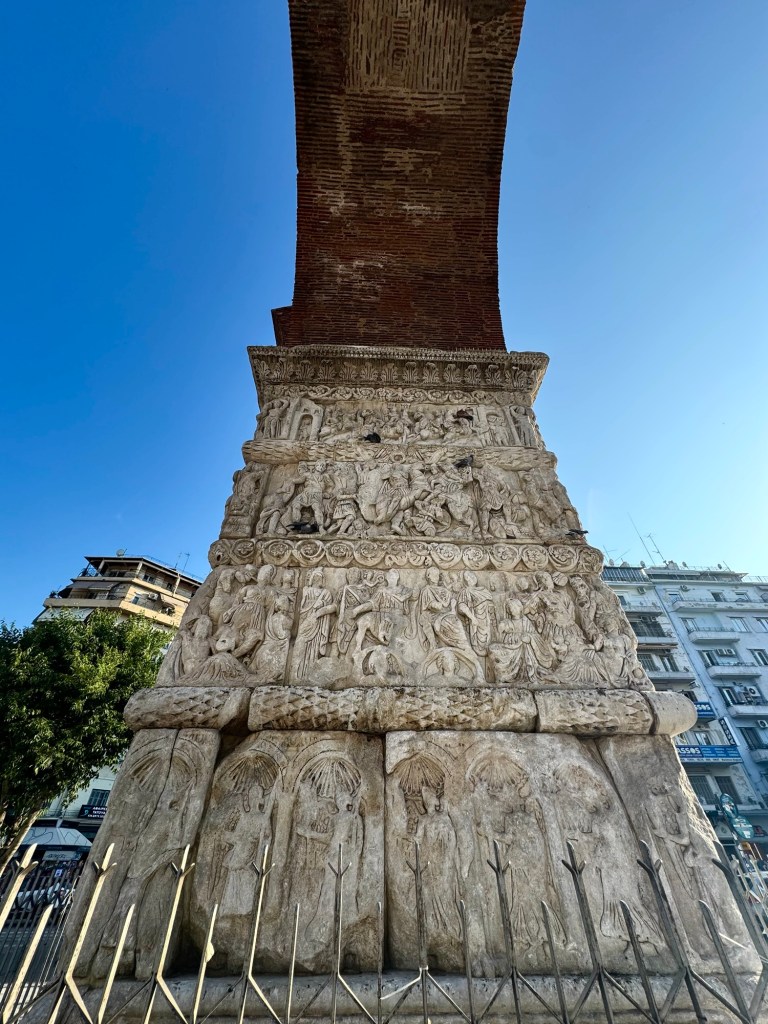
But perhaps the most striking site, at least for me, was the Arch of Galerius. Rising seemingly out of nowhere amid the modern cityscape, the Arch dates back to 298–305 CE, celebrating Emperor Galerius’ victory over the Persians and his role in the Tetrarchy (when the Roman Empire was ruled by four co-emperors).
The arch once stood along a grand processional route that linked Galerius’ palace complex to the Rotunda, a massive round temple (later a church) that still stands just a short walk away. Together, they were meant to transform Thessaloniki into a mini-imperial capital of the East. Originally, the arch had eight pillars forming a four-way crossing. Only three survive today, but the reliefs on the marble panels still impress, depicting Galerius’ Persian campaign, battle scenes, sieges, the emperor on horseback, and moments of triumph frozen in stone.
A Voice Calling…
Thessaloniki was the perfect base to dive into Macedonian history, but the road was calling again. Southward this time, winding toward the slopes of Mount Parnassus. There, perched above the valley, lies Delphi, once the spiritual heart of Greece, where the voice of Apollo shaped the fate of empires. Dare i seek out the voice of the silent Oracle? One can only hope.
 Shenanigans Abroad
Leave a Reply