Land of Silent Oracle
Past, Present, Future?
Ah, Delphi. Legendary land of the Pythia. Scene-setter of so many Greek myths and legends. The place where Apollo slew the Python.
Dramatically set on the slopes of Mount Parnassus in central Greece, Delphi was one of the most important religious and cultural centers of the ancient world. To the Greeks, it was the “navel of the world” (the omphalos), the point where heaven and earth met, and the seat of Apollo’s most famous oracle.
For me, Delphi has always been a fascination, mostly because of how often it pops up in myths, legends, and even books. From novels like the Percy Jackson series or Esther Friesner’s Nobody’s Princess and Prize, to the classics like the Iliad, Odyssey, and Aeneid, and the myths of Jason and the Argonauts or Hercules. The very idea that a prophecy could spell boon or disaster depending on how it was interpreted, or whether it was even heeded at all, is endlessly intriguing.
Beyond its mystical aura, there is also the political side of the oracle. Were the words of the Pythia truly the voice of a god? Or simply the carefully crafted performance of a well-informed individual or sect? We may never know. It does says a lot about the human condition, I suppose, though that is an entirely different rabbit hole I won’t be diving into today.
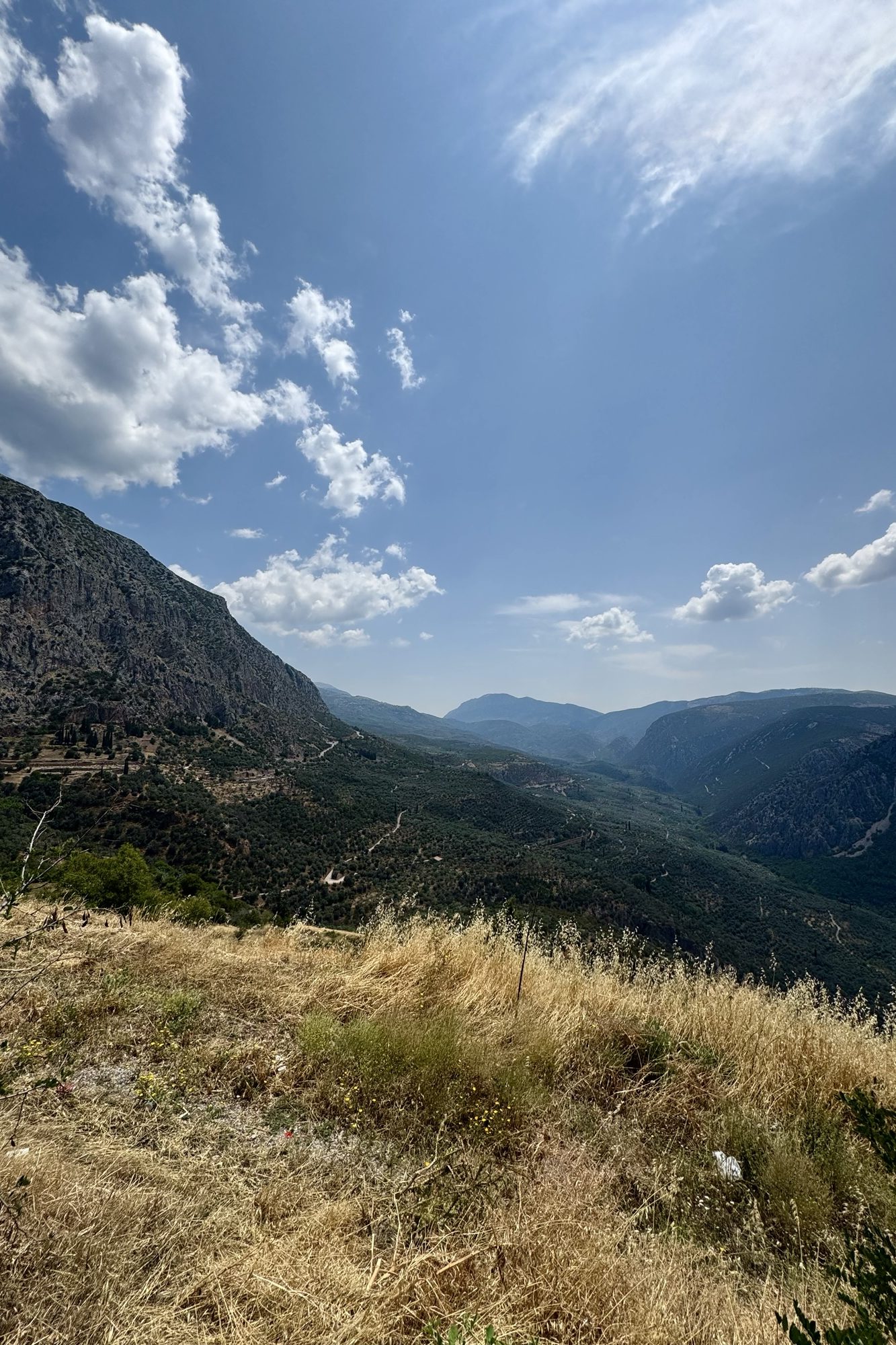

In the present day, Delphi is very much a tourist-oriented town, perched over the Pleistos Valley with its sweeping views of olive groves stretching to the Gulf of Corinth. The ancient city and archaeological museum sit just a five-minute walk from town. Delphi is worth at least a night’s stay, so you can catch the sunset or sunrise from a balcony restaurant or your accommodation, soaking up the peaceful village atmosphere. Beyond the ruins, Delphi is also a gateway to hiking trails on Mount Parnassus, charming mountain villages like Arachova (famous for its stone houses and ski resort), and even day trips down to the Gulf of Corinth.
That said, Delphi also makes a great day trip from Athens with plenty of tours going to the town and back. It is about two hours by car or three hours by bus from the Liosion Bus Station via KTEL Fokidas. Tickets cost €20 one way, or €33 for a return. Just remember, when heading back, to flag the bus down on the opposite side of the road, as Delphi’s “bus station” is nothing more than a wooden plaque reading “bus stop.”
The Passage Up
Exploring the archeological site of Delphi is one of those sites best understood as a journey uphill, following the same route ancient pilgrims once took. It’s a symbolic pilgrimage, climbing from the earthly world of Athena’s sanctuary to Apollo’s sacred heights, where humans once sought answers from the gods. But first, let’s talk tribute- ahem, i mean tickets.
Entry to both the site and the museum is €20, and the same ticket covers both. If you’re buying on-site, make sure you stop at the ticketing booth outside the museum first, because there are no ticket sales at the archaeological site itself. If you walk down from the town and head straight for the ruins, you’ll have to double back, which is not fun in the summer heat.
A short distance from the main sanctuary lies the Tholos of Athena Pronaia, a mysterious circular temple often photographed against the mountains. This was the spiritual “gateway” to Delphi, where visitors would pause before entering Apollo’s precinct. Sadly, it’s currently inaccessible due to a rockfall in 2024, though you can still see it from across the street near the main entrance.
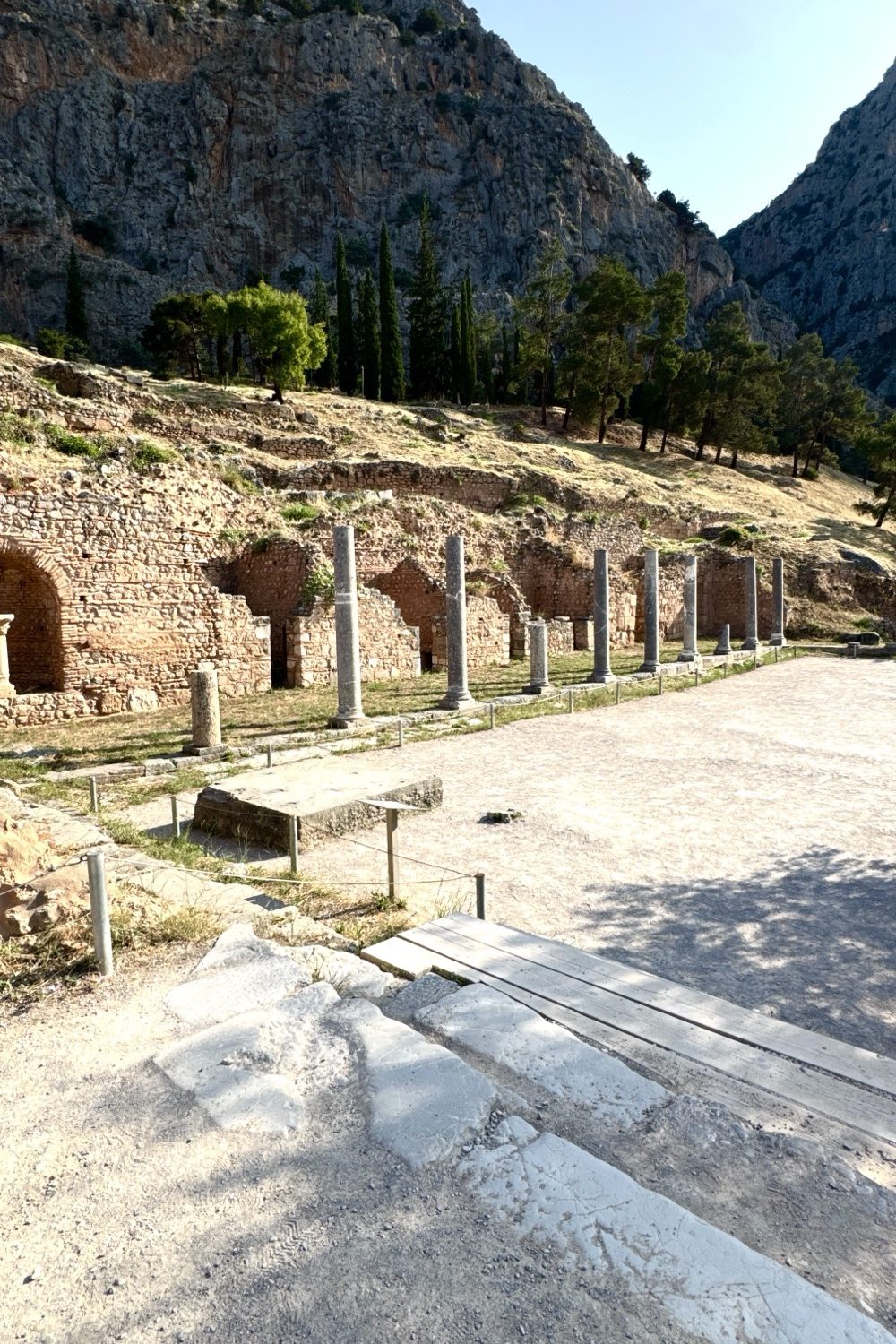
Once inside, you begin at the Roman Agora, where markets and administrative life once bustled. From there, you pass the gateway and climb the Sacred Way, the processional route winding through the sanctuary. Along this path stood treasuries, small temple-like buildings where city-states stored their offerings to Apollo.
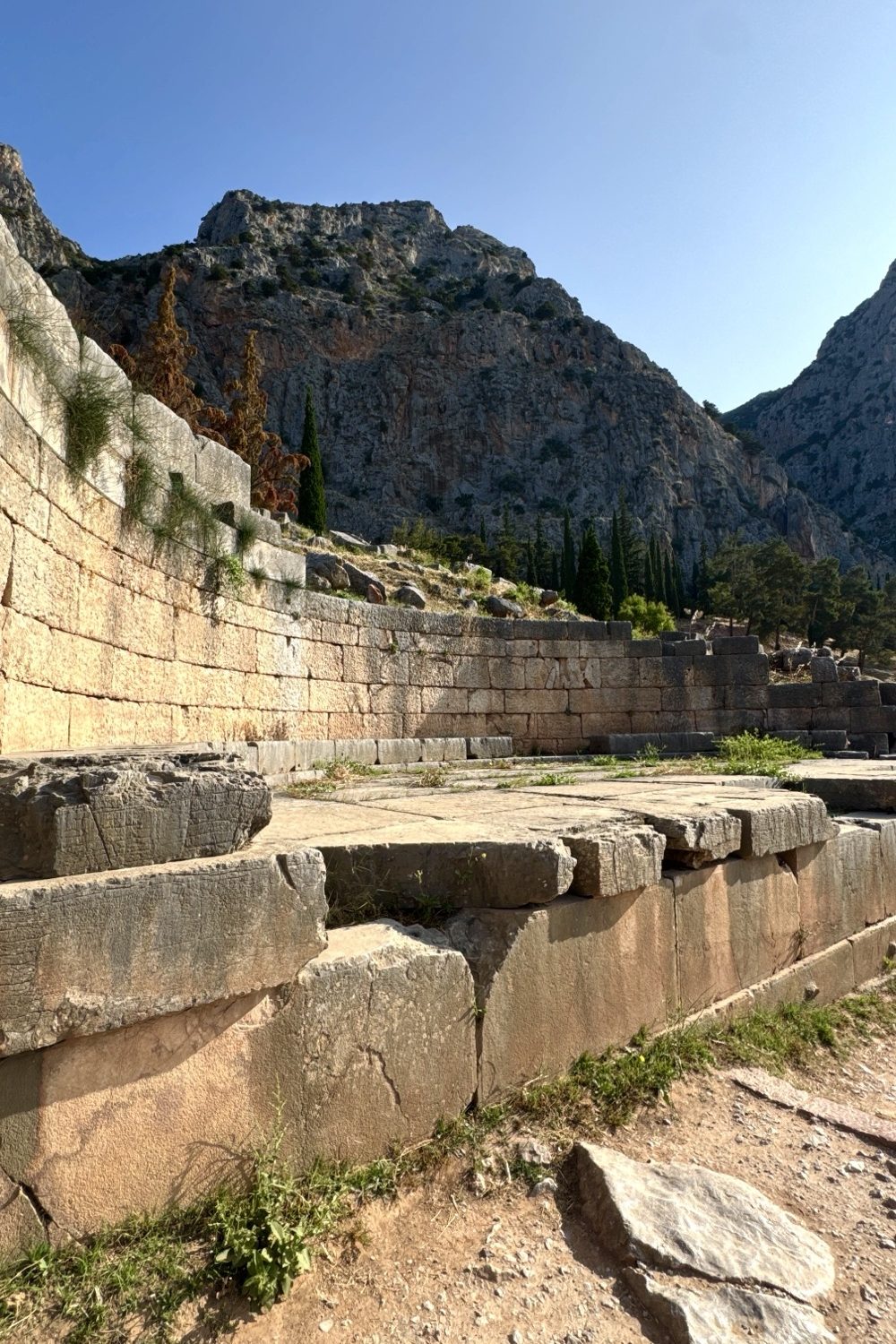
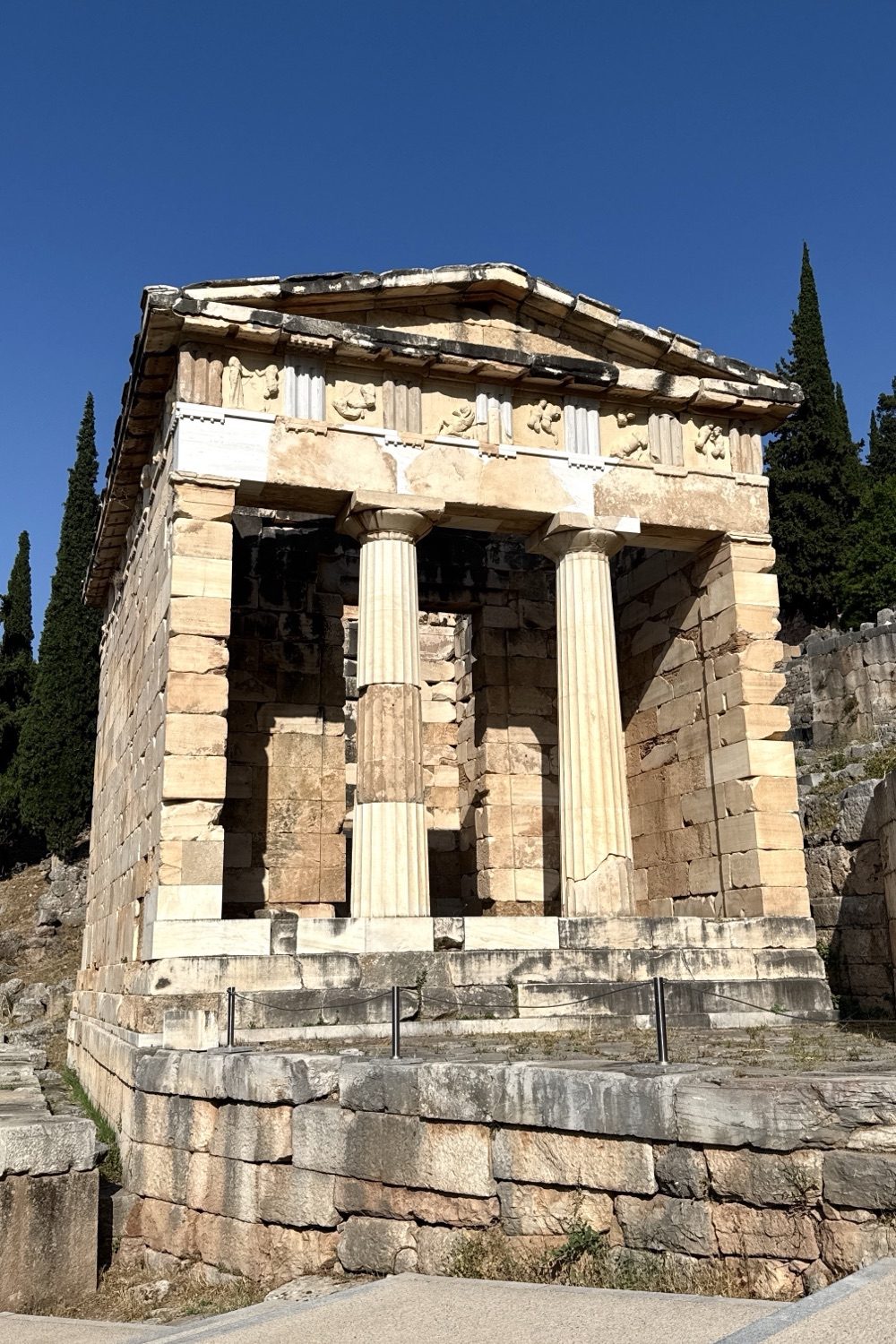
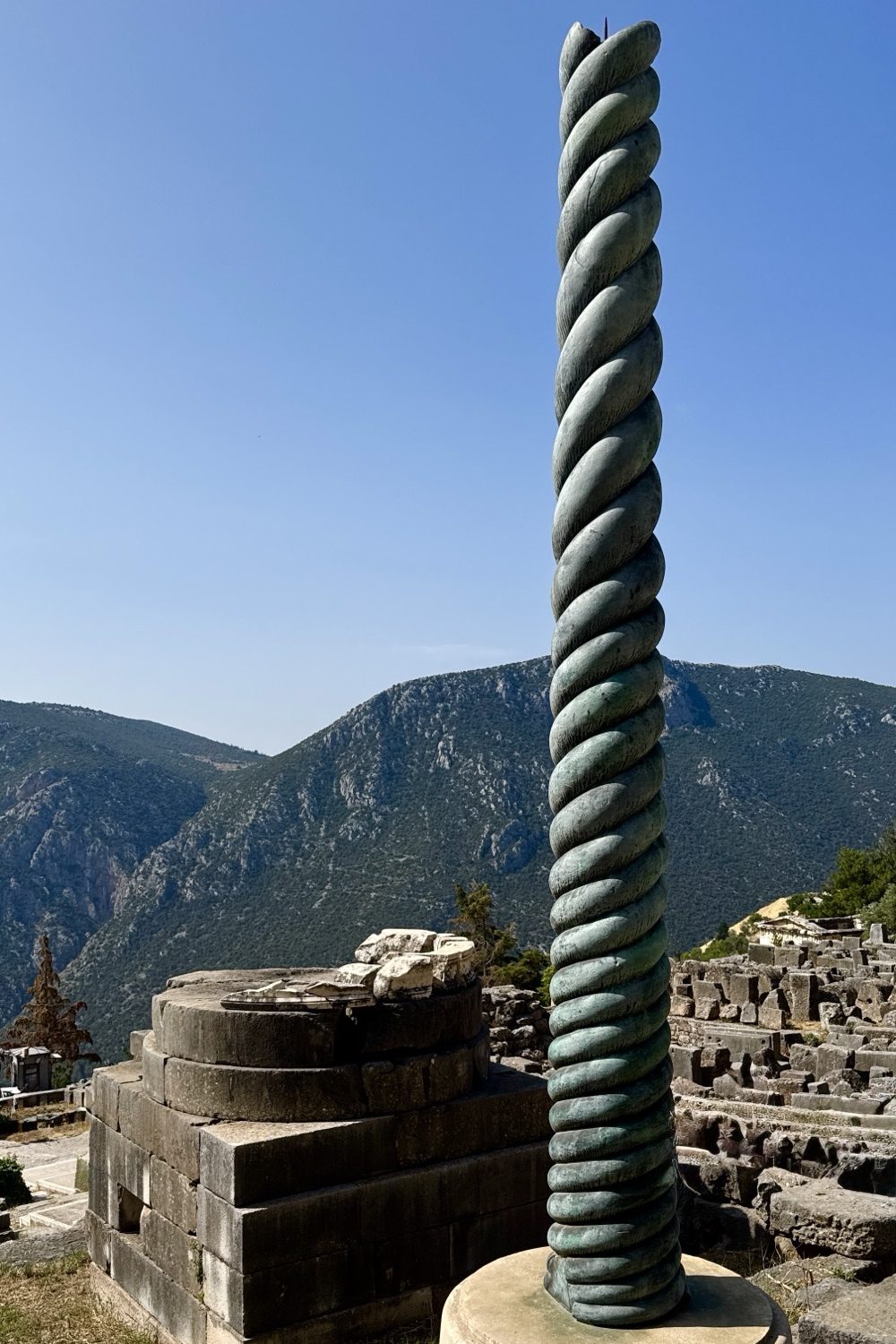
These weren’t just gifts to the gods, they were political statements. The most famous, the Athenian Treasury, has been reconstructed in brilliant white marble, its carved metopes depicting myths and victories, a proud reminder of Athens’ power after the Persian Wars. All along the way, you’ll see bases for statues, votive columns, and inscriptions, each a testament to the competitive devotion of cities vying for Apollo’s favor.
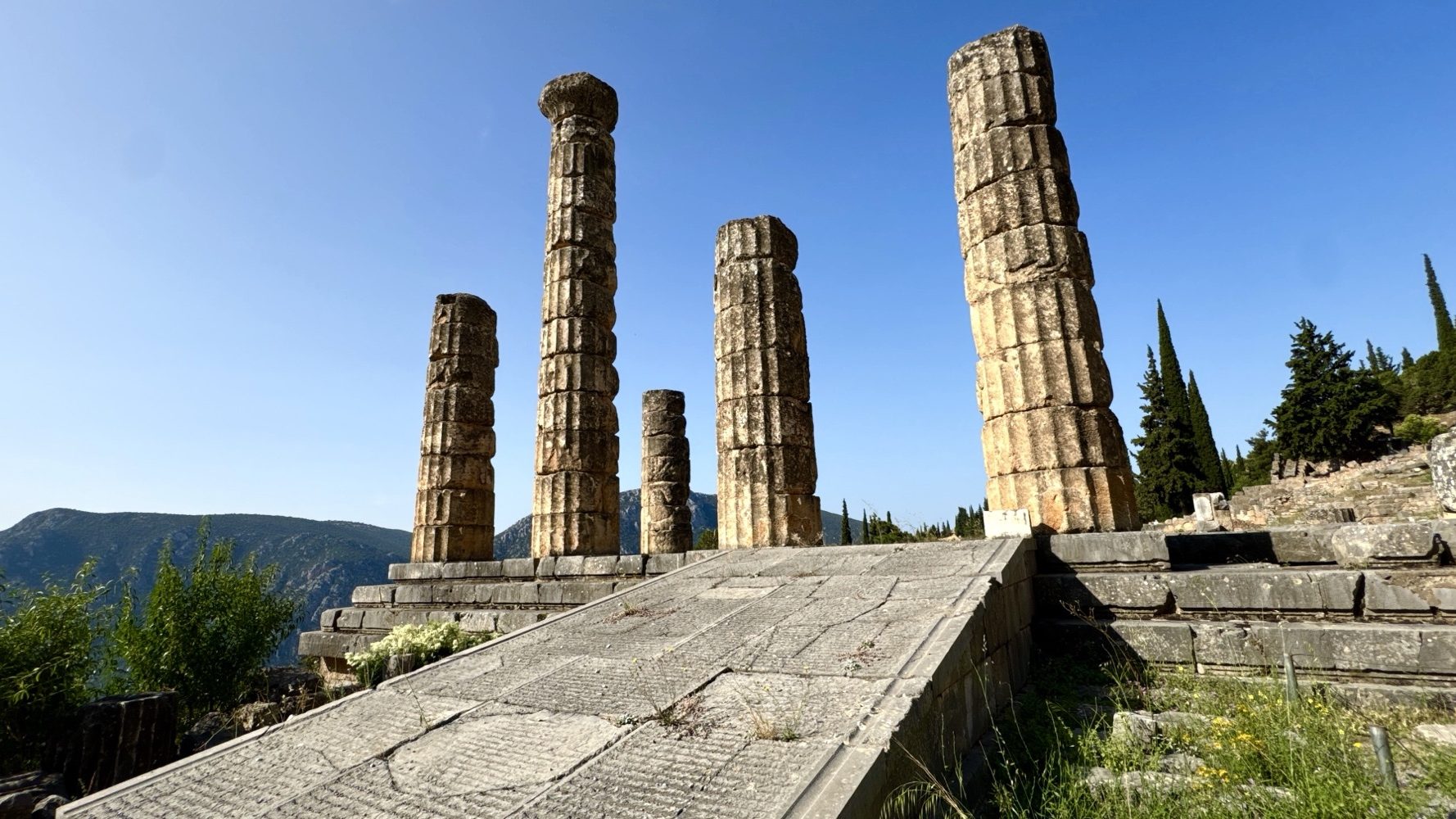
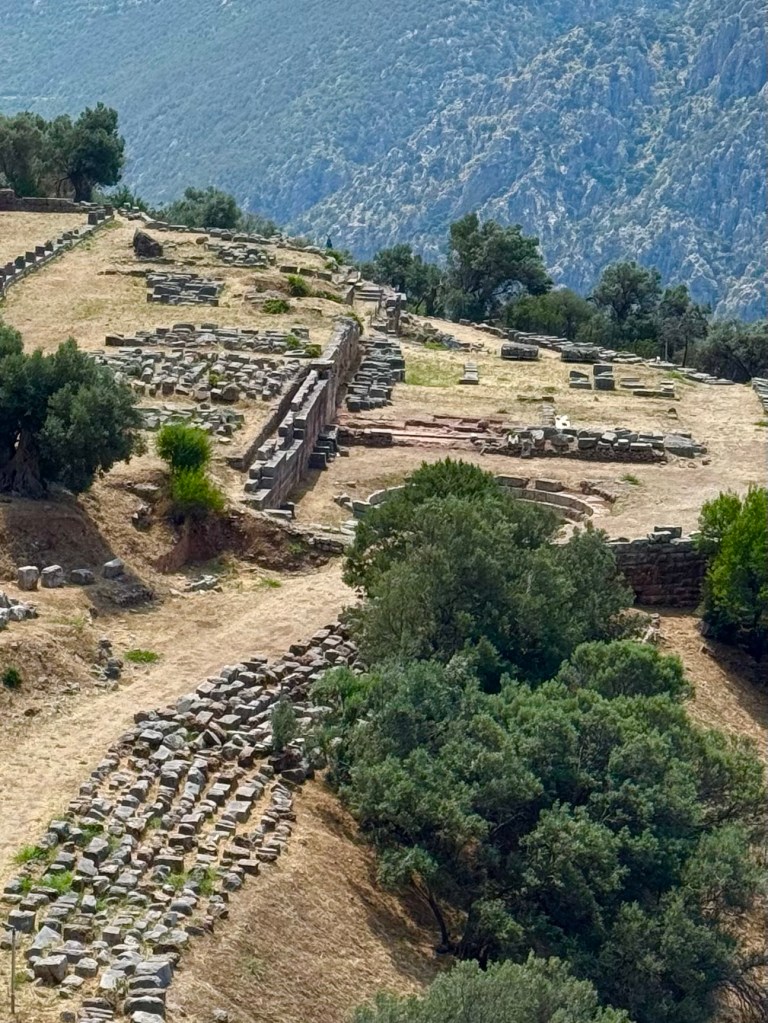
At the top of the Sacred Way lies the heart of Delphi: the Temple of Apollo. Here the Pythia once sat above a chasm, inhaling sacred vapors and delivering Apollo’s words. The ruins you see now are from the 4th century BCE, but temples before this one were destroyed by fire or earthquake. Visitors in antiquity were greeted by the famous inscription, “Know Thyself” (γνῶθι σεαυτόν). From this vantage point, the valley of olive groves rolls out toward the Gulf of Corinth, a view that surely lent weight to the oracle’s pronouncements.
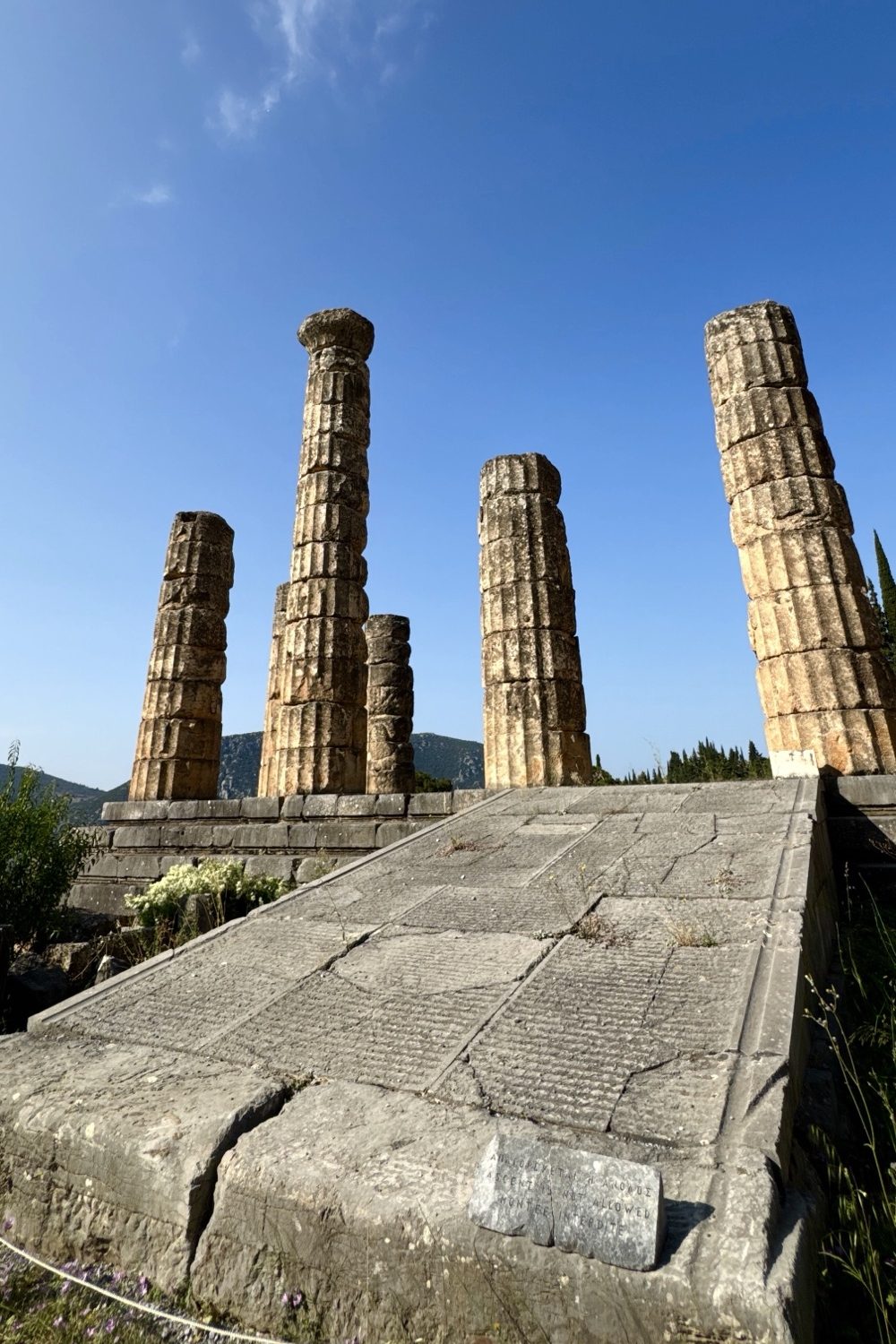
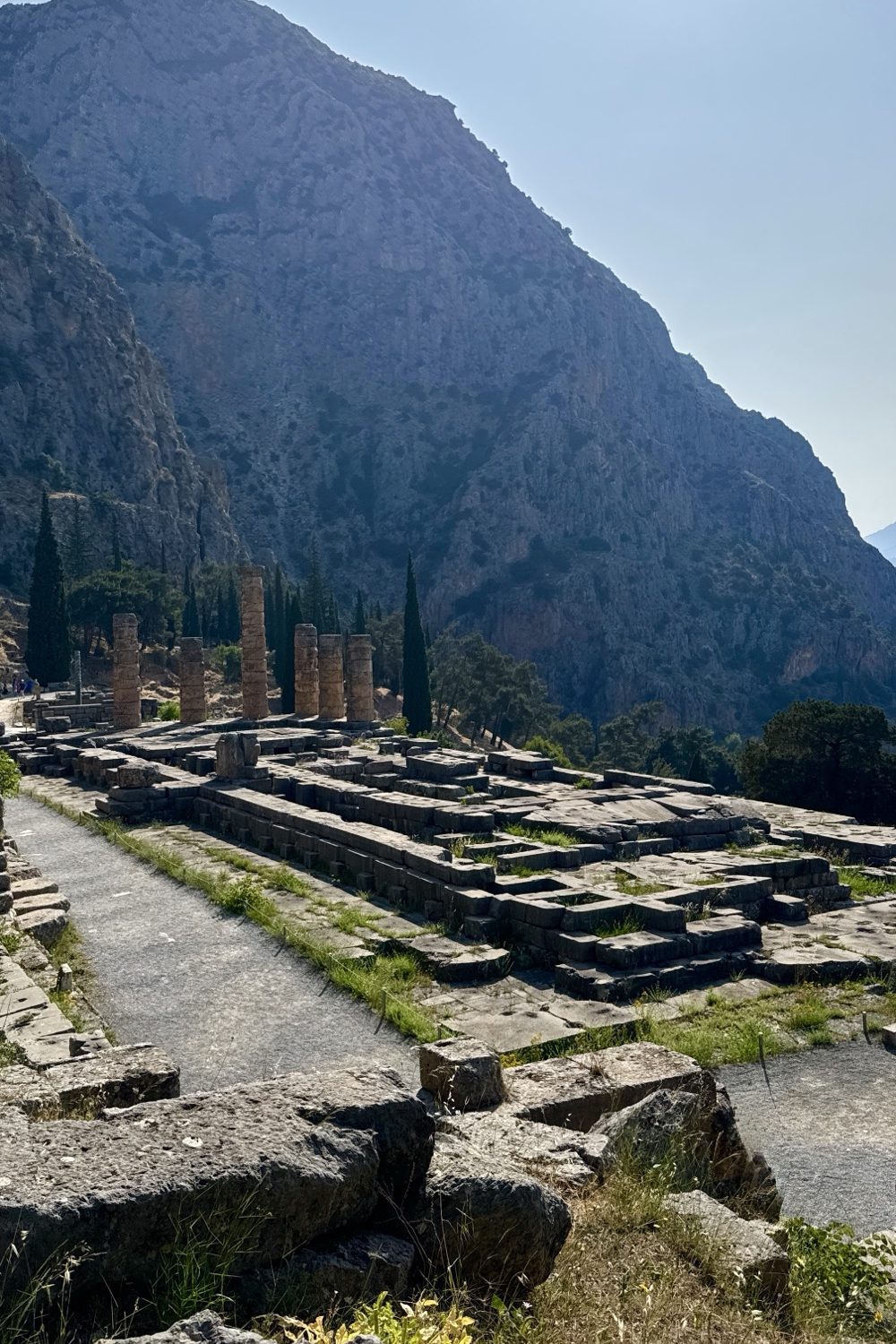
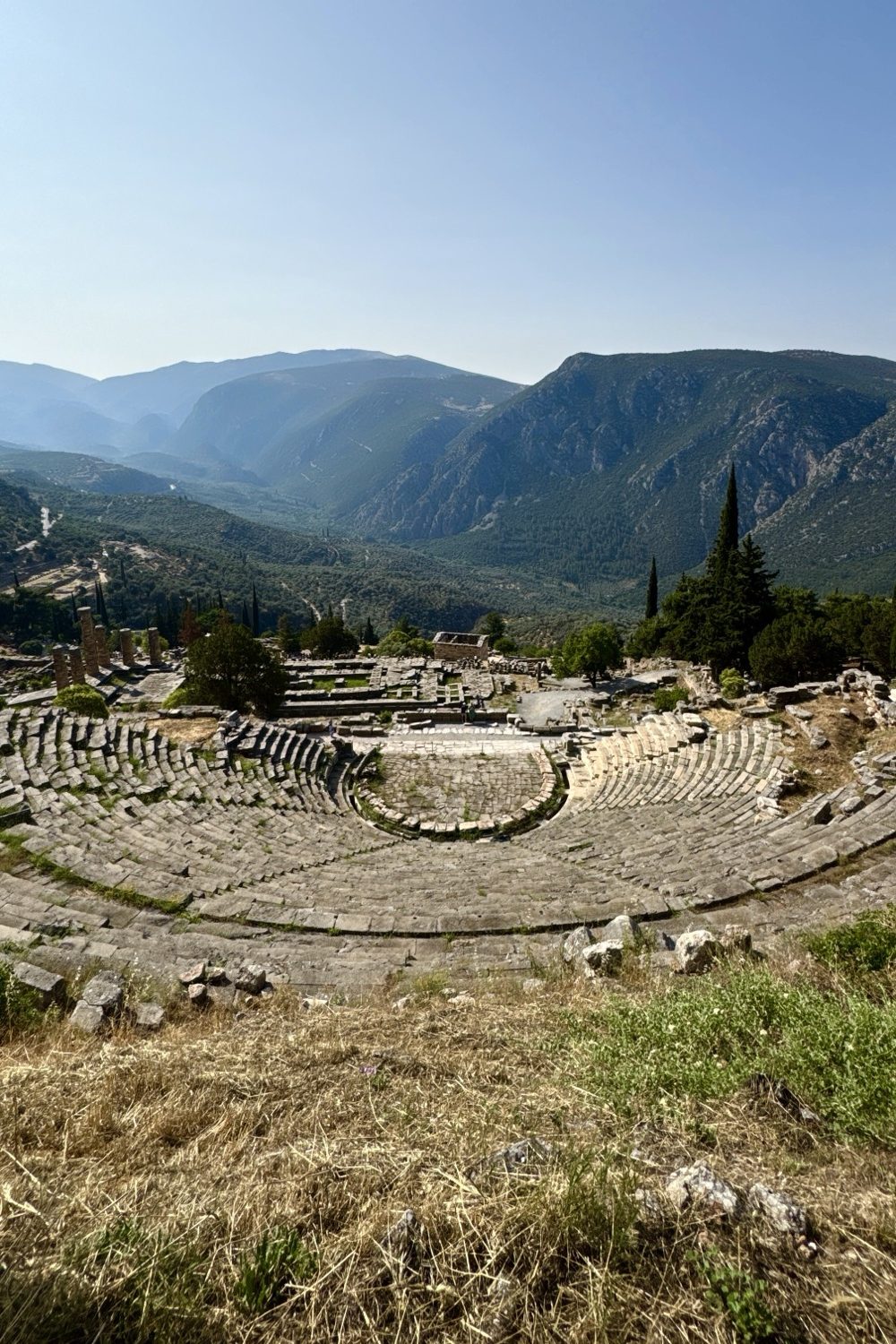
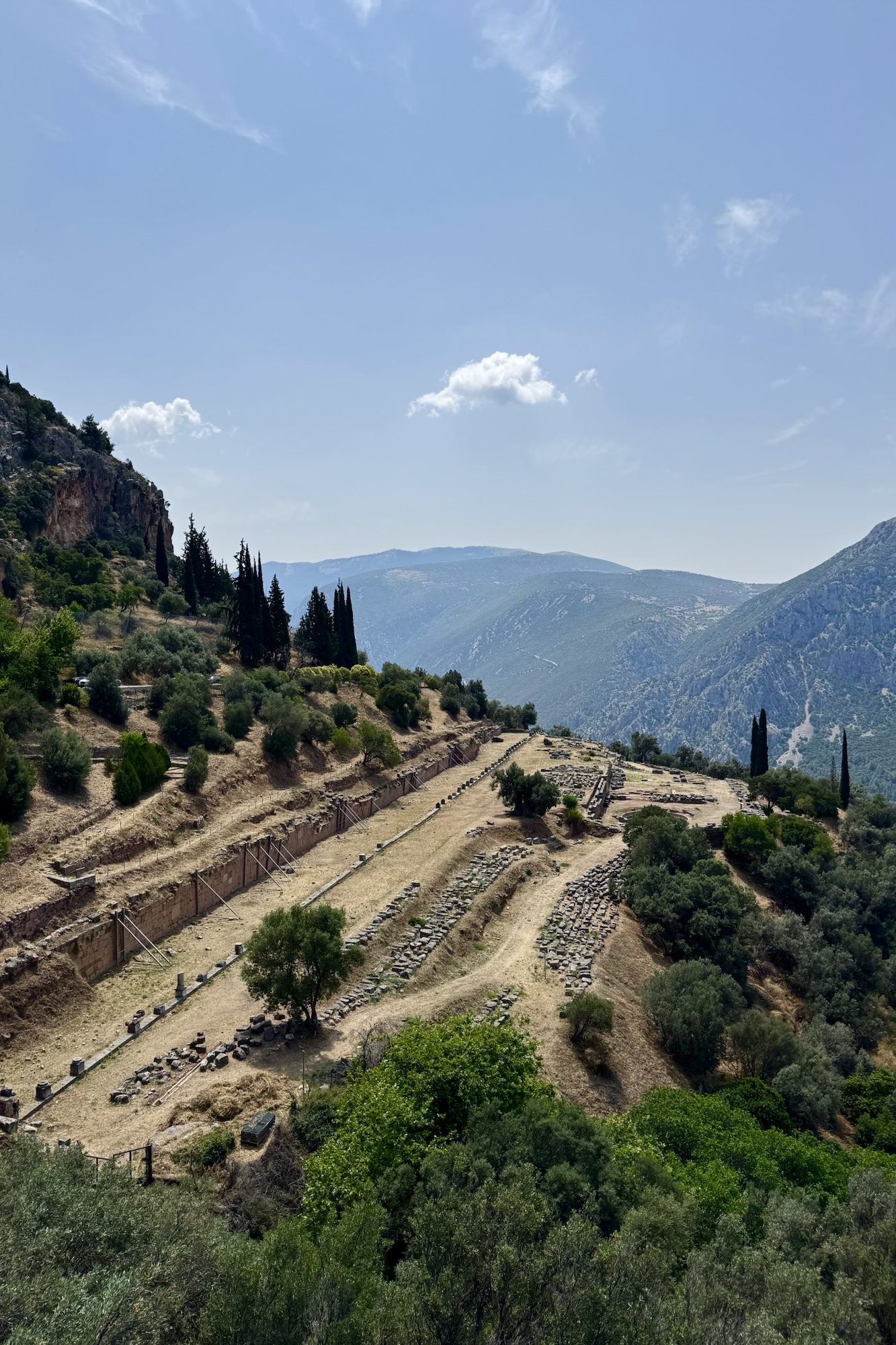
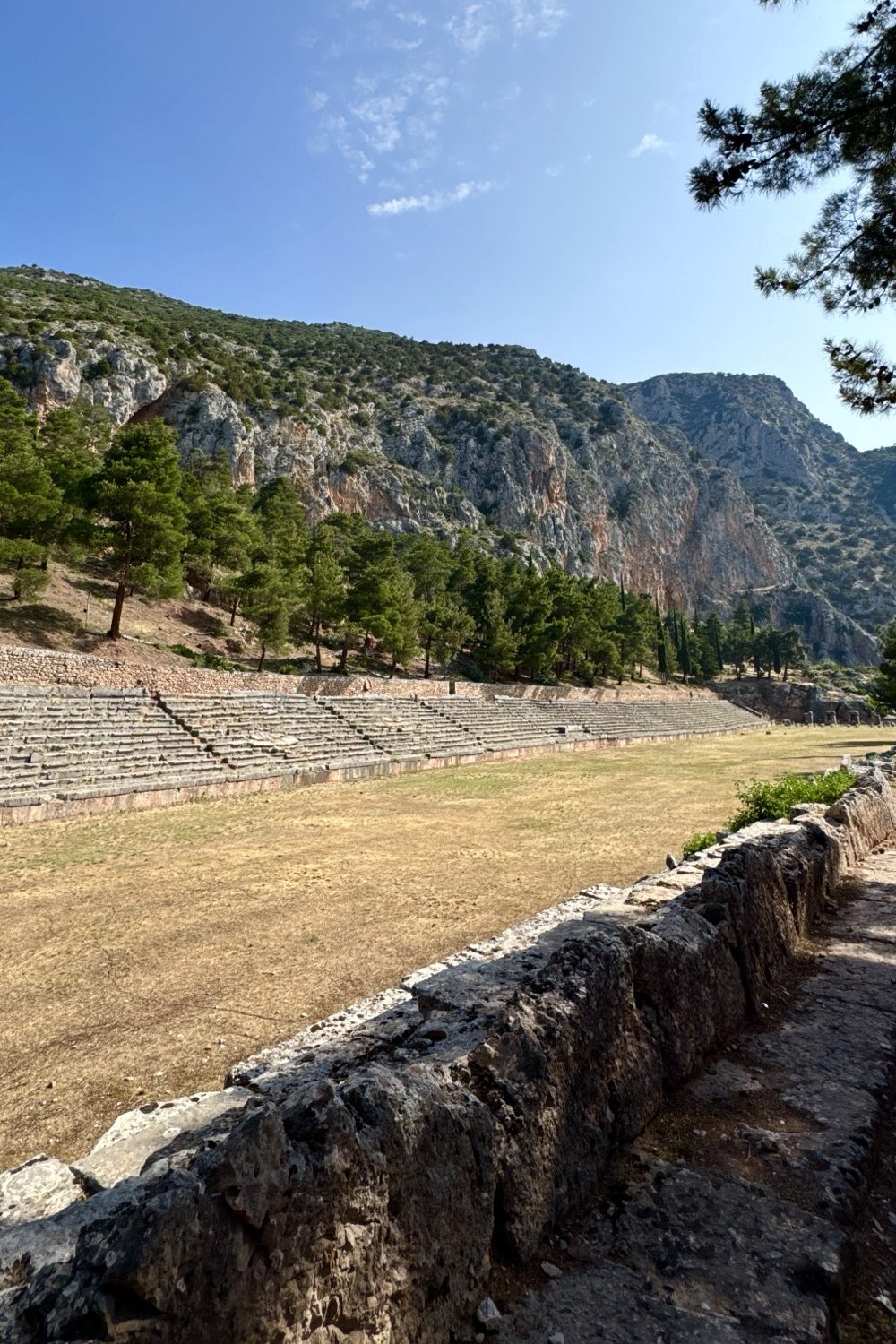
Climb higher and you reach the Theatre of Delphi, carved into the slope. It held around 5,000 spectators and hosted poetry, music, and drama during the Pythian Games, all with the temple below and the valley stretching beyond. The final steep climb takes you to the Stadium, perched above the sanctuary. This long structure seated about 6,500 people and was the venue for athletic contests, wrestling, and races, honoring Apollo through physical competition, just as the theatre honored him through the arts.
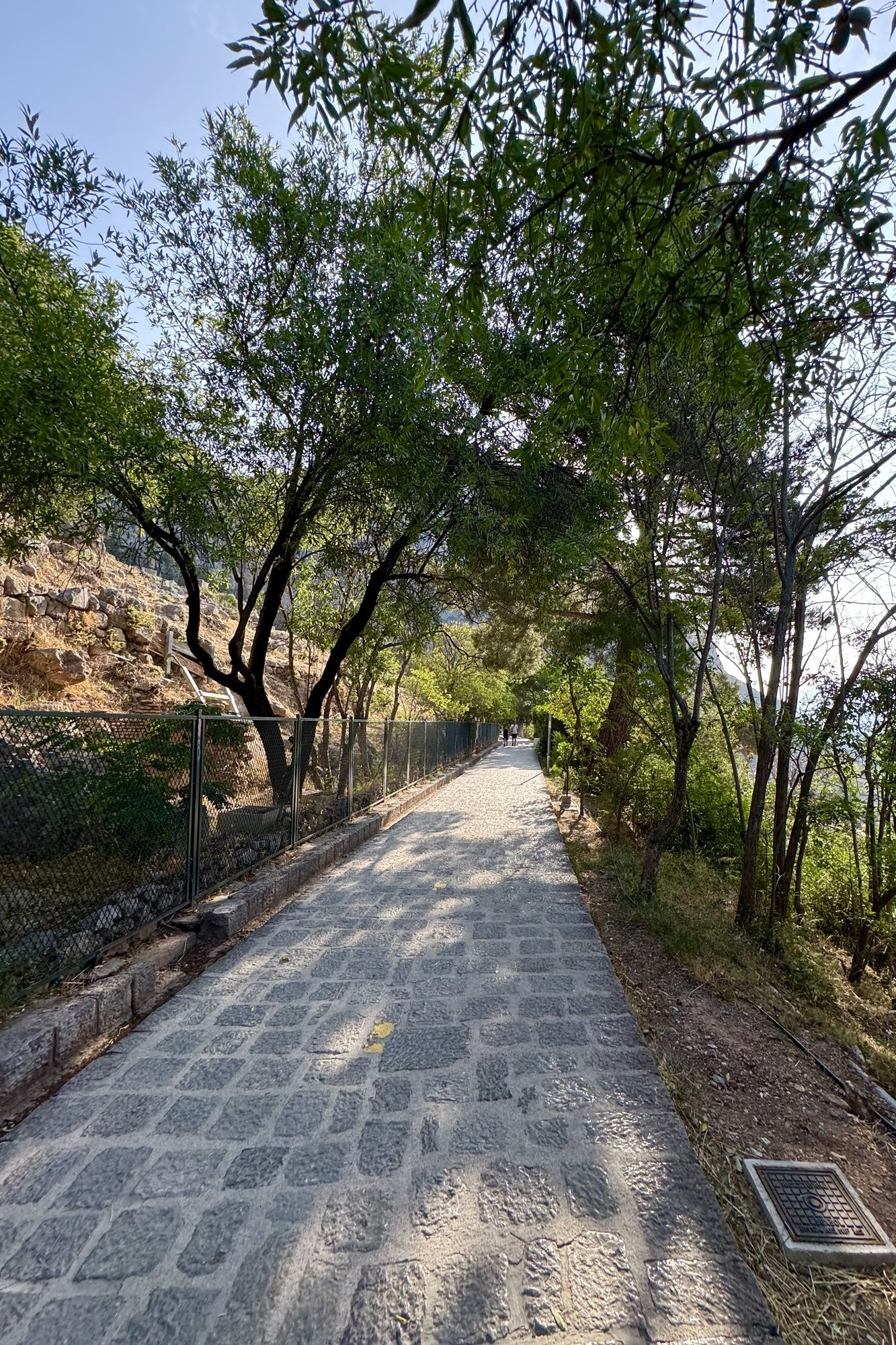
Visiting Delphi does require some physical effort, as the entire site is uphill. The paths are well maintained, but it is not recommended for anyone with mobility issues. It’s also a hugely popular site, so plan to visit early in the morning or later in the afternoon, and set aside at least 1.5 to 2 hours to explore fully. Sun protection is essential.

House of Divine Goods
The experience is incomplete without the Archaeological Museum of Delphi, which ties the ruins to the objects once housed there. The museum is arranged chronologically, from the Archaic period through the Classical, Hellenistic, and Roman eras, so you can trace Delphi’s rise, glory, and eventual decline.
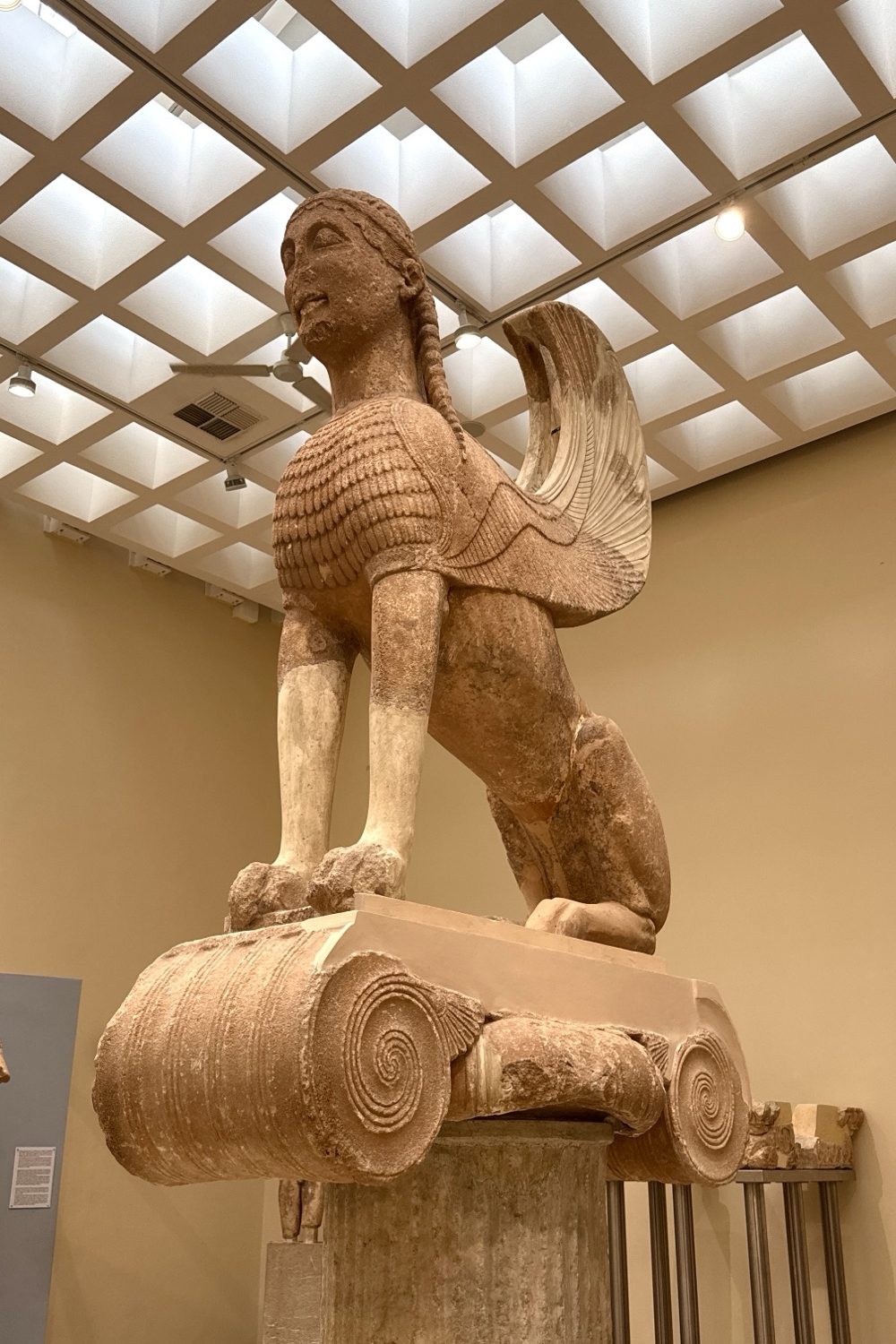

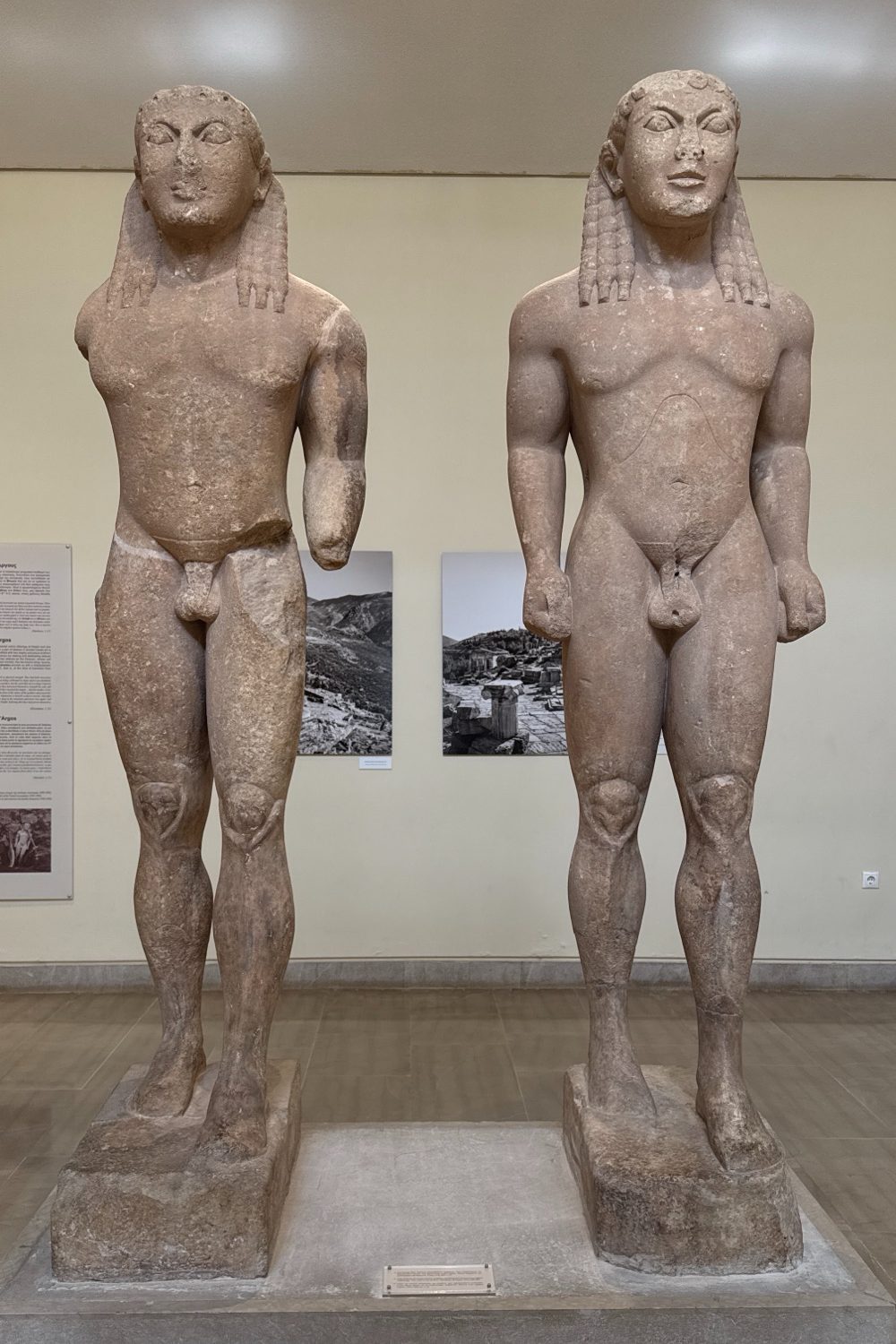
Highlights include the Charioteer of Delphi, one of the finest bronzes from antiquity, so detailed you can see the eyelashes and folds of his robe. The colossal Sphinx of Naxos, which once perched atop a 10-meter Ionic column. The Omphalos Stone, marking Delphi as the “navel of the world.” The intricate friezes from the Siphnian Treasury, showing mythological battles like the Gigantomachy. The stiff but powerful Archaic kouroi statues portraying the Twins of Argos, and fragments from the Temple of Apollo itself.
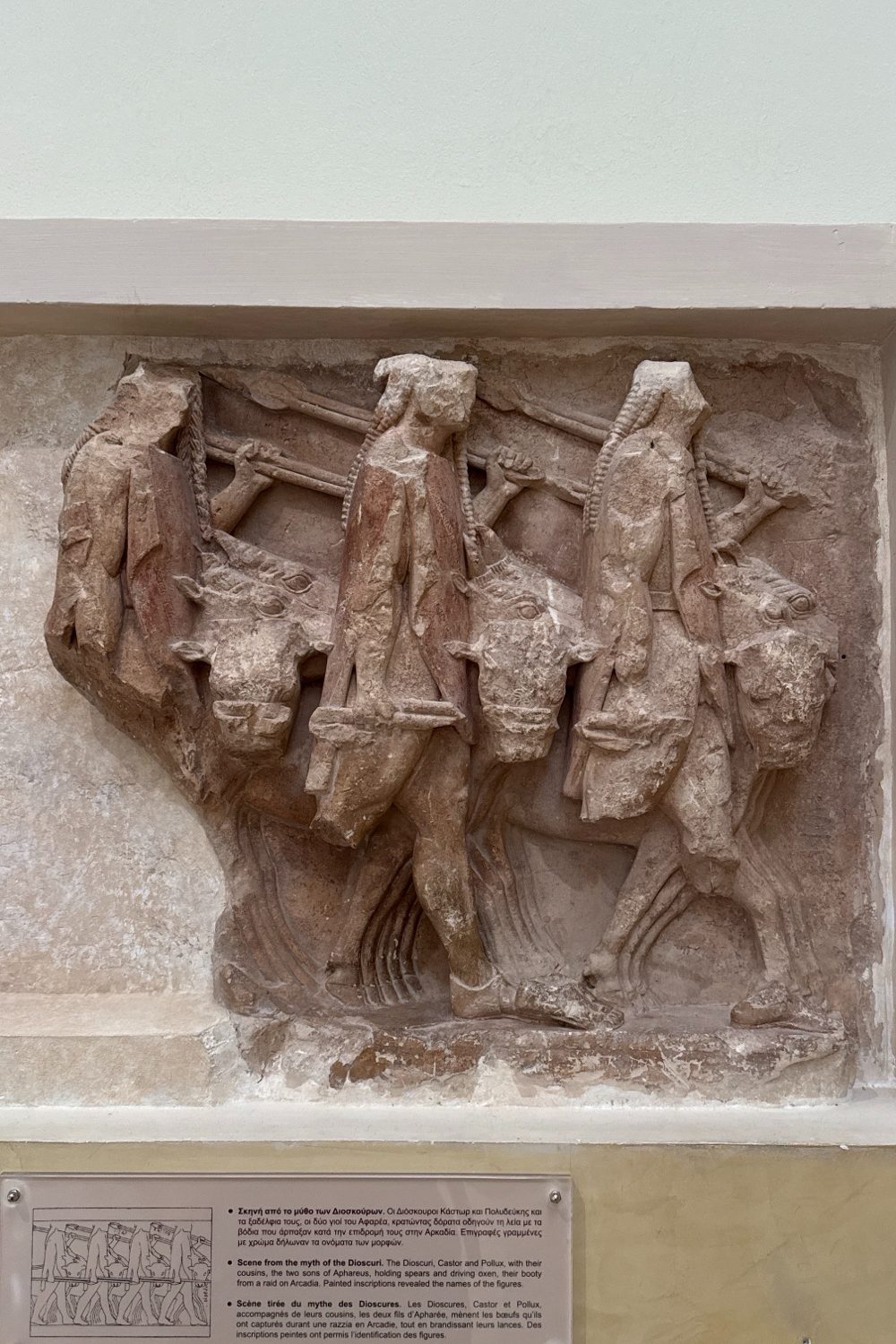
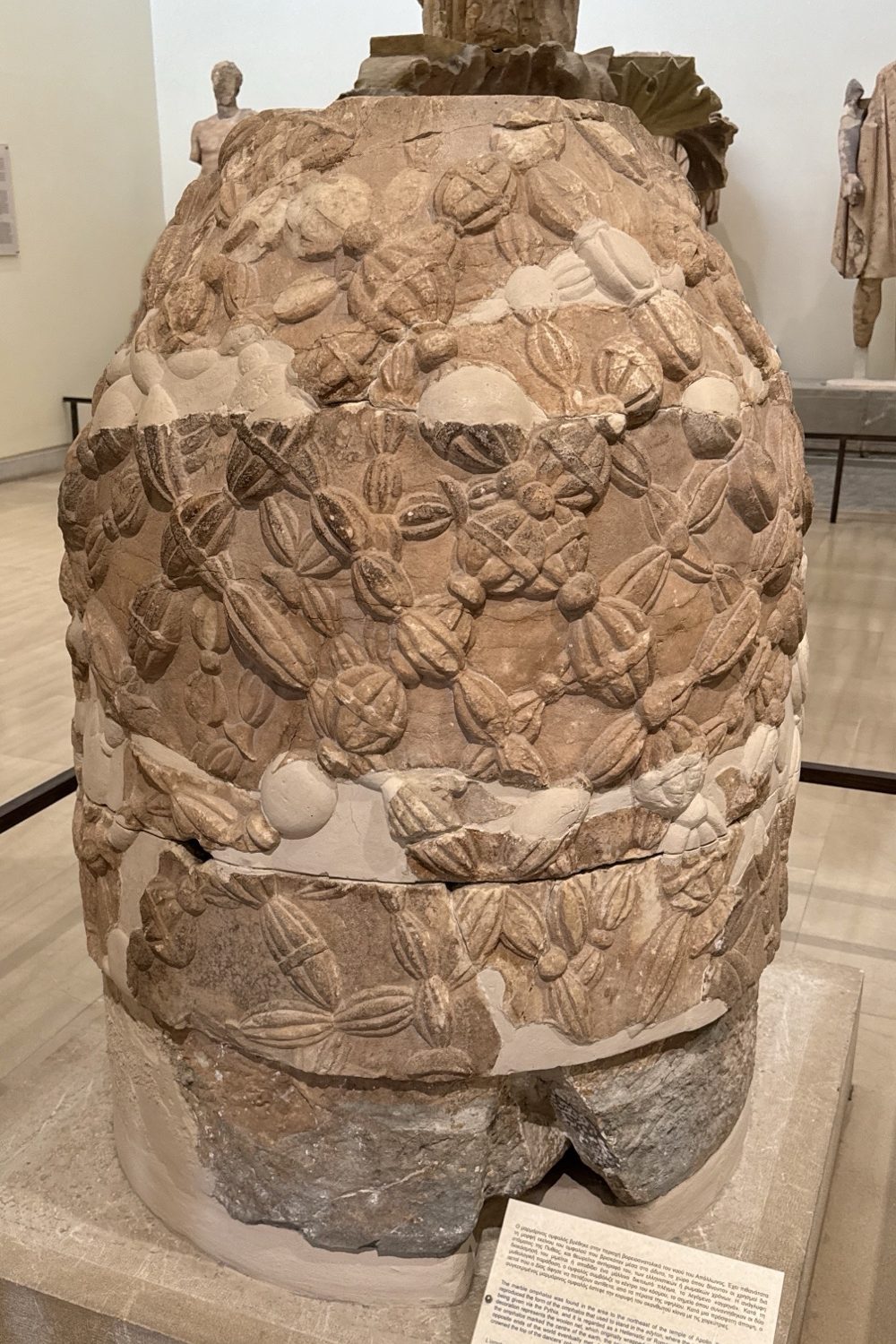
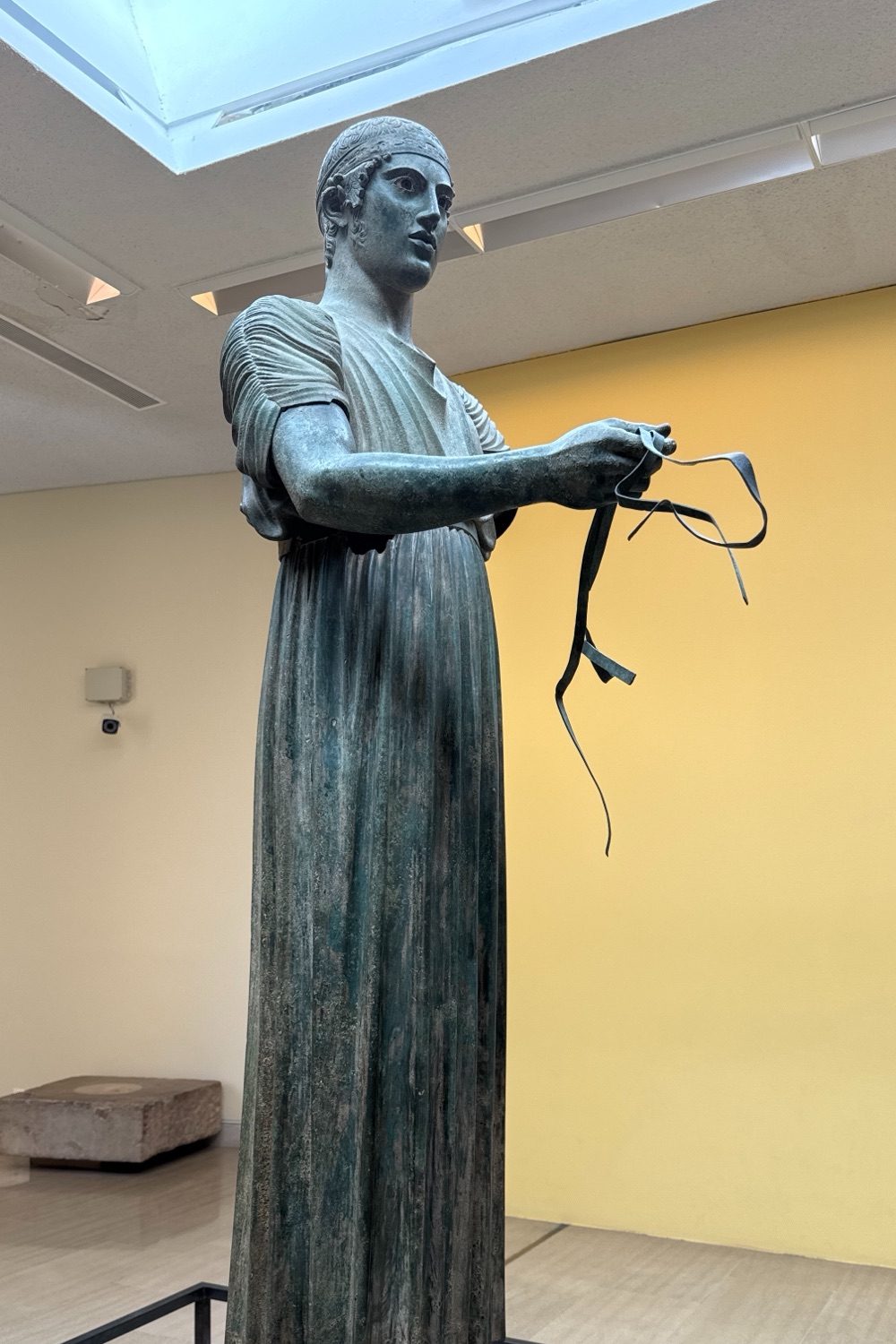
The museum doesn’t just display artifacts, it captures Delphi’s role as a meeting point of myth, religion, and politics. Each dedication and offering reminds us that city-states from all over Greece, and even beyond, came here not only for prophecy but also to demonstrate power and prestige.
A Sign of the Future?
A visit to Delphi is more than sightseeing. It feels like a pilgrimage through myth, politics, art, and spirituality, where every step up the Sacred Way echoes the climb toward Apollo’s wisdom.
During my visit, I had an encounter that added to the mysticism of the place. A random stranger on the hillside told me of the final prophecy of the Pythia. I never knew there was such a thing, but later via trusty Google-sensei I learned that as the Roman Empire shifted and Christianity rose, pagan sanctuaries were being systematically closed. Delphi, already weakened by earthquakes, looting, and decline, could no longer function as a pan-Hellenic center.
When the oracle was consulted for the last time, the Pythia gave these words:
“Tell the king: the fair-wrought hall has fallen.
Apollo has no dwelling, nor prophetic laurel, nor prophetic spring.
The voice of the water is silent.”
This poetic farewell marked the end of Delphi’s sacred role. Apollo had left, the temple was no longer holy, and the oracle’s power was gone. Even so, Delphi’s story ended as mythically as it had lived.
The stranger told me the waters of Delphi have begun to move again. Was it a geological shift? Or something more? I’ll never know, because just then I was dragged away to be the designated photographer for a group of German tourists, and not long after, I left for the next stage of my Greek journey. I assume my stranger simply went her own way too.
So now I can’t help but wonder. Was that encounter simply a coincidence, or was it a brush with the divine?
 Shenanigans Abroad
Leave a Reply