Tag: greece

  • Greece – Delphi

    Land of Silent Oracle

    Past, Present, Future?

    Ah, Delphi. Legendary land of the Pythia. Scene-setter of so many Greek myths and legends. The place where Apollo slew the Python.

    Dramatically set on the slopes of Mount Parnassus in central Greece, Delphi was one of the most important religious and cultural centers of the ancient world. To the Greeks, it was the “navel of the world” (the omphalos), the point where heaven and earth met, and the seat of Apollo’s most famous oracle.

    For me, Delphi has always been a fascination, mostly because of how often it pops up in myths, legends, and even books. From novels like the Percy Jackson series or Esther Friesner’s Nobody’s Princess and Prize, to the classics like the Iliad, Odyssey, and Aeneid, and the myths of Jason and the Argonauts or Hercules. The very idea that a prophecy could spell boon or disaster depending on how it was interpreted, or whether it was even heeded at all, is endlessly intriguing.

    Beyond its mystical aura, there is also the political side of the oracle. Were the words of the Pythia truly the voice of a god? Or simply the carefully crafted performance of a well-informed individual or sect? We may never know. It does says a lot about the human condition, I suppose, though that is an entirely different rabbit hole I won’t be diving into today.
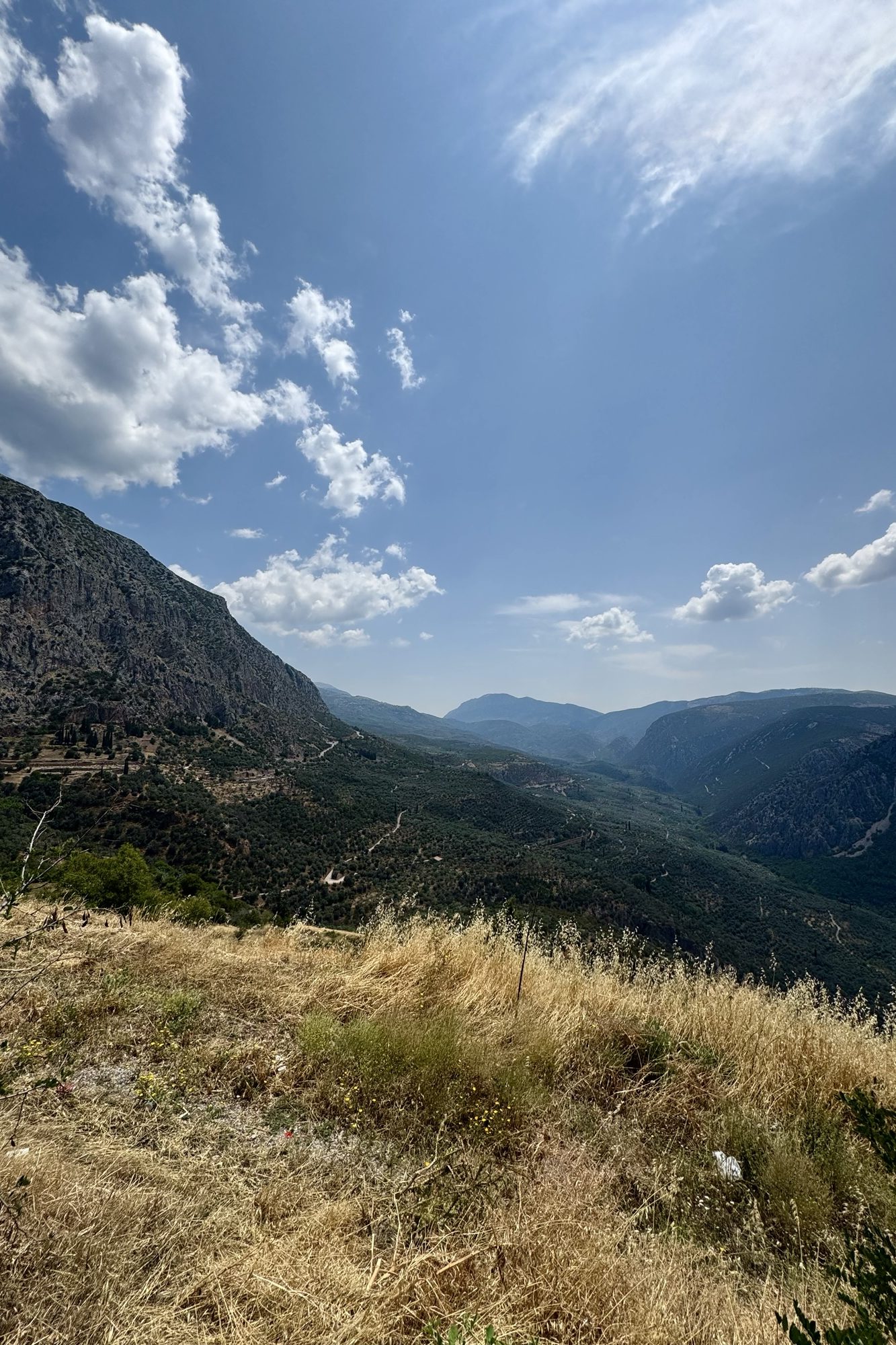
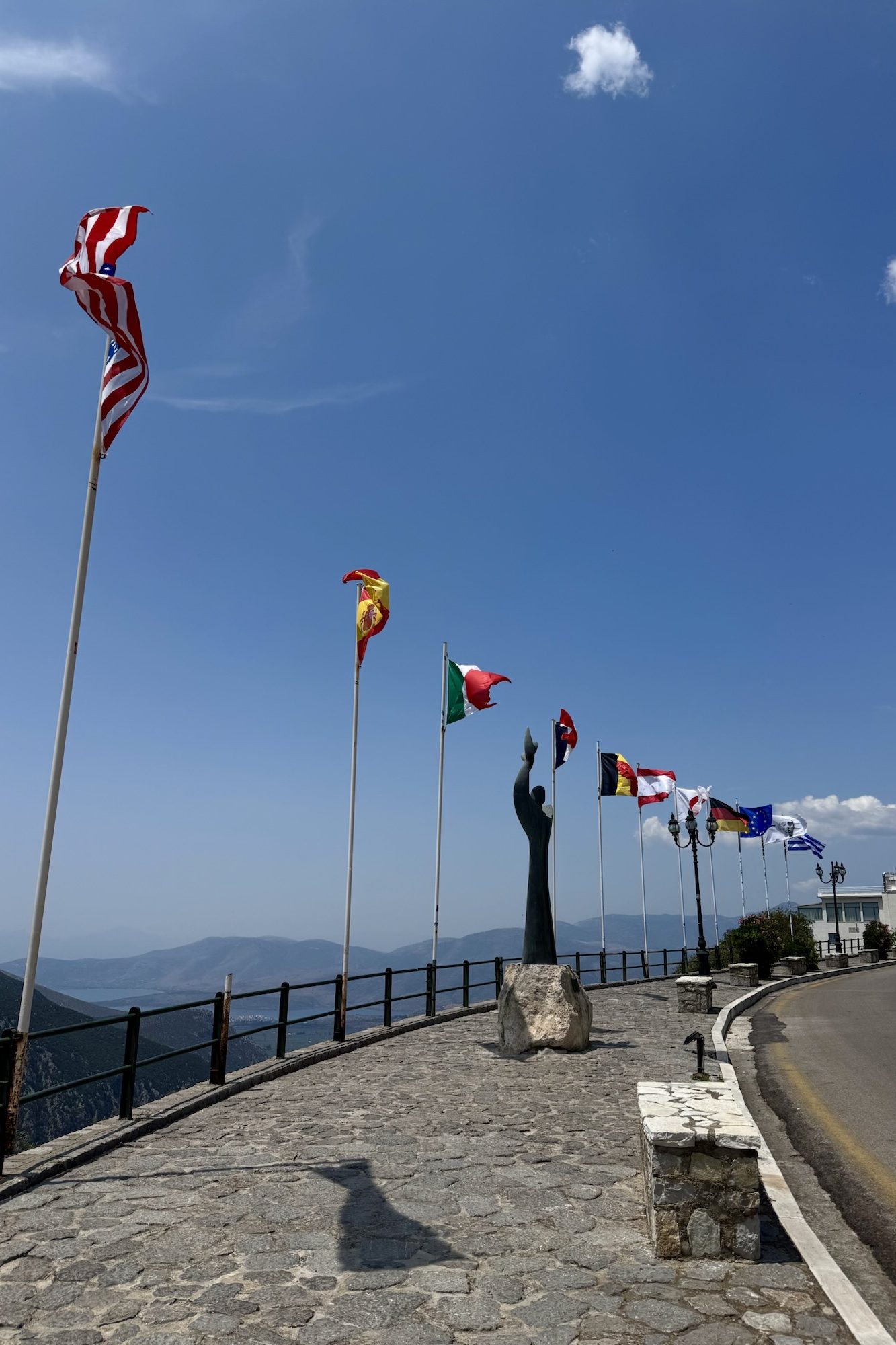
    In the present day, Delphi is very much a tourist-oriented town, perched over the Pleistos Valley with its sweeping views of olive groves stretching to the Gulf of Corinth. The ancient city and archaeological museum sit just a five-minute walk from town. Delphi is worth at least a night’s stay, so you can catch the sunset or sunrise from a balcony restaurant or your accommodation, soaking up the peaceful village atmosphere. Beyond the ruins, Delphi is also a gateway to hiking trails on Mount Parnassus, charming mountain villages like Arachova (famous for its stone houses and ski resort), and even day trips down to the Gulf of Corinth.

    That said, Delphi also makes a great day trip from Athens with plenty of tours going to the town and back. It is about two hours by car or three hours by bus from the Liosion Bus Station via KTEL Fokidas. Tickets cost €20 one way, or €33 for a return. Just remember, when heading back, to flag the bus down on the opposite side of the road, as Delphi’s “bus station” is nothing more than a wooden plaque reading “bus stop.”

    The Passage Up

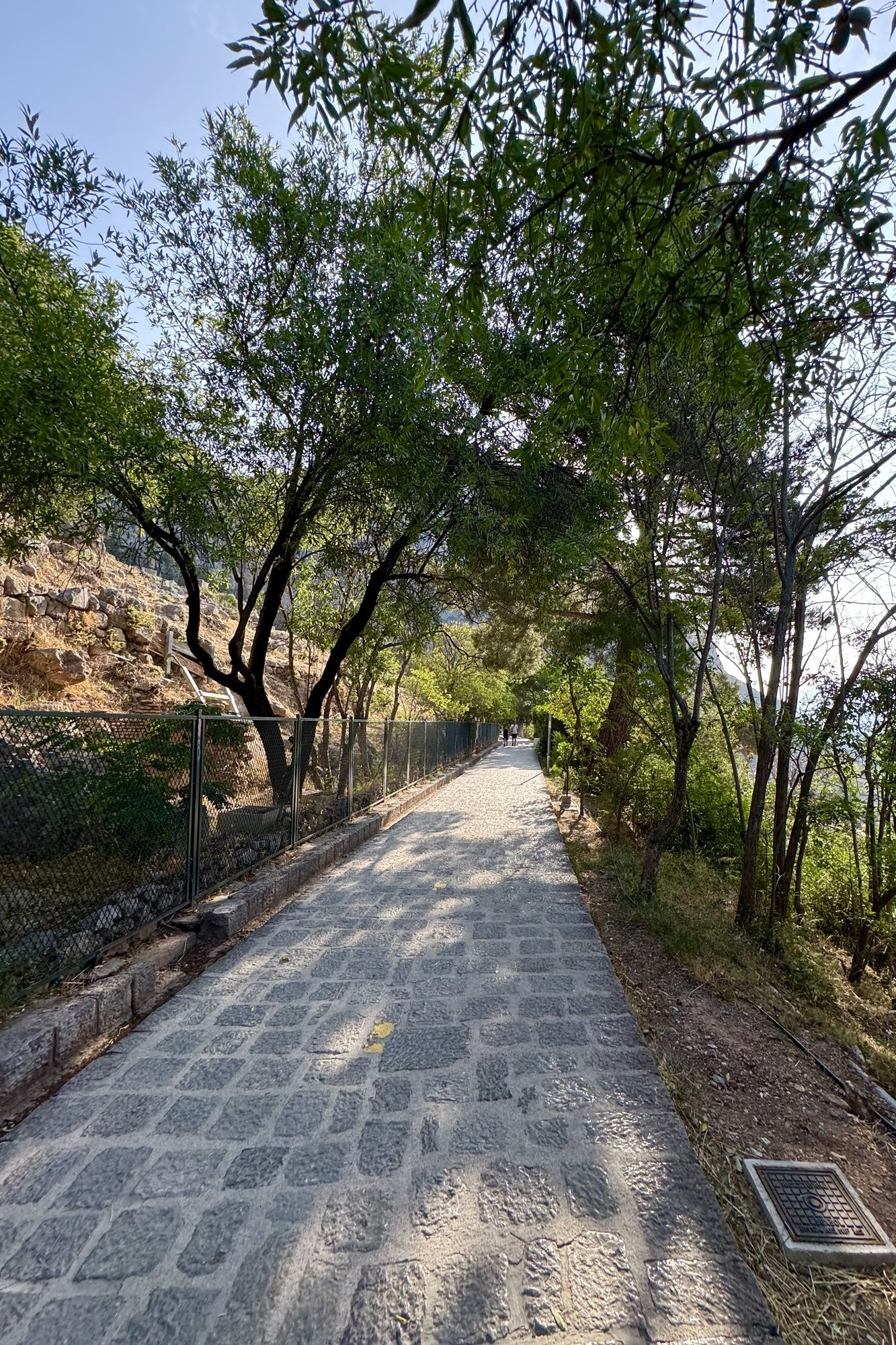
    Exploring the archeological site of Delphi is one of those sites best understood as a journey uphill, following the same route ancient pilgrims once took. It’s a symbolic pilgrimage, climbing from the earthly world of Athena’s sanctuary to Apollo’s sacred heights, where humans once sought answers from the gods. But first, let’s talk tribute- ahem, i mean tickets.

    Entry to both the site and the museum is €20, and the same ticket covers both. If you’re buying on-site, make sure you stop at the ticketing booth outside the museum first, because there are no ticket sales at the archaeological site itself. If you walk down from the town and head straight for the ruins, you’ll have to double back, which is not fun in the summer heat.
    A short distance from the main sanctuary lies the Tholos of Athena Pronaia, a mysterious circular temple often photographed against the mountains. This was the spiritual “gateway” to Delphi, where visitors would pause before entering Apollo’s precinct. Sadly, it’s currently inaccessible due to a rockfall in 2024, though you can still see it from across the street near the main entrance.

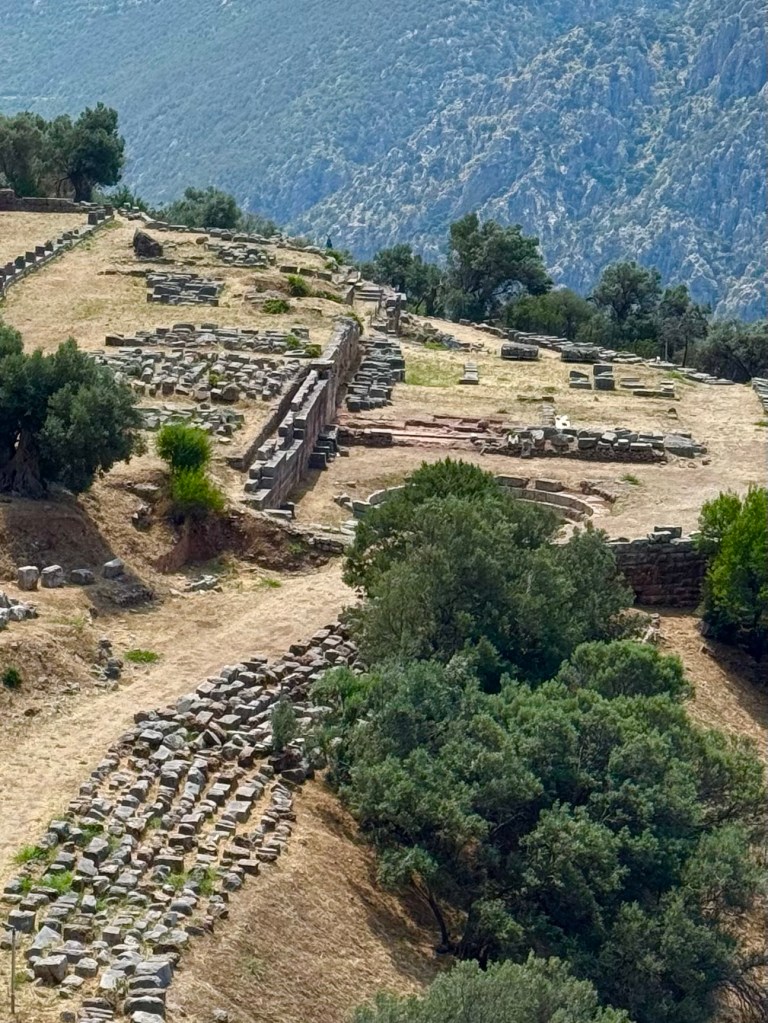
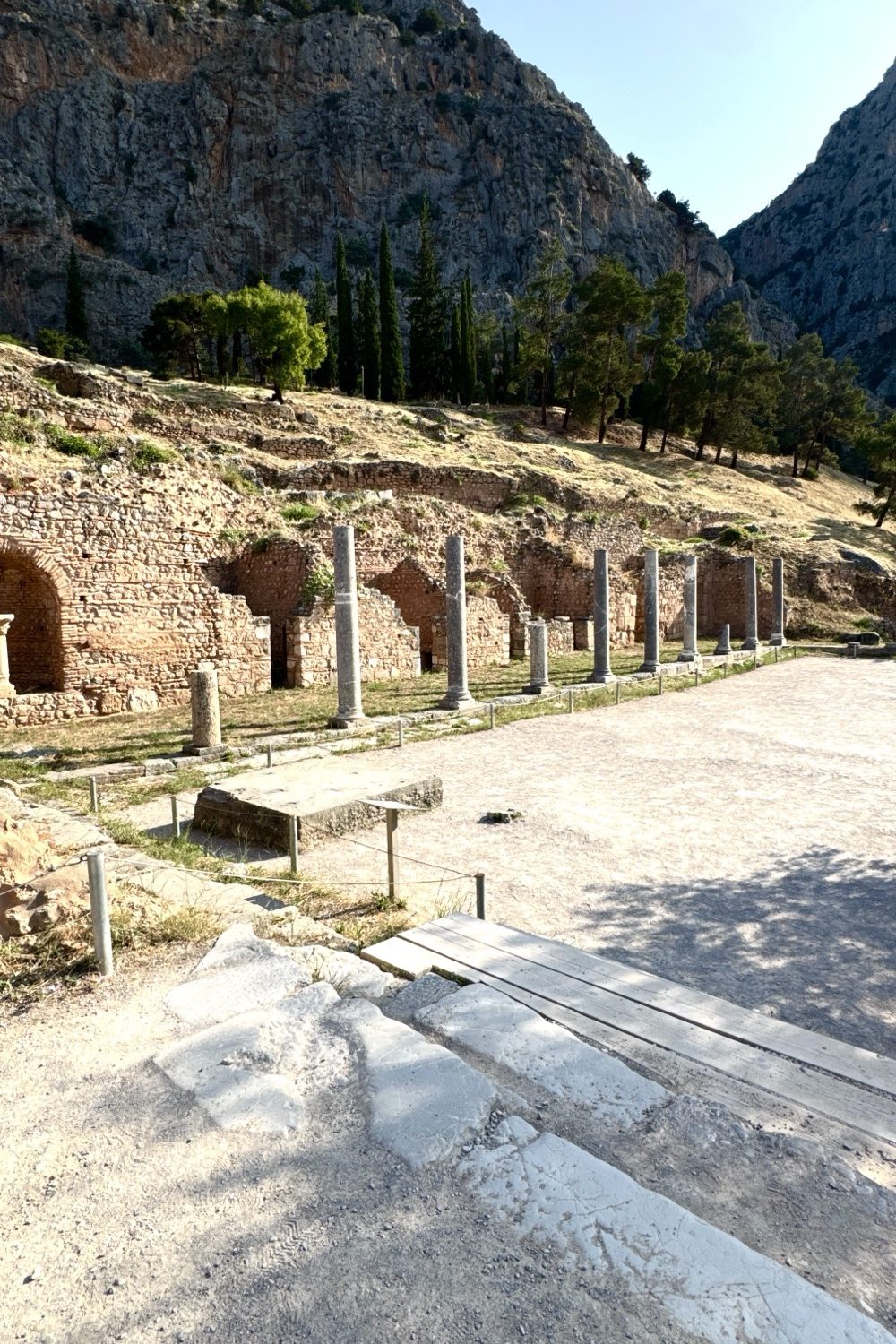
    Once inside, you begin at the Roman Agora, where markets and administrative life once bustled. From there, you pass the gateway and climb the Sacred Way, the processional route winding through the sanctuary. Along this path stood treasuries, small temple-like buildings where city-states stored their offerings to Apollo.
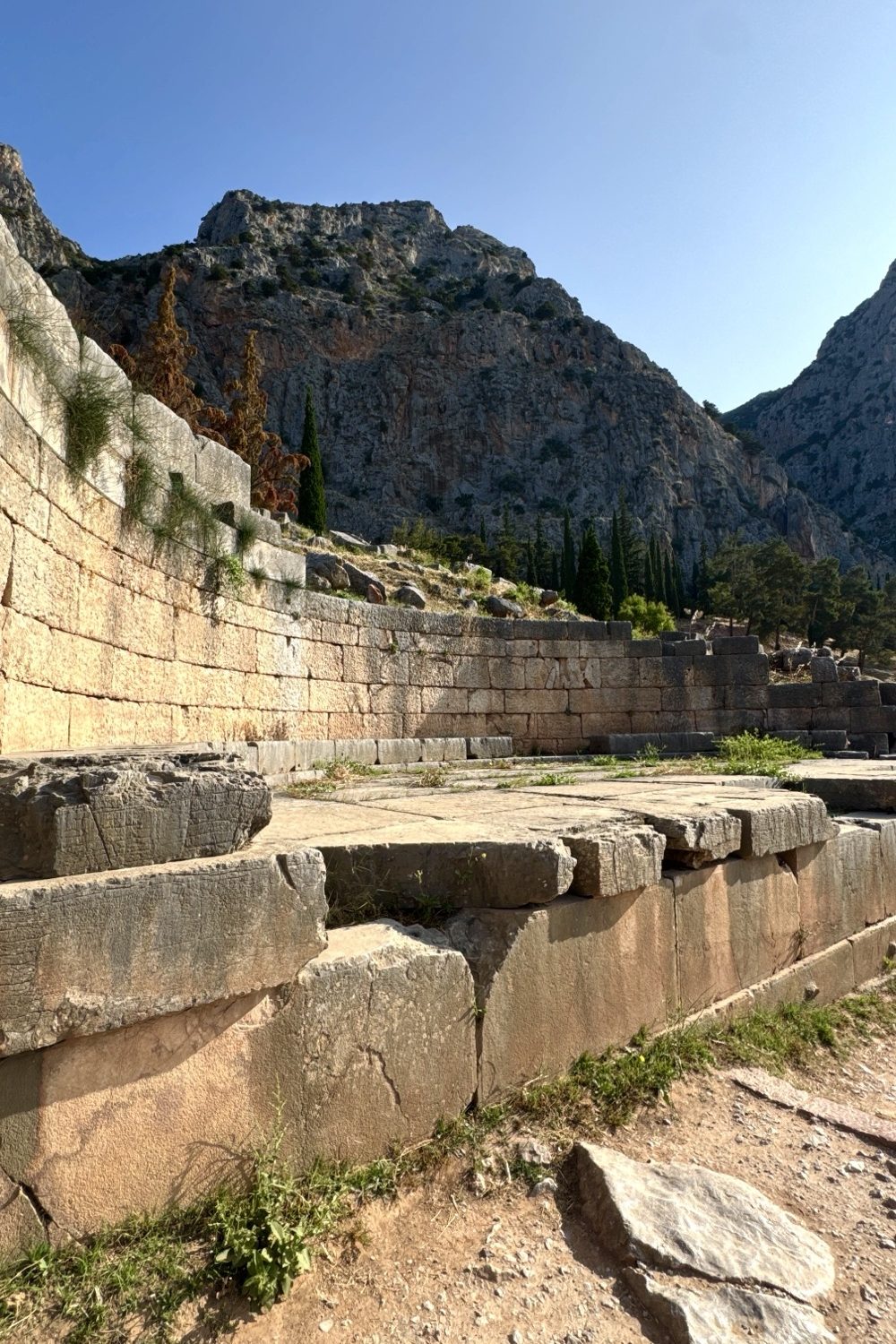
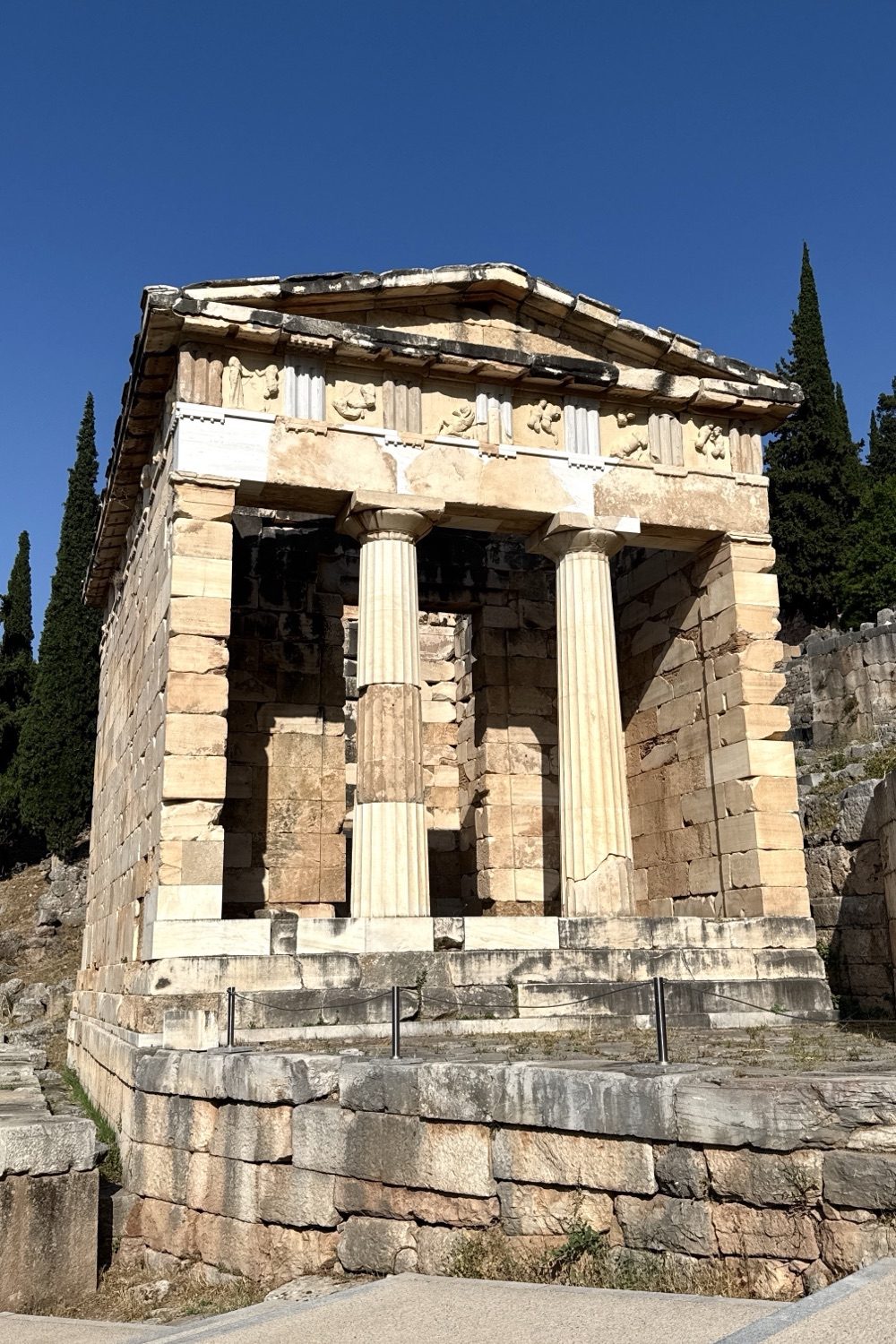
    These weren’t just gifts to the gods, they were political statements. The most famous, the Athenian Treasury, has been reconstructed in brilliant white marble, its carved metopes depicting myths and victories, a proud reminder of Athens’ power after the Persian Wars. All along the way, you’ll see bases for statues, votive columns, and inscriptions, each a testament to the competitive devotion of cities vying for Apollo’s favor.

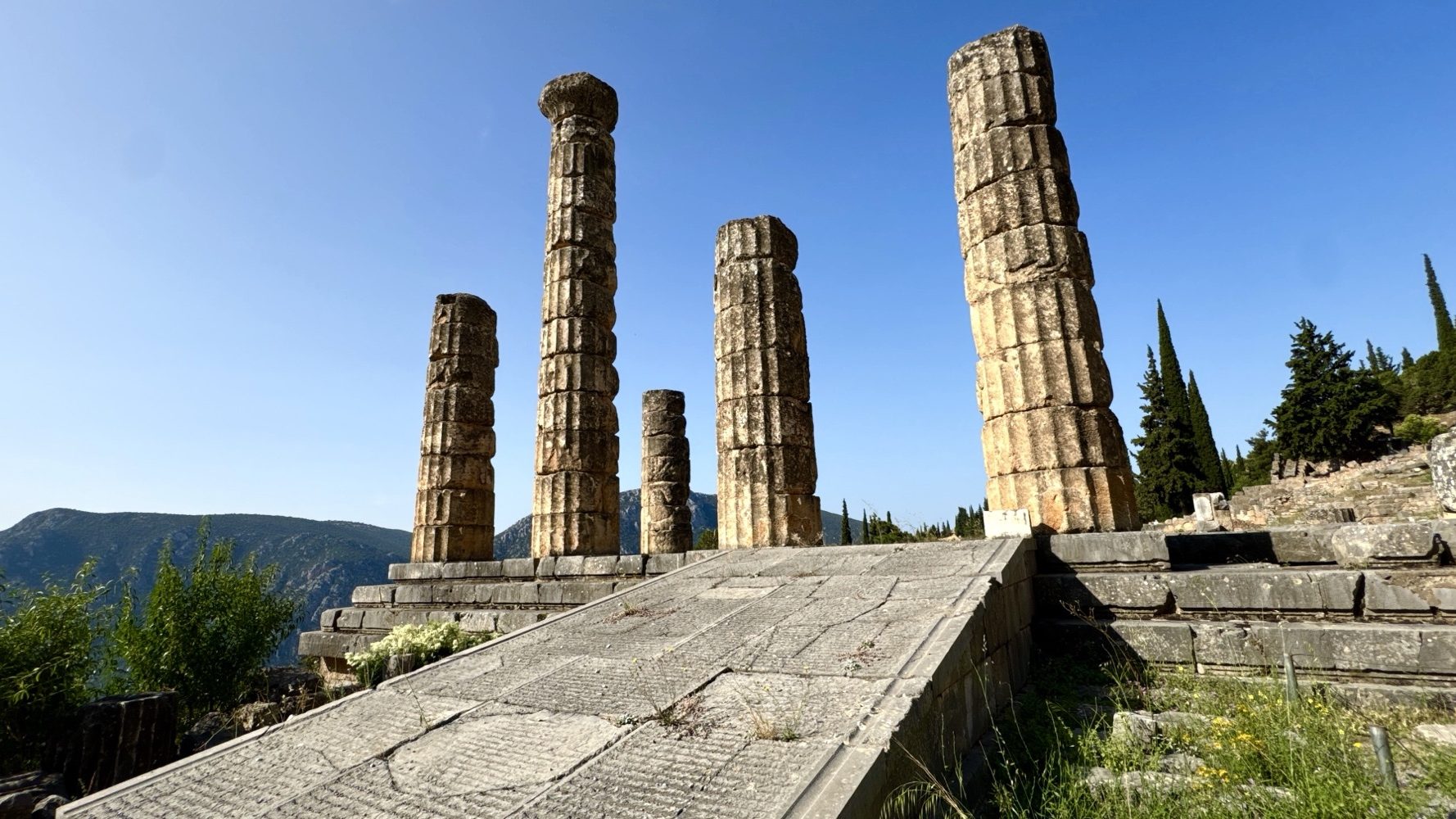
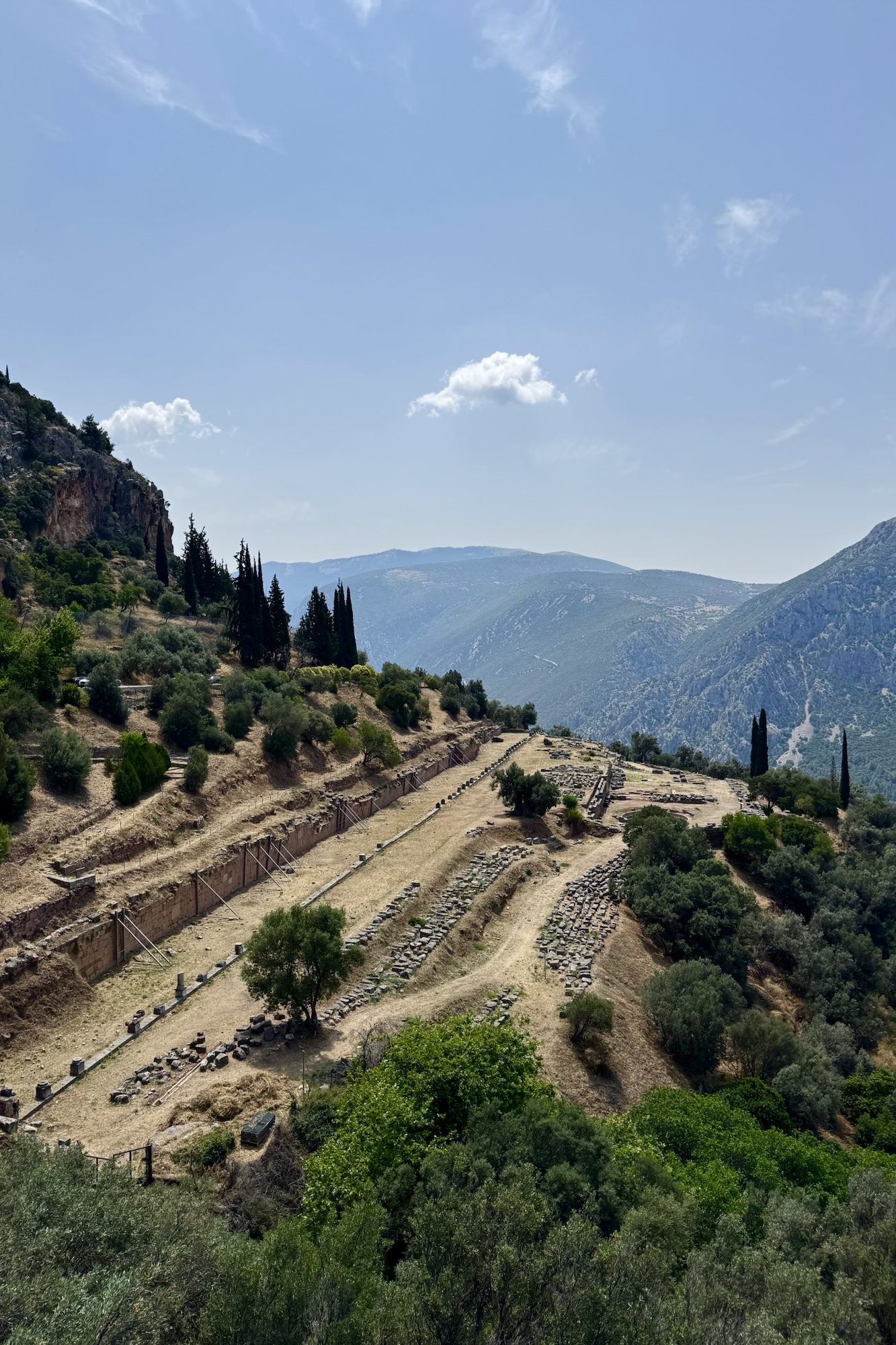
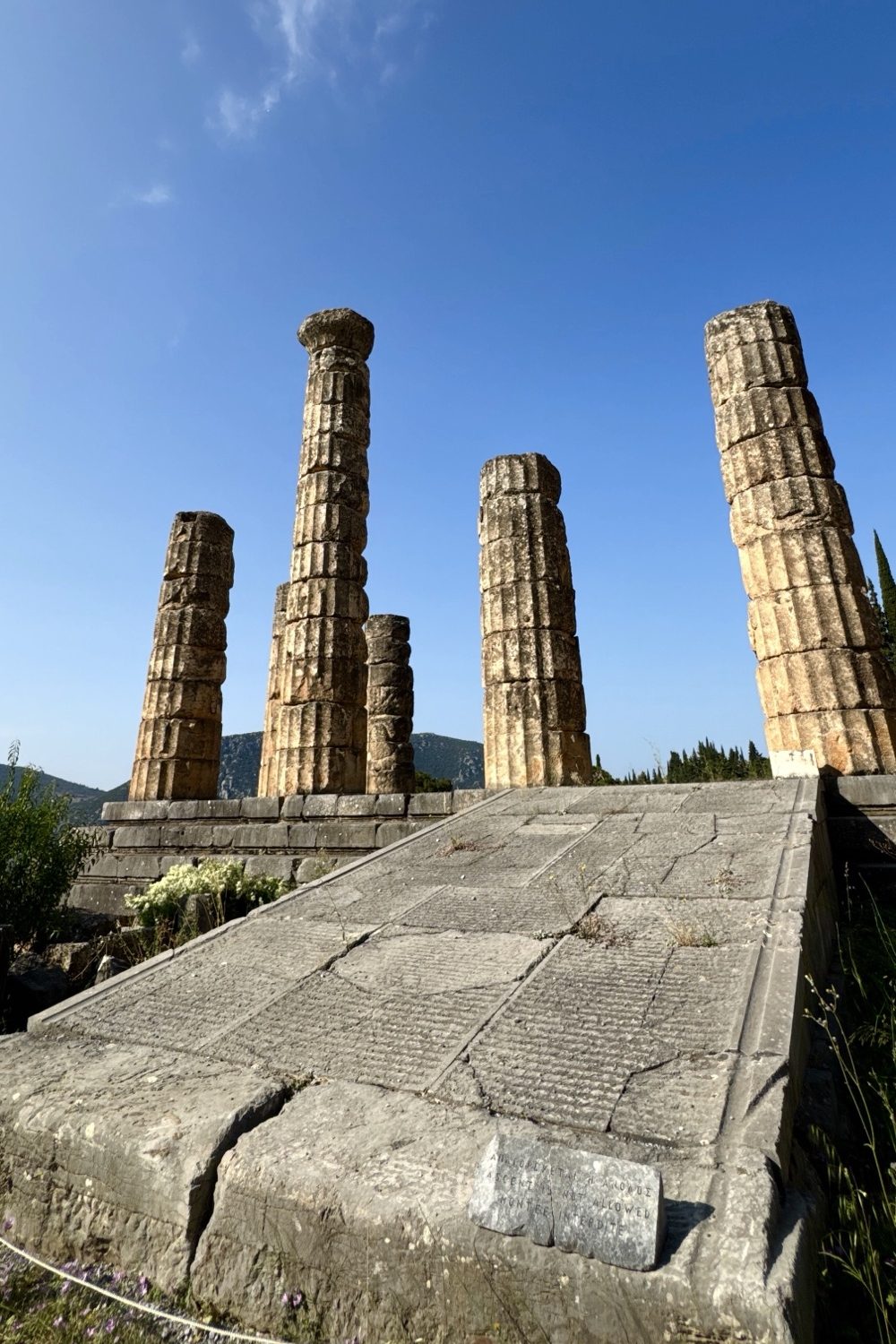
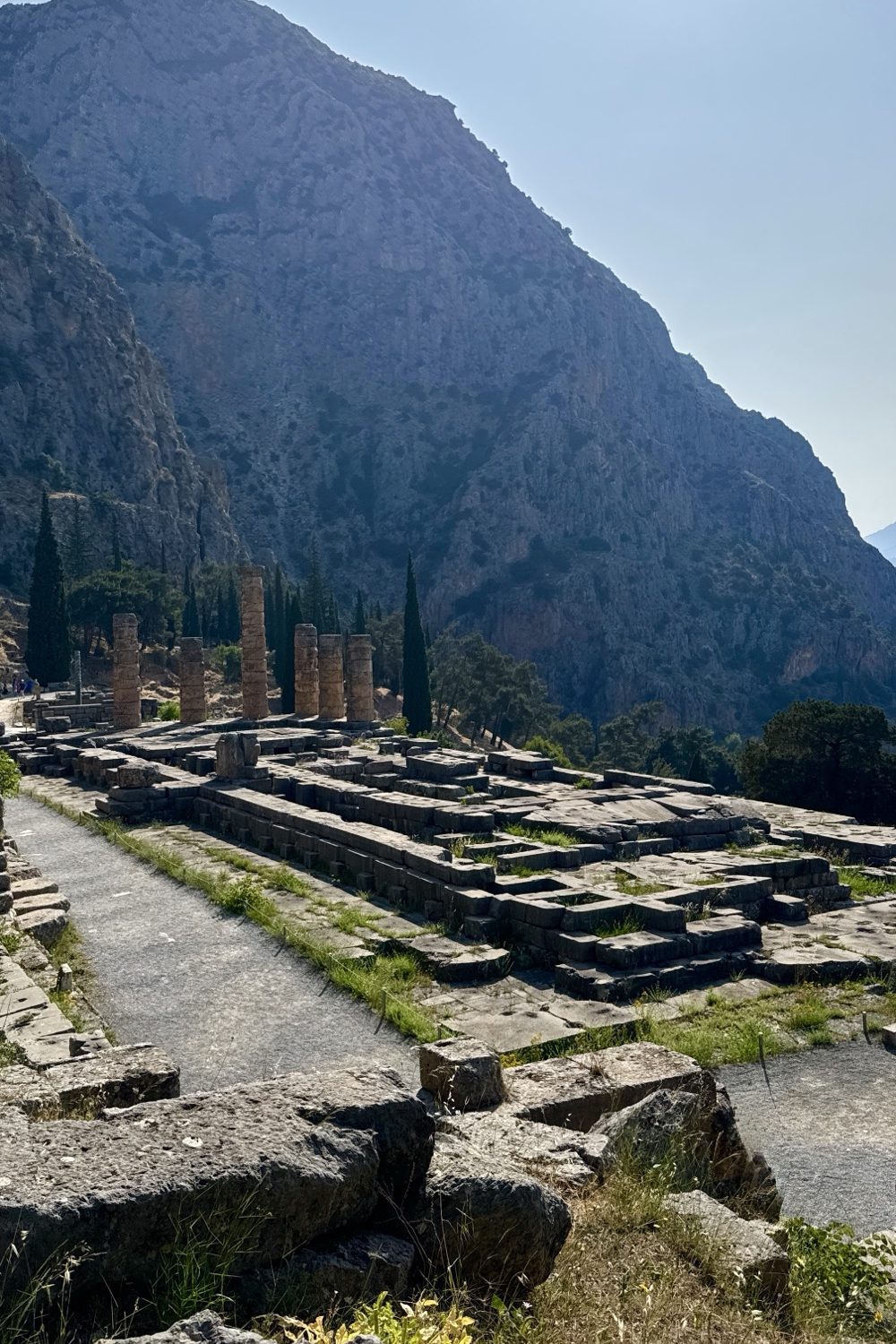
    At the top of the Sacred Way lies the heart of Delphi: the Temple of Apollo. Here the Pythia once sat above a chasm, inhaling sacred vapors and delivering Apollo’s words. The ruins you see now are from the 4th century BCE, but temples before this one were destroyed by fire or earthquake. Visitors in antiquity were greeted by the famous inscription, “Know Thyself” (γνῶθι σεαυτόν). From this vantage point, the valley of olive groves rolls out toward the Gulf of Corinth, a view that surely lent weight to the oracle’s pronouncements.
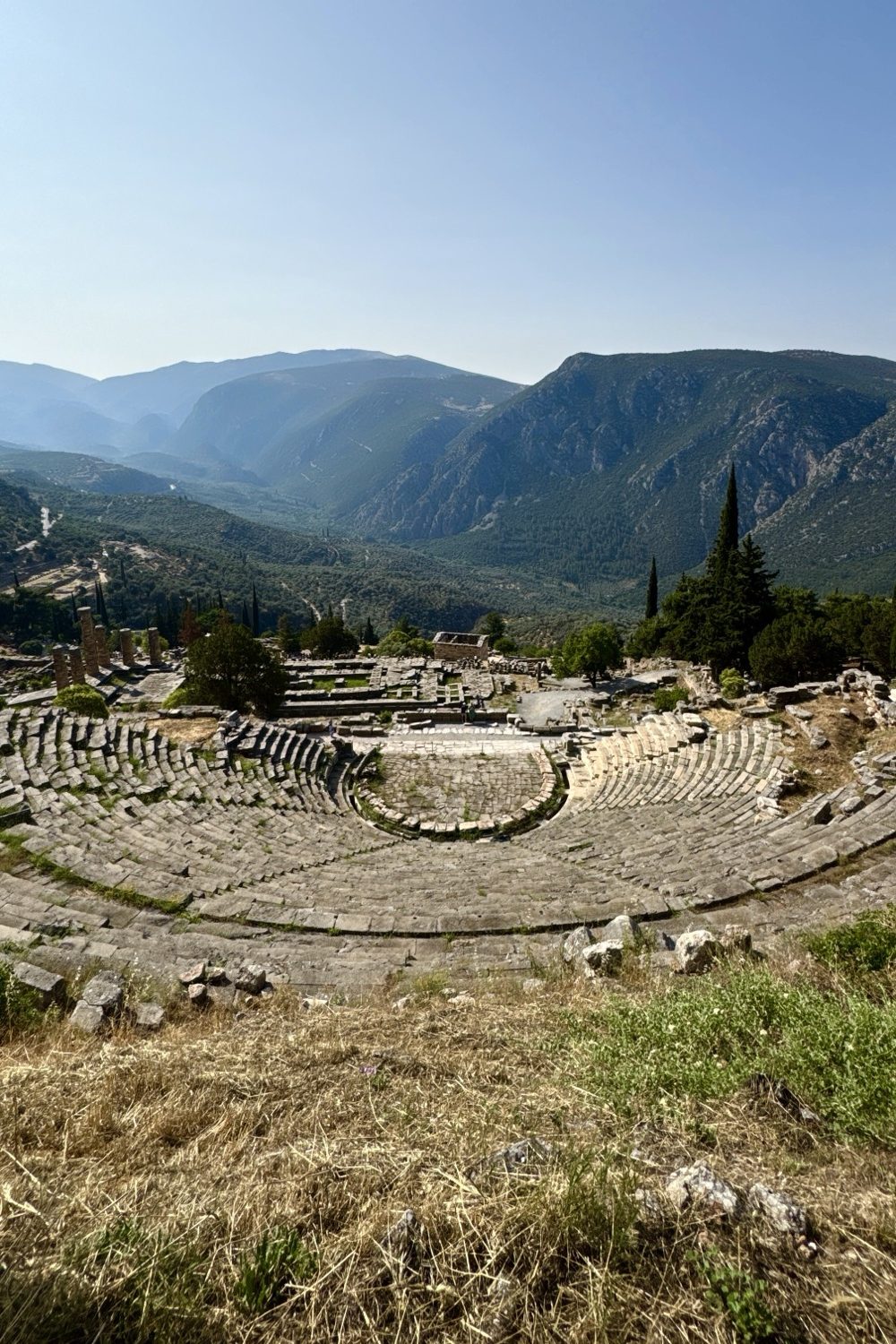
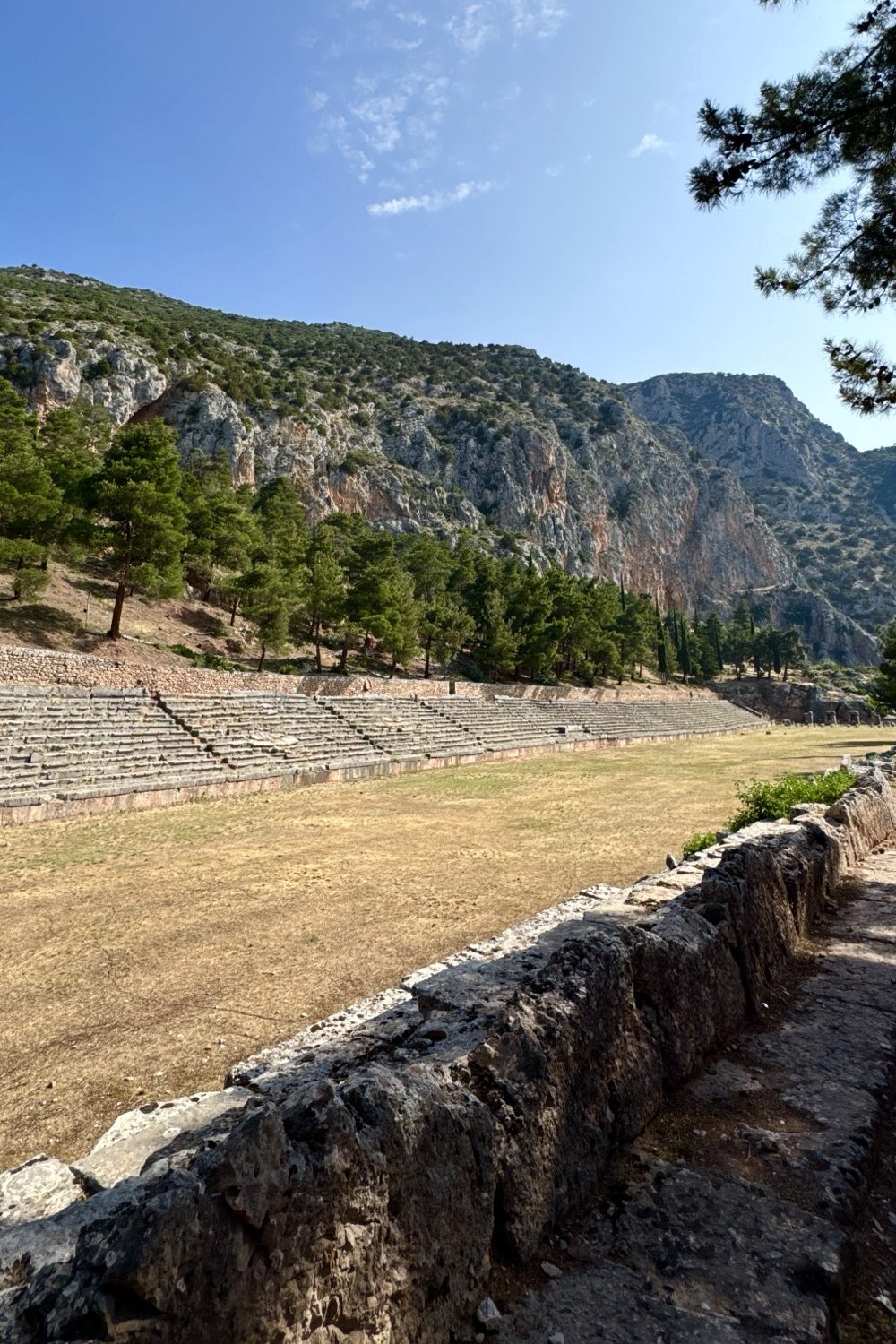
    Climb higher and you reach the Theatre of Delphi, carved into the slope. It held around 5,000 spectators and hosted poetry, music, and drama during the Pythian Games, all with the temple below and the valley stretching beyond. The final steep climb takes you to the Stadium, perched above the sanctuary. This long structure seated about 6,500 people and was the venue for athletic contests, wrestling, and races, honoring Apollo through physical competition, just as the theatre honored him through the arts.

    Visiting Delphi does require some physical effort, as the entire site is uphill. The paths are well maintained, but it is not recommended for anyone with mobility issues. It’s also a hugely popular site, so plan to visit early in the morning or later in the afternoon, and set aside at least 1.5 to 2 hours to explore fully. Sun protection is essential.
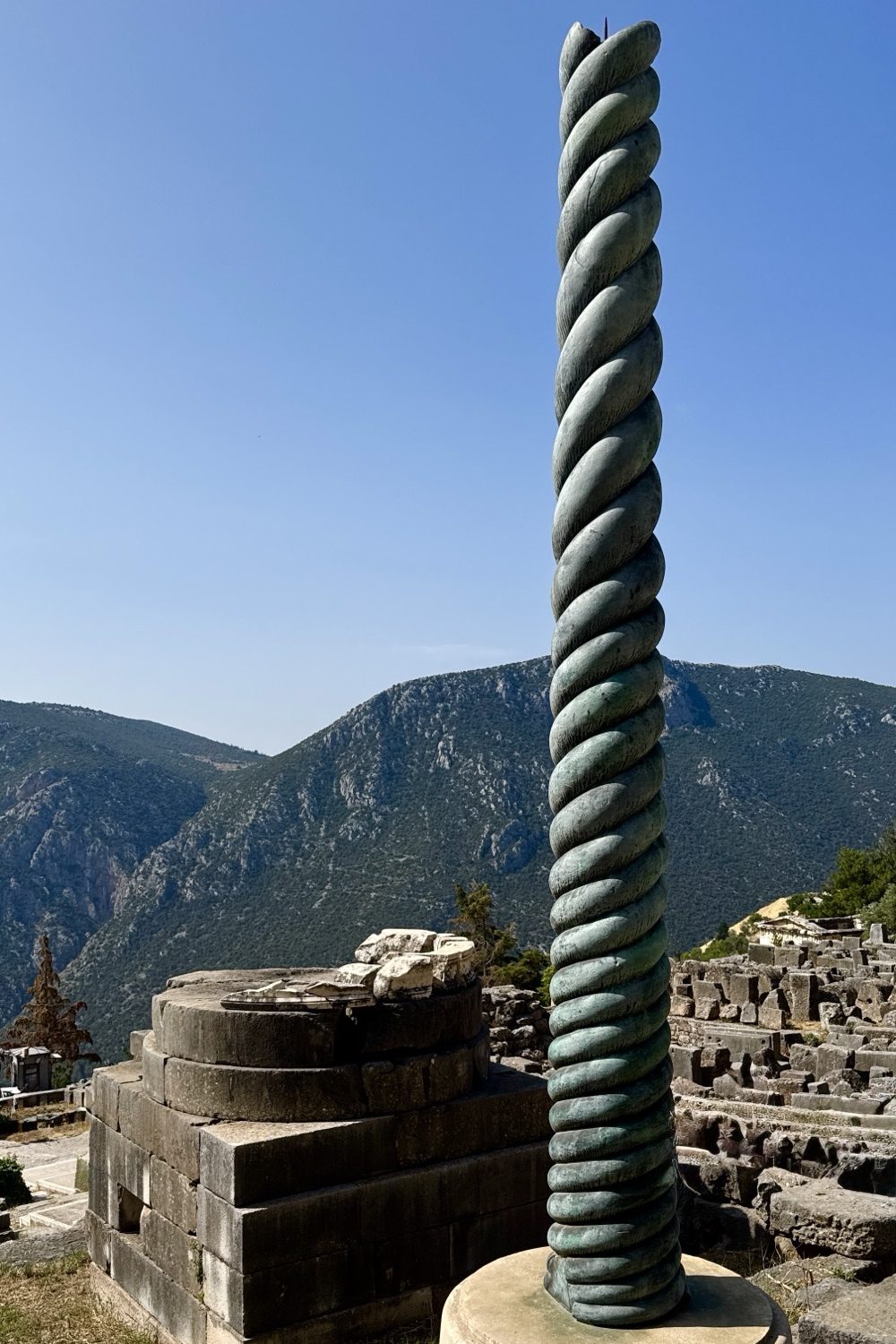
    House of Divine Goods

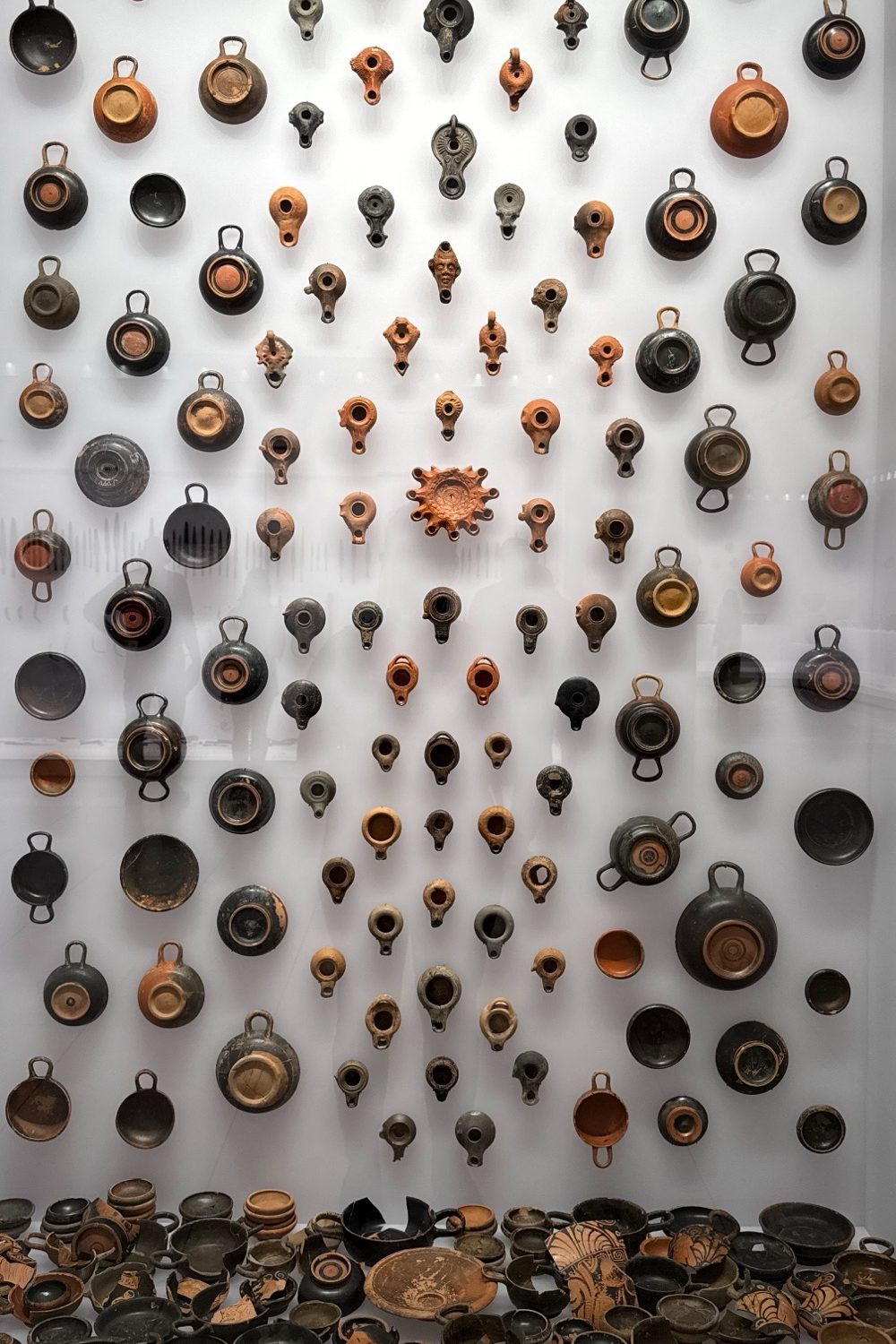
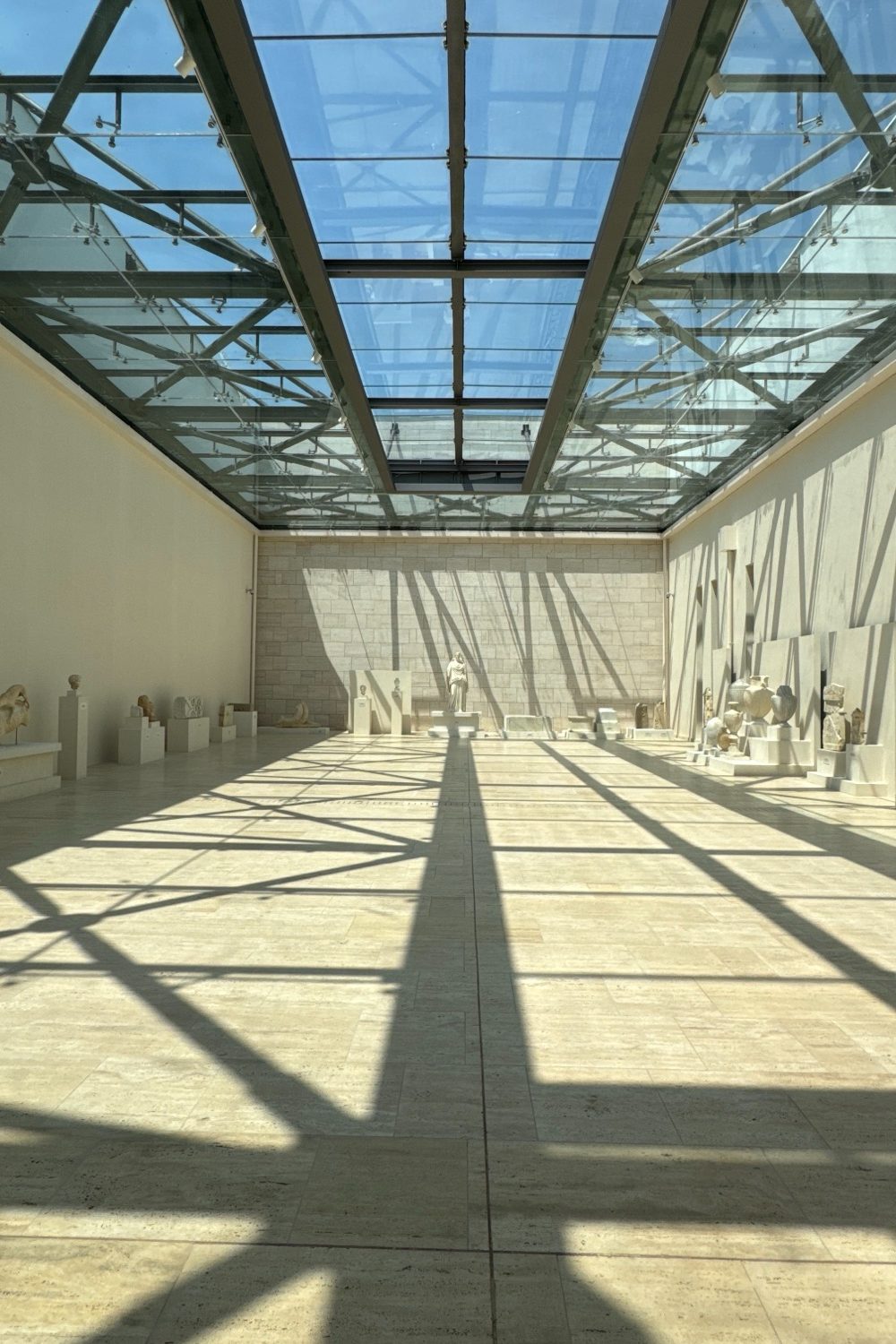
    The experience is incomplete without the Archaeological Museum of Delphi, which ties the ruins to the objects once housed there. The museum is arranged chronologically, from the Archaic period through the Classical, Hellenistic, and Roman eras, so you can trace Delphi’s rise, glory, and eventual decline.
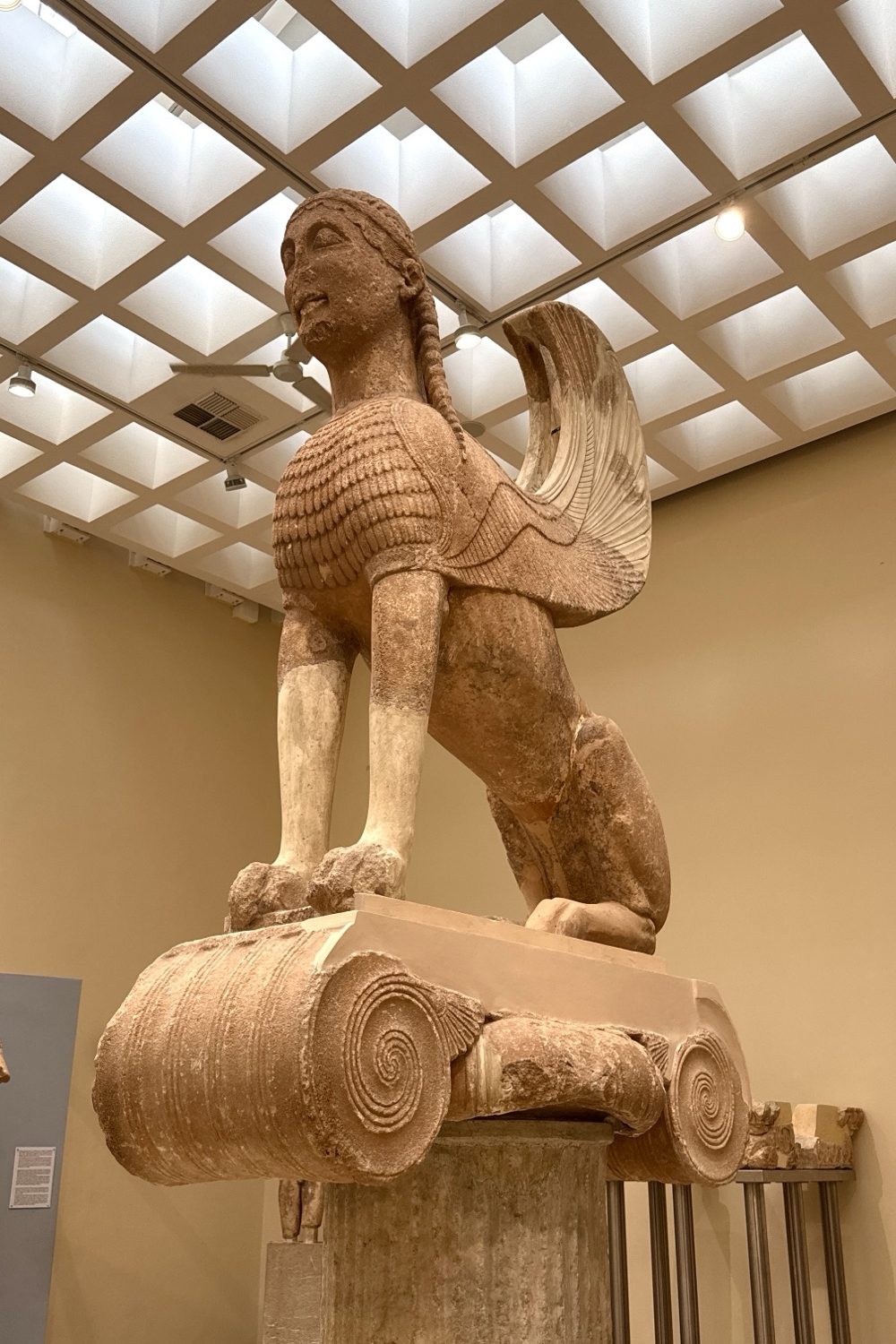
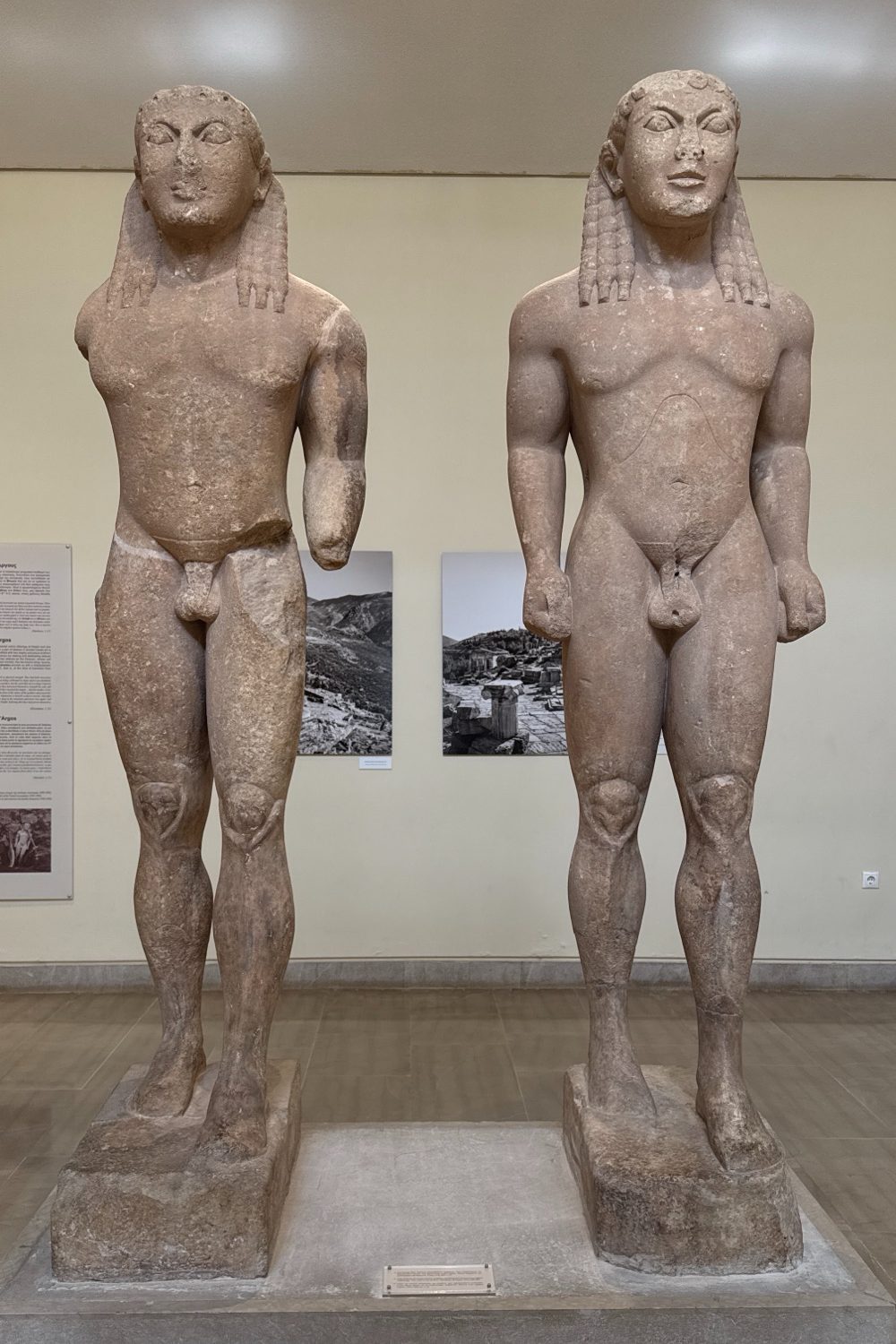
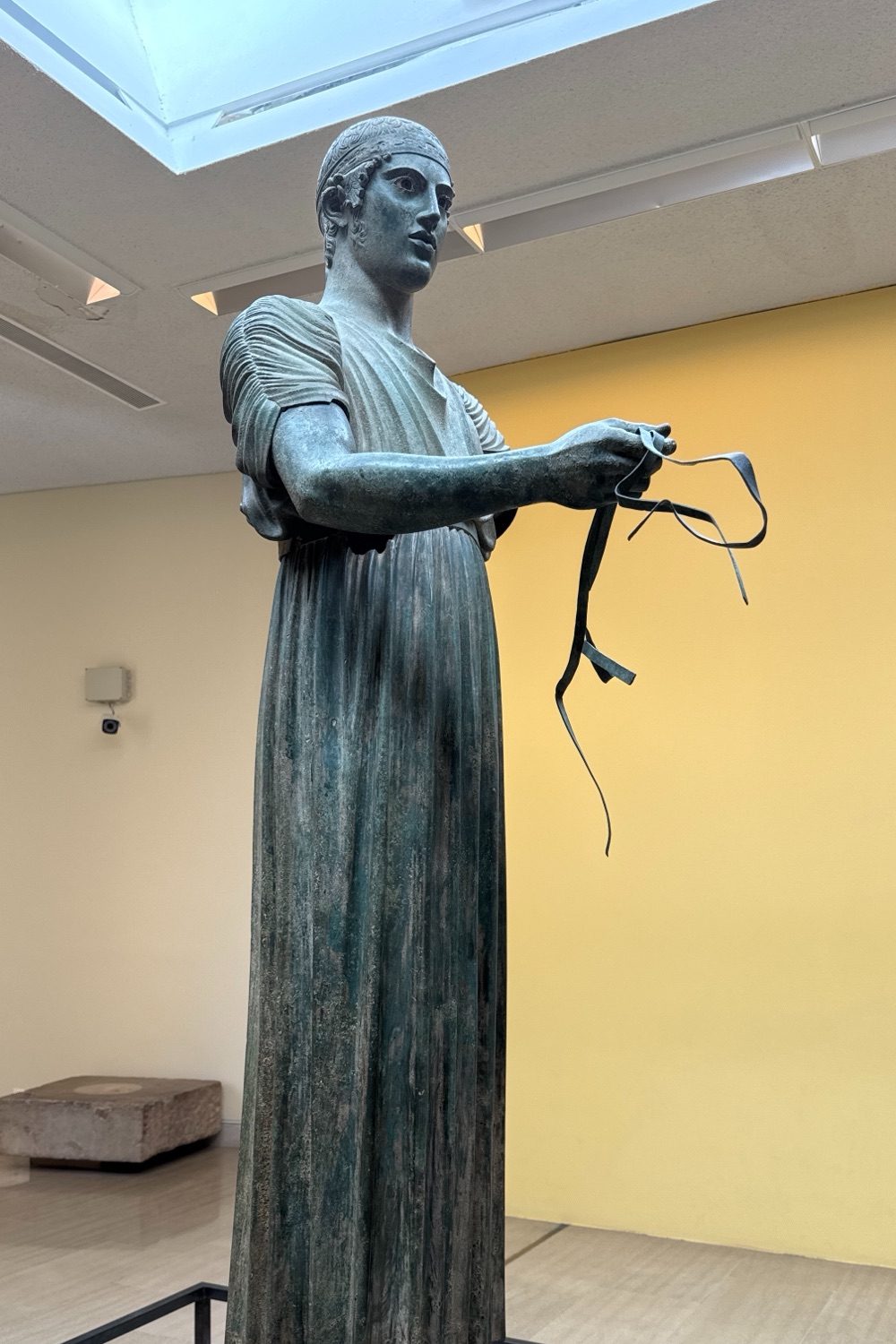
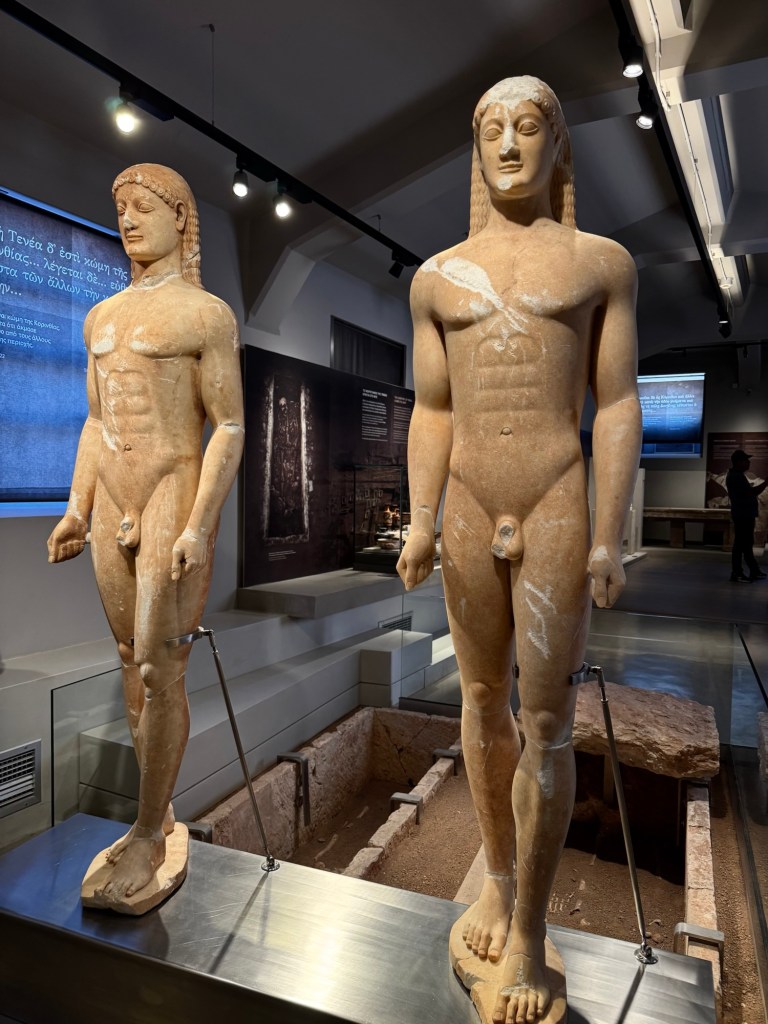
    Highlights include the Charioteer of Delphi, one of the finest bronzes from antiquity, so detailed you can see the eyelashes and folds of his robe. The colossal Sphinx of Naxos, which once perched atop a 10-meter Ionic column. The Omphalos Stone, marking Delphi as the “navel of the world.” The intricate friezes from the Siphnian Treasury, showing mythological battles like the Gigantomachy. The stiff but powerful Archaic kouroi statues portraying the Twins of Argos, and fragments from the Temple of Apollo itself.
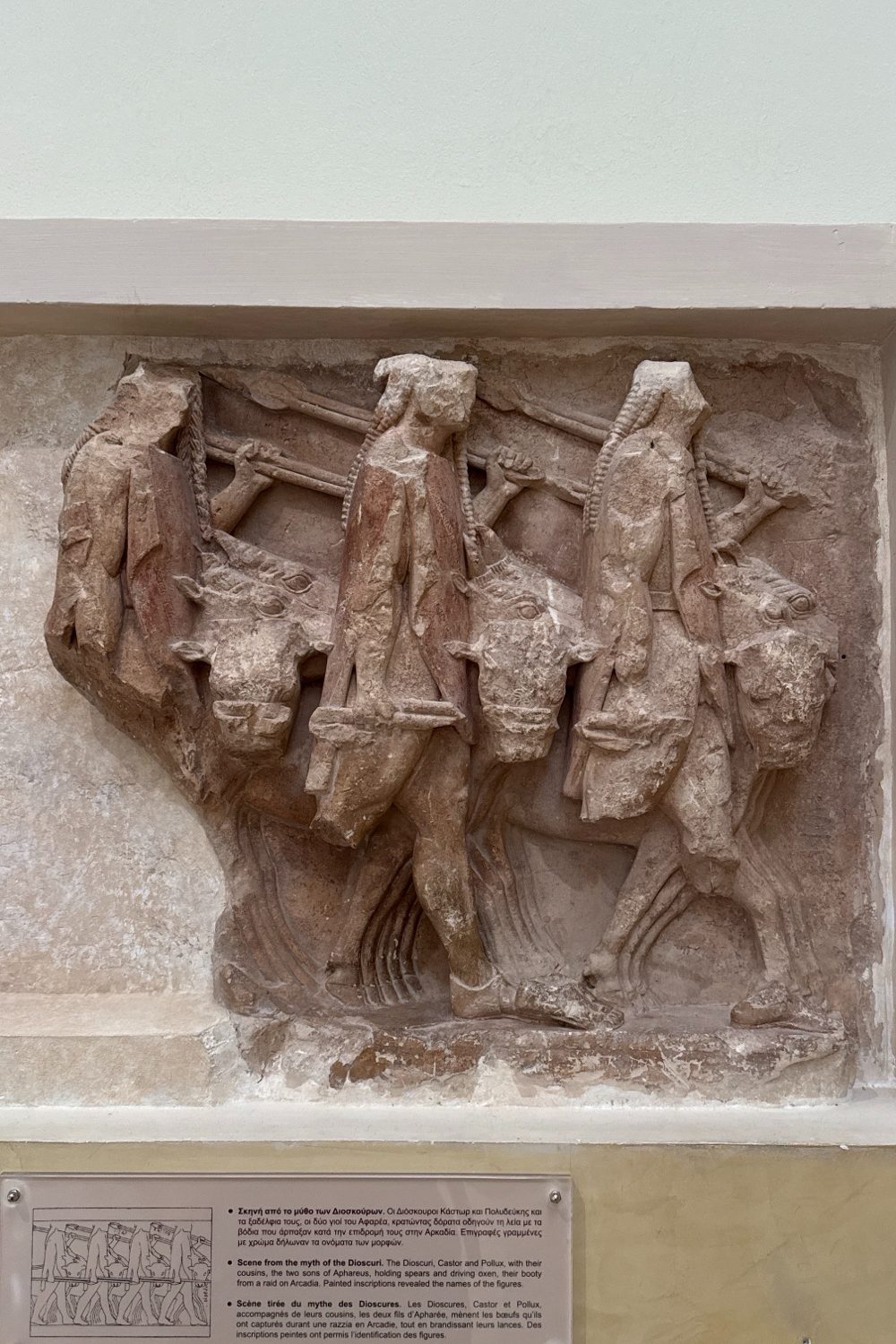
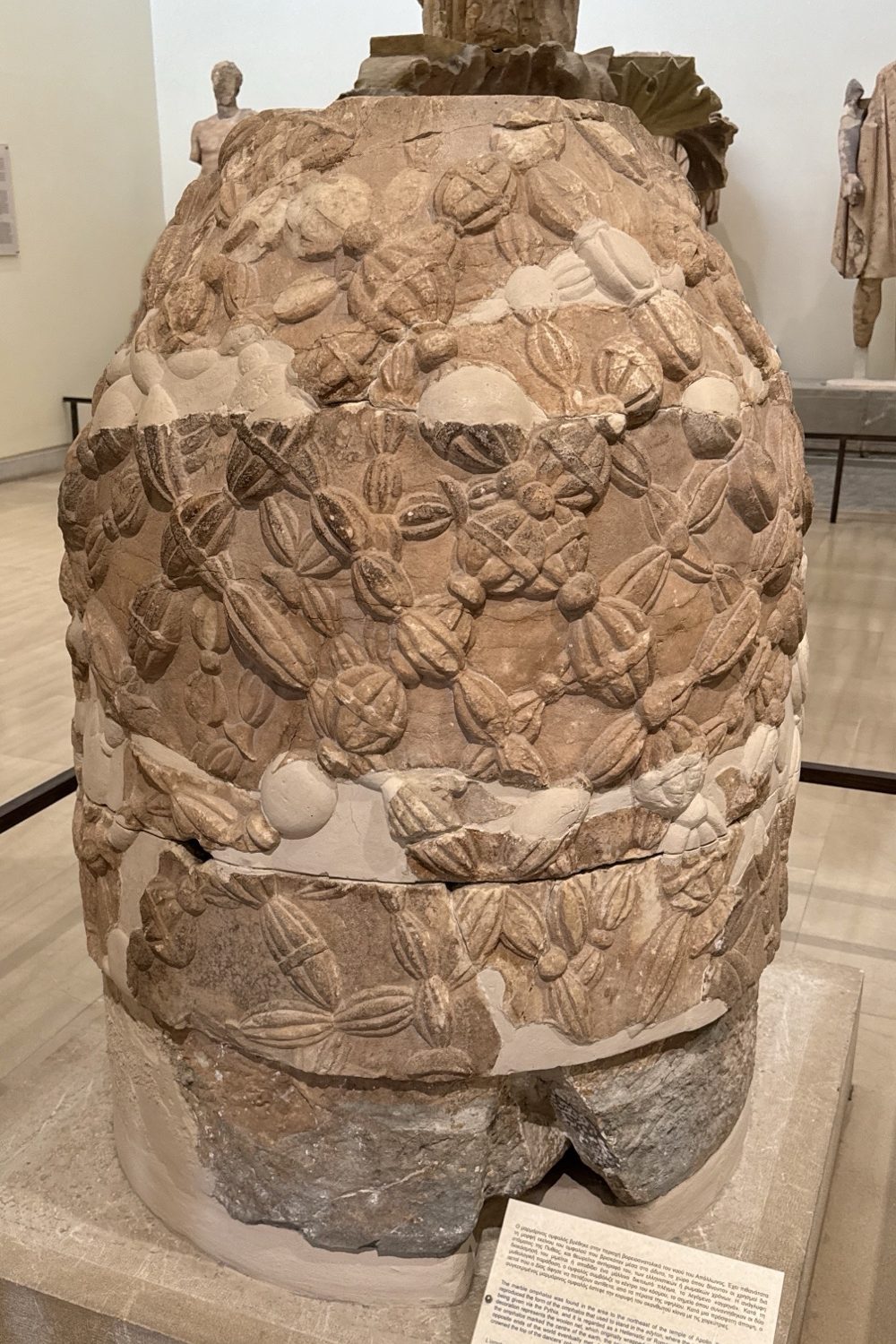
    The museum doesn’t just display artifacts, it captures Delphi’s role as a meeting point of myth, religion, and politics. Each dedication and offering reminds us that city-states from all over Greece, and even beyond, came here not only for prophecy but also to demonstrate power and prestige.

    A Sign of the Future?

    A visit to Delphi is more than sightseeing. It feels like a pilgrimage through myth, politics, art, and spirituality, where every step up the Sacred Way echoes the climb toward Apollo’s wisdom.

    During my visit, I had an encounter that added to the mysticism of the place. A random stranger on the hillside told me of the final prophecy of the Pythia. I never knew there was such a thing, but later via trusty Google-sensei I learned that as the Roman Empire shifted and Christianity rose, pagan sanctuaries were being systematically closed. Delphi, already weakened by earthquakes, looting, and decline, could no longer function as a pan-Hellenic center.

    When the oracle was consulted for the last time, the Pythia gave these words:

    “Tell the king: the fair-wrought hall has fallen.
    Apollo has no dwelling, nor prophetic laurel, nor prophetic spring.
    The voice of the water is silent.”

    This poetic farewell marked the end of Delphi’s sacred role. Apollo had left, the temple was no longer holy, and the oracle’s power was gone. Even so, Delphi’s story ended as mythically as it had lived.

    The stranger told me the waters of Delphi have begun to move again. Was it a geological shift? Or something more? I’ll never know, because just then I was dragged away to be the designated photographer for a group of German tourists, and not long after, I left for the next stage of my Greek journey. I assume my stranger simply went her own way too.

    So now I can’t help but wonder. Was that encounter simply a coincidence, or was it a brush with the divine?
  • Greece – Thessaloniki

    History in Layers


    Back In The Day

    Greece’s second-largest city, Thessaloniki, has been a crossroads of cultures for more than 2,300 years. It was founded in 316 BCE by Cassander of Macedon, who named it after his wife, Thessalonike, the half-sister of Alexander the Great.

    Over those 2,300 years, the city passed through the hands of multiple empires.

    Under the Romans, Thessaloniki grew into one of the empire’s most important provincial capitals, boasting grand forums, arches, and solid infrastructure. With the Byzantines, it became the empire’s second city after Constantinople, its skyline dotted with domed churches, mosaics, and fortifications, many of which survive today as UNESCO World Heritage Sites. During the Ottoman era, the city transformed into a bustling multicultural hub, enriched by Turkish, Balkan, and Sephardic Jewish communities (the latter arriving after the Jews were expelled from Spain in 1492).

    In modern times, Thessaloniki still wears its layered history proudly. You’ll stumble across the White Tower on the waterfront, the Arch of Galerius and Rotunda from Roman days, Byzantine churches like Agia Sophia, Ottoman baths and markets, and lively boulevards lined with both neoclassical and contemporary architecture. Add to that its thriving café and nightlife culture , plus its reputation as a beloved university city, and you’ve got a place buzzing with life.

    The Way There

    Getting here from Athens is easy. Driving is always the most straightforward option, but there’s also the train, bus, plane, and even a ferry. As the second-largest city in Greece, Thessaloniki is well connected to most parts of the country and serves as a major transport hub for northern Greece and beyond, with buses and overnight trains running across the borders into North Macedonia and Bulgaria, a popular route for backpackers and overland travelers.

    If you’re driving, expect about a 5–6 hour journey (slightly longer if you’re on the bus, since it makes frequent stops). The fastest ways are by train or plane. SkyExpress runs regular flights from Athens International, but while the trip takes just about an hour in the air, the tickets can get pricey. The next best option is the train, run by Hellenic Trains. The ride takes about five hours, the trains are modern and comfortable, and it’s smooth sailing as long as you book your tickets early, they do sell out fast.

    There’s also the ferry, though it’s infrequent and best paired with a stopover on the island of Chios. From there, you transfer to another boat heading to Thessaloniki. I didn’t personally try this route, but I did meet travelers who had. Reviews were mixed: one couple paid around €70 for the trip, while another solo traveler forked out €150. No clue what caused that massive price gap, but it seems like a bit of a gamble.

    The most economical options are the bus and train. Train fares fluctuate depending on the season , I paid €68.80 for a return, while the bus costs roughly €65. After being on buses for so long, I opted for the train for a change of scenery (and a slightly less sore butt). The whole journey was seamless, comfortable, and I only arrived with a 30-minute delay, which isn’t too bad by Greek standards.

    As for accommodation, you’re spoiled for choice. Thessaloniki has everything from budget hostels to high end hotels. A quick PSA though: since it’s a big university city with a lively youth scene, do check your hostel descriptions carefully. I accidentally booked myself into a semi-party hostel and let’s just say… sleep was not on the agenda.

    The Sights

    Now, no trip to a city is complete without a museum visit, at least not for me. Museums are the butter to my toast, the milk to my cereal, the Bonnie to my Clyde. And in Thessaloniki, the star is the Archaeological Museum of Thessaloniki, the largest of its kind in northern Greece.

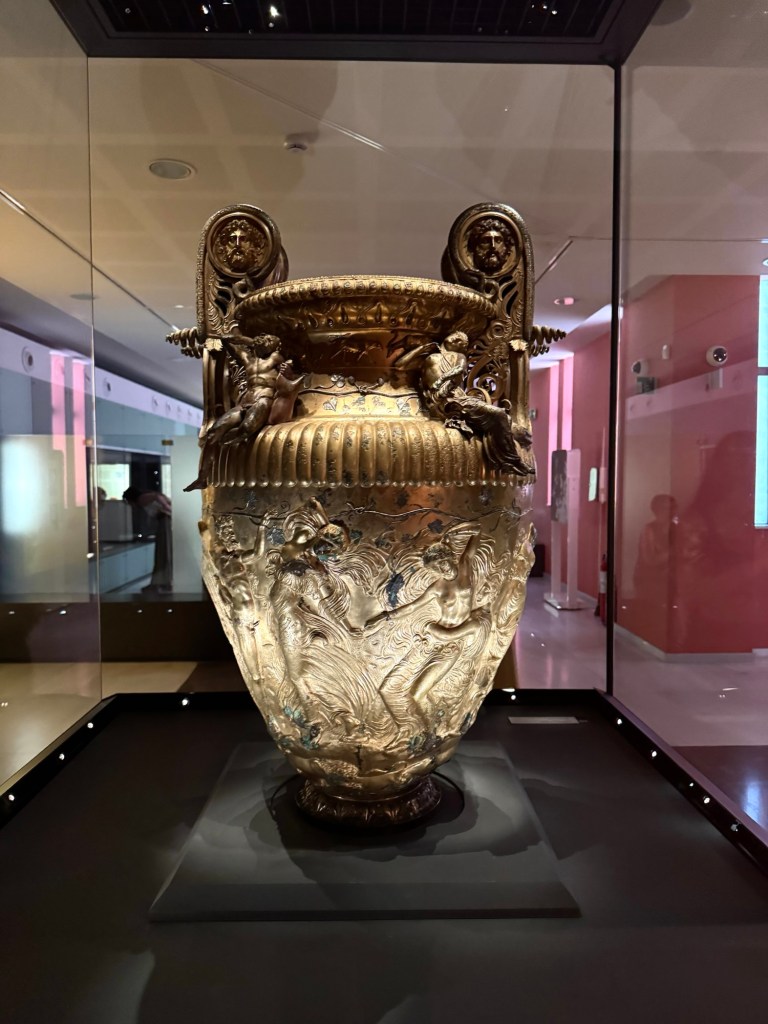
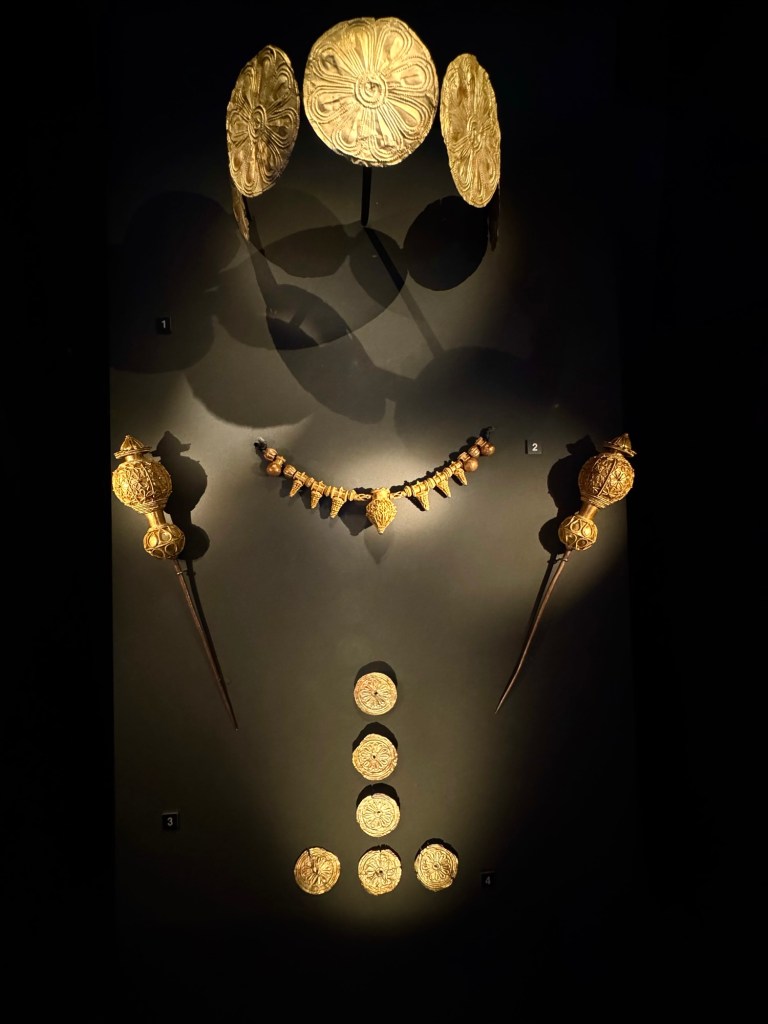
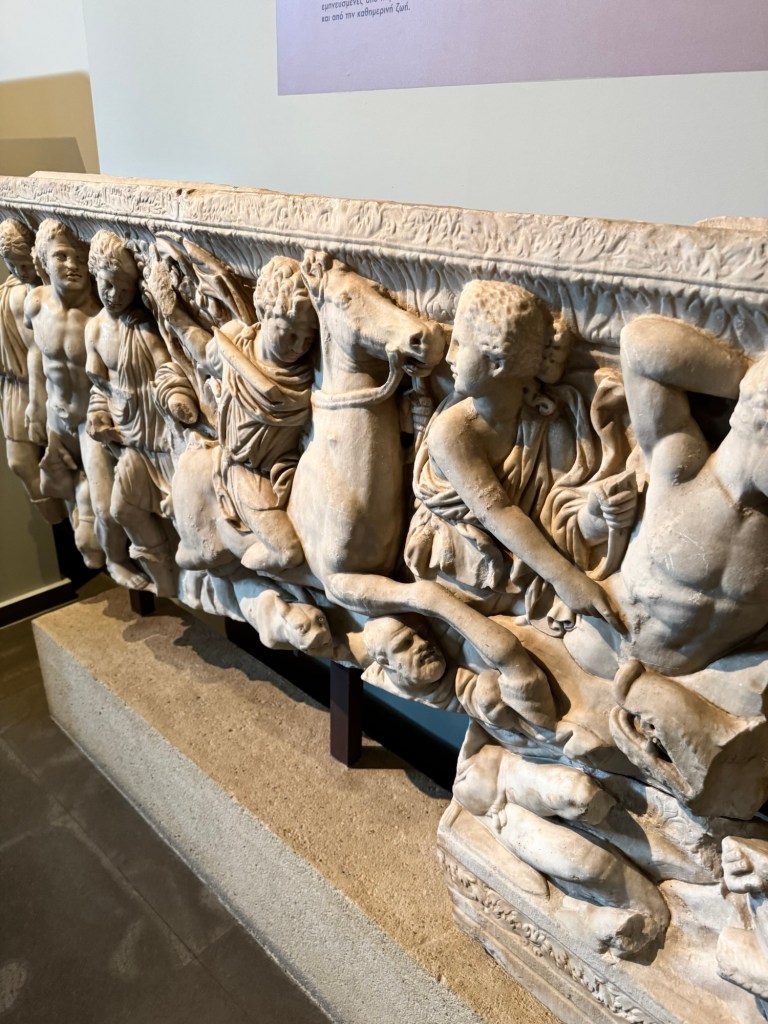
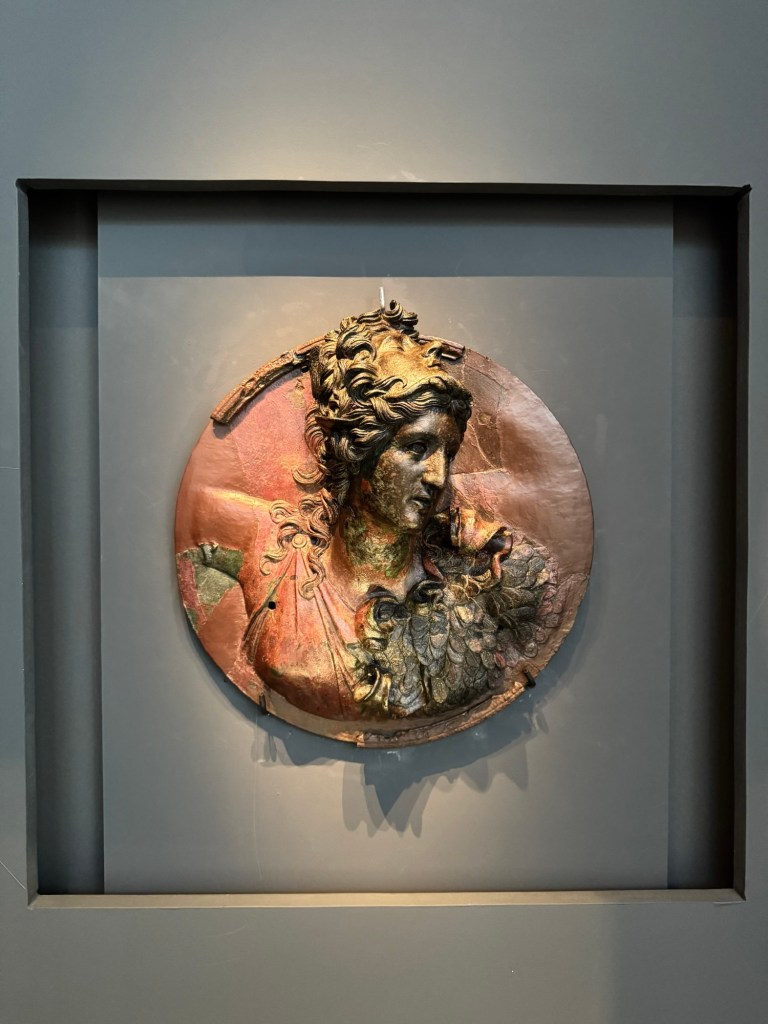
    Its collection spans Macedonia’s prehistoric, classical, Hellenistic, and Roman eras, with a special focus on the Macedonian kingdom and the city’s long history. Translation: there’s a lot of gold.

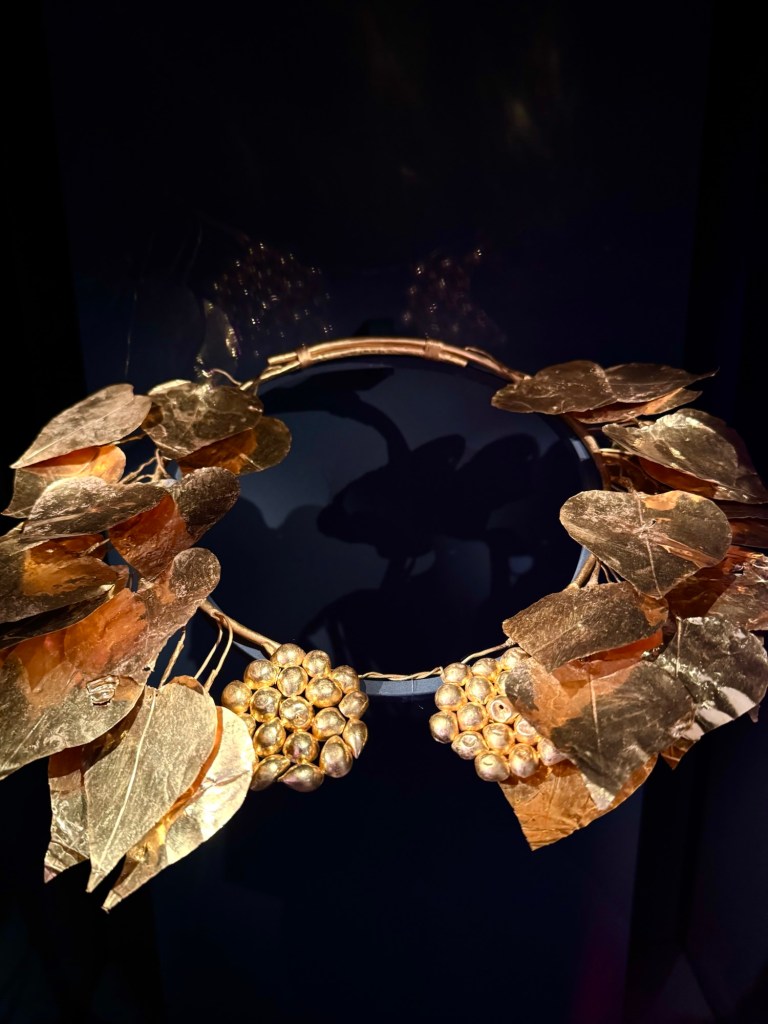
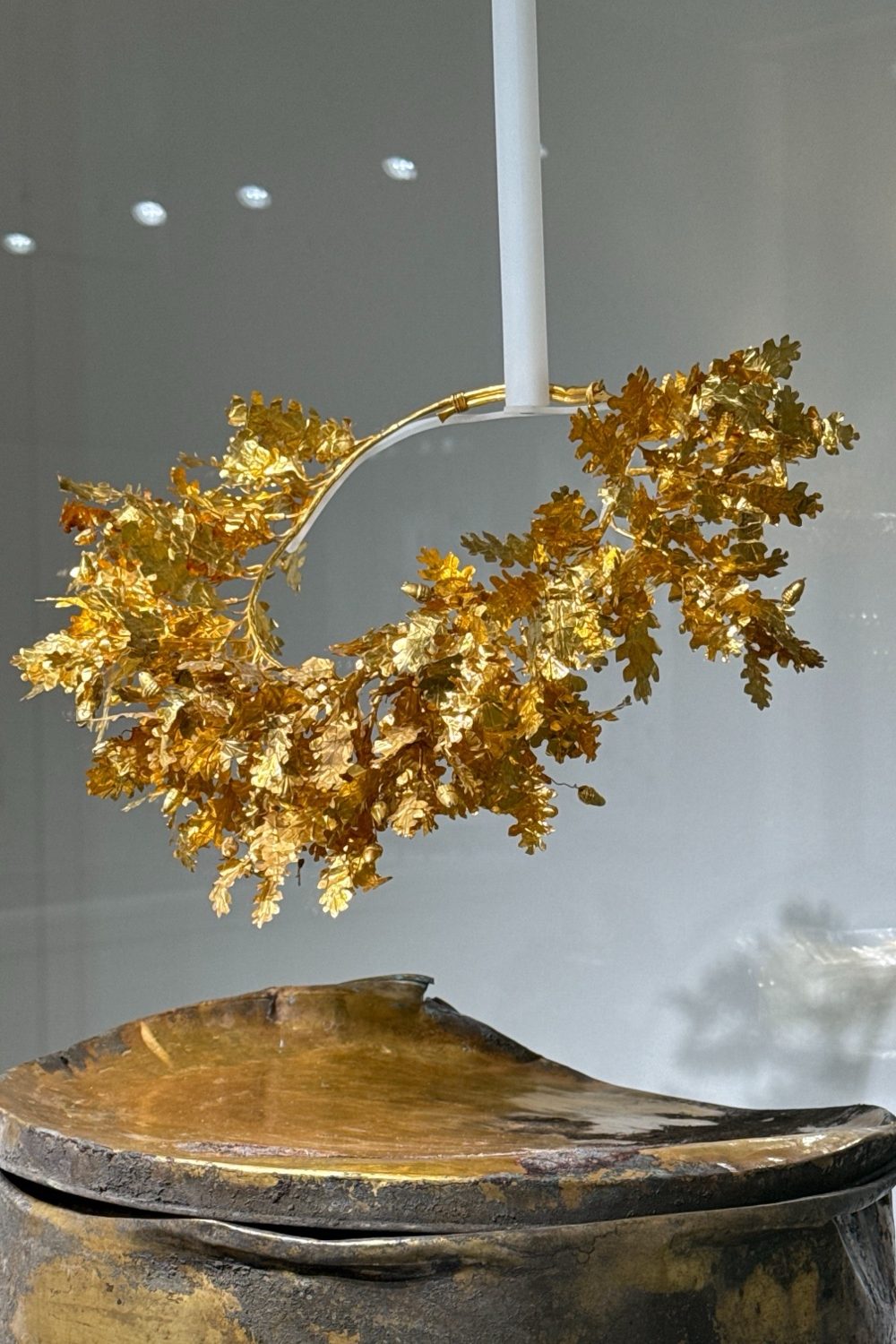
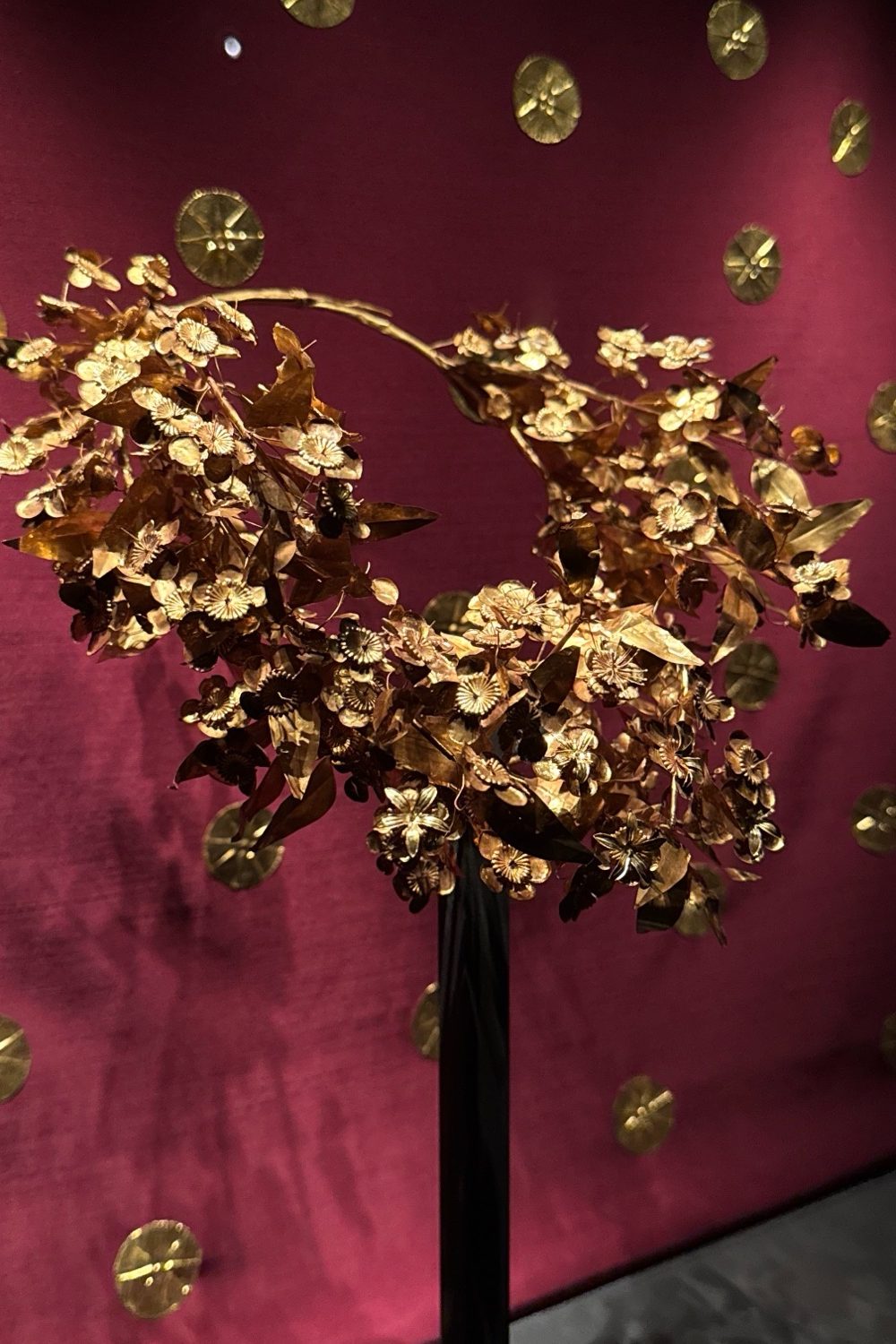
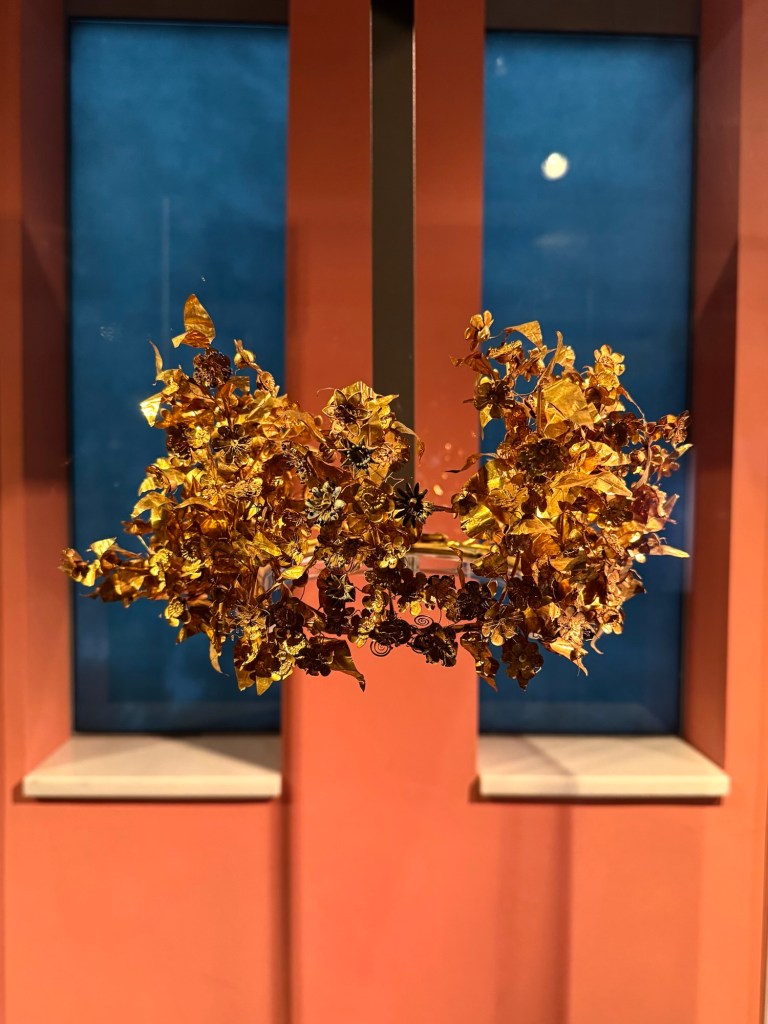
    I’m talking dazzling wreaths, diadems, and ornaments rivaling the treasures in Aigai. These pieces showcase the craftsmanship of Macedonian workshops and mostly come from sites around Vergina, Sindos, and other ancient cemeteries. The ones directly linked to the royal tombs, though, are kept at Aigai.

    In the same neighborhood, you’ll also find the Museum of Byzantine Civilization, the War Museum of Thessaloniki, and the Museum of Contemporary Art (MOMus). Sadly, I didn’t get around to these during my short stay, I was mainly using Thessaloniki as a base for day trips to Vergina and Pella, the old stomping grounds of Alexander the Great.

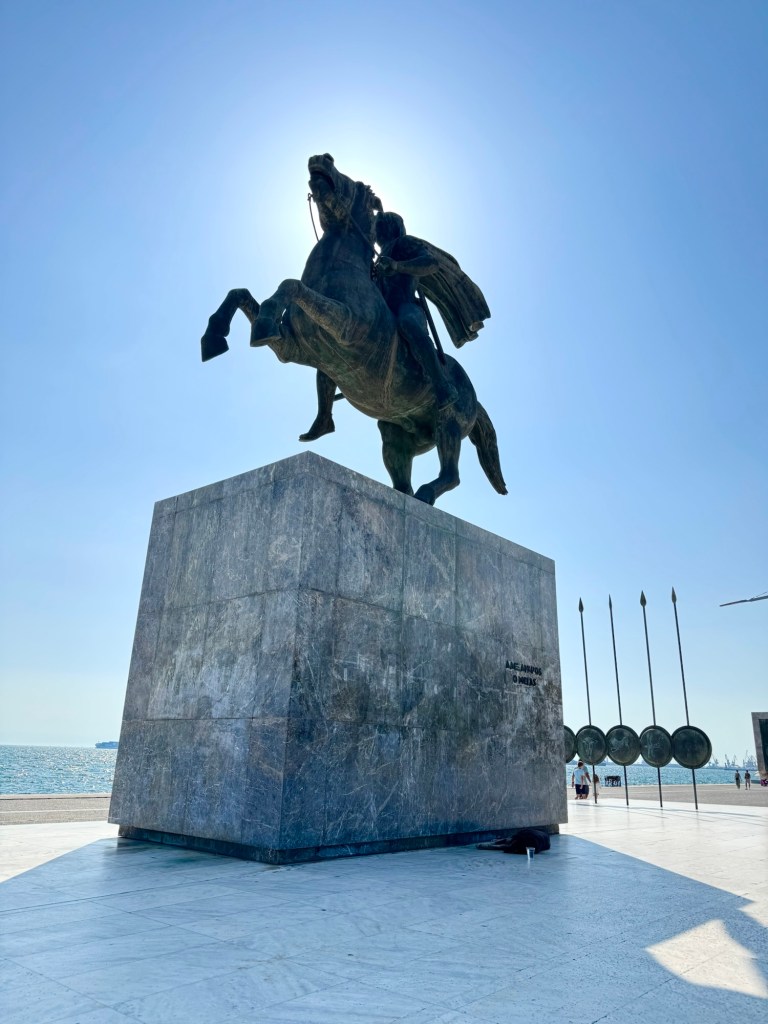
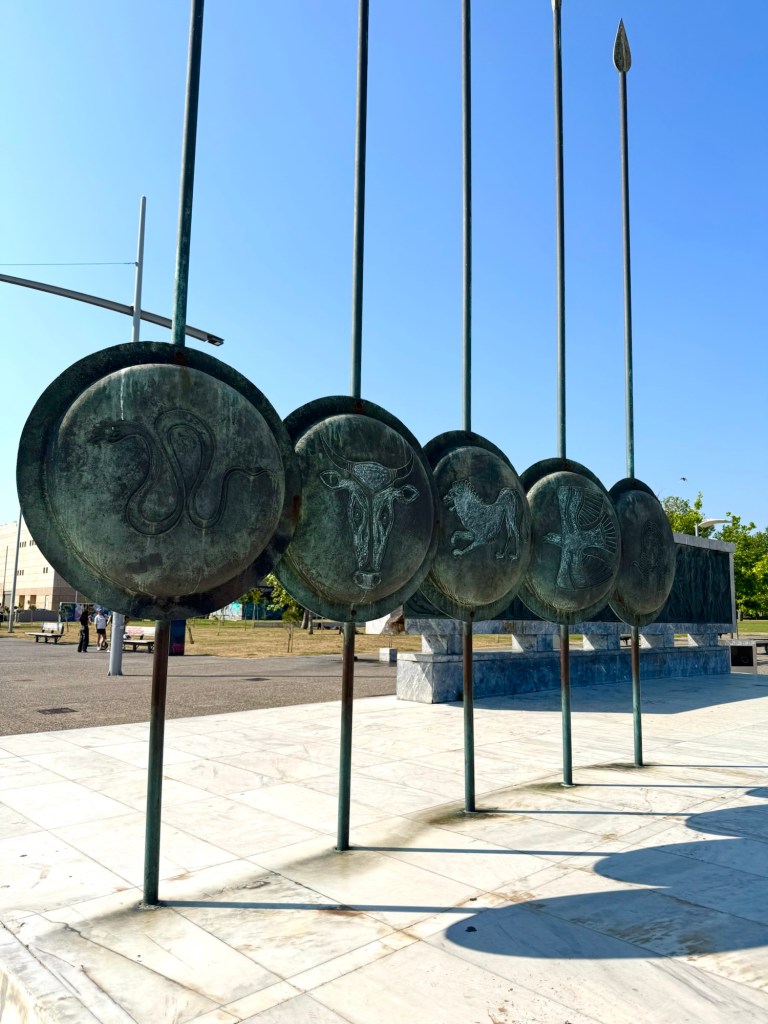
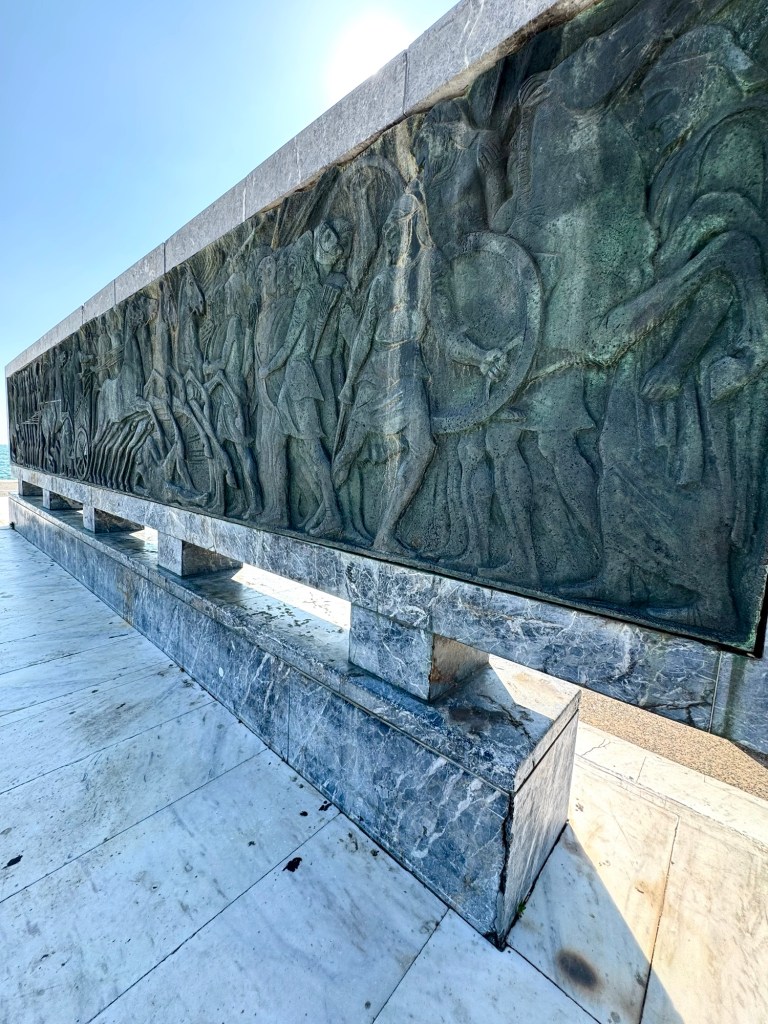
    Thankfully, the city itself has plenty of open-air monuments that don’t come with closing hours. Just a few minutes’ walk from the museum stands the massive statue of Alexander the Great on his legendary warhorse, Bucephalus. He gazes eastward, toward the lands he conquered, with a frieze of the Battle of Gaugamela at his side. Set right by the sea, it’s also a stellar spot to catch the sunset.

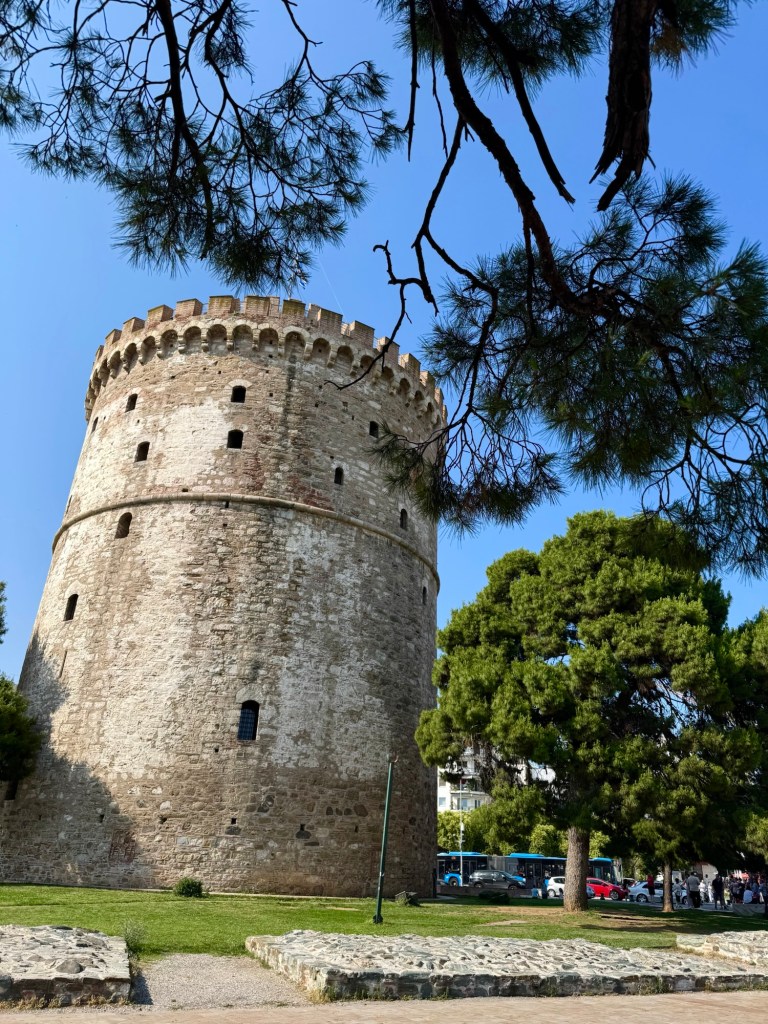
    A short stroll away sits the White Tower of Thessaloniki, both a monument and museum on the waterfront. The present tower replaced an older Byzantine fortification mentioned as early as the 12th century. After the Ottomans captured Thessaloniki in 1430, they rebuilt the tower to strengthen the city’s defenses. Later, it gained a darker reputation as a notorious prison and execution site, most infamously for the Janissaries during their revolt.

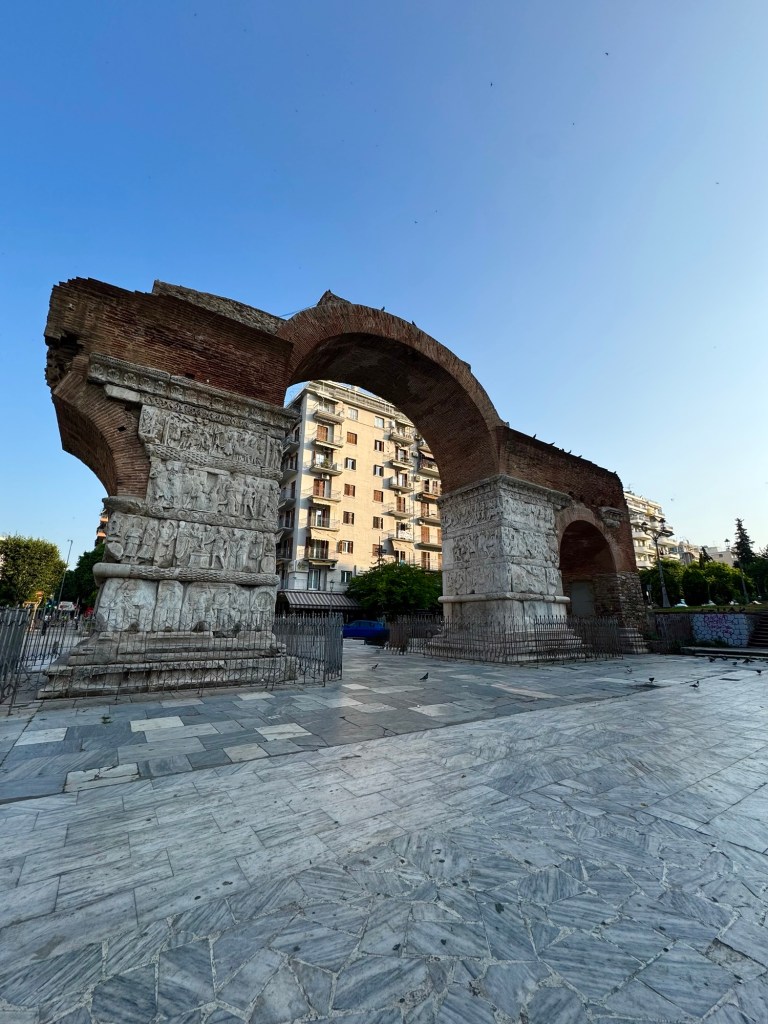
    But perhaps the most striking site, at least for me, was the Arch of Galerius. Rising seemingly out of nowhere amid the modern cityscape, the Arch dates back to 298–305 CE, celebrating Emperor Galerius’ victory over the Persians and his role in the Tetrarchy (when the Roman Empire was ruled by four co-emperors).

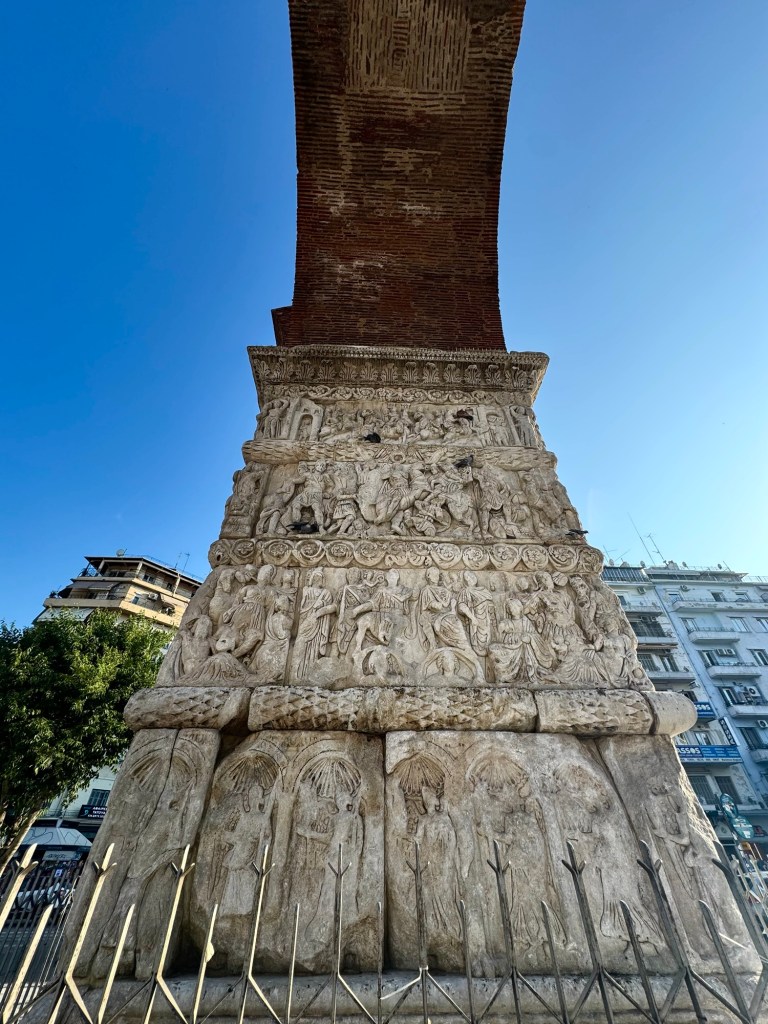
    The arch once stood along a grand processional route that linked Galerius’ palace complex to the Rotunda, a massive round temple (later a church) that still stands just a short walk away. Together, they were meant to transform Thessaloniki into a mini-imperial capital of the East. Originally, the arch had eight pillars forming a four-way crossing. Only three survive today, but the reliefs on the marble panels still impress, depicting Galerius’ Persian campaign, battle scenes, sieges, the emperor on horseback, and moments of triumph frozen in stone.

    A Voice Calling…

    Thessaloniki was the perfect base to dive into Macedonian history, but the road was calling again. Southward this time, winding toward the slopes of Mount Parnassus. There, perched above the valley, lies Delphi, once the spiritual heart of Greece, where the voice of Apollo shaped the fate of empires. Dare i seek out the voice of the silent Oracle? One can only hope.

  • Greece – Vergina & Pella

    Where the Legend Was Born


    From Father to Son

    We’ve gone to the land of mythical bulls and labyrinths. We’ve stepped foot into the sacred land of the games. And now we’ll visit the lands that gave birth to the legend that is Alexander the Great.

    But behind the legend, there’s another legendary figure just as important. His father, Philip II, whose own legacy stands proud in the annals of ancient Greek history. It was Philip who laid the groundwork for Alexander’s later conquests and reputation, reshaping Macedonia into something far greater than the fragile frontier kingdom it once was.

    Philip II of Macedon was a visionary king whose 23 year reign transformed Macedonia into the dominant power of the Greek world. From his royal seat at Aigai (modern Vergina), where he built grand palaces and was ultimately buried in a richly adorned tomb, to the cosmopolitan capital of Pella, Philip reshaped everything. His military reforms, especially the creation of the Macedonian phalanx, redefined warfare. His strategic mind and diplomatic cunning united Greece under Macedonian leadership. His emphasis on education shaped his son, who grew up in Pella under the tutelage of none other than Aristotle, and went on to become the legend we all still know today.

    Honestly, I could go on and on about the history of these two men who shaped what could be called Greece’s golden age. We’re talking about the man who united Greece, and then his son who essentially conquered half the known world. But that deserves its own post entirely. For now, we need to move on and actually get on the road, otherwise we’ll never make it to Aigai and Pella, ainnit?

    The Journey There

    Getting to Aigai and Pella isn’t as simple as just hopping onto a bus and being dropped off at the doorstep. There are no direct buses, so the obvious, most convenient methods are either by car or by joining a tour. After much research, and after asking both my hostel receptionist and the almost-too-friendly old proprietor of a random restaurant I ended up in, everyone agreed: the easiest way to visit both places in a single day is by car or tour.

    Pella, at least, is straightforward. There are regular inter-city buses operated by KTEL Pellas. The catch? Their website is only in Greek, Google Translate mangles it into nonsensical mess, and the timetable isn’t actually shown on their site. Instead, the information you actually need is hidden away on the KTEL Macedonia website, which at least has both English and Greek versions.

    Aigai (Vergina) is another story entirely. From Thessaloniki, you first need to take a bus or train to Veria, and from there, a bus to Aigai. The one-way journey alone can take two to three hours. Add the time needed to actually explore the museum, royal tombs, maybe the royal palace, and then get back to the city… yeah, it makes sense why locals looked at me as if i suddenly grew three-heads like Cerberus when I asked if it was possible to do as a day trip via public transport. They know their system better than I do, and after weeks of riding Greek buses, I’ve learned that “two to three hours” never actually means two to three hours.

    So I looked up my least favorite thing to do. Urgh, Tours.

    Don’t get me wrong, i like a guided tour every now and then, but i just don’t like it when it’s done in groups of 20 or more and we’re being herded from spot to spot like sheep being fed snippets of information being read from call cards like an unfortunate presentation project.

    Personal preference aside, there are plenty of combined tours from Thessaloniki that visit both Aigai and Pella together. On the map, the two towns are relatively close, but only if you’re driving. I found a reasonably priced option via my trusty non-sponsored app, GetYourGuide. And honestly? I highly recommend it. The tour was well organized, well timed, and quite frankly, even as someone who thoroughly dislikes tours, I actually enjoyed this one.

    The day began at 8am sharp at the designated meeting point in front of the Statue of Venizelos in Thessaloniki’s city center. Pro tip: this statue is apparently the meeting spot for tours, because when I got there, at least eight different groups were gathering. Six of them were with the same operator as mine. Finding the right guide felt like a mini-challenge in itself. Eventually, I found my “fun-sized guide” (her words, not mine), and off we went. First stop: the Archaeological Site of Pella.

    From Glory to Ghost Town

    Pella was the capital of the ancient Kingdom of Macedon during its prime, especially under Philip II and Alexander. It replaced Aigai as the royal seat in the late 5th century BCE and became the birthplace and childhood home of Alexander himself. Under Alexander’s conquests, it blossomed into a cosmopolitan hub. But after the Roman conquest of Macedonia, and a series of earthquakes and floods, Pella faded into obscurity and was eventually abandoned.

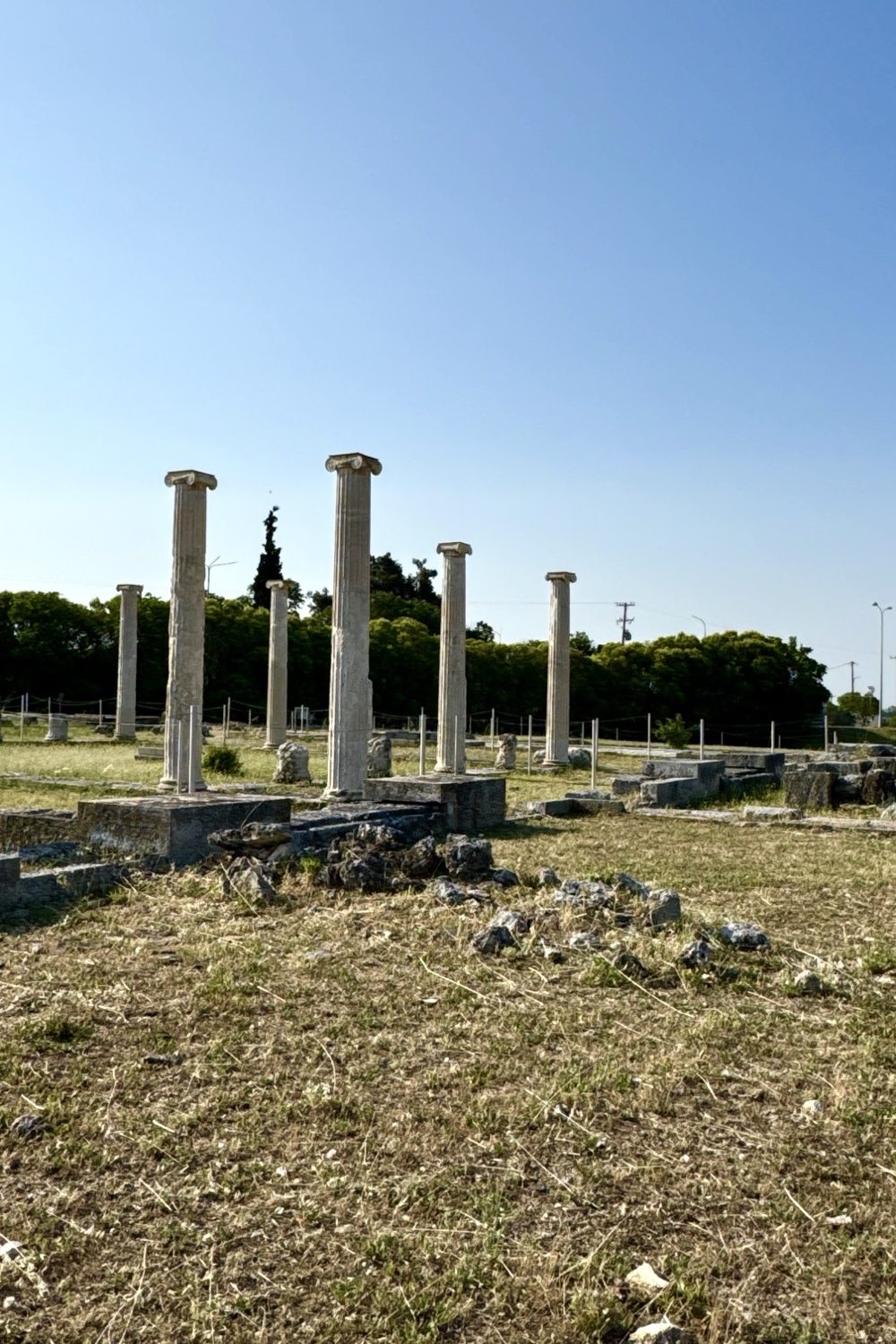
    Today, there’s little left but foundations. Yet standing among the ruins, you can imagine the magnificence of the city. The site is peaceful and open-air, surrounded by farmland with wide, walkable paths. Unlike Athens or Delphi, it’s refreshingly quiet and un-touristy, making it easy to feel connected to history.

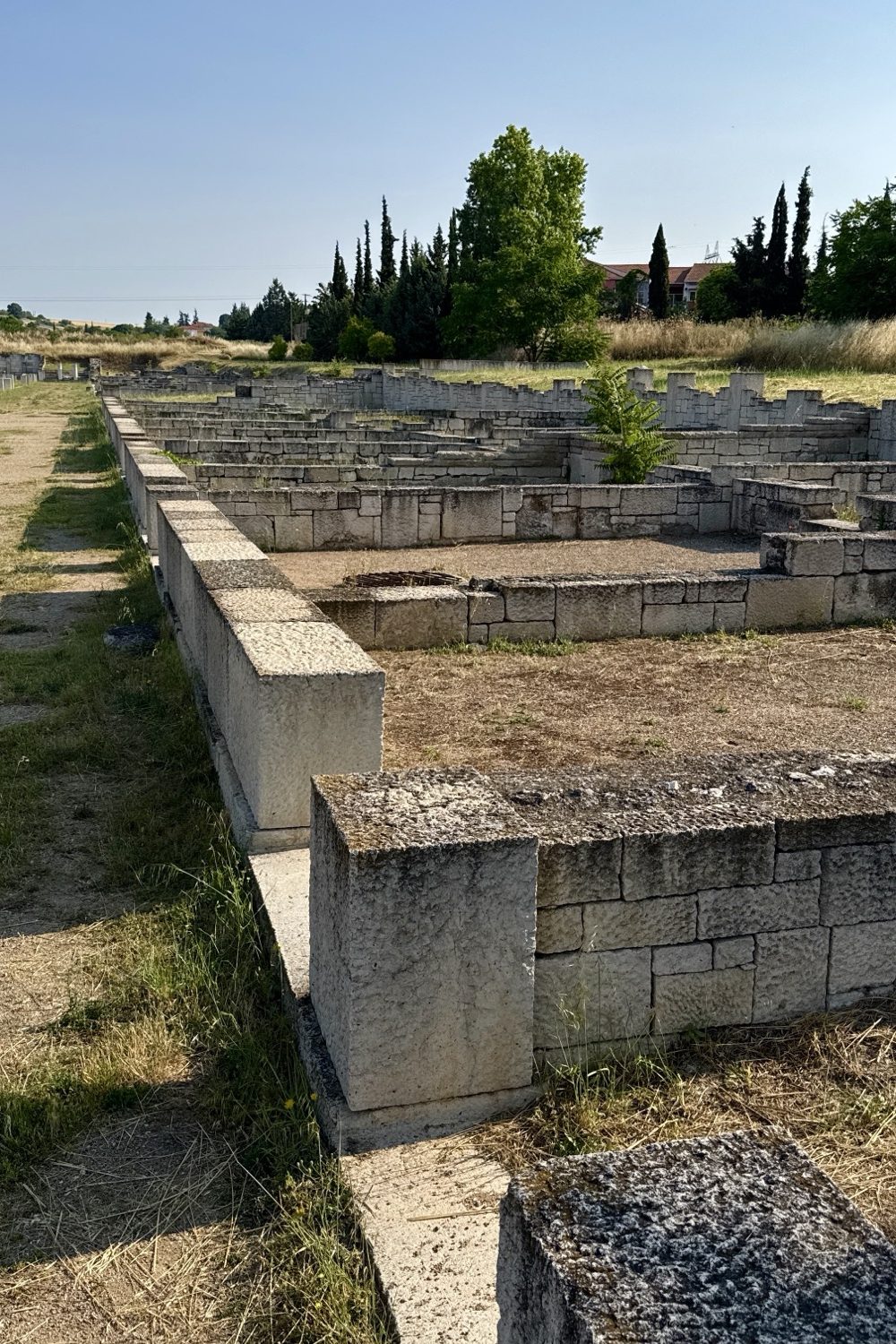
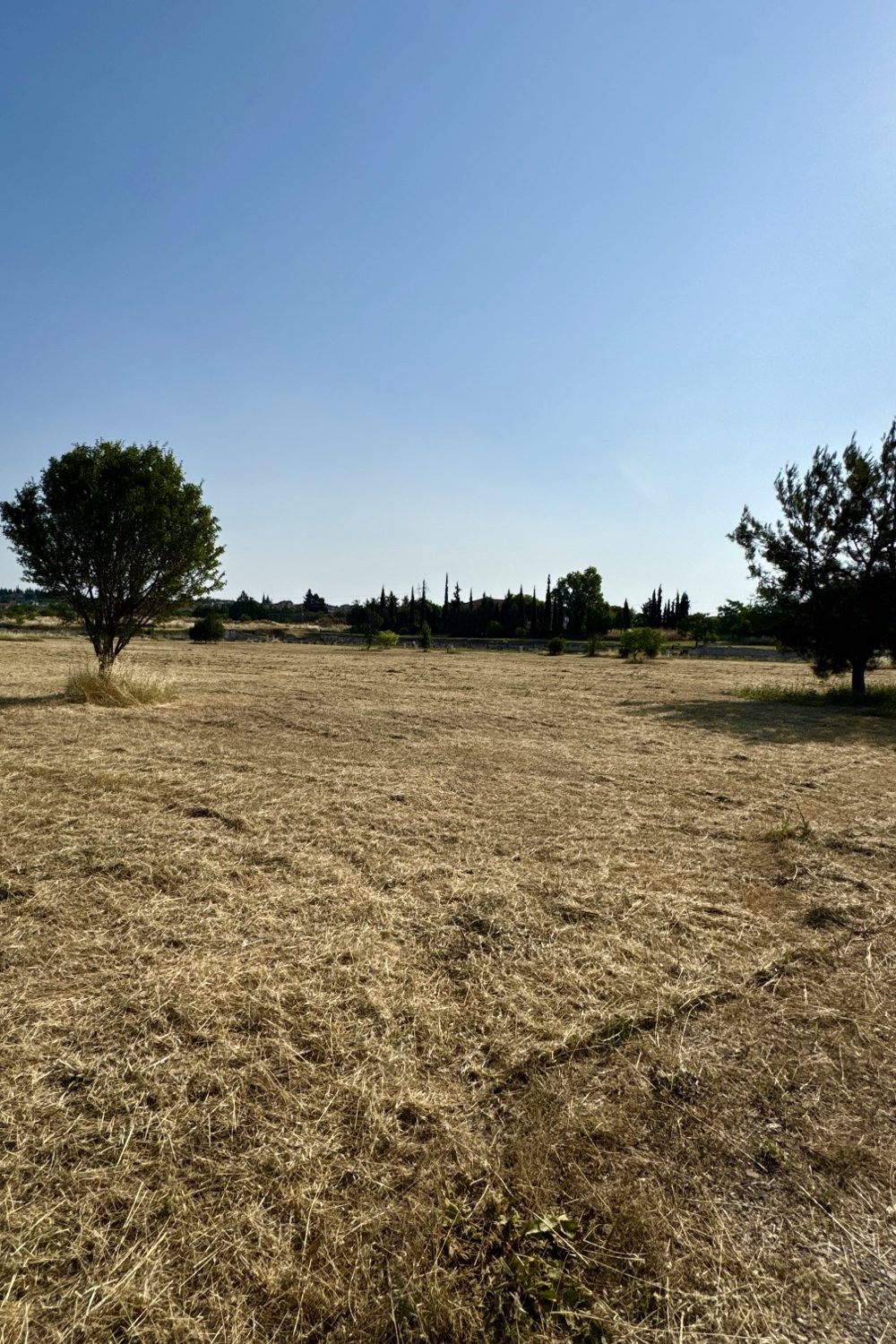
    The highlight is the Agora, not because it’s particularly well preserved, it isn’t, but because of its sheer scale. Covering about 70,000 square meters, it was the largest and most advanced of its time, laid out on a grid plan (the Hippodamian system), making it incredibly modern for the era.

    Standing there, you can barely see from one end to the other. I don’t recommend actually walking across, though, not because it’s far, but because the space is overgrown with weeds and tall grass. Take to the stoas around the Agora instead, once lined with shops, administrative offices, and storage rooms.

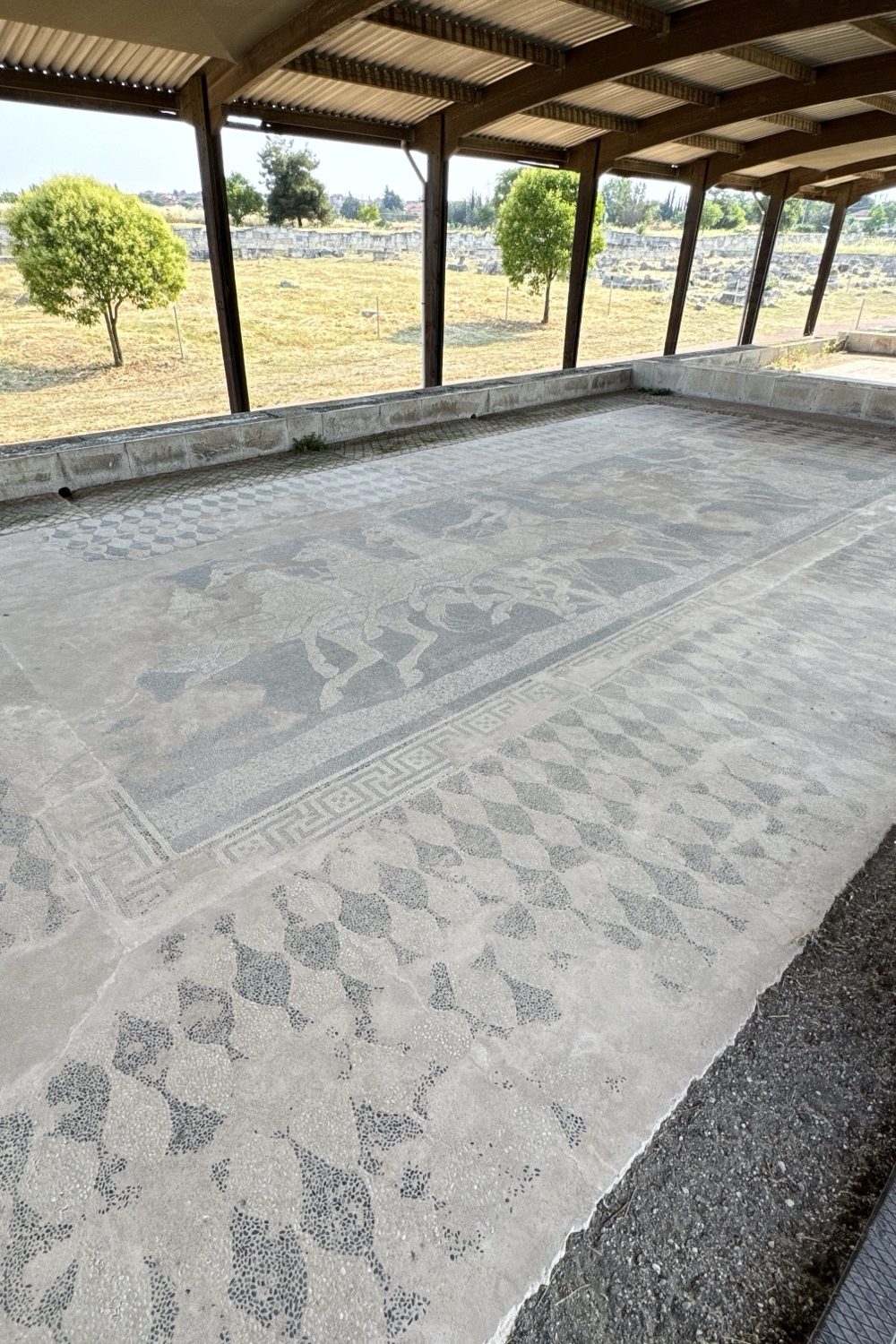
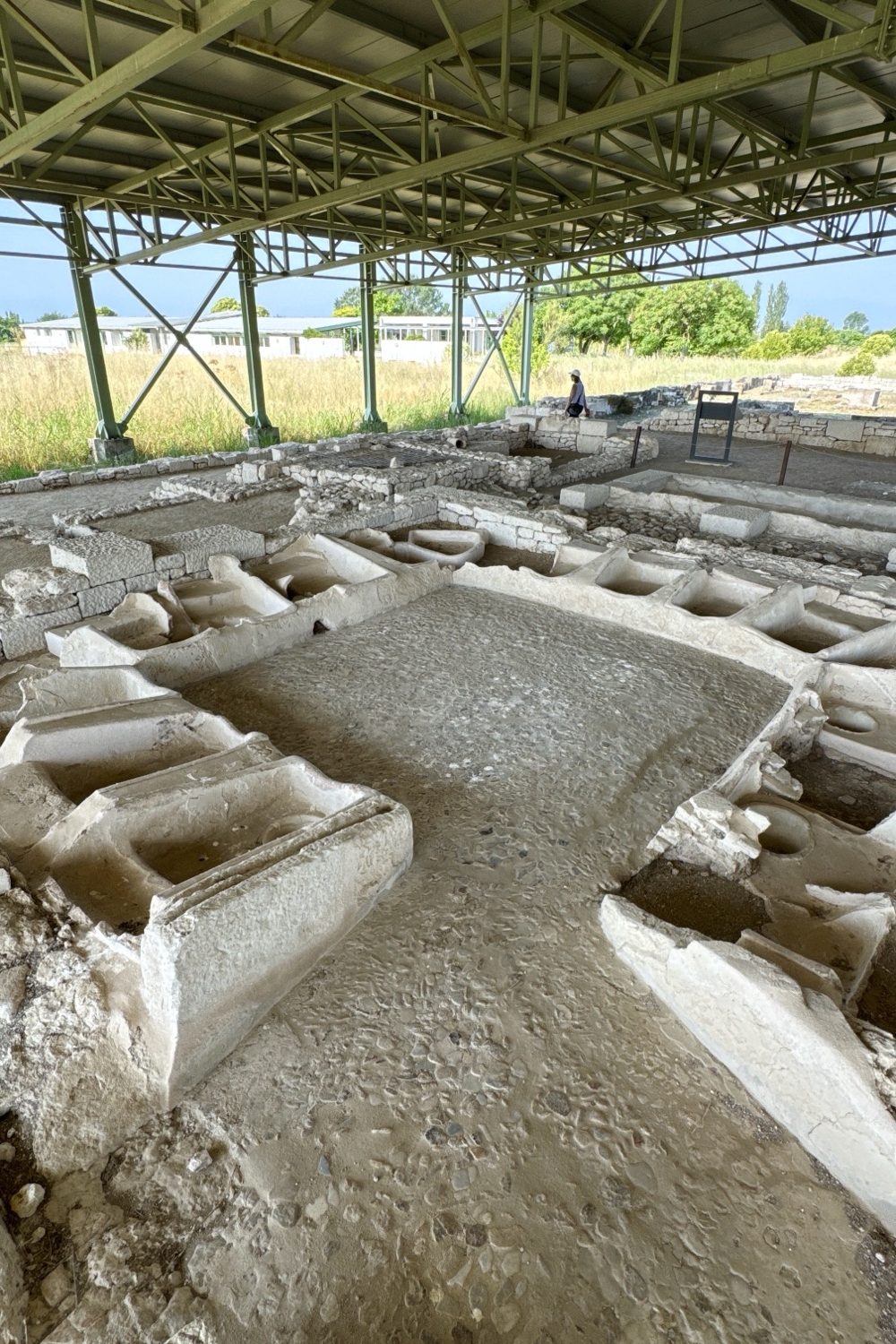
    Nearby are private houses, lavish elite residences with peristyle courtyards and stunning mosaics (that can also be found at the museum). The Sanctuary of Aphrodite gives a glimpse into the city’s spiritual life, blending Eastern and Greek traditions. Public baths and infrastructure hint at just how sophisticated life here once was. A detour to the potters’ houses reveals well-preserved pipes, pottery, and infrastructure, right beside the construction site for a brand-new visitor center. For now, though, there’s just a small ticket booth (€10 entry) and some basic facilities.

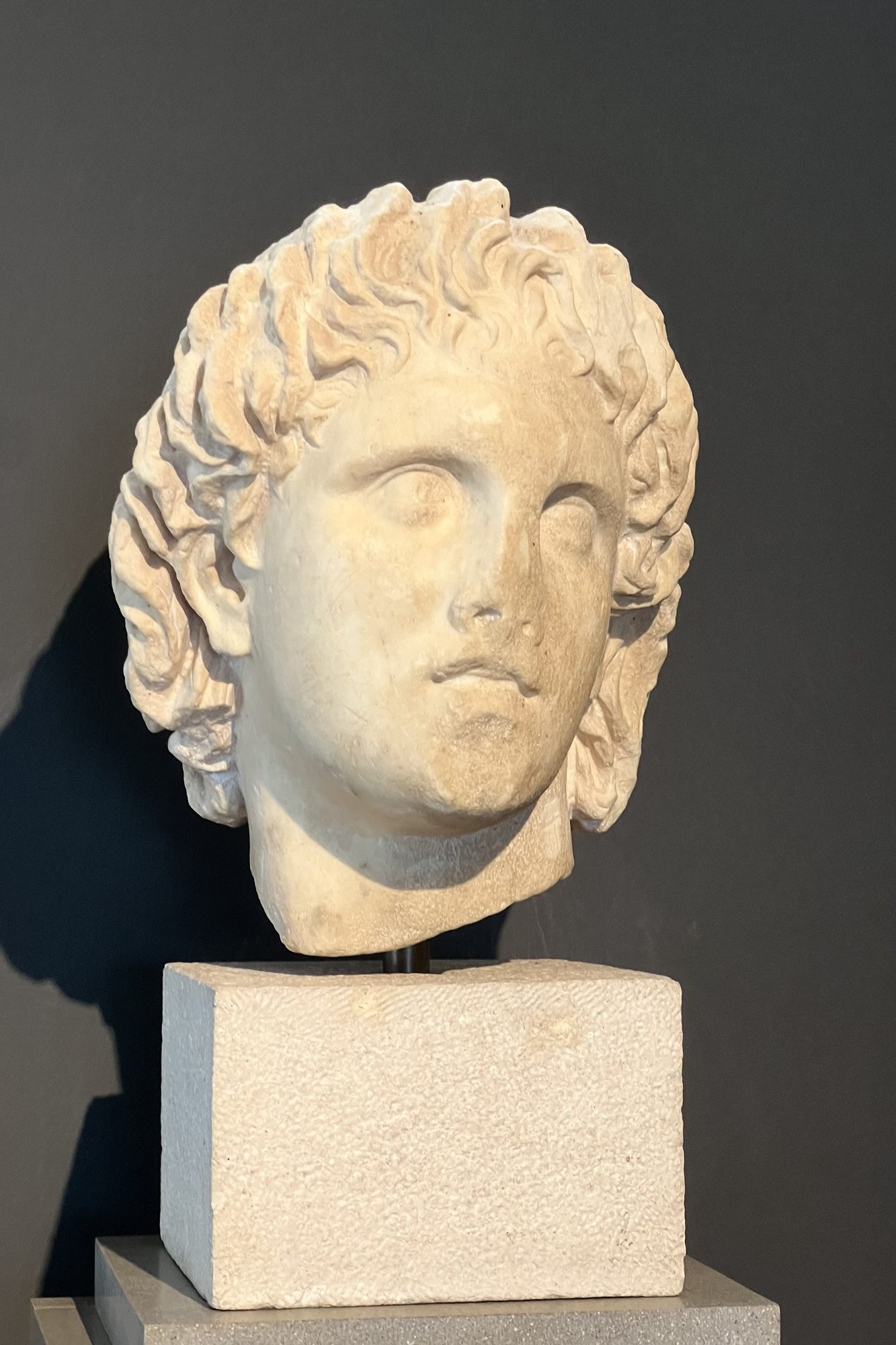
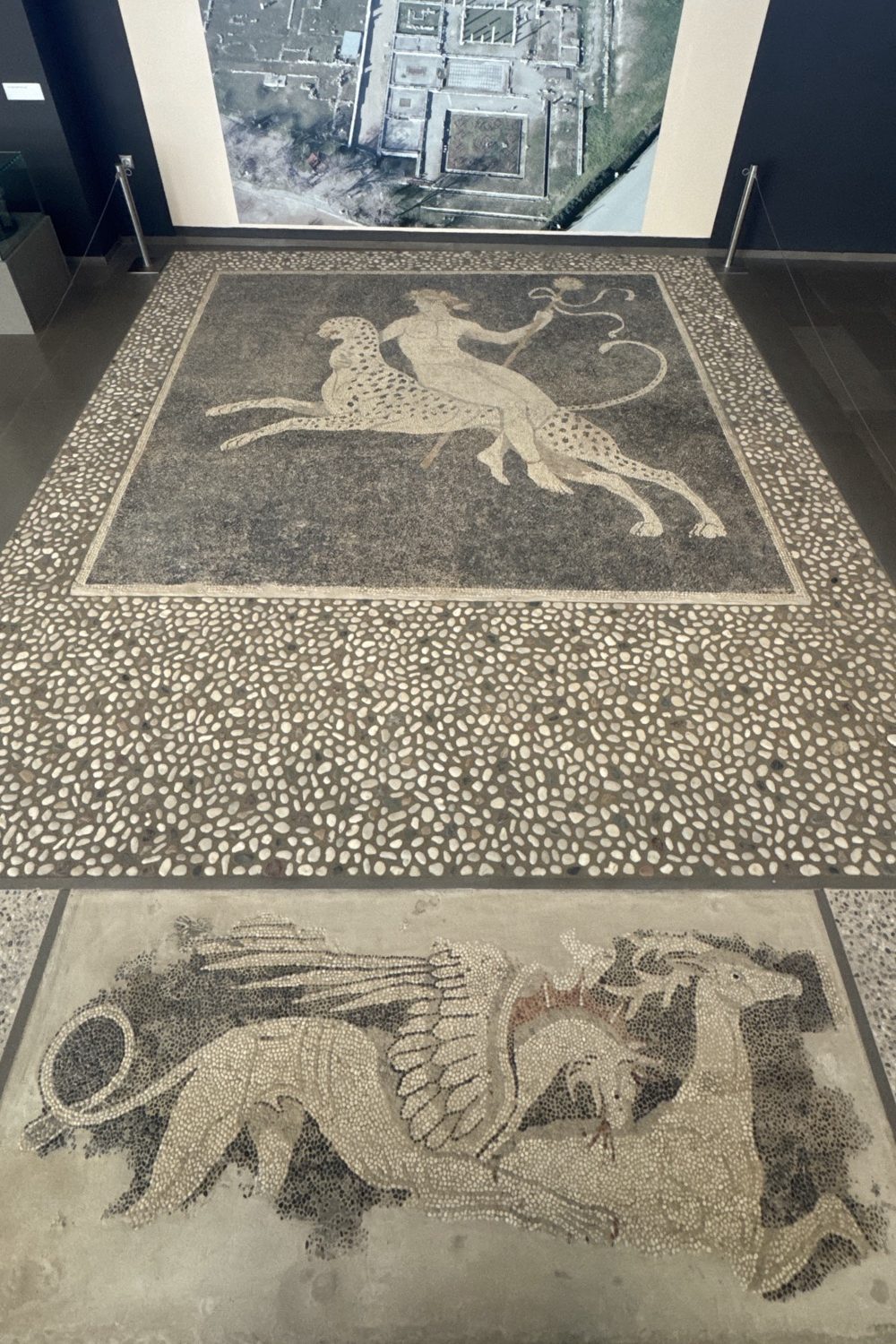
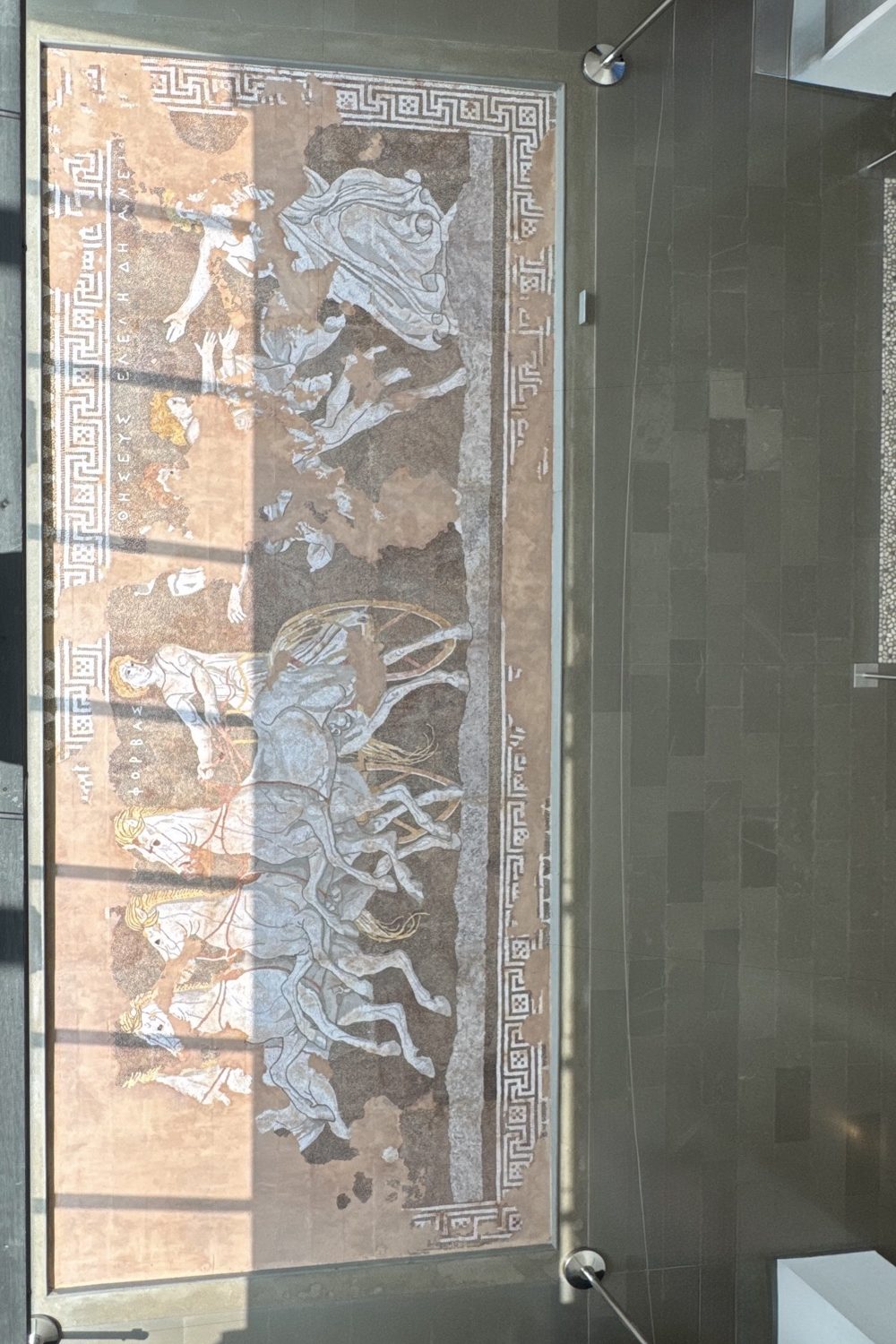
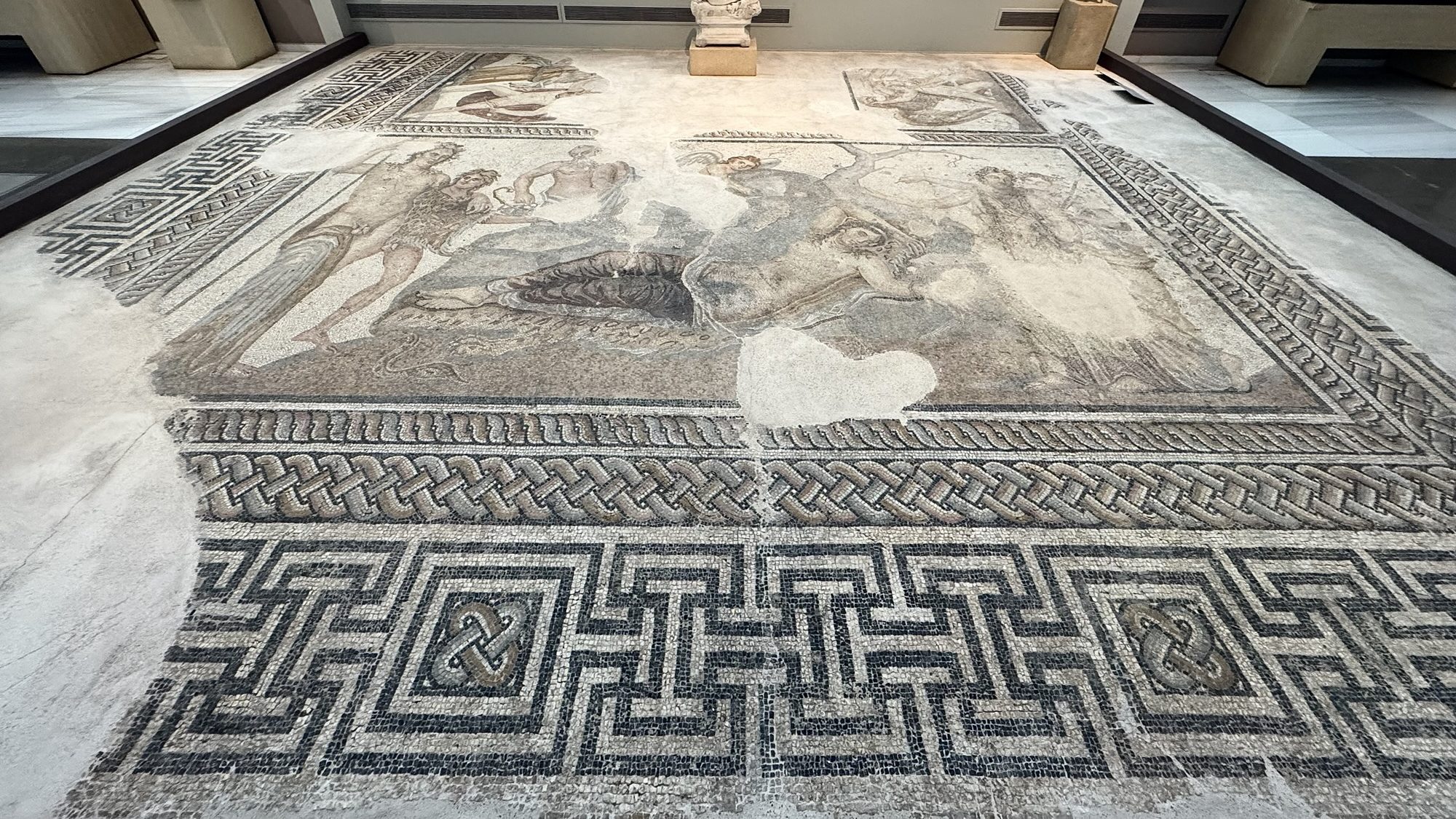
    No visit is complete without the Archaeological Museum of Pella, just next door. The modern building houses an impressive collection of artifacts, many unearthed from the site itself. The first thing you encounter is the massive 8-meter-long mosaic of “The Abduction of Helen.” It’s joined by other masterpieces like “The Stag Hunt,” “Dionysus on a Panther,” and “The Lion Hunt,” thought by some to depict Alexander himself. The museum also showcases reliefs, altars, pottery, glassware, sculptures, busts, cursed inscribed tablets, and coins, offering a vivid picture of life in ancient Pella.

    After about an hour exploring the museum, we moved on to Aigai, or modern-day Vergina.

    Gold, Gold and More Gold

    Aigai was the original capital of the Macedonians, the birthplace of their royal dynasty, and most famously, the burial site of Philip II. But first, we stopped at the Polycentric Museum of Aigai, which spreads its exhibits across multiple sites in the ancient city: the Royal Tombs, the Theatre, the Royal Palace, and the necropolis. Entry is €20, and your ticket covers them all, so don’t lose it.

    The museum itself houses over 500 objects, arranged thematically: Royal Authority, Public & Political Life, Religion & Rituals, Daily Court Life, and Death & Memory. Here you’ll find diadems, armor, ceremonial weapons, inscriptions, decrees, offerings, statues, pottery, funerary steles, and more, arranged being glass cases that make me wonder if the curators has OCD or simply has good aesthetic sense as they were just *chef’s kiss*.

    And of course, front and center, Alexander himself: a giant LCD display at the lobby maps out his conquests, from Corinth to Luxor, Alexandria, Babylon, and beyond.

    The museum is located just outside the city, or roughly a 20min walk from the Royal Tombs, so if you’re planning to take a bus from Veria, speak to the bus driver if they’d drop you off on the main street in front of the museum entrance, rather than walking from the city, and then back again.

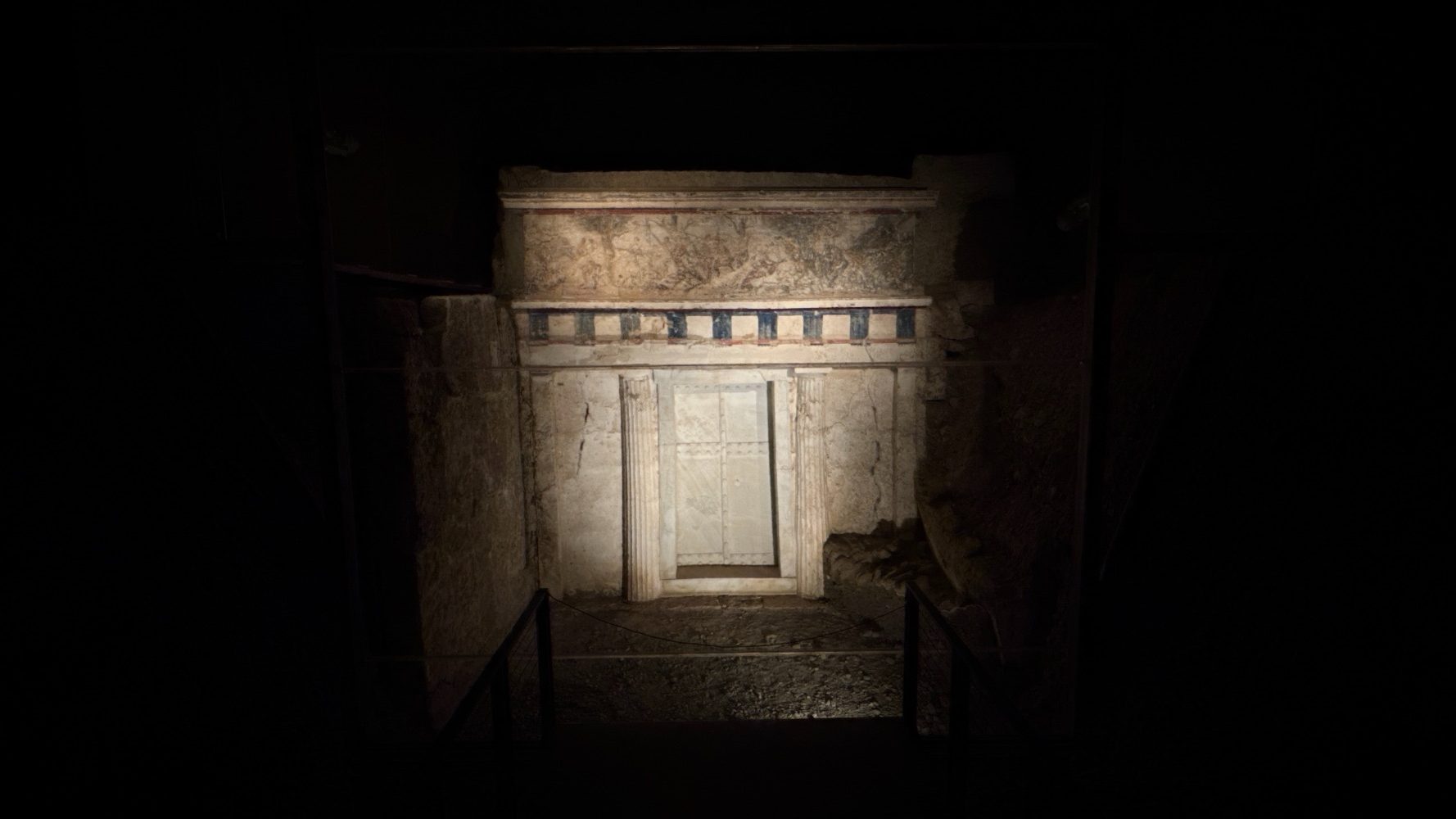
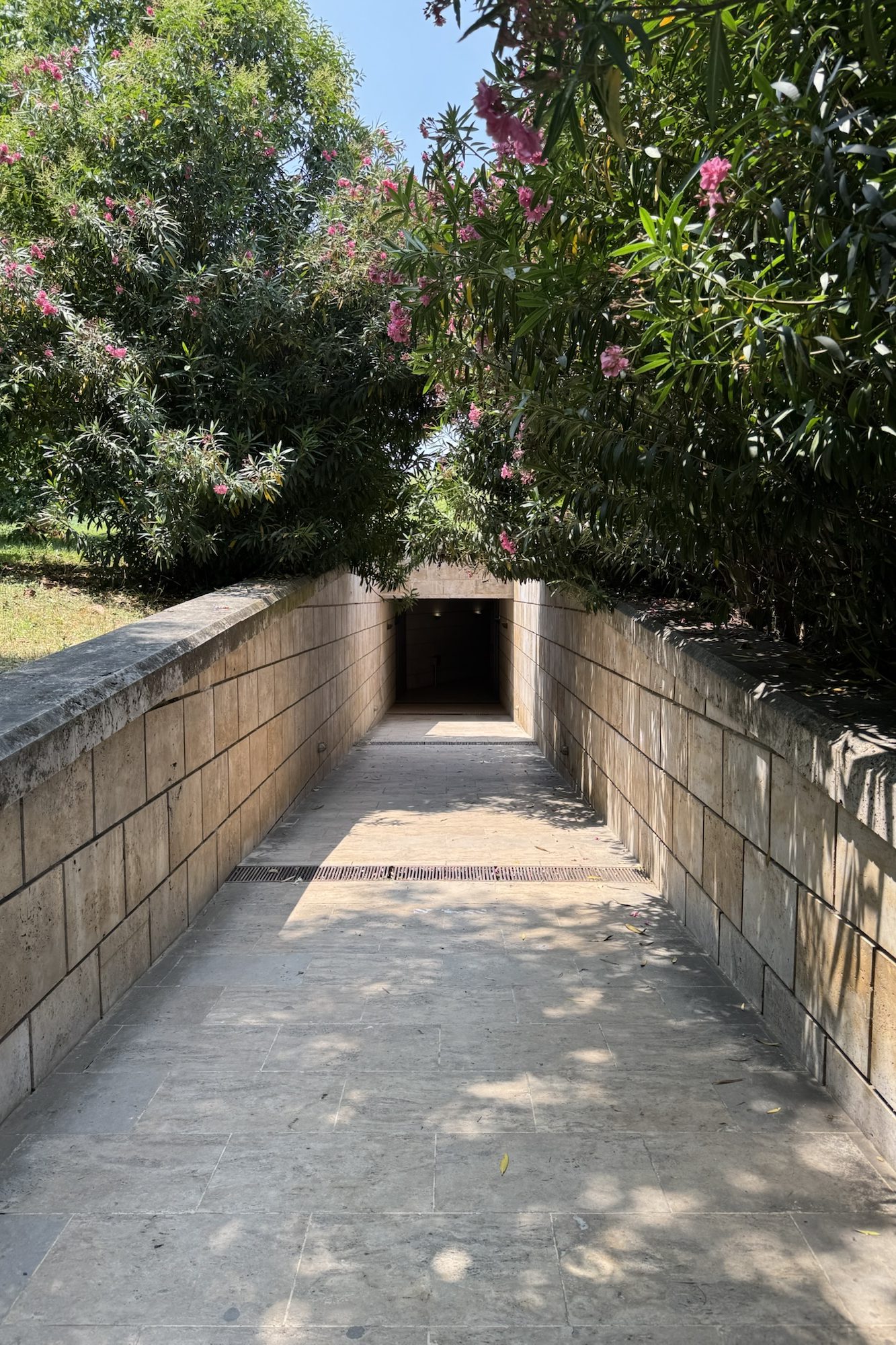
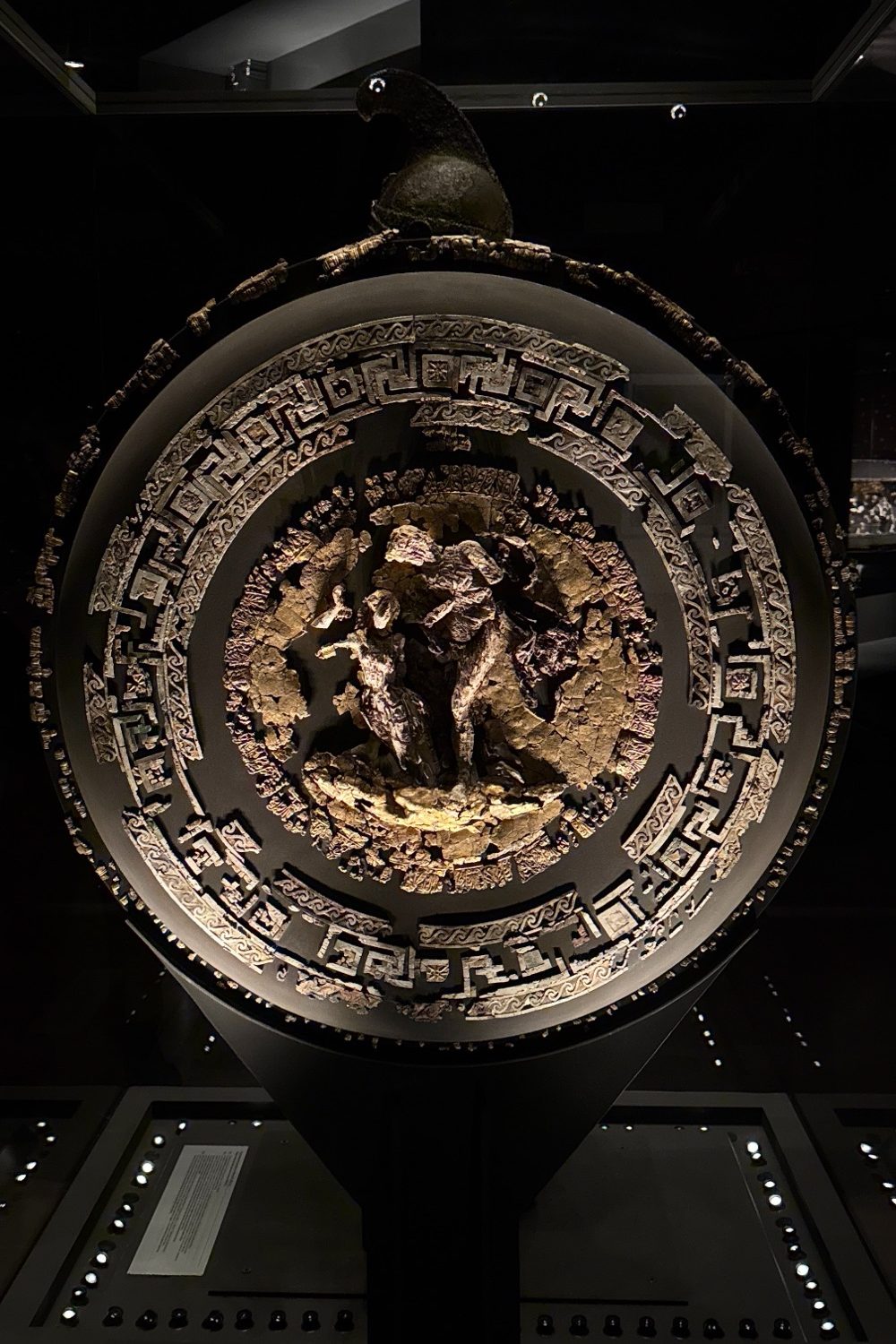
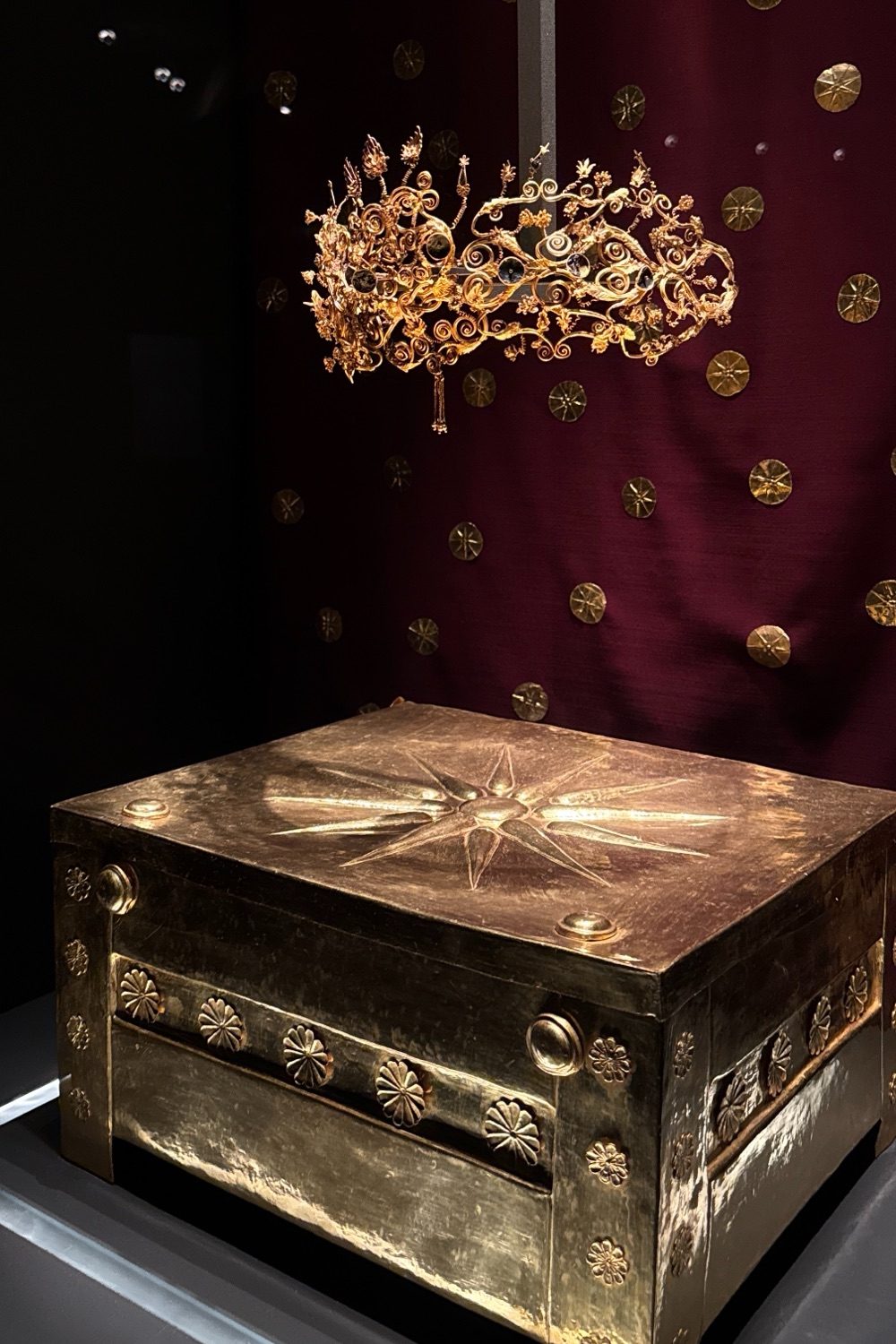
    Then it was on to the Royal Tombs, one of the most extraordinary archaeological discoveries in Greece. Tomb II, believed to belong to Philip II, contains treasures beyond imagination: a marble sarcophagus, a golden larnax with the Vergina Sun emblem, a gold oak-leaf crown, weapons, and ceremonial armor. The tomb is exceptionally preserved, with vibrant frescoes still intact.

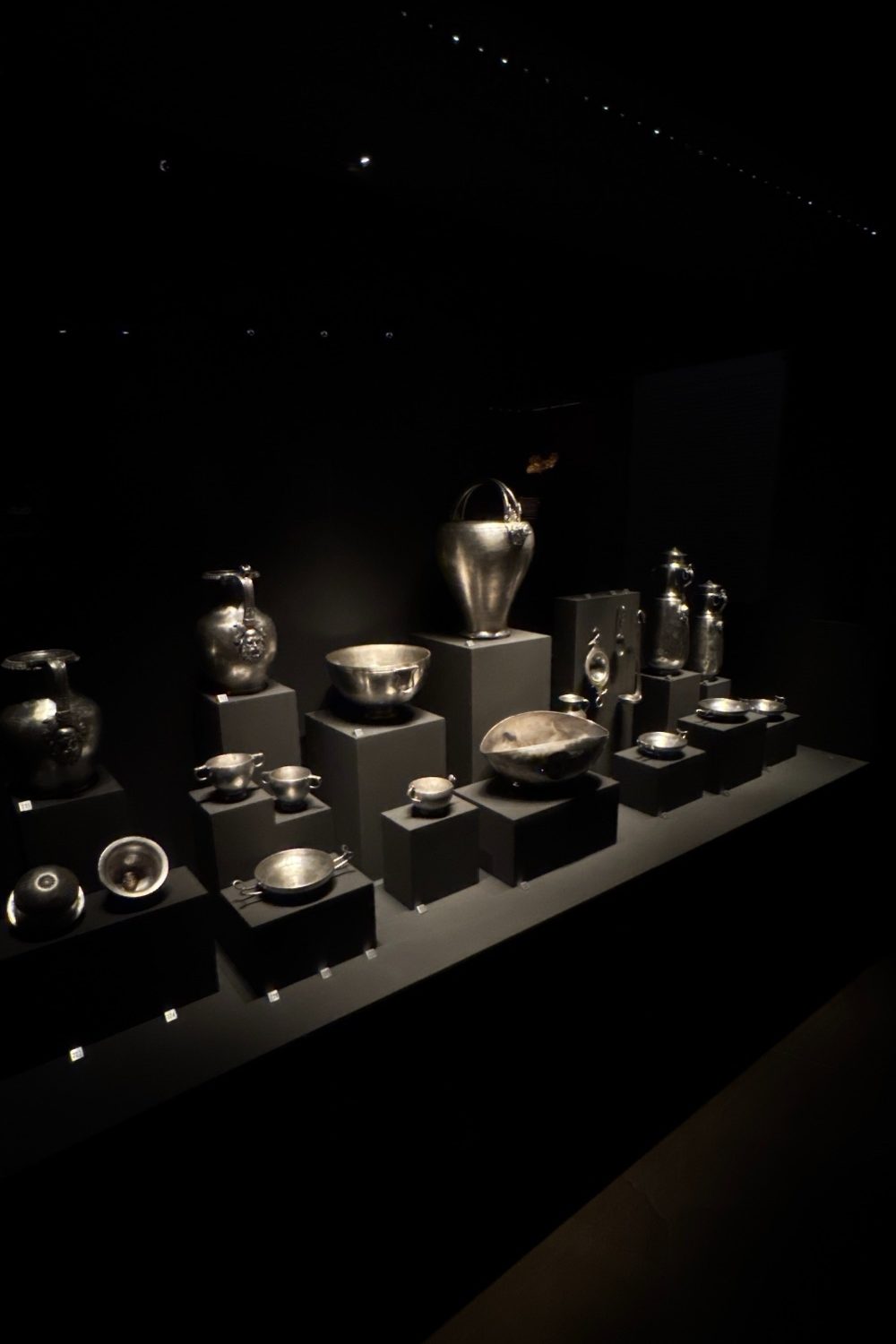
    Nearby, Tomb III (the “Prince’s Tomb”) is thought to belong to Alexander IV, son of Alexander and Roxana, and contained fine silver vessels and weaponry. Tomb I, though heavily damaged, may have belonged to a queen (some say Cleopatra, Philip II’s last wife), and features fragments of the haunting “Abduction of Persephone” fresco. Together, these tombs are breathtaking, with artifacts like a full set of Macedonian armor, another golden larnax, and a nearly 1kg gold oak-leaf crown on display. Yep, that’s a lot of gold.

    It gets chilly inside, even in summer, so pack a light layer.

    Most of the group opted for a leisurely lunch afterwards or were just entering the tombs after lunch, as per the proposed itinerary by the guide. Me? I decided to unintentionally hike up to the Royal Palace.

    Why you might ask? Well, as is with most of the royal palaces i’ve been to thus far on this Greek odyssey, this royal palace is no different from the others as its located on top of, you guessed it, a darn hill.

    So according to Google-sensei, the Royal Palace of Aigai and Theatre is located a short 15mins walk away from the Royal Tombs. Like a normal person i was like “Oh yeah that’s doable.”.

    What it didn’t say (or what i didn’t look out for in small font) was that it’s a 30–45° incline on gravel, under the blazing Greek sun, with me gasping for air in battered sneakers. I feel like ancient sites like this should come with disclaimers in bold, font size 50 letters in italics: “HIKE INCLUDED.”

    But alas, this was no longer a matter of will or will not. Oh no. Now, my men. It’s now a matter of pride, glory, HOME -ahem-

    I may or may not have had EPIC the musical on repeat during my hike. Hey, i needed some sorta motivation alright.

    Anyways, i made it to the Royal Palace. PSA though, while the technically speaking the Ancient Theater of Aigai is landmark on its own, it isn’t something you have to go out of your way to add to your itinerary, you’ll naturally come upon it on the way up to the palace, and there isn’t exactly a lot of TLC that goes into its upkeep, so most of the steps/seats are overgrown with grass and weeds.

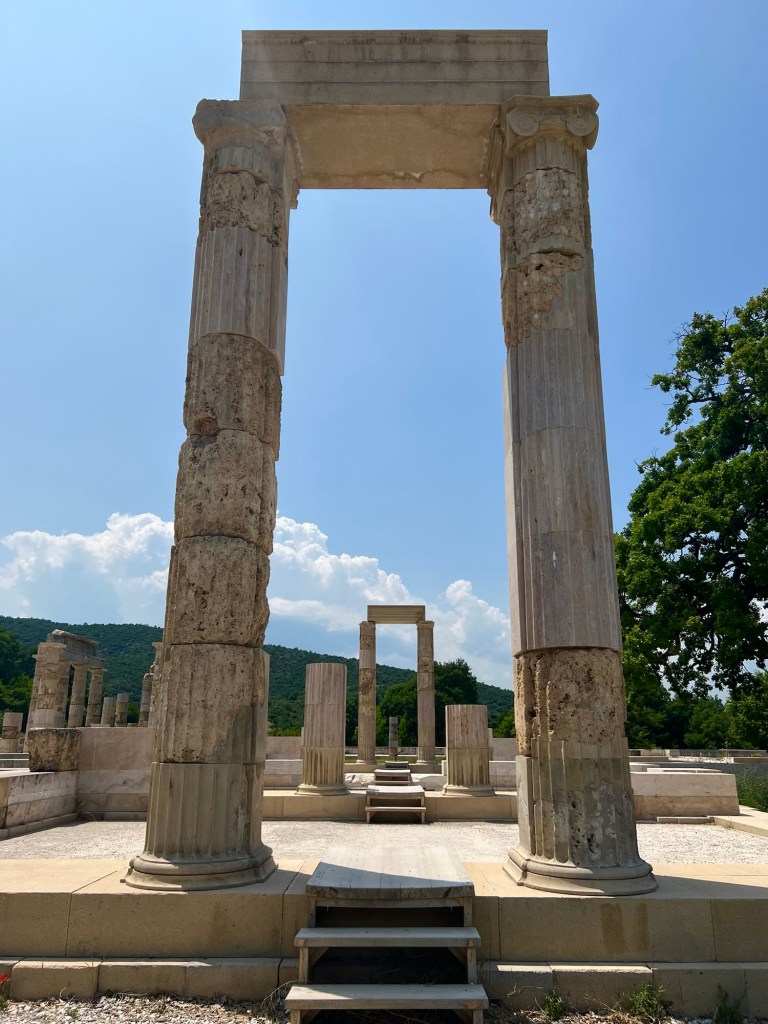
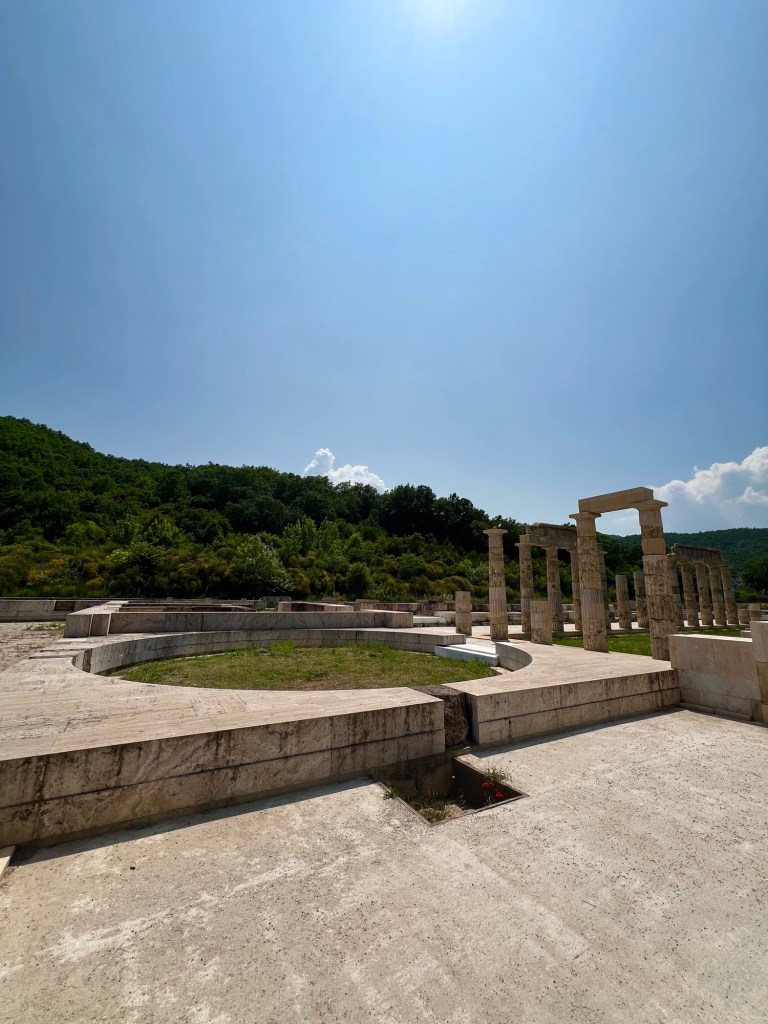
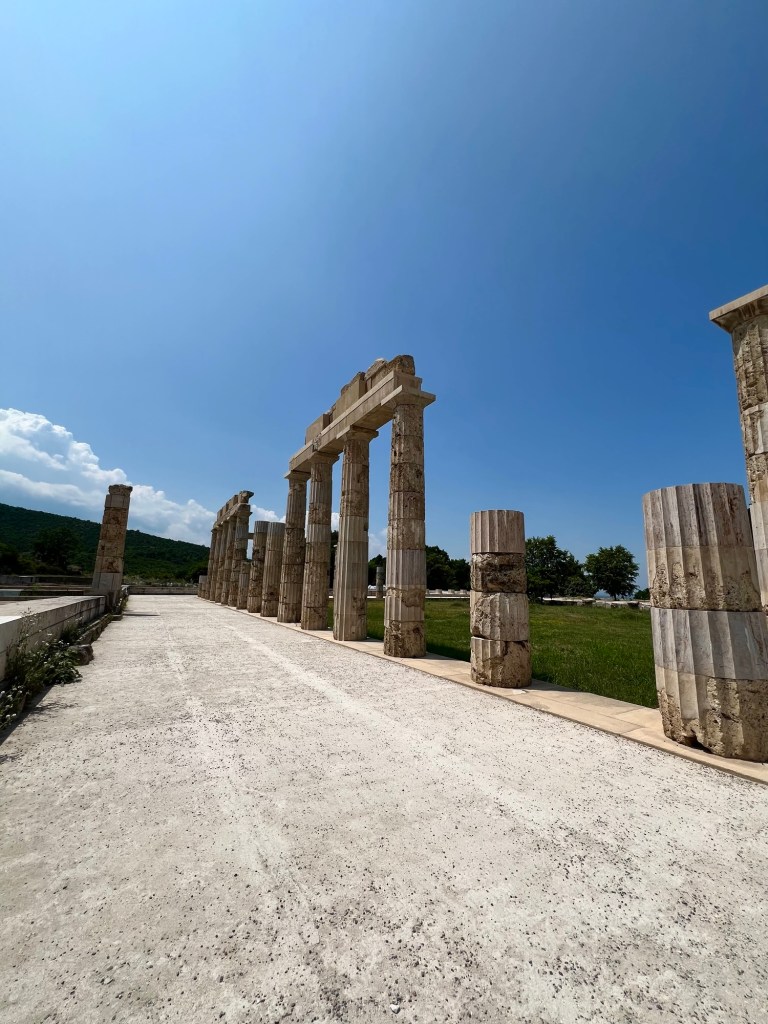
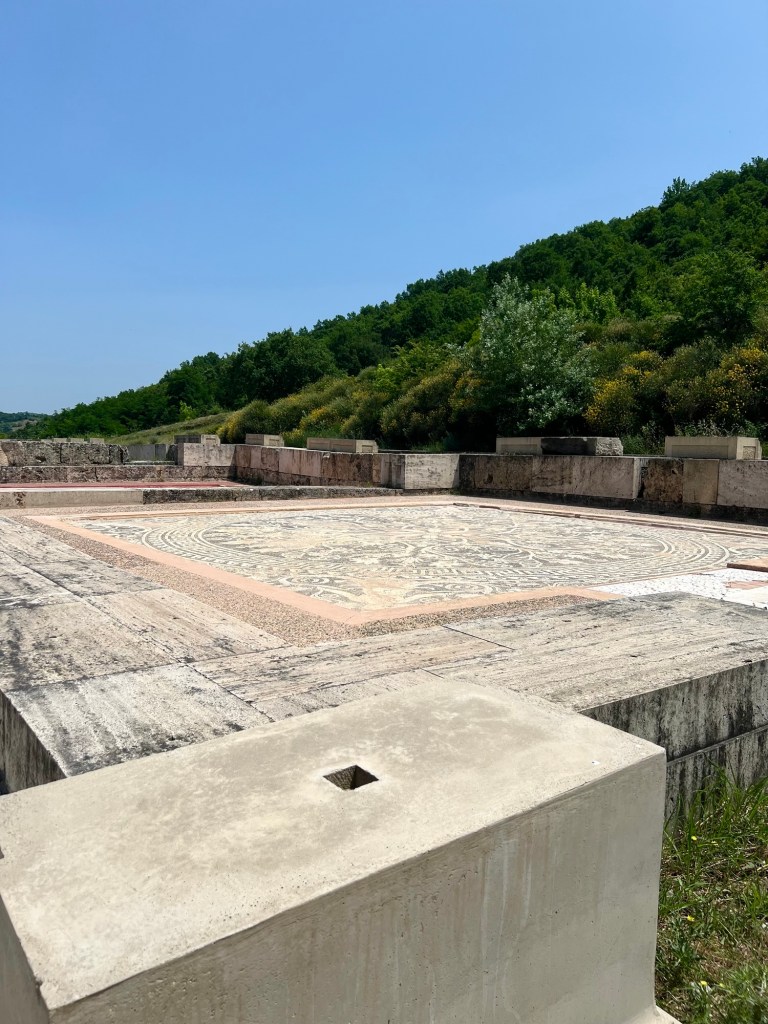
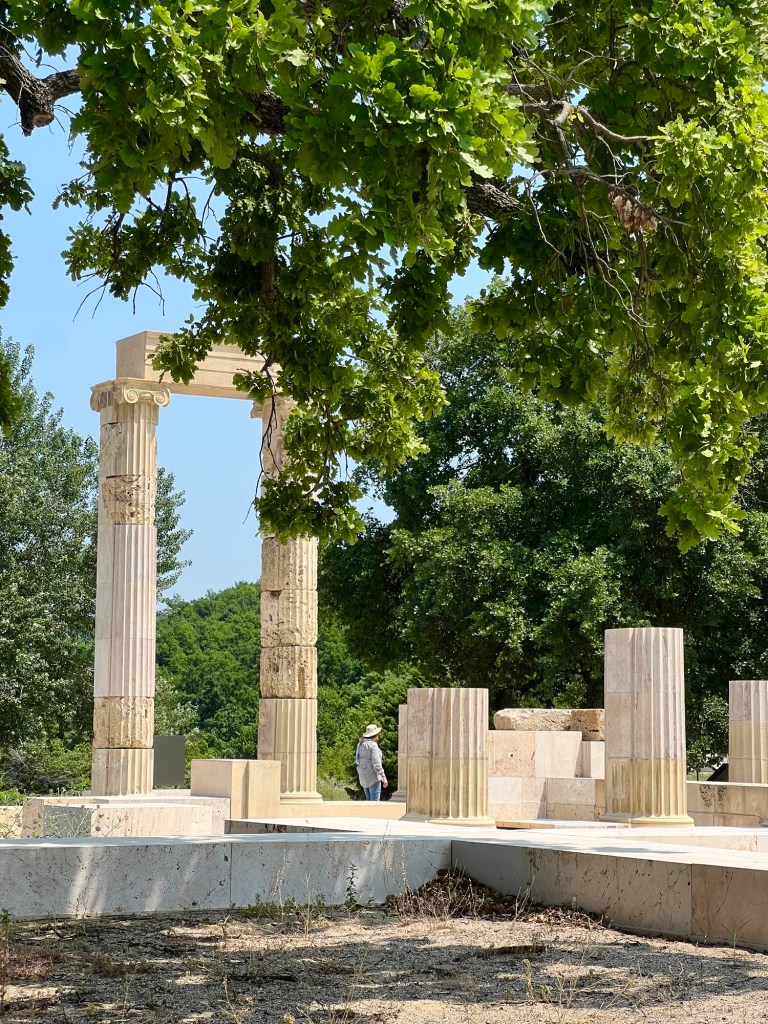
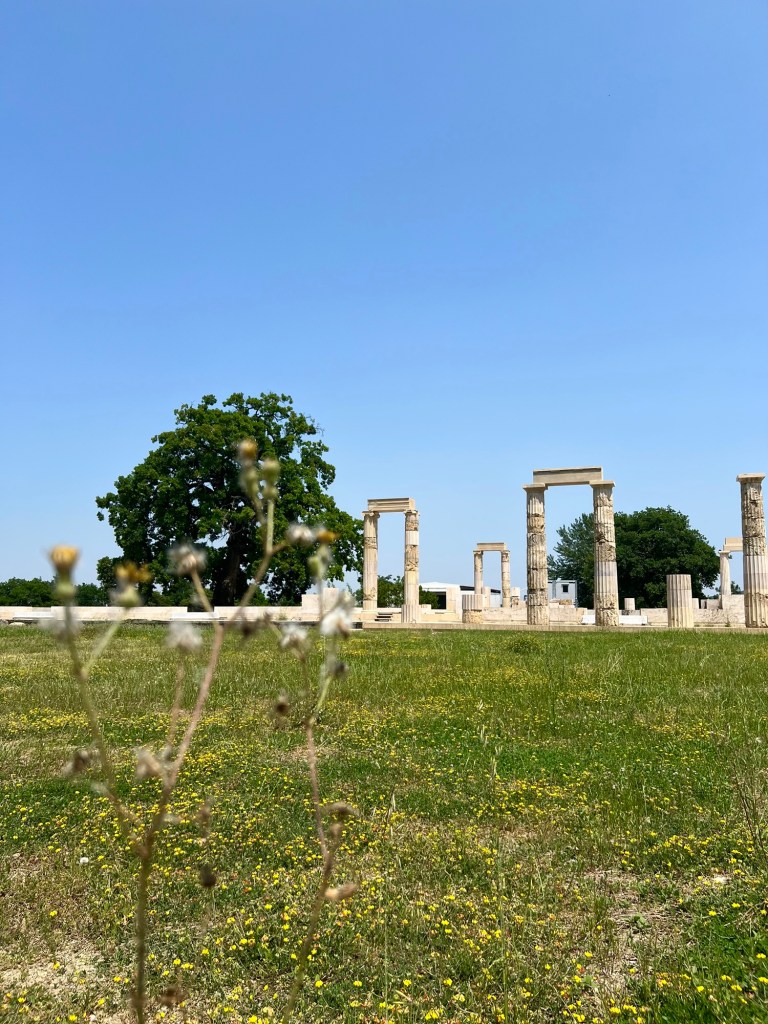
    Back to the Royal Palace, as with most of these royal palaces, not only is it a great vantage point for looking down on the peasants, it was also a political and ceremonial hub, reflecting the power and ambitions of the Macedonian dynasty. Today, its ruins are still vast and monumental, revealing what was considered to be one of the largest buildings of classical Greece, supposedly three times the size of the Parthenon, covering a whopping 15 thousand square meters.

    That said, information on-site is sparse, signage is minimal. It’s not always clear where visitors are allowed to step, and barriers are badly needed. Still, the central peristyle courtyard is walkable, and you get a real sense of the scale and ambition of Macedonian royalty.

    Maybe due to the fact that it is not exactly a well visited site, there were probably only 3 custodians on site, one of which will watch you like a hawk and practically stalk your every step. Not that i actually minded my stalker though, as he was more than happy to give me an brief guided tour of the grounds seeing that i was their first, and hopefully not the only, visitor of the day, which i found quite sad, as the restored site was a thing of beauty, you can spot him in one of the pictures below.

    But i would say the main areas you’re not allowed to approach are the ‘rooms’ with the mosaic floors, admiring them from afar would have to suffice but it would probably been a more impressive viewing experience if they installed steps like they did at the Archeological Site of Pella so as to be able to view the stunning mosaic floors from higher ground.

    If you’re coming here as part of a tour like i did, and would also like to check out the Royal Palace of Aigai, i would recommend checking with your guide first how much time is allocated for your time in Aigai (Vergina). It took me roughly 15-20 mins to get up to the Palace, and slightly less than 15 to get back down. Even though i would have loved to stay on site for at least an hour or more, i pretty much only had 30mins at the palace cause i spent too much time at the Royal Tombs. So unless you have i would say at least 1.5hours at Aigai, I’d recommend prioritizing the Royal Tombs. The palace is spectacular, but unless you’re a ruins enthusiast, it’s not as essential.

    What if…?

    Eventually, it was time for me to head back down the hill and rejoin the group for the ride back to Thessaloniki. Cruising past quiet fields and grazing animals, it’s surreal to think of the empires and legends born in this land. What if things had gone differently? We’ll never know.

    But what’s for certain, is that i skipped lunch, dinner was next on the agenda, and my stomach was growling like Scylla awaiting its next meal. So back to Thessaloniki it was, to find dinner, and the city that was named after Alexander’s half sister: Thessalonike.

  • Greece – Olympia

    Birthplace of the Games


    The Starting Line

    Every four years, the whole world rallies together to celebrate the pinnacle of sports: the Olympics. It’s a spectacle, a celebration, and a competition all rolled into an international gyros that is the modern Games.

    Although modeled after the ancient Games of Olympia, the original Games couldn’t be more different.

    The first Olympic Games were held here in honor of Zeus. Held every four years, the Games at Olympia were a national event that attracted participants and spectators from all over the Greek world, including colonies in what we now call Italy and Turkey. Tens of thousands would make the difficult pilgrimage to attend. Some sources say as many as 40,000 people gathered for the event.

    The Olympic Games were one of the four Panhellenic Games of ancient Greece. The other three were: the Pythian Games in Delphi (dedicated to Apollo), the Nemean Games in Argos (also in honor of Zeus, though there are some that attribute the institution of the Nemean Games to Heracles after he had slain the Nemean lion), and the Isthmian Games in Corinth (for Poseidon).

    The modern Games feature up to 30 sports, over 40 if you count the summer and winter versions. The ancient Games started with a single footrace and eventually expanded to include up to 18 events by the Classical period, ranging from footraces and wrestling to equestrian and field sports.

    The ancient Games continued until around 393–394 AD, when Roman Emperor Theodosius I banned them, seeing them as part of a “pagan cult/practice.” The Olympic flame wouldn’t reignite until 1896, when Athens hosted the first modern Games after a 1,500-year hiatus, sparking a revival of the ancient tradition that continues today.

    But Games aside, Olympia wasn’t your typical bustling Greek city-state like Athens or Corinth. It was never a political powerhouse. Rather, it functioned as a sacred sanctuary complex in the rural Peloponnesus. What made Olympia exceptional wasn’t its population or military, but its role as a Panhellenic religious center.

    At its heart, Olympia was a sanctuary devoted to Zeus, king of the gods. The centerpiece was the Altis, a sacred grove packed with temples, treasuries, altars, and monumental sculptures. Over time, Olympia grew to include athletic and artistic spaces too: stoas, workshops, baths, and of course, the stadium. Despite all this, it had no permanent population — more like a permanent festival ground than a living city.

    These days, modern Olympia is a quaint town of fewer than 1,000 residents. Tourism and hospitality are the main industries, and the main street is lined with international flags, family-run hotels, cozy tavernas, and shops selling everything from local honey to olive oil to handmade crafts.

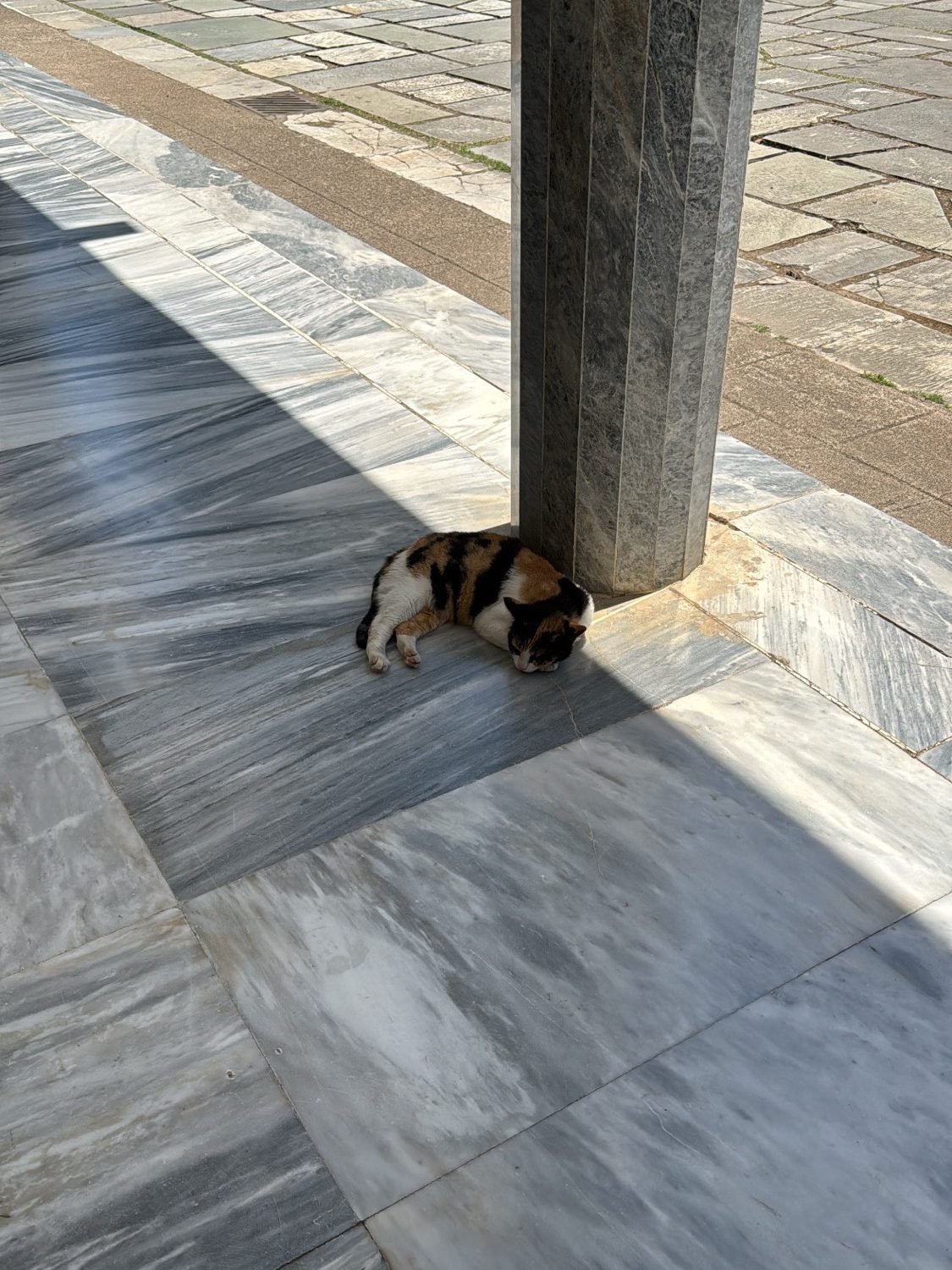
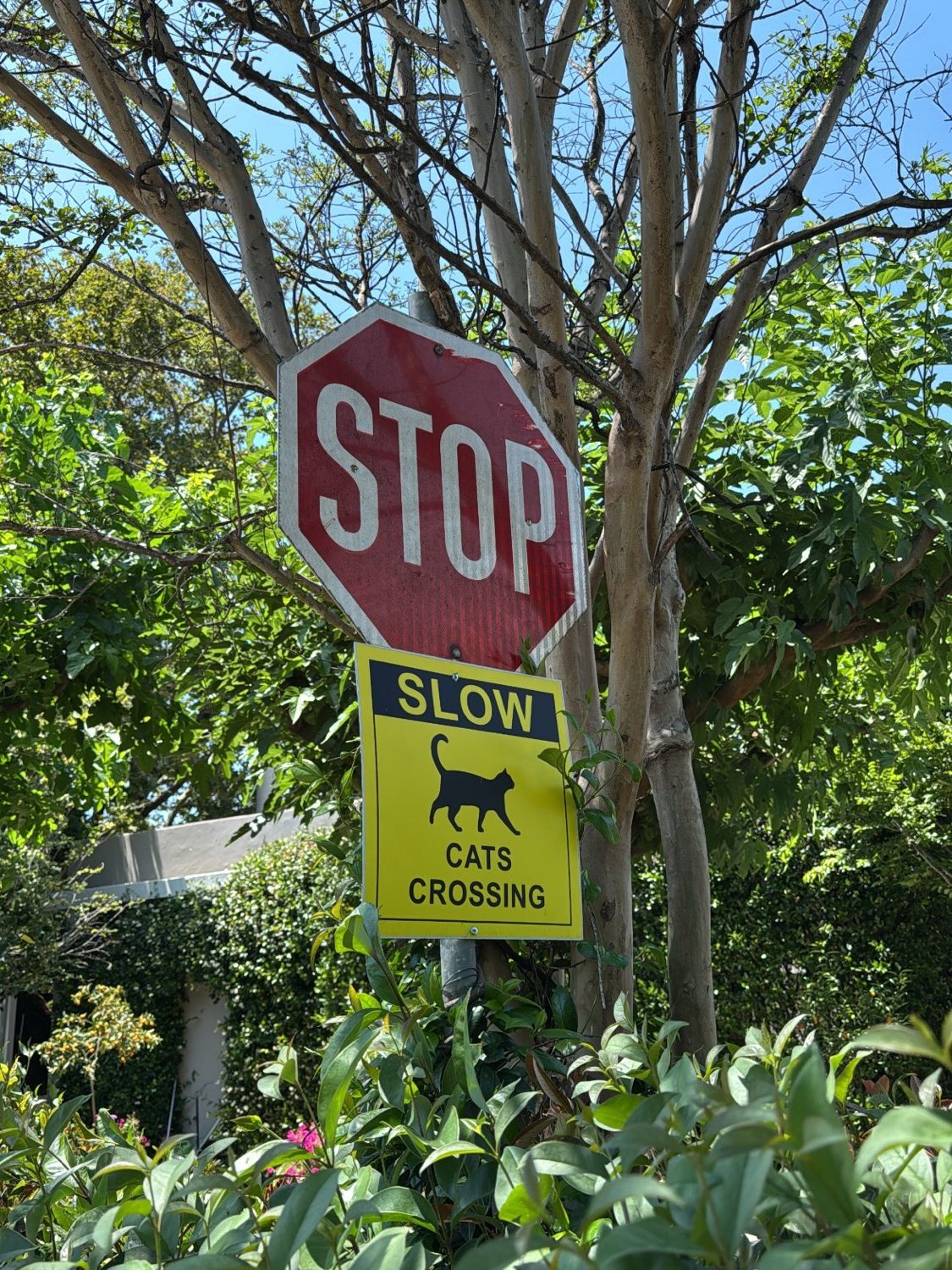
    If you’re visiting during the off-season, and by that I mean not during the Olympic torch-lighting ceremony, Olympia feels like a quiet respite from Greece’s busier tourist hubs despite being one itself. It’s peaceful, slow-paced, and if you’re lucky, you might be joined by a few stray animal companions on your stroll through town.

    Ready, Set…

    So let’s triple-jump right into how to get here.

    As always, the most convenient method is by car. But it’s not a short or easy drive, you’d be cutting across the entire country in 4.5 hours, and much of the road after the highway is a narrow one-lane road.

    You could make the trip part way by flight by arriving in Kalamata Airport and taking a bus or renting a car from there. But just note that the Kalamata airport mainly operates in summer and does not remain open throughout the year.

    There are tour groups offering day trips to Olympia from Athens, but most are quite pricey, so if you’re traveling on a budget, this may not be the move.

    For public transport, it’s a combo of bus and/or train. First, we gotta get to Pyrgos.

    KTEL Ileias runs regular buses from Athens (and Isthmus) to Pyrgos every hour or so. Tickets cost around €22–23, and the journey takes about 4–5 hours. The bus stops for a break midway, but I recommend packing snacks and visiting the bathroom before you board. Here’s the link for the schedule.

    Once in Pyrgos, you’ve got three options to reach Olympia: taxi, bus, or train.

    Buses run from Pyrgos to Olympia every 30 minutes to an hour, for just €2.30.

    Alternatively, you can take the train from either Pyrgos or Katakolo (a nearby port city). Trains only run 3–4 times a day and mostly in summer, so check the official site before committing.

    I actually took both, bus in, train out, and honestly, for €2, the train was quick, efficient, and surprisingly scenic.

    Technically, a day trip to Olympia from Athens is possible, but I wouldn’t recommend it. Between the long journeys there and back, site visits, and museum hopping, and making sure you don’t miss the last bus, trying to do it all in one day is a recipe for burnout.

    If you’re coming from closer cities like Kalamata or Katakolo, or if you’re driving, a day trip is totally doable. As other than the museums and the archeological site of Olympia, taking a nice stroll through the main street or city and maybe having a meal, there really isn’t much else to do in Olympia.

    …Go!

    Admission to the ancient site is €20, and it’s well worth it. That ticket gets you into the Archaeological Museum of Olympia and the Museum of the History of the Olympic Games of Antiquity. So don’t toss your ticket!

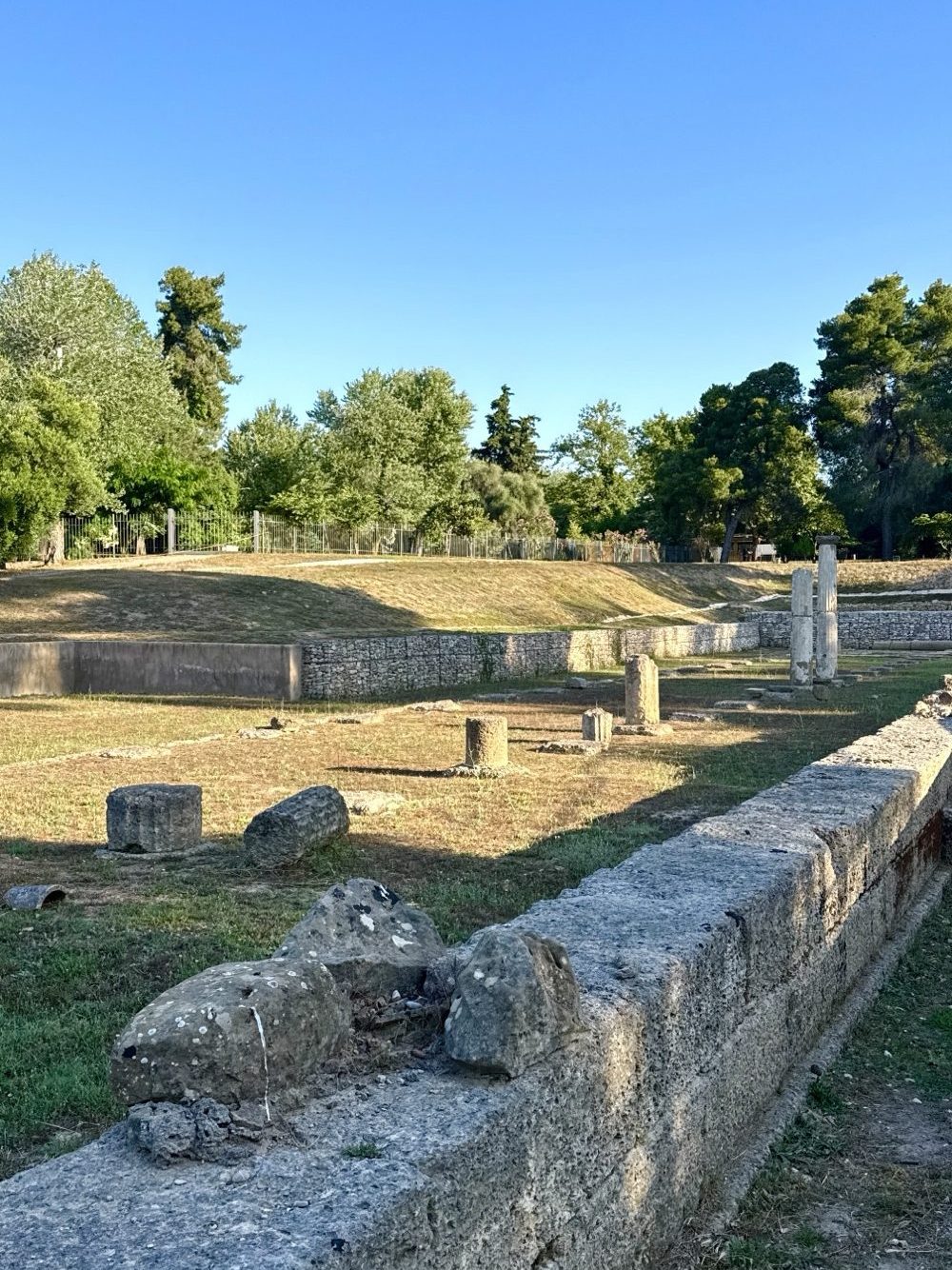
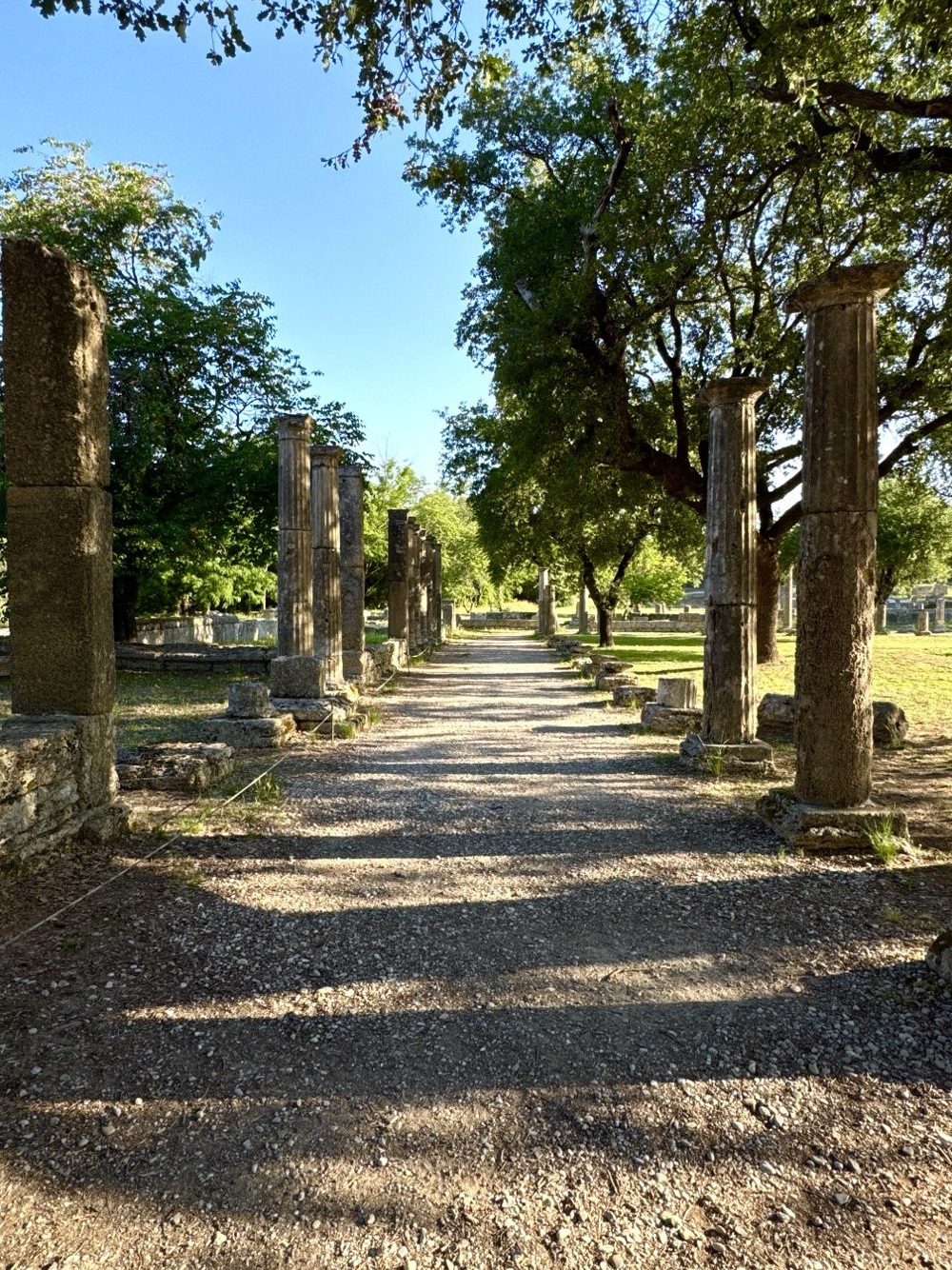
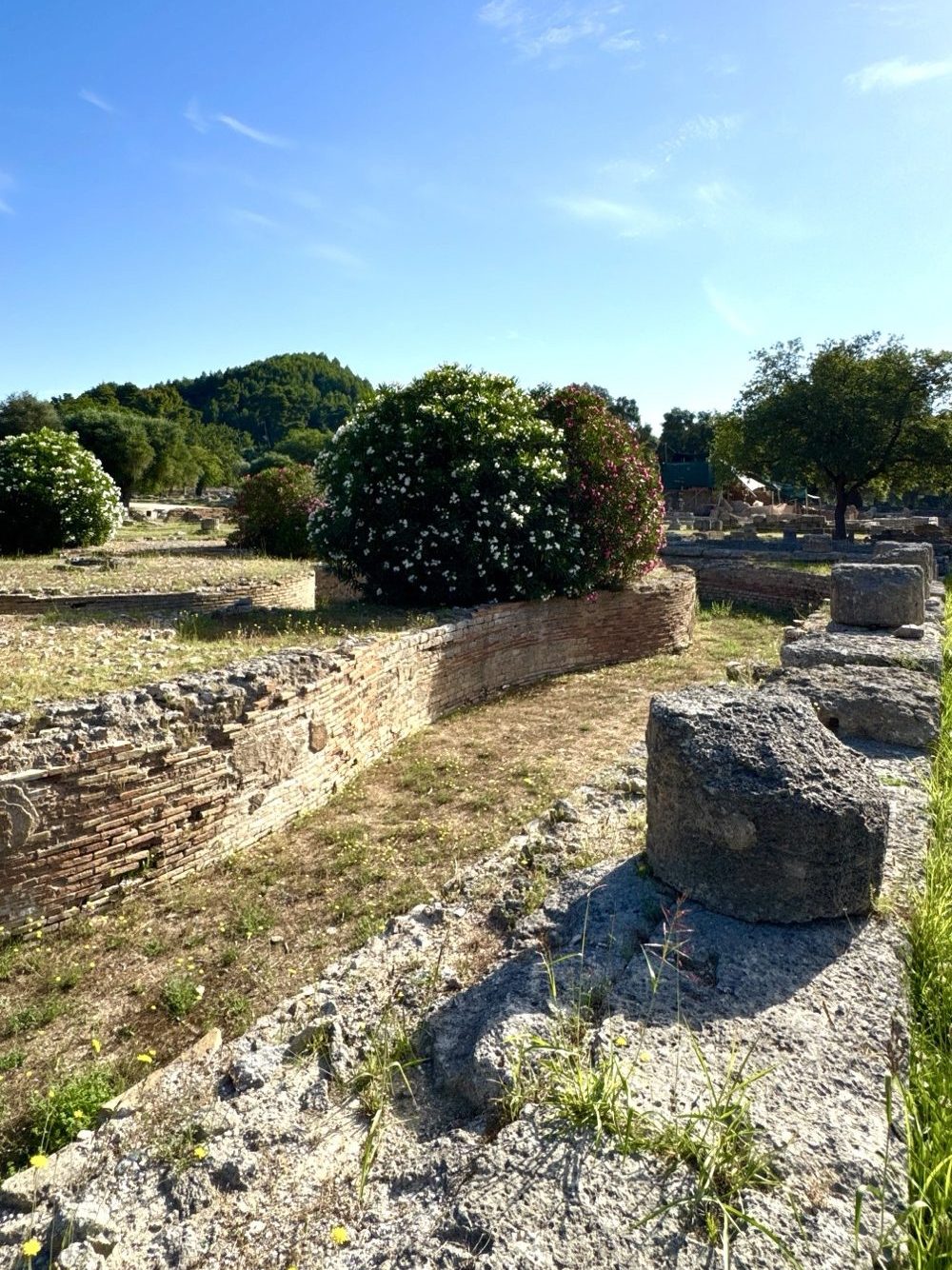
    Once inside the main gate, you’ll pass the Gymnasium and stroll into the ancient athletic and social quarters. Step inside the Leonidaion, which once housed VIPs during the Games. You can wander through the ruins at your leisure, respectfully, of course. (Seriously, why do people always want to climb ancient stuff?)

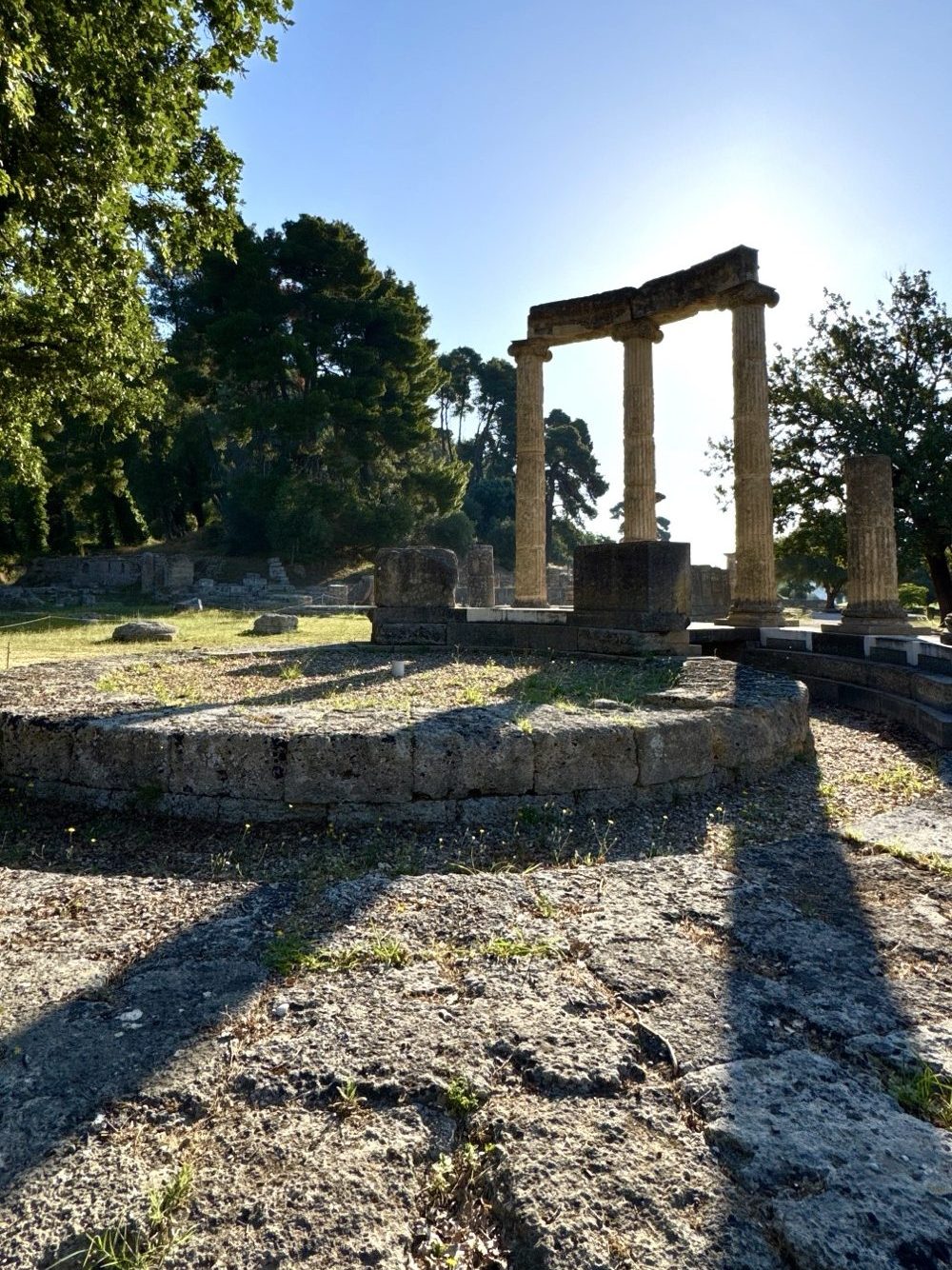
    Don’t miss the Philippeion, a circular monument built by Philip II of Macedon, and the workshop of Phidias, where he sculpted the massive statue of Zeus.

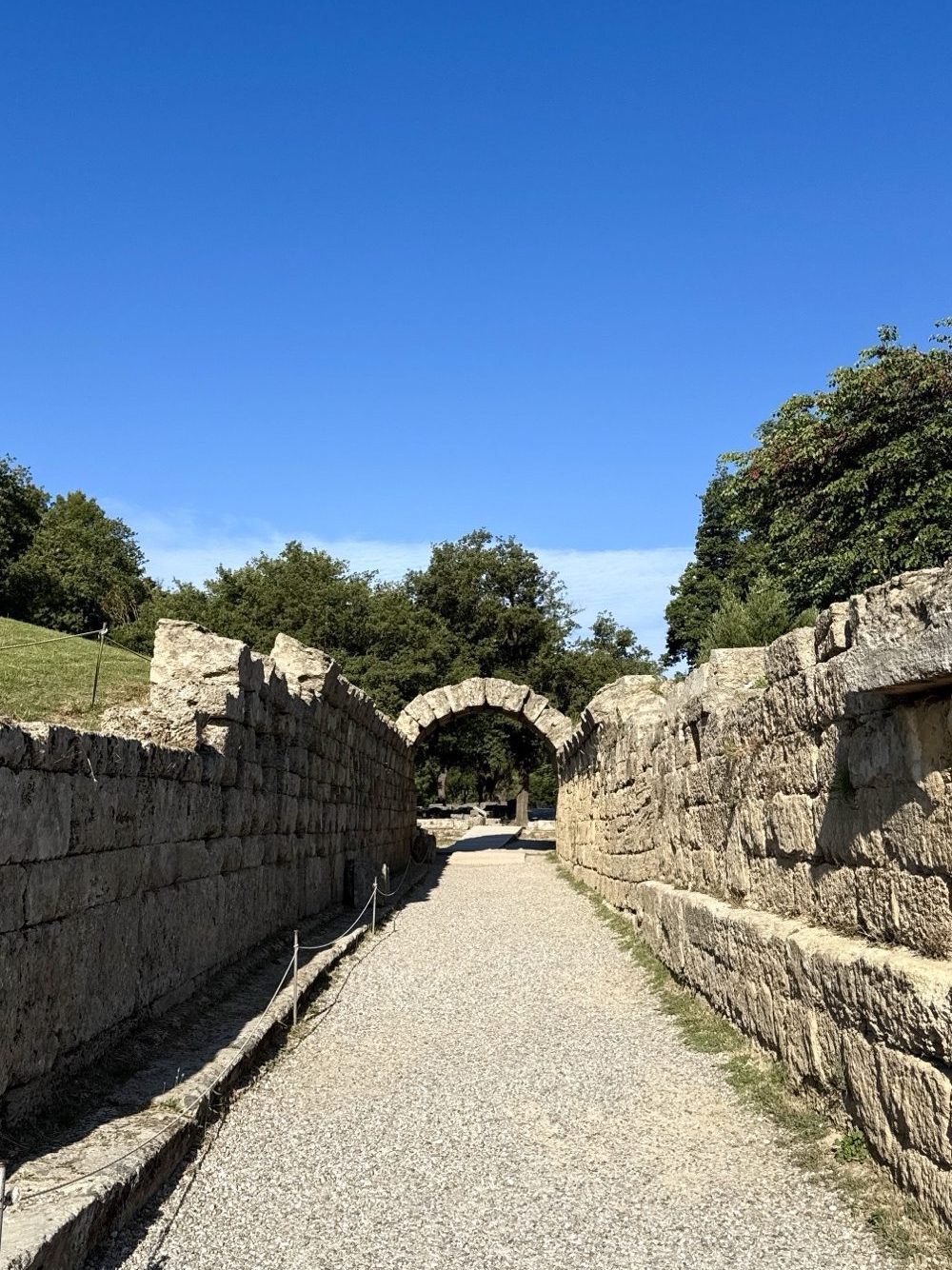
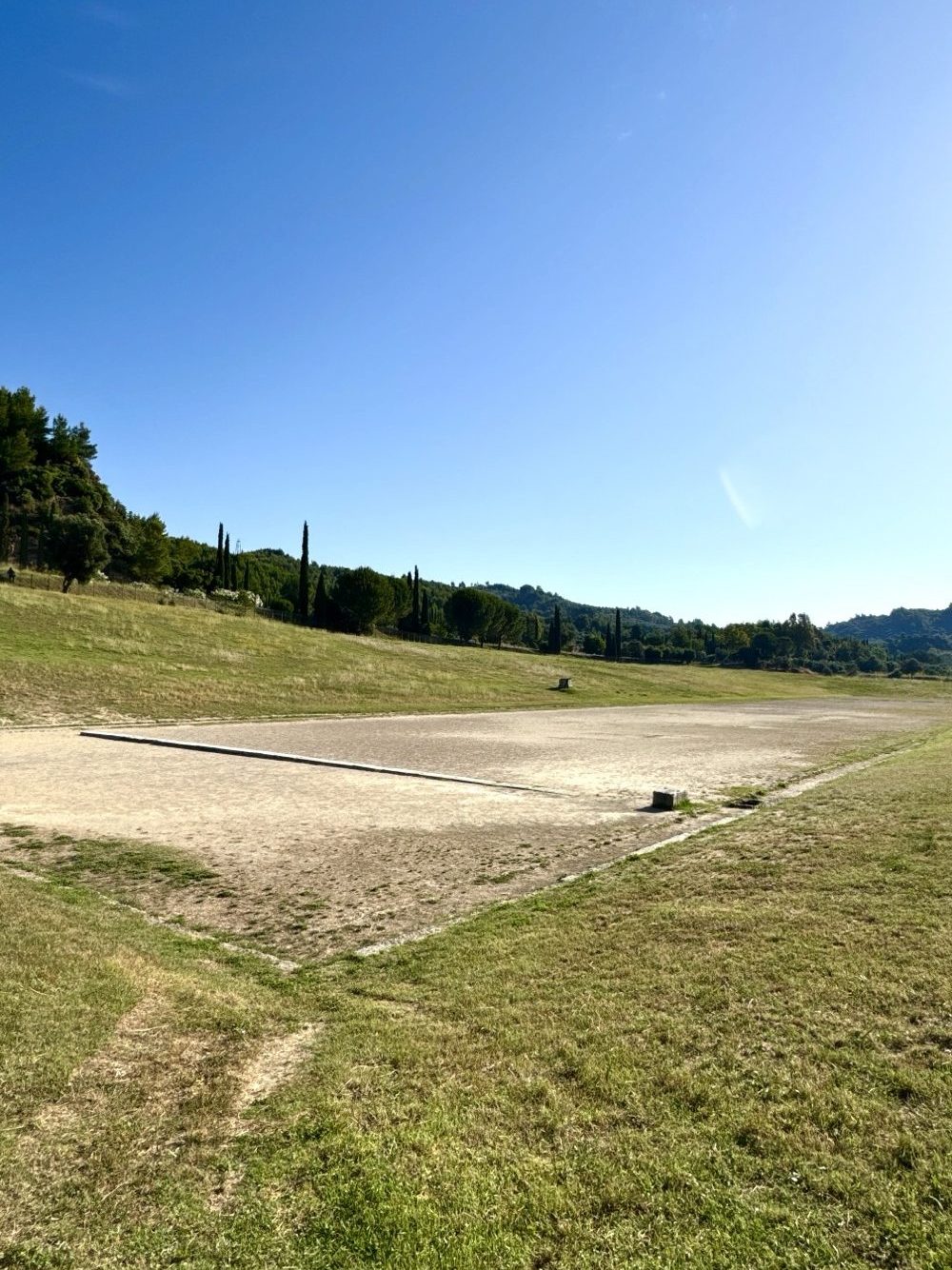
    Then head toward the ancient Stadium where up to 40,000 spectators once gathered. Walk through the vaulted Krypte archway and step onto the original track. It’s surreal, and brings out something oddly competitive inside of you. If you’re with friends, now’s the time to challenge someone to a race. Stone starting blocks with carved grooves still mark the lanes.

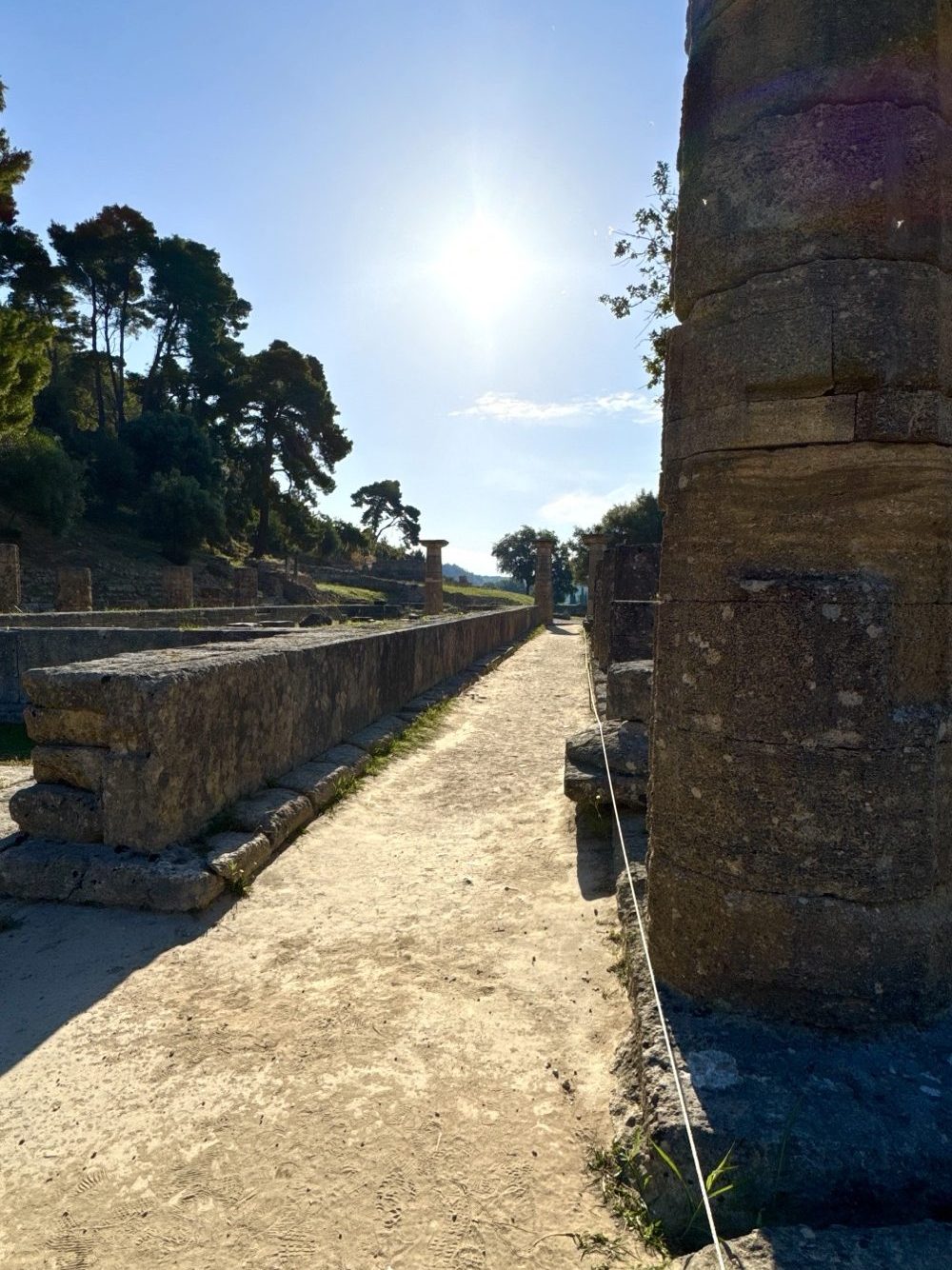
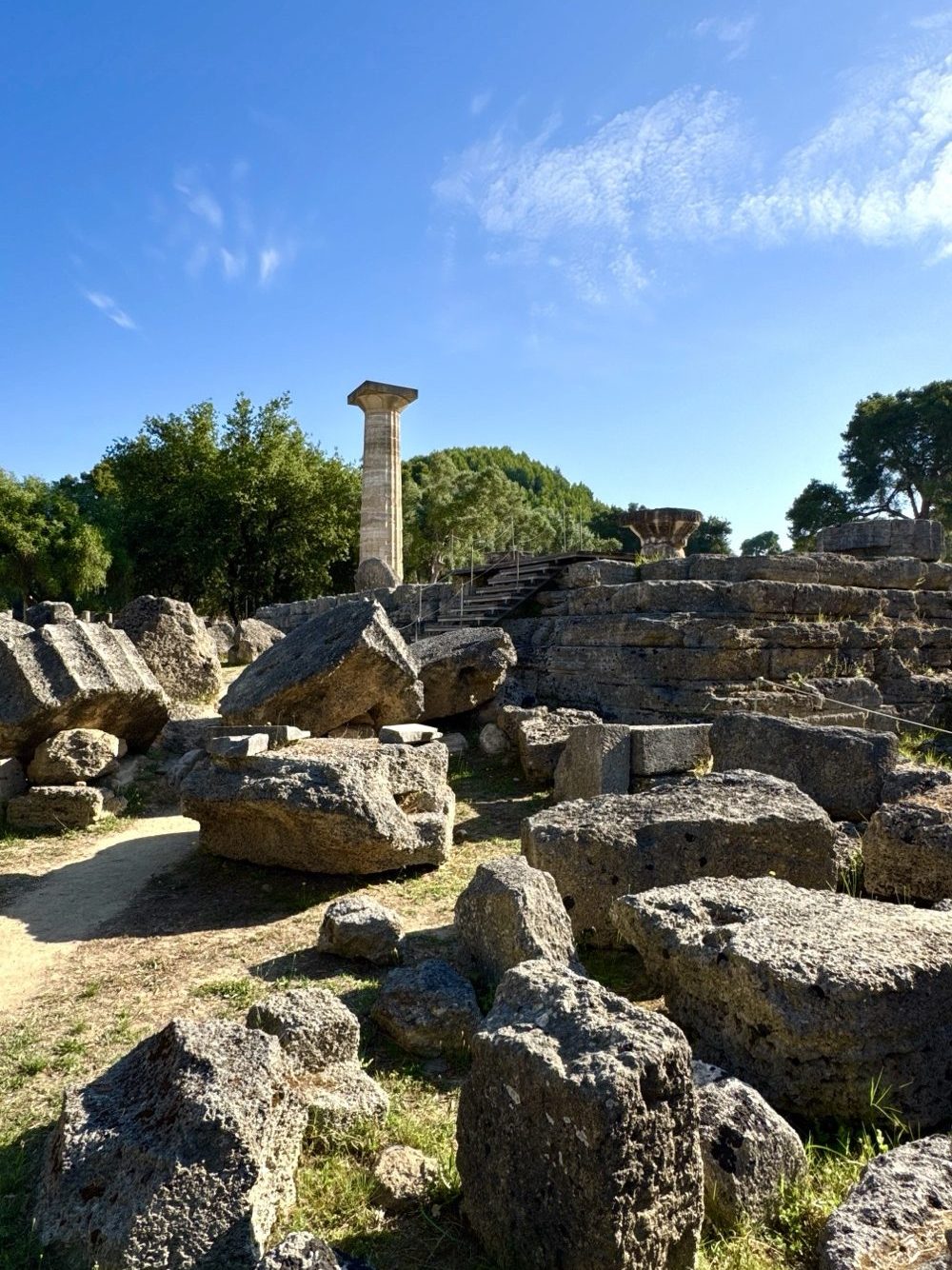
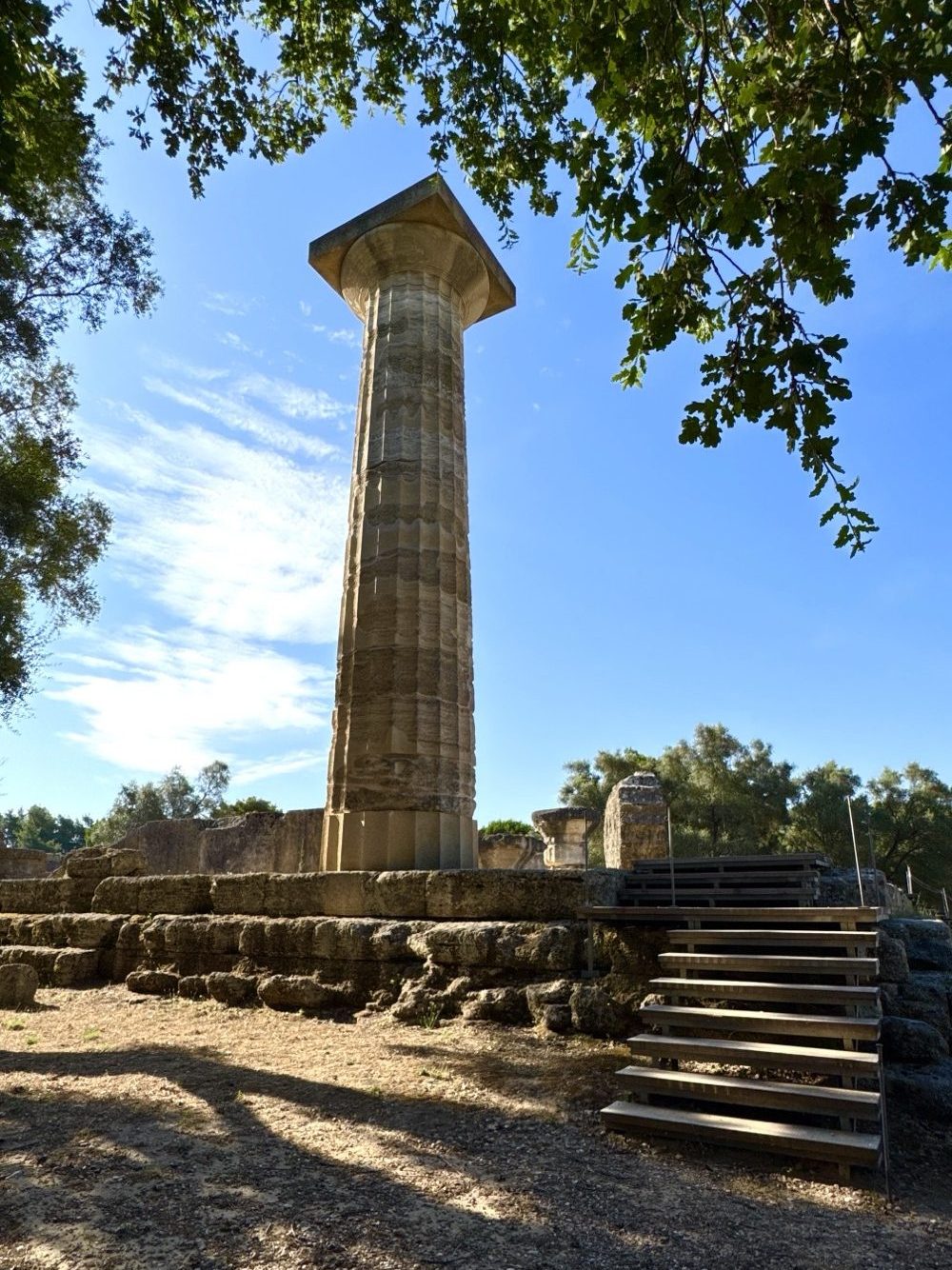
    Next, head into the Altis, the sacred heart of Olympia. You’ll pass the remains of the Temple of Zeus, once home to the famed gold-and-ivory statue of Zeus (one of the Seven Wonders of the Ancient World), and the older Temple of Hera, where the Olympic flame is still lit every four years.

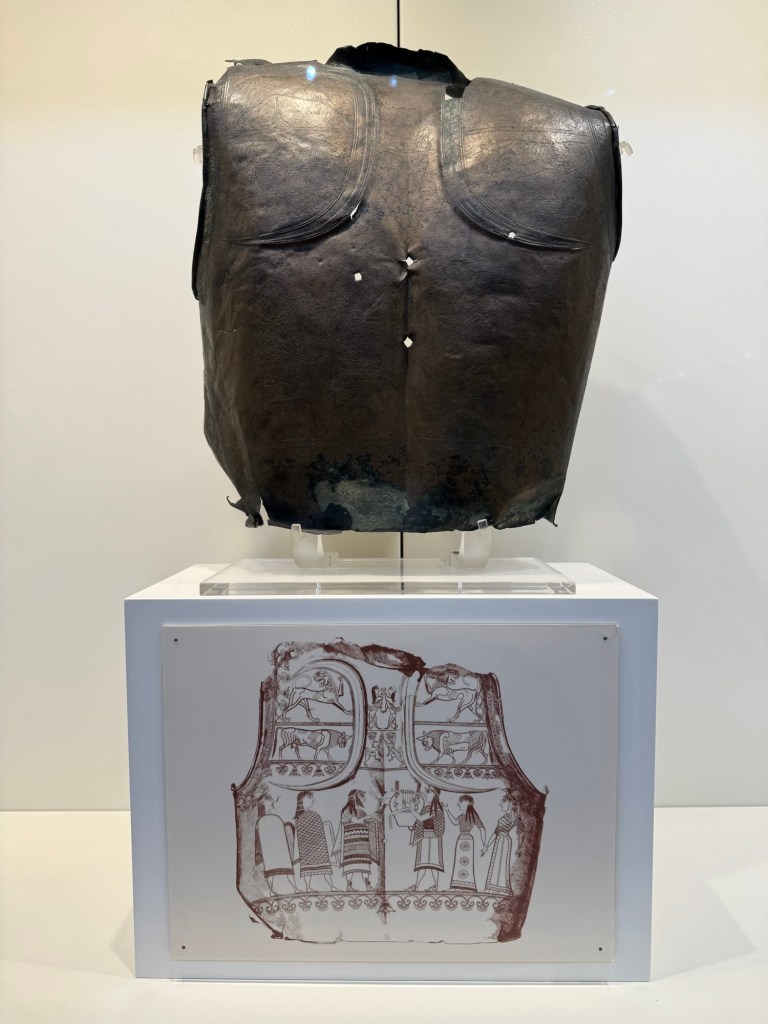
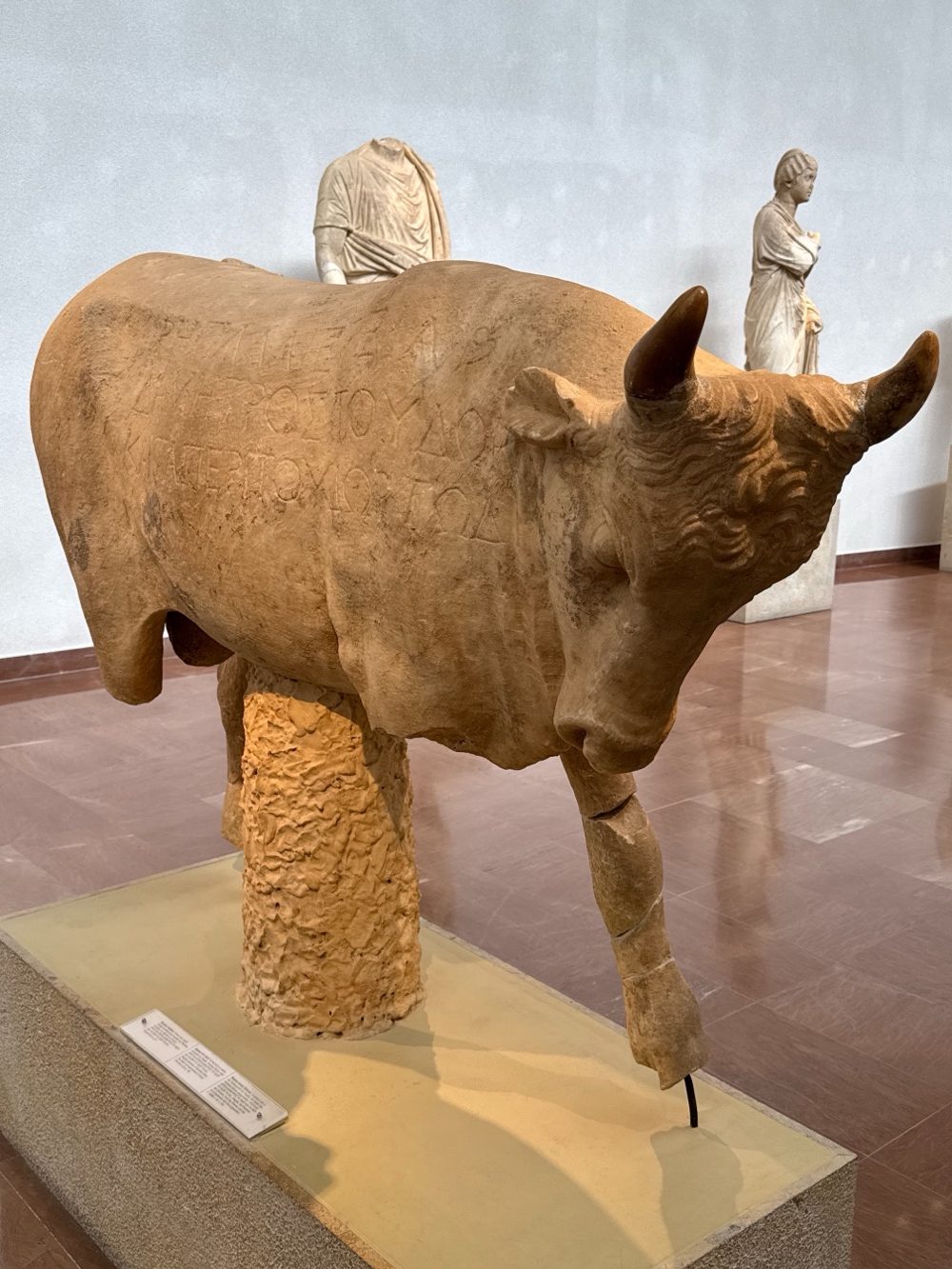
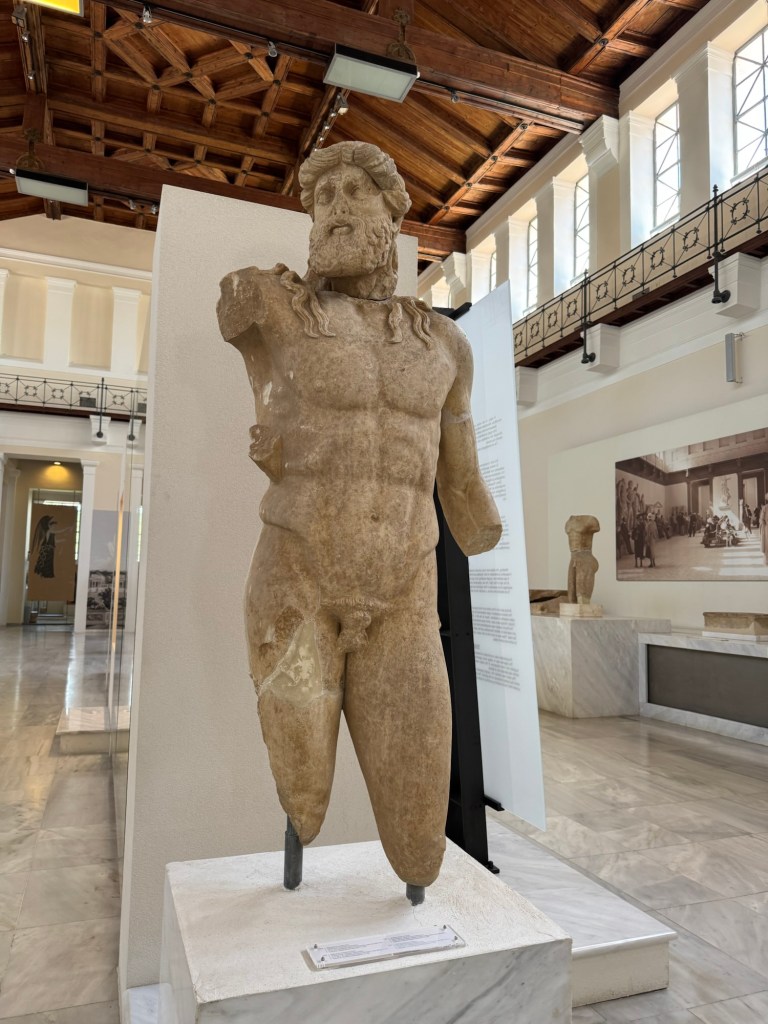
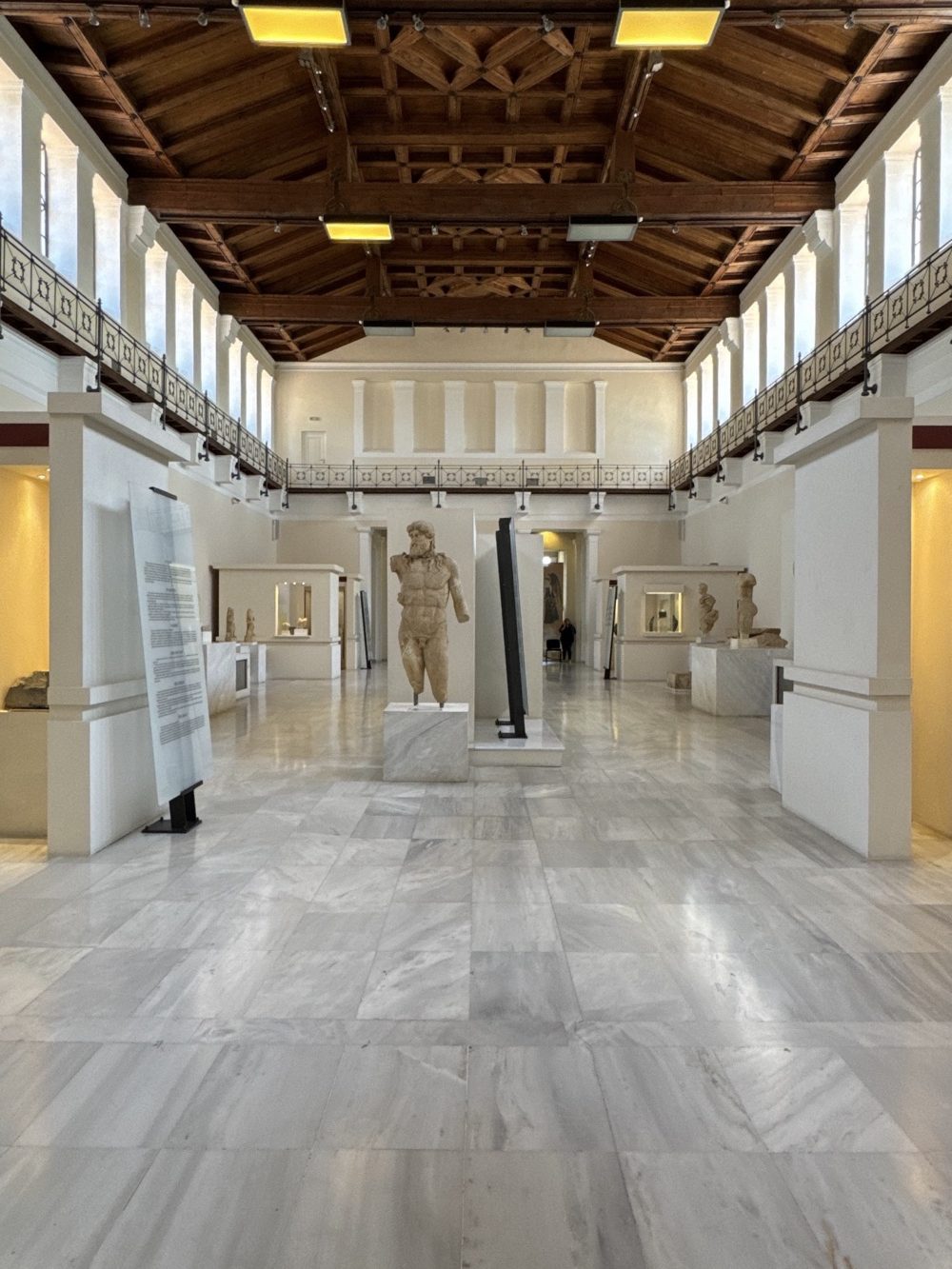
    Just 10 minutes away is the Archaeological Museum of Olympia, an absolute must. This place houses artifacts that span Olympia’s entire timeline, from prehistoric days to the Roman era.

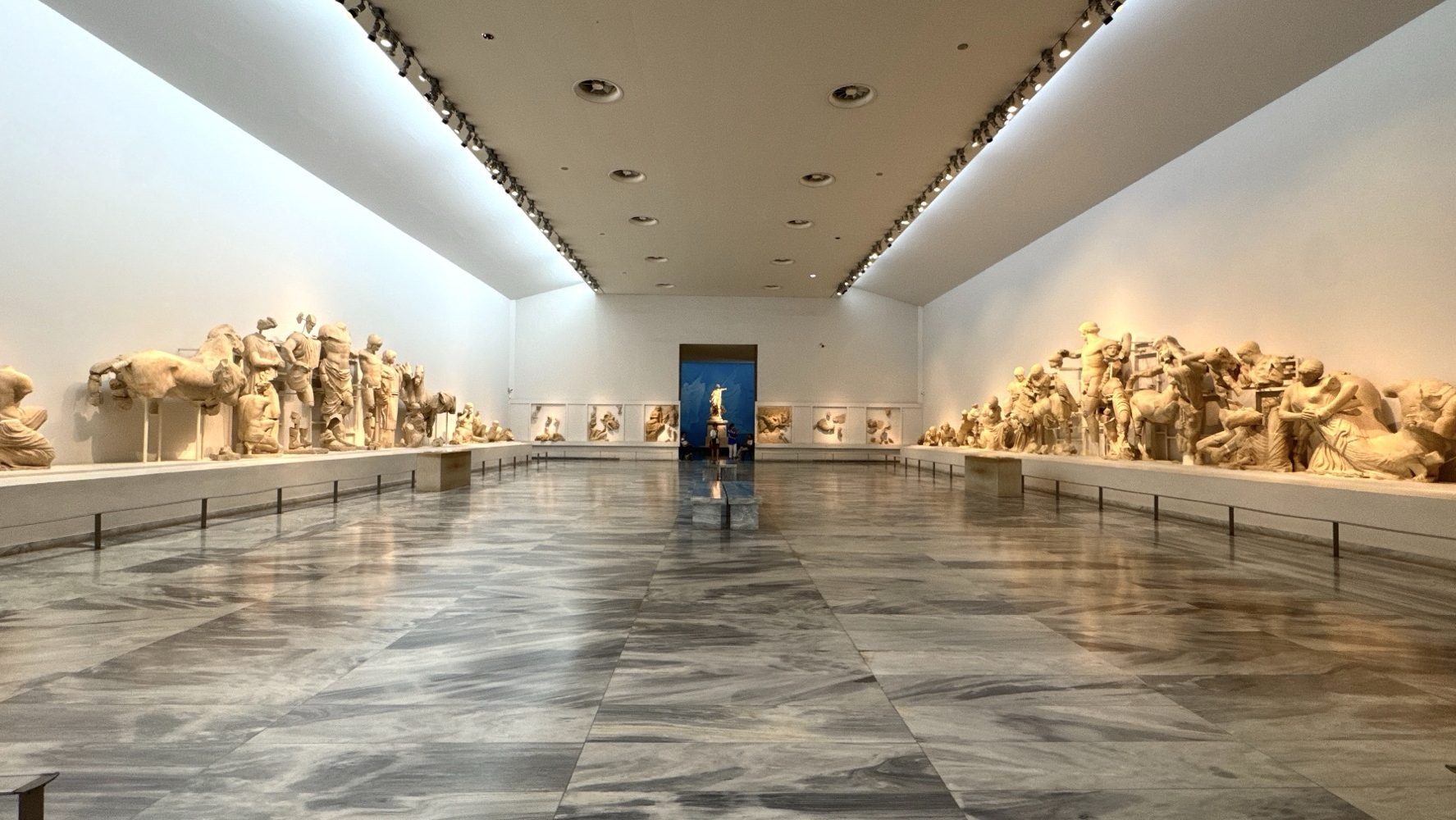
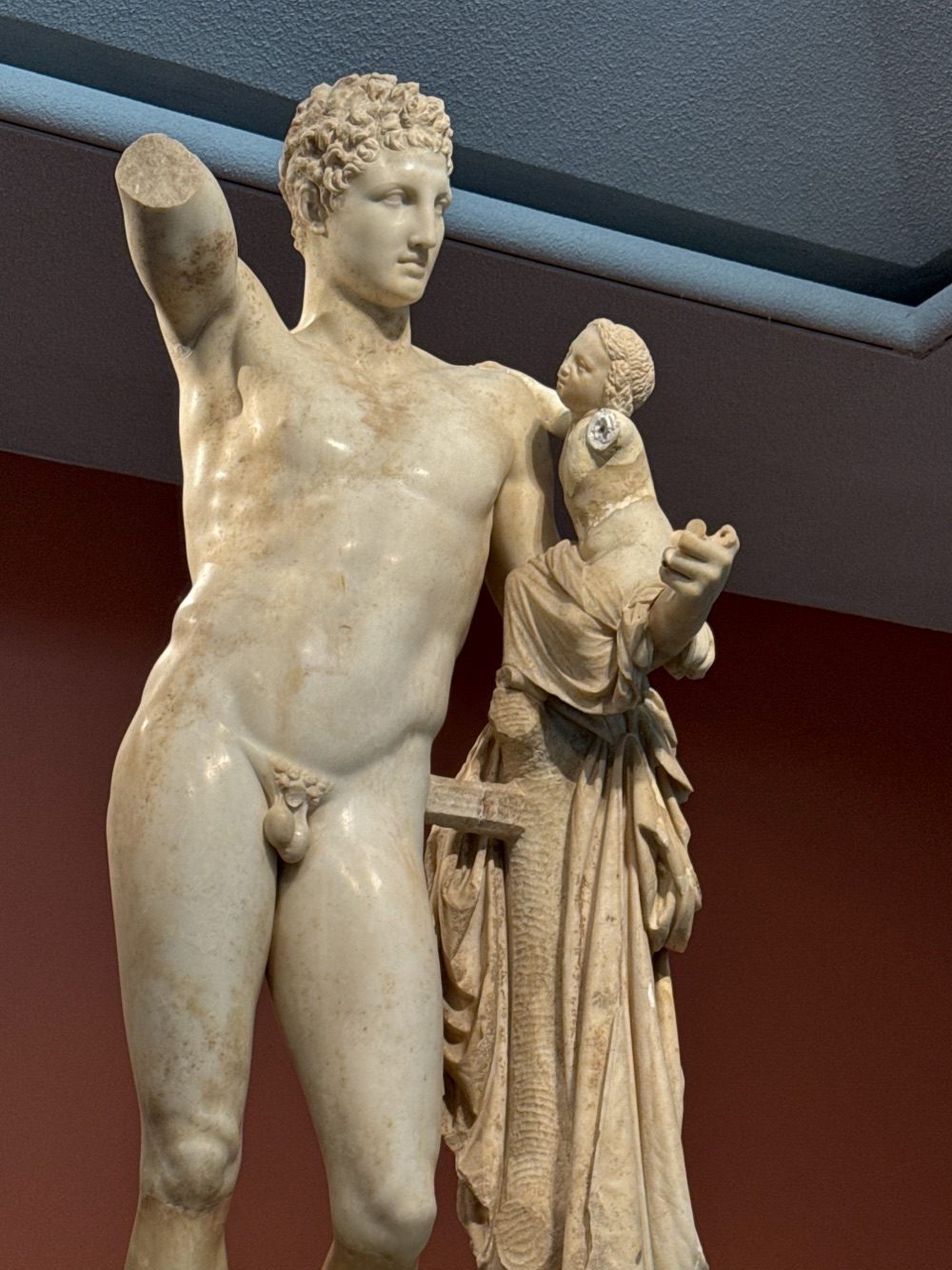
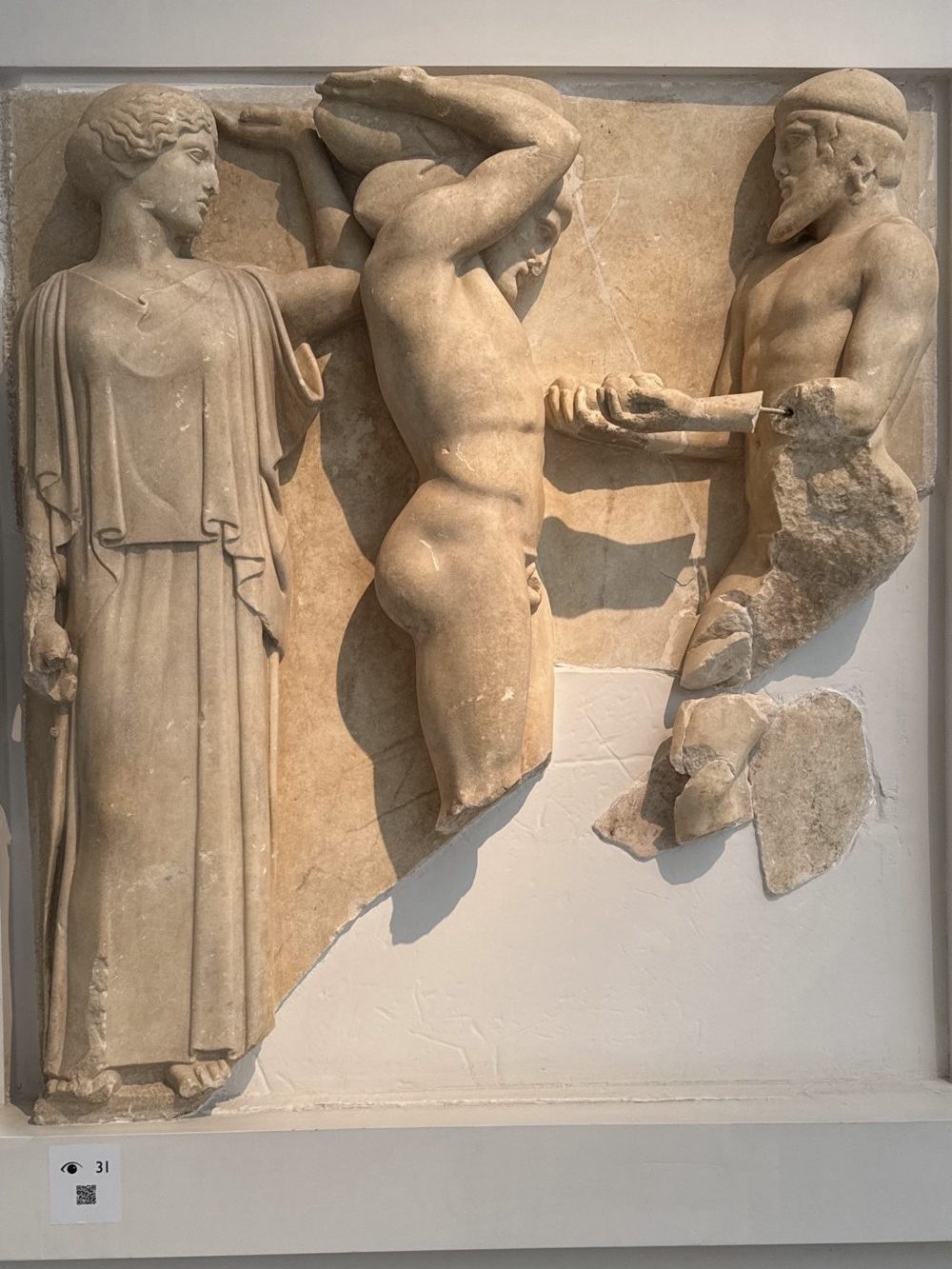
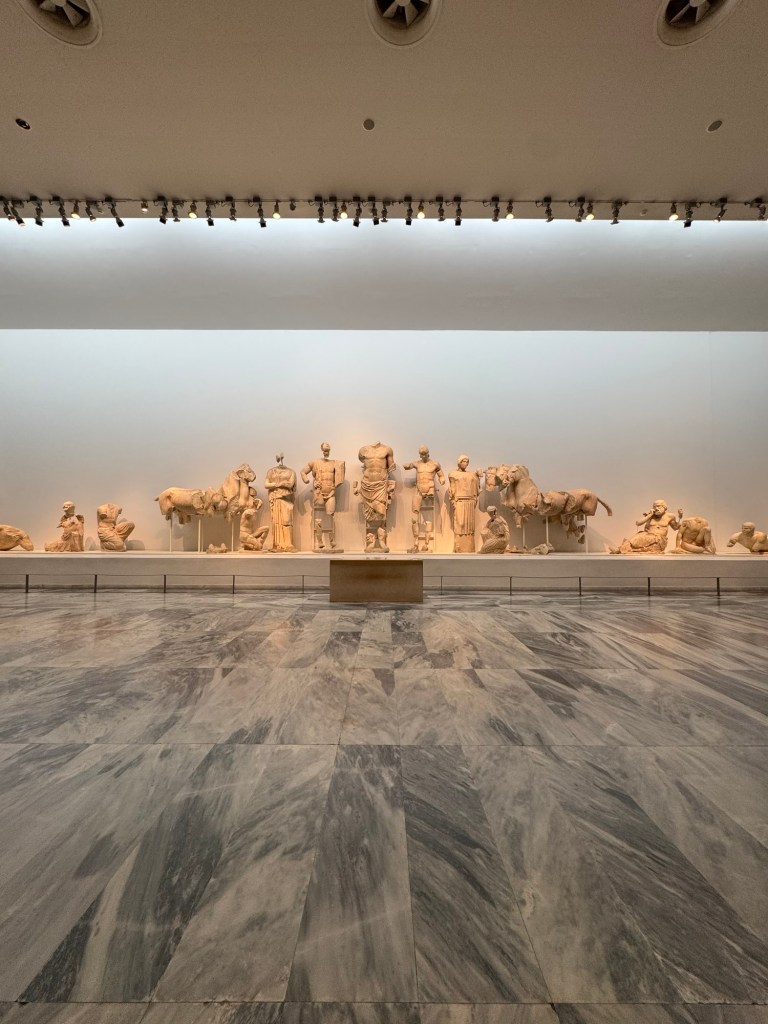
    The museum’s crown jewel is Hermes of Praxiteles, a marble statue of Hermes holding infant Dionysus, praised for its grace and lifelike quality. You’ll also find the massive sculptural groups from the Temple of Zeus: pediments and metopes depicting the chariot race of Pelops and Oinomaos, the battle of Lapiths and Centaurs, and the Labors of Heracles. They’re displayed dramatically in their own dedicated room.

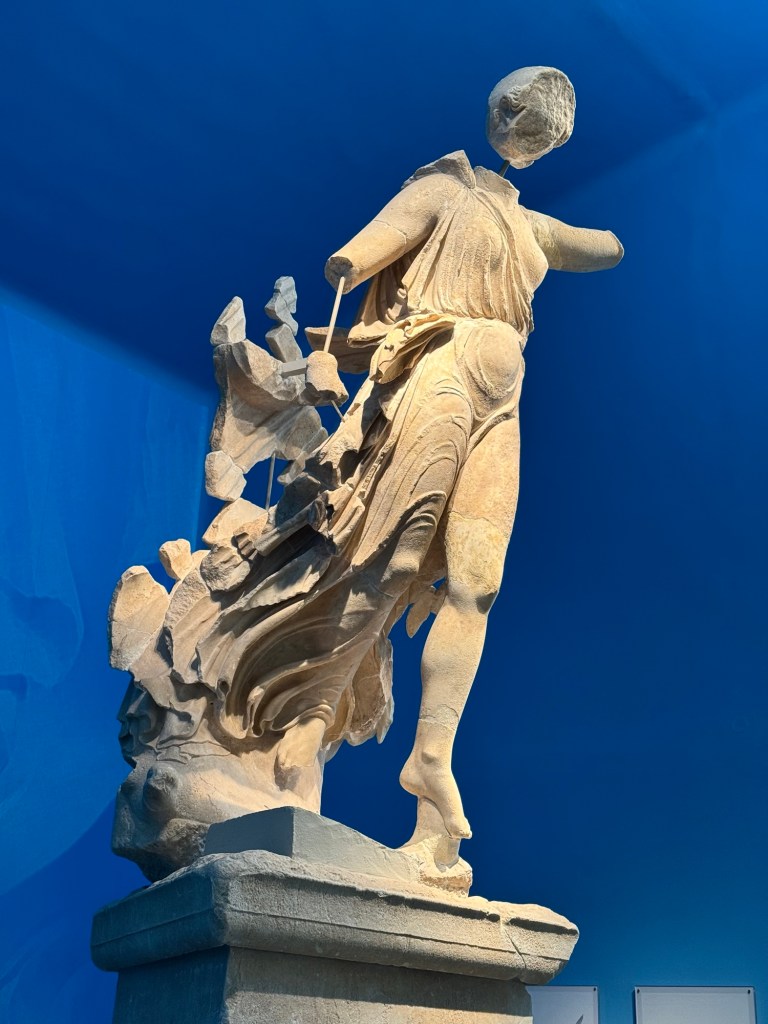
    Near the exit, don’t miss the 2.1-meter-tall marble statue of Nike, goddess of victory, commemorating a military win around 421 BCE.

    The museum is well-labeled in Greek, English, and German, thanks in part to the German archaeological team who began excavations under a treaty with Greece, giving them exclusive rights to work on the site.

    The layout is intuitive, moving chronologically from Olympia’s earliest history through to its Classical and Roman heights.

    And then there’s one more must-visit spot — the Museum of the History of the Olympic Games of Antiquity. Bit of a mouthful, but incredibly worth it. About 15 minutes from the site, this museum focuses entirely on the origin, evolution, and significance of the ancient Olympic Games.

    Here, you’ll find everything: competition breakdowns, game evolution, athlete diets, gymnasium life, victory dedications, and more. While the Archaeological Museum tells the story of Olympia the sanctuary, this museum tells the story of Olympia the Games and the people.

    The Finish Line?
    And just like that, my torch-lit time in Olympia comes to an end. My skin is lobster red, my phone is brimming with pictures of ruins and relics, and I may or may not have raced some very competitive tourists at the ancient stadium. (I lost, of course, but I’m never one to back down when a glove’s been thrown.)

    But there’s no rest for the curious, next stop: Thessaloniki. I’ll be diving into the world of Macedonian kings, starting with Pella, Alexander the Great’s hometown, and Aigai, where his father, Philip II, was buried in royal splendor. Let’s see if the north holds secrets as grand as the south.

  • Greece – Corinth

    Debauchery and Divinity


    Another Uphill…

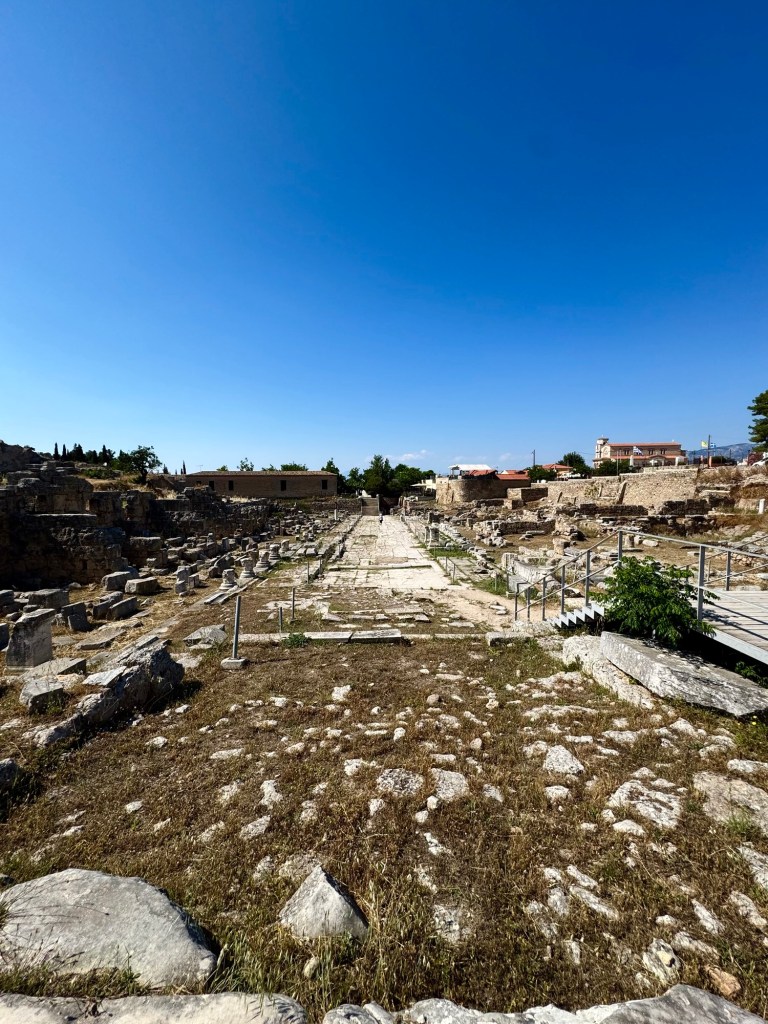
    Located along a narrow stretch of land known as the Isthmus of Corinth lies the mighty remnants of the Ancient City of Corinth.

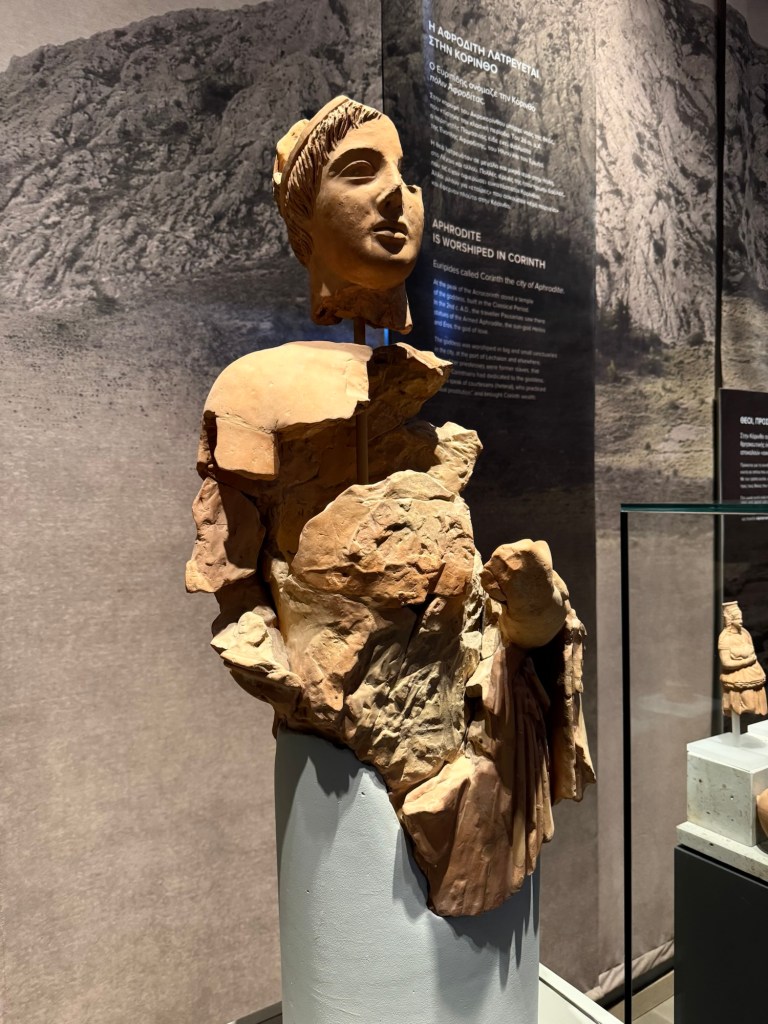
    Much like its other famous cousins, the Ancient City of Corinth has it fair share of myths and legends. It was supposedly founded by Sisyphus, the dude doomed to eternally roll a boulder uphill in the Underworld. It’s where Jason and Medea settled after their whole Golden Fleece fiasco, and where Bellerophon tamed Pegasus before slaying the Chimera. The goddess Aphrodite was also highly revered here, with Corinth serving as a major cult center in her honor, which gave the city quite the reputation for indulgence and debauchery in antiquity.

    In real life, Ancient Corinth was one of the wealthiest and most powerful city-states in Greece. By the time the Bronze Age rolled in, it had grown into a Mycenaean stronghold and founded colonies of its own. Thanks to its strategic location between the Aegean and Ionian Seas, Corinth was both a commercial giant and a cultural hub from the Archaic through Roman periods.

    These days, the ancient ruins watch over modern Corinth like a weathered sentinel in the hills. The city itself feels almost island-like, hugged on three sides by the gulf, clean beaches, parks, and mountain-backed shores surround a quaint little town where Pegasus-themed cafés dot the streets. While not as lively as other cities, it’s definitely worth a pit stop if you’re already heading to the ruins.

    Just a quick PSA though, The modern city and the ancient archaeological site are not the same location. They’re at least 8 km apart. Don’t assume you can just rock up in town and stroll over to the ruins. You will regret it.

    The Journey There

    The most obvious and straightforward option is by car. I’ll let Google-sensei handle that for you.

    Plenty of tour companies also organize day trips from Athens to Corinth, often bundled with Mycenae, Epidaurus, or a boat ride through the Corinth Canal.

    If you’re going the public transport route, here’s how:

    You can take the direct train from Athens to Corinth, operated by Hellenic Train. A return trip costs €13.60, and a one-way is €8.50. After arriving at the station, your best bet is to take a taxi to Ancient Corinth (it’s about 6 km from the station). If you’re feeling extra brave and have steel-calves, renting a bike or walking is technically possible — but know it’s not a quick stroll.

    You can also take a bus. KTEL Kifisos in Athens also run regular buses to Isthmus every hour or so. Located on the same route to get to Nafplio, the trip takes about 1.5 hours.

    Here is the link for the KTEL website so you can check out the schedule or buy your tickets online. While it is technically stated on the website that they do have direct buses to the main city of Corinth, it was unavailable when i checked in person at the ticketing booth. So it’s always prudent to check with the bus operators on site before purchasing your tickets.

    When you alight at Isthmus, there will be another bus stop right in front of the main building/shack that’ll take you into the main city of Corinth, and from there it’s the same story as before, cab, bike, or good old fashioned hiking,

    Alternatively, you can hail a cab from the Isthmus Bus station to take you straight to the city/ancient site and skip the whole going into the main city if your onAnother option is the KTEL bus from Athens Kifisos station to Isthmus, which departs hourly. This is the same route used to get to Nafplio. The trip takes about 1.5 hours.

    From Isthmus, you’ve got a few options, you can catch a connecting bus into modern city of Corinth, then cab/bike/walk to the ruins, or skip the city entirely and take a taxi straight to the archaeological site.

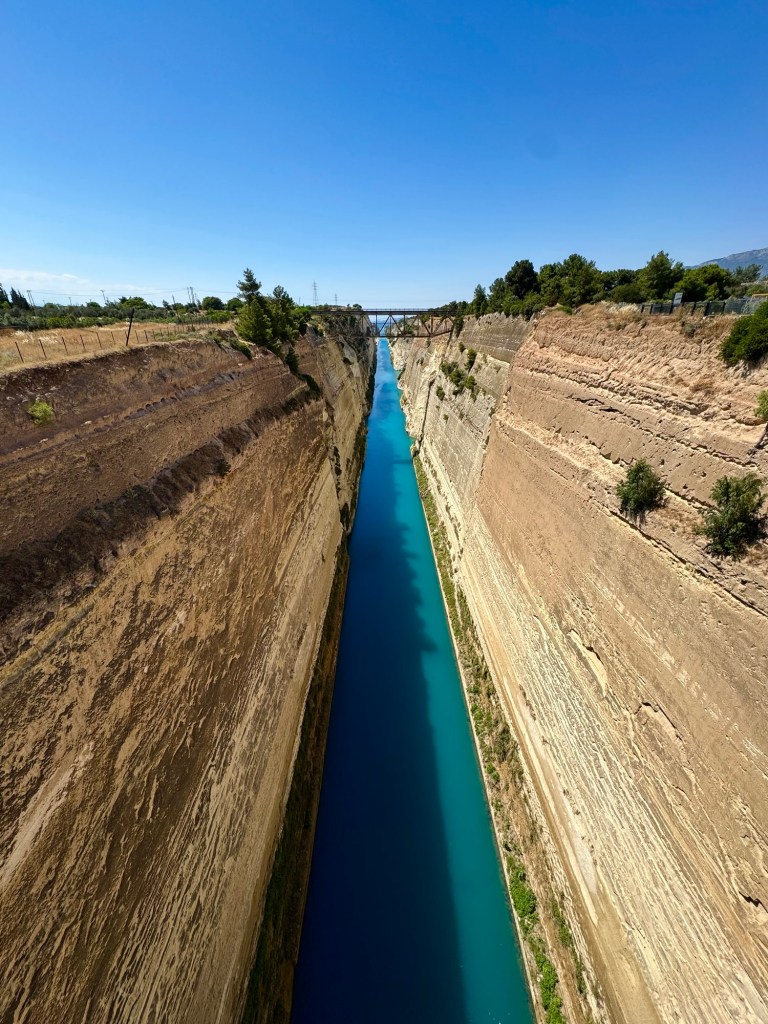
    And if you’re stopping at Isthmus, don’t miss the Corinth Canal, located just a 5–10 minute walk from the station. Cross the road and follow the bridge over the gorge. The rusted metal grating underfoot, the dizzying drop into a chasm of blue, it’s surprisingly dramatic for something that’s just casually located under a fairly nondescript bridge,

    I lucked out. A group of Spanish tourists who got off the same bus as me were heading to the ruins and kindly let me hitch a ride in their cab. Smooth 15-minute ride. No regrets. And judging by the incline of that road, boi, if you’re walking, prepare to sacrifice your legs to the gods.

    It was not till later in my trip that i started to see similarities with all of these ancient sites and ruins. Uphill is one of them. Which i mostly understood that it was for defensive purposes, or better access to water and resources. Understanding is one thing. Accepting it is another. I believe my calves and thighs have never forgiven me.

    The Ancient City

    Entrance is €15. Students and EU residents may be eligible to a reduced price ticket, so remember to bring your student card or identification. The ticket includes a visit to the Archeological Museum of Ancient Corinth which is located on site right next to the main entrance.

    The museum hold findings and restorations from the site of Ancient Corinth and nearby sites. It provides a chronological journey of Corinth’s 7,000-year history, from its prehistoric roots to Roman and Byzantine transformations, with interactive displays, and thematic groupings to illuminate daily life, trade, war, religion, and public ceremonies in ancient Corinth.

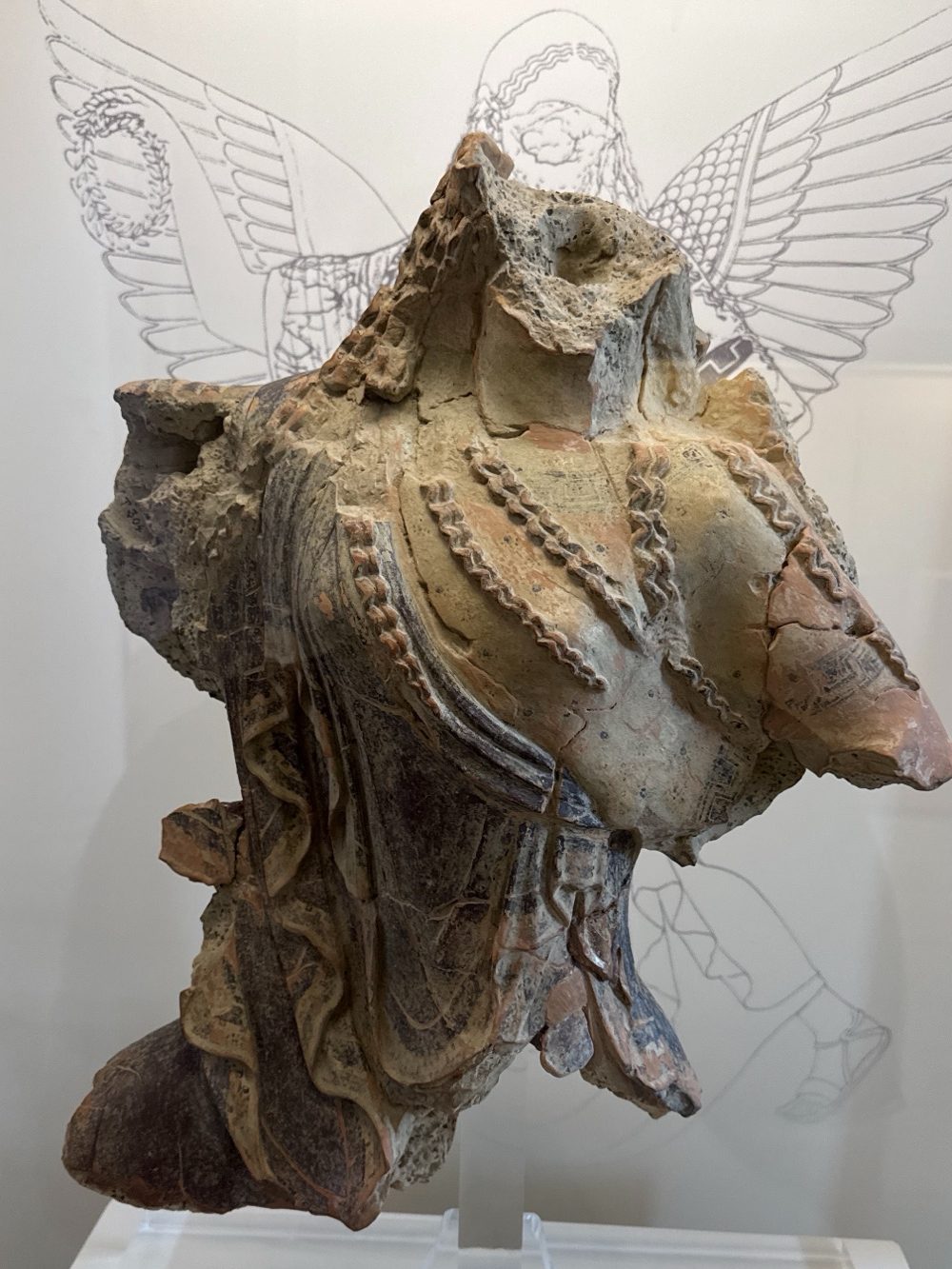
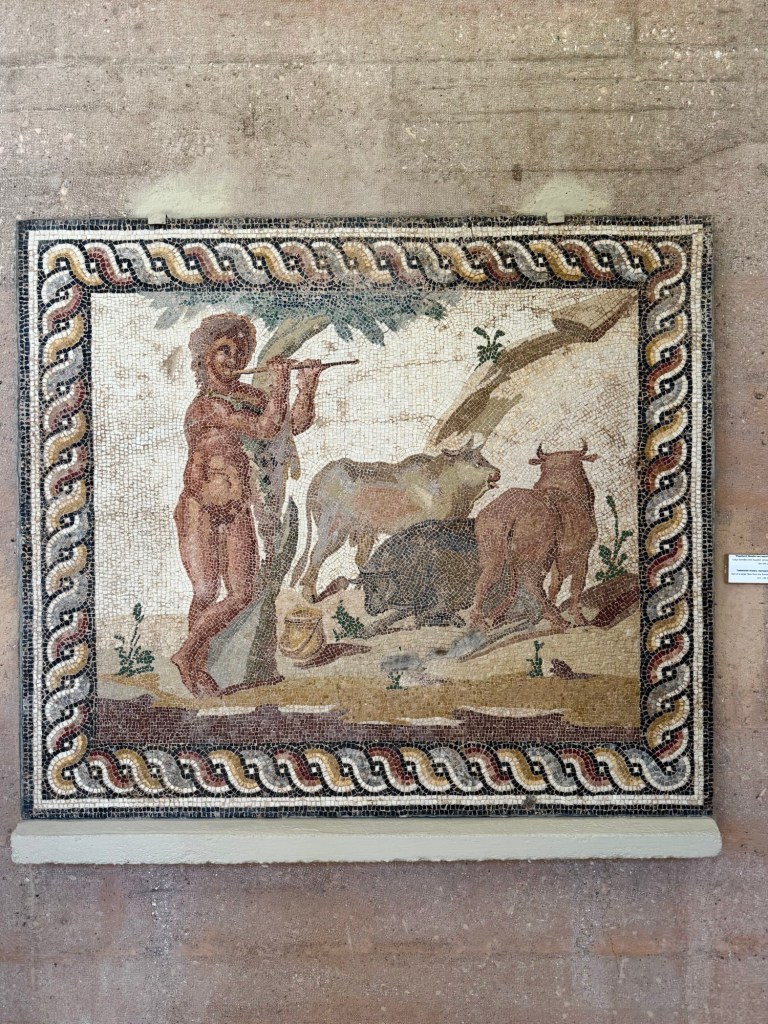
    Highlights to look out for are the Roman mosaics, and Twin Kouroi (a style of free standing ancient greek sculpture prominent in the Archaic period of greek history), and the Asklepieion votives.

    Also, practical tip: use the toilet before venturing too far. The only restrooms are near the museum.

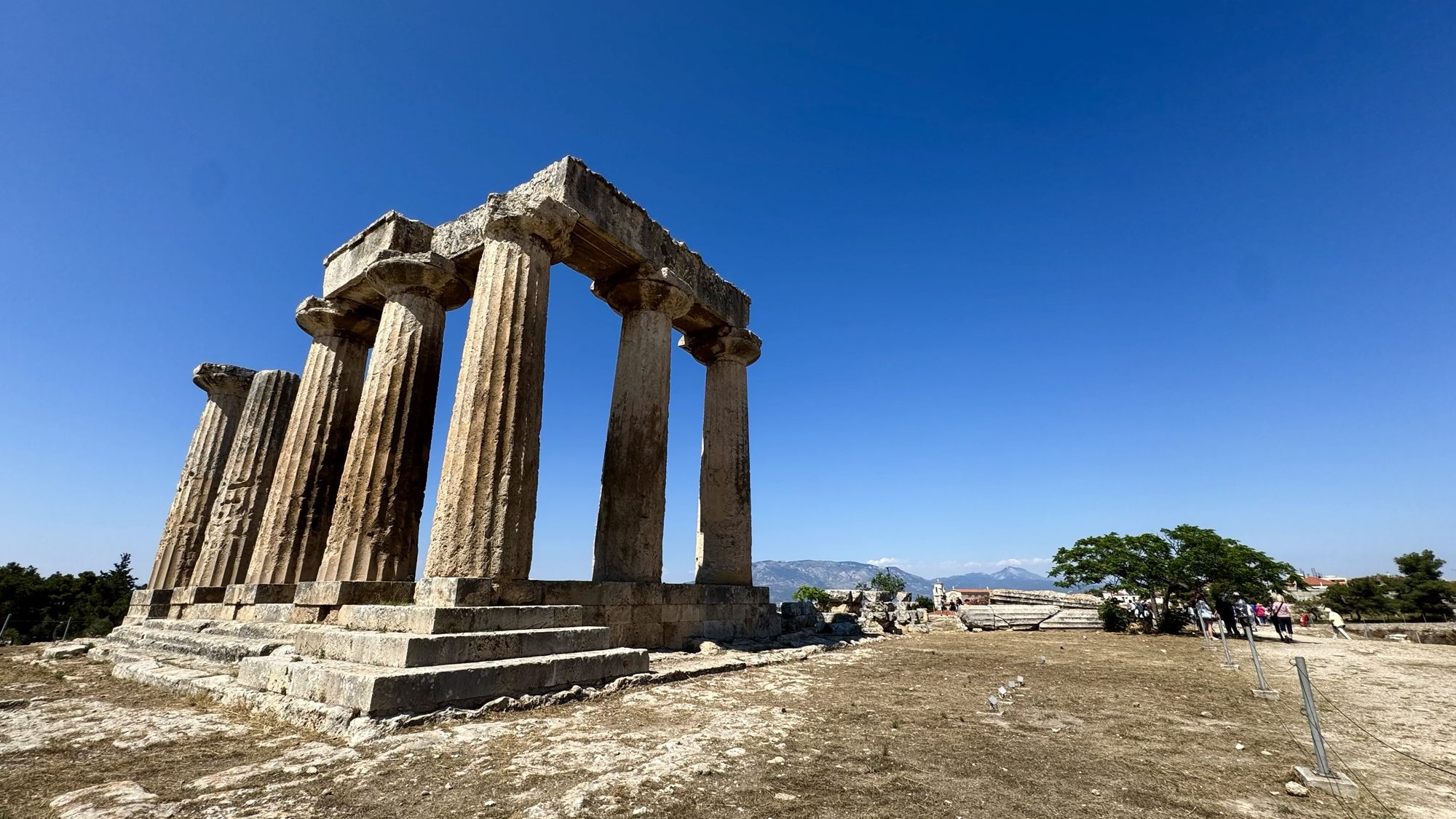
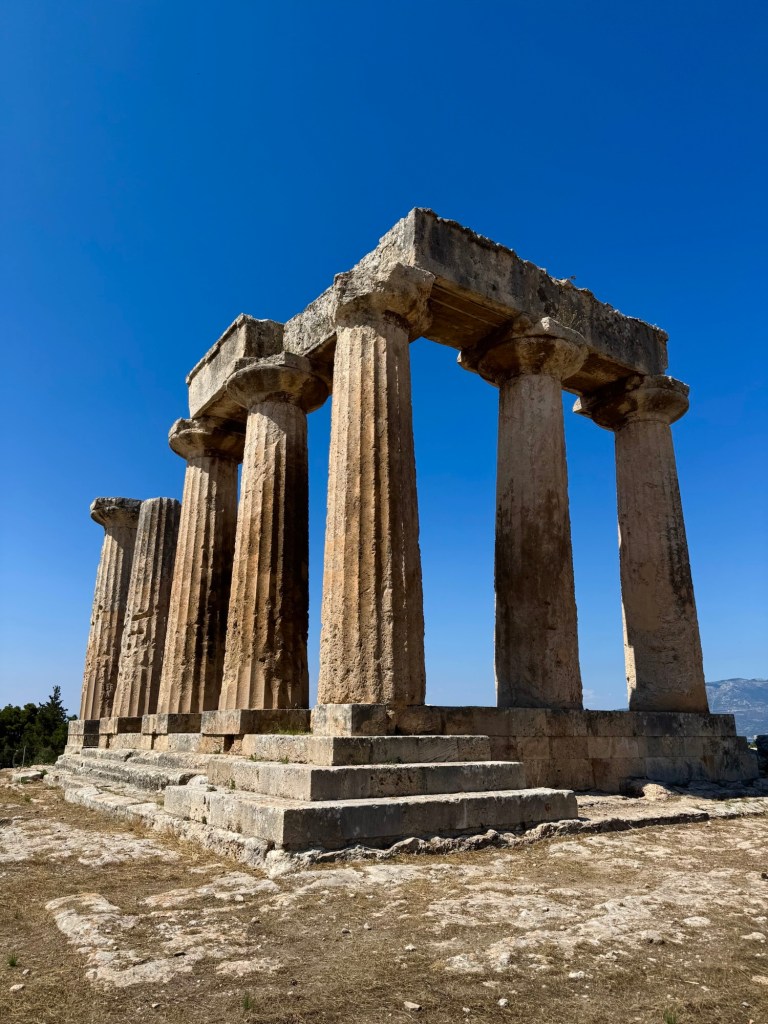
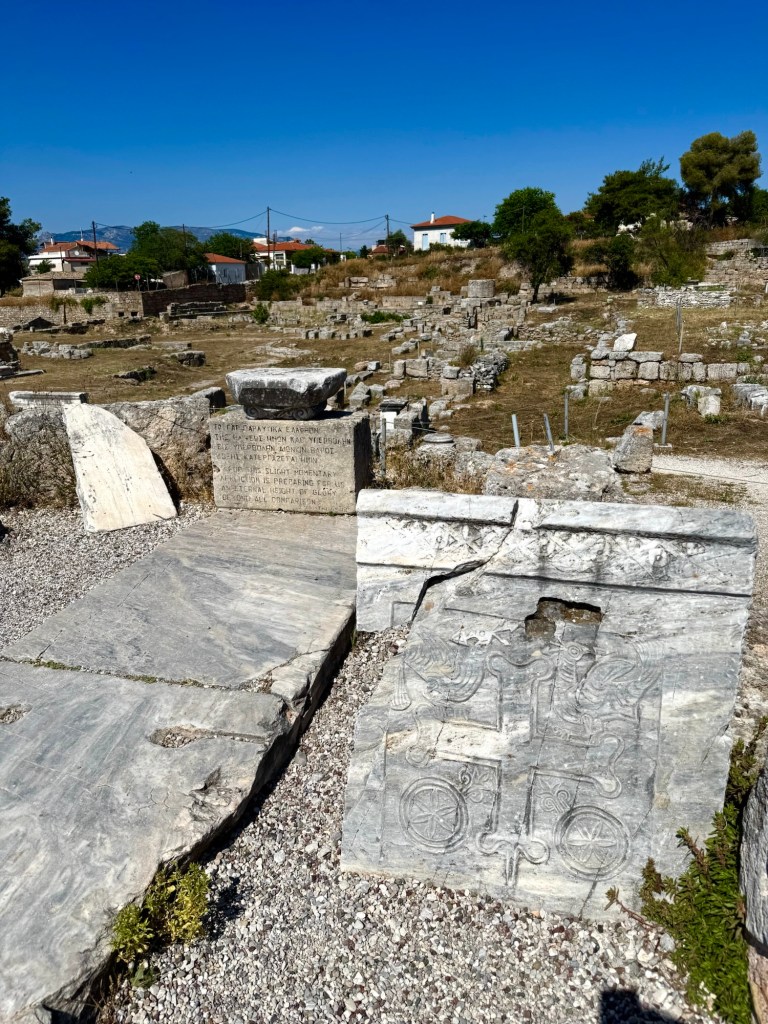
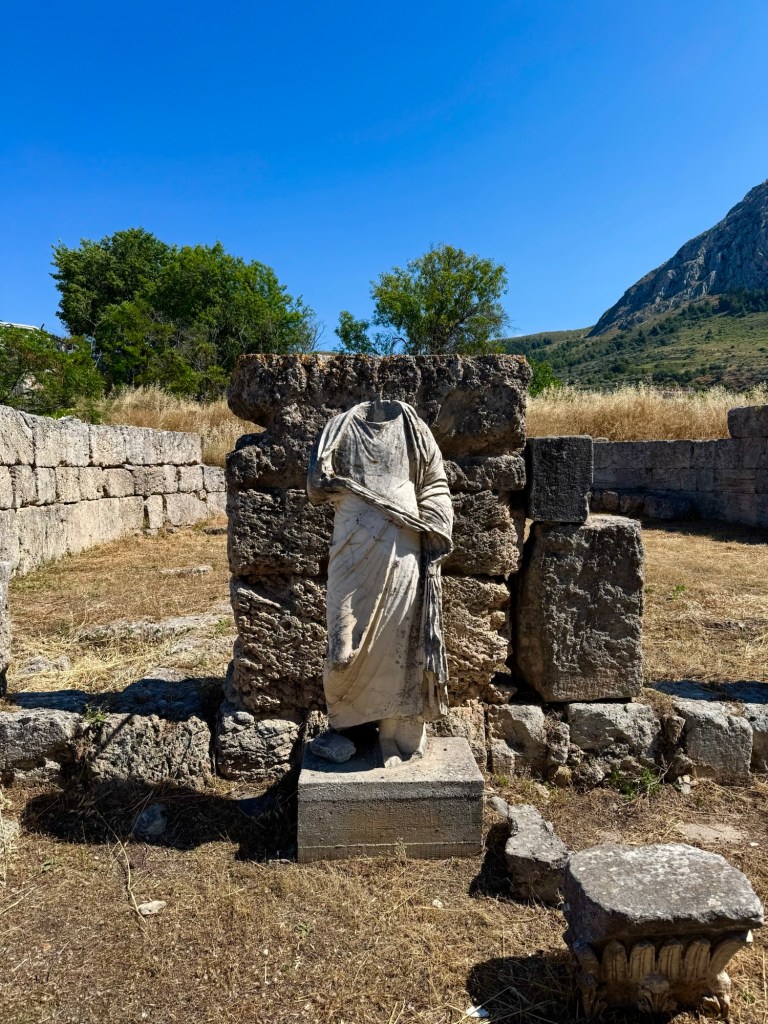
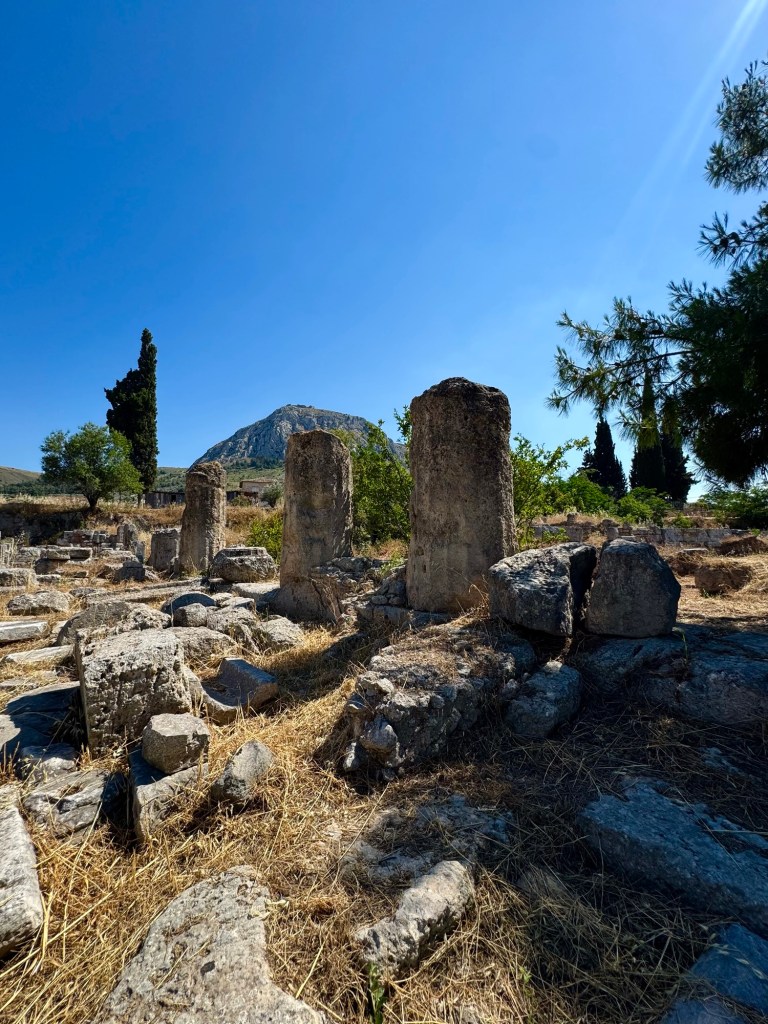
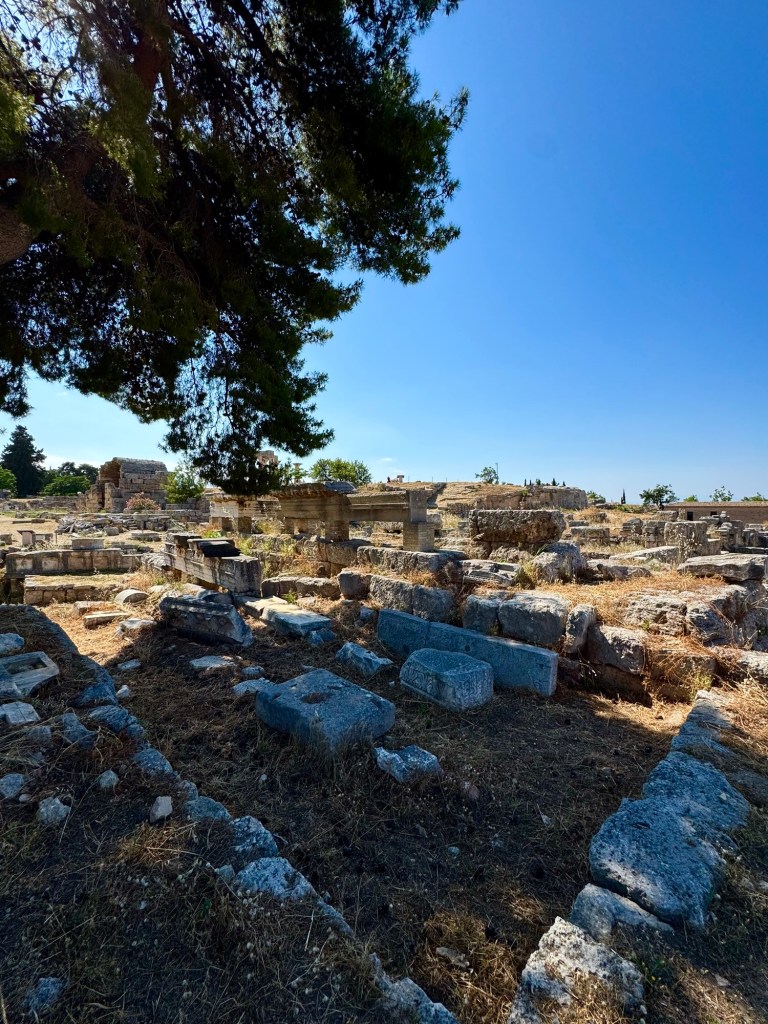
    Start your visit at the Temple of Apollo, one of the oldest surviving Doric temples on mainland Greece. From there, the site opens up to the Roman Agora, once a buzzing marketplace full of merchants and politicking. Wander down Lechaion Road, lined with ruins of shops and fountains, and pause at the Bema, where the Apostle Paul supposedly preached to the Corinthians.

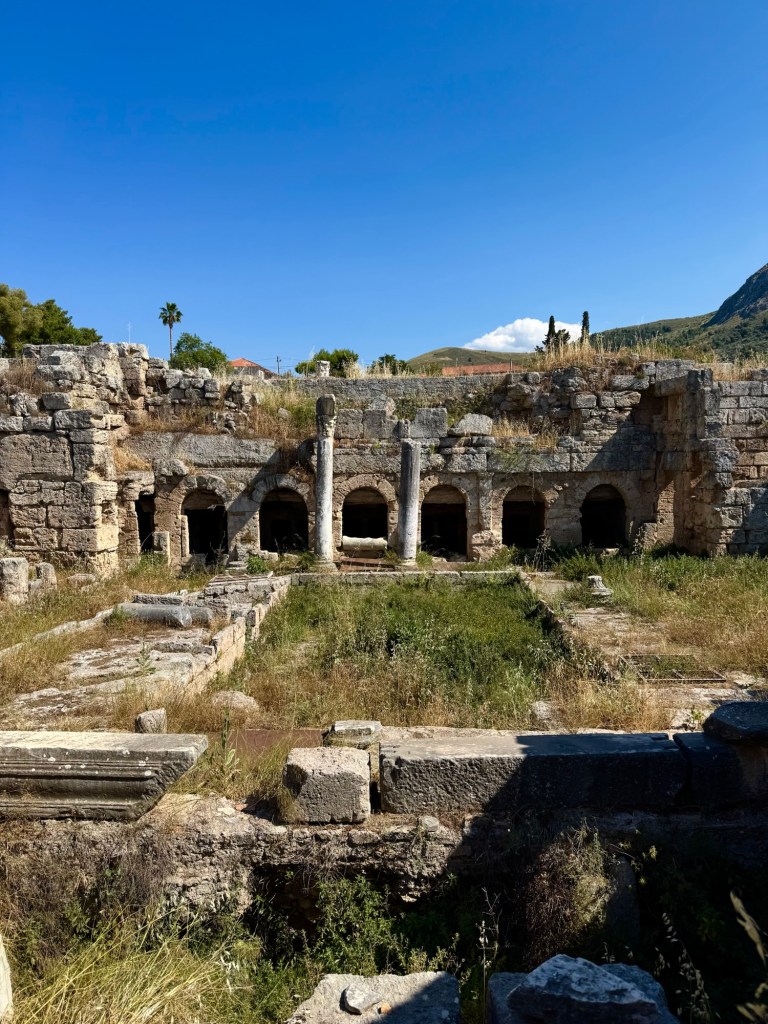
    Then head over to the Peirene Fountain, a serene spring wrapped in mythology, it is said to be created from the tears of the nymph Peirene and the place where Bellerophon tamed Pegasus. Just nearby is the Asklepieion, a healing sanctuary dedicated to Asclepius, god of medicine.

    Finish off by looping through the smaller temples and Roman baths, or double back to the museum.

    Just outside the bus parking area, behind a fence, are the ruins of Ancient Corinth’s theatre. It wasn’t open when I visited, but hopefully, it is for you.

    The Hill of the Gods

    If your legs haven’t tapped out yet, there’s Acrocorinth, a massive hilltop fortress just 5 minutes by car (or a sweaty 45-minute uphill trek). It’s one of the most important defensive sites in ancient Greece and was used from the Mycenaean through to Ottoman periods.

    At its peak stood the Temple of Aphrodite, rumored by ancient sources to house sacred prostitutes (though scholars still debate how literal that claim was). Whatever the truth, the views from the top are mythic in themselves.

    Resting My Laurels For Now

    Corinth might have been about myths, markets, and mountain climbs, but my journey through Greece’s ancient heartland isn’t over yet. With my calves still screaming from the Acrocorinth, I’m heading next to a place where the ancient world turned sport into religion. Olympia, birthplace of the Olympic Games. Let’s see if the gods reward stamina.