Bulls and Kings
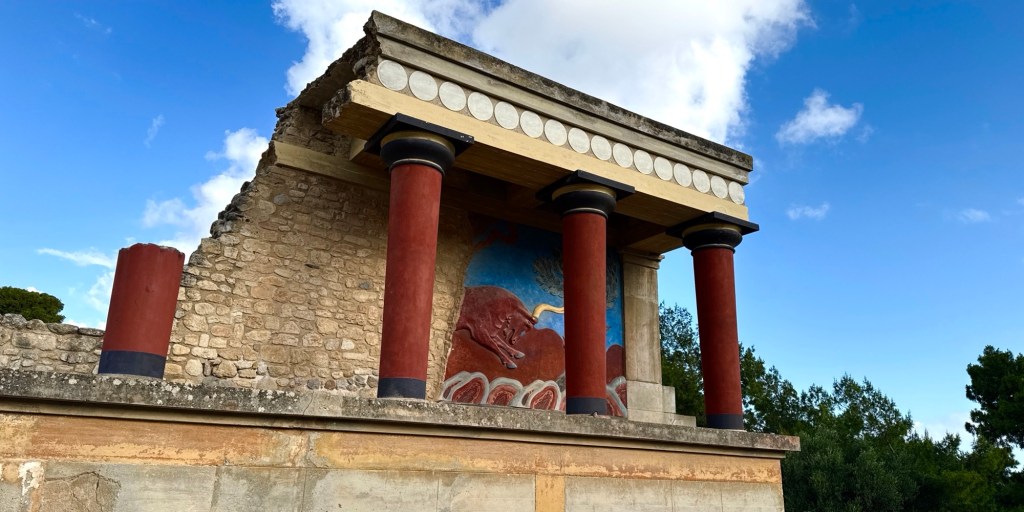
A New Odyssey
Setting off on a new adventure — this time to the land (or lands) of cerulean blue seas, Olympic beginnings, and epic myths: Greece.
Well, first to Heraklion, specifically. Ironically, the cheapest flight from where I was happened to land on this island instead of Athens.
Which kind of worked out for me, since the Palace of Knossos is just around the corner. How convenient.
Getting here was simple enough. I had a direct flight to Nikos Kazantzakis Airport (HER) in Heraklion. Since it landed after midnight, I hopped onto a local bus and checked into my hostel for the night.
Till 4 hours later that is. Yes, I’m back with my sleep-deprived adventures. If you’ve read my posts before, you’ll know I’m a fan of getting to archaeological sites or museums right at opening — to avoid the crowds and, in this case, the summer sun too.
The Greek summer sun is ruthless. Less than an hour under its death rays, and conveniently forgetting my sunscreen at the hostel, I was cooked like a ready-to-eat lobster. And I arrived in June, peak summer season. Joy.
Fortunately, getting to the site is as straightforward as hopping onto a local bus. Tickets can be purchased both onboard and at self-service kiosks, but it’s cheaper at the kiosk. A roundtrip ticket from the bus driver is €5, but only €3.60 at the kiosk. The journey takes about 30–40 minutes.
The entrance to the Archaeological Site of Knossos is just a 5-minute walk from the bus stop, and the entrance fee costs £20.
The Palace, The King, and The Bull
The Archaeological Site of Knossos, also known as the Palace of Knossos, is deeply intertwined with Greek mythology, especially stories about King Minos, the Minotaur, and the Labyrinth.
To those not familiar with this particular lore, here’s a bite-sized version: King Minos was said to be a powerful king of Crete and the son of Zeus and Europa. To become king of Crete, he competed with his brothers, backed by the god Poseidon, who sent him a bull as a sign of favor. That bull was supposed to be sacrificed to honor Poseidon once Minos became king — but he didn’t, because the bull was too pretty and he wanted to keep it. So, in typical Greek god fashion, it was time for revenge. Poseidon, with the help of Aphrodite, made Minos’s wife, Pasiphaë, fall in love with the bull and do the nasty with it,
And that was how the Minotaur was born. So Minos had Daedalus construct the Labyrinth to contain the creature. This leads to the story of Daedalus and how his son, Icarus, flew too close to the sun, as well as the tale of Theseus slaying the Minotaur with Ariadne’s help. But those are stories for another time.
Much of these tales appear in Homer’s Iliad and Odyssey, both really intriguing reads. But if you’re not the reading type, luck’s on your side, because The Odyssey is getting the Hollywood treatment, set to release in 2026, and hopefully stays somewhat true to the source material with its star-studded cast.
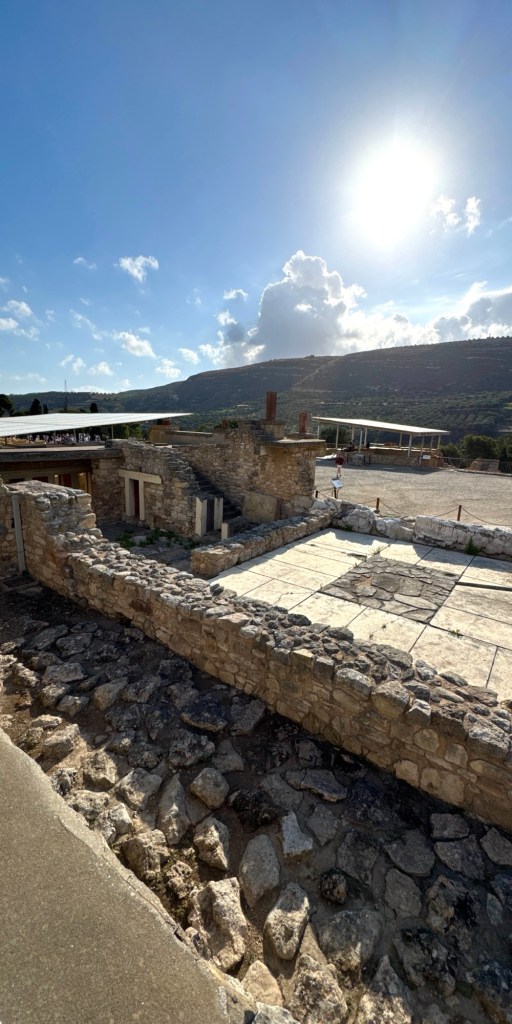


While King Minos’s existence is debatable, the Palace of Knossos is a legend in its own right. With its maze-like layout, bull motifs, and sacred symbolism, it likely inspired the myths. Frescoes depicting bull-leaping ceremonies hint at the cultural reverence of the bull — and possibly at the myth of the Minotaur.
The name “Minoan” itself was coined by Sir Arthur Evans, the British archaeologist who excavated the site. We still don’t know what the Minoans actually called themselves.
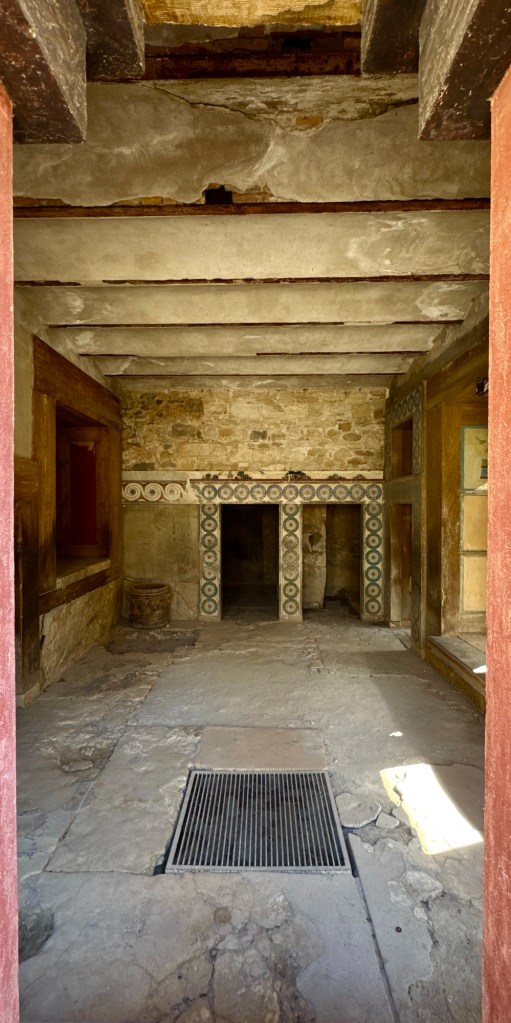
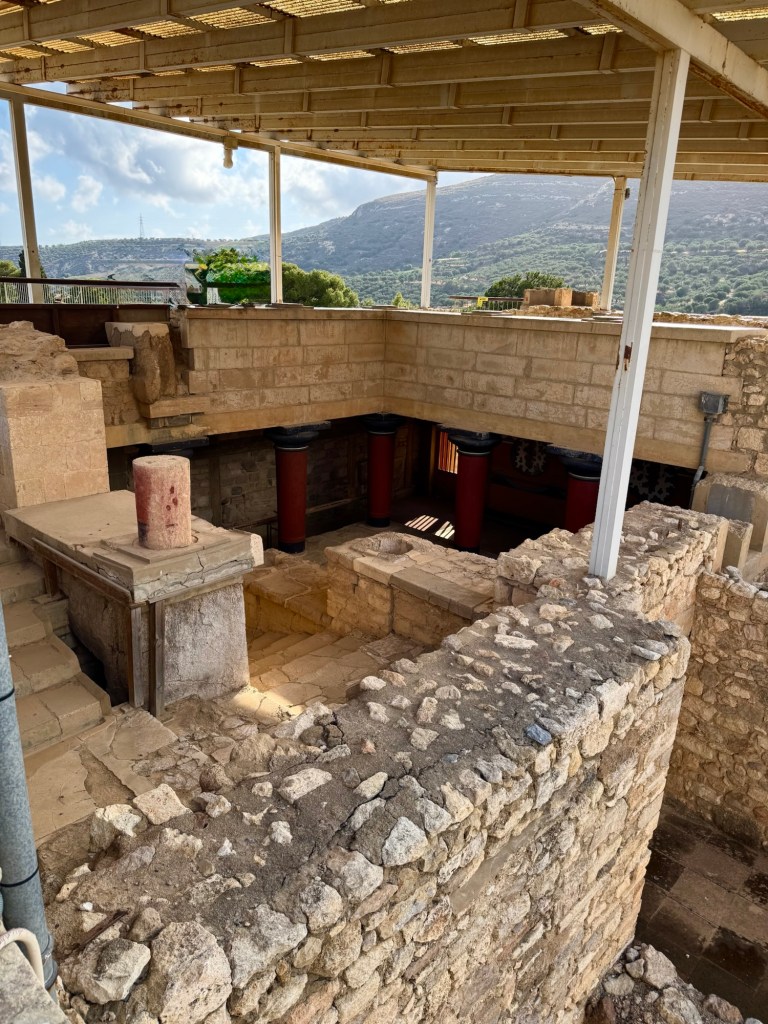
The site itself is a sprawling, multi-story complex with over 1,000 rooms, intricate corridors, and advanced features such as indoor plumbing, drainage, colorful frescoes, storage pithoi jars, courtyards, roads and workshops.
Restoration or Reinvention?
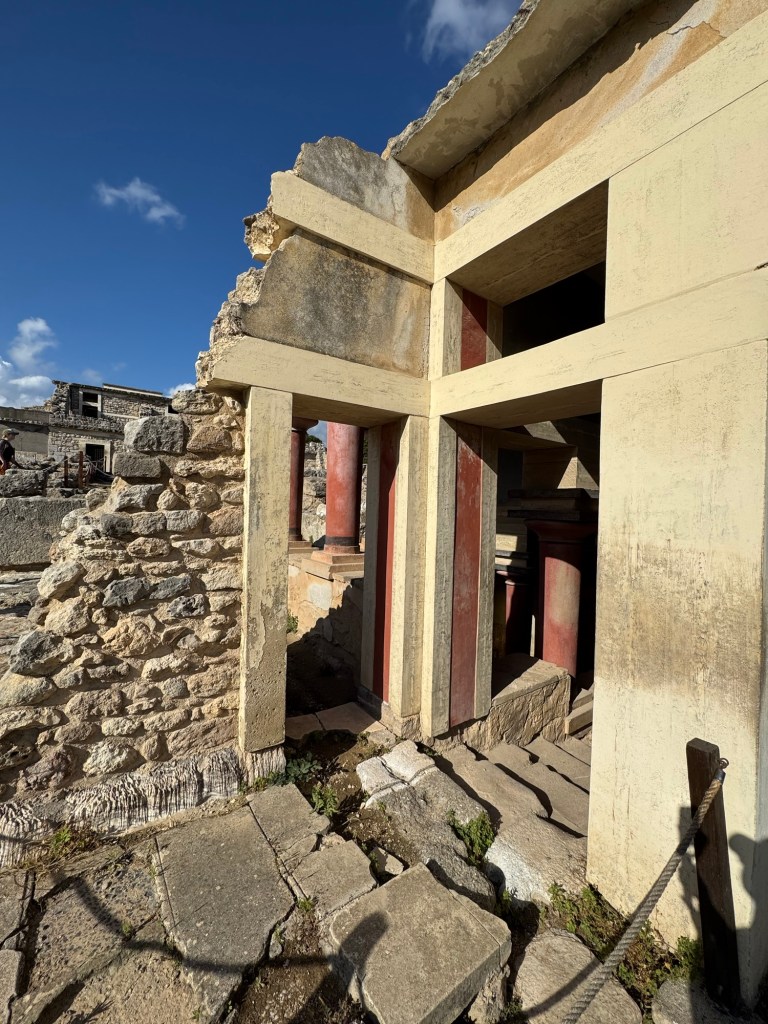
Evans excavated Knossos between 1900 and 1931, and then undertook a bold, and controversial, restoration project. Instead of leaving ruins as-is, he rebuilt parts of the palace using reinforced concrete, commissioning artists to recreate frescoes and architectural elements based on his interpretation of what Knossos should have looked like.
Some of the most iconic reconstructions include the Grand Staircase, the Throne Room, and frescoes like the Prince of the Lilies and Bull-Leaping Scene. The signature red-painted columns you see today? Yep, also part of Evans’ vision.

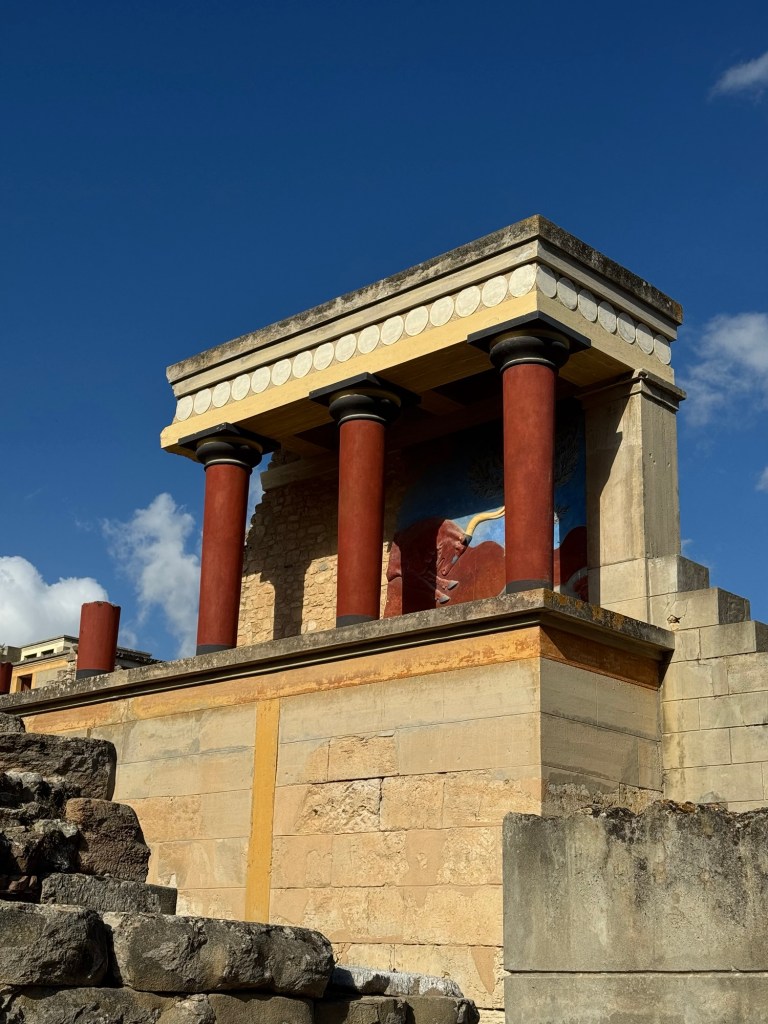
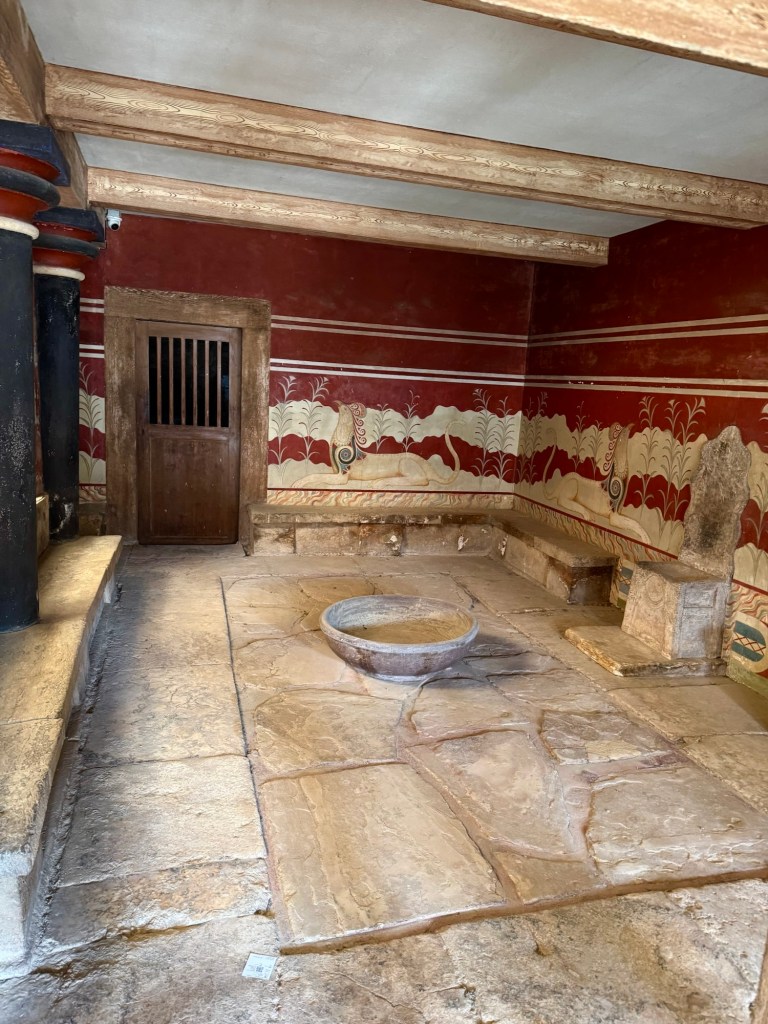
But here’s the issue: a lot of these reconstructions were hypothetical, sometimes based on mere fragments. And once concrete was used, the original structures were gone for good — meaning future archaeologists couldn’t re-examine untouched remains.
That said, Evans’s vision has shaped how we see Minoan civilization. His reconstructions are both preservation and projection — and a major reason Knossos is as famous, or infamous, as it is today.
The Visit
The site is massive and slightly chaotic — in a charming way. Depending on your pace, expect to spend 1 to 2 hours here. The layout definitely fits the “labyrinth” description, but if you stick to the main paths, you won’t need Ariadne’s thread, just follow the tour groups (there are lots).
There are info plaques scattered around and guides available at the entrance if you want the full narrative. But it does get crowded fast, especially in summer, and the narrow paths can get claustrophobic. I recommend arriving at opening or at least two hours before closing.

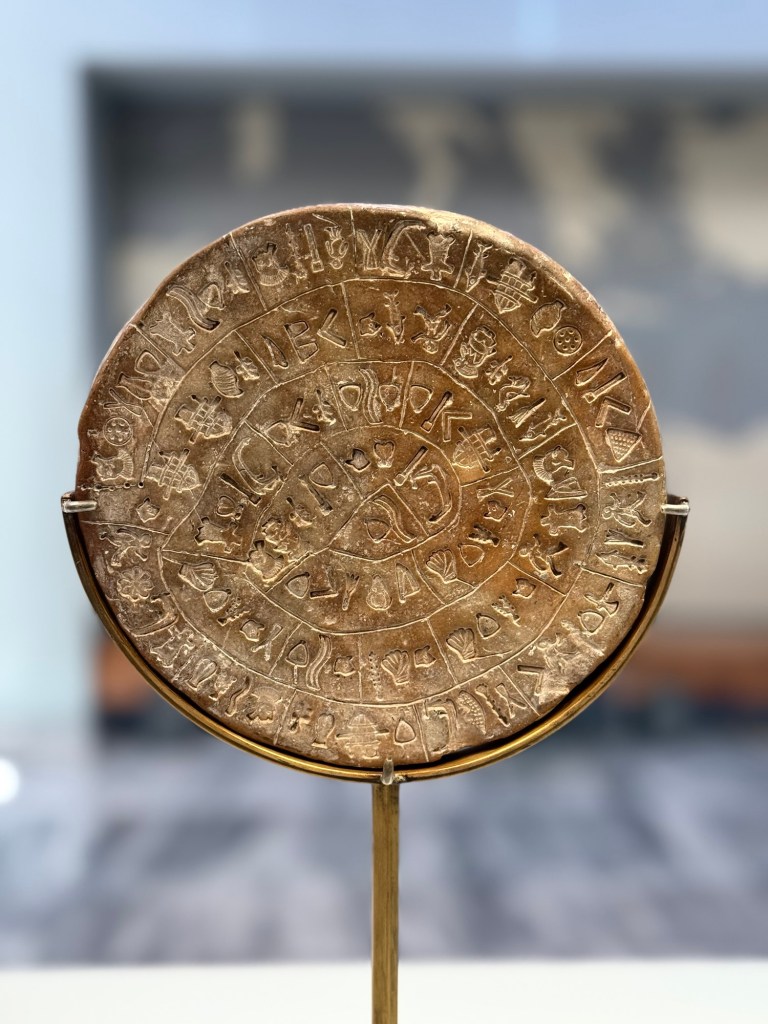
A visit to the Knossos Palace is not complete without a visit to the Heraklion Archaeological Museum, where most of the excavated artifacts are. The museum is the world’s leading institution for Minoan civilization, and brings together thousands of artifacts spanning over 5,500 years of Cretan history , from the Neolithic era through the Roman period, with a special emphasis on the Minoan Bronze Age.
The museum houses the most comprehensive collection of Minoan artifacts anywhere in the world, many of them excavated from Knossos, Phaistos, Malia, Zakros, and other Minoan palatial sites across Crete.
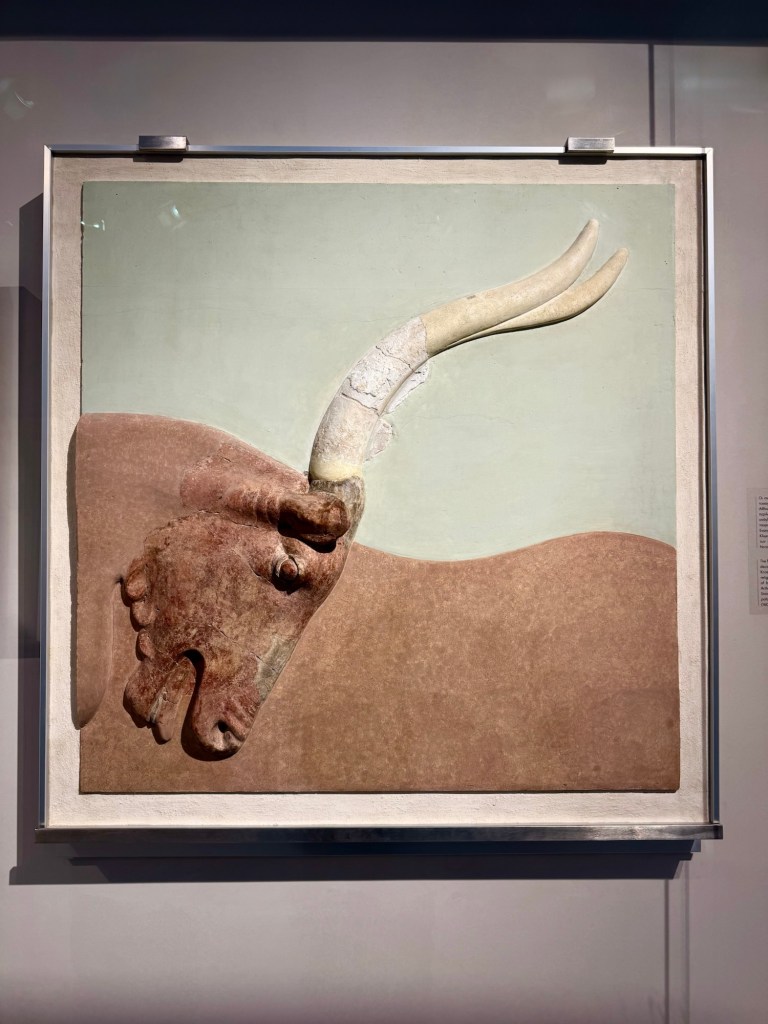
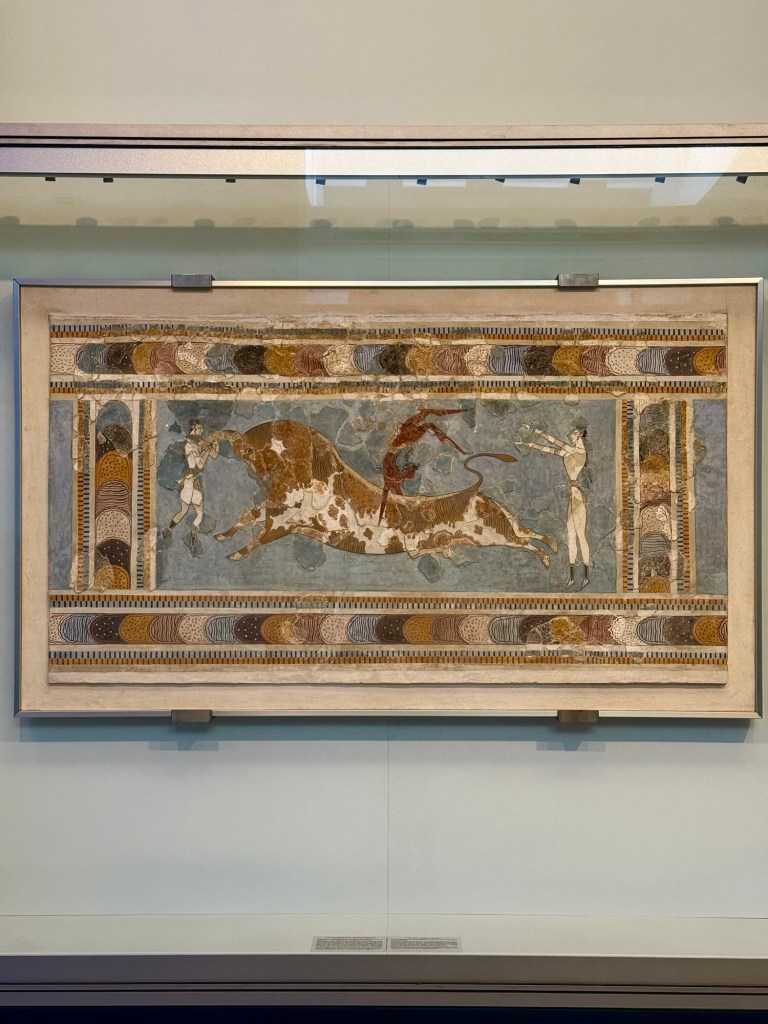

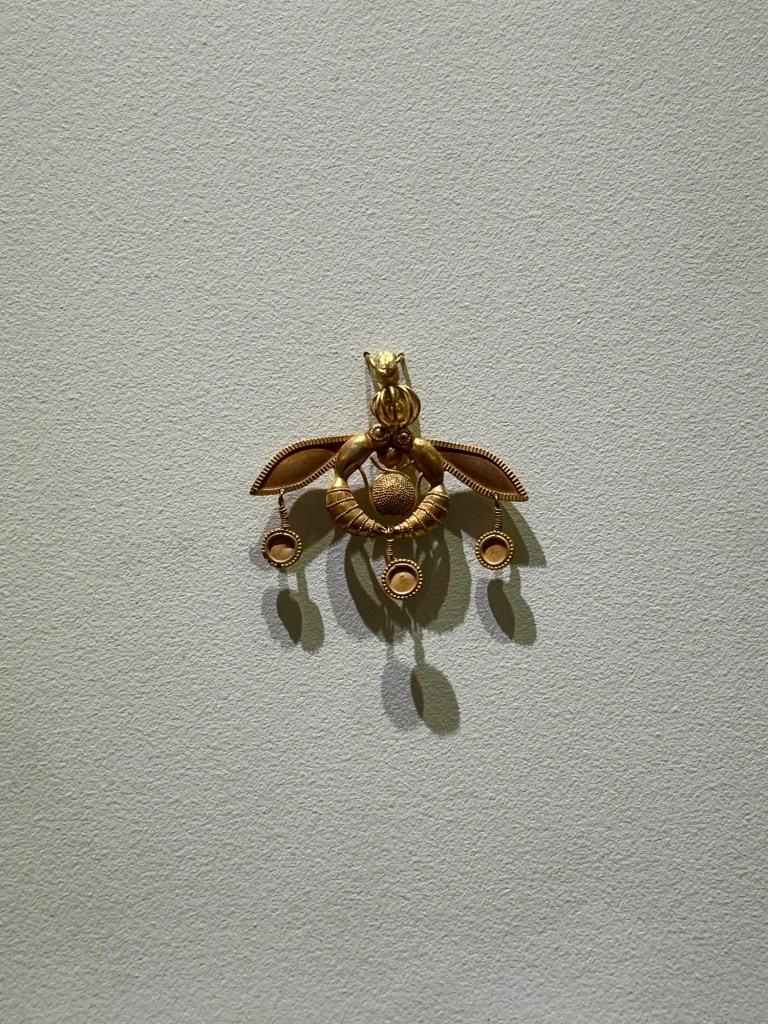
Some highlights of the museum include the frescos from the Knossos Palace, Linear A and B tablets, the Bee Pendant from Malia and so on, for me it was the scaled down reconstruction of the Knossos Palace near the entrance. Probably the clearest visualization of how sprawling and advanced this place truly was, it is impressive to think such structures were made some 4000 years ago, and still inspires architecture and art till this day.
The museum also features a myth vs. history section, connecting Greek lore with archaeological reality, along with a full breakdown of King Minos’s legendary family tree. It’s insightful, well-laid-out, and doesn’t drown you in text. An absolute must after seeing the palace itself.
So, whether you’re here for the history, the mythology, or just Season 15 Episode 215 of the Greek gods behaving badly, Knossos doesn’t disappoint. It’s one thing to read about ancient kings, divine grudges, and monstrous offspring, it’s another to walk the same labyrinthine paths that may have inspired them. Standing amid the crumbling walls, frescoes, and echoing corridors, it’s easy to see how legend and reality blurred into one timeless tale. And honestly, in a world where bulls can father monsters and palaces double as mazes, who’s to say where myth ends and history begins?
 Shenanigans Abroad