Roads that led to Rome

Is That It?
It’s one thing to read about the mighty Roman Empire, but it’s another to stand in one of their ancient cities—nearly 4,000 km away from modern-day Rome—and realize just how far they came.
A little research truly goes a long way. Good ole me would have been content with just exploring Petra and sand cruising through Wadi Rum. But then I wondered—was there more that Jordan had to offer? A quick Google search revealed that Jordan is so much more than just sands and rosy rock-carved buildings.
During the Hellenistic and Roman periods, Amman was known as Philadelphia, named after Ptolemy II Philadelphus. (Ha, and now, a cream cheese manufacturer has taken up the same name. )
After the Roman annexation of the Nabataean Kingdom in 106 AD, the province of Arabia Petraea was established, incorporating cities like Petra, Gerasa (Jerash), Gadara (Umm Qais), and Philadelphia (Amman). These cities flourished under Roman rule, leaving behind a rich architectural legacy—grand theaters, temples, and colonnaded streets. Walking through them today makes you wonder what life must have been like in their golden age.
Now, I’m not usually a “hire a tour” kind of person, but with only one day left in Jordan and two major sites on my list, I figured it was the best option. Luckily, I found a private tour with a driver through GetYourGuide that perfectly fit my itinerary.
You can drive to these locations yourself. The mountainous roads to Umm Qais can get a little spicy, but overall, the routes are straightforward and safe. Tour groups and buses are also an option. But there’s an option for everyone and budget.
Umm Qais—A Hilltop Roman Gem
As with most trips in Jordan, the day started early. After a two-hour car ride, with tea breaks included, I arrived at Umm Qais, where the ancient ruins of Gadara sit atop the mountainous northwest of the country.
Thanks to its hilltop location, Umm Qais is the perfect place to soak in breathtaking views of the Jordan Valley, including the Sea of Galilee, the Golan Heights, and parts of Israel and Syria. In its prime, Gadara was a major center of culture, home to classical poets and philosophers. Today, though in ruins, it still boasts an impressive colonnaded street, a vaulted terrace, and two large Roman-style amphitheaters. The site is criminally underrated. It’s a stunning testament to Rome’s reach, even in the farthest corners of its dominion.
The site includes a temple with shops below it, a nymphaeum, an amphitheater, and a Roman road that once linked it to the rest of the empire. Other highlights include the Mausoleum, Basilica Terrace, and the Thermae. Visiting Umm Qais is covered by the Jordan Pass, but you can also purchase entry tickets for 5 JD per person. Local guides can be found near the ticketing booth if you’re up for some haggling.
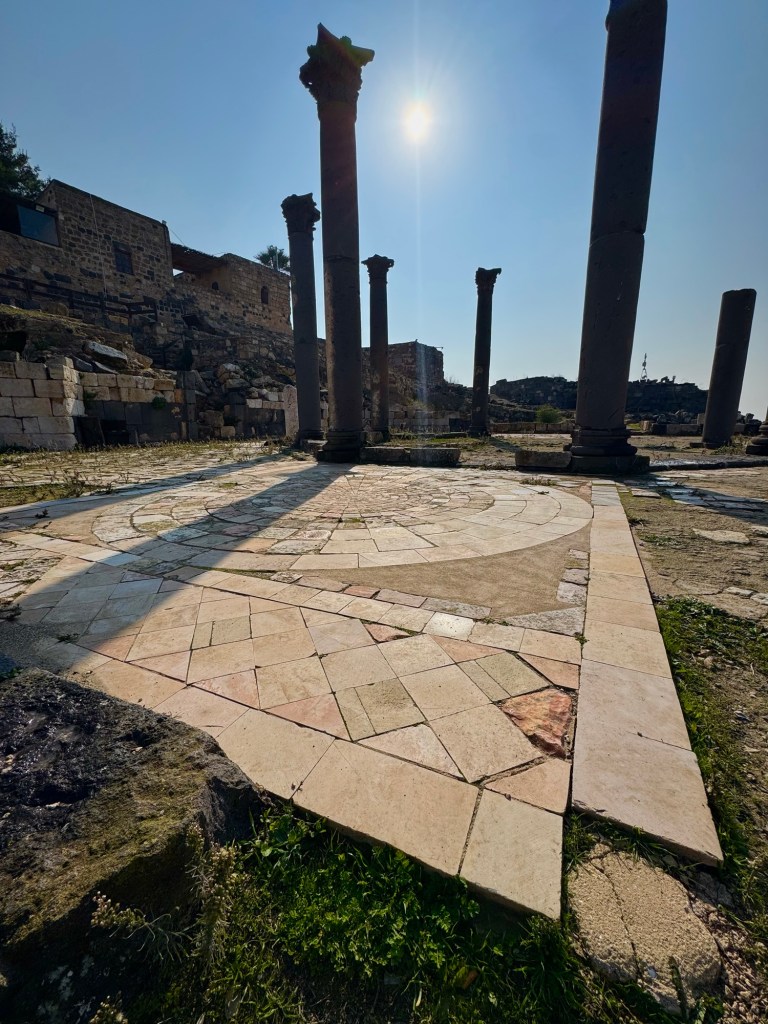
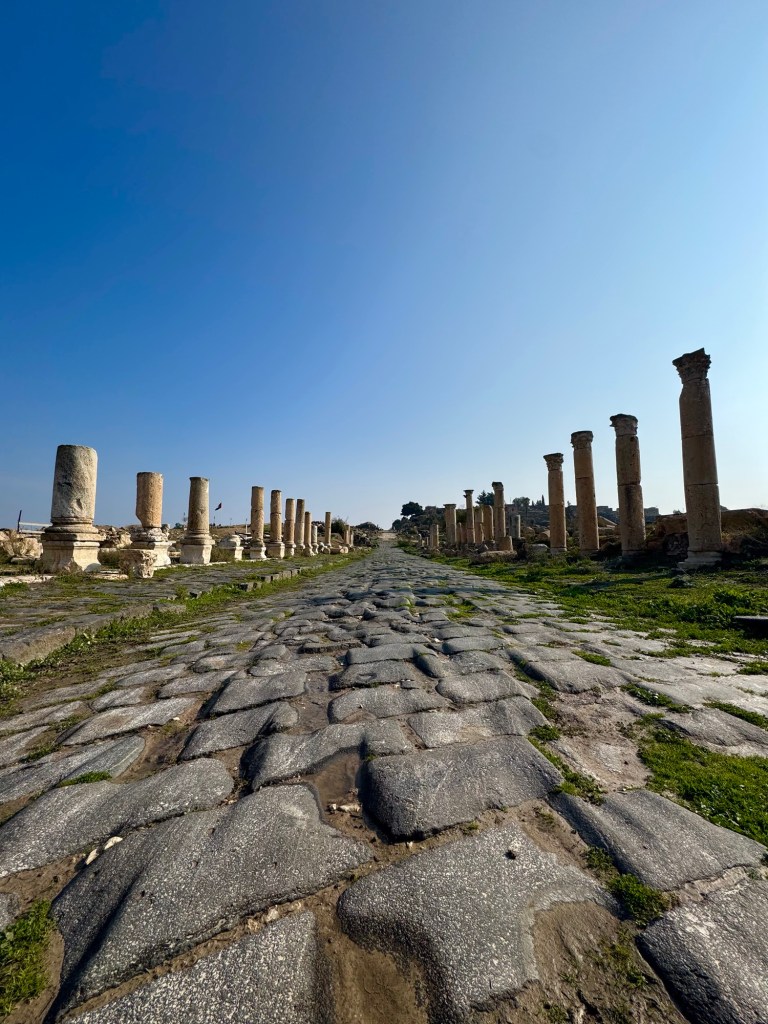
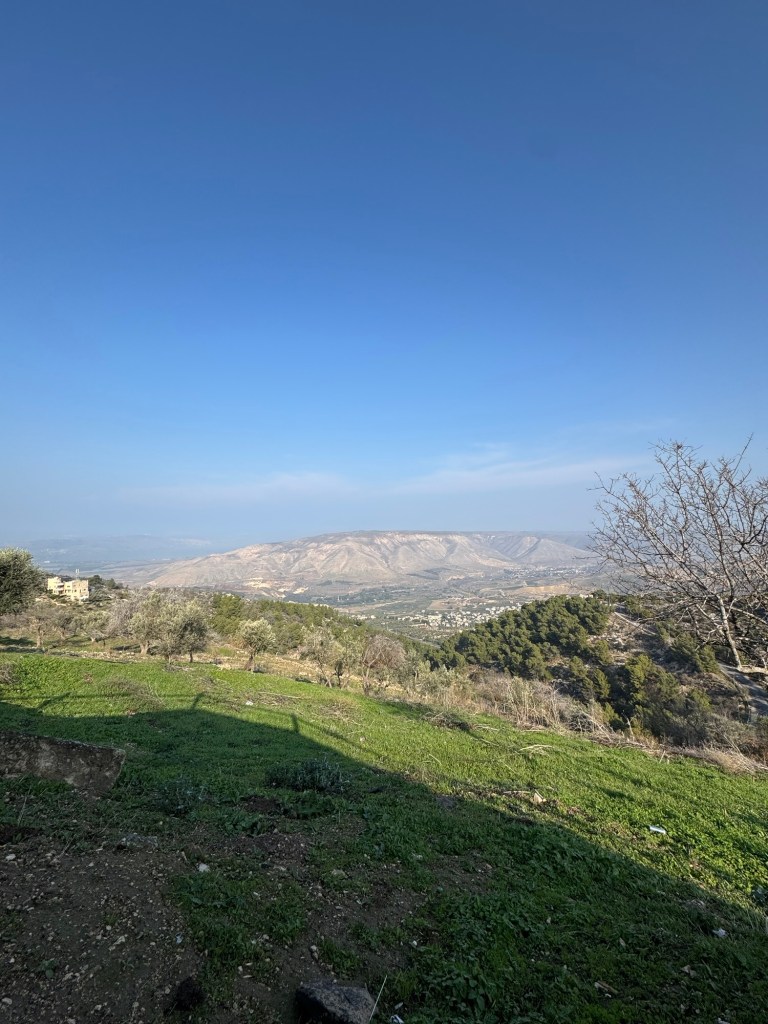
My local guide, included in my tour, provided fascinating insights into the city’s history and its strategic importance in both ancient and modern times. That said, the site is well-mapped with clear signage, so exploring independently is entirely doable. I’d recommend setting aside at least two hours to take it all in.
Jerash—The “Pompeii of the East”
From Umm Qais, you can opt to visit Ajloun Castle, a 12th-century Ayyubid fortress built to defend against Crusader attacks. It’s just 40 minutes away and is also covered by the Jordan Pass. However, I had my sights set on another Roman marvel—Jerash.
After an hour-long tour of Umm Qais and some free time to explore, I reunited with my driver and headed straight to Jerash. Just an hour’s drive from Umm Qais, Jerash is one of Jordan’s most significant historical sites, offering a remarkably well-preserved look at Roman civilization outside of Italy.
Often called the “Pompeii of the East,” Jerash flourished under Roman rule in the 2nd and 3rd centuries AD. Even today, archaeologists continue to uncover new discoveries, keeping this site an ever-evolving historical wonder.
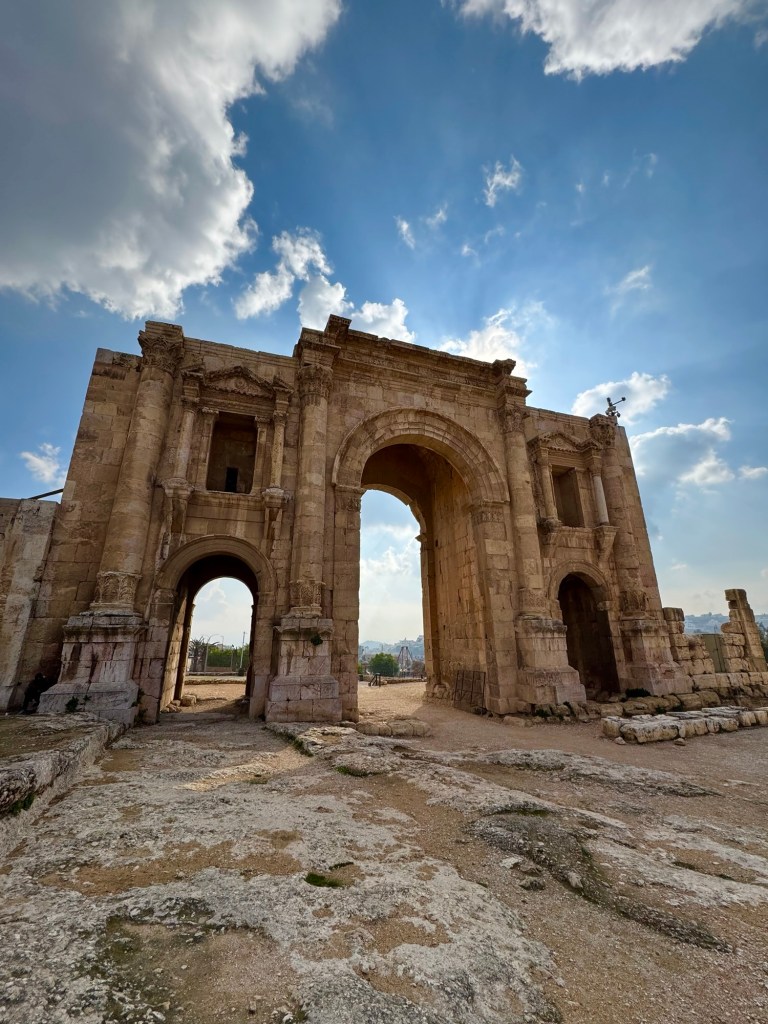
Before even entering the ticketed area, I was greeted by Hadrian’s Arch, a massive triumphal arch built in 129 AD to commemorate Emperor Hadrian’s visit to the city. Just beyond it lies the Hippodrome, a vast sports arena that once held 15,000 spectators, where chariot races and gladiator battles entertained the crowds. I later learned that the Hippodrome still hosts re-enactments of Roman chariot races and military drills—an experience that I, unfortunately, missed. I guess that just gives me another reason to come back.

Jerash is vast, and with little signage, it can feel overwhelming. Hiring a guide for around 20 JD is well worth it. Guides are available at the ticket checkpoint and offer tours in various languages, including English, French, German, Mandarin, and Japanese.
I had some fun watching them guess which language I preferred before finally settling on good ole English, because my French and Mandarin would have embarrassed me beyond repair seeing that they spoke it more fluently than me. Shame on me, my cow, and family.
Walking Through Time
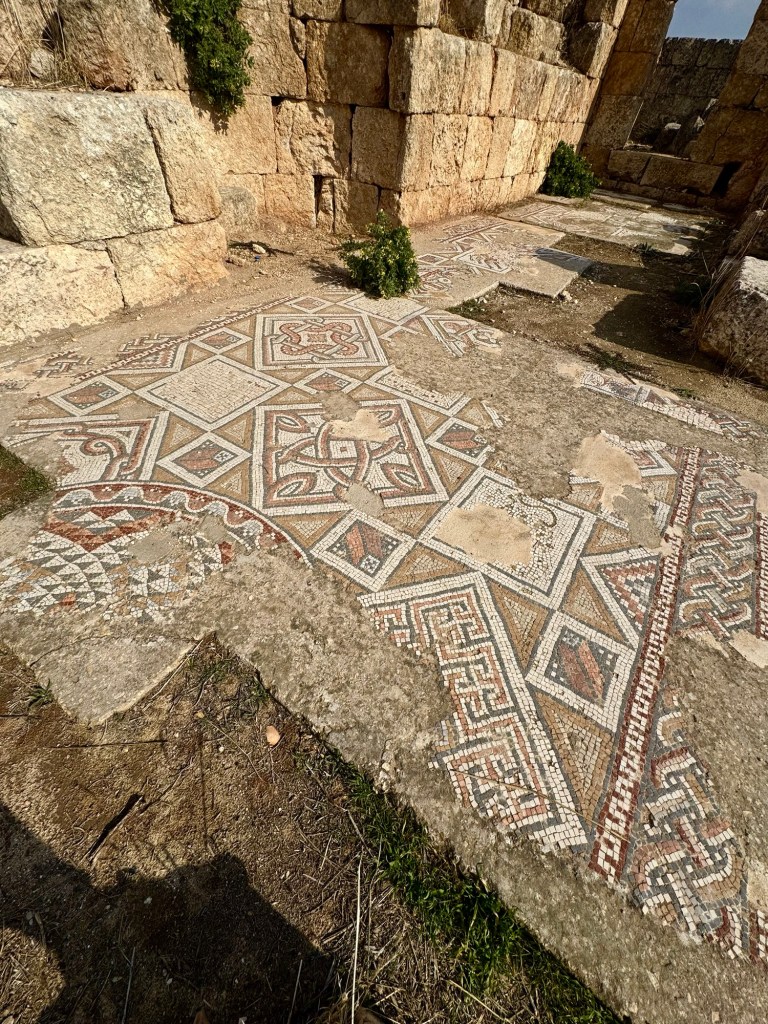
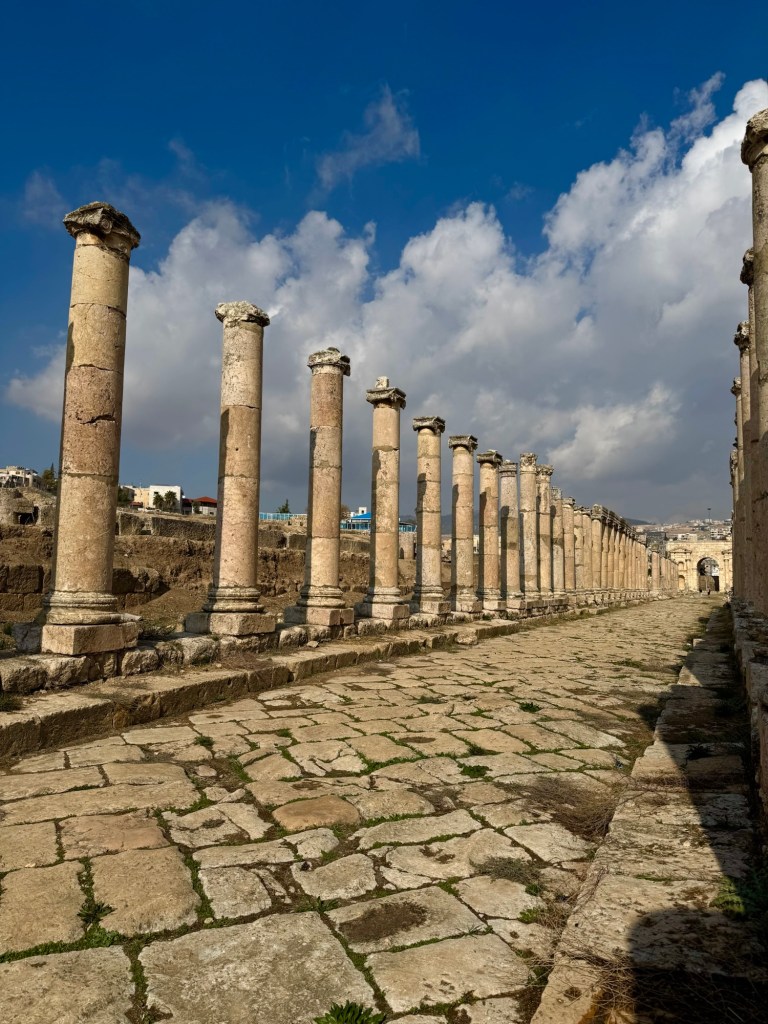
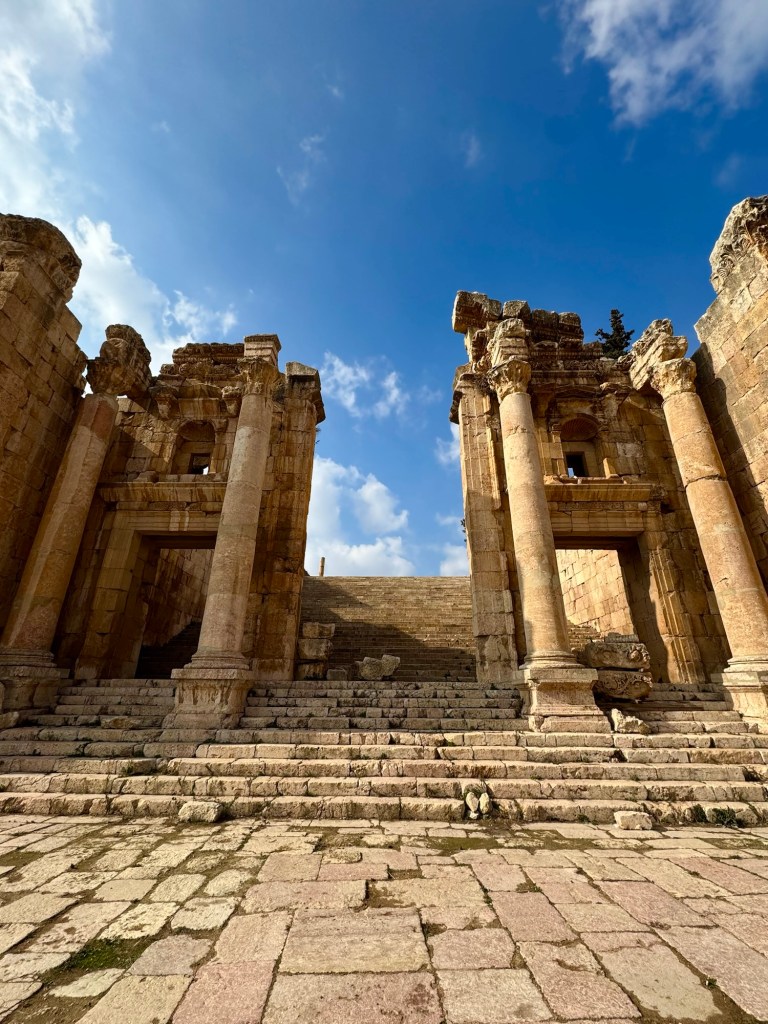
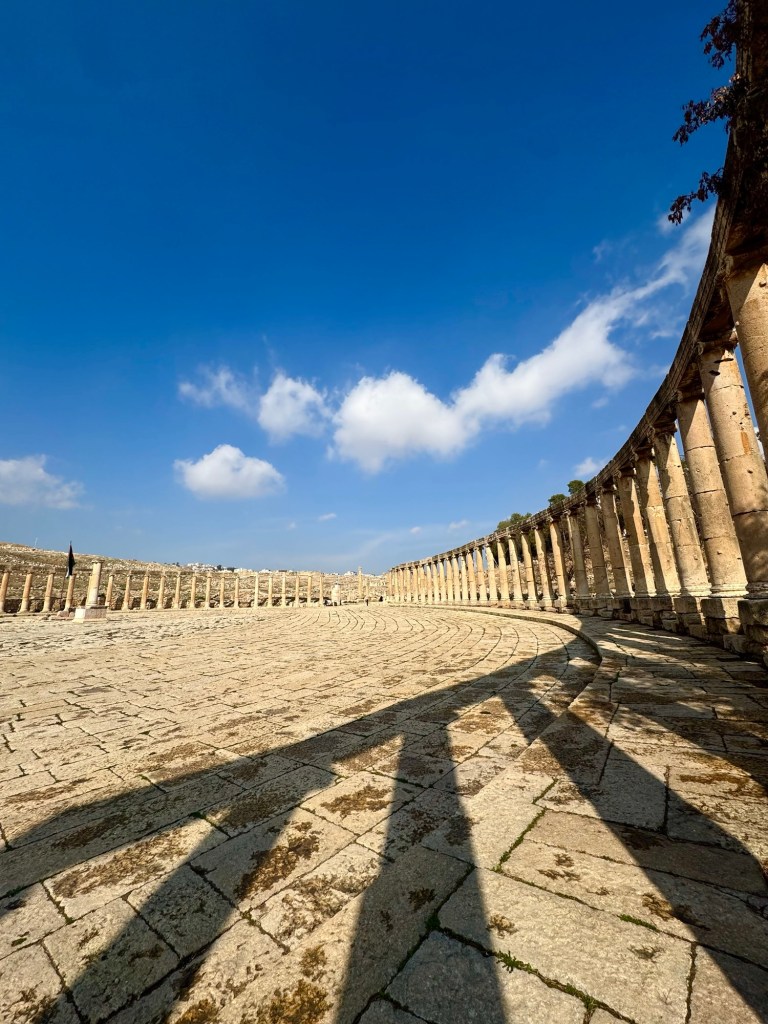
My fantastic guide, Anas—and you know he’s amazing if I remembered his name (I am notoriously bad at remembering names)—began the tour through the South Gate, the grand entrance to this remarkably preserved city. From there, we walked into the Oval Plaza, a vast, colonnaded open space that felt like the heart of ancient Jerash. The wide, stone-paved Cardo Maximus stretched ahead, its surface still bearing the grooves left by Roman chariots. We passed the Macellum, once a bustling marketplace, before arriving at the Nymphaeum—a beautifully adorned public fountain and my personal favorite site in Jerash.
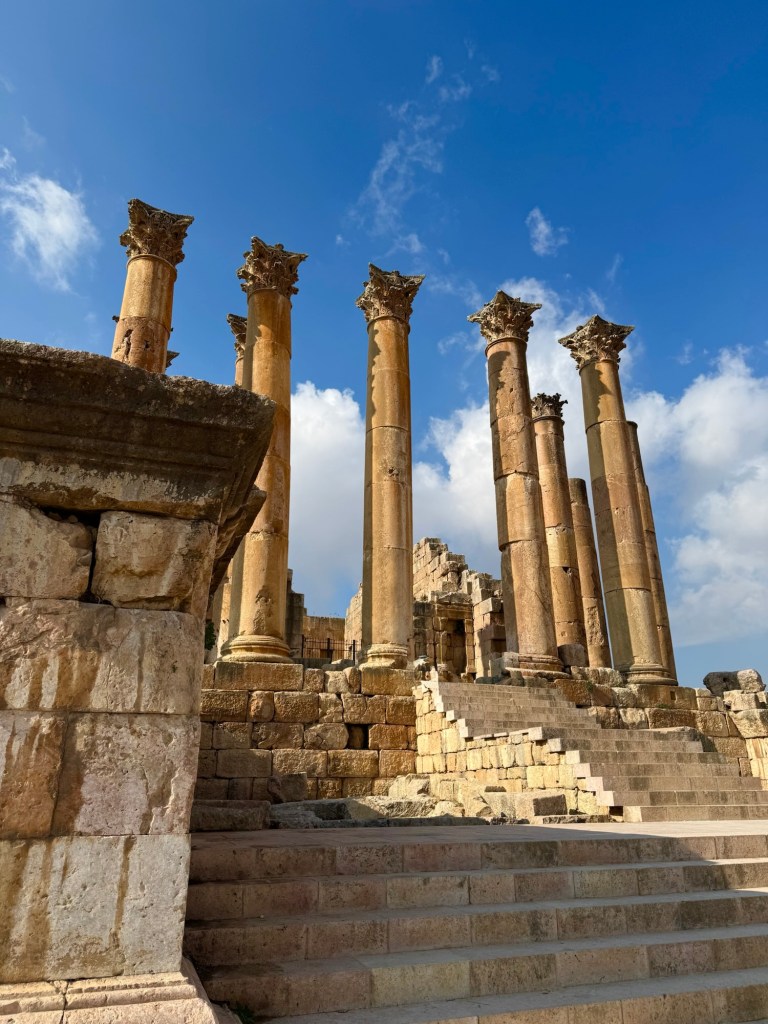
The tour continued uphill to the Temple of Artemis, dedicated to the city’s patron goddess. The towering Corinthian columns still stand as a testament to Roman engineering. From there, we explored the North Theater, the Church of SS Cosmas and Damian, and finally the South Theater, where, to my surprise, Jordanian bagpipers were playing. Yes, bagpipes in Jerash—it’s a thing.
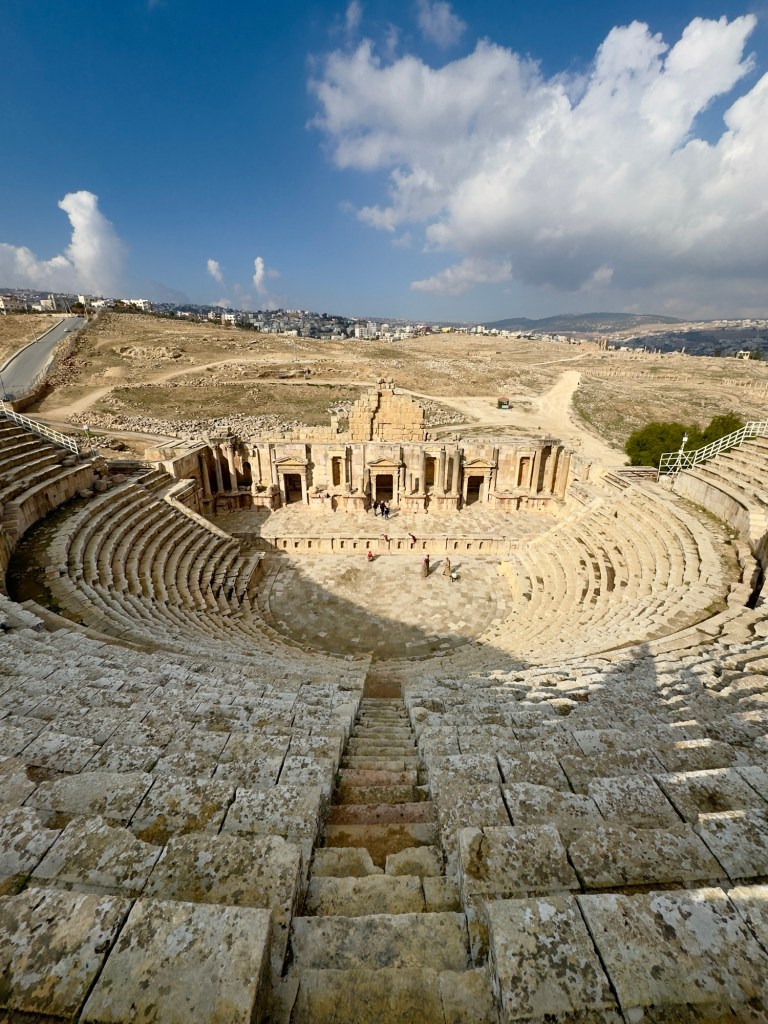
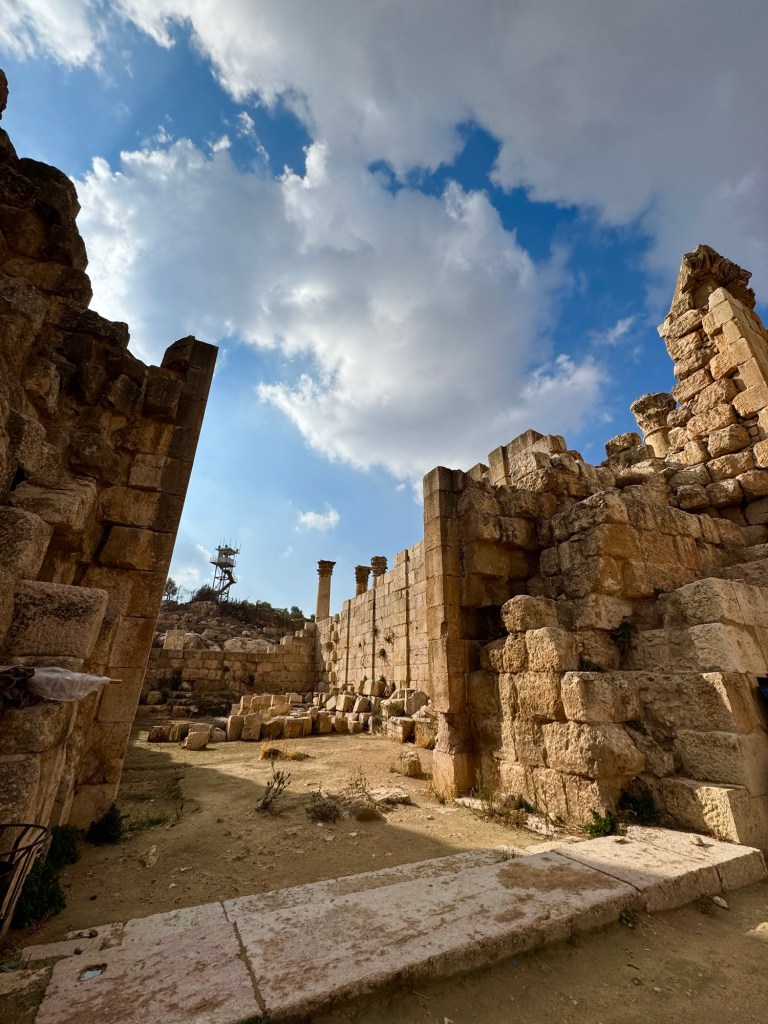
We concluded the tour at the Temple of Zeus, perched on a hill with breathtaking panoramic views of the ruins below. It was the perfect finale, showcasing Jerash’s blend of history, architecture, and stunning landscapes. As the sun dipped lower, I made my way back to the visitor center, then to my driver, and finally back to Amman.
Farewell?
Standing atop the Temple of Zeus, I took one last look at the ancient city below. I had just traced the footsteps of Roman citizens in a place that still feels alive with history.
It’s surreal to find such a well-preserved Roman city in the heart of the Middle East—a place I never expected to hold such strong ties to the empire I admire. It’s a reminder that history is full of surprises, waiting to be uncovered.
Now, with the dust of Jerash still clinging to my shoes, I turn my sights to my next destination: Egypt—another land of ancient wonders, where pharaohs and pyramids will tell stories of a different kind.
 Shenanigans Abroad