Tag: Jordan

  • Jordan – Umm Qais & Jerash

    Roads that led to Rome

    Is That It?

    It’s one thing to read about the mighty Roman Empire, but it’s another to stand in one of their ancient cities—nearly 4,000 km away from modern-day Rome—and realize just how far they came.

    A little research truly goes a long way. Good ole me would have been content with just exploring Petra and sand cruising through Wadi Rum. But then I wondered—was there more that Jordan had to offer? A quick Google search revealed that Jordan is so much more than just sands and rosy rock-carved buildings.

    During the Hellenistic and Roman periods, Amman was known as Philadelphia, named after Ptolemy II Philadelphus. (Ha, and now, a cream cheese manufacturer has taken up the same name. )

    After the Roman annexation of the Nabataean Kingdom in 106 AD, the province of Arabia Petraea was established, incorporating cities like Petra, Gerasa (Jerash), Gadara (Umm Qais), and Philadelphia (Amman). These cities flourished under Roman rule, leaving behind a rich architectural legacy—grand theaters, temples, and colonnaded streets. Walking through them today makes you wonder what life must have been like in their golden age.

    Now, I’m not usually a “hire a tour” kind of person, but with only one day left in Jordan and two major sites on my list, I figured it was the best option. Luckily, I found a private tour with a driver through GetYourGuide that perfectly fit my itinerary.

    You can drive to these locations yourself. The mountainous roads to Umm Qais can get a little spicy, but overall, the routes are straightforward and safe. Tour groups and buses are also an option. But there’s an option for everyone and budget.

    Umm Qais—A Hilltop Roman Gem

    As with most trips in Jordan, the day started early. After a two-hour car ride, with tea breaks included, I arrived at Umm Qais, where the ancient ruins of Gadara sit atop the mountainous northwest of the country.

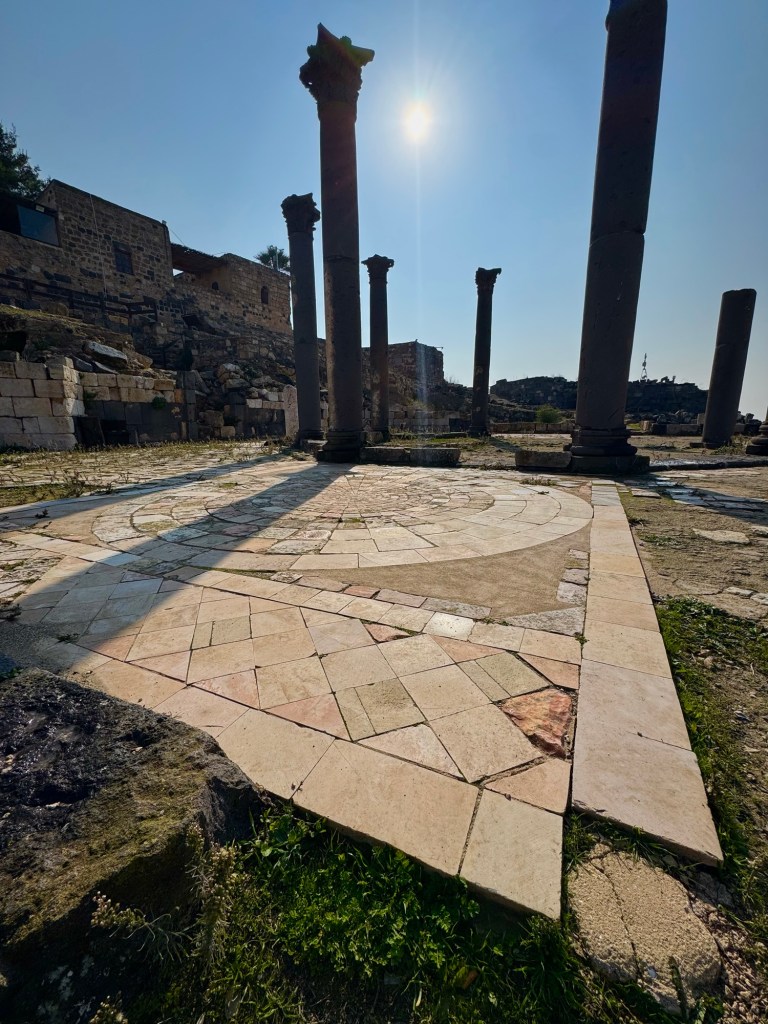
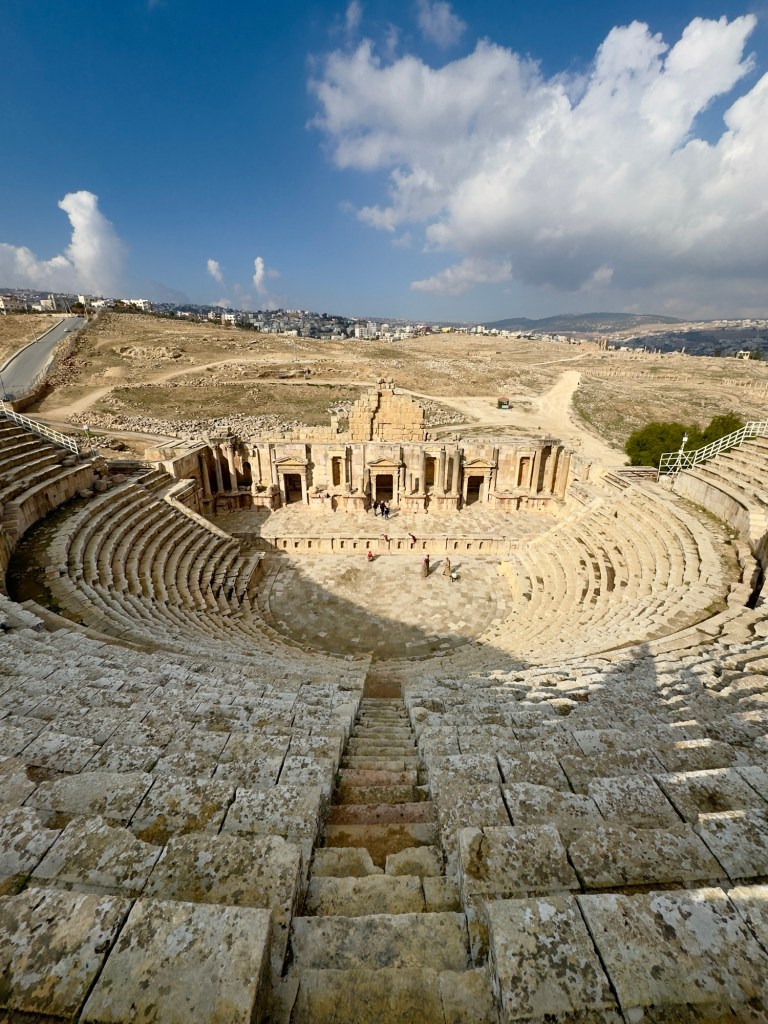
    Thanks to its hilltop location, Umm Qais is the perfect place to soak in breathtaking views of the Jordan Valley, including the Sea of Galilee, the Golan Heights, and parts of Israel and Syria. In its prime, Gadara was a major center of culture, home to classical poets and philosophers. Today, though in ruins, it still boasts an impressive colonnaded street, a vaulted terrace, and two large Roman-style amphitheaters. The site is criminally underrated. It’s a stunning testament to Rome’s reach, even in the farthest corners of its dominion.

    The site includes a temple with shops below it, a nymphaeum, an amphitheater, and a Roman road that once linked it to the rest of the empire. Other highlights include the Mausoleum, Basilica Terrace, and the Thermae. Visiting Umm Qais is covered by the Jordan Pass, but you can also purchase entry tickets for 5 JD per person. Local guides can be found near the ticketing booth if you’re up for some haggling.
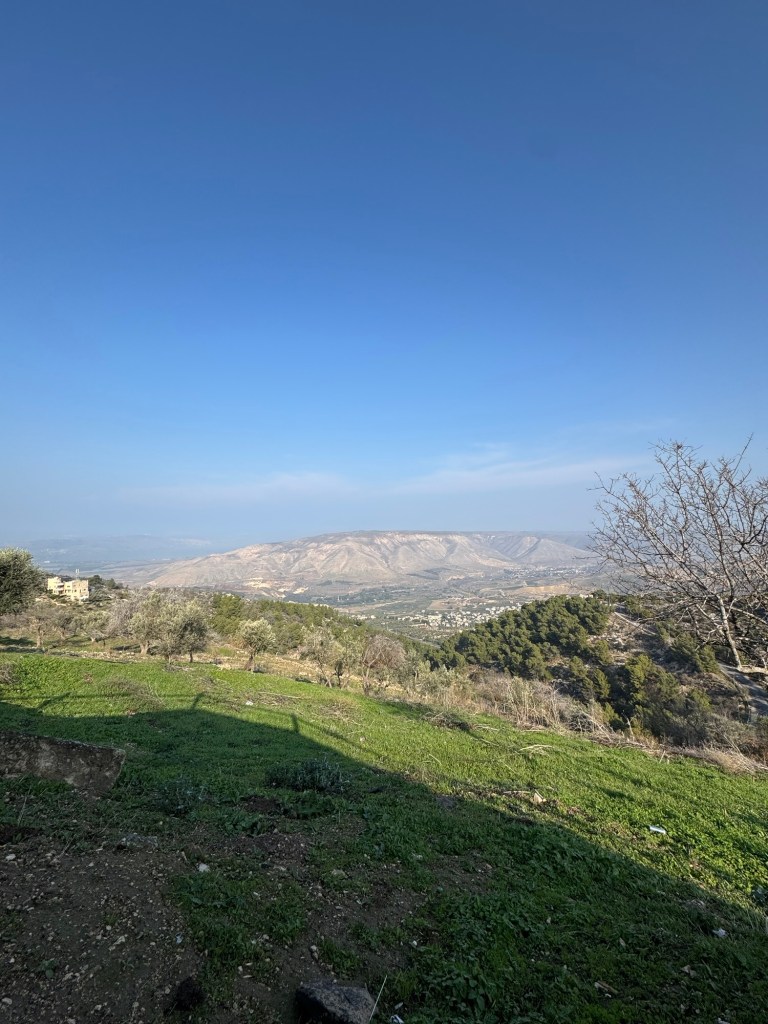
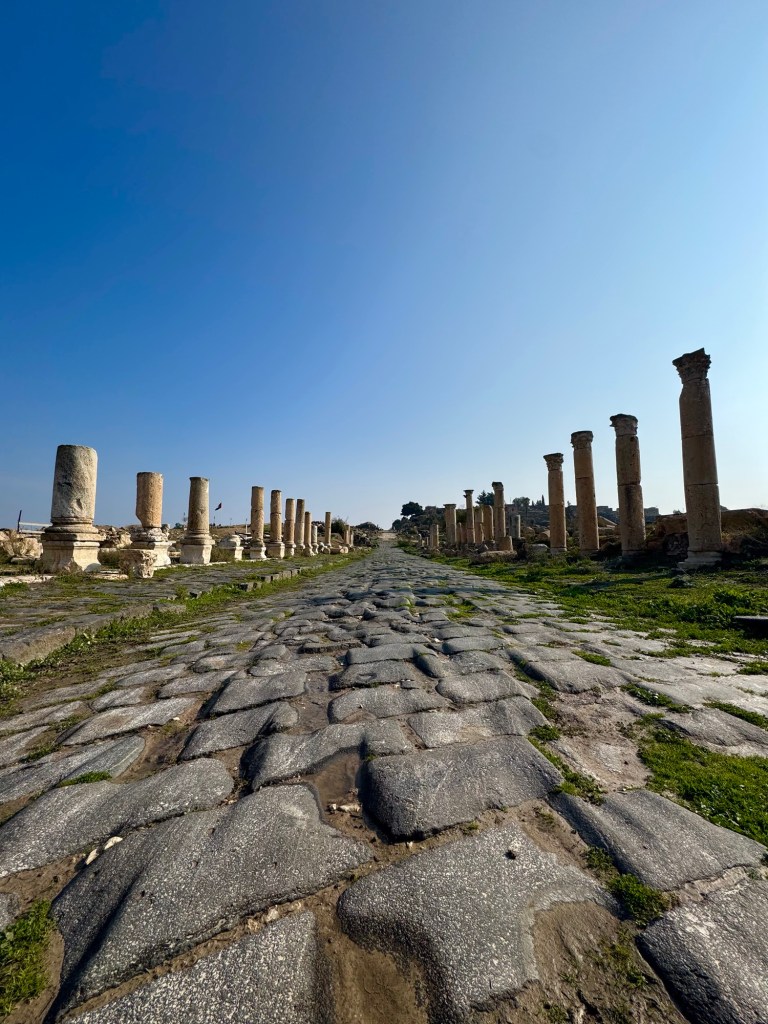
    My local guide, included in my tour, provided fascinating insights into the city’s history and its strategic importance in both ancient and modern times. That said, the site is well-mapped with clear signage, so exploring independently is entirely doable. I’d recommend setting aside at least two hours to take it all in.

    Jerash—The “Pompeii of the East”

    From Umm Qais, you can opt to visit Ajloun Castle, a 12th-century Ayyubid fortress built to defend against Crusader attacks. It’s just 40 minutes away and is also covered by the Jordan Pass. However, I had my sights set on another Roman marvel—Jerash.

    After an hour-long tour of Umm Qais and some free time to explore, I reunited with my driver and headed straight to Jerash. Just an hour’s drive from Umm Qais, Jerash is one of Jordan’s most significant historical sites, offering a remarkably well-preserved look at Roman civilization outside of Italy.

    Often called the “Pompeii of the East,” Jerash flourished under Roman rule in the 2nd and 3rd centuries AD. Even today, archaeologists continue to uncover new discoveries, keeping this site an ever-evolving historical wonder.

    Before even entering the ticketed area, I was greeted by Hadrian’s Arch, a massive triumphal arch built in 129 AD to commemorate Emperor Hadrian’s visit to the city. Just beyond it lies the Hippodrome, a vast sports arena that once held 15,000 spectators, where chariot races and gladiator battles entertained the crowds. I later learned that the Hippodrome still hosts re-enactments of Roman chariot races and military drills—an experience that I, unfortunately, missed. I guess that just gives me another reason to come back.
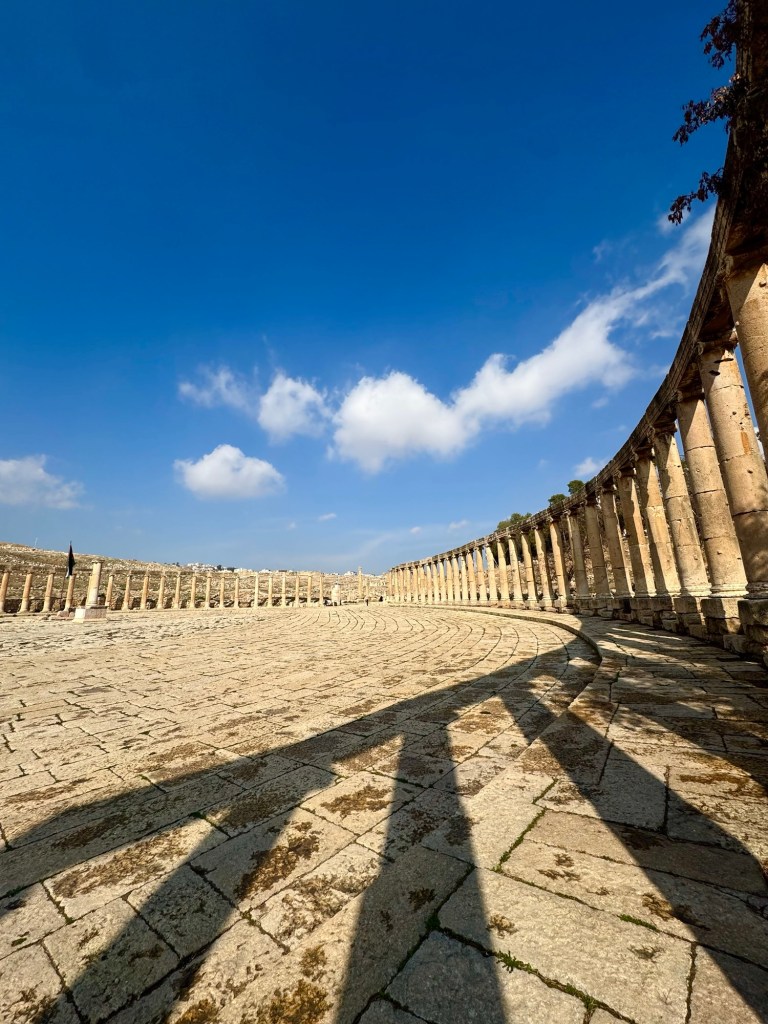
    Jerash is vast, and with little signage, it can feel overwhelming. Hiring a guide for around 20 JD is well worth it. Guides are available at the ticket checkpoint and offer tours in various languages, including English, French, German, Mandarin, and Japanese.

    I had some fun watching them guess which language I preferred before finally settling on good ole English, because my French and Mandarin would have embarrassed me beyond repair seeing that they spoke it more fluently than me. Shame on me, my cow, and family.

    Walking Through Time
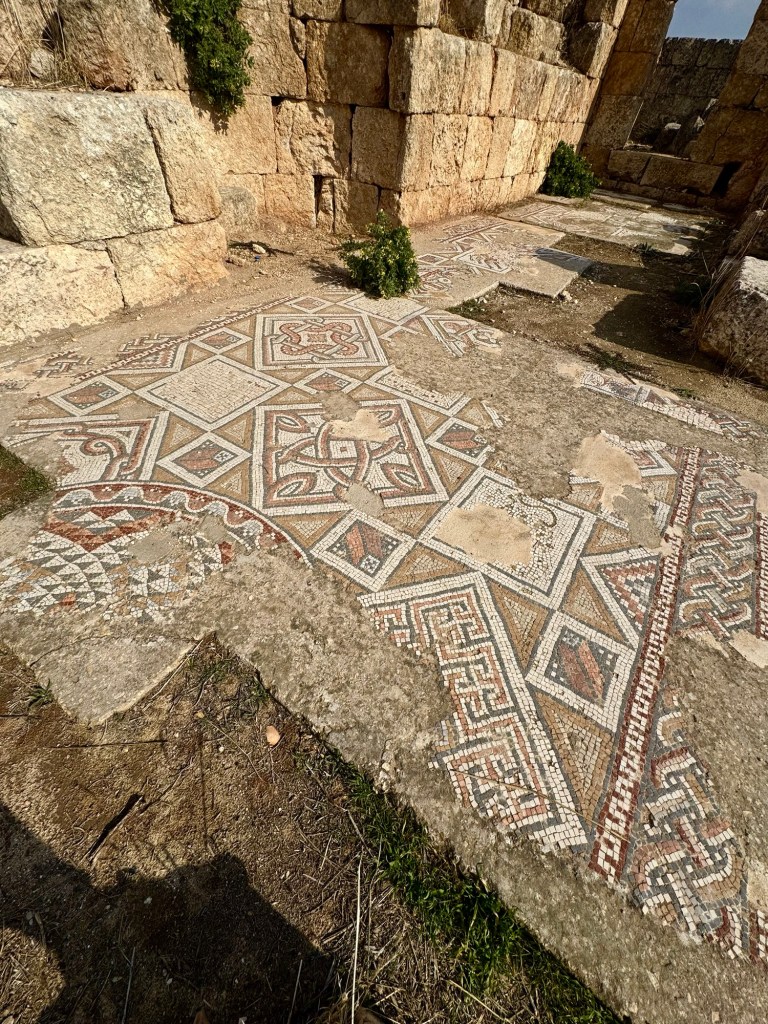
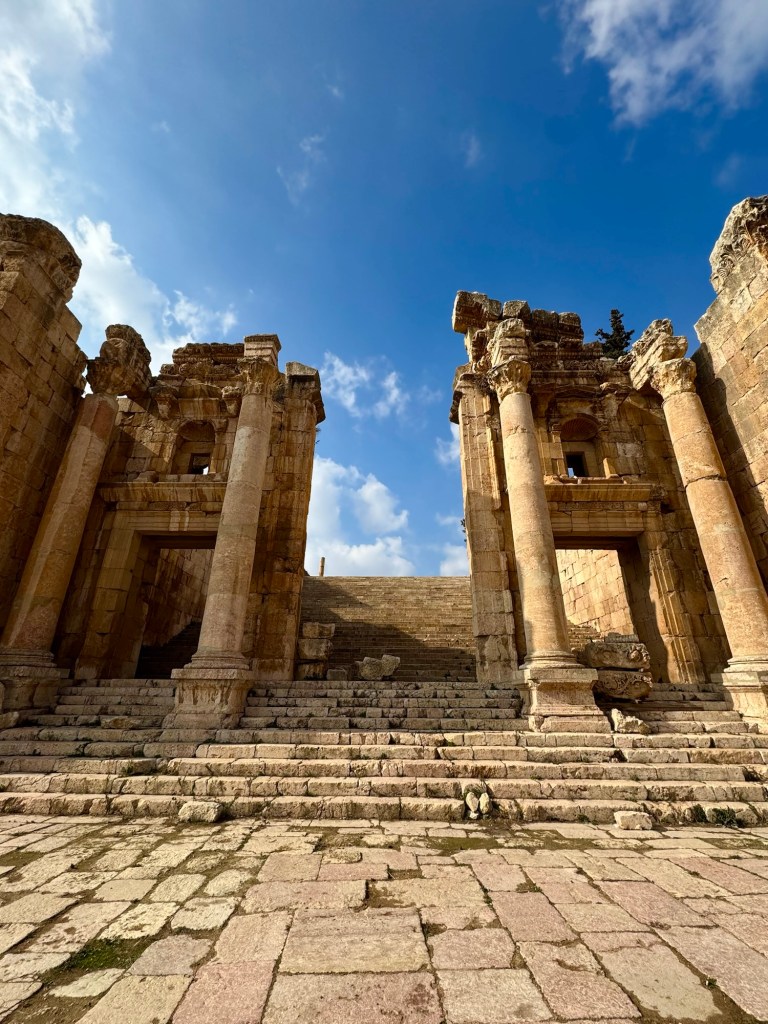
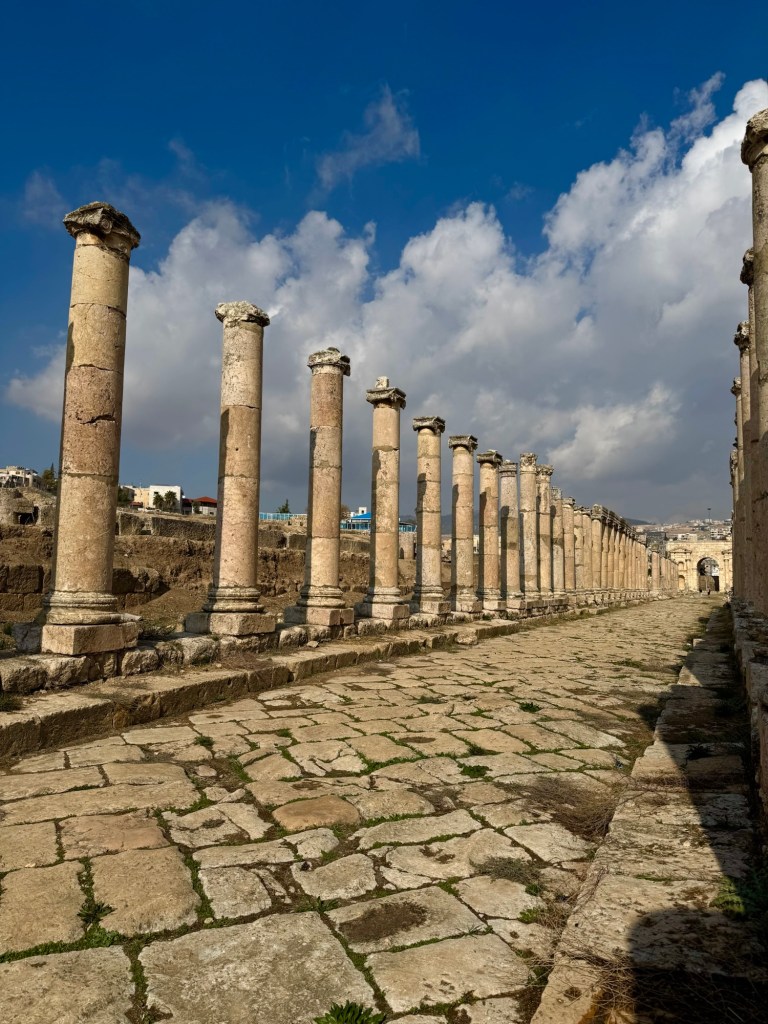
    My fantastic guide, Anas—and you know he’s amazing if I remembered his name (I am notoriously bad at remembering names)—began the tour through the South Gate, the grand entrance to this remarkably preserved city. From there, we walked into the Oval Plaza, a vast, colonnaded open space that felt like the heart of ancient Jerash. The wide, stone-paved Cardo Maximus stretched ahead, its surface still bearing the grooves left by Roman chariots. We passed the Macellum, once a bustling marketplace, before arriving at the Nymphaeum—a beautifully adorned public fountain and my personal favorite site in Jerash.

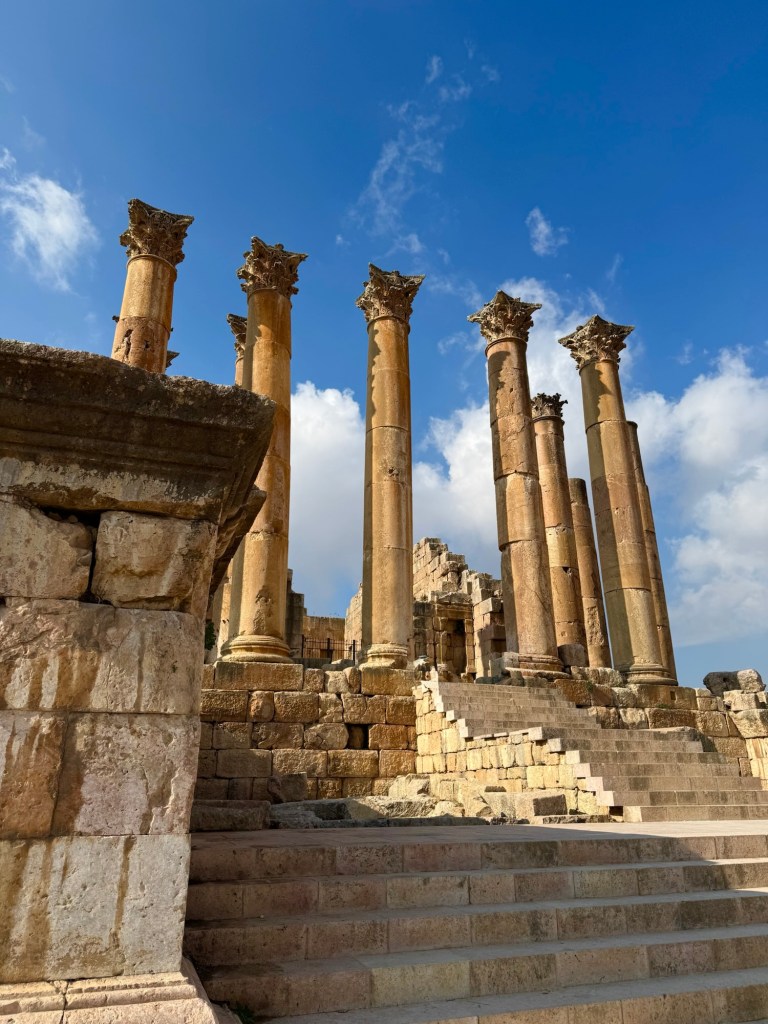
    The tour continued uphill to the Temple of Artemis, dedicated to the city’s patron goddess. The towering Corinthian columns still stand as a testament to Roman engineering. From there, we explored the North Theater, the Church of SS Cosmas and Damian, and finally the South Theater, where, to my surprise, Jordanian bagpipers were playing. Yes, bagpipes in Jerash—it’s a thing.
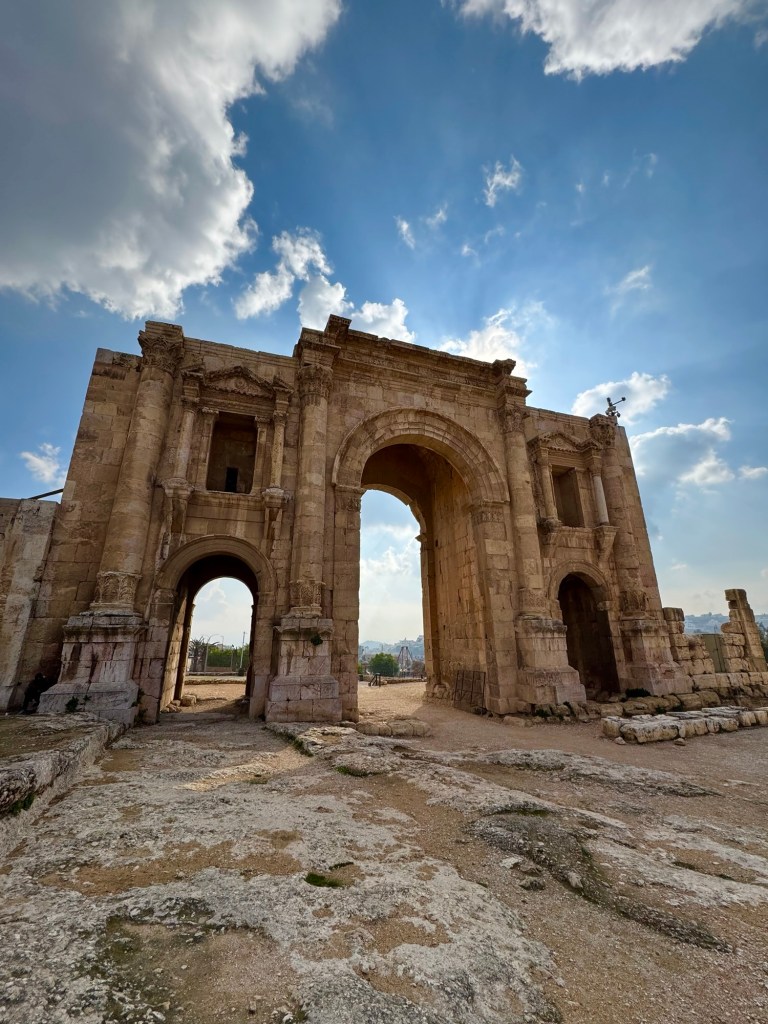
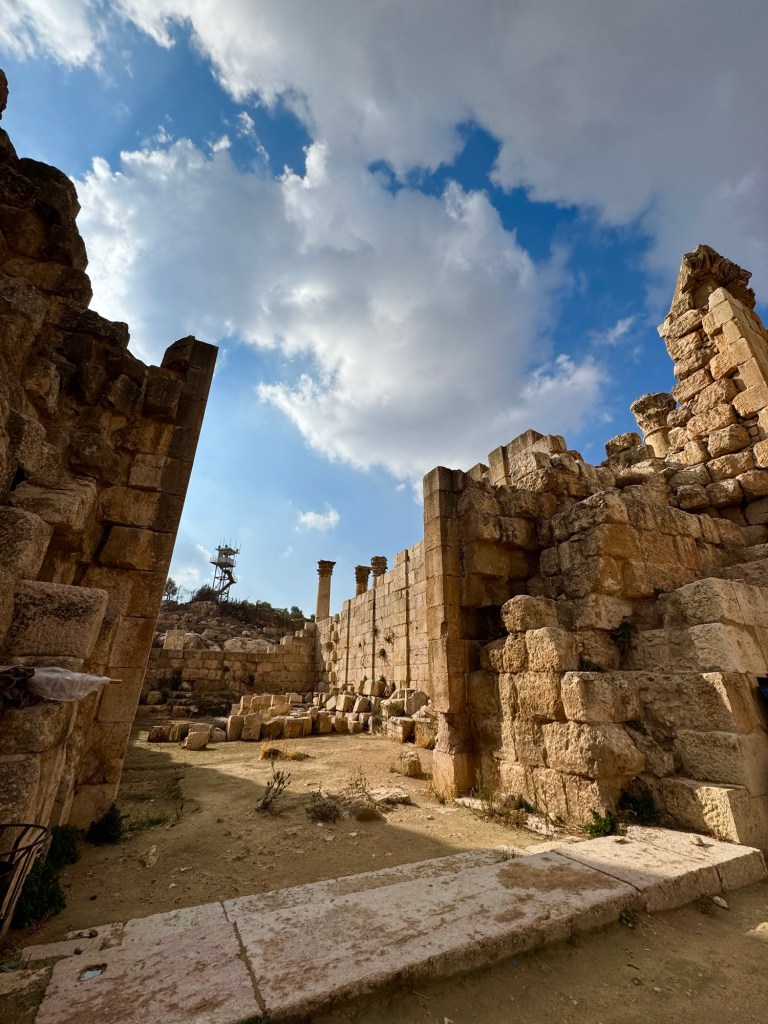
    We concluded the tour at the Temple of Zeus, perched on a hill with breathtaking panoramic views of the ruins below. It was the perfect finale, showcasing Jerash’s blend of history, architecture, and stunning landscapes. As the sun dipped lower, I made my way back to the visitor center, then to my driver, and finally back to Amman.

    Farewell?

    Standing atop the Temple of Zeus, I took one last look at the ancient city below. I had just traced the footsteps of Roman citizens in a place that still feels alive with history.

    It’s surreal to find such a well-preserved Roman city in the heart of the Middle East—a place I never expected to hold such strong ties to the empire I admire. It’s a reminder that history is full of surprises, waiting to be uncovered.

    Now, with the dust of Jerash still clinging to my shoes, I turn my sights to my next destination: Egypt—another land of ancient wonders, where pharaohs and pyramids will tell stories of a different kind.

  • Jordan – Wadi Rum

    The Valley of the Moon

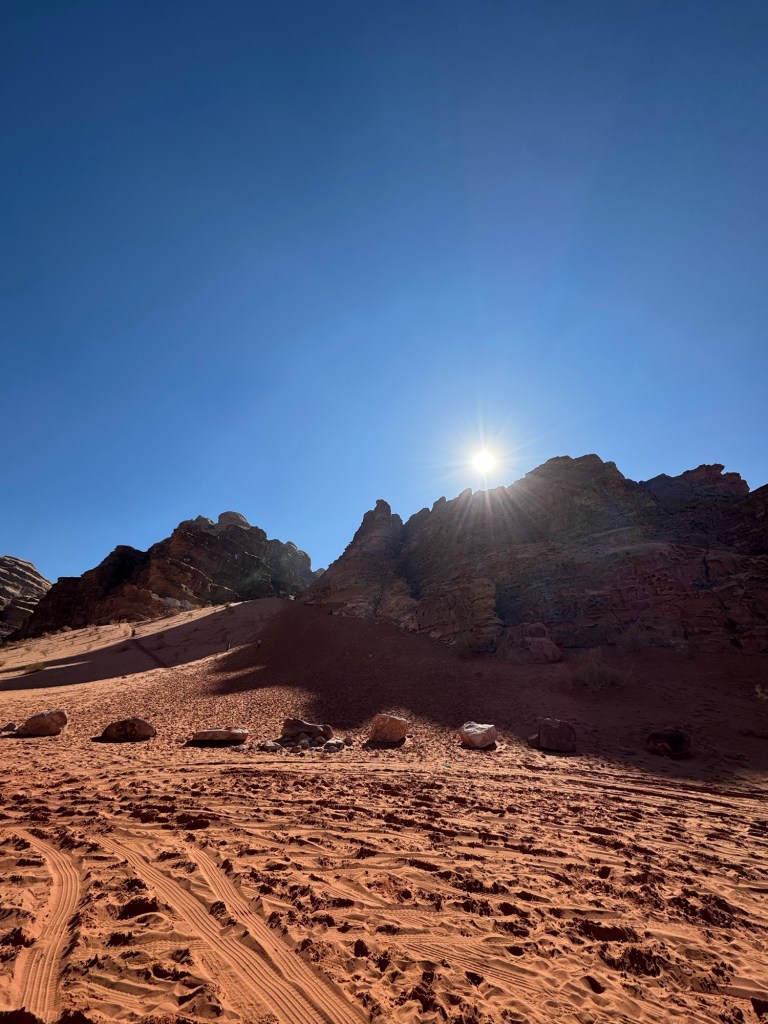
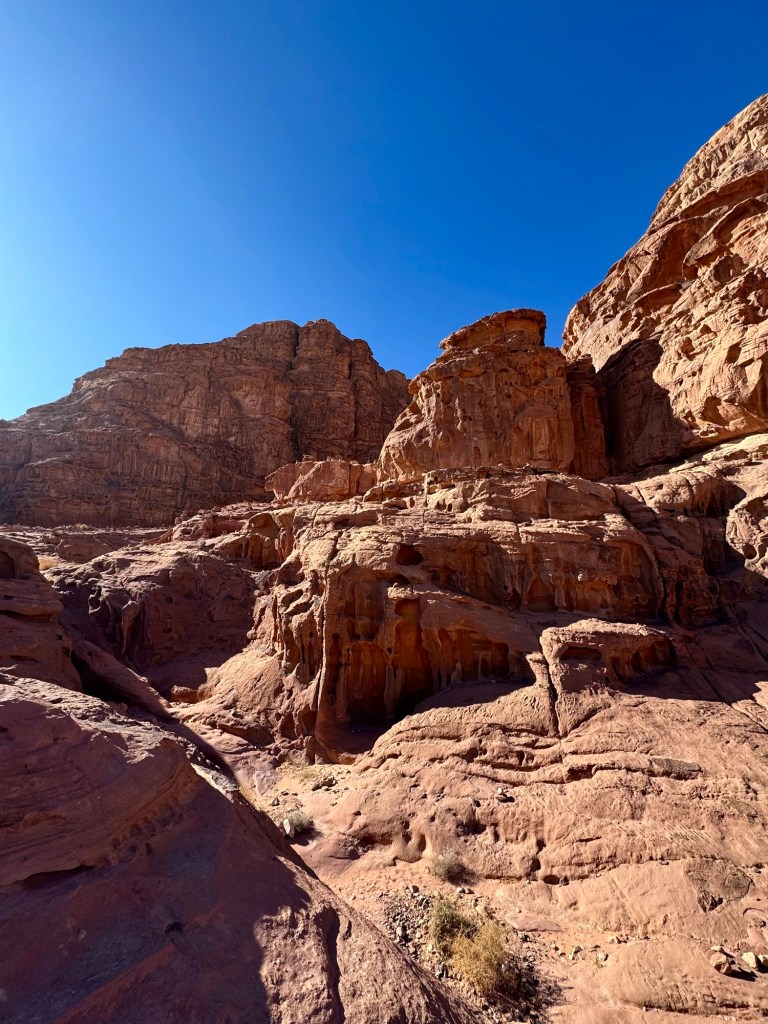
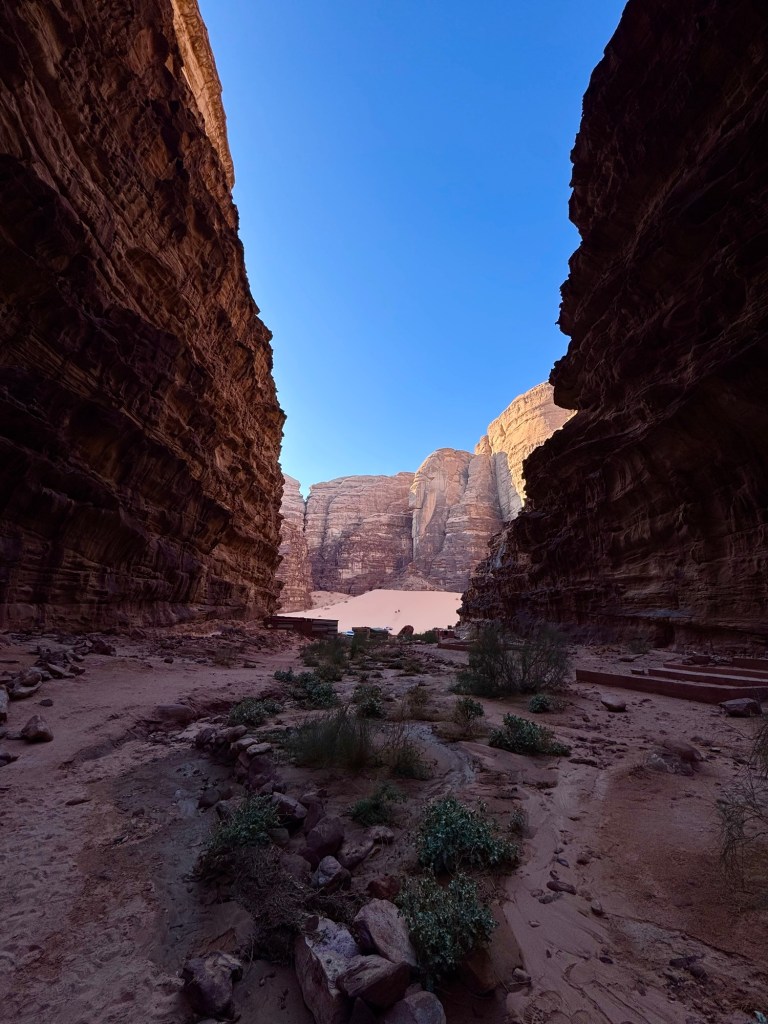
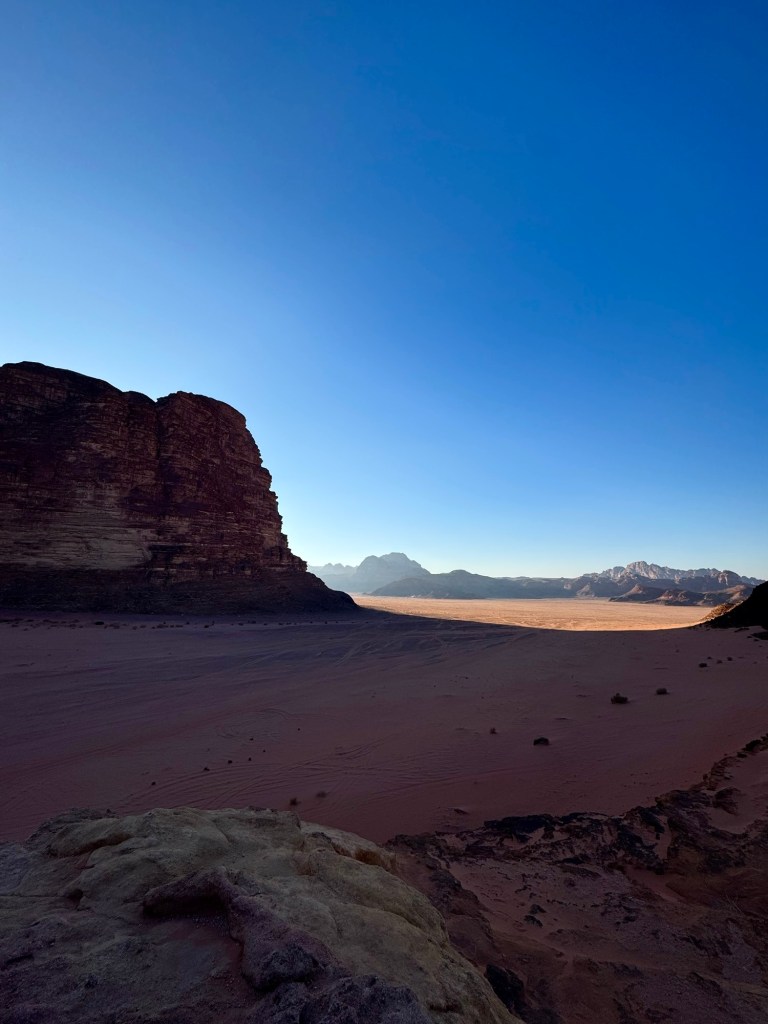
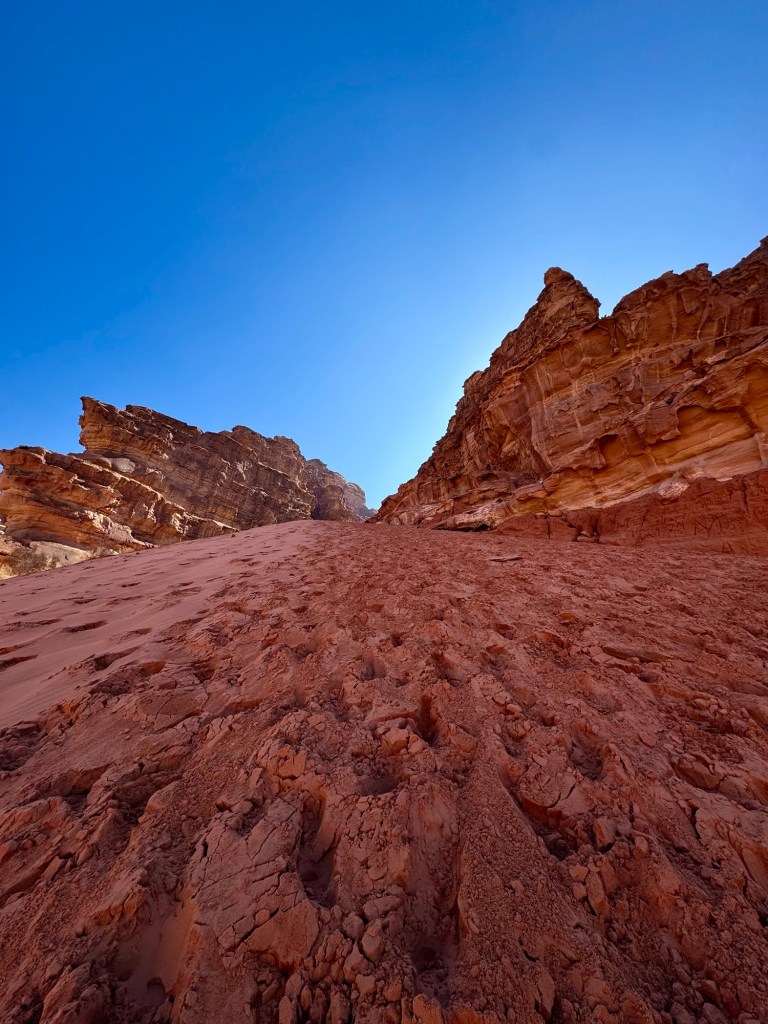
    Wadi Rum—often called the “Valley of the Moon”—is a vast, surreal expanse of towering sandstone mountains, sweeping red dunes, and weathered rock formations that seem almost otherworldly.

    Its dramatic, alien-like landscape has made it a popular filming location for major movies, including Lawrence of Arabia, Dune, and Disney’s Aladdin. With its striking scenery, it’s easy to see why filmmakers continue to be drawn to this timeless wilderness.

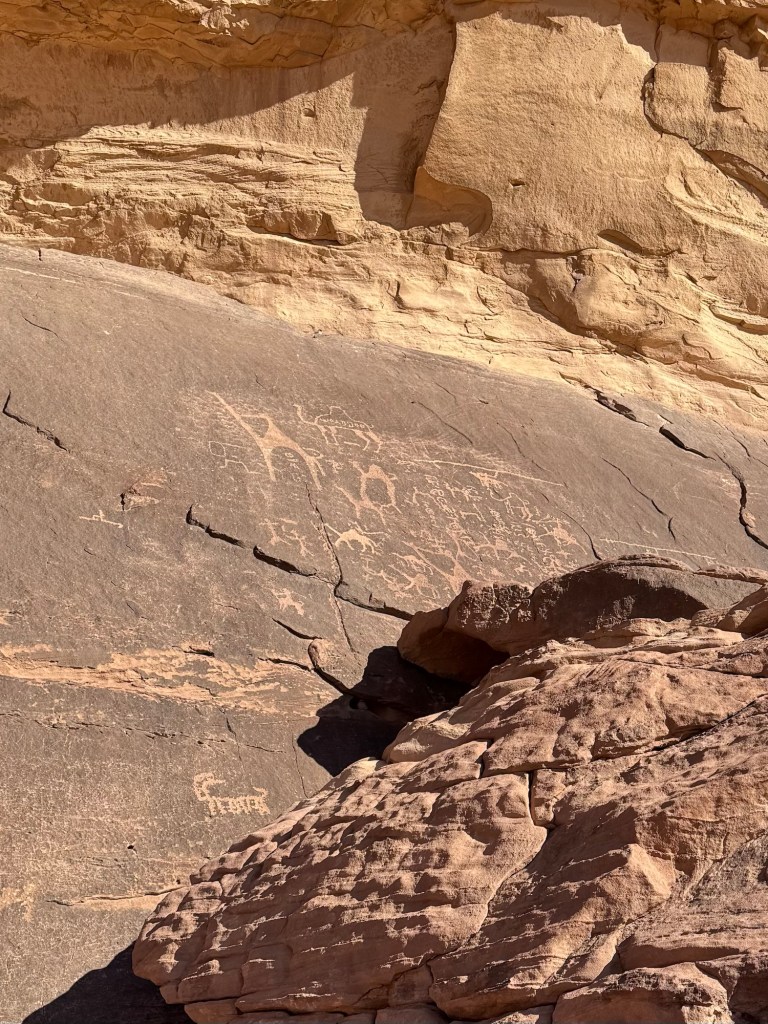
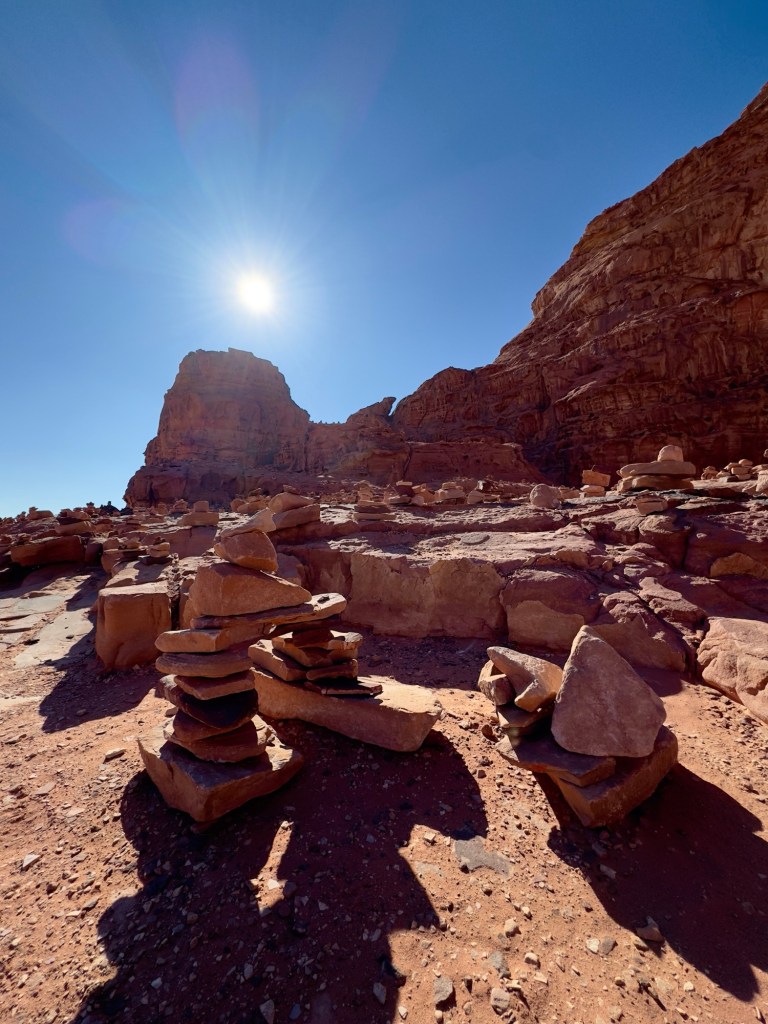
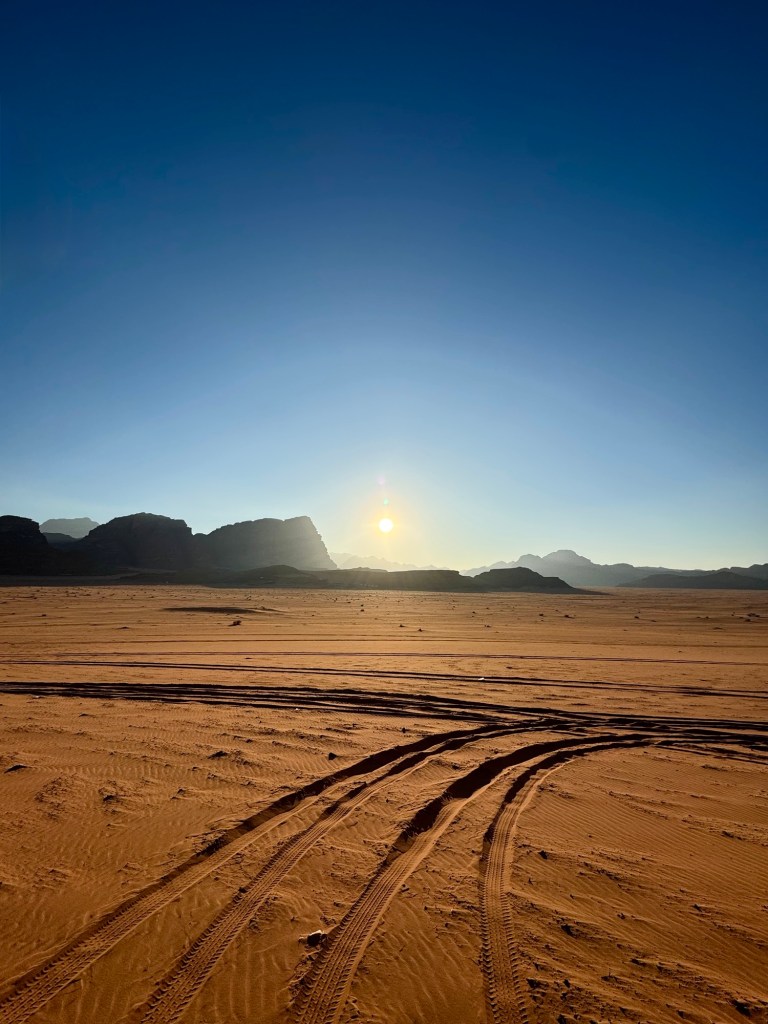
    Carved by wind and time, jagged cliffs and deep canyons contrast against the endless desert floor, creating a scene that feels more like Mars than Earth. The shifting hues of the sand and rock—from deep reds to golden yellows—change with the light, especially at sunrise and sunset, when the desert glows in fiery tones. Scattered petroglyphs and ancient inscriptions hint at the people who once traversed this land, adding to its mystique. A UNESCO-protected site, Wadi Rum is an untouched wilderness where time seems to stand still. But Wadi Rum isn’t just a destination—it’s an experience.

    The Journey Here

    No matter where you’re coming from—Amman, Petra, or Aqaba—the journey to Wadi Rum is fairly straightforward.

    1. By Car
      The drive from Amman takes around 4 hours via the Desert Highway (Highway 15), with well-marked signs leading to Wadi Rum Village. Be mindful of speed bumps, occasional checkpoints, and long stretches without gas stations.
      It takes 1.5–2 hours via the King’s Highway and Desert Highway from Petra (Wadi Musa) to Wadi Rum, and the shortest drive is from Aqaba, it is the closest major city, and the drive takes 1 hour via Desert Highway.
    2. By Bus
      There are no direct buses from Amman to Wadi Rum, but you can take a JETT Bus to Aqaba (4 hours) and then a taxi or local bus to Wadi Rum.
      A daily tourist minibus departs Petra around at 6:00–6:30 AM , the ride takes about 2 hours and costs around 10 JOD ($14), and public minibuses run irregularly from Aqaba to Wadi Rum but are less reliable than taxis.
    3. By Taxi/Private Transfer
      From Amman, no cab will take you to Wadi Rum, but many tour operators and hotels offer private transfers, which can be more convenient, especially for groups. Expect to pay around 100–150 JOD ($140–210) for a one-way trip. Should you be staying at a camp in Wadi Rum, some will also offer an airport transfer if you’re going straight from the airport to the camp. (confirm with your camp in advance)
      A taxi or private car hire from Petra to Wadi Rum costs 35–50 JOD ($50–70), and you can usually find cabs right outside the Petra Museum, and a taxi from Aqaba costs 20–30 JOD ($28–42), depending on your bargaining skills.

    Arriving at Wadi Rum

    After an eventful morning at Petra, I headed to Wadi Rum by cab, arriving at the Wadi Rum Visitor Center after a 2-hour drive. Upon arrival, all visitors must check in and pay an entry fee (or present your Jordan Pass for free entry).

    If you’ve booked a desert camp, your hosts will typically arrange a 4×4 pickup from Wadi Rum Village. If you haven’t booked in advance, you can arrange a tour here, including 4×4 Jeep tours, camel treks, hiking excursions, and overnight stays (subject to availability).

    Although these options are available at the Visitor Center, I highly recommend booking your tours in advance. As with any popular tourist destination, scams are prevalent in the area, so proceed with caution if you choose to book on-site.

    Right outside the visitor center, you’ll find a stunning view of the Seven Pillars of Wisdom, a massive rock formation named after T.E. Lawrence’s famous book—a great photo spot before heading deeper into the desert.

    The Stay

    A trip to Wadi Rum wouldn’t be complete without spending a night in the desert—whether in a traditional Bedouin camp, a luxury bubble tent, or even camping under the stars.

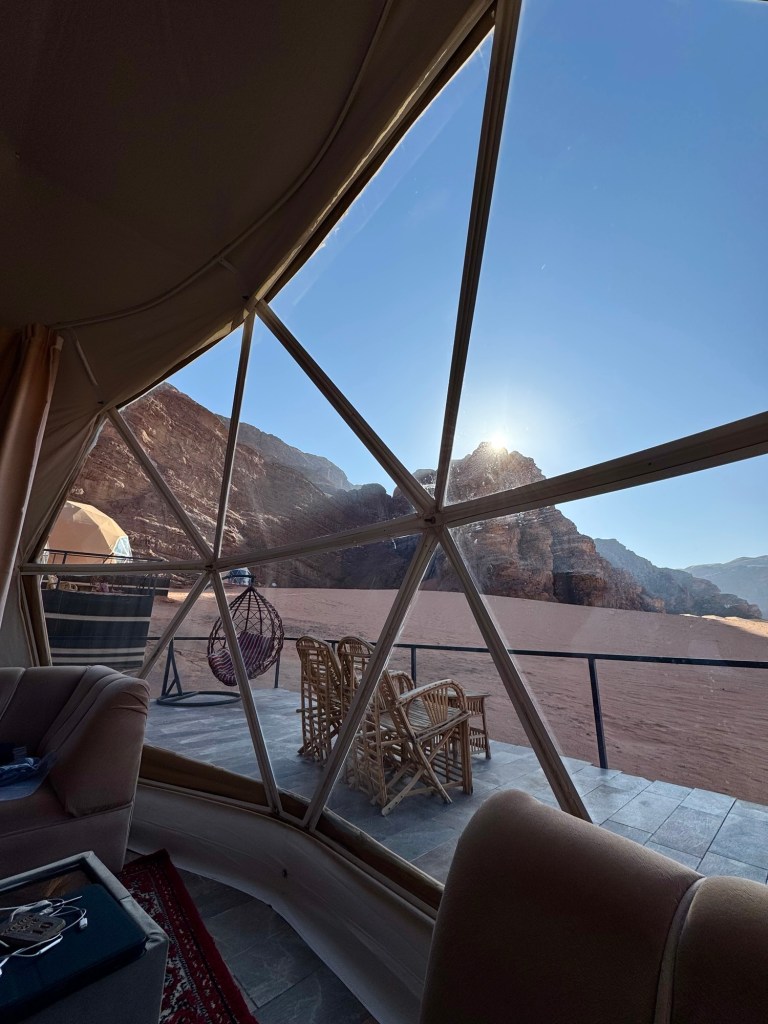
    I stayed at Hasan Zawaideh Camp, a mid-range option, booking one of their Martian tents for the night. The hospitality was great, and the camp had all the basics—decent Wi-Fi, air-conditioned rooms, clean towels, and toiletries. You can also book your tours and activities directly with the camp, including jeep tours, stargazing, hiking, and climbing expeditions. I opted for their 6-hour jeep tour, and the entire package (1-night stay +full board + jeep tour) cost me 120 JOD, which was quite reasonable.

    A Wild Ride

    After a quick lunch, I was picked up by my guide—one of the local Bedouins—for my sunset desert tour.

    I wasn’t exactly convinced when I first hopped onto the back of the jeep—the bench opposite mine wasn’t even properly attached and was barely hanging on by a single hinge. As we sped through the desert, bench and I held on for dear life, feeling like a piñata flung around in the back of a moving jeep. At one point, my guide attempted to tie the bench down with a rope—which promptly came undone with a single bump. With each jolt, I watched the bench defy gravity like Elphaba in Wicked and wondered if I would be next.

    But as soon as we left the camps and entered the vast wilderness, all my worries faded.

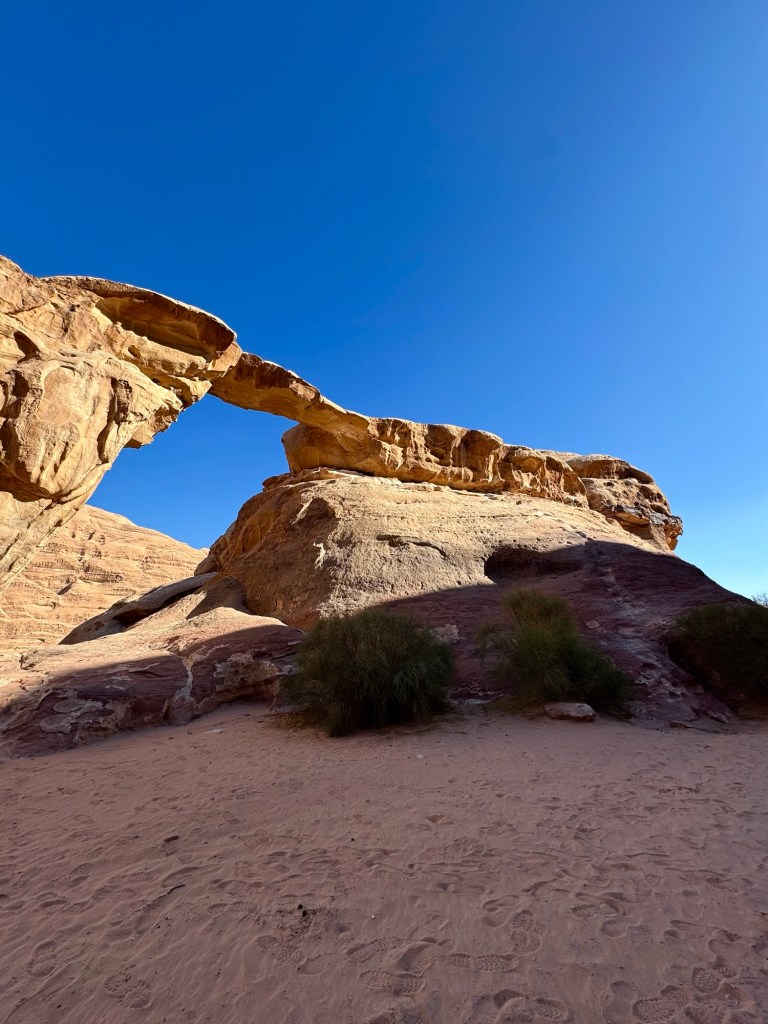
    Cruising through the rosy sands, you’ll be brought to several spots like the Red Sand Dunes, Um Fruth Rock Bridge, Lawrence’s Spring, and Khazali Canyon where you can see some Nabatean, Thamudic and Islamic inscriptions covering the Jebel Khazali’s inner walls. Most tours will also include visiting sites that were used as the filming locations to movies like Dune and Aladdin,

    Bedouin guides don’t act as traditional tour guides—they know their way around Wadi Rum and drive you from spot to spot, but don’t expect detailed explanations. Most of them speak little English and will briefly point out sights before disappearing into one of the many Bedouin tents scattered around. I actually liked this—it gave me the freedom to explore at my own pace.

    How you experience Wadi Rum is up to you, you could hike the cliffs and climb the rocks for the best views, or stay in your jeep and snap photos, your guide will adapt the tour to your style.

    I think my guide got the impression that I was one of those adventurous types, and I don’t blame him—I do dress rather athletically by default. But for me, it’s more about comfort and practicality than actual athleticism—the most exercise I get in daily life is probably doing sit-ups to get out of bed or sprinting after the last bus.

    He took me to all the high viewpoints, and each time he dropped me off with a knowing look, it felt less like a choice and more like a test of pride. So, rolling up my imaginary sleeves, I scrambled up dunes, cliffs, and rocks, sweating like a sinner in church—but the views were absolutely worth it.

    As my tour ended, we drove to the sunset spot. More and more jeeps converged on the rocky outcrop, and as the sun dipped below the horizon, the desert transformed into a warm, glowing masterpiece. The sky darkened, the moon emerged, and it was time to head back for dinner.

    A Bedouin Feast

    Dining in Wadi Rum isn’t just about the food—it’s an experience that immerses you in Bedouin hospitality, culture, and the magic of the desert night sky. The highlight of most camp dinners is Zarb, a traditional Bedouin barbecue cooked underground. Meat (usually lamb or chicken), along with vegetables and rice, is placed in a metal rack inside a deep, sand-covered pit and slow-cooked for hours, resulting in tender, smoky, and flavorful dishes. Food is served communally and enjoyed around the campfire.

    After dinner, most camps serve sweet Bedouin tea, infused with sage or cardamom. It’s the perfect way to relax by the fire, share stories with fellow travelers, and admire Wadi Rum’s spectacular night sky, free from light pollution.

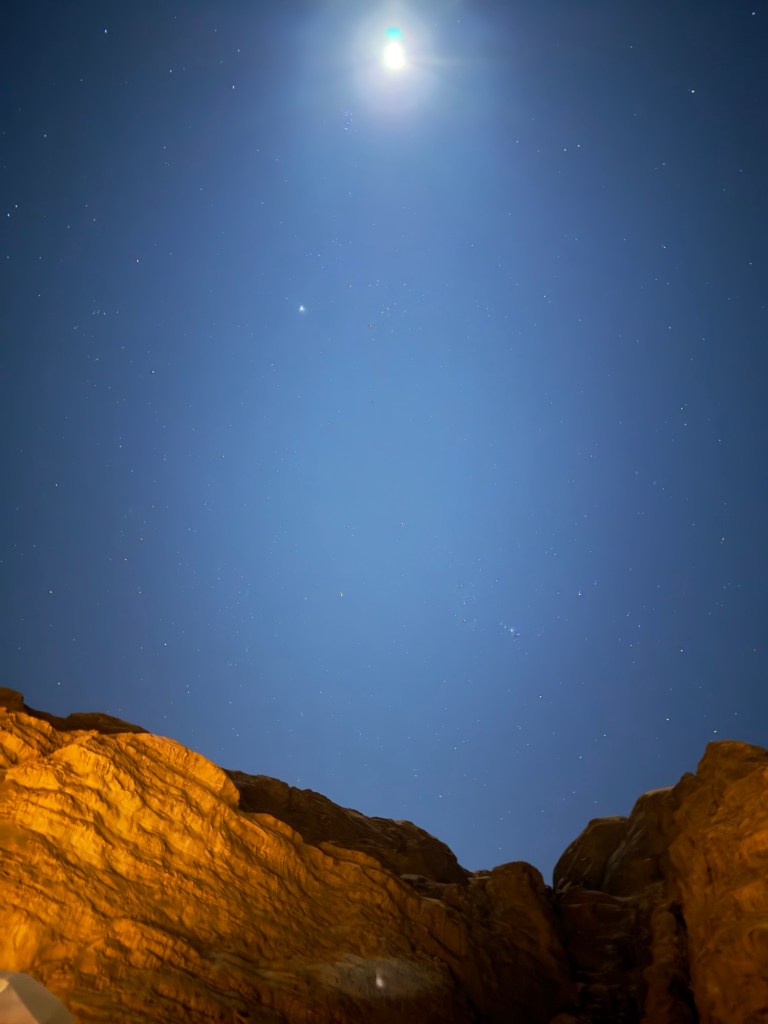
    With a full belly and a warm cup of tea, I retreated to my bubble tent, gazing at a sky bursting with stars—the perfect way to end the night.

    A Bittersweet Goodbye

    Waking up to the sight of the desert at sunrise is truly a one-of-a-kind experience. But all good things must come to an end. Packed and ready, I was driven back to the Wadi Rum Visitor Center after check out, meeting my GYG driver for the return to Amman—all the while watching the desert fade in the distance, feeling like I had left a piece of myself in the sands.

    Back at my hotel, it was time to recharge and refresh for a new adventure the next day—swapping the desert sands for the ancient ruins of Jerash and Umm Qais.

  • Jordan – Petra

    The city of stone and secrets.

    If there’s one reason I’d return to Jordan, revisiting Petra would be it. Walking through this ancient Nabataean city truly feels like stepping into another world. Tucked away in the rugged canyons of southern Jordan, Petra is one of the most awe-inspiring archaeological sites on the planet—and rightfully holds its place as one of the New Seven Wonders of the World.

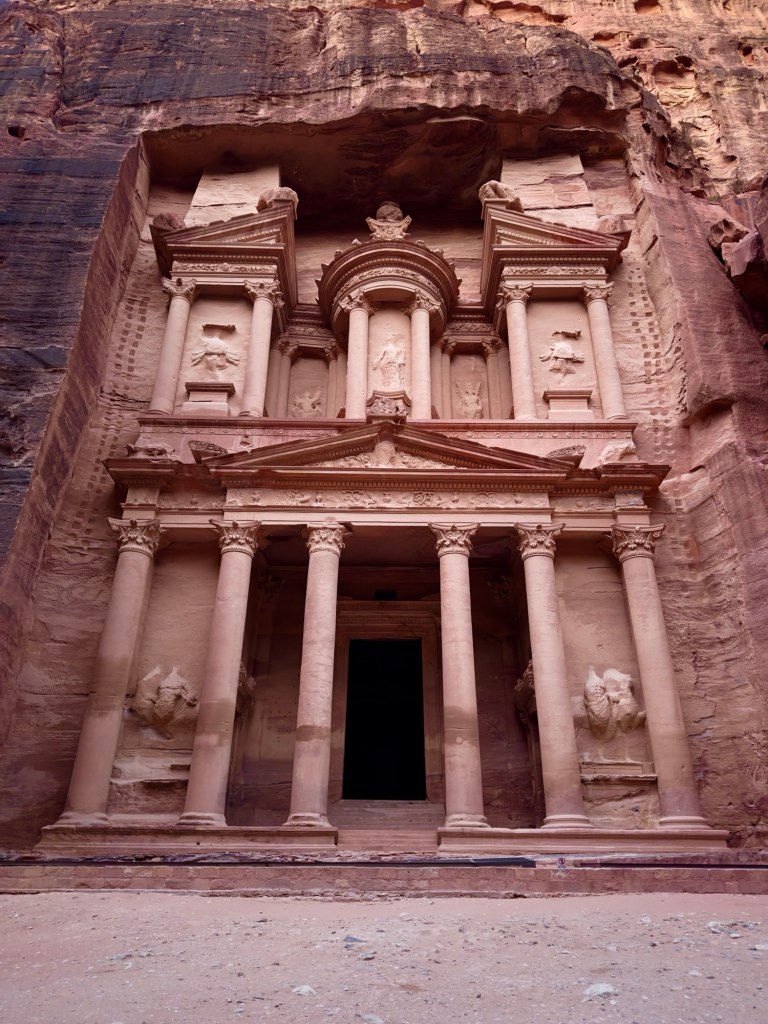
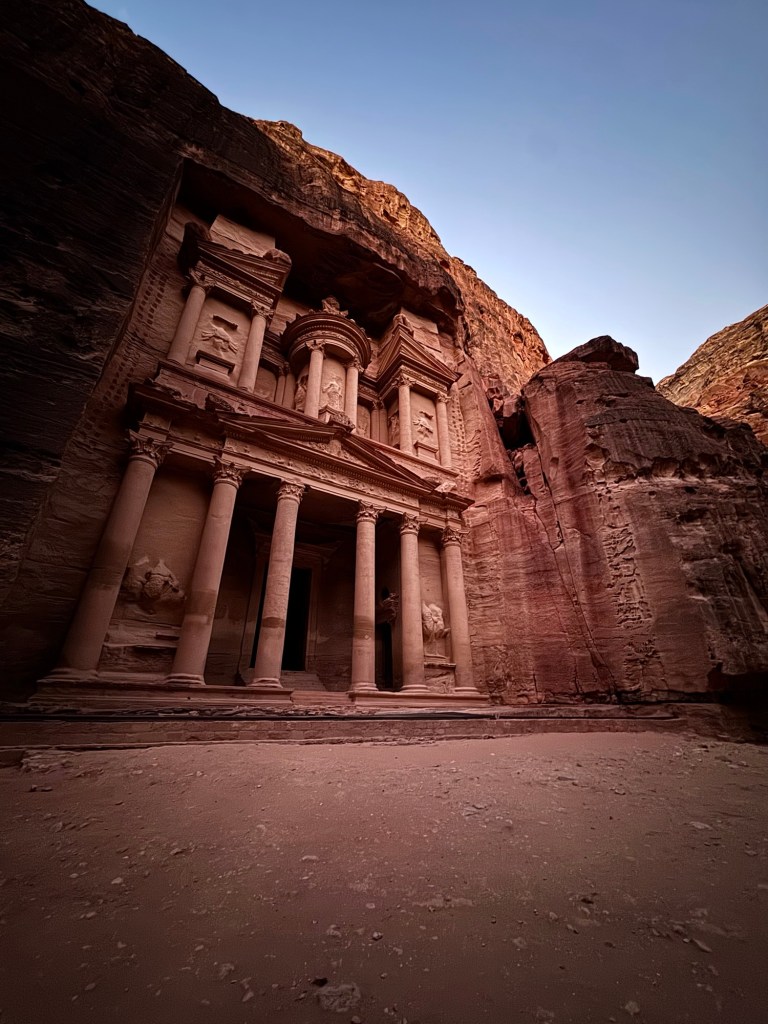
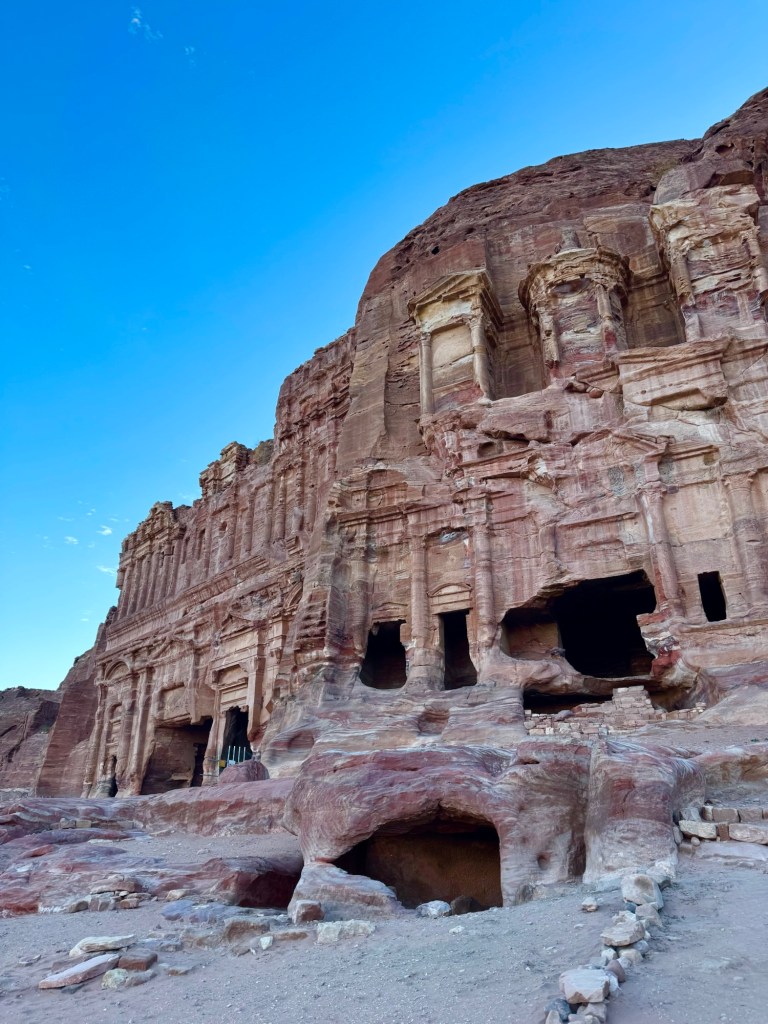
    Now, most people recognize Petra from the countless social media posts featuring its iconic “gate”—which is actually The Treasury. But Petra is far more than just this one monument. The city stretches over a staggering 60 square kilometers, filled with hidden tombs, intricate facades, and even a massive amphitheater carved directly into the rock. For those willing to take on a challenge, the Monastery (Al-Deir) sits at the top of an 800-step climb, rewarding visitors with one of the most breathtaking views in Jordan.

    Getting from Amman to Petra

    Traveling from Amman to Petra is relatively straightforward, with several options depending on your budget, time, and schedule:

    1. By Car
      If you enjoy road trips and a bit of adventure, renting a car is a great option. The drive from Amman to Petra (Wadi Musa) takes around 3 to 3.5 hours via the Desert Highway. The roads are well-maintained, and signage is clear. However, be mindful of local driving habits, frequent security checkpoints, and unexpected speed bumps. I personally wouldn’t recommend this method—once you leave the highway and approach Wadi Musa, the roads become a bit of a labyrinth. For non-locals, navigation can be tricky, especially if cell reception is spotty in the desert.
    2. By JETT Bus
      The JETT Bus is the easiest public transport option for tourists. It’s a direct, comfortable, air-conditioned bus that departs daily from Amman’s JETT Bus Station (7th Circle) at 6:30 AM, arriving in Petra around 10:30 AM. A return bus leaves Petra at 5:00 PM. Tickets cost around 11 JOD ($15) one-way or 22 JOD ($31) round-trip, and it’s best to book in advance via their official website or at the station.
    3. By Taxi or Private Transfer
      For a direct and hassle-free trip, hiring a private driver or taxi is a solid option. Prices range from 70–100 JOD ($100–140) one way, depending on your negotiation skills and vehicle type. This is ideal for those on a tight schedule or traveling in a small group.
    4. By Tour Group
      Several tour operators in Amman offer day trips and multi-day excursions to Petra, often including stops at other sites like Little Petra or Wadi Rum. You can even book tours on GetYourGuide or Viator. Prices vary, but expect to pay around 50–100 JOD ($70–140) per person for a group tour, which includes transport and sometimes a guide.

    Onwards!

    I opted for a private transfer, booked through GetYourGuide, which cost around £100 GBP. Since I wanted to arrive at Petra right when it opened (6:30 AM in winter, 6 AM in summer) to avoid crowds, this option worked best for me. Ideally, staying overnight in Wadi Musa would have been more budget-friendly, but given the last-minute nature of my trip, factoring in hotel costs and transport, it ended up being roughly the same price.

    I left Amman at 2:30 AM, and after 3.5 hours (including rest stops and refueling), I arrived at Petra Visitor Center at 6:15 AM—way too early. It completely slipped my mind that I was visiting in winter, and sunrise wasn’t for another hour and a half at least. I was so early, I scared the security guard when he found me sitting in his chair, casually waving good morning to him.

    By 6:40 AM, the ticket booths were up and running. A quick scan of my Jordan Pass confirmation email, a short 5-minute walk to the entrance, and I was officially inside Petra.

    A Quick PSA: The “Free” Horse Ride Scam

    The moment you step inside, you’ll be approached by vendors offering horse rides, insisting that they’re ‘included in your ticket’ or ‘free’. While technically true, there’s a catch—they expect a hefty tip at the end, far more than what most would consider reasonable. If you decline, they can be quite persistent. Just respectfully, but assertively decline, and walk away. They will give up eventually and find another target. This applies for the vendors selling food, drink and souvenirs at the complex too.

    But if you actually require mobility assistance, camel rides, carriages, and buggies are available for hire near the entrance, and be expected to haggle. It is the Middle East after all, it’s practically a pastime.

    Trek into the Unknown

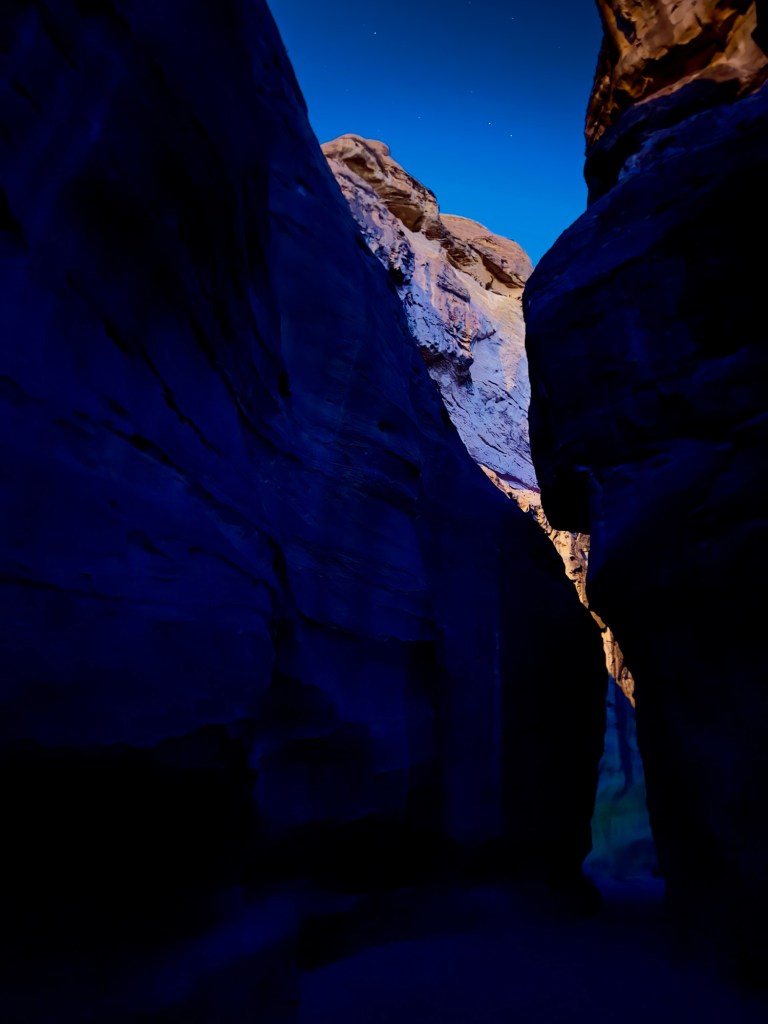
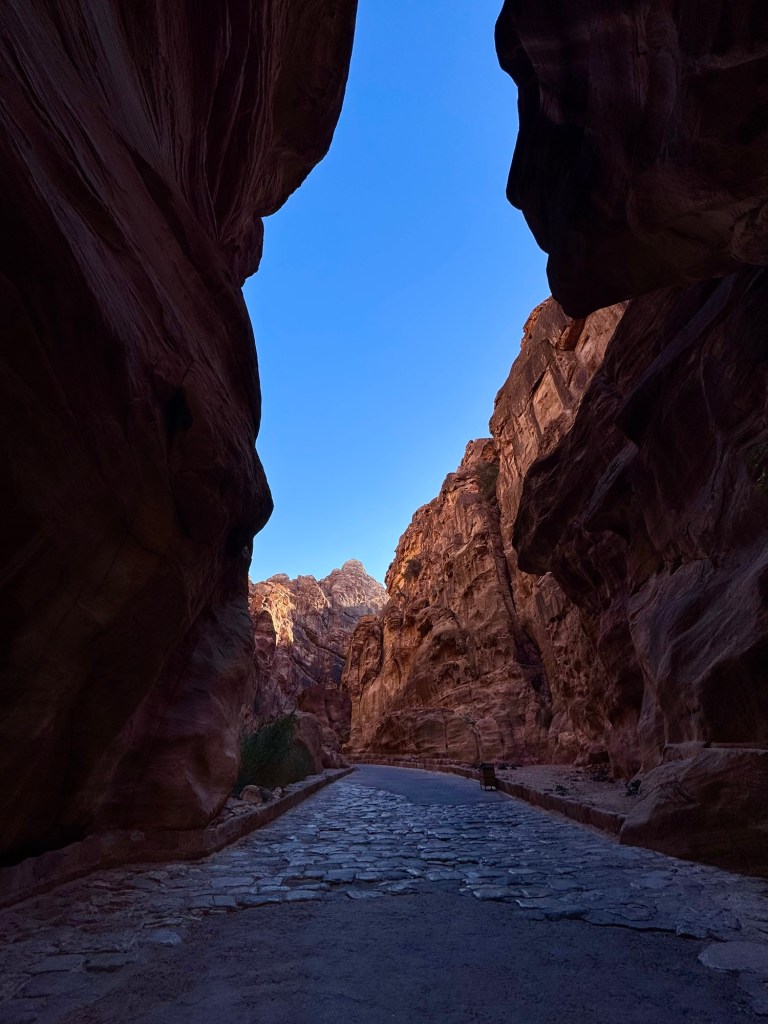
    The journey into Petra begins with the Siq, a narrow, winding gorge that serves as its grand entrance. The path is mostly flat, making for an easy walk, with some spots of cobbled stone, but its twists and turns build anticipation for what lies ahead.

    Since I arrived in complete darkness, I walked through the Siq guided only by my phone’s flashlight. No street lights. Even the full moon wasn’t bright enough to light up the canyon’s winding paths. But oddly, this made the experience even more immersive—just me, the sound of my boots crunching against the sand and stone, the rustling wind through the gorge, and the eerie silence of an ancient city still asleep, slowly coming to life with the light of the rising sun.

    And then, the reveal.

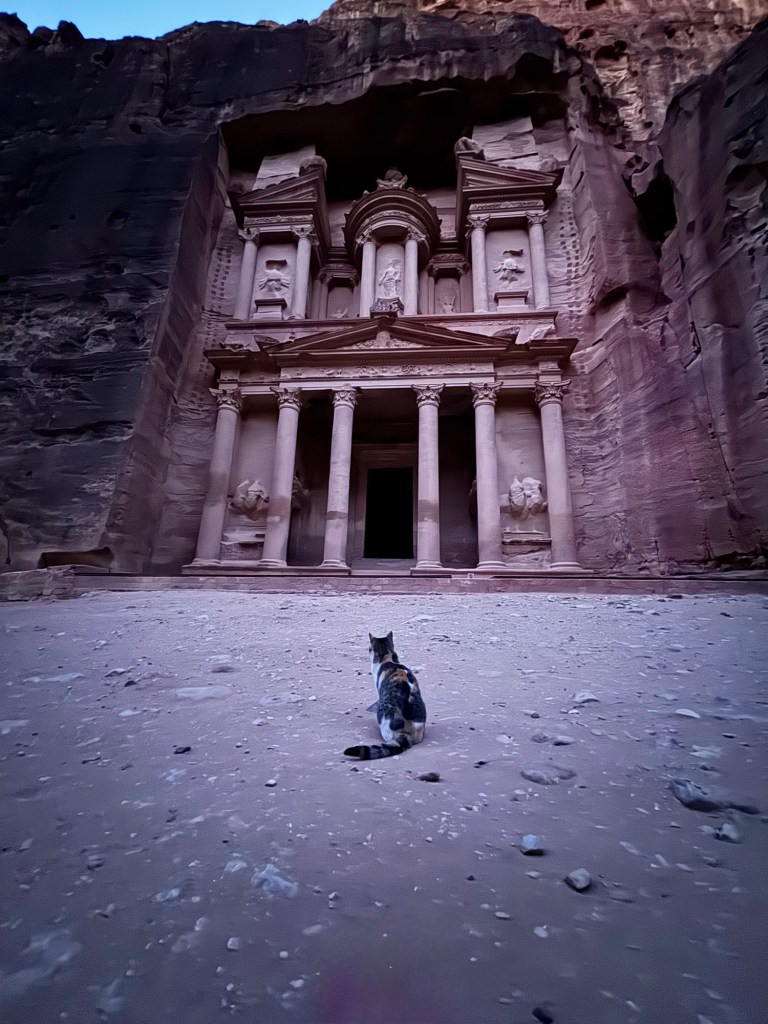
    As I turned the final bend, the breathtaking Treasury (Al-Khazneh) emerged from the shadows—completely deserted, just me and a lone cat. For a fleeting moment, I had this wonder entirely to myself. If this is what the nomads felt when they first rediscovered Petra, I completely understand why they wanted to keep it secret.

    The Petra Experience

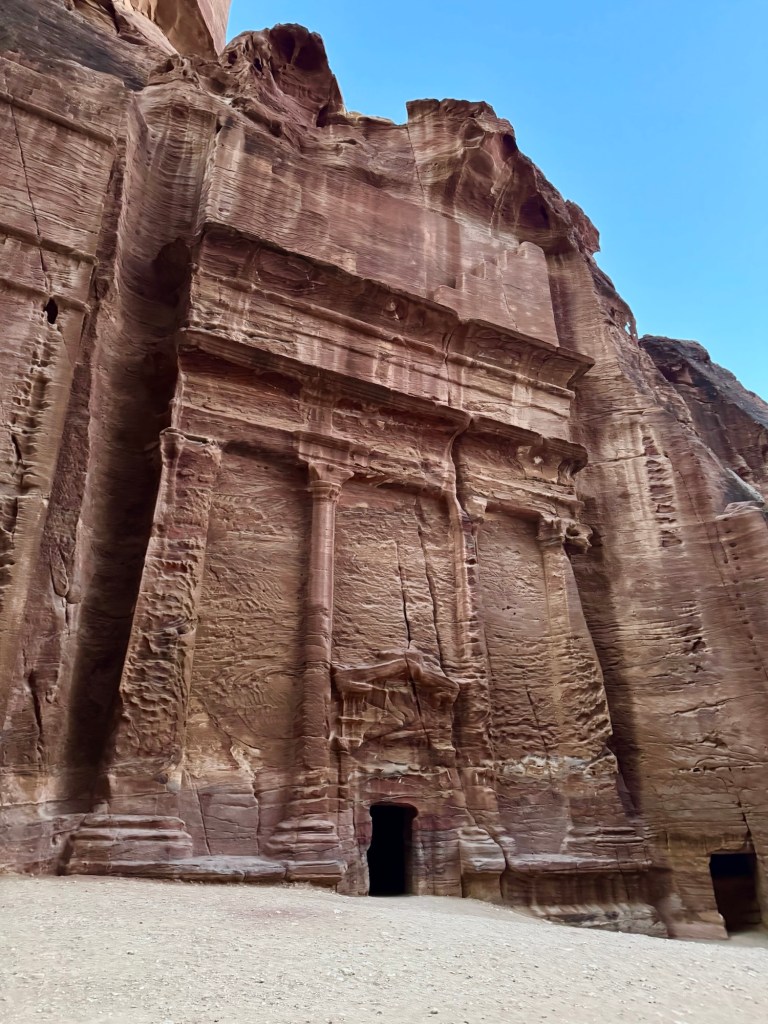
    Now this is where i tell you NOT to do what i did. Since I was on a tight schedule, I only had six hours to explore Petra before heading to Wadi Rum. In my opinion, you would need at least 2 days to completely explore the humongous complex at a comfortable pace, but if you’re only there to explore the highlights, one day would be more than sufficient. While I regret not having more time, I still managed to cover a lot, including:

    • Treasury
    • Street of Facades
    • The Theatre
    • Nymphaeum
    • Colonnaded Street
    • The Great Temple
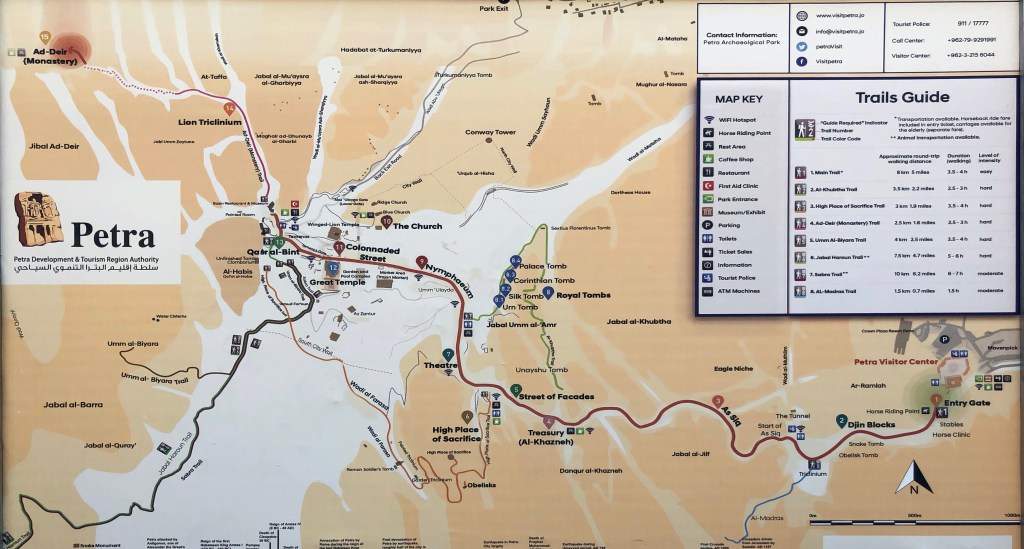
    • Royal Tombs (partially, via Al-Khubtha Trail)

    Unfortunately, I had to skip the Monastery (Al-Deir), and the much sought after viewpoint above the Treasury, which is on the other half of the Al-Khubtha Trail.

    On my way out, I made a quick stop at the Petra Museum, located just up the stairs on the left of the entrance toilets. It’s free, modern, and well-organized, displaying fascinating artifacts that offer deeper insight into Petra’s multi cultural history, divulging much information about the city’s rise and fall.

    Essential Tips for Visiting Petra

    So after making the mistakes so you don’t have to, here are some key tips to help you navigate this ancient wonder with ease:

    1. Arrive Early (or Stay Late)
      Petra opens at 6:30 AM in summer and 6:00 AM in winter. Arriving early not only lets you experience the Treasury with fewer crowds but also keeps you ahead of the midday heat in summer. If you can, staying late also offers stunning golden-hour lighting for photography.
    2. Prepare for a Lot of Walking
      Petra is massive—spanning around 60 square kilometers, with trails that range from easy to “I’m rethinking my life decisions.”. Comfortable shoes are a must, but it does not necessarily mean hiking boots, simply choose a pair that provides both comfort and a good grip.
    3. Bring Plenty of Water and Snacks
      There are some vendors inside Petra, but prices are steep. Bring at least 1.5–2 liters of water per person, snacks for energy, and electrolytes if visiting during hotter months.
    4. Hire a Local Guide (If You Want the Full Story)
      While you can explore on your own, or book a tour beforehand, a local guide (available at the visitor center) provides deeper insight into Petra’s history, Nabataean culture, and hidden spots you might miss.
    5. Stay Overnight in Wadi Musa
      If possible, spend a night in Wadi Musa, the town next to Petrai. This allows you to start early and explore at a more relaxed pace. Plus, it gives you the chance to experience Petra by Night, a candlelit event held on Mondays, Wednesdays, and Thursdays at 8:30 PM.
    6. Plan Your Route
      If you’re short on time, you can consider trekking only the Main Route like i did, or if you have certain mobility issues, you might want to consider what trails are doable or not, as each trial vary in difficulty. Here’s the map of Petra so you can consider your route in advance.


    The End?

    Petra was nothing short of extraordinary—a place that truly lives up to its legendary status. While I left with a lingering sense of regret, that only gives me more reason to return and explore even deeper. The sheer scale, history, and beauty of this ancient city left an imprint on me that won’t fade anytime soon. But for now, it was time to trade the rose-red cliffs for the boundless, otherworldly expanse of Wadi Rum, where my next adventure awaited.

  • Jordan – Amman

    The city of contrasts and hidden gems

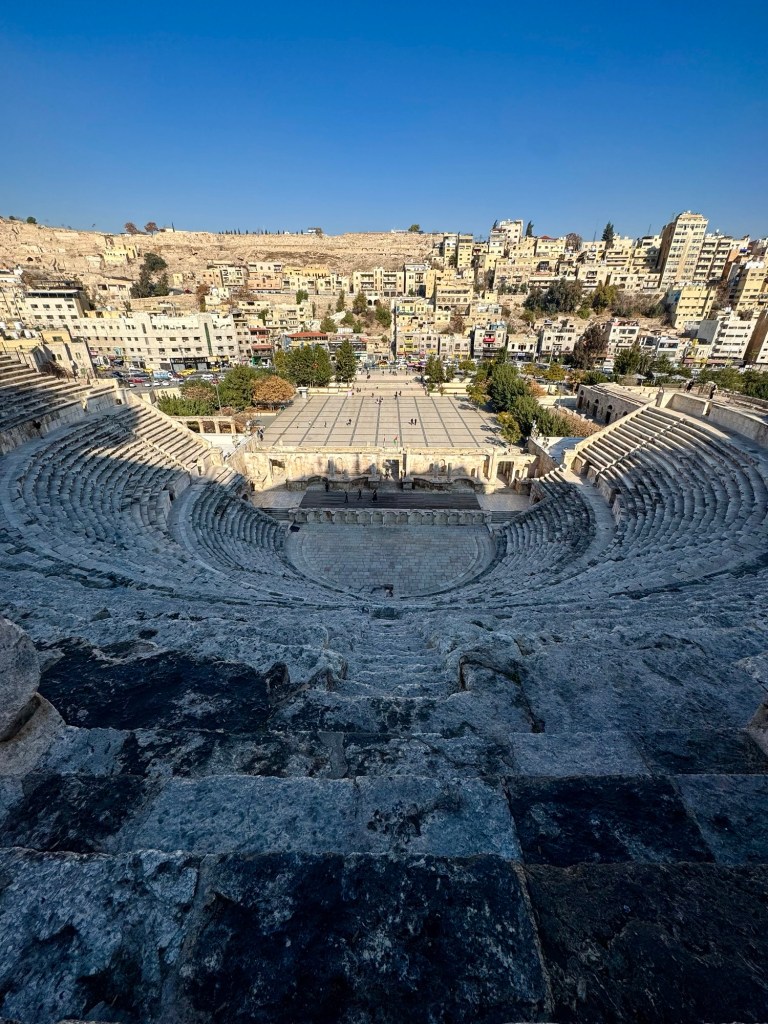
    View of the Roman Theater in Amman, Jordan, showcasing its ancient stone architecture and surrounding modern cityscape.

    Sometimes, the best adventures start off with a whim—one moment you’re scrolling through Instagram, 60s of a reel that says “Hey, come to Petra!” in one of those “Habibi, come to Dubai!” kinda vibe, and the next you’re like “Yeah, why the heck not?”. That’s exactly how I ended up booking a flight to Jordan. So, armed with my bags, flight tickets, and the wrong set of shoes, i set off on what would be one of the greatest adventures of my life.

    Jordan is like that bloke at the bar who looks all serious and dangerous on the outside but turns out to be an absolute sweetheart once you get to know him. One moment, you’re wandering through the ancient ancient, rock-carved city of Petra, living your inner Indiana Jones/Lara Croft fantasies, the next, you’re floating effortlessly in the Dead Sea like an overconfident pool noodle. From the Mars-like landscapes of Wadi Rum to the chaotic, charming, and surprisingly modern streets of Amman, Jordan is a delightful mix of history, and adventure ( with the best hummus you’ll ever eat. Period.)

    Welcome to Amman!

    Let’s start off in Amman, the capital of Jordan. Remember when I said surprisingly modern? Picture this: You’ve just landed at Queen Alia International Airport at ass o’clock in the morning (because, of course, the only flight I could find arrived at 4 AM). As you’re driving toward the city center, the first thing you see after five minutes on the road is… IKEA. I mean, sure, the sign is in Arabic—Jordan’s official language—but come on, that blue and yellow is recognizable anywhere. The closer you get to the city, more familiar brands start popping up – Mcdonalds, KFC, Popeyes. Even big name hotels like The Four Seasons, The St. Regis, The Ritz. Of course more budget options like the Nomads Hostel and AirBnb rentals are also available. But you get the point. Amman? It’s just like any other capital city really.

    One Day in Amman

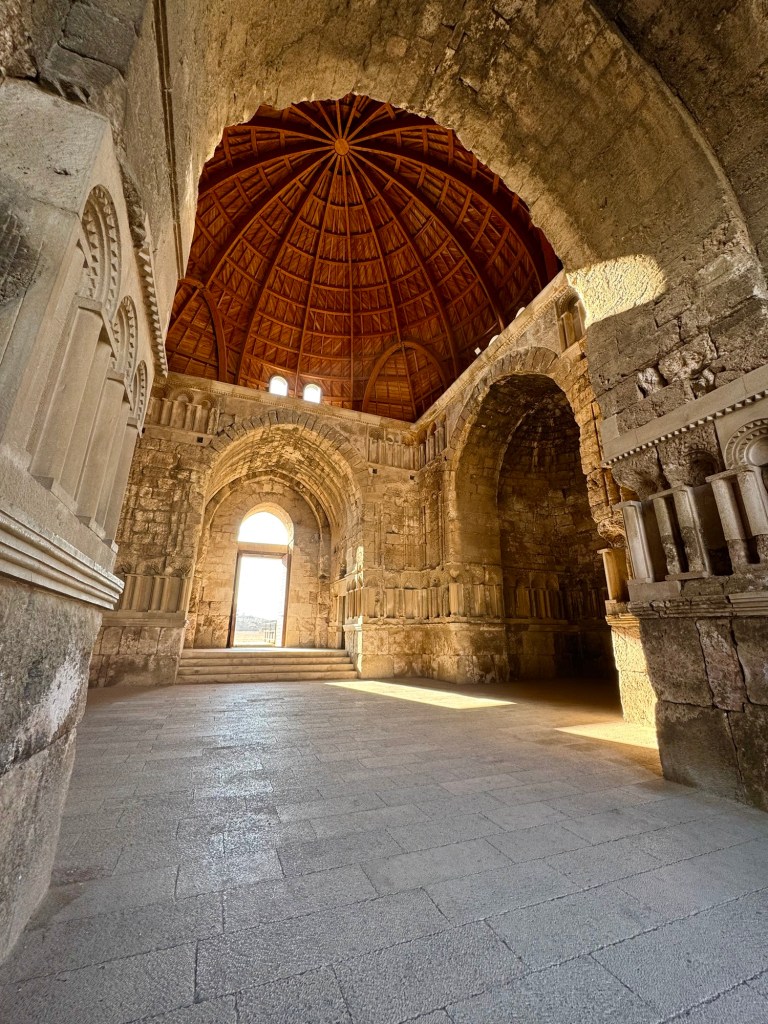
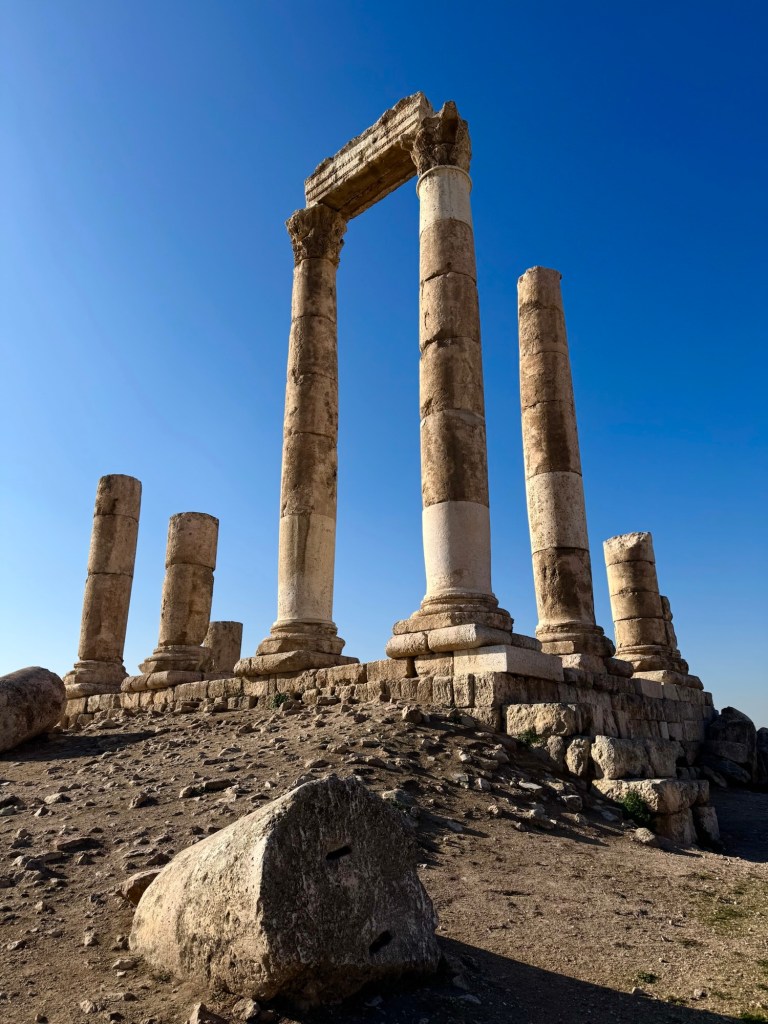
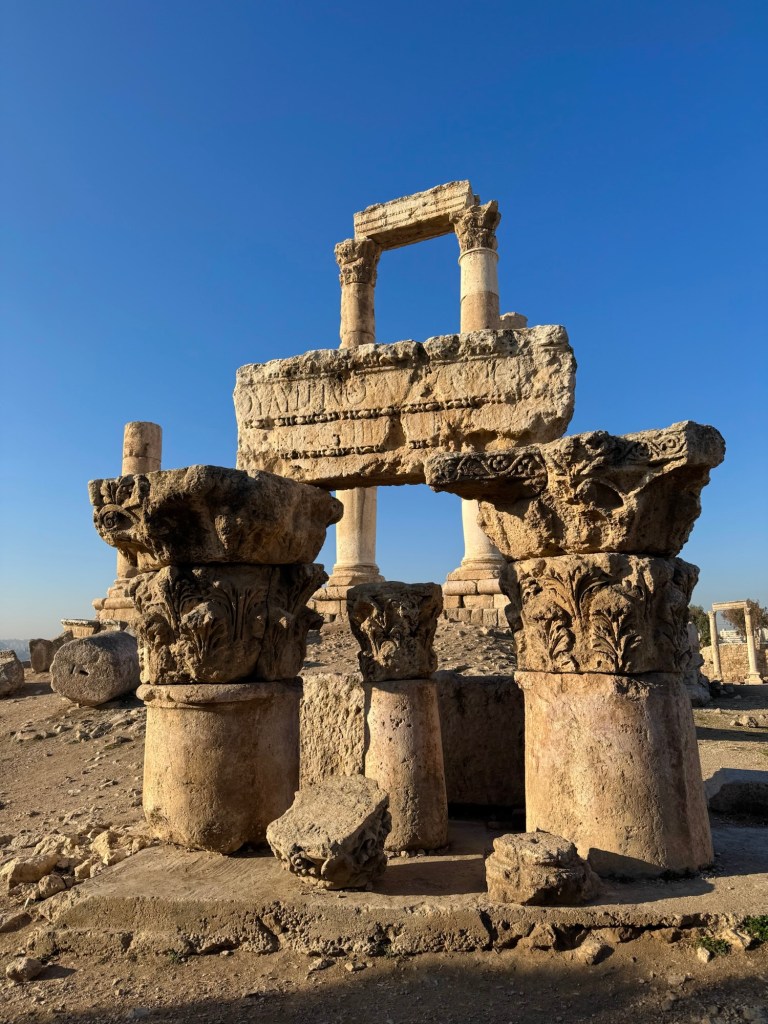
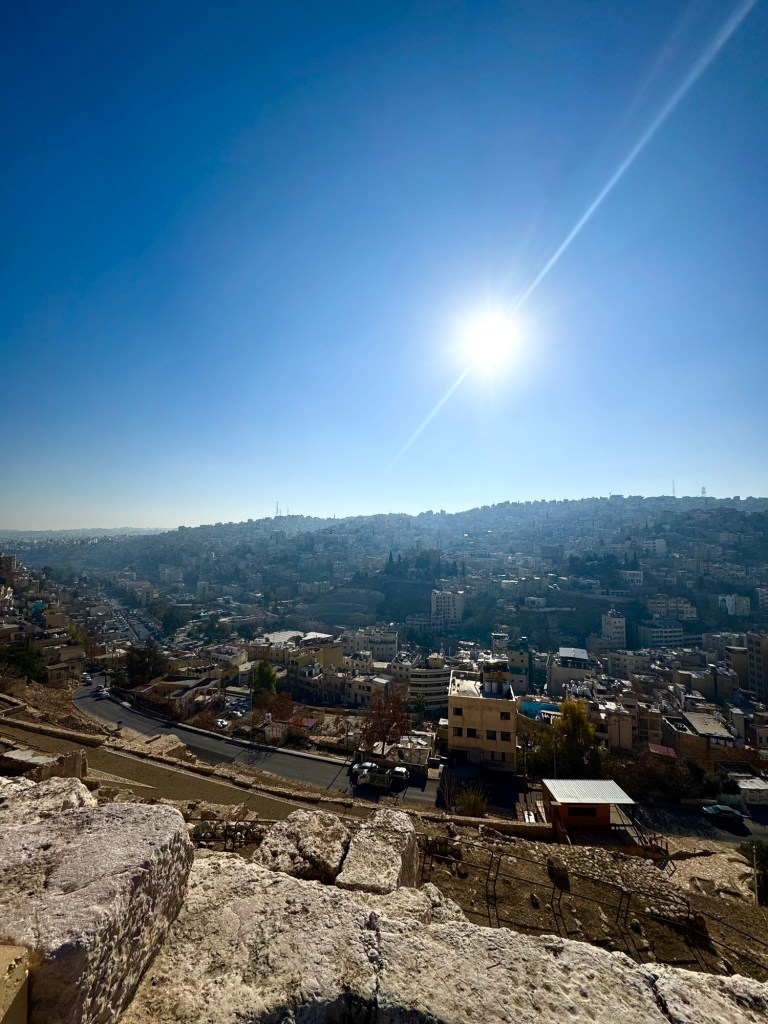
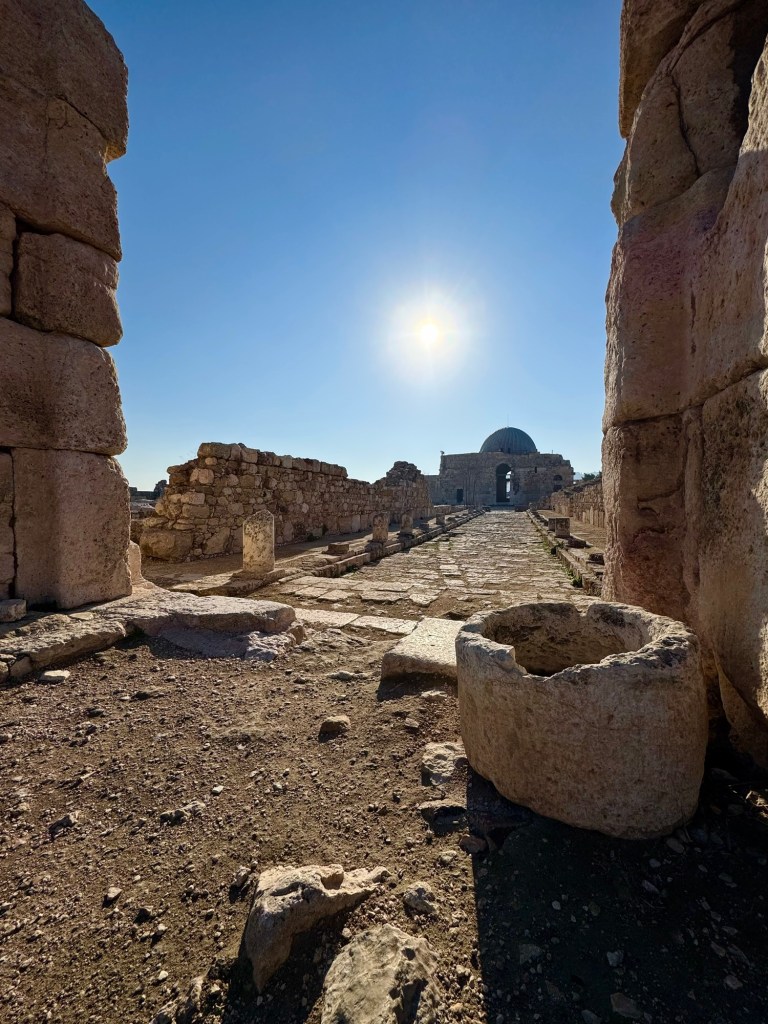
    With only one day in Amman, and running on 2 hours of sleep, I had to make every moment count. I started my morning at the Amman Citadel, perched on a hill with breathtaking city views and ancient ruins like the Temple of Hercules and the Umayyad Palace. Arriving early is a good idea, especially during peak season, to avoid the crowds. I thankfully had no such thing, as unfortunately tourism in Jordan was directly impacted by the regional conflicts around the Jordanian border, so it felt like i had the entire place to myself. Within the Citadel grounds, I made a quick stop at the Jordan Archaeological Museum, a small yet fascinating building just a short walk from the temple.

    Next, I headed down to the Roman Theater, a stunning 2nd-century amphitheater still in use today. Climbing to the top is worth it for the panoramic view, but be careful—the worn stone steps can be quite slippery. From there, I took a short 10–15min UBER to the Jordan Museum, home to an impressive collection of artifacts, including prehistoric tools, Nabatean sculptures, and some of the famous Dead Sea Scrolls. Photography is strictly prohibited inside the scrolls’ chamber to protect their integrity, and security is tight—so stash your cameras and phones away, you’ve been warned, there’s nothing as embarrassing as being whistled at in public for not following very clear instructions.

    For food, Hashem Restaurant was an absolute must. Their falafel and hummus were nothing short of life-changing, and that’s coming from someone who never cared much for pureed chickpeas before. The hospitality? Impeccable. Locals also insisted I try the kunafa from Habibah Sweets, just down the street. I wanted to, I really did—but after two hours of sleep, a full stomach, and food coma creeping in, I had to tap out and call it a day, especially since I had an early start for Petra the next day.

    Here Comes the Deets

    Alright, time for the burning questions— and probably the reason you clicked on this post in the first place. Let’s dive into some of the most common questions I got before, during, and after my trip:

    1. Is Jordan is Unsafe?
      A lot of people assume that because Jordan sits right in the heart of the Middle East—bordering Syria to the north, Iraq to the east, Saudi Arabia to the south, and Israel and the occupied Palestinian territories to the west—it must be unsafe. But in reality, Jordan is one of the safest and most stable countries in the region. The government prioritizes security, especially in tourist areas, since tourism is a major part of the economy. I personally felt completely safe the entire time.
    2. Do the people there speak English?
      Oh absolutely. While Arabic is the official language, English is widely spoken, especially in cities and tourist areas. Most Jordanians, particularly younger generations, speak excellent English, so communication is rarely an issue.
    3. Is it expensive to visit?
      Jordan can be pricey compared to some neighboring countries, but there are ways to travel on a budget. Staying in hostels, eating at local restaurants, and using public transportation can help keep costs down. Uber is also surprisingly affordable for getting around the city. One major money-saver is the Jordan Pass – which I personally used, as it includes visa fees and free entry to multiple attractions.
    4. What is the weather like in Jordan?
      Summers can be scorching hot, so spring and autumn are the best times to visit for mild, pleasant weather. I went in January (winter) and experienced sunny daytime highs of 15–25°C and chilly nights dropping to 0–5°C, both in the city and the desert. Locals told me I got lucky—winter often brings rain and even occasional snow. So, if you’re visiting in the colder months, pack accordingly!
    5. How do you get around in Jordan?
      In Amman, I either walked or took an Uber. Google Maps is somewhat reliable, but take it with a grain of salt and a dose of common sense—if it directs you toward a trash heap, just don’t. As for getting to Petra, Wadi Rum, Aqaba, or Jerash, that’s a bit more complicated, so I’ll be covering those in their own posts. Stay tuned!

    Jordan Pass

    The Jordan Pass is an incredibly convenient and cost-effective way to explore Jordan while also covering your visa fees. Issued by the Jordanian Ministry of Tourism, it must be purchased online before arrival and grants free entry to over 40 sites, including Petra, Wadi Rum, Jerash, and the Amman Citadel. One of its biggest perks is that it waives the 40 JOD visa fee, provided you stay in Jordan for at least three nights. The pass comes in three tiers, with the only difference being the number of days you can visit Petra. No need for a printed copy—just show it on your phone at ticket booths, and you’re good to go.

    At the airport, Jordan Pass holders have a separate line for immigration, making the process quick and seamless—just wait your turn, flash your confirmation, wait a little while they verify you’re legit, and you’re off. However, keep in mind that this is NOT a fast pass or skip-the-line ticket—something I’ve seen some travelers awkwardly realize at both Petra and Jerash. More information, including a full list of included attractions can be found on their website.

    Did I Miss Out? Probably.

    Now, my itinerary might not be for everyone—my interests lean heavily toward history. At this point, I can practically hear past visitors to Amman raising their pitchforks, yelling, “But you missed Rainbow Street!” “Amman has so much more to offer!” “What about the nightlife?!” And honestly? Fair points. But hey, priorities. That said, I’d love to hear about your experiences! Drop your recommendations, share your stories, and who knows? Maybe they’ll make it into my itinerary the next time I find myself back in this incredible city.