Rebirth from Flames
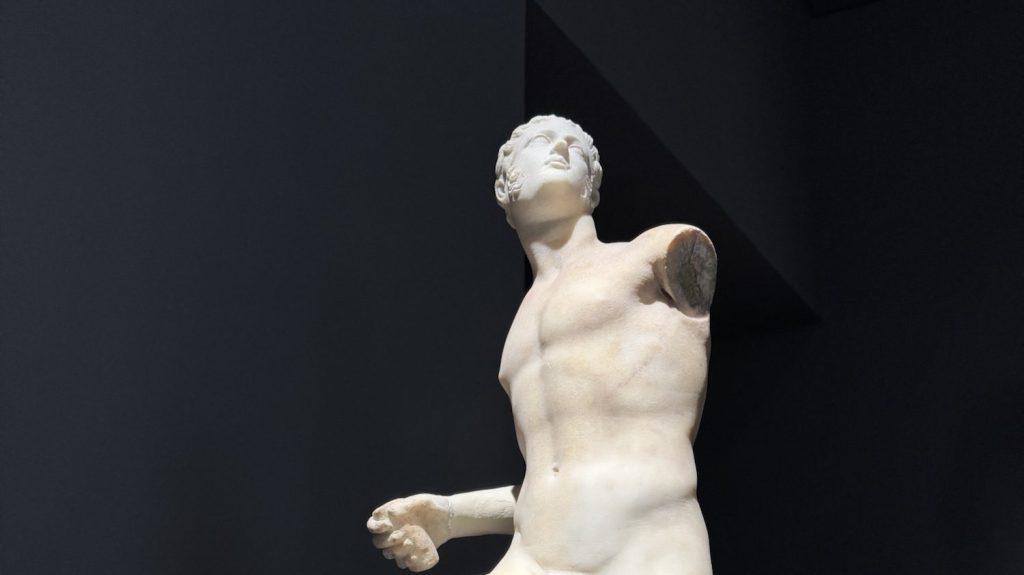
Echoes of Greatness
Alexandria is not your typical stop when visiting Egypt. There are no pyramids here, no flashy temples or dramatic descents into tombs. But what it lacks in typical Egyptian flair, it more than makes up for with legacy.
As the name suggests, the city was founded by Alexander the Great. It became a major center of Hellenistic civilization, replacing Memphis as Egypt’s capital during the reign of the Ptolemaic pharaohs — including Cleopatra, who reigned generations after Alexander. Alexandria remained the capital for almost a millennium, surviving Roman and Eastern Roman rule until the Muslim conquest of Egypt in 641 AD, when the capital shifted to Fustat (which would later be absorbed into Cairo).
Best known for the Lighthouse of Alexandria (Pharos), one of the Seven Wonders of the Ancient World, and the Great Library of Alexandria, it’s now more known for its beaches, a smattering of Greco-Roman ruins, and an impressive population density.
Royal Jewelry Museum
The city exploration kicked off at the Royal Jewelry Museum.
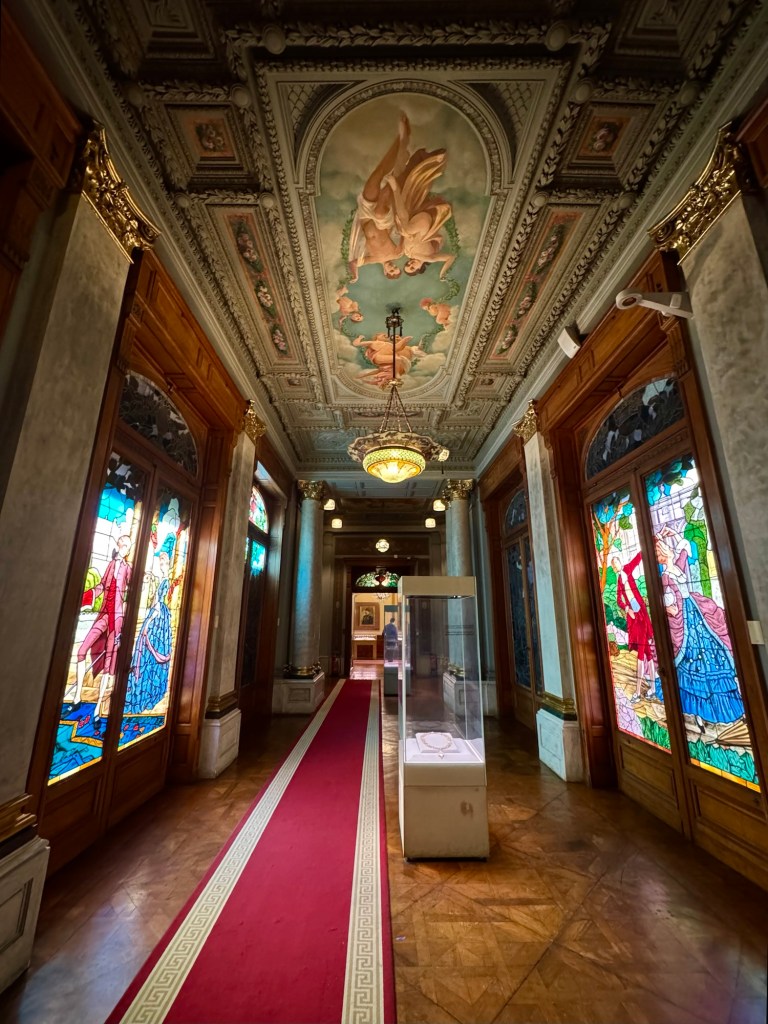
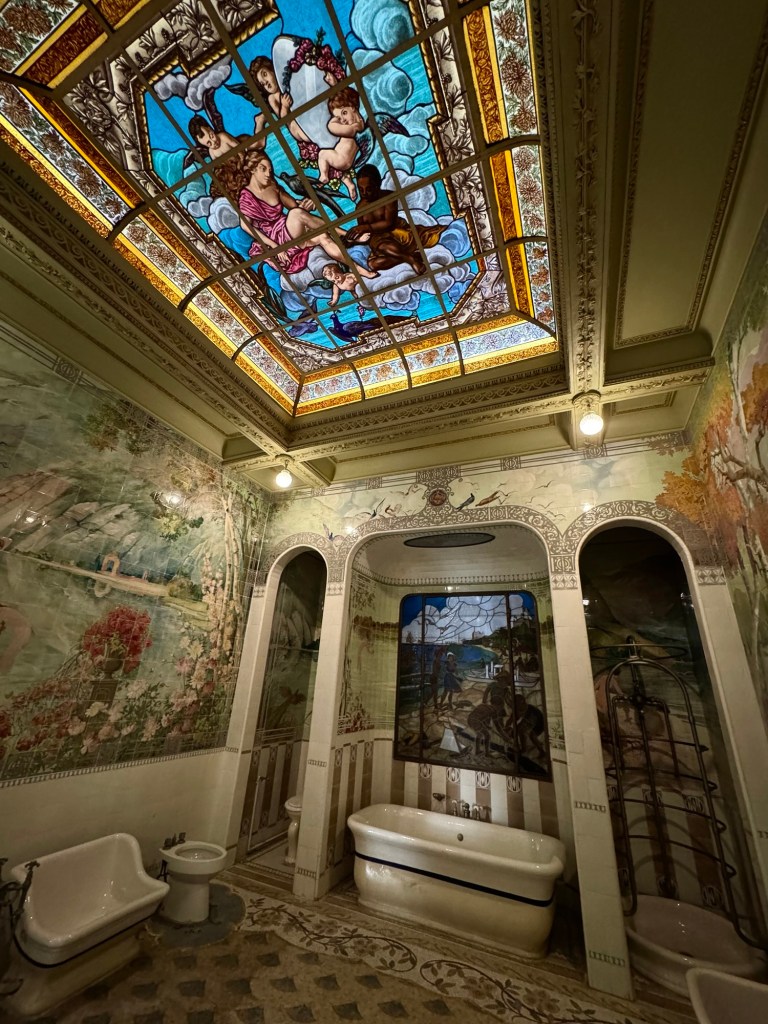
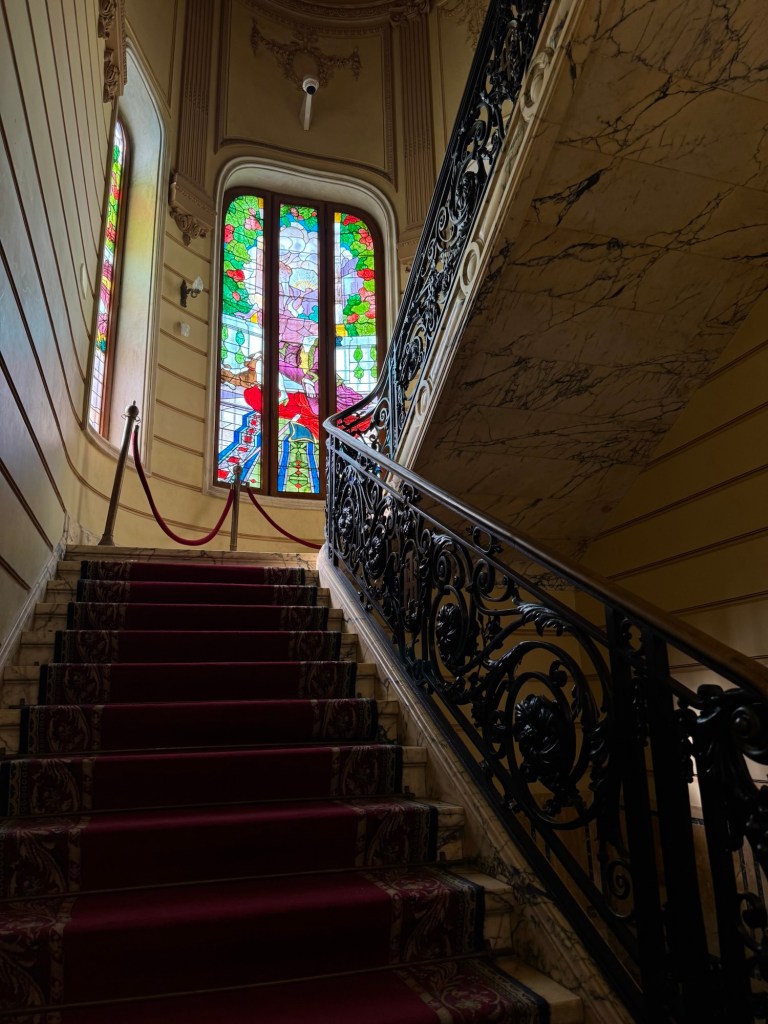
Housed in the former palace of Princess Fatma Al-Zahra’, the museum holds the opulent spoils and personal adornments of the Muhammad Ali dynasty, who ruled Egypt for nearly 150 years from 1805 to 1952. 1952 movement.
The building itself is one of the highlights of the visit, so you’re provided with fancy scrubs for your shoes upon entry. Every room is dressed to impress: Italian-style stained glass, gilded mirrors, and actual royal jewels in glass cases as far as the eye can see. Tiaras, jeweled snuff boxes, diamond-encrusted swords, and enough gold to spark a minor coup. In one of the rooms, a scene from the Odyssey – The Slaying of the Suitors, is painted onto the walls, each wall section with a different scene painted onto it.
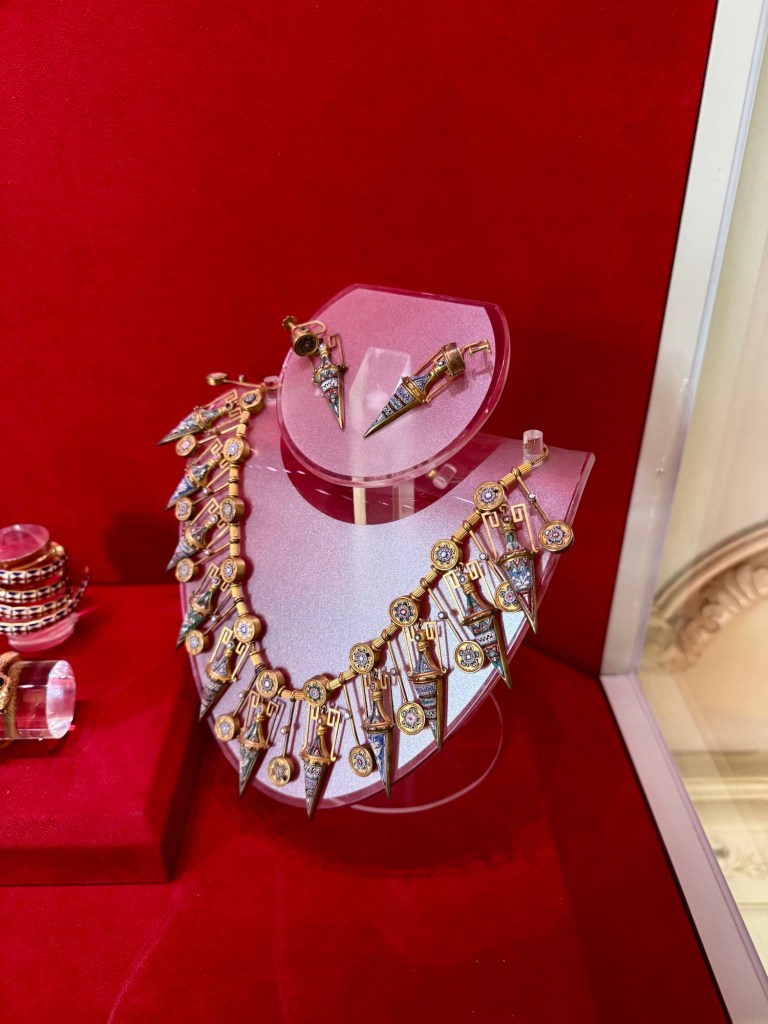
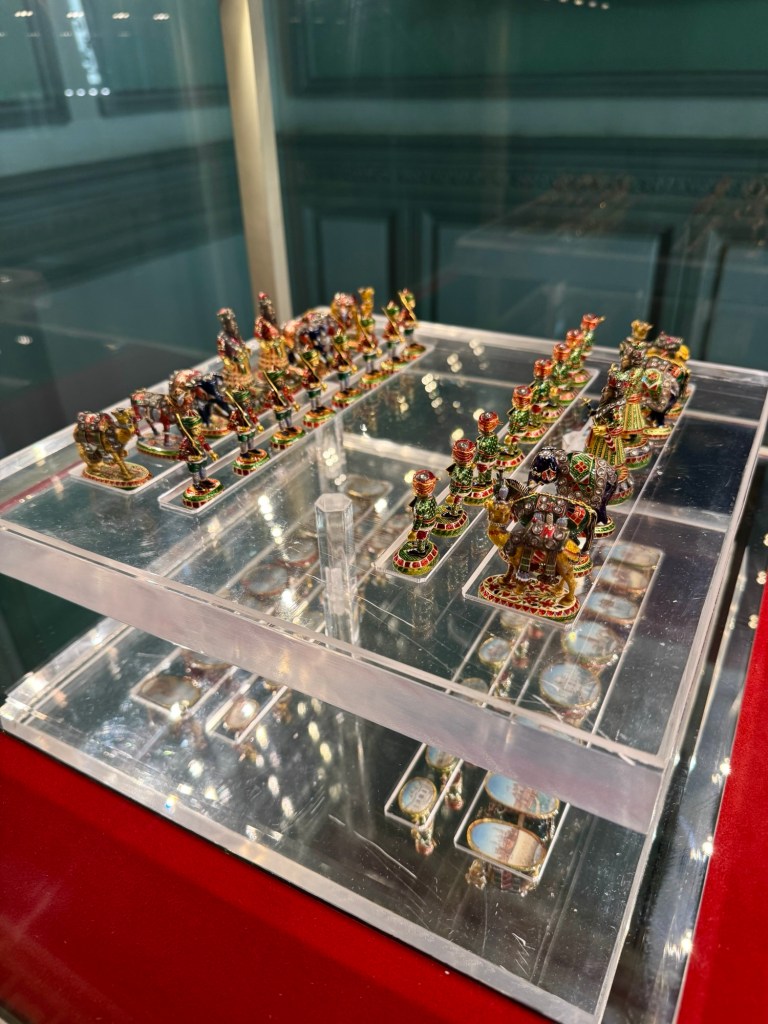
It’s a compact visit — less than an hour — but feels like a glittering escape into a different world. A hidden gem, pun intended.
Catacombs of Kom el Shoqafa
Carved straight into bedrock, this necropolis is a mashup of Egyptian, Greek, and Roman funerary art — a visual identity crisis, but make it ancient and fabulous. You’ve got Anubis in Roman armor, Medusa on sarcophagi, and a spiral staircase that feels like a descent into the underworld (because, well, it kind of is).
In the central tomb, bearded serpents flank the vestibule, while Medusa-headed shields protect the entry. And tucked inside are statues of Sobek and Anubis flexing Roman centurion gear — straight out of the second century AD, when “the old faiths began to merge and melt” (shoutout to Forster).

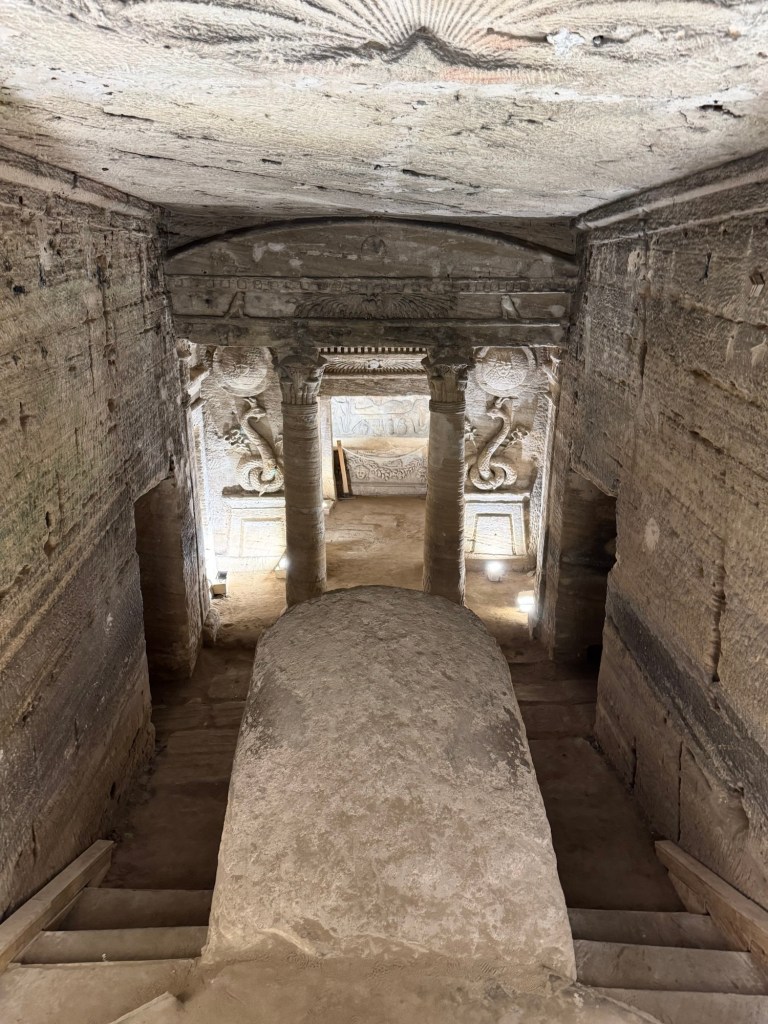
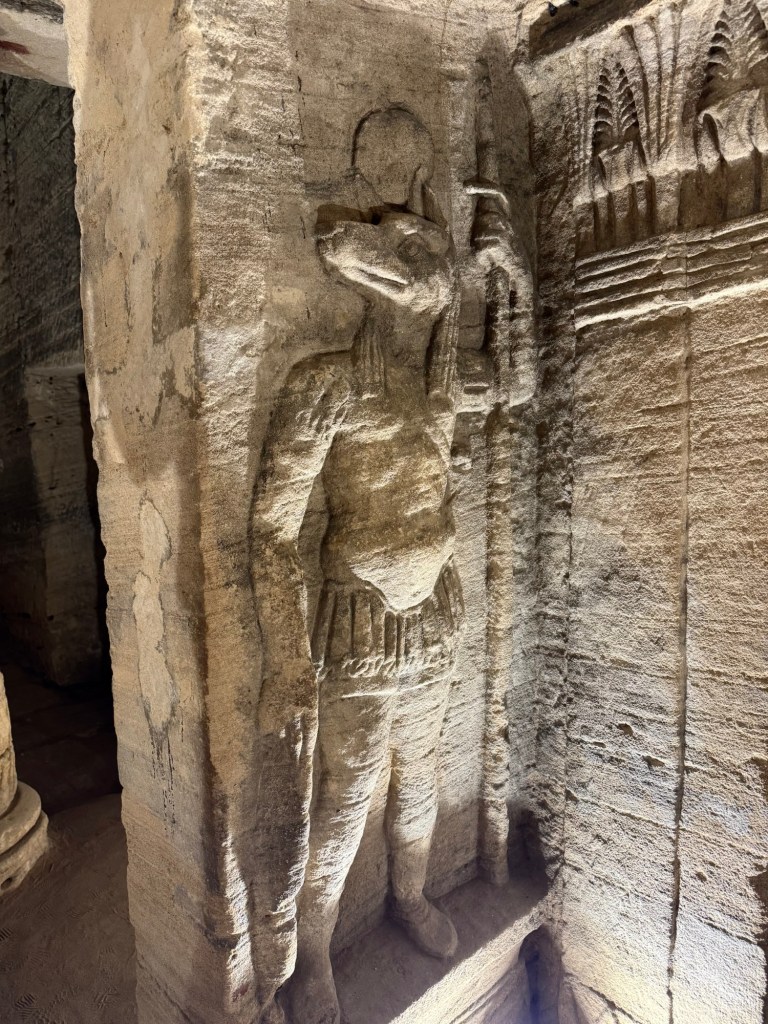
It’s damp. It’s eerie. It’s the kind of place where you half-expect a mummy to tap your shoulder and ask for directions. But it’s probably just another tourist, lost in the labyrinth.
Scattered around the premises are bits and pieces of excavated relics and items of antiquity, laid bare on the ground in the sun just as it is, most of the are un-labeled and you’ve no clue what you’re looking at other than the fact that it’s a piece of history and also a prime kitty nap spot.
Serapeum of Alexandria
Just a few minutes away sits the Serapeum of Alexandria smack in the middle of a rather dilapidated area of Alexandria.
Mostly ruins now— but once upon a time, it was home to the Temple of Serapis, a Greco-Egyptian god dreamed up to unite Hellenistic and Egyptian belief systems. Unfortunately, the temple met its doom when early Christians showed up with sledgehammers and no chill.
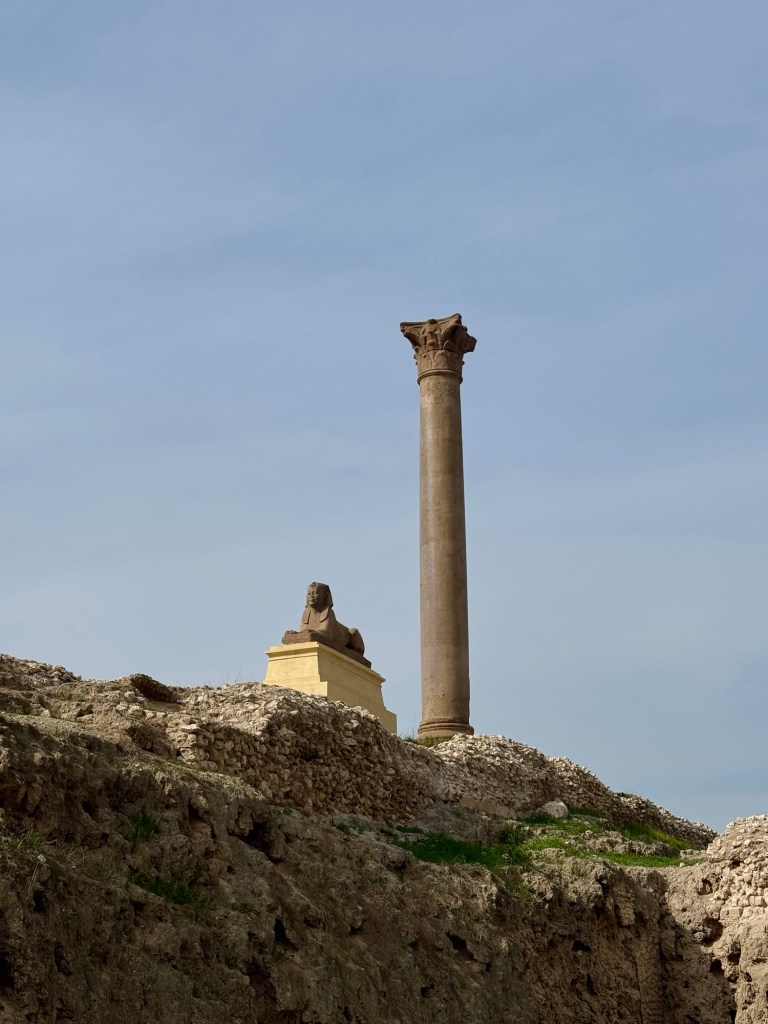
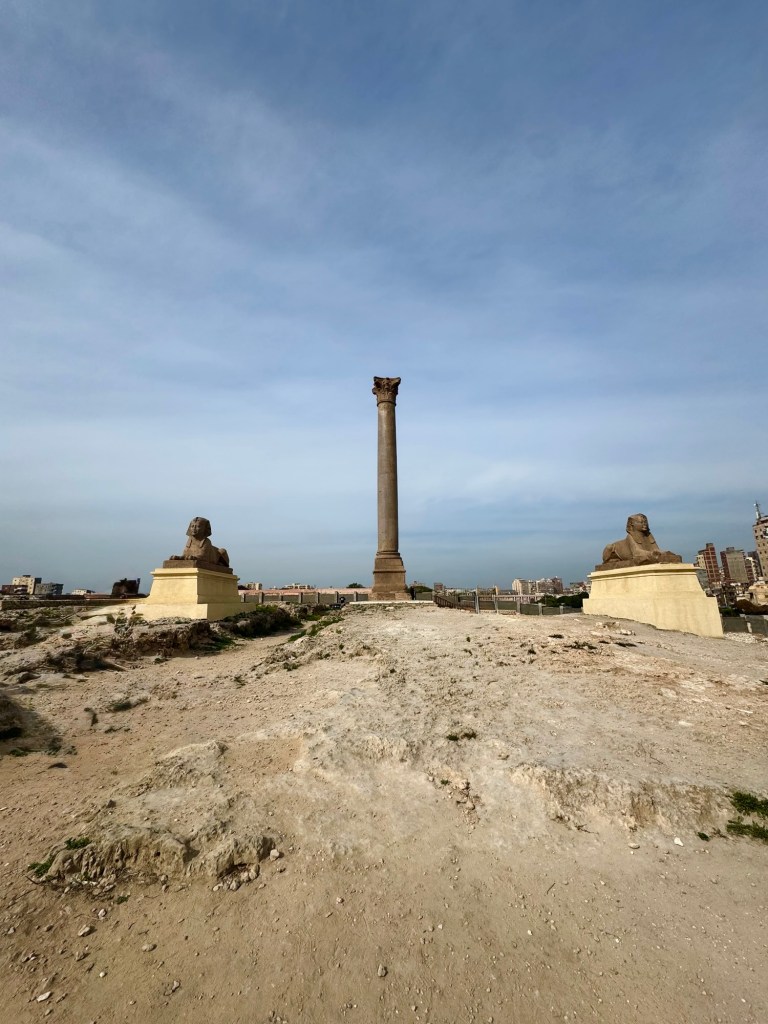
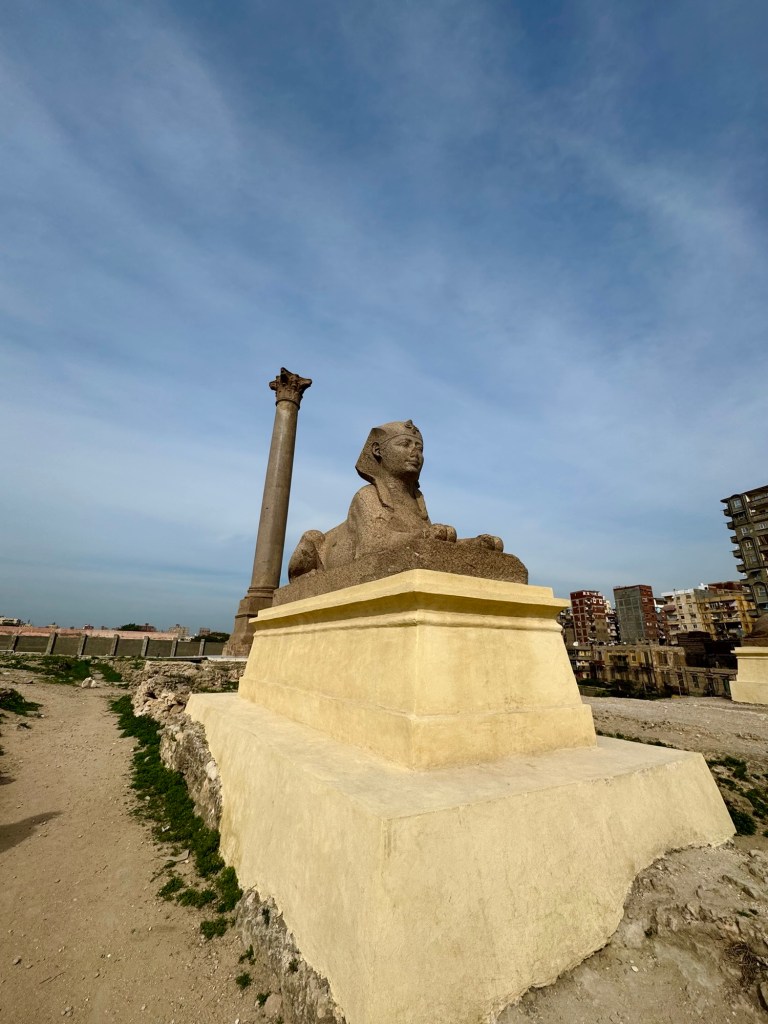
Now, all that remains is Pompey’s Pillar — a solitary, towering column that looks like it should be muttering, “You should’ve seen the other guy.” and two forlorn sphinxes stand by like old security guards who’ve seen some things. The site is humble, yes — but still quietly monumental.
Qaitbay Citadel
Desperate for air that wasn’t just 80% car exhaust, I made my way to the Qaitbay Citadel.
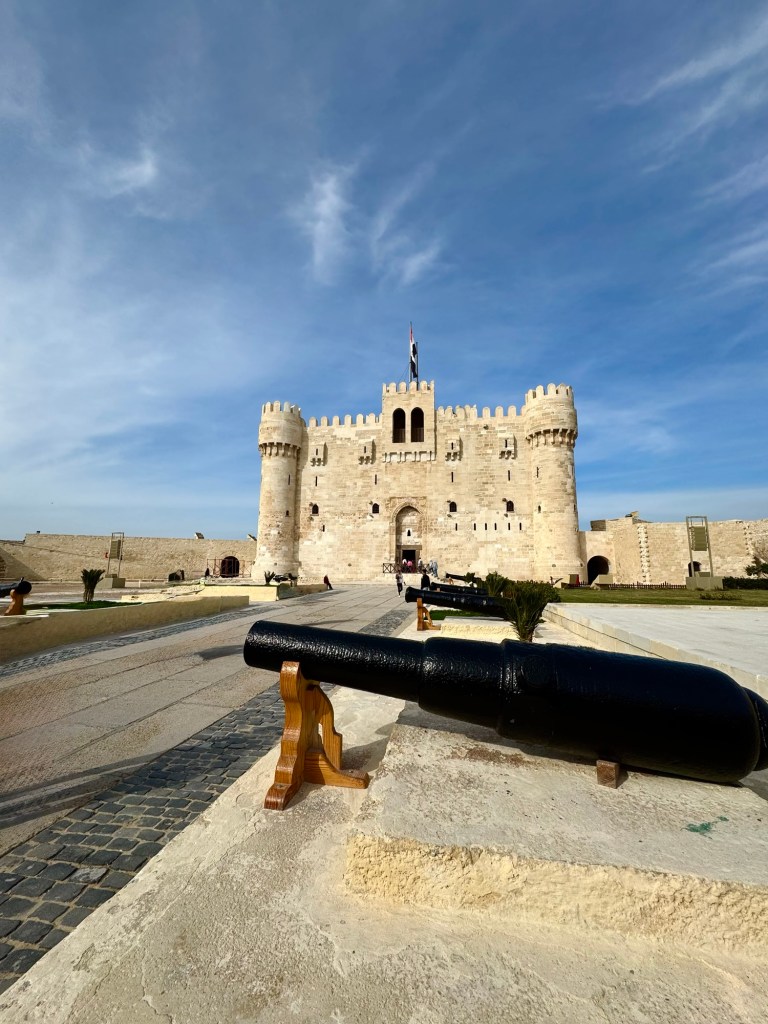
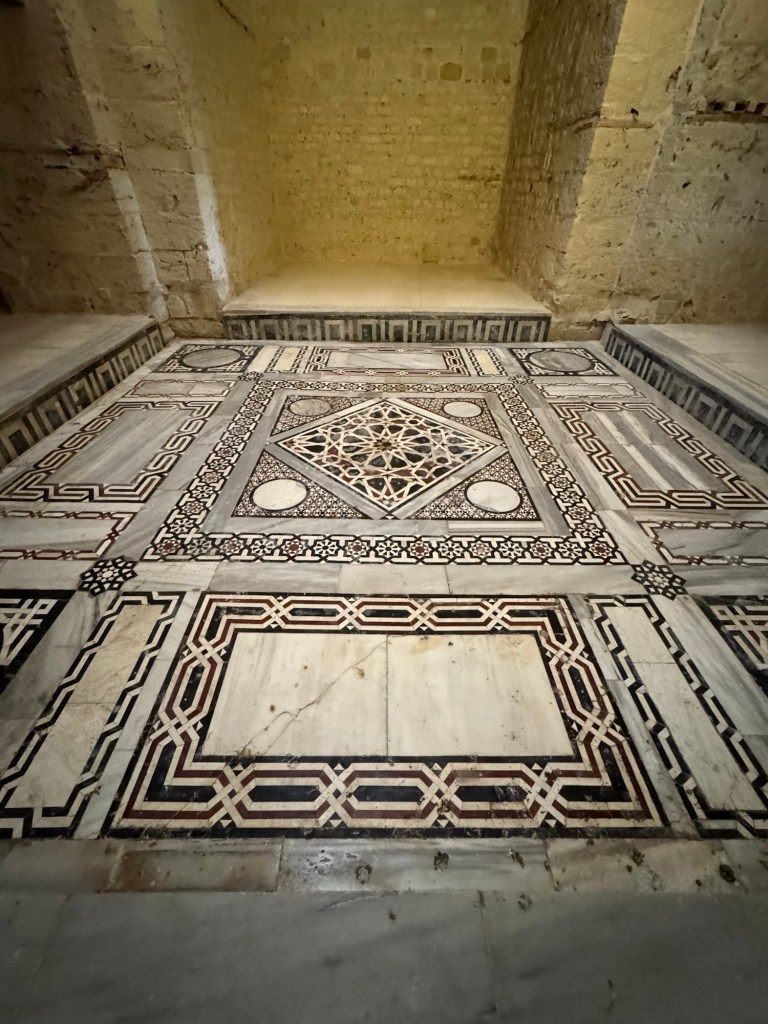
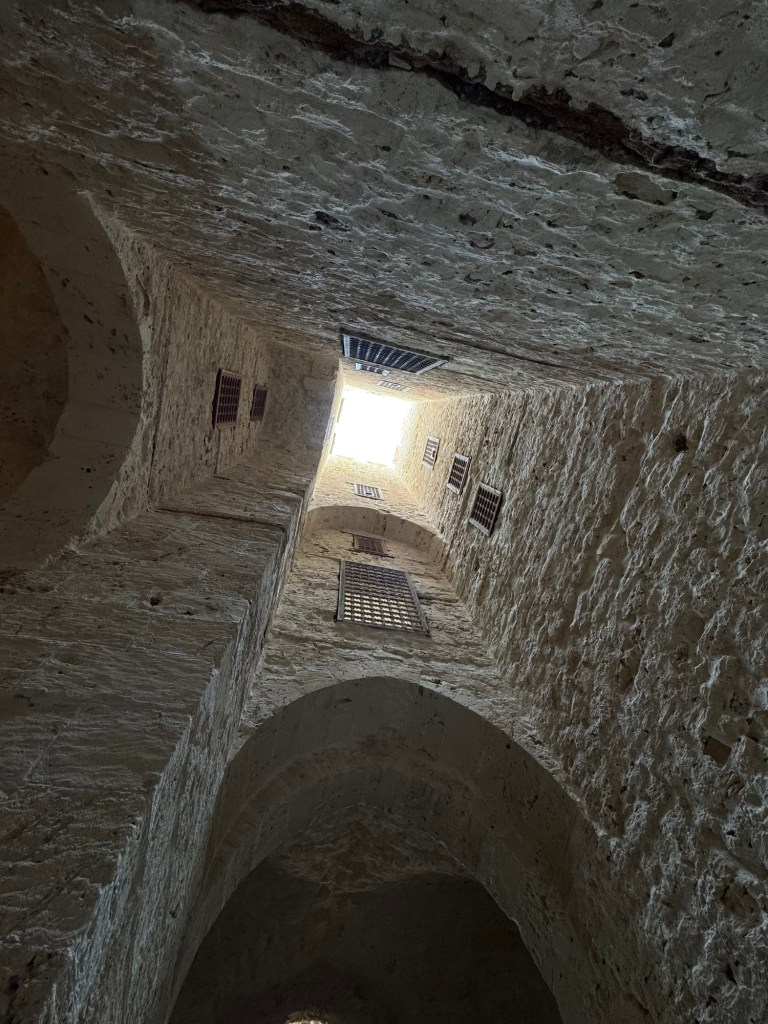
Built in 1477 CE by Sultan Al-Ashraf Qaitbay (a Mamluk sultan with a coastal defense fixation), the fortress was constructed on the ruins of the Lighthouse of Alexandria — that Lighthouse. One of the Seven Wonders of the Ancient World, reduced to rubble by a series of earthquakes between the 10th and 14th centuries, then salvaged to build this very fortress. Sustainability at its best.
Inside: arched ceilings, winding corridors, and sea-framed windows that look like oil paintings. Outside: flocks of battle-hardened seagulls who will fight you for snacks or pride. It’s equal parts Instagrammable and a battle of wits, man vs bird.
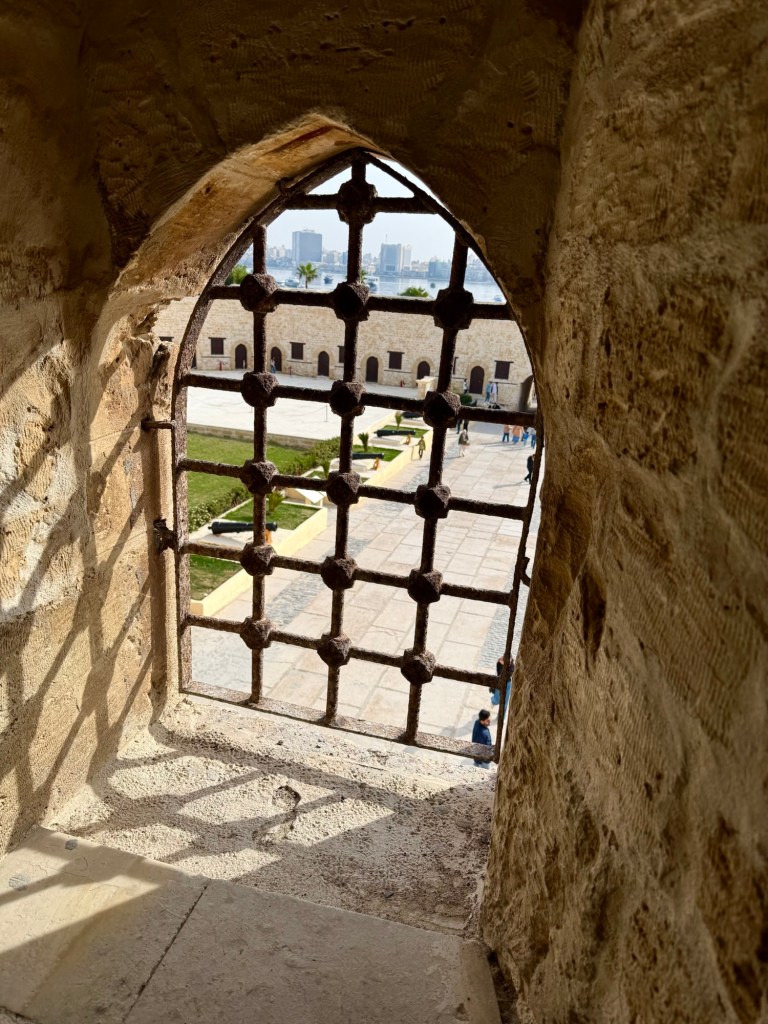
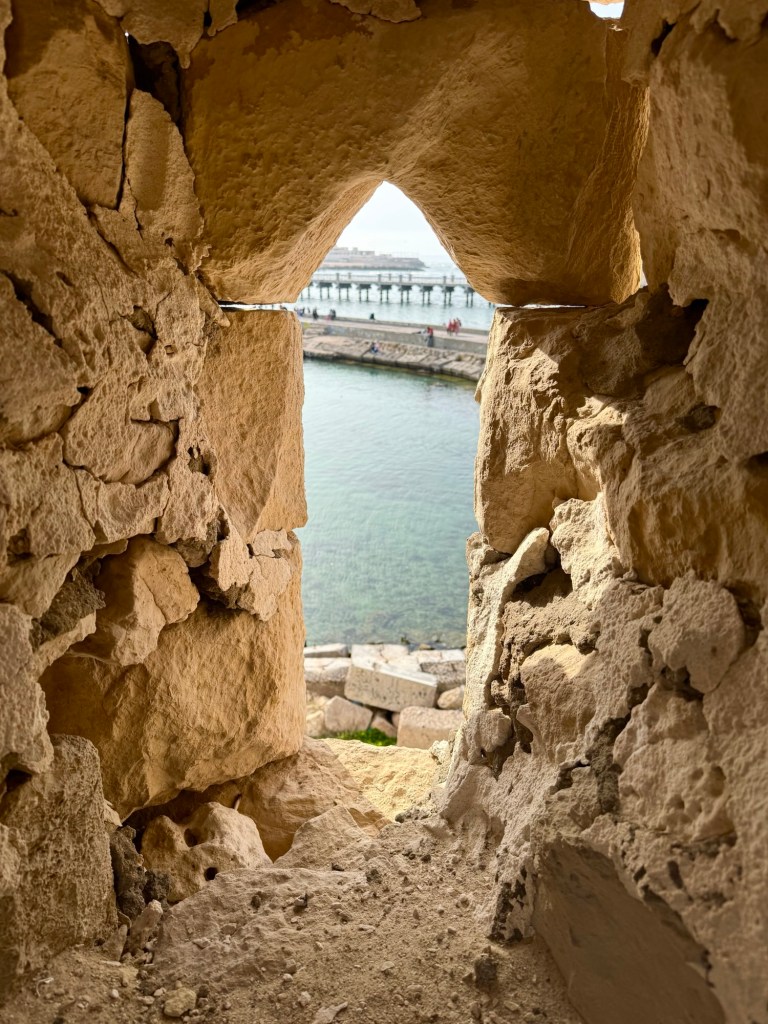
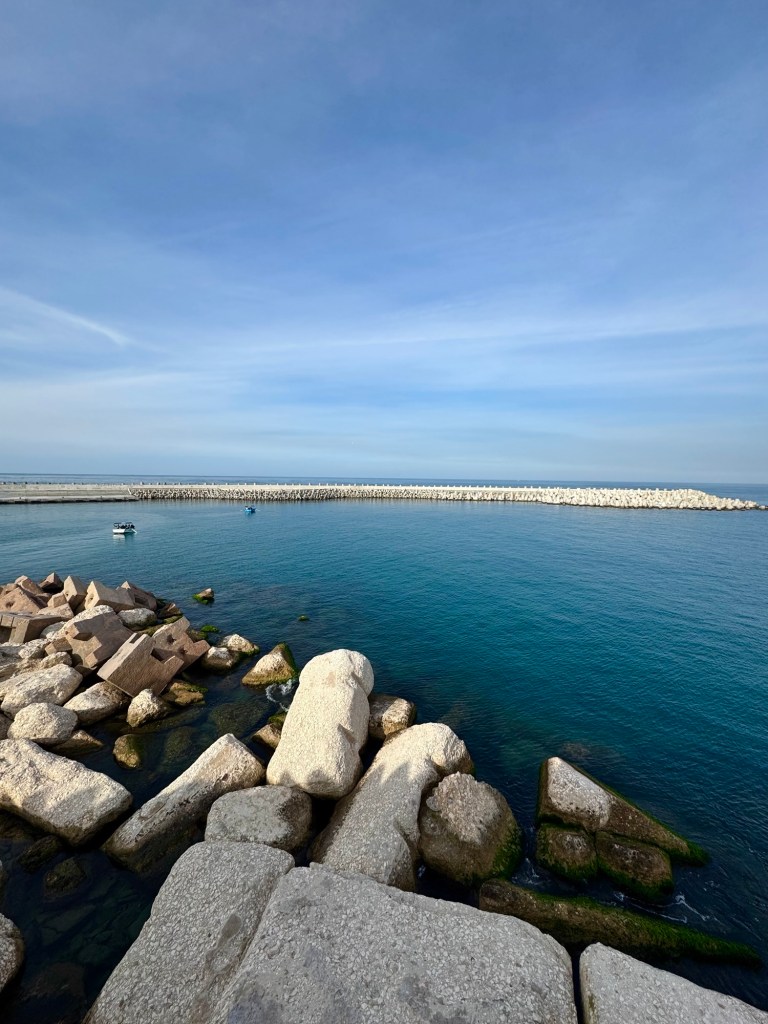
You’ll find old cannons, panoramic sea views, and enough echoey chambers to start your own historical podcast. Some of the stones still bear ancient inscriptions — a mashup of Pharaonic ambition and Islamic military genius.
Situated far from the city, it is also one of the places you can actually catch a whiff of a sea breeze, which is a shame, as even on the beaches it smelled like L’eau Exhaust.
Alexandria National Museum
Next up is the fairly underrated Alexandria National Museum.
Tucked inside a restored Italianate mansion, the Alexandria National Museum is a quick, one-stop shop if you want a compact crash course in the city’s layered history.
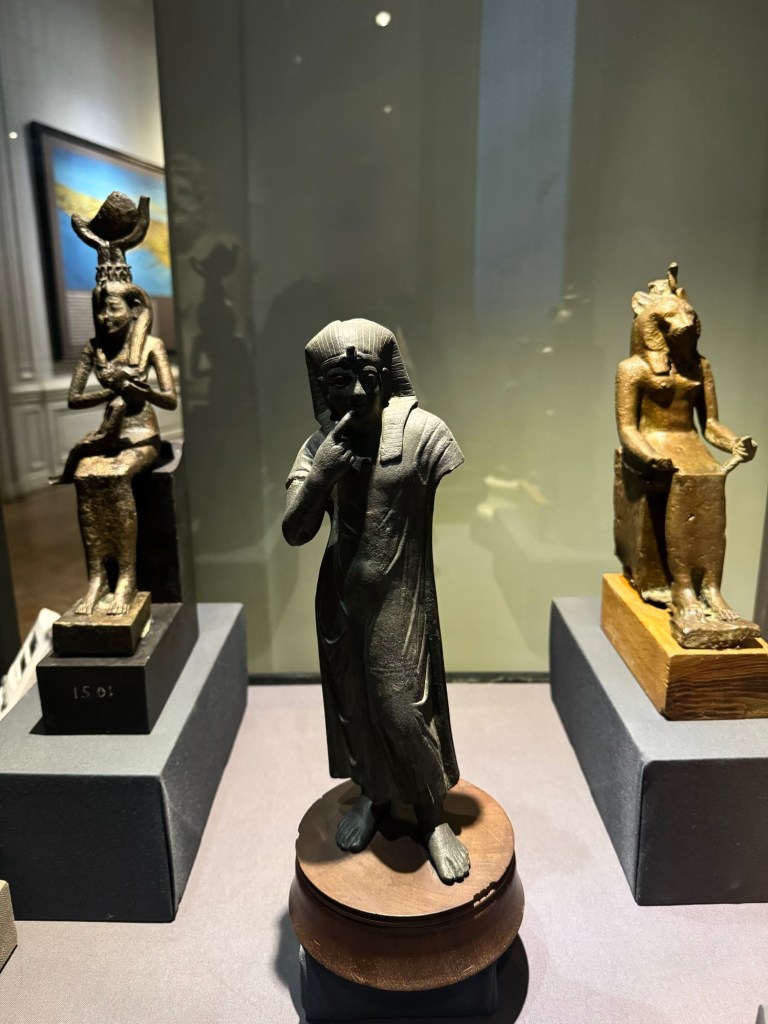
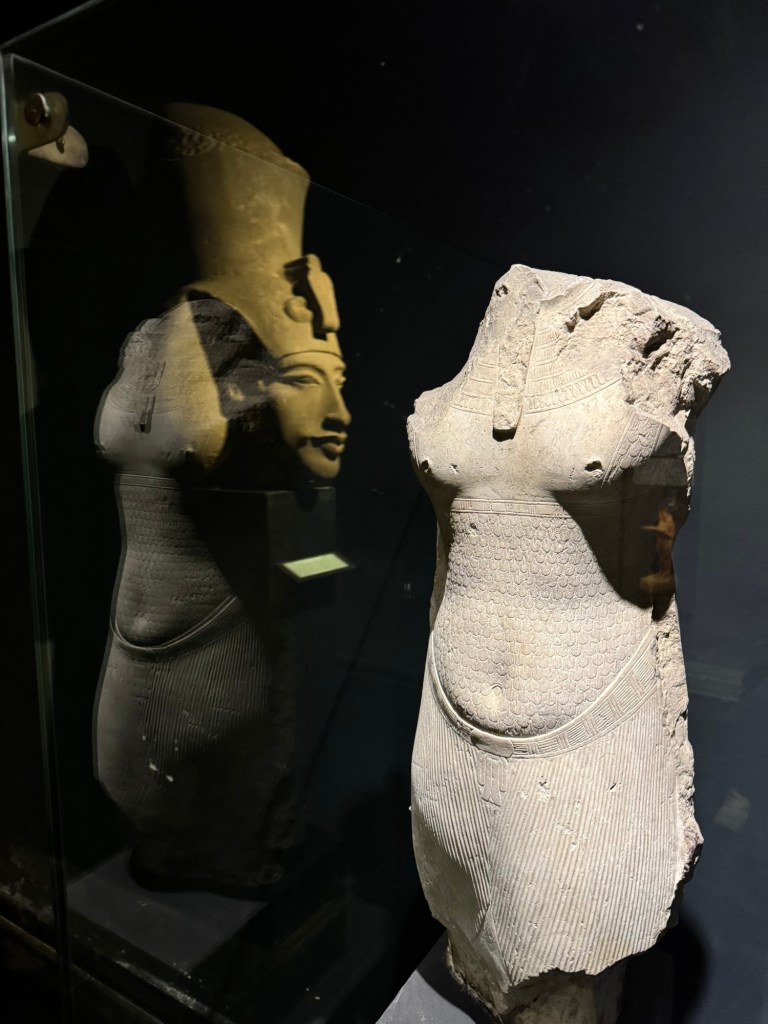
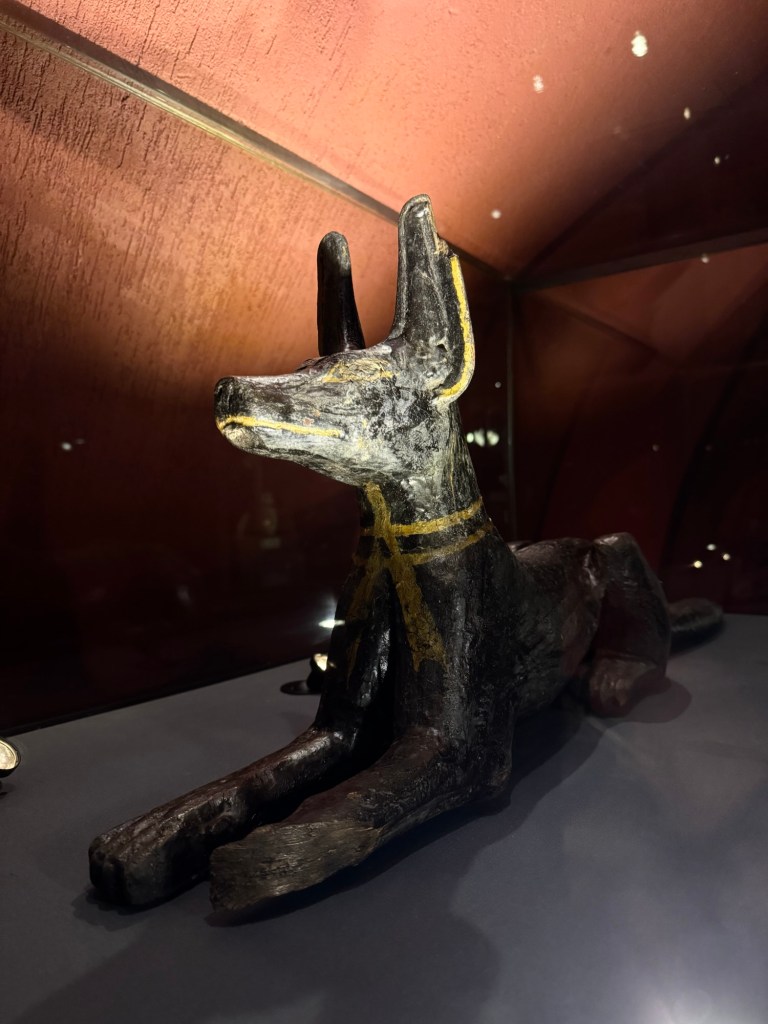
Spread across three floors, the museum takes you through Alexandria’s chaotic, beautiful timeline — from Pharaonic gods to Roman emperors, Coptic saints to Islamic scholars. It’s far less overwhelming than Cairo’s mega-museums, with just the right amount of artifacts to spark curiosity without triggering museum fatigue.
The highlight for me? A slightly ‘hidden’ crypt that leads into a mock tomb down in the cellar. Just when you think you can’t go lower than the basement (where the Ancient Egyptian section is), a walk toward the back reveals a shadowy entrance that takes you even further underground — into a room filled with Egyptian afterlife relics, and yes, a mummy too.
Greco-Roman Museum
The true highlight of the trip though, for me at least, was the Greco-Roman Museum.
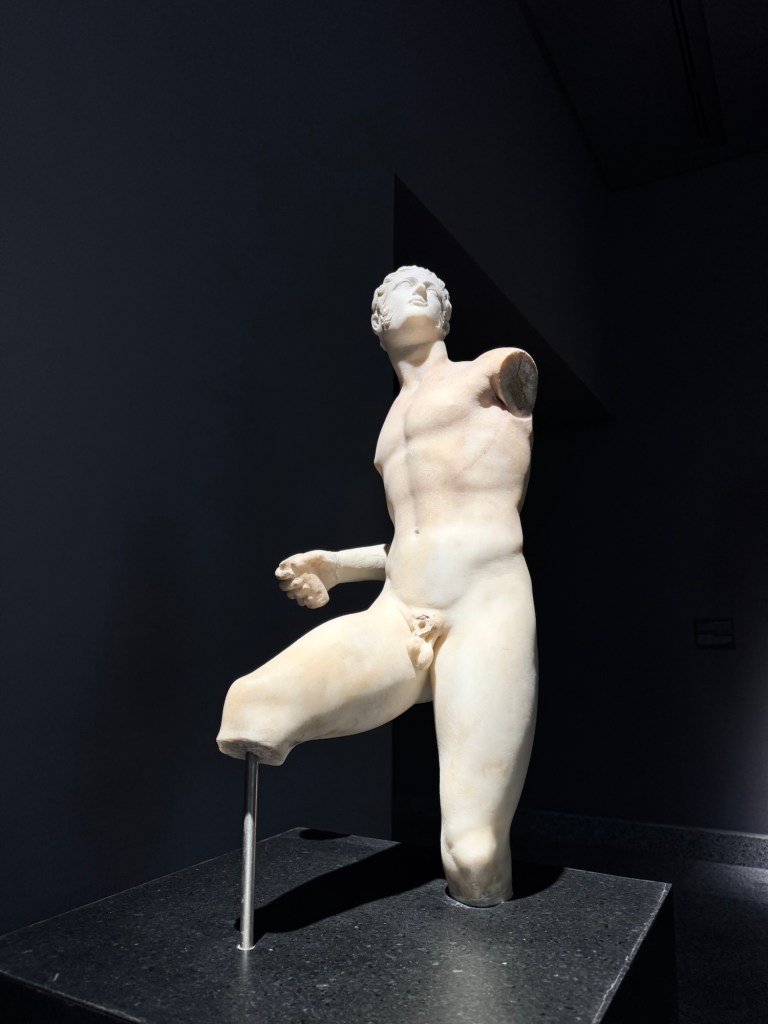
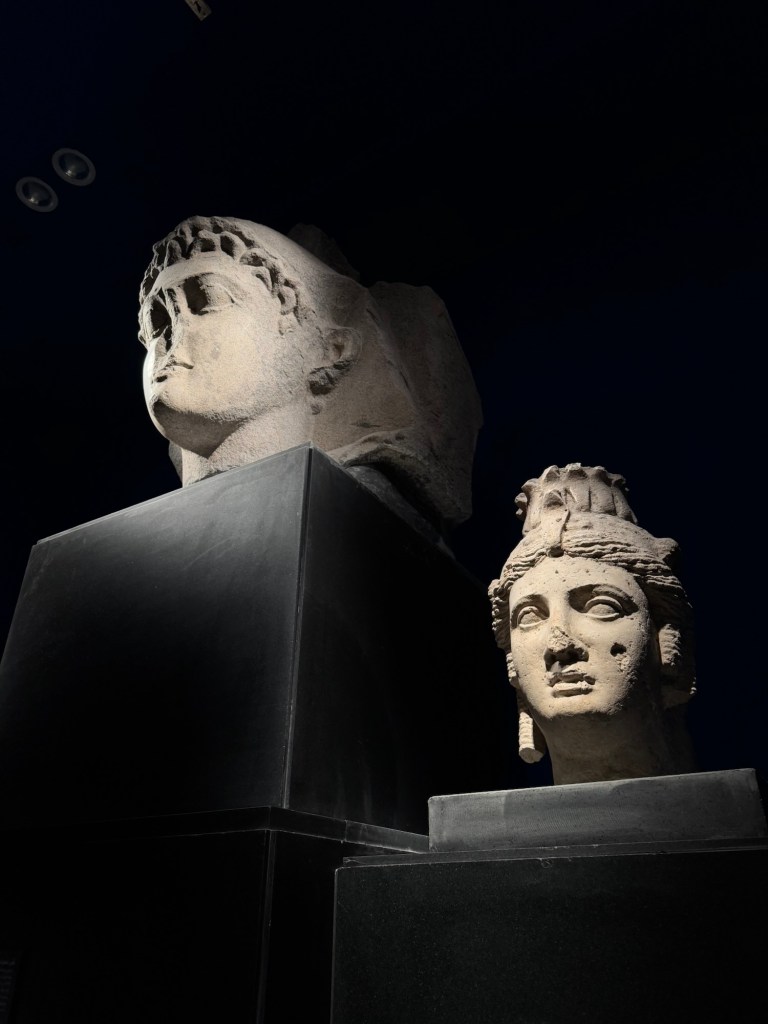
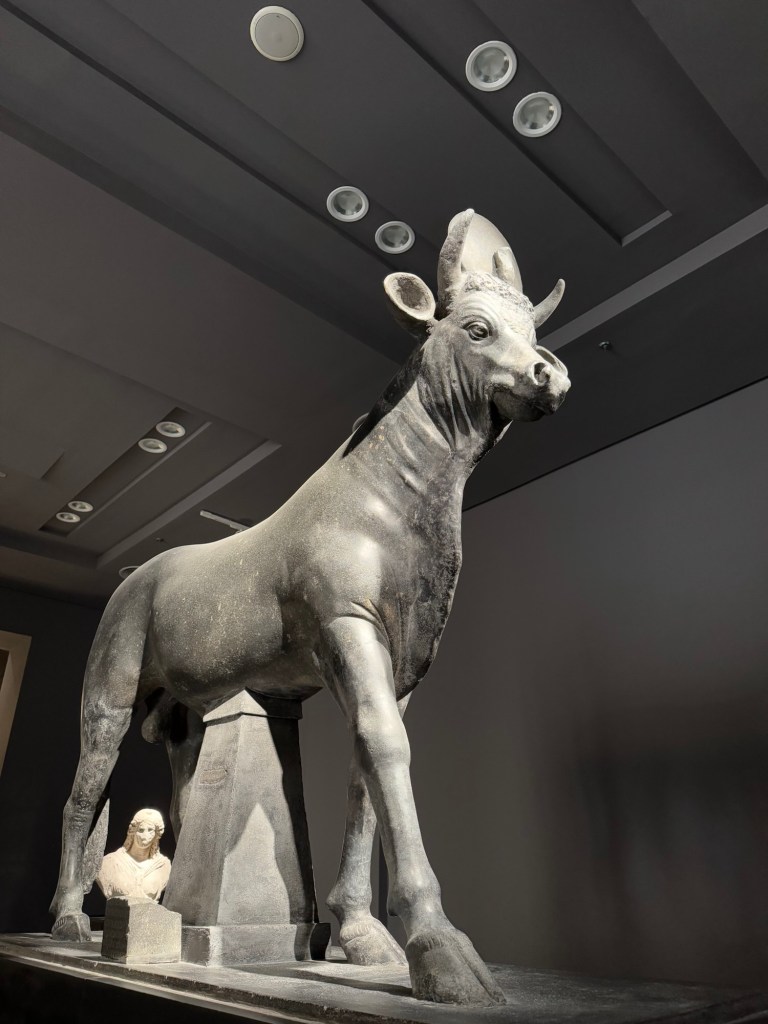
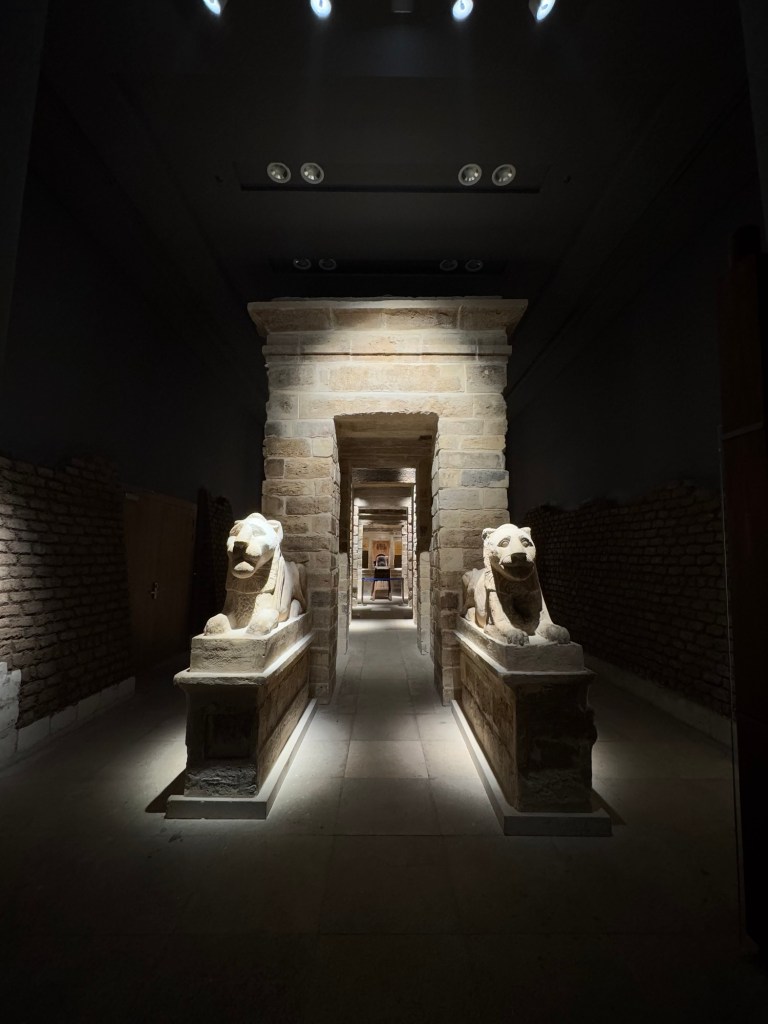
Freshly restored and reopened after being shuttered for over 18 years, this museum is an absolute stunner. Every hallway is moody, every artifact in it’s own little spotlight, well organized and very informative with just the right amount of information scattered strategically around on little plaques or fully blown up on the walls.
It holds the only surviving portrait of Cleopatra and her father Ptolemy XII Auletes, a treasure trove of Alexander the Great busts and relics, a towering basalt statue of the Apis Bull, and so much more. Each room feels like it was lovingly designed to guide you through the layered, tangled story of Alexandria’s past.
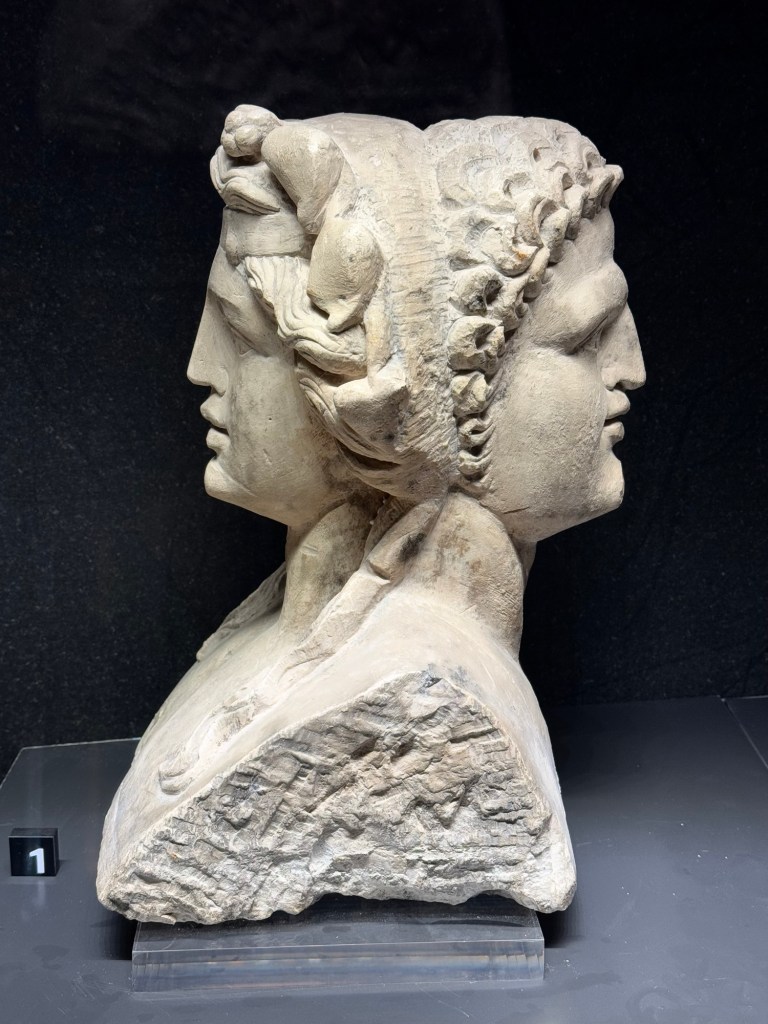
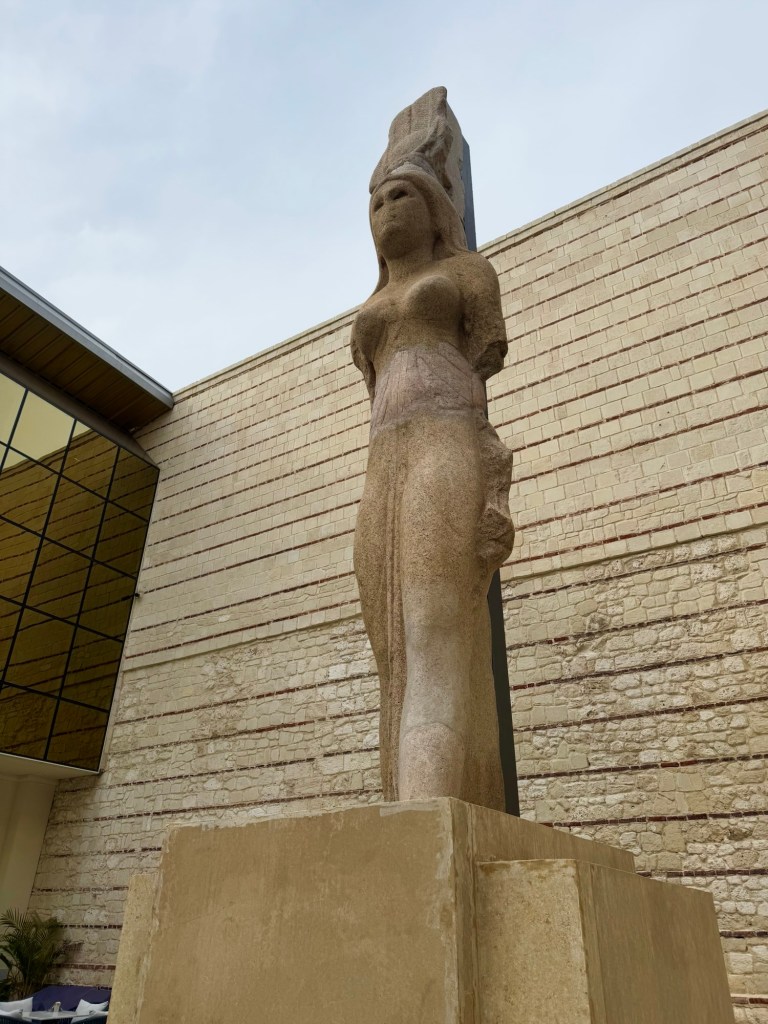
And just before you leave, you’re led into the courtyard, where an 11-metre-tall statue of a Ptolemaic queen in the form of Isis now stands in the sun after centuries underwater. She’s regal. She’s back. And she deserves her moment.
If you’re only doing one museum in Alexandria, make it this one.
Bibliotheca Alexandrina
The last stop on my Alexandria adventure: the Bibliotheca Alexandrina.
Opened in 2002, this sleek modern marvel stands where the legendary Great Library of Alexandria once reigned — a temple of knowledge that supposedly held the wisdom of the ancient world before being lost to fire, war, and very bad planning.

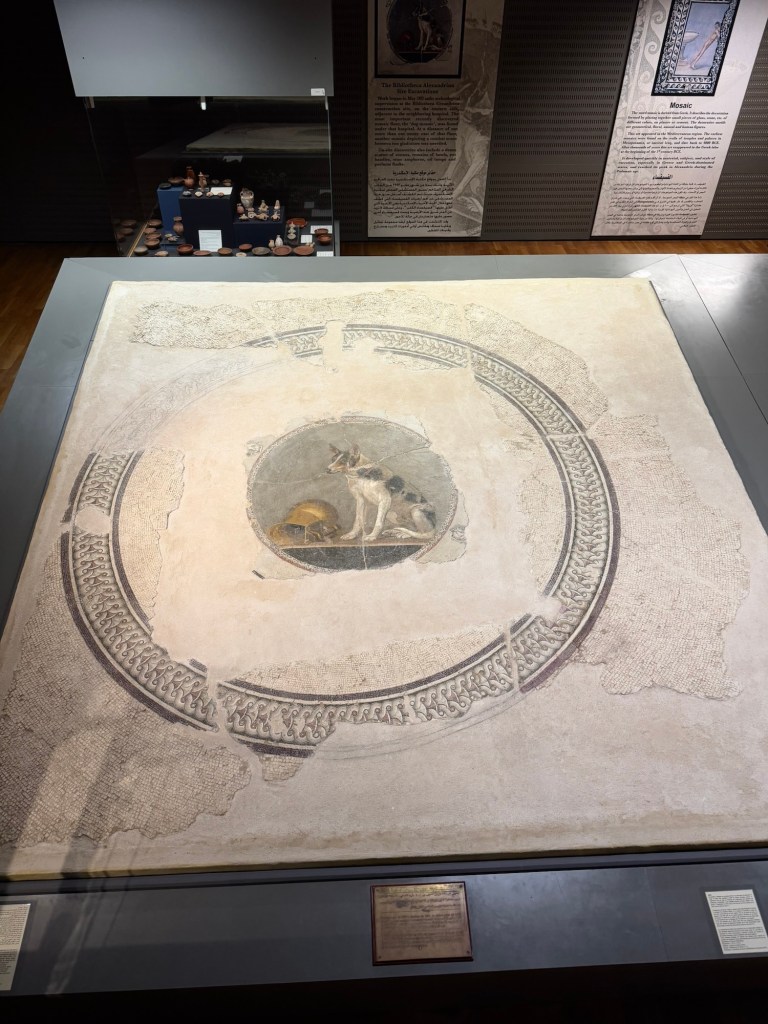
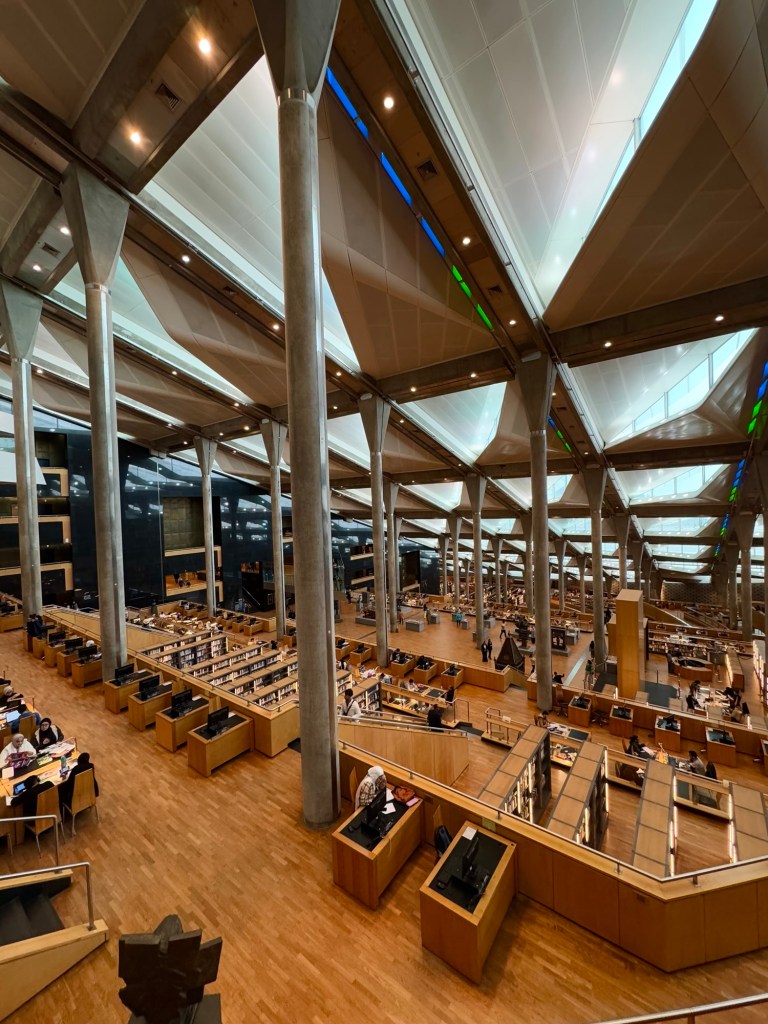
Inside, it’s part archive, part museum, part every student’s dream or nightmare. The library houses millions of books in multiple languages, with capacity for over 8 million volumes. You’ll find exhibitions on science, literature, Islamic manuscripts, and the Archaeological Museum in the basement—a quiet gem of a space housing artifacts found during the library’s construction.
To visit the library is free – only if you’re a student. To us non-studious plebs a ticket is required, and the ticket booth is located by the main street outside the library. You easily miss it, it looks more like a bus stop than a ticket booth, so keep your eyes peeled.
Reflections from Memory and Myth
I’ll be honest — I arrived in Alexandria with high expectations. I wanted to feel the weight of its mythic past, to sense echoes of the great library and the glowing beacon of Pharos. And while it still has charm, and museums that absolutely deliver, it’s hard not to feel a tinge of loss. Alexandria today isn’t the Alexandria of legends. But maybe that’s the point — to seek the remnants, not the ruins. To piece together stories from the stones.
With this, I wrapped up my Egypt trip. It had its ups and downs, and yes, I still hold a personal vendetta against EgyptAir. But it was everything — and nothing — I expected. Chaotic. Exhilarating. Unforgettable.
A culmination of 20 years of once lost childhood dreams about golden sands and gods, now grounded in reality — flawed, dusty, luminous.
Here’s to closing one chapter. And to the next story just waiting to be written.
Just one encore left, time to get cranking on that Egypt Cheat Sheet i promised. So stay tuned, adventurers!
 Shenanigans Abroad