Colossuses of the Past
Monoliths and Mayhem
If Cairo is a fever dream of glittery museum artifacts, surprising greenery, car horns, grabby hands, and the looming possibility of lung cancer, then Giza, Saqqara, and Memphis are where time has stood still — centuries deep — while the rest of the world raced ahead.
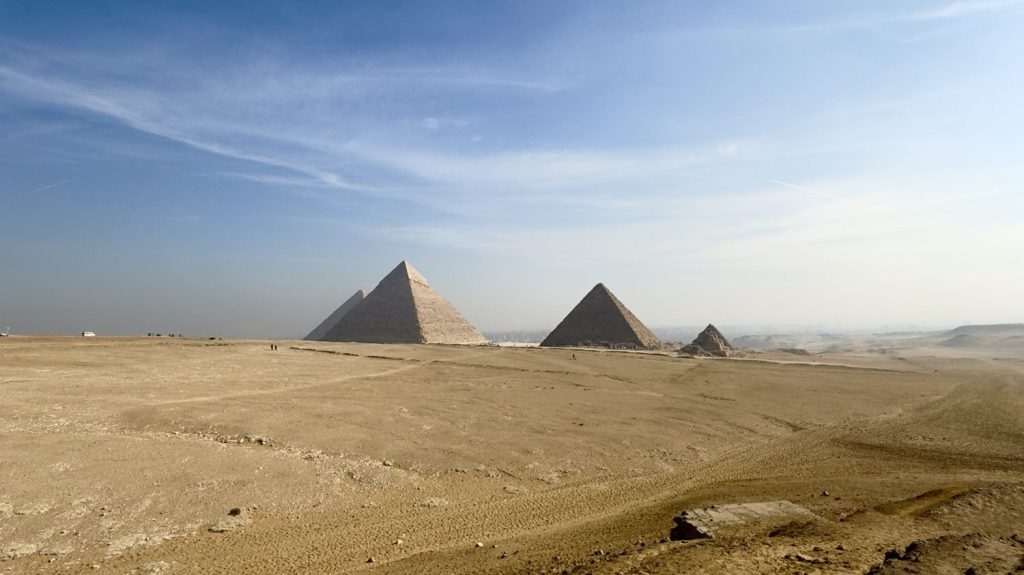
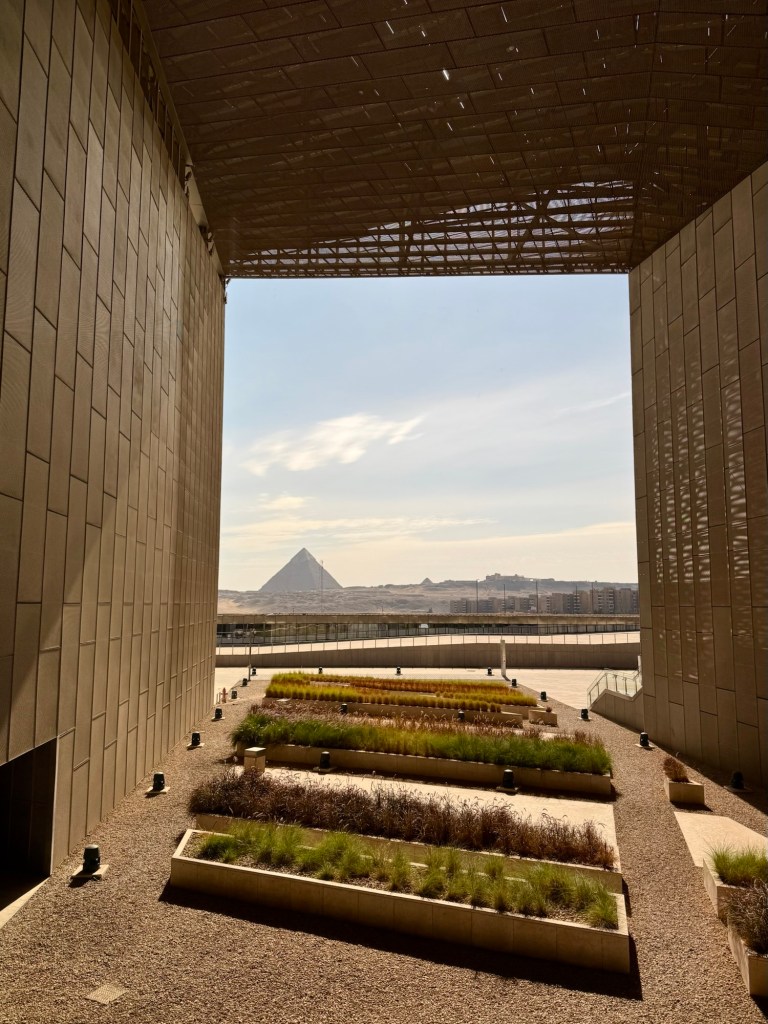
We started early with the obvious: the Pyramids of Giza. Because you kind of have to. It’s like going to Paris and skipping the Eiffel Tower — except imagine if the Eiffel Tower was 4,500 years old, hand-carved from megalithic stones, and allegedly aligned with the stars by people who didn’t even have wheels or drones.
Some say aliens built them. Some say ancient Egyptians were just wildly tech-savvy.
I say: “Holy shit, that’s a lot of limestone.”
Let me just say: photos absolutely do not prepare you for the sheer absurdity of their size. They literally loom over you. The Great Pyramid of Khufu alone is 146 meters tall (well, was — time has trimmed it down a bit), and you feel it in your bones (and neck) when you stand beneath it. The scale is mindbogglingly ridiculous.
Entrance is 540 EGP, and — as of writing this — the main entrance has been relocated to a new site called “The Great Gate” on the Cairo-Fayoum road, replacing the old one near the Marriott Mena House.
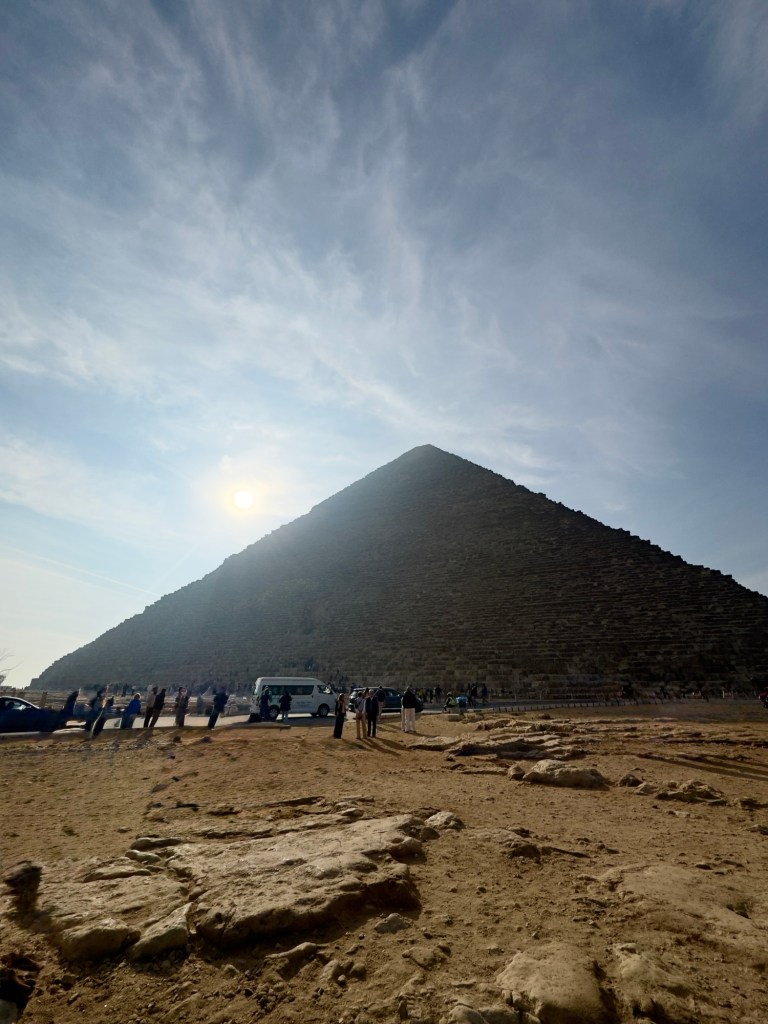

This project aims to reduce congestion and pollution, banning private vehicles and tour buses from entering the plateau itself. Instead, visitors and guides are shuttled in via eco-friendly electric vehicles. I haven’t experienced the new system yet, but honestly — if it streamlines the experience? I’m all for it.
Because the old setup? An absolute logistical nightmare.
All visitors — and I do mean everyone — had to disembark with all their belongings to pass through a chaotic security process. There were no group lanes, so imagine armies of freshly landed tourists dragging oversized suitcases through disorganized lines, losing their guides, and waiting for vehicles to clear. It was an apocalyptic free-for-all. At 7 AM.
So here’s hoping the new system saves future souls.
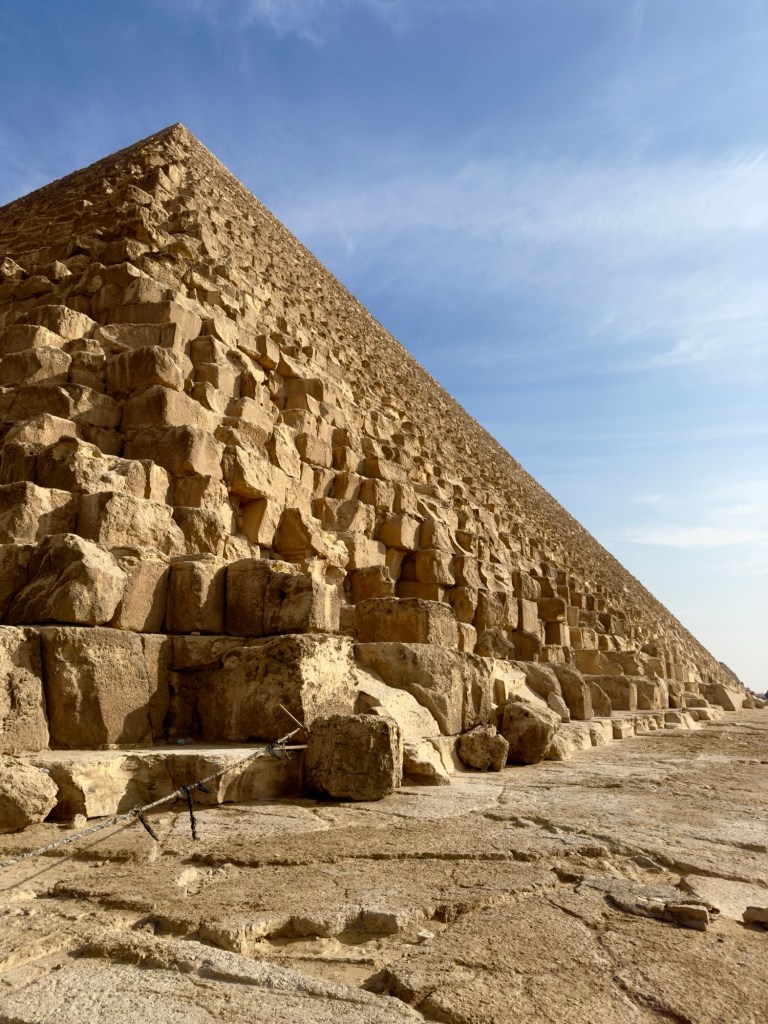
Now back to the pyramids. The path to them is… well, straightforward. Literally. You can’t miss it. And as you walk toward — and eventually around — the Great Pyramid, you might spot a fossil or two embedded in the stones. Many of the limestone blocks contain visible marine fossils from when this land was a warm, shallow sea. Yes, the desert used to be ocean. Wild.
You can enter the Great Pyramid for a separate fee. I passed. After climbing through a rough-cut shaft, up a steep ramp called the Grand Gallery, you eventually reach the King’s Chamber — which is basically a hot, airless granite room with an empty sarcophagus. For 900 EGP?
Nah, I’m good.
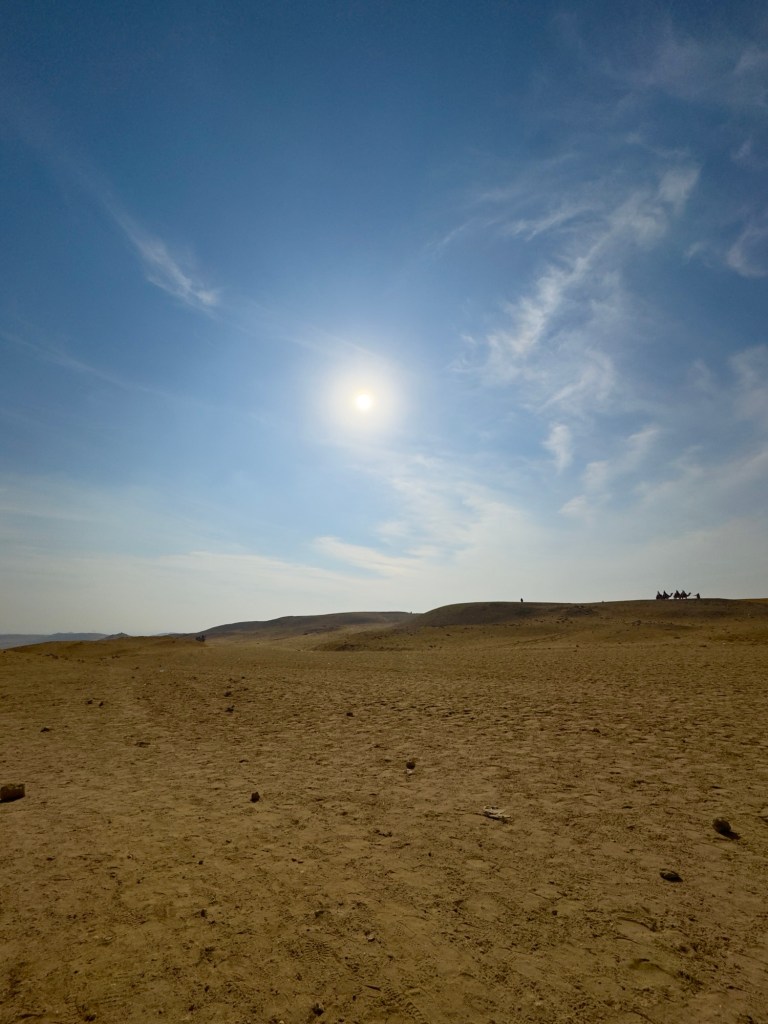

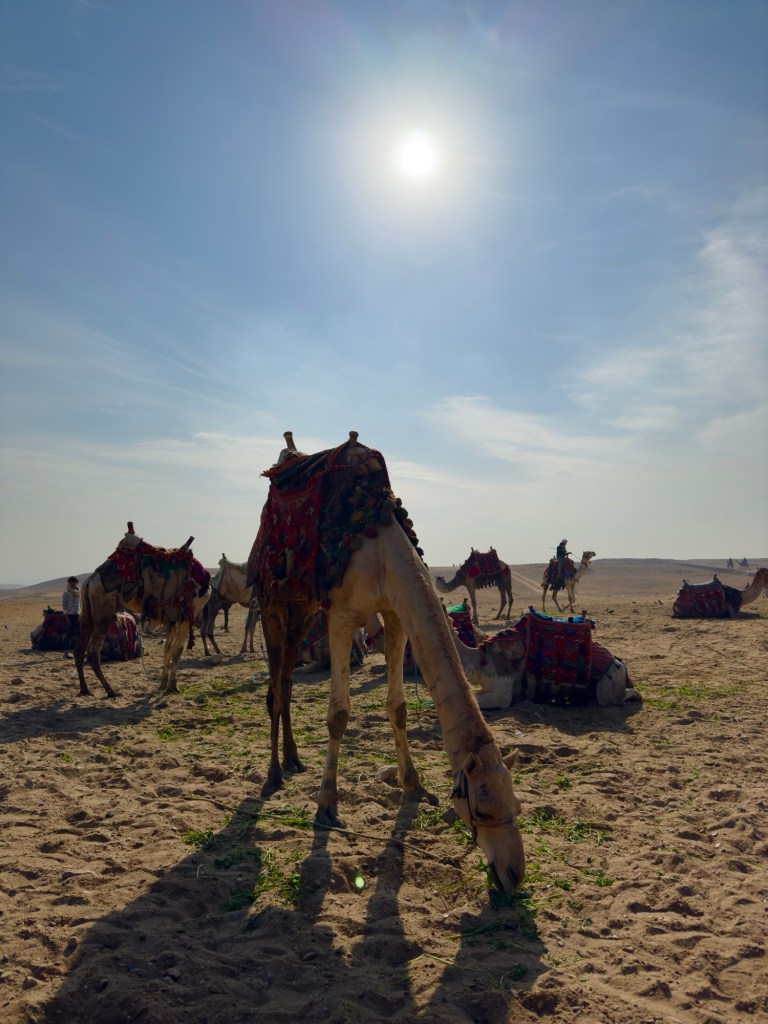
But do not skip the Panoramic Viewpoint. Whether it’s a drive or a dusty hike around the back, it’s so worth it. All three pyramids line up like a constellation in the sand. Camels groan nearby, the wind kicks up cinematic dust, and the scent of the animals… well, let’s call it atmospheric.
This is also the hotspot for camel and horse rides. Pro tip: book one through your guide or tour operator in advance. You’ll still need to tip your handler, but at least the chaos is managed.
Trying to arrange a ride yourself? Risky. Every single person who tried to negotiate their own ride while I was at the viewpoint? It went sideways. Dramatically.
Because once you’re on the animal, they hold the power — not you. Not your wallet. You’re up there. They’re down here. And no, the tourist police won’t help you. Half of them aren’t even real cops to begin with.
(More on this in the upcoming Egypt Cheat Sheet — stay tuned.)
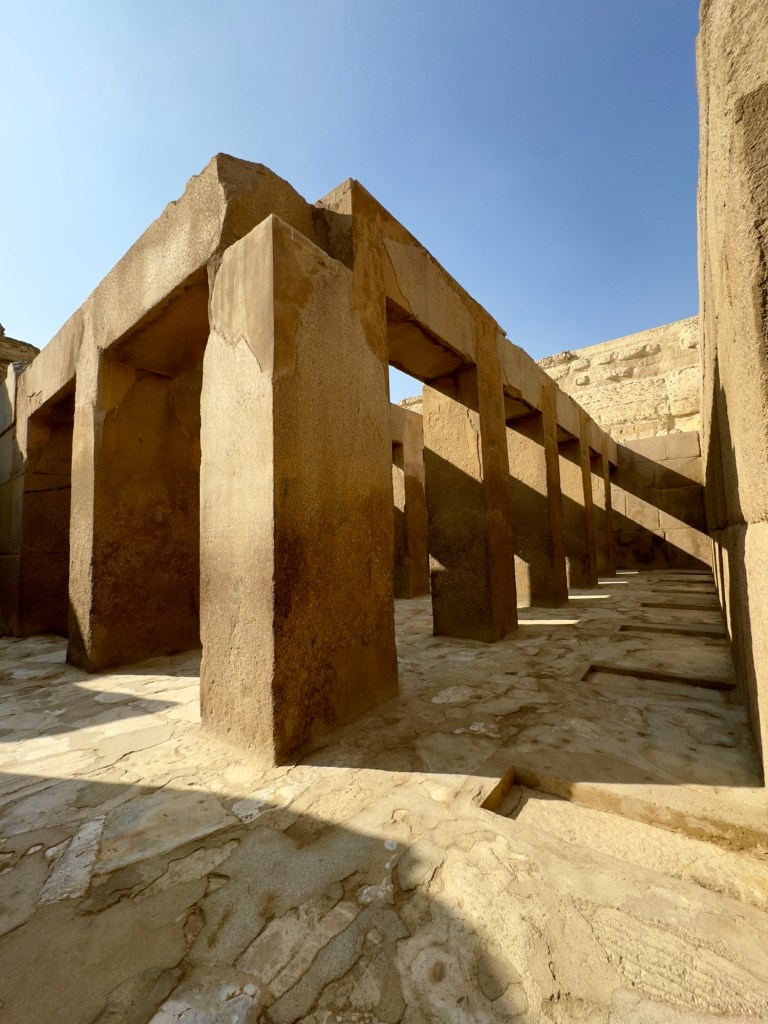
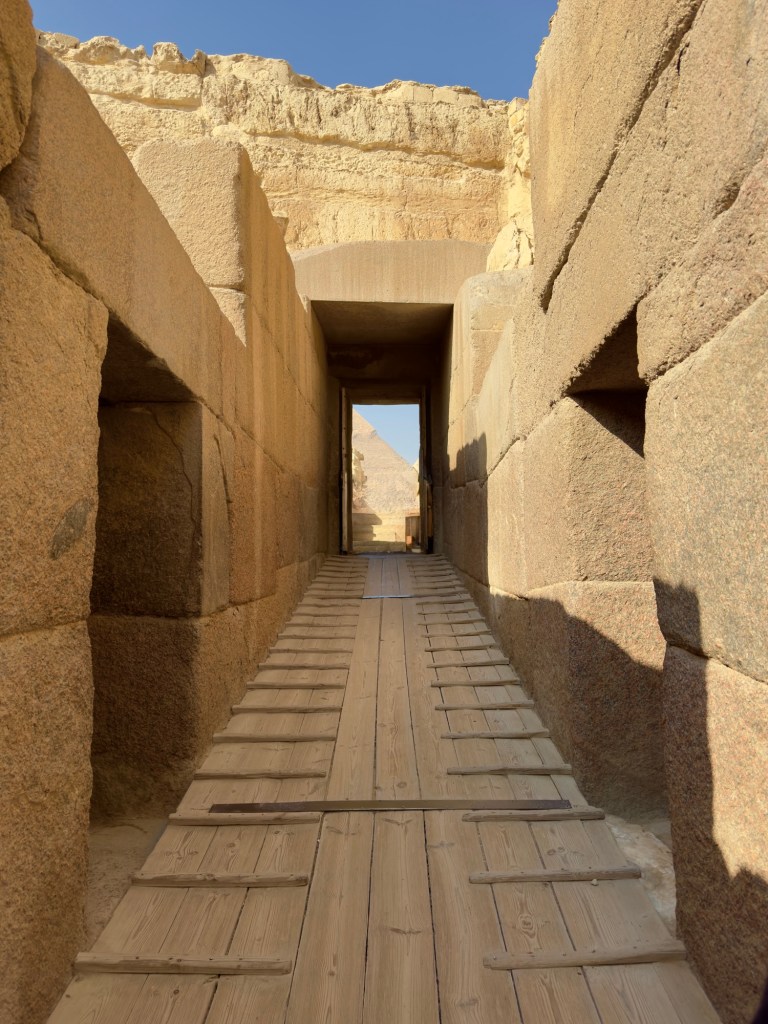
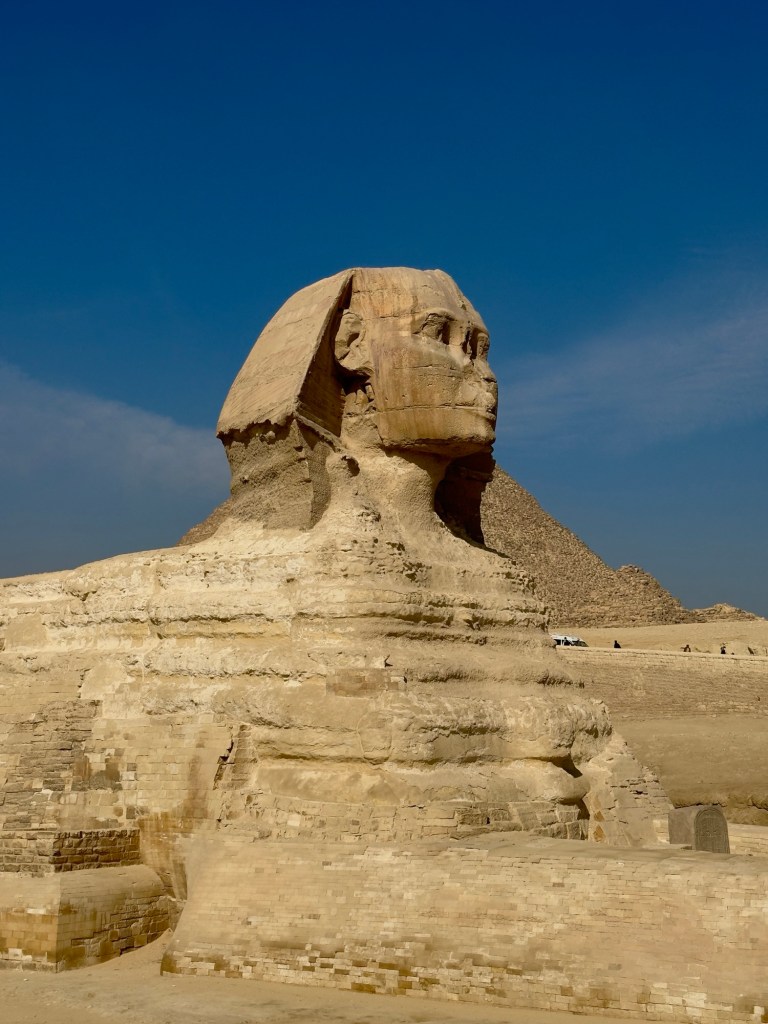
A visit to the Giza Plateau isn’t complete without visiting the Great Sphinx of Giza.
It starts with a quick detour through the Temple of Khafre — all massive limestone blocks and eerie stillness, like the world’s oldest minimalist lobby. The columns are thick, the light is soft, and everything feels weirdly preserved, like time hit pause around 2500 BCE.
And then, just past the last threshold, there he is, the big stone kitty himself.
Seeing the Sphinx in person is strange. You know what it looks like, but standing in front of it is still surreal. It’s smaller than the pyramids but somehow just as commanding — part lion, part pharaoh, and a good friend of Monsieur Voldermort.
Getting close to it requires a bit of a queue and maneuvering through other tourists doing their best “kiss the Sphinx” poses. And the closest you can get to it is from the side.
There is a path that leads between the Sphinx’s paws, but from what I’ve gathered, that route is reserved for “special guests only.”
We all know what that means.
We just need to become MrBeast, apparently.
But if you must know what’s tucked between those iconic forelegs, it’s a stele — a slab of inscribed stone — dating back to the 1400s BCE. According to legend, it records a pharaoh’s dream where the Sphinx promised him the throne in exchange for clearing the sand off its body.
Honestly, that seems like a better bargain than getting saddled with a potentially deadly riddle. But who am i to judge?
The Sleeping Giant
Next up: Memphis.
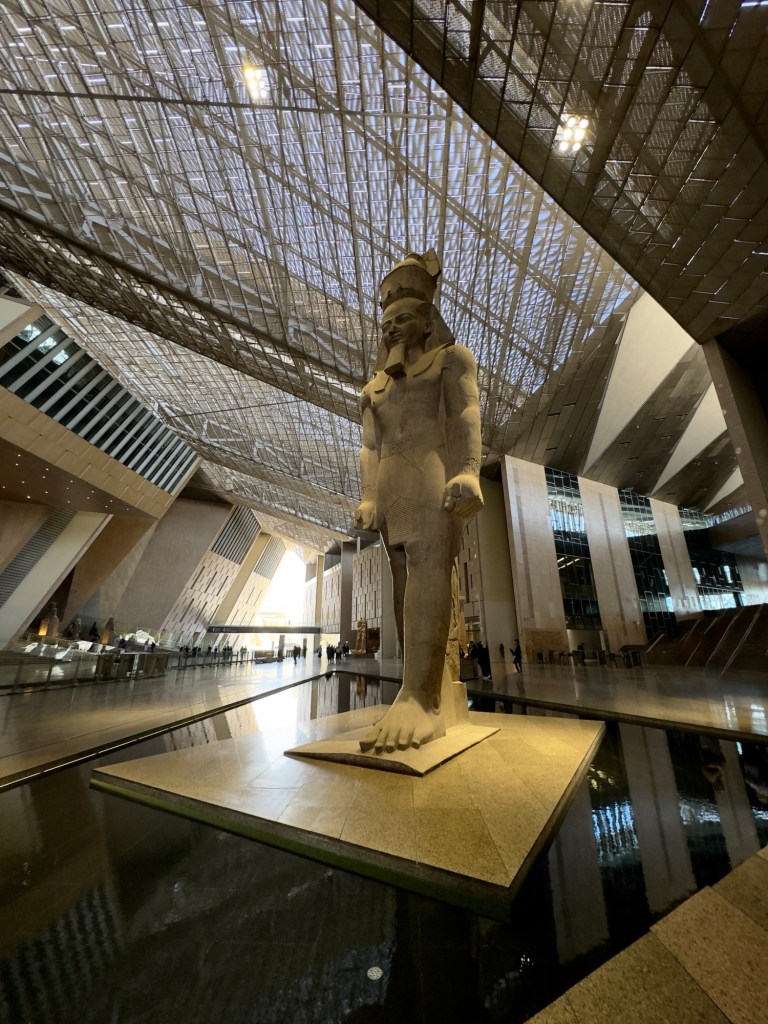
Memphis is what happens when a capital city from 3100 BCE refuses to fade quietly. There’s not a lot left — just a small open-air museum and some scattered ruins — but what is there will make you stop mid-sweat: the colossal, fallen statue of Ramesses II.
He’s lying down because, frankly, no one wants to risk trying to stand him up again. The 83-ton statue is too heavy, too old, and too precious. Even the British and French looked at it and said, “Nah, too expensive,” and so the Egyptians built the museum around it instead.
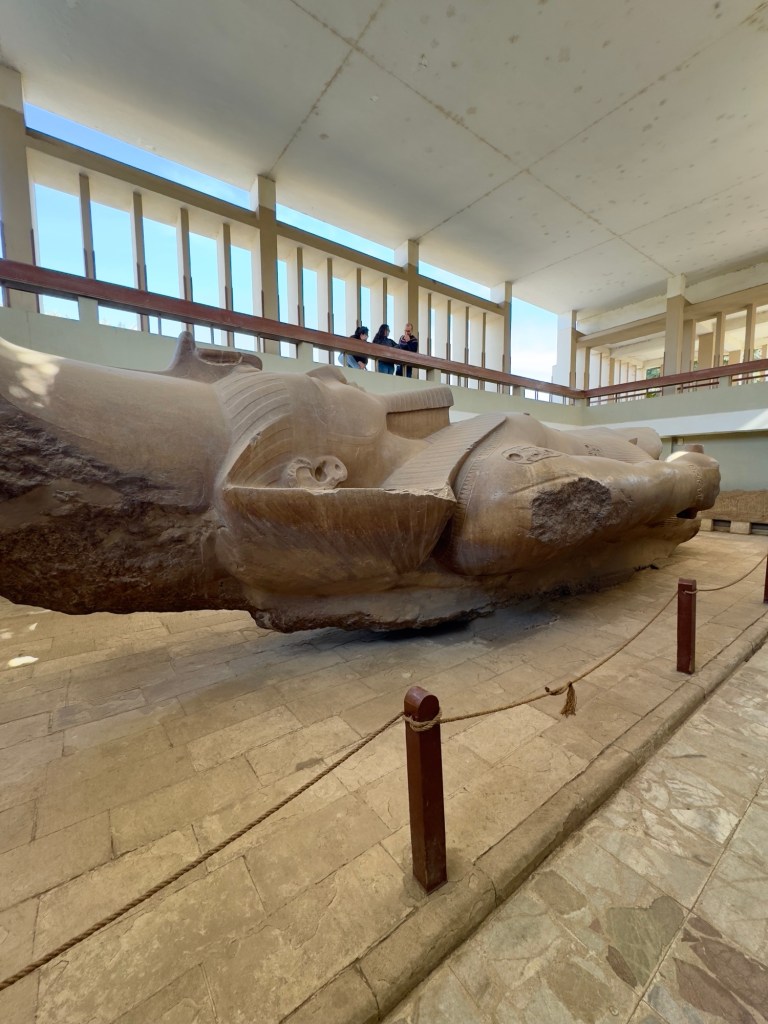
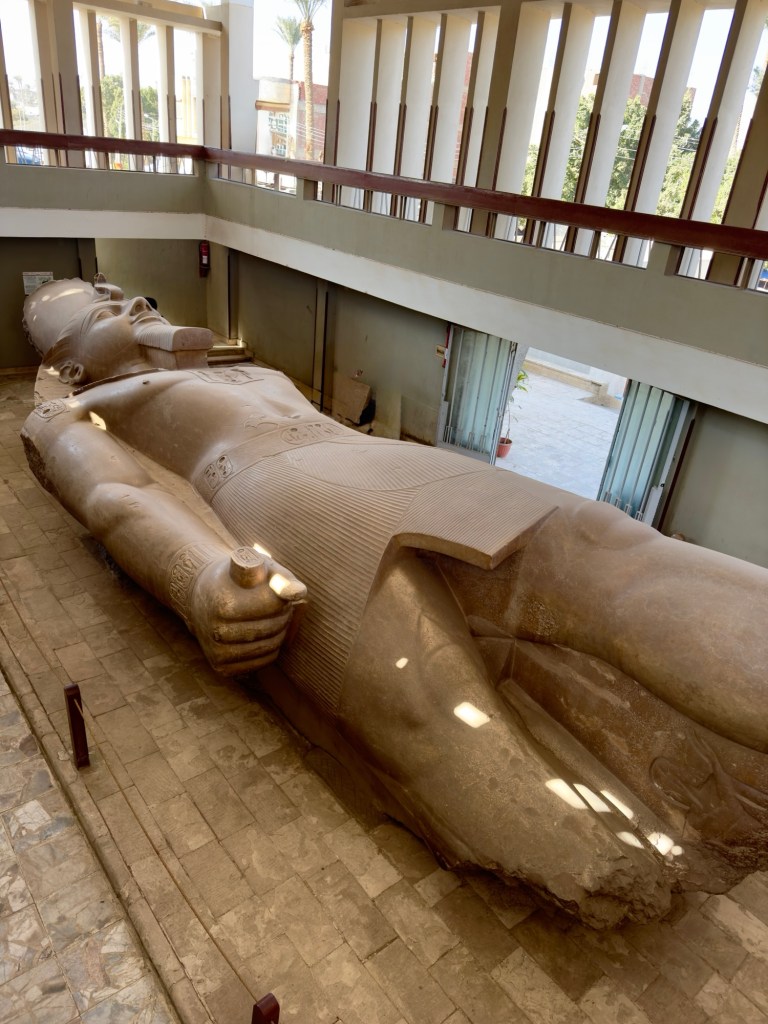

Even horizontal, he’s massive. You view him from a balcony above — the only way to take him all in. The level of detail carved into that limestone is insane. His nose alone is the size of a toddler. And perfectly symmetrical. It’s both eerie and majestic.
Then, when you think your brain can’t possibly take in more stone-and-sand-based awe, you hit Saqqara.
The Pyramid That Started It All
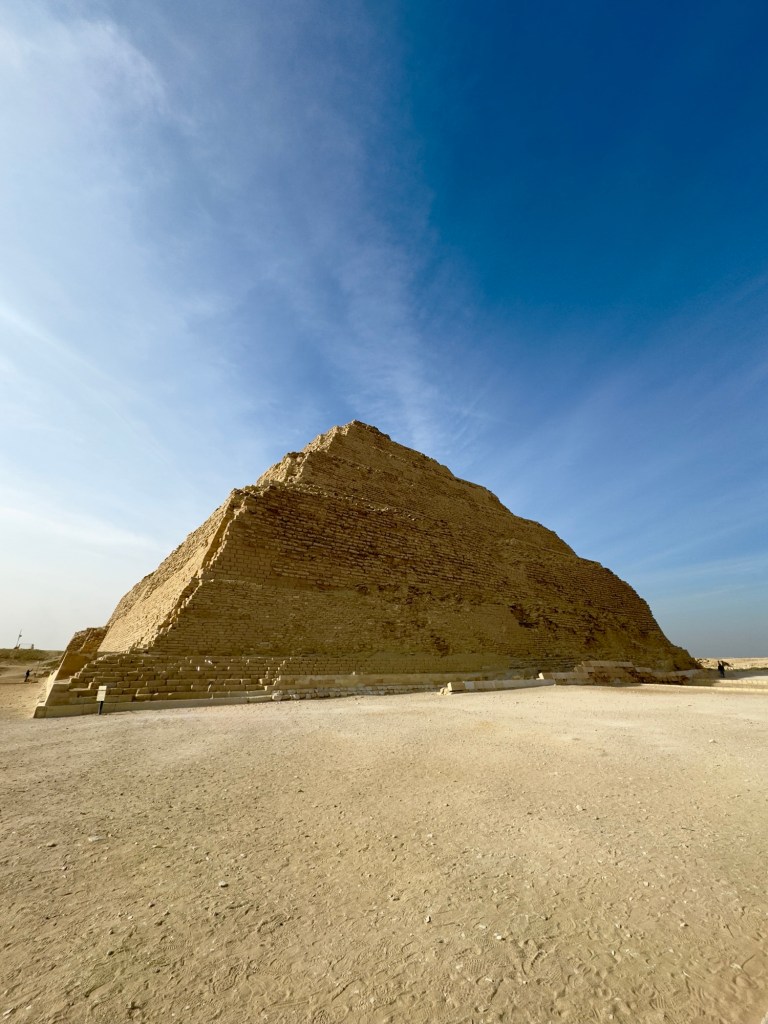
Where Giza is grandeur, Saqqara is origin. This is where it all began — with the Step Pyramid of Djoser.
It’s not smooth and polished like the Giza giants. It’s rough. Rugged. A little lopsided. And that’s exactly the point. This was the first. The architectural equivalent of a mad genius testing the impossible.
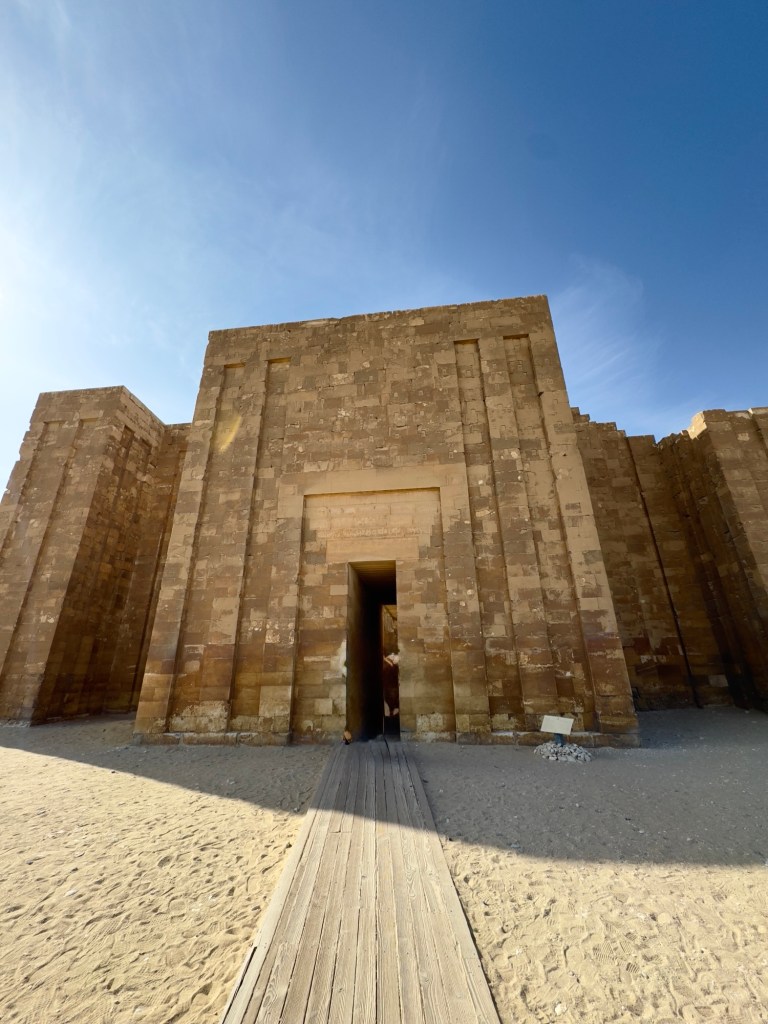
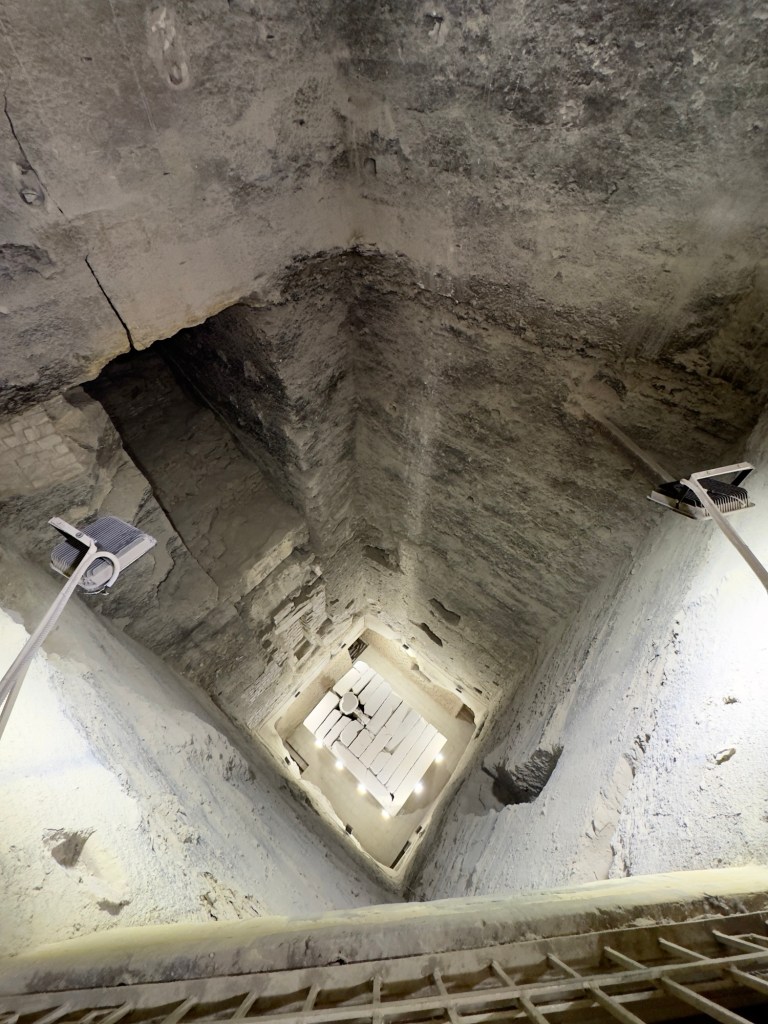
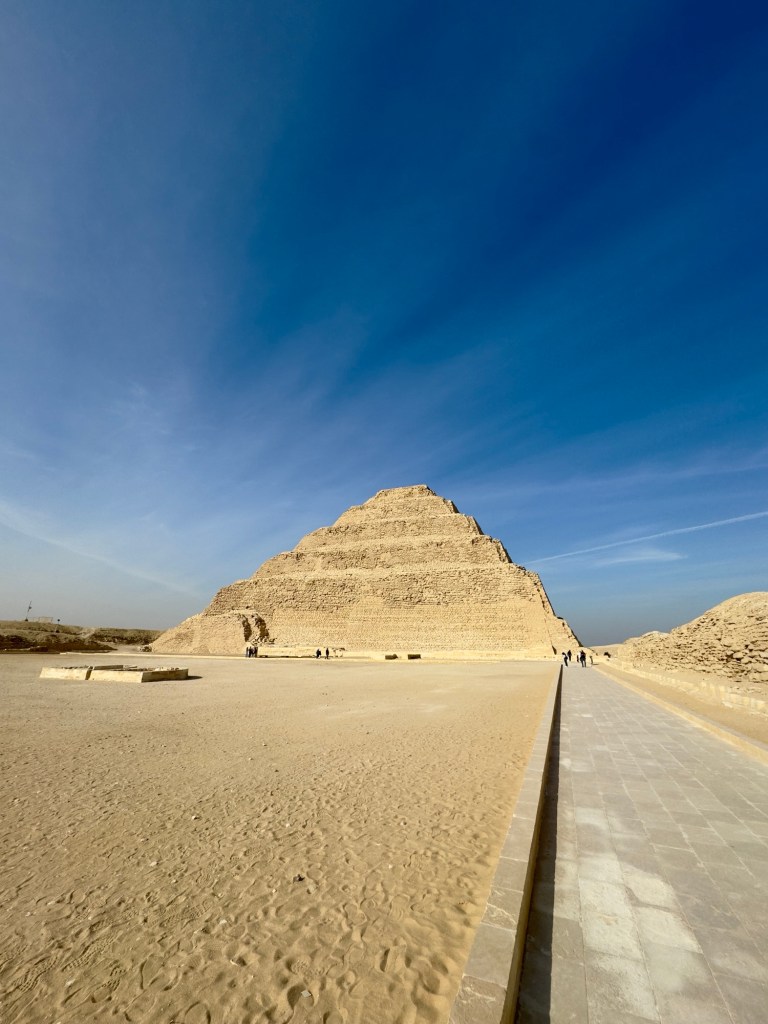
Before Djoser, pharaohs were buried in flat tombs. He basically said, “Nah. I want stairs to the afterlife.”
And just like that — the world’s first monumental stone structure was born.
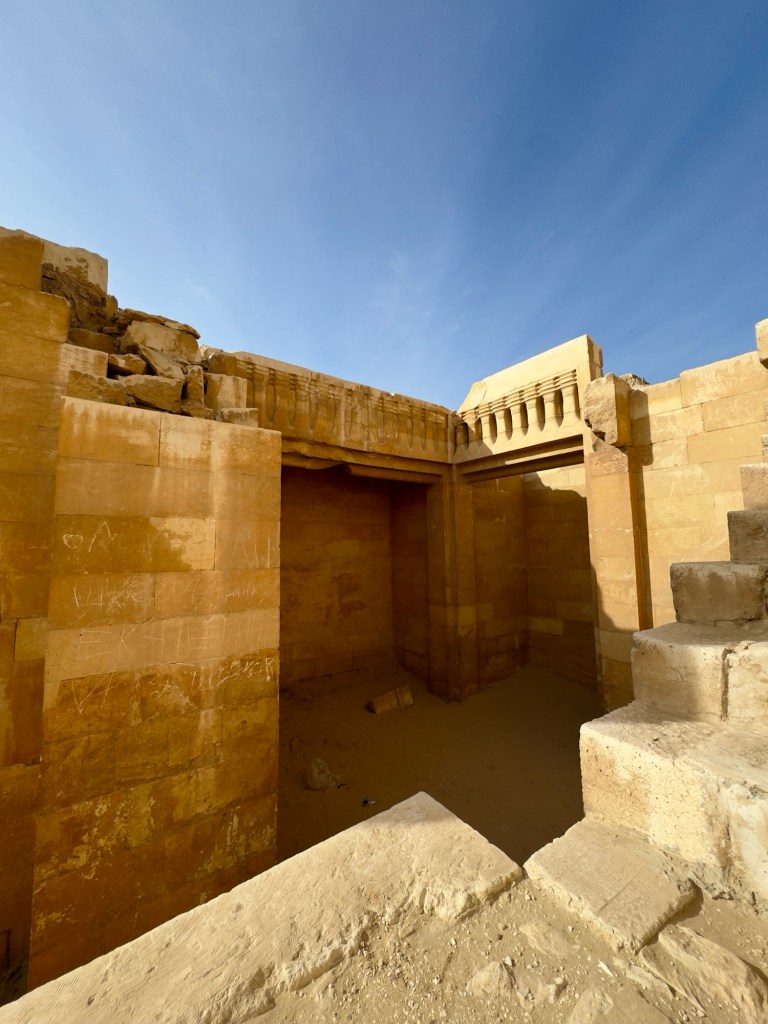
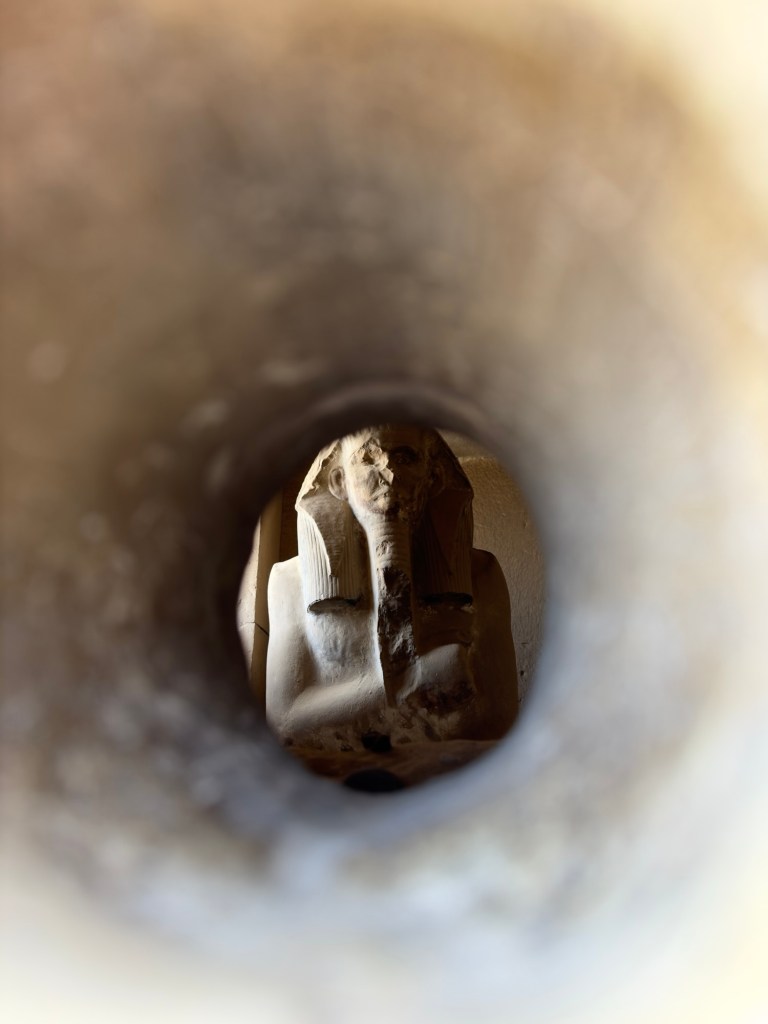
The surrounding complex still holds hints of its former glory — crumbling colonnades, battered walls, shafts dropping into ancient burial chambers — but the Step Pyramid itself steals the show. While not as impressive size wise, the Step Pyramid emits a quiet sort of power and authority, standing regally and making its name quietly in the annals of history.
Where Knowledge Burned
By the end of the day, I’d walked in the footsteps of gods and visionaries, seen stones older than entire languages, and stared down the gaze of kings who ruled when farming was still a shiny new idea, all while the soundtrack of ‘The Prince of Egypt” was playing in the back of my brain.
And somehow, through the sweat and the sand, the only though i had as i lay in bed was how these structures have stood against the tests of time, literally through wars and natural disasters. Of all the lost knowledge and technology.
And of my next destination, a place where “lost knowledge” isn’t just a sore spot, but a catastrophic wound in the story of civilization.
I speak of Alexandria.









 Shenanigans Abroad