Birthplace of the Games
The Starting Line
Every four years, the whole world rallies together to celebrate the pinnacle of sports: the Olympics. It’s a spectacle, a celebration, and a competition all rolled into an international gyros that is the modern Games.
Although modeled after the ancient Games of Olympia, the original Games couldn’t be more different.
The first Olympic Games were held here in honor of Zeus. Held every four years, the Games at Olympia were a national event that attracted participants and spectators from all over the Greek world, including colonies in what we now call Italy and Turkey. Tens of thousands would make the difficult pilgrimage to attend. Some sources say as many as 40,000 people gathered for the event.
The Olympic Games were one of the four Panhellenic Games of ancient Greece. The other three were: the Pythian Games in Delphi (dedicated to Apollo), the Nemean Games in Argos (also in honor of Zeus, though there are some that attribute the institution of the Nemean Games to Heracles after he had slain the Nemean lion), and the Isthmian Games in Corinth (for Poseidon).
The modern Games feature up to 30 sports, over 40 if you count the summer and winter versions. The ancient Games started with a single footrace and eventually expanded to include up to 18 events by the Classical period, ranging from footraces and wrestling to equestrian and field sports.
The ancient Games continued until around 393–394 AD, when Roman Emperor Theodosius I banned them, seeing them as part of a “pagan cult/practice.” The Olympic flame wouldn’t reignite until 1896, when Athens hosted the first modern Games after a 1,500-year hiatus, sparking a revival of the ancient tradition that continues today.
But Games aside, Olympia wasn’t your typical bustling Greek city-state like Athens or Corinth. It was never a political powerhouse. Rather, it functioned as a sacred sanctuary complex in the rural Peloponnesus. What made Olympia exceptional wasn’t its population or military, but its role as a Panhellenic religious center.
At its heart, Olympia was a sanctuary devoted to Zeus, king of the gods. The centerpiece was the Altis, a sacred grove packed with temples, treasuries, altars, and monumental sculptures. Over time, Olympia grew to include athletic and artistic spaces too: stoas, workshops, baths, and of course, the stadium. Despite all this, it had no permanent population — more like a permanent festival ground than a living city.
These days, modern Olympia is a quaint town of fewer than 1,000 residents. Tourism and hospitality are the main industries, and the main street is lined with international flags, family-run hotels, cozy tavernas, and shops selling everything from local honey to olive oil to handmade crafts.
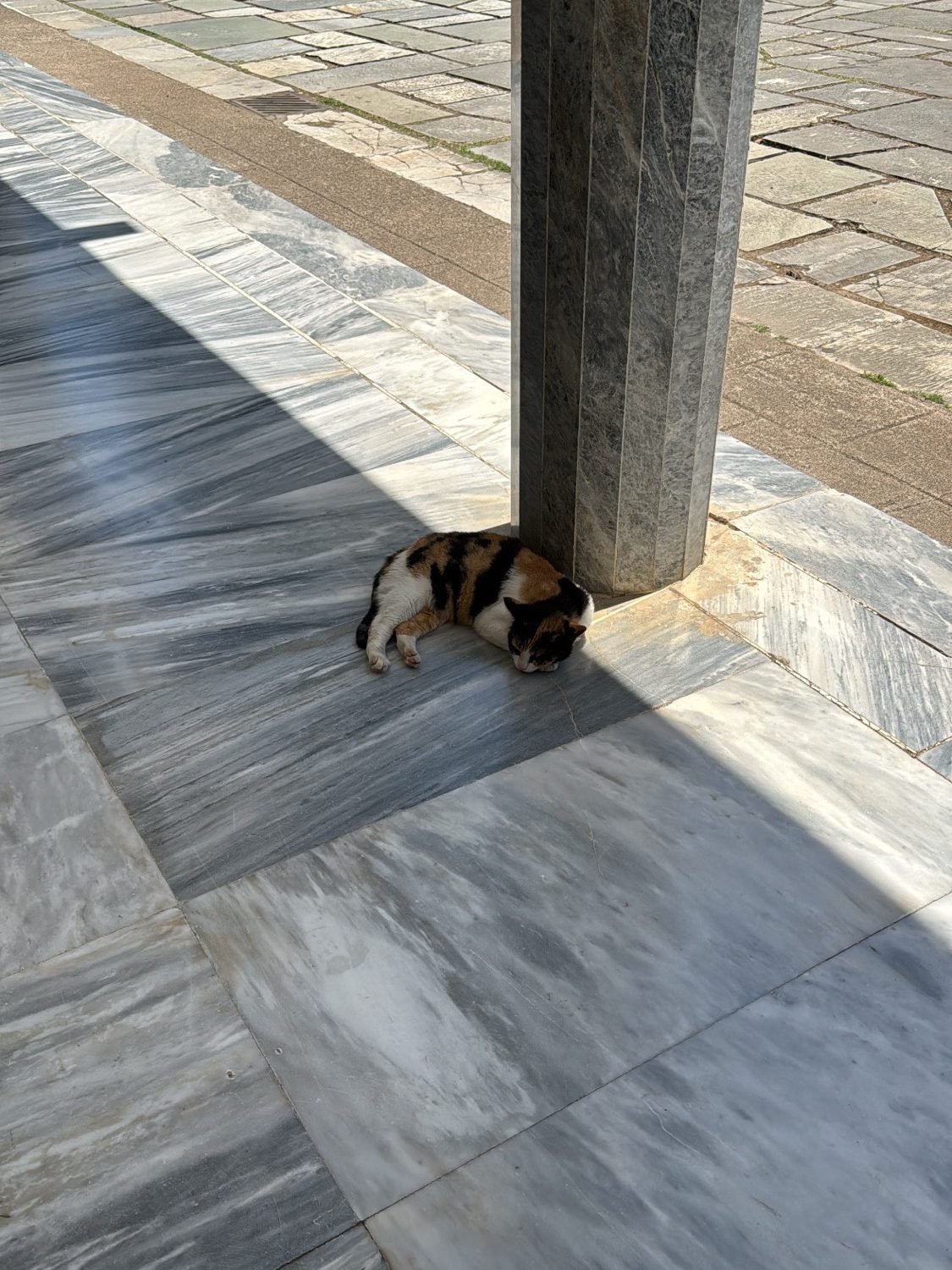
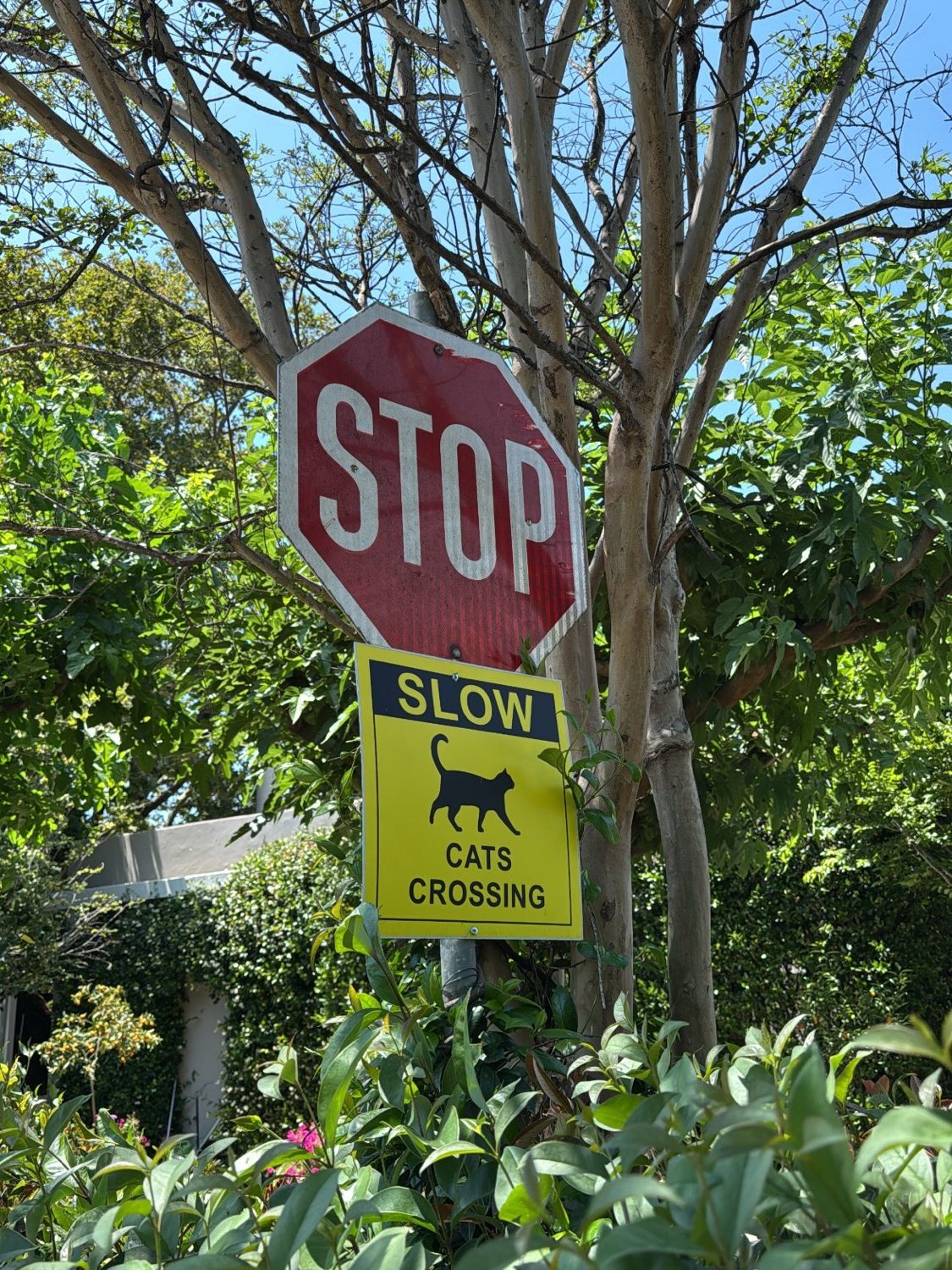
If you’re visiting during the off-season, and by that I mean not during the Olympic torch-lighting ceremony, Olympia feels like a quiet respite from Greece’s busier tourist hubs despite being one itself. It’s peaceful, slow-paced, and if you’re lucky, you might be joined by a few stray animal companions on your stroll through town.

Ready, Set…
So let’s triple-jump right into how to get here.
As always, the most convenient method is by car. But it’s not a short or easy drive, you’d be cutting across the entire country in 4.5 hours, and much of the road after the highway is a narrow one-lane road.
You could make the trip part way by flight by arriving in Kalamata Airport and taking a bus or renting a car from there. But just note that the Kalamata airport mainly operates in summer and does not remain open throughout the year.
There are tour groups offering day trips to Olympia from Athens, but most are quite pricey, so if you’re traveling on a budget, this may not be the move.
For public transport, it’s a combo of bus and/or train. First, we gotta get to Pyrgos.
KTEL Ileias runs regular buses from Athens (and Isthmus) to Pyrgos every hour or so. Tickets cost around €22–23, and the journey takes about 4–5 hours. The bus stops for a break midway, but I recommend packing snacks and visiting the bathroom before you board. Here’s the link for the schedule.
Once in Pyrgos, you’ve got three options to reach Olympia: taxi, bus, or train.
Buses run from Pyrgos to Olympia every 30 minutes to an hour, for just €2.30.
Alternatively, you can take the train from either Pyrgos or Katakolo (a nearby port city). Trains only run 3–4 times a day and mostly in summer, so check the official site before committing.
I actually took both, bus in, train out, and honestly, for €2, the train was quick, efficient, and surprisingly scenic.
Technically, a day trip to Olympia from Athens is possible, but I wouldn’t recommend it. Between the long journeys there and back, site visits, and museum hopping, and making sure you don’t miss the last bus, trying to do it all in one day is a recipe for burnout.
If you’re coming from closer cities like Kalamata or Katakolo, or if you’re driving, a day trip is totally doable. As other than the museums and the archeological site of Olympia, taking a nice stroll through the main street or city and maybe having a meal, there really isn’t much else to do in Olympia.
…Go!
Admission to the ancient site is €20, and it’s well worth it. That ticket gets you into the Archaeological Museum of Olympia and the Museum of the History of the Olympic Games of Antiquity. So don’t toss your ticket!
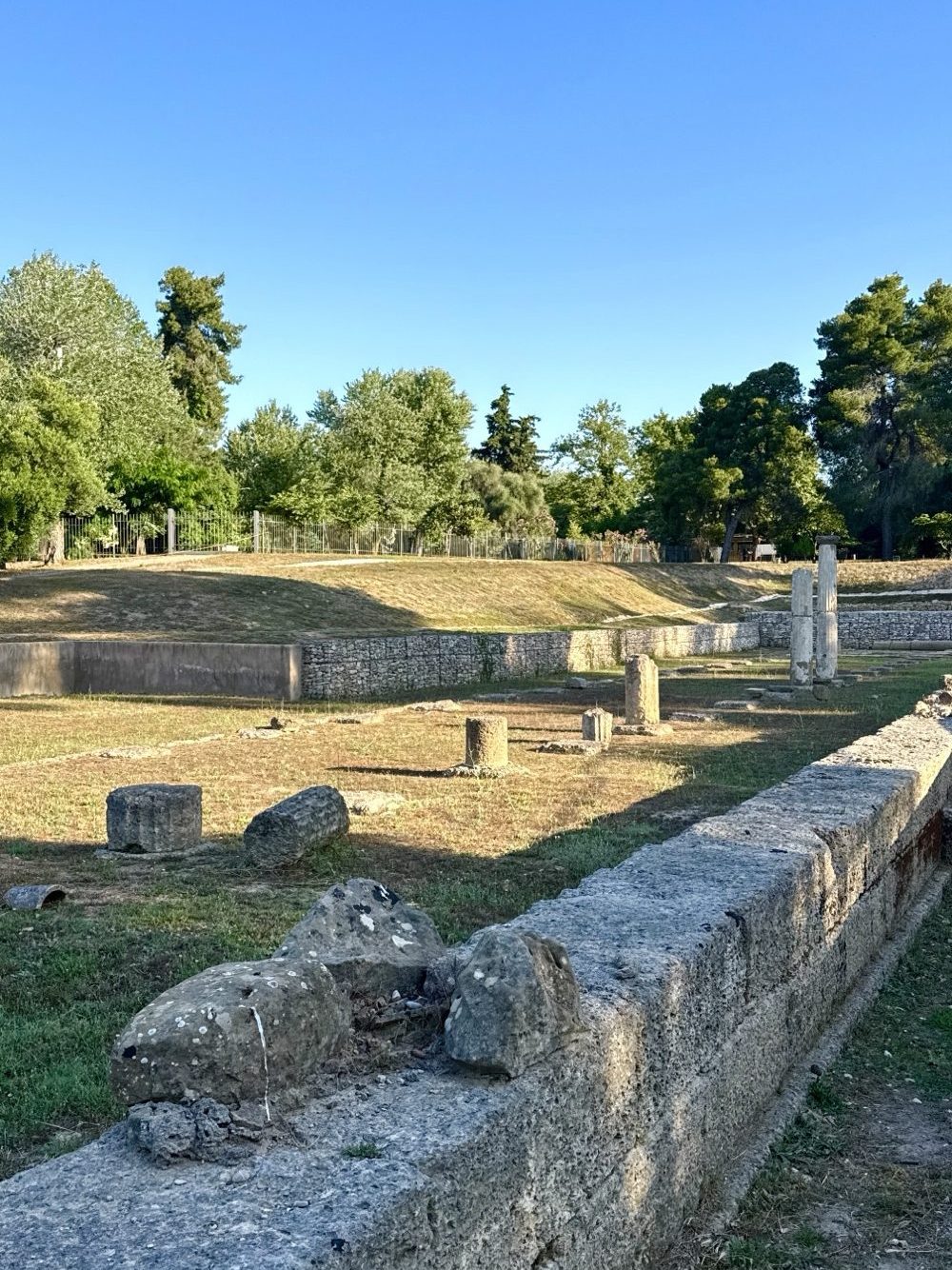
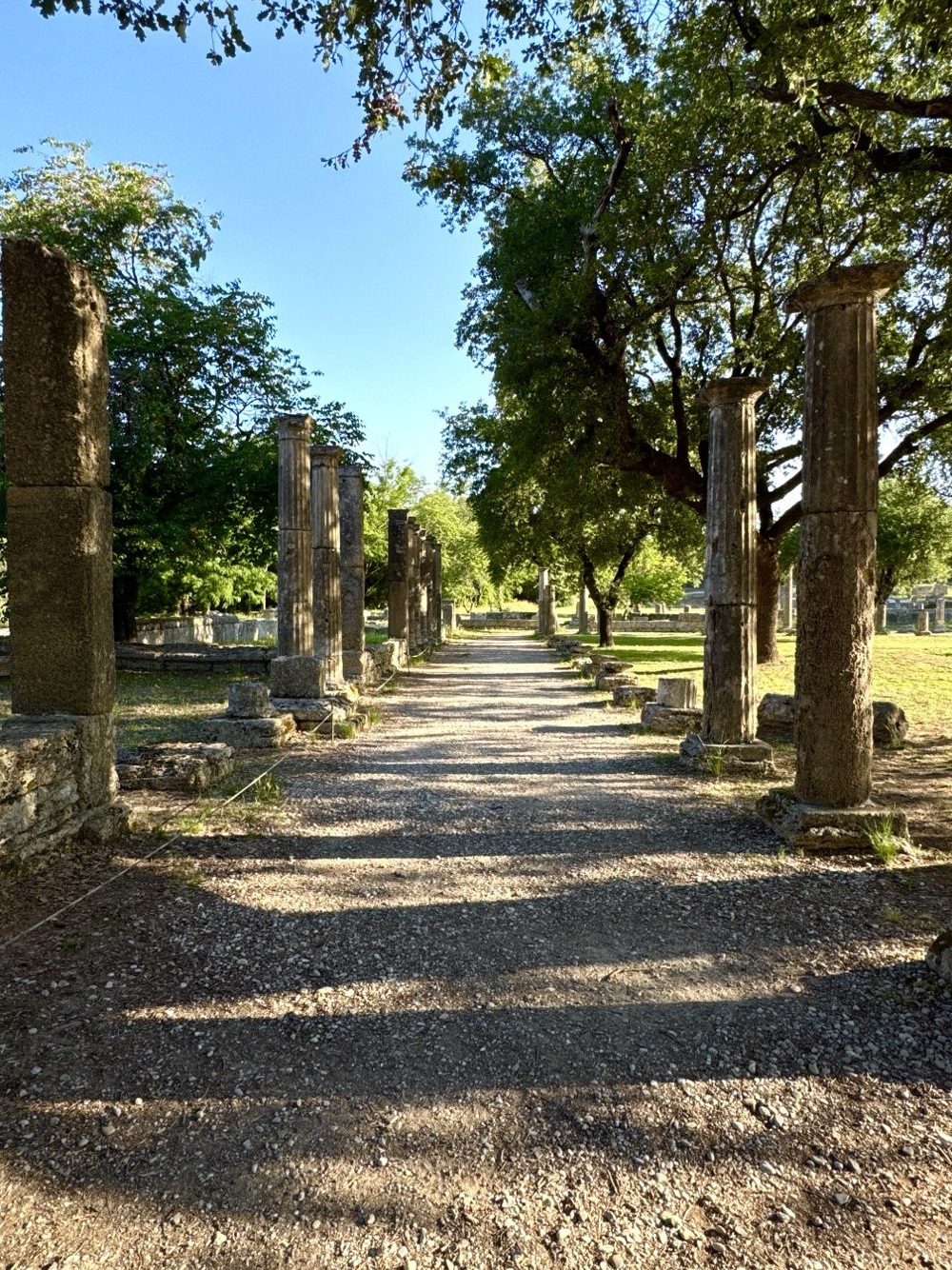
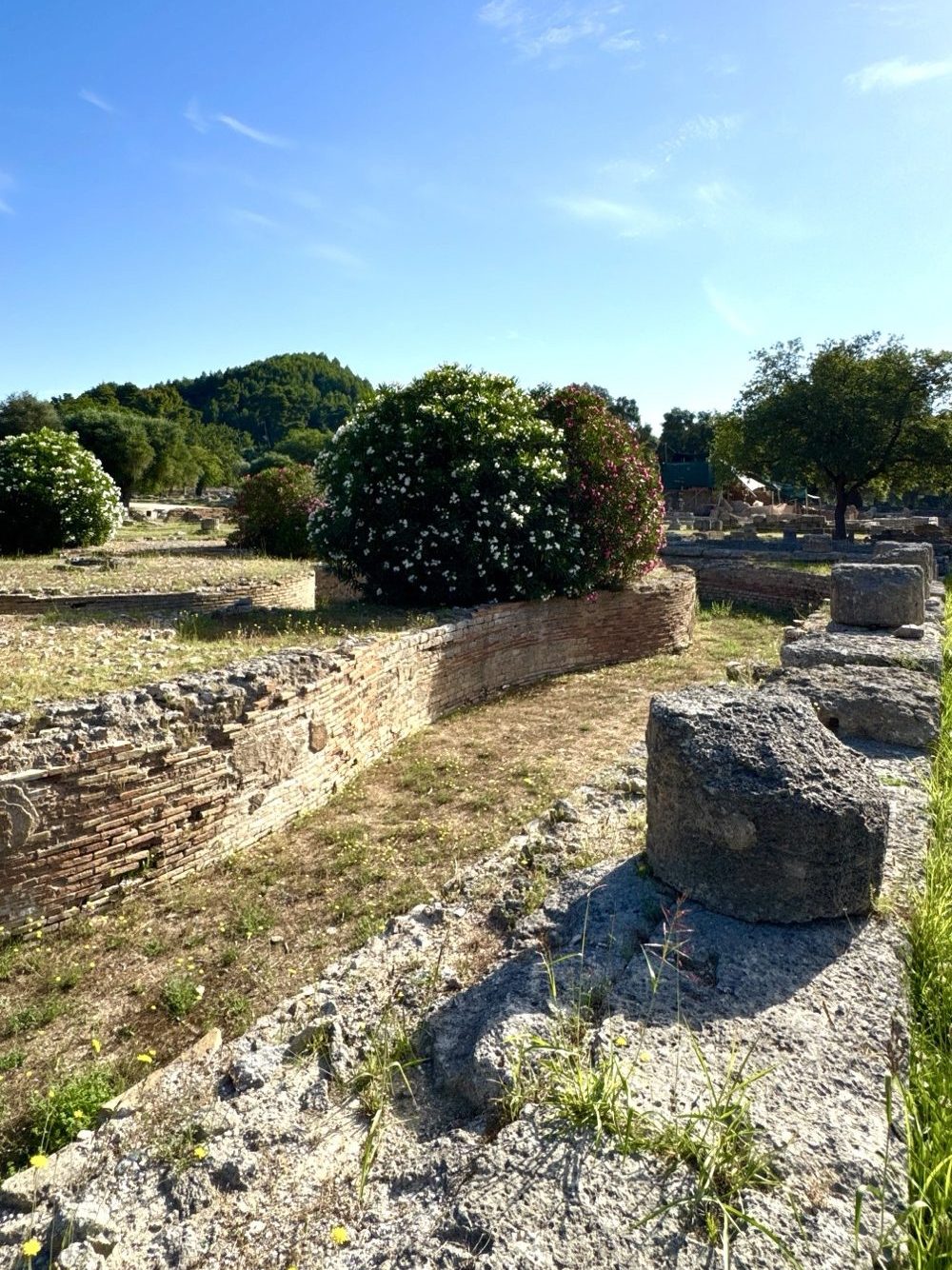
Once inside the main gate, you’ll pass the Gymnasium and stroll into the ancient athletic and social quarters. Step inside the Leonidaion, which once housed VIPs during the Games. You can wander through the ruins at your leisure, respectfully, of course. (Seriously, why do people always want to climb ancient stuff?)
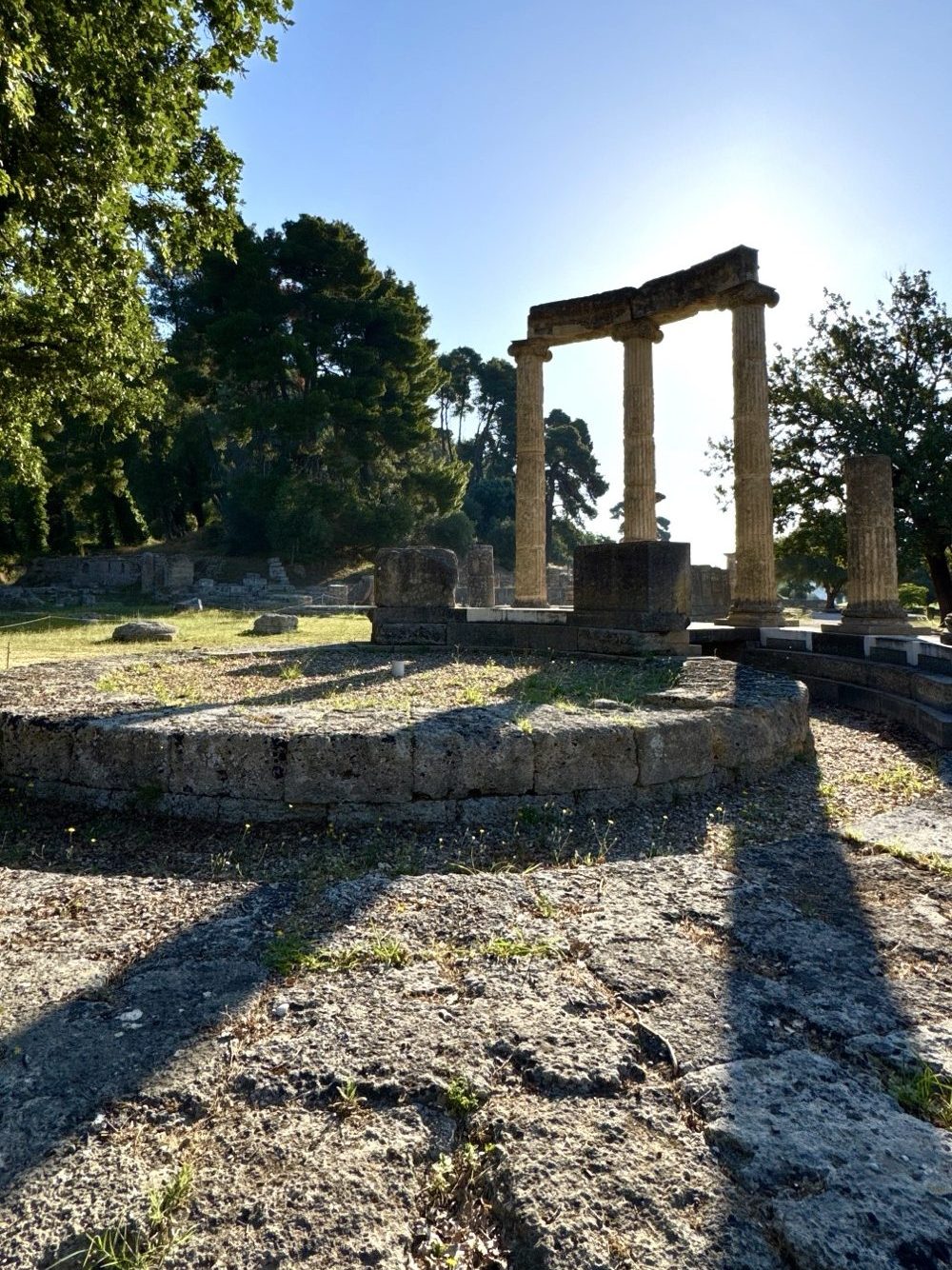
Don’t miss the Philippeion, a circular monument built by Philip II of Macedon, and the workshop of Phidias, where he sculpted the massive statue of Zeus.
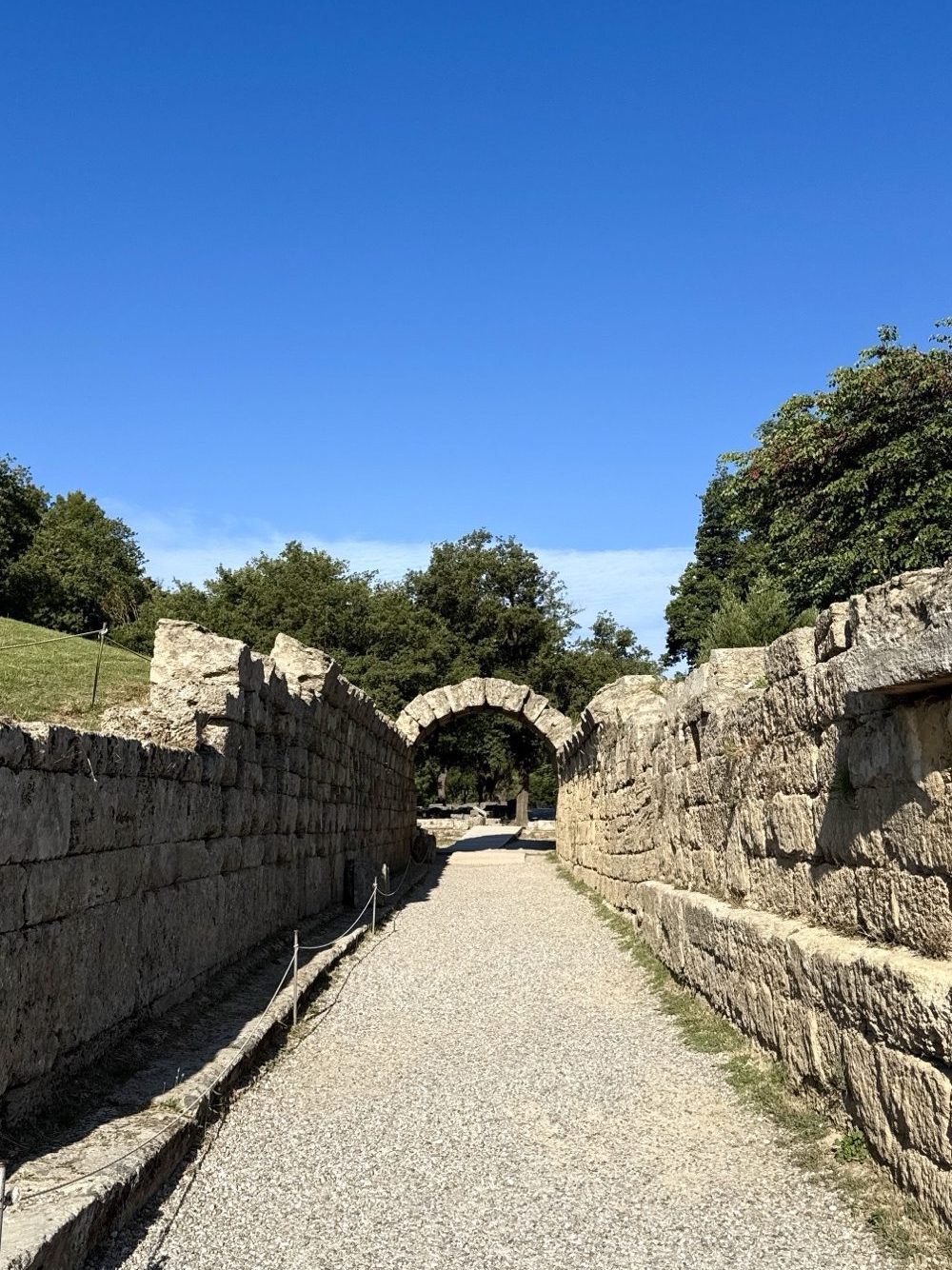
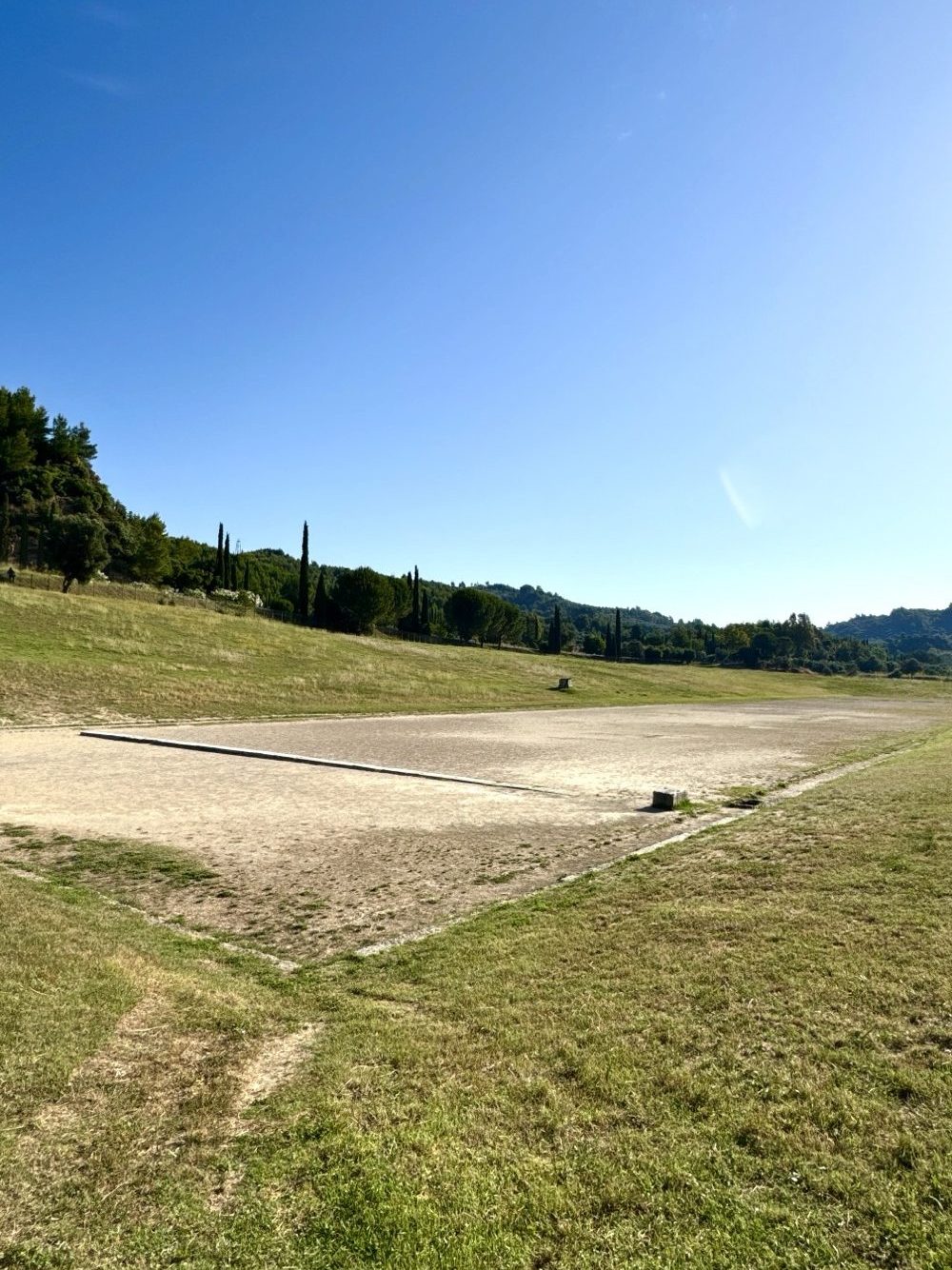
Then head toward the ancient Stadium where up to 40,000 spectators once gathered. Walk through the vaulted Krypte archway and step onto the original track. It’s surreal, and brings out something oddly competitive inside of you. If you’re with friends, now’s the time to challenge someone to a race. Stone starting blocks with carved grooves still mark the lanes.
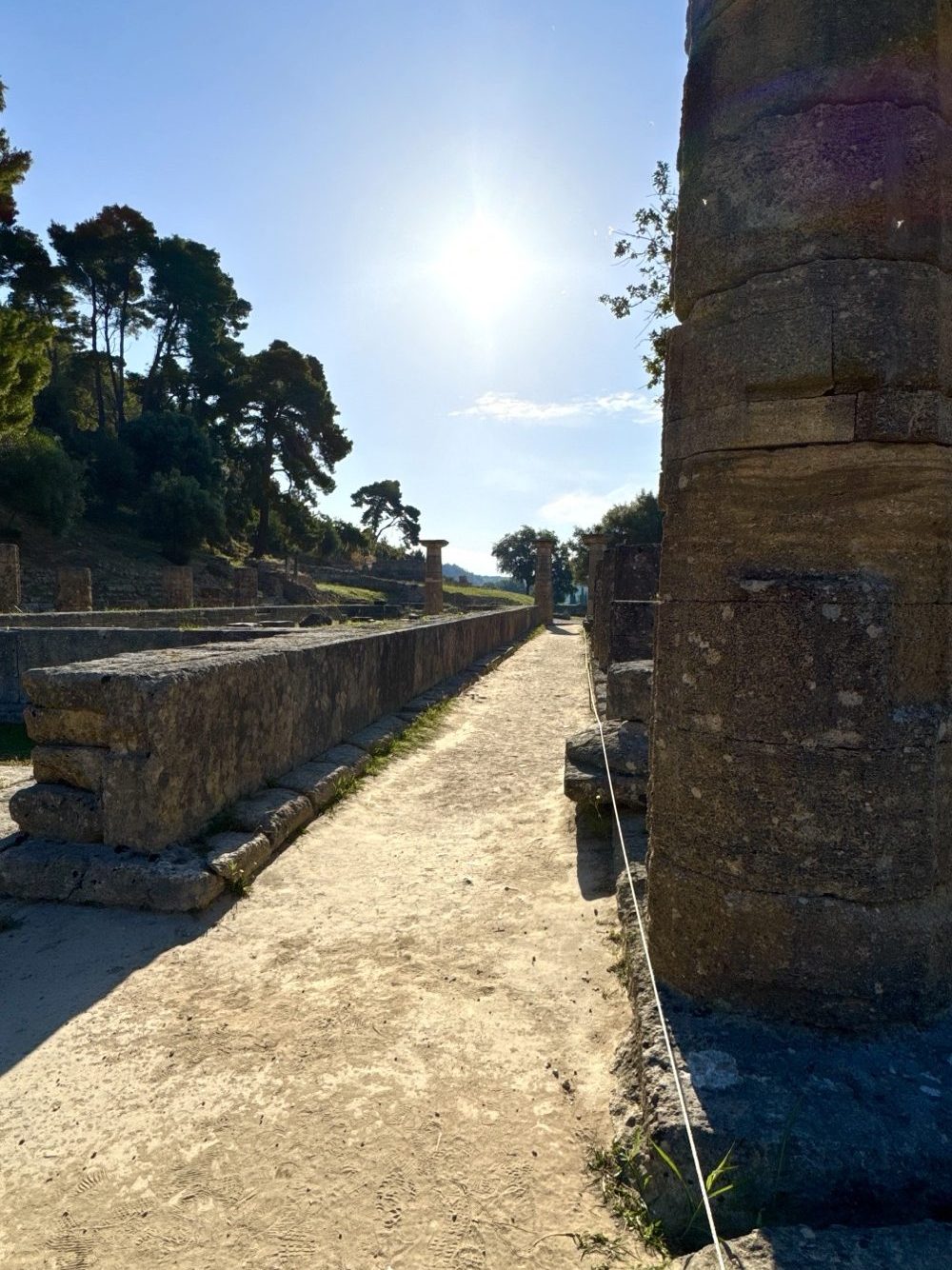
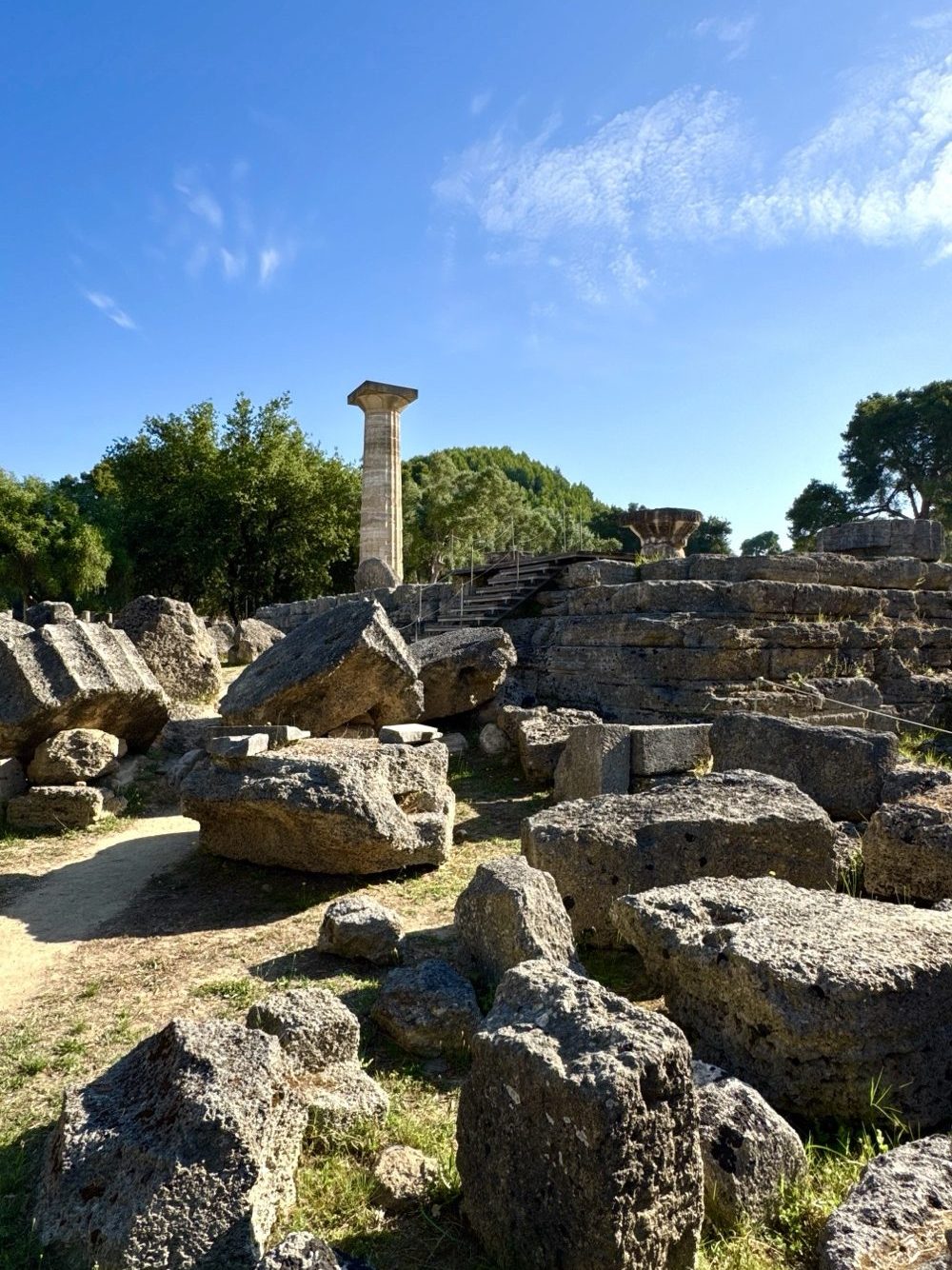
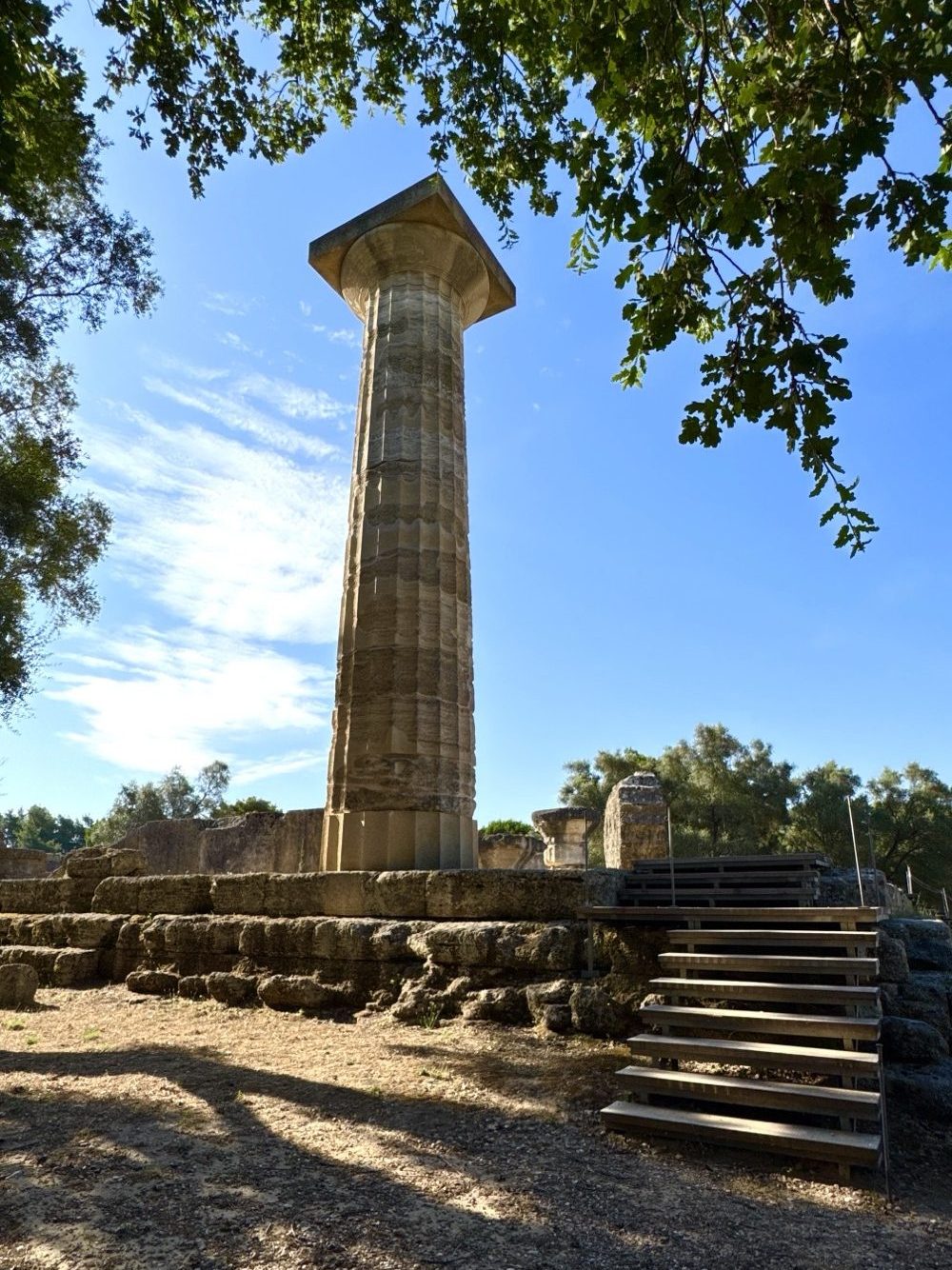
Next, head into the Altis, the sacred heart of Olympia. You’ll pass the remains of the Temple of Zeus, once home to the famed gold-and-ivory statue of Zeus (one of the Seven Wonders of the Ancient World), and the older Temple of Hera, where the Olympic flame is still lit every four years.
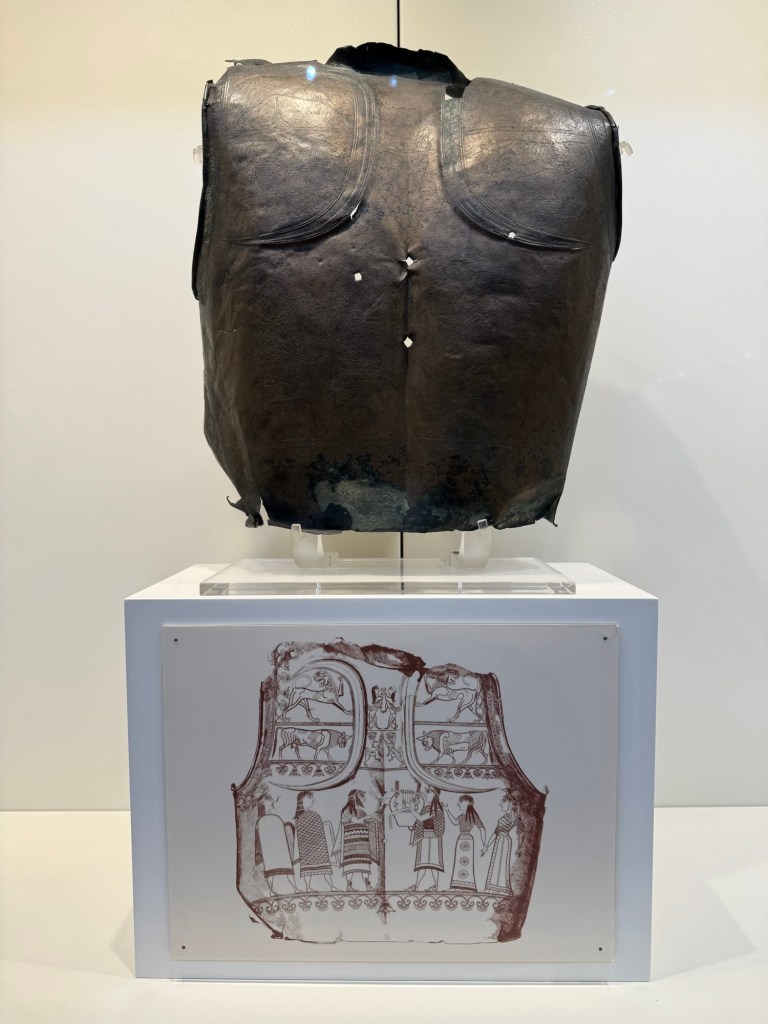
Just 10 minutes away is the Archaeological Museum of Olympia, an absolute must. This place houses artifacts that span Olympia’s entire timeline, from prehistoric days to the Roman era.

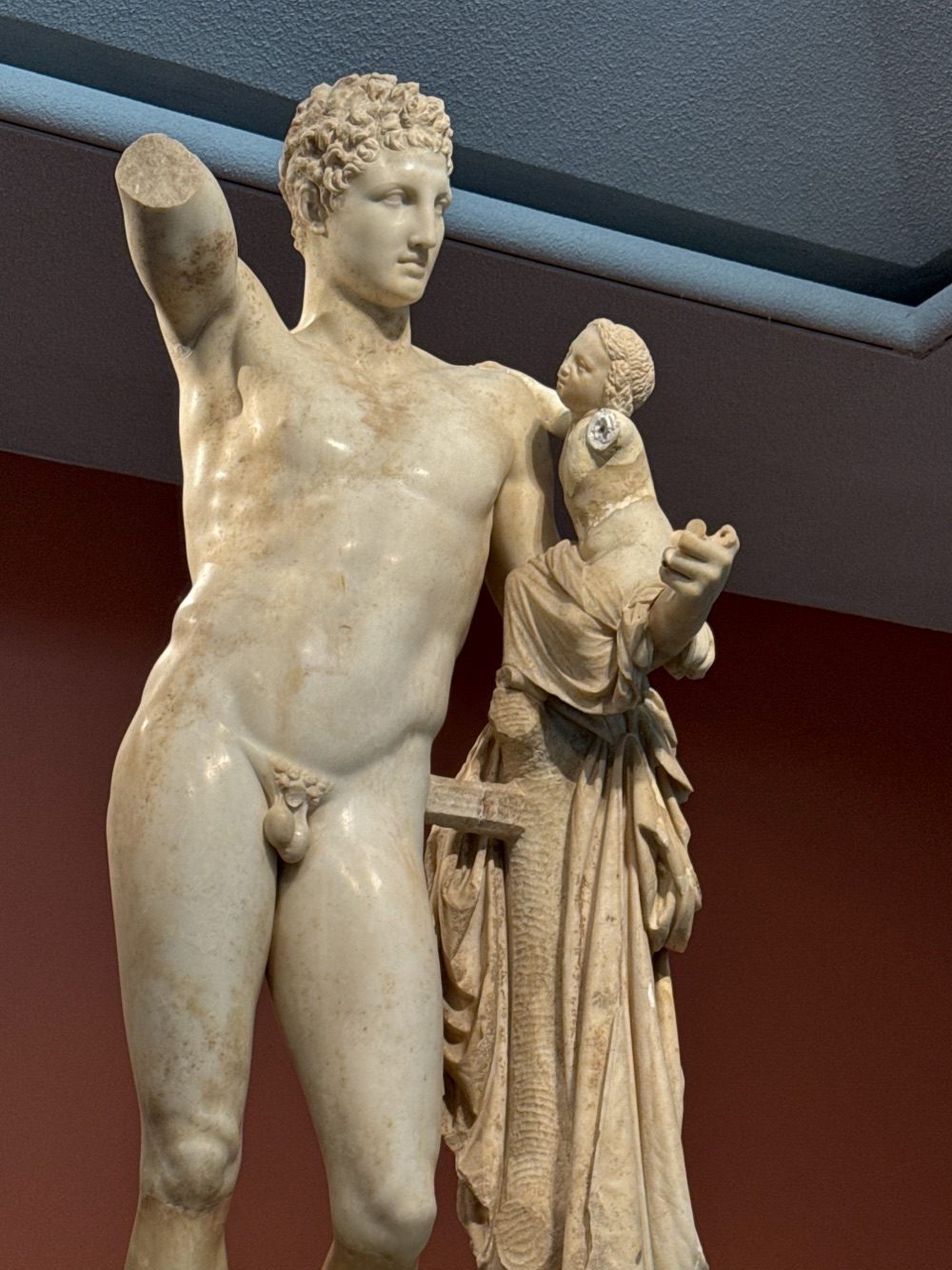
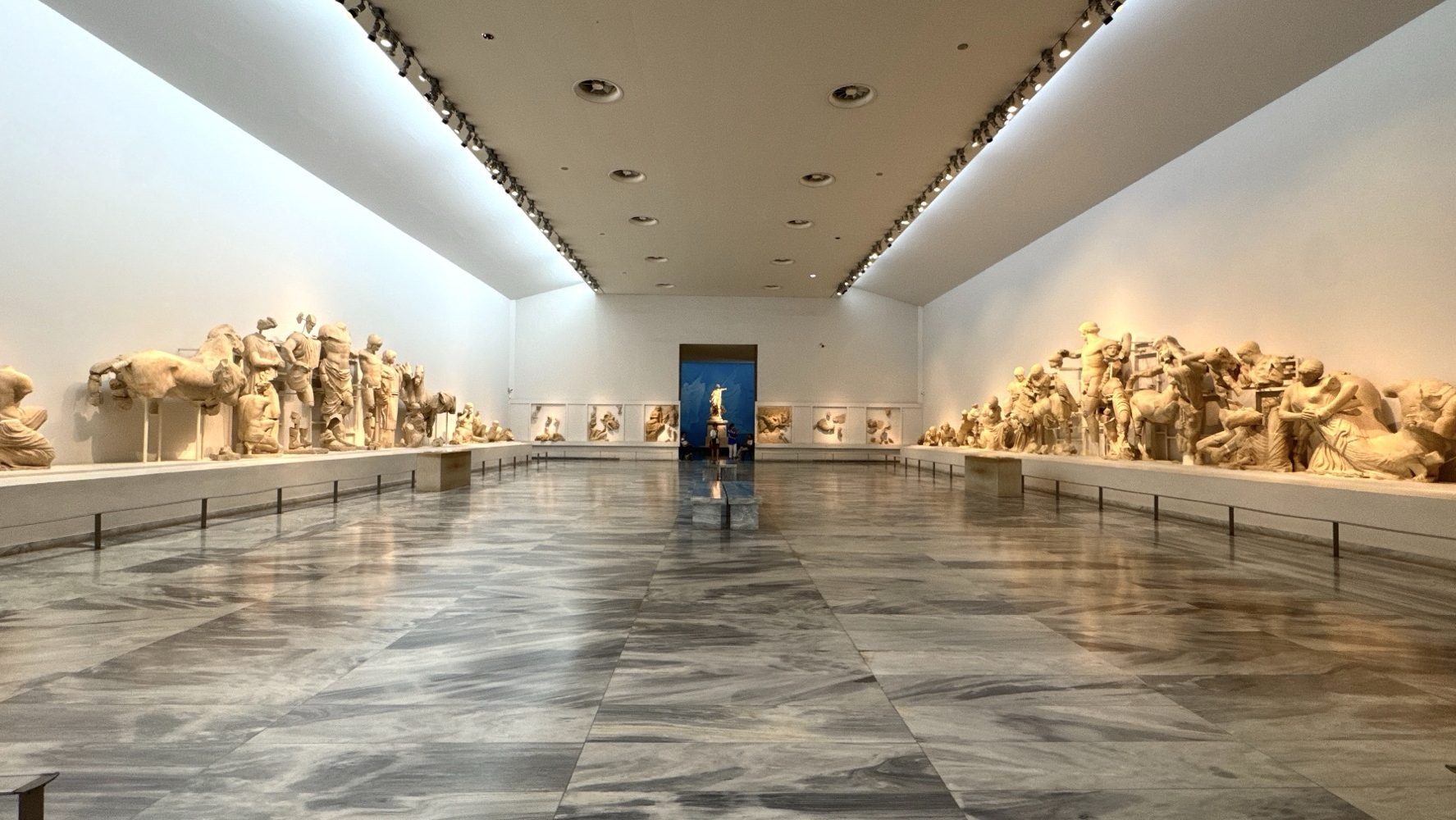
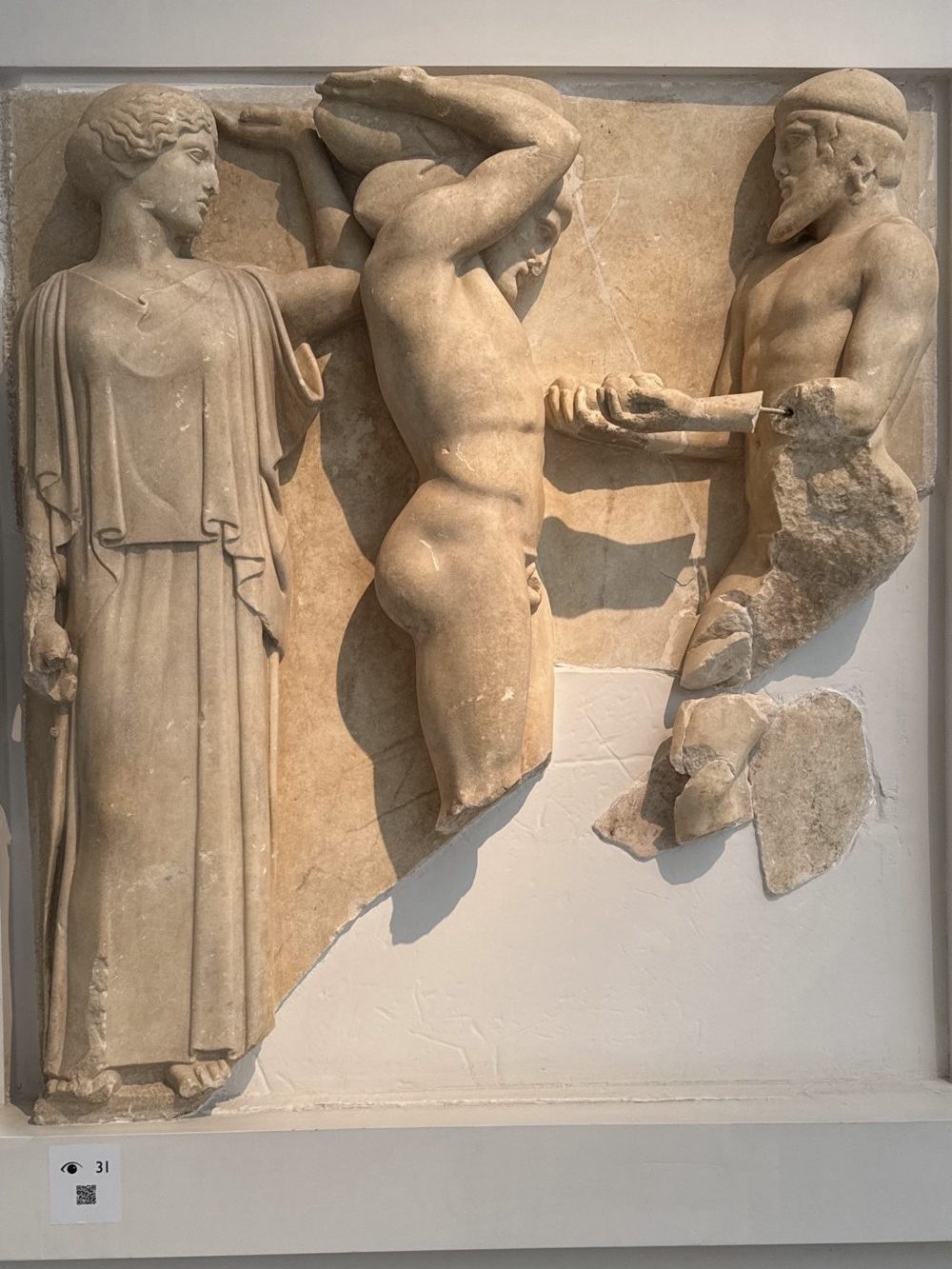
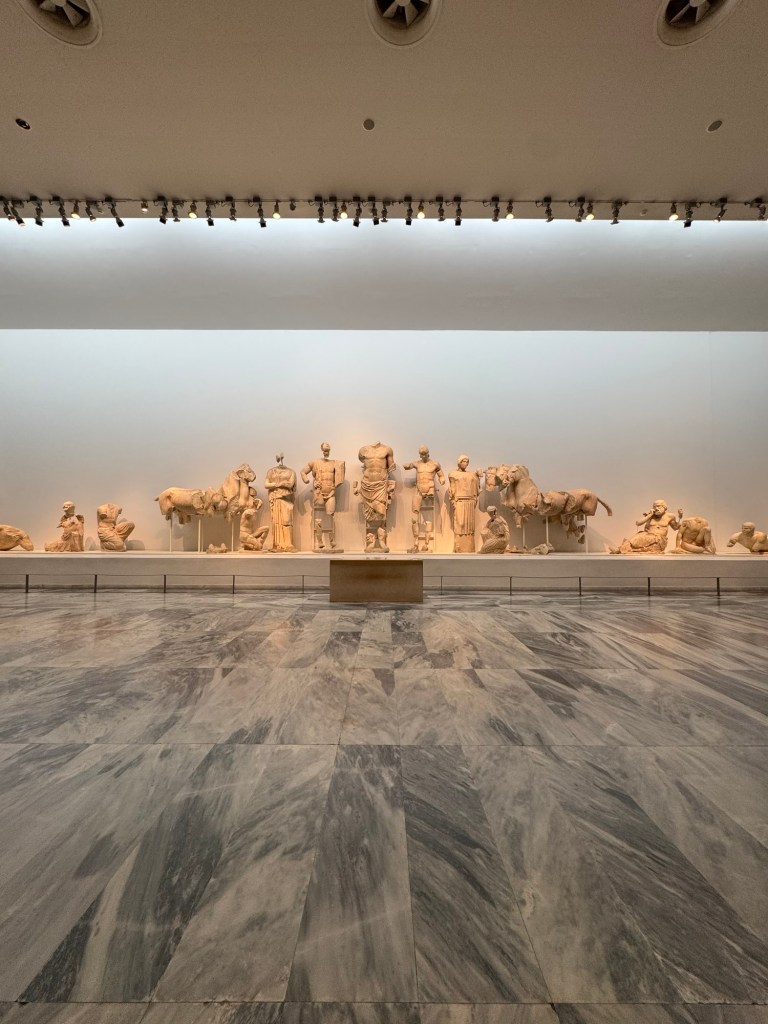
The museum’s crown jewel is Hermes of Praxiteles, a marble statue of Hermes holding infant Dionysus, praised for its grace and lifelike quality. You’ll also find the massive sculptural groups from the Temple of Zeus: pediments and metopes depicting the chariot race of Pelops and Oinomaos, the battle of Lapiths and Centaurs, and the Labors of Heracles. They’re displayed dramatically in their own dedicated room.

Near the exit, don’t miss the 2.1-meter-tall marble statue of Nike, goddess of victory, commemorating a military win around 421 BCE.
The museum is well-labeled in Greek, English, and German, thanks in part to the German archaeological team who began excavations under a treaty with Greece, giving them exclusive rights to work on the site.
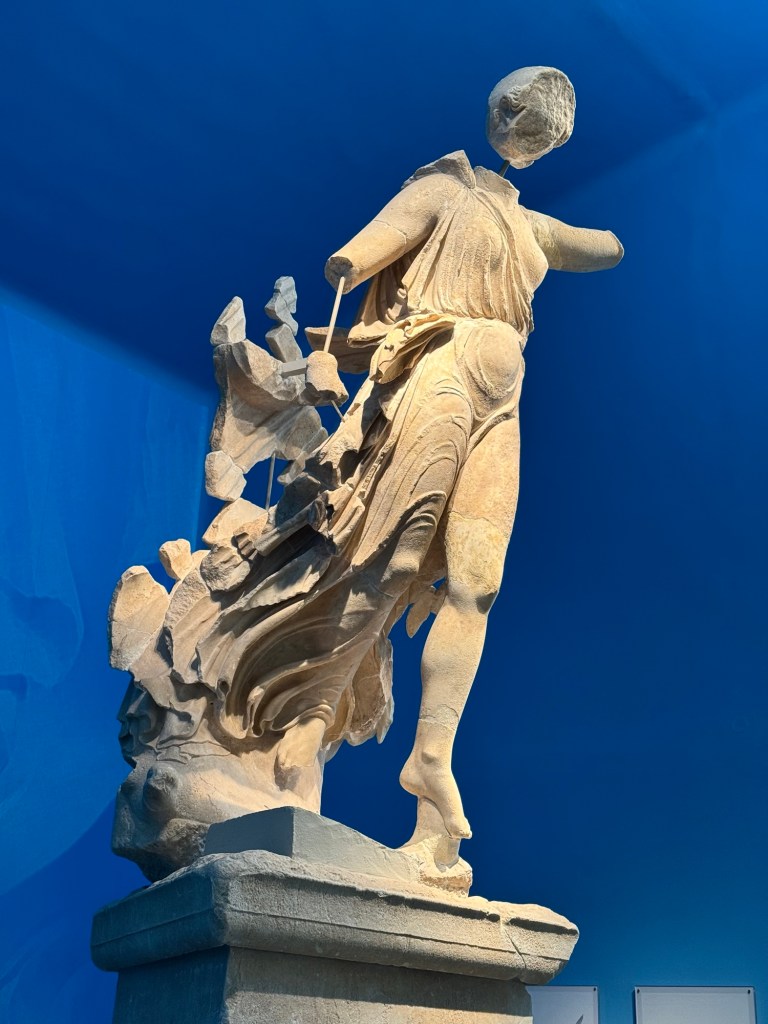
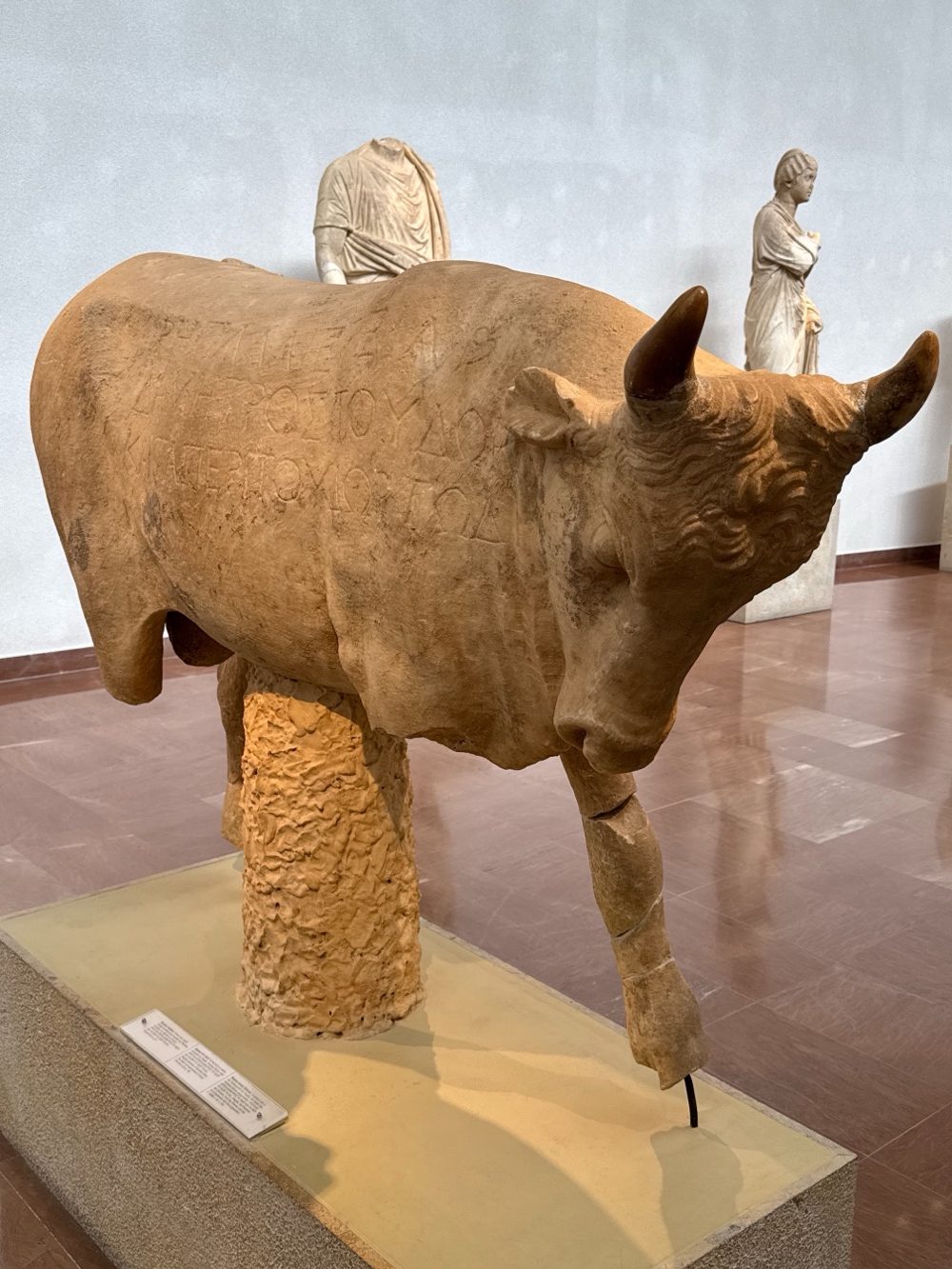

The layout is intuitive, moving chronologically from Olympia’s earliest history through to its Classical and Roman heights.
And then there’s one more must-visit spot — the Museum of the History of the Olympic Games of Antiquity. Bit of a mouthful, but incredibly worth it. About 15 minutes from the site, this museum focuses entirely on the origin, evolution, and significance of the ancient Olympic Games.
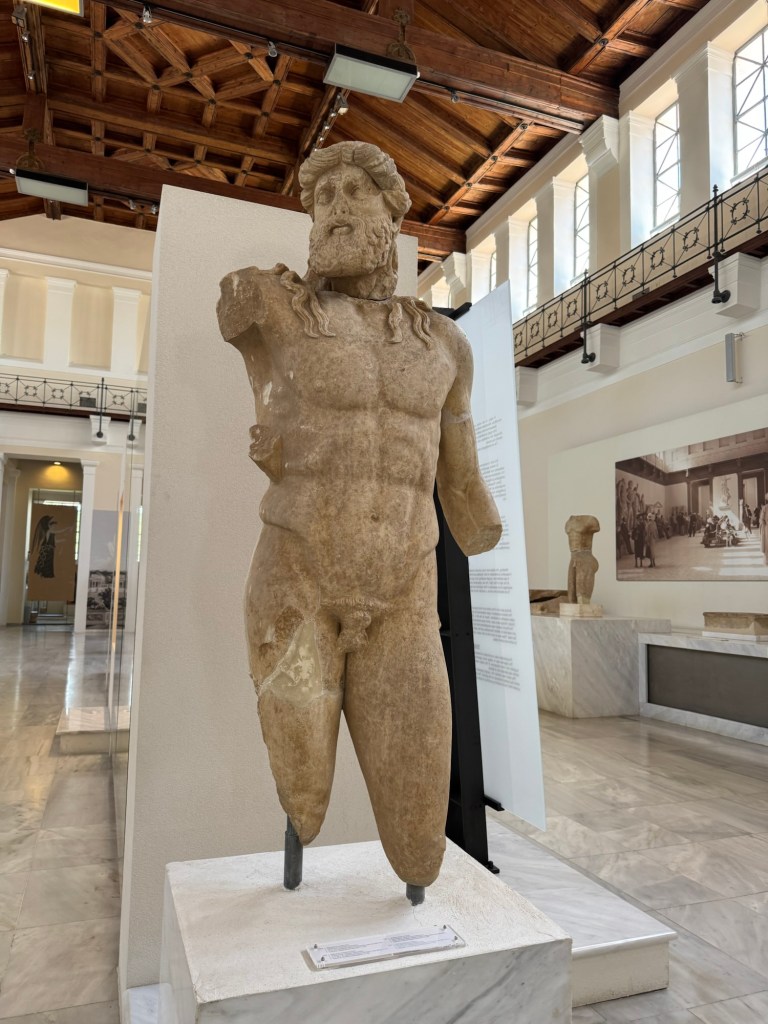
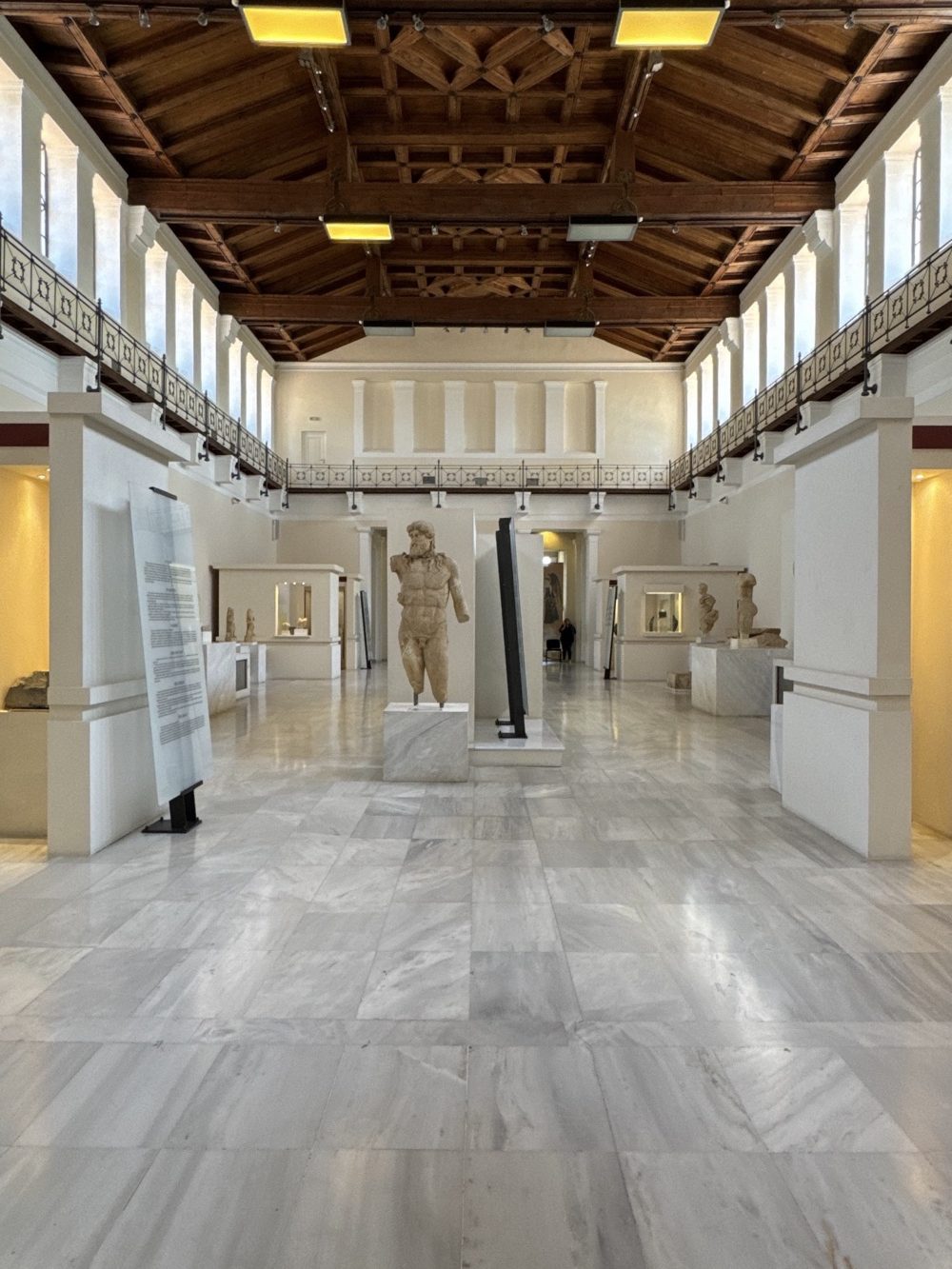
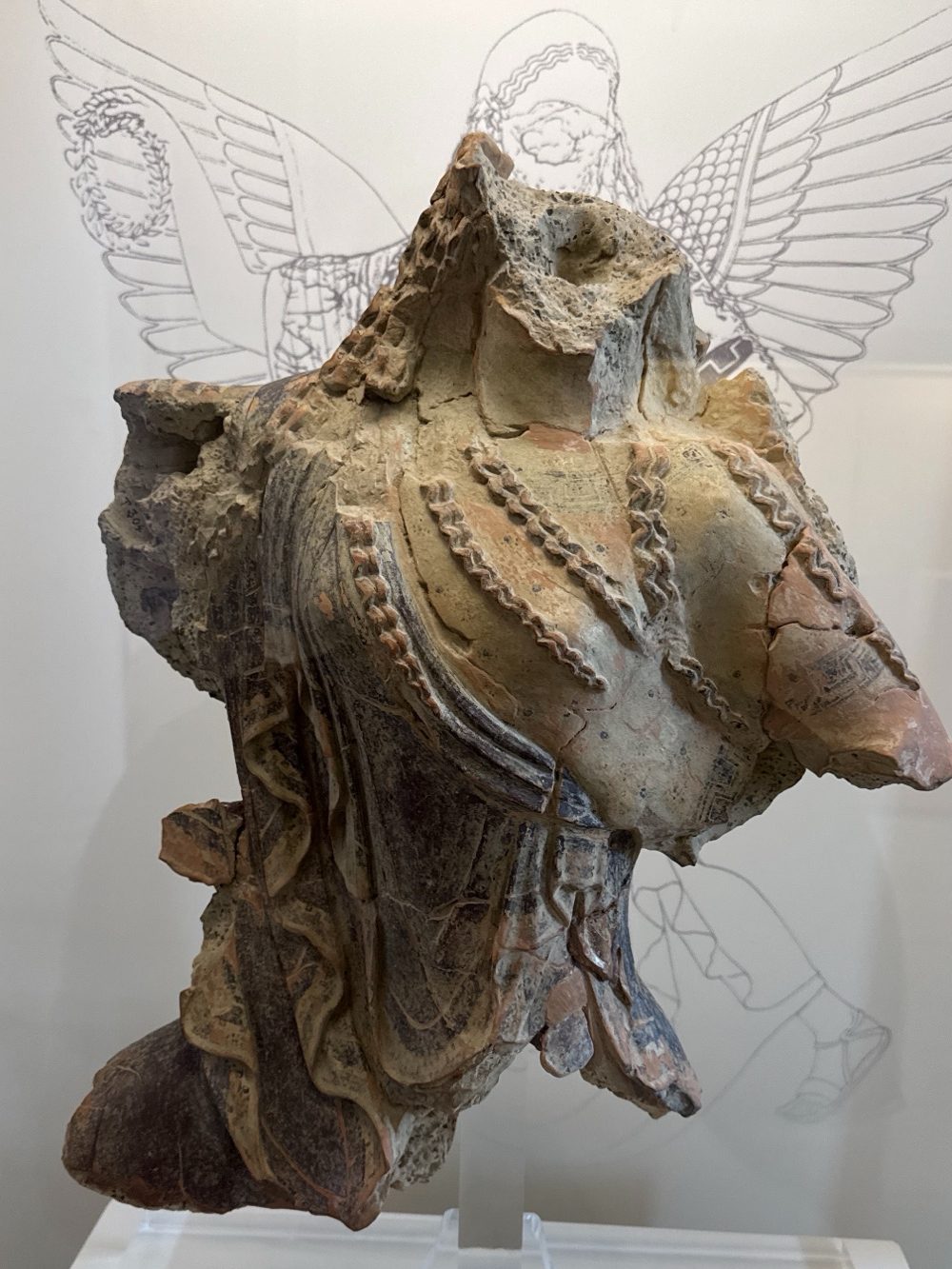
Here, you’ll find everything: competition breakdowns, game evolution, athlete diets, gymnasium life, victory dedications, and more. While the Archaeological Museum tells the story of Olympia the sanctuary, this museum tells the story of Olympia the Games and the people.
The Finish Line?
And just like that, my torch-lit time in Olympia comes to an end. My skin is lobster red, my phone is brimming with pictures of ruins and relics, and I may or may not have raced some very competitive tourists at the ancient stadium. (I lost, of course, but I’m never one to back down when a glove’s been thrown.)
But there’s no rest for the curious, next stop: Thessaloniki. I’ll be diving into the world of Macedonian kings, starting with Pella, Alexander the Great’s hometown, and Aigai, where his father, Philip II, was buried in royal splendor. Let’s see if the north holds secrets as grand as the south.
 Shenanigans Abroad