Debauchery and Divinity
Another Uphill…
Located along a narrow stretch of land known as the Isthmus of Corinth lies the mighty remnants of the Ancient City of Corinth.
Much like its other famous cousins, the Ancient City of Corinth has it fair share of myths and legends. It was supposedly founded by Sisyphus, the dude doomed to eternally roll a boulder uphill in the Underworld. It’s where Jason and Medea settled after their whole Golden Fleece fiasco, and where Bellerophon tamed Pegasus before slaying the Chimera. The goddess Aphrodite was also highly revered here, with Corinth serving as a major cult center in her honor, which gave the city quite the reputation for indulgence and debauchery in antiquity.
In real life, Ancient Corinth was one of the wealthiest and most powerful city-states in Greece. By the time the Bronze Age rolled in, it had grown into a Mycenaean stronghold and founded colonies of its own. Thanks to its strategic location between the Aegean and Ionian Seas, Corinth was both a commercial giant and a cultural hub from the Archaic through Roman periods.
These days, the ancient ruins watch over modern Corinth like a weathered sentinel in the hills. The city itself feels almost island-like, hugged on three sides by the gulf, clean beaches, parks, and mountain-backed shores surround a quaint little town where Pegasus-themed cafés dot the streets. While not as lively as other cities, it’s definitely worth a pit stop if you’re already heading to the ruins.
Just a quick PSA though, The modern city and the ancient archaeological site are not the same location. They’re at least 8 km apart. Don’t assume you can just rock up in town and stroll over to the ruins. You will regret it.
The Journey There
The most obvious and straightforward option is by car. I’ll let Google-sensei handle that for you.
Plenty of tour companies also organize day trips from Athens to Corinth, often bundled with Mycenae, Epidaurus, or a boat ride through the Corinth Canal.
If you’re going the public transport route, here’s how:
You can take the direct train from Athens to Corinth, operated by Hellenic Train. A return trip costs €13.60, and a one-way is €8.50. After arriving at the station, your best bet is to take a taxi to Ancient Corinth (it’s about 6 km from the station). If you’re feeling extra brave and have steel-calves, renting a bike or walking is technically possible — but know it’s not a quick stroll.
You can also take a bus. KTEL Kifisos in Athens also run regular buses to Isthmus every hour or so. Located on the same route to get to Nafplio, the trip takes about 1.5 hours.
Here is the link for the KTEL website so you can check out the schedule or buy your tickets online. While it is technically stated on the website that they do have direct buses to the main city of Corinth, it was unavailable when i checked in person at the ticketing booth. So it’s always prudent to check with the bus operators on site before purchasing your tickets.
When you alight at Isthmus, there will be another bus stop right in front of the main building/shack that’ll take you into the main city of Corinth, and from there it’s the same story as before, cab, bike, or good old fashioned hiking,
Alternatively, you can hail a cab from the Isthmus Bus station to take you straight to the city/ancient site and skip the whole going into the main city if your onAnother option is the KTEL bus from Athens Kifisos station to Isthmus, which departs hourly. This is the same route used to get to Nafplio. The trip takes about 1.5 hours.
From Isthmus, you’ve got a few options, you can catch a connecting bus into modern city of Corinth, then cab/bike/walk to the ruins, or skip the city entirely and take a taxi straight to the archaeological site.
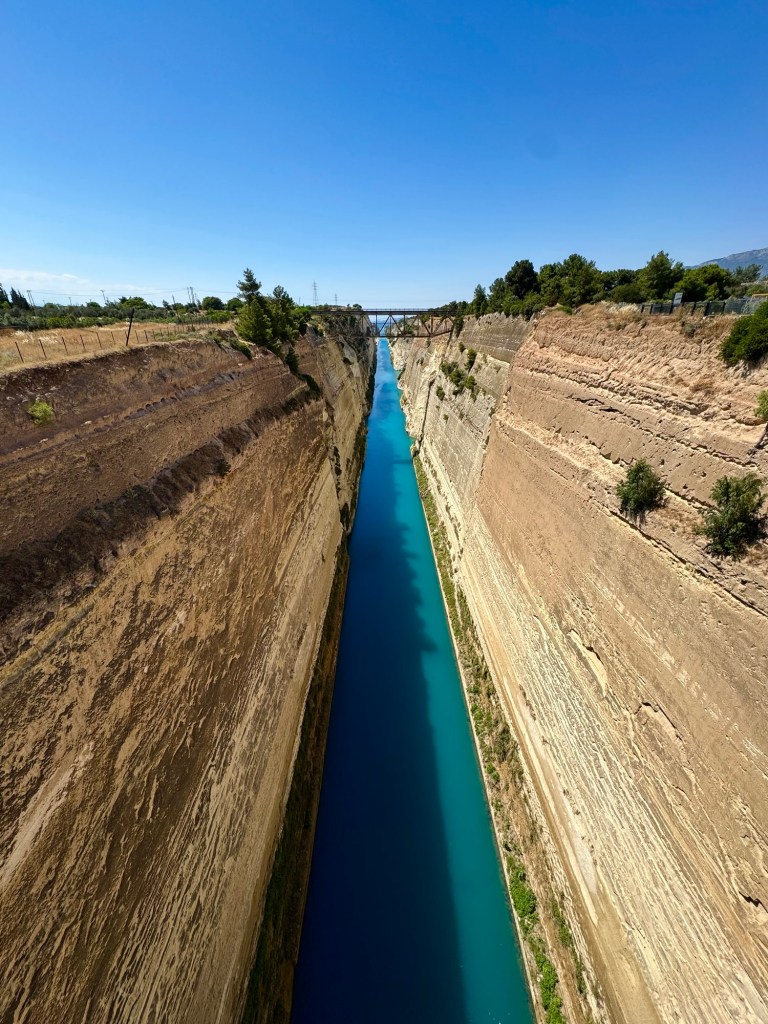
And if you’re stopping at Isthmus, don’t miss the Corinth Canal, located just a 5–10 minute walk from the station. Cross the road and follow the bridge over the gorge. The rusted metal grating underfoot, the dizzying drop into a chasm of blue, it’s surprisingly dramatic for something that’s just casually located under a fairly nondescript bridge,
I lucked out. A group of Spanish tourists who got off the same bus as me were heading to the ruins and kindly let me hitch a ride in their cab. Smooth 15-minute ride. No regrets. And judging by the incline of that road, boi, if you’re walking, prepare to sacrifice your legs to the gods.
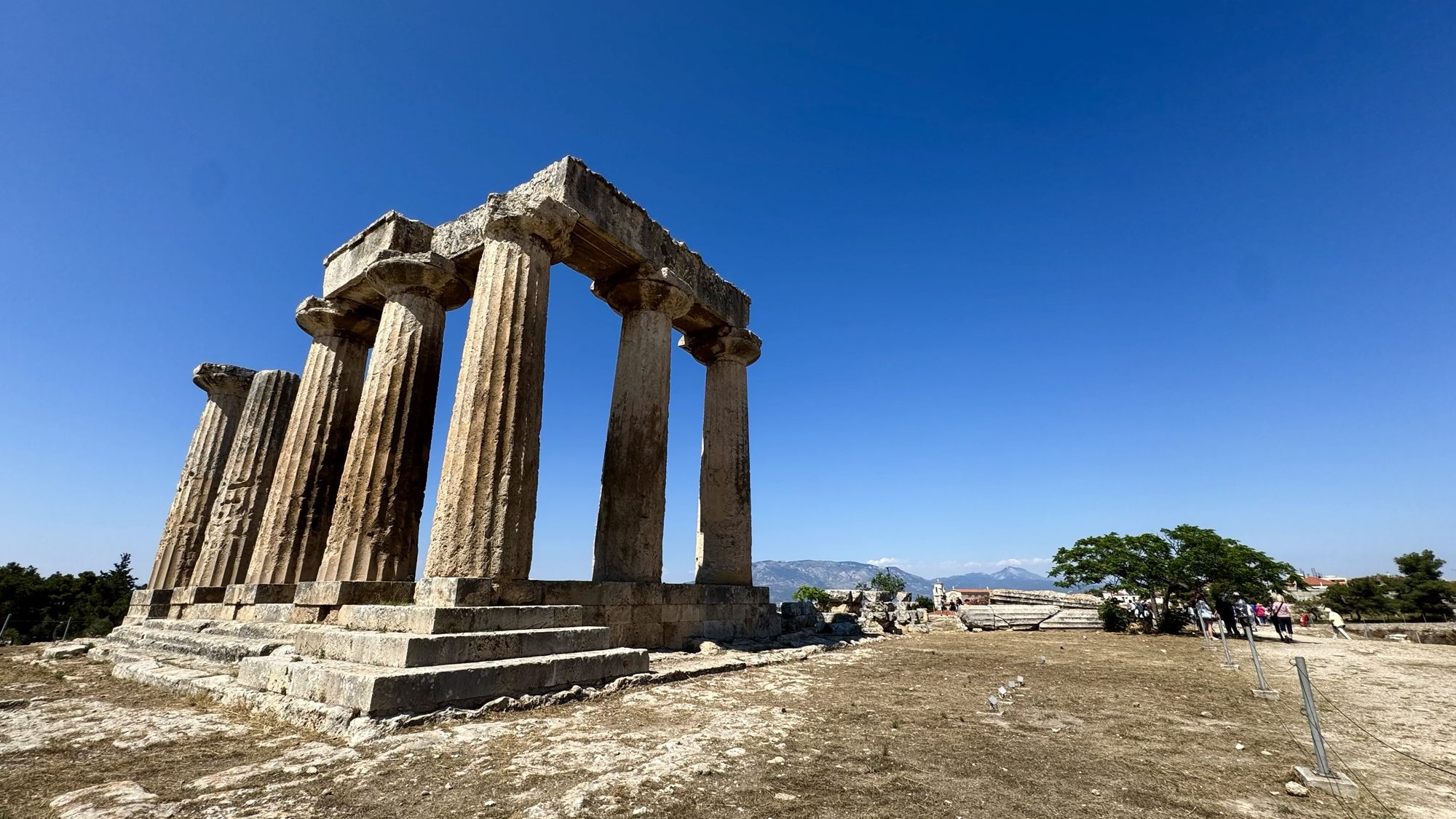
It was not till later in my trip that i started to see similarities with all of these ancient sites and ruins. Uphill is one of them. Which i mostly understood that it was for defensive purposes, or better access to water and resources. Understanding is one thing. Accepting it is another. I believe my calves and thighs have never forgiven me.
The Ancient City
Entrance is €15. Students and EU residents may be eligible to a reduced price ticket, so remember to bring your student card or identification. The ticket includes a visit to the Archeological Museum of Ancient Corinth which is located on site right next to the main entrance.

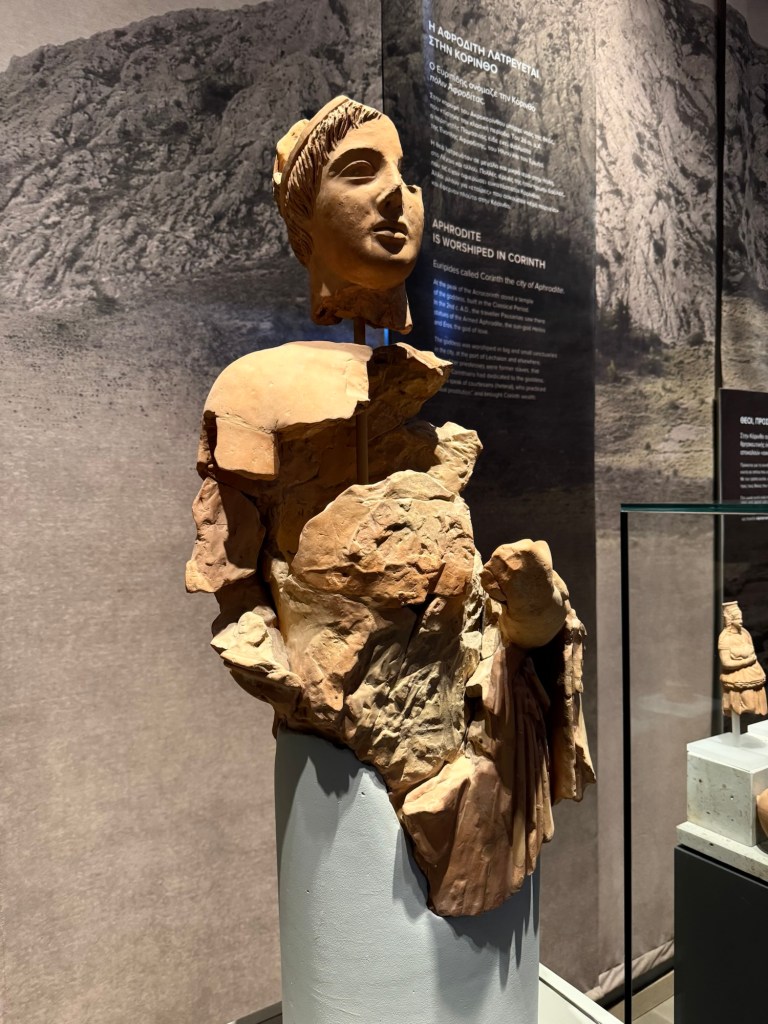
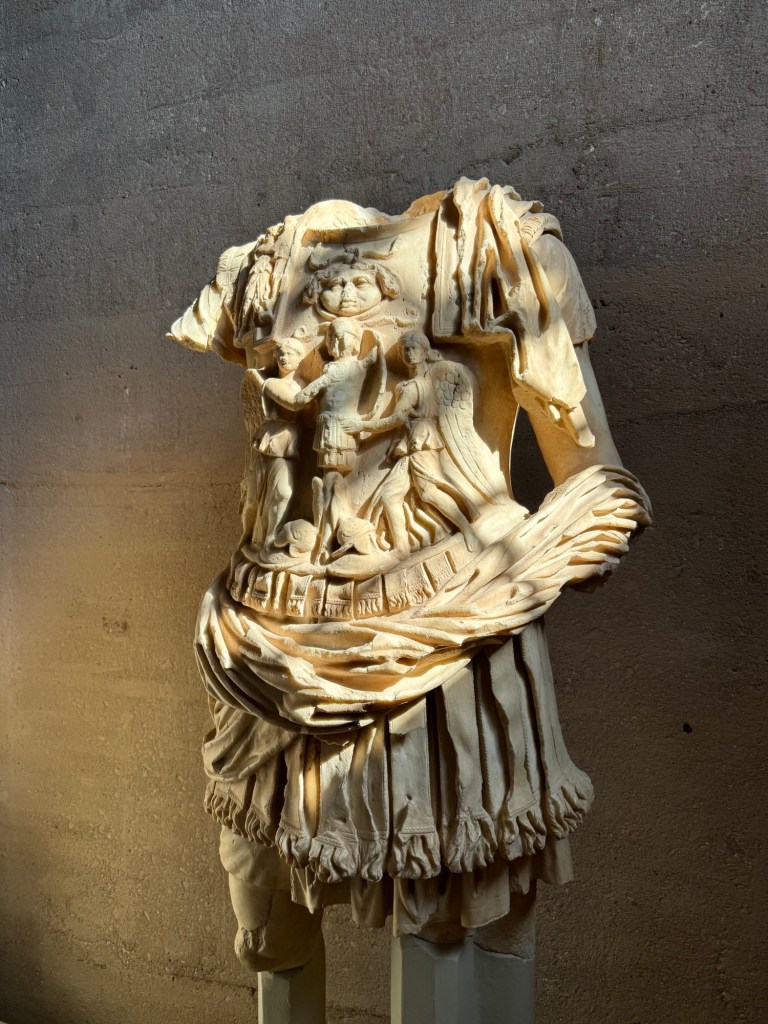
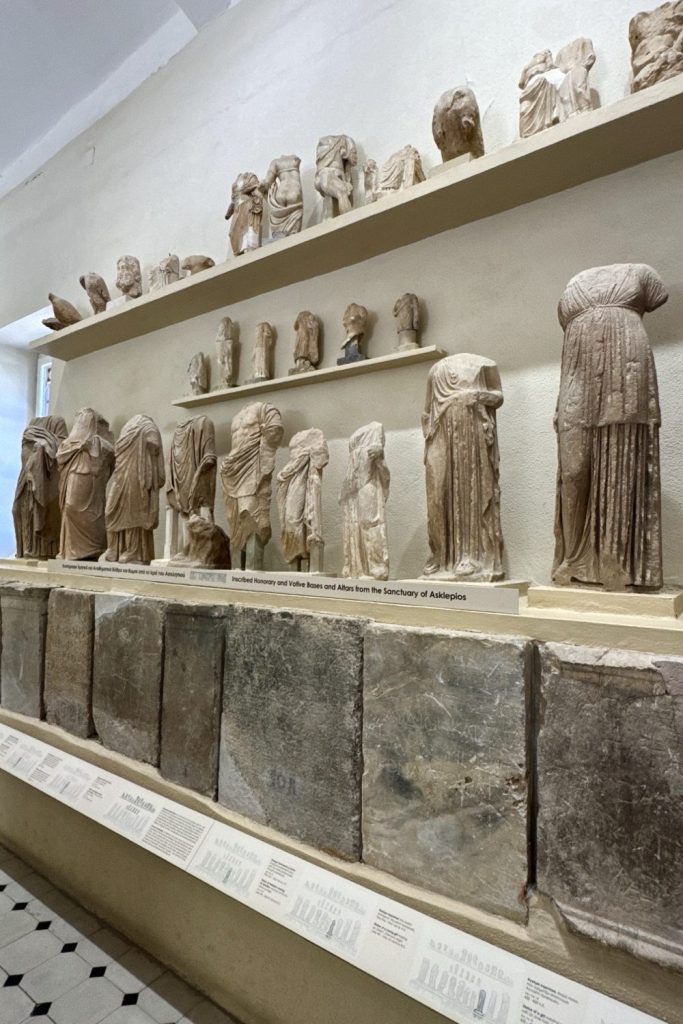
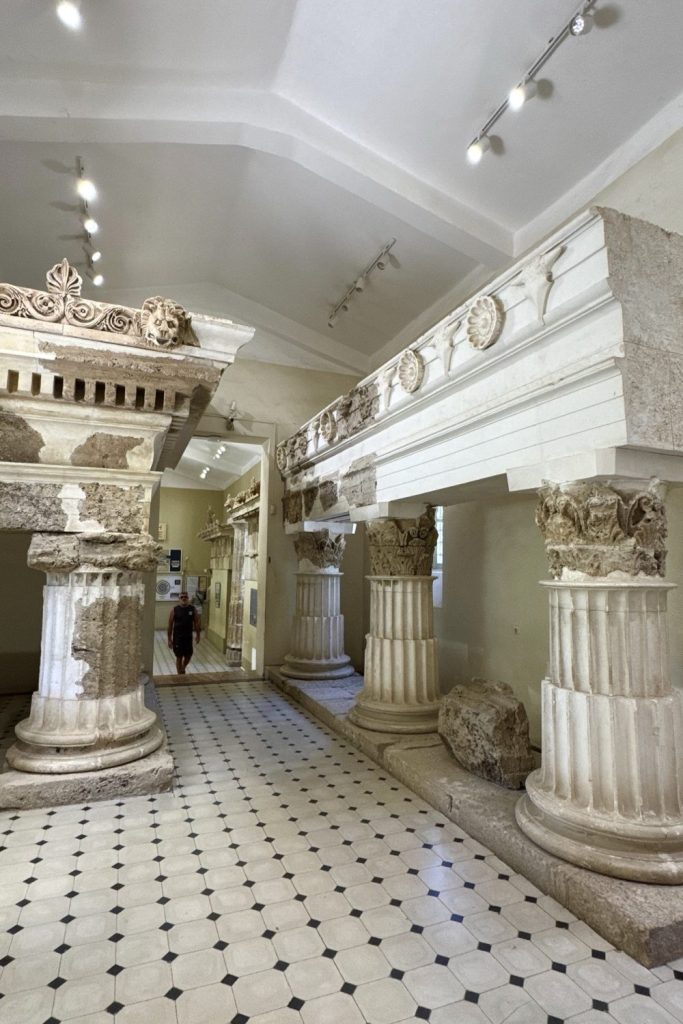
The museum hold findings and restorations from the site of Ancient Corinth and nearby sites. It provides a chronological journey of Corinth’s 7,000-year history, from its prehistoric roots to Roman and Byzantine transformations, with interactive displays, and thematic groupings to illuminate daily life, trade, war, religion, and public ceremonies in ancient Corinth.
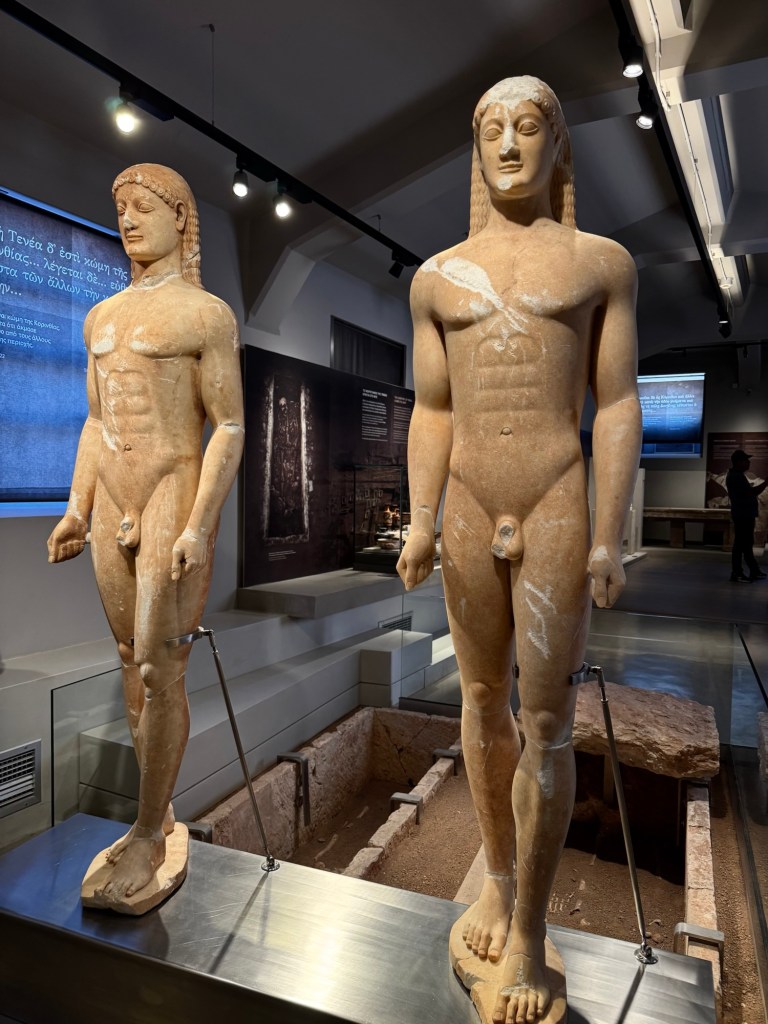
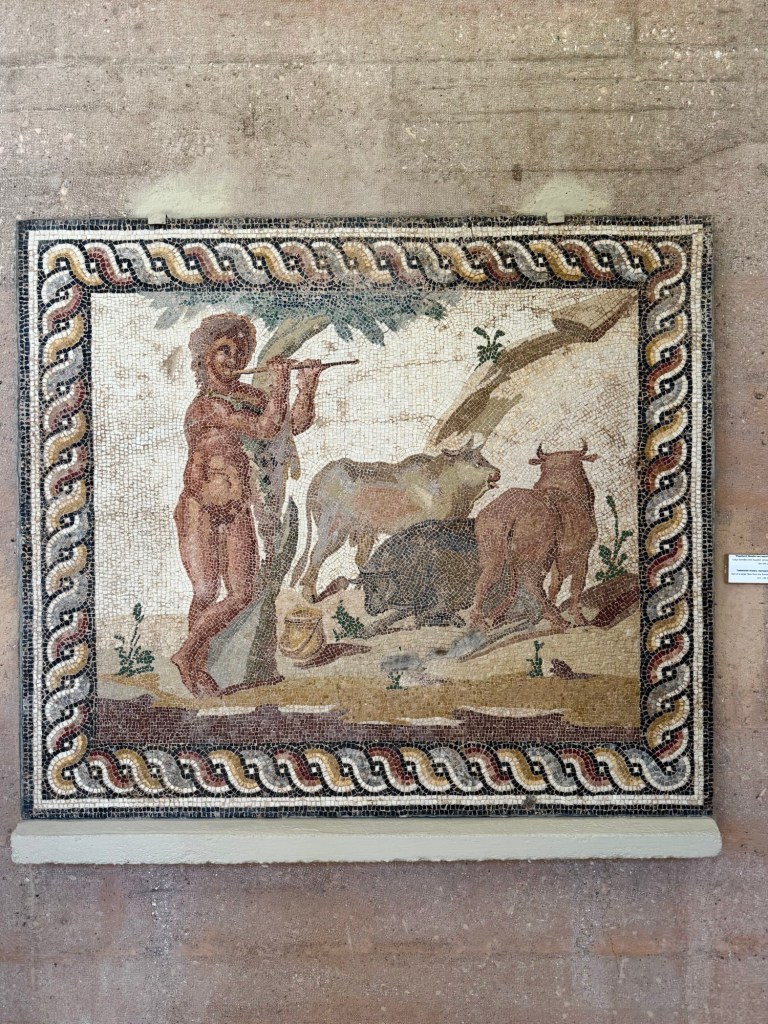
Highlights to look out for are the Roman mosaics, and Twin Kouroi (a style of free standing ancient greek sculpture prominent in the Archaic period of greek history), and the Asklepieion votives.

Also, practical tip: use the toilet before venturing too far. The only restrooms are near the museum.
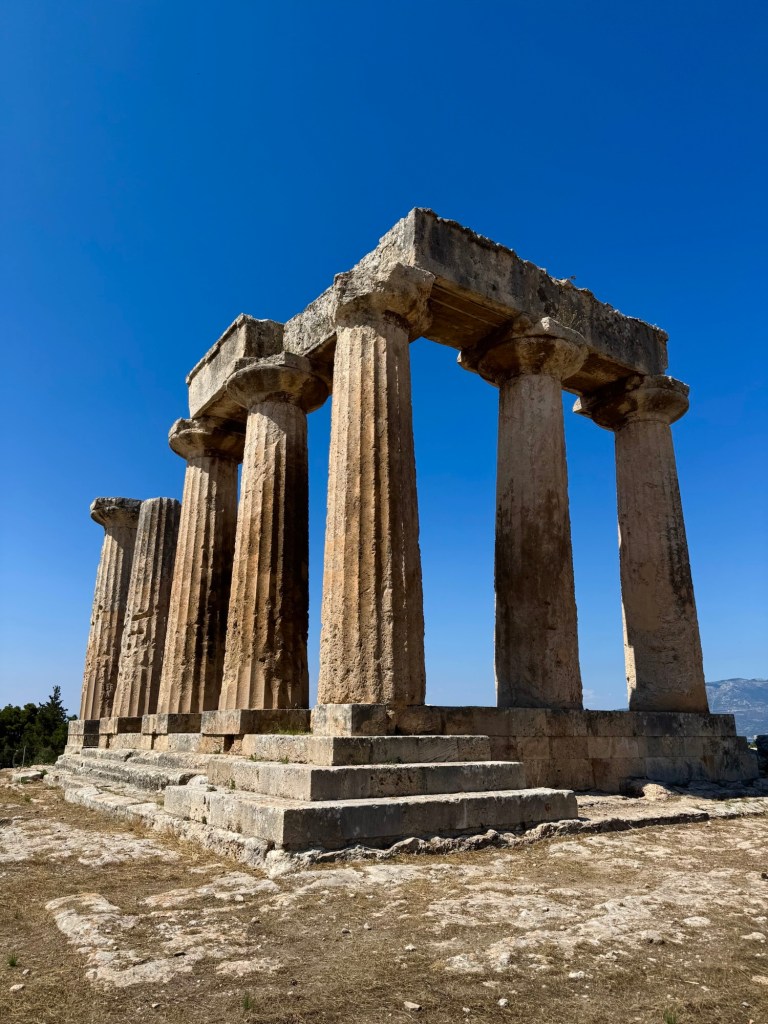
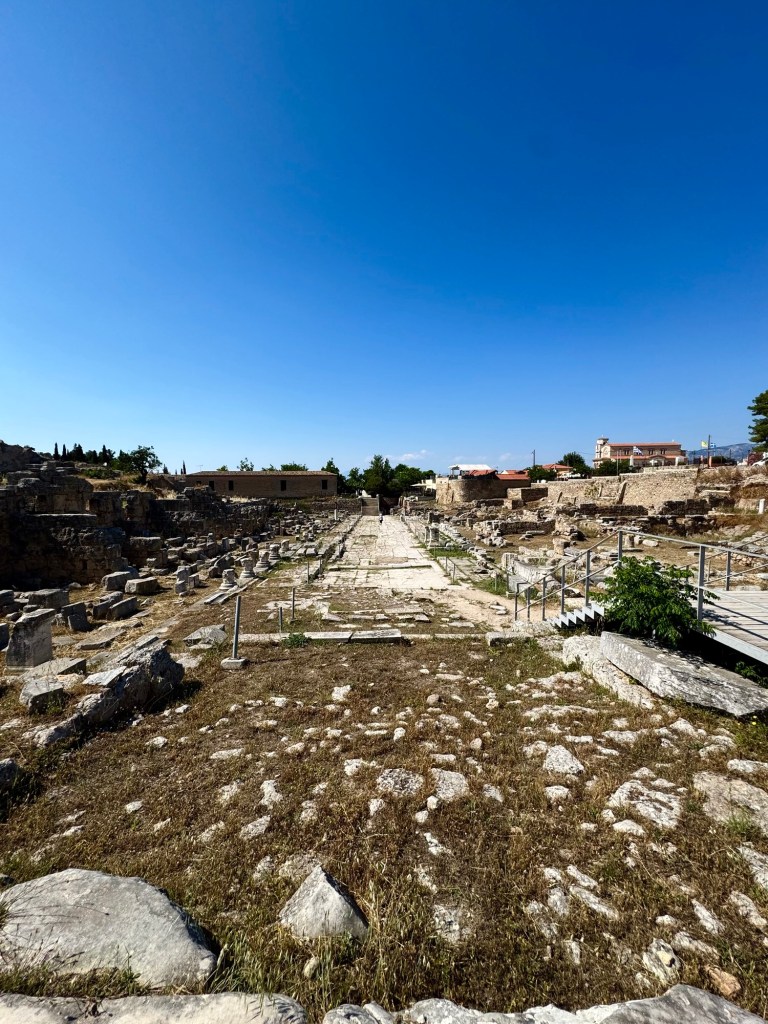
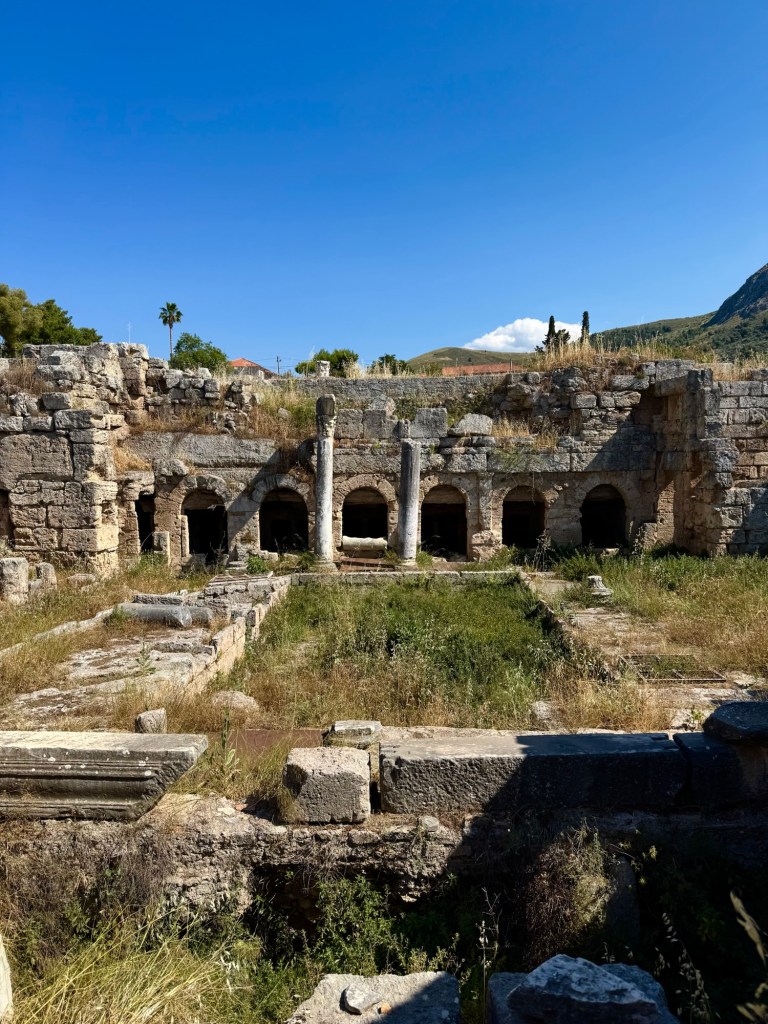
Start your visit at the Temple of Apollo, one of the oldest surviving Doric temples on mainland Greece. From there, the site opens up to the Roman Agora, once a buzzing marketplace full of merchants and politicking. Wander down Lechaion Road, lined with ruins of shops and fountains, and pause at the Bema, where the Apostle Paul supposedly preached to the Corinthians.
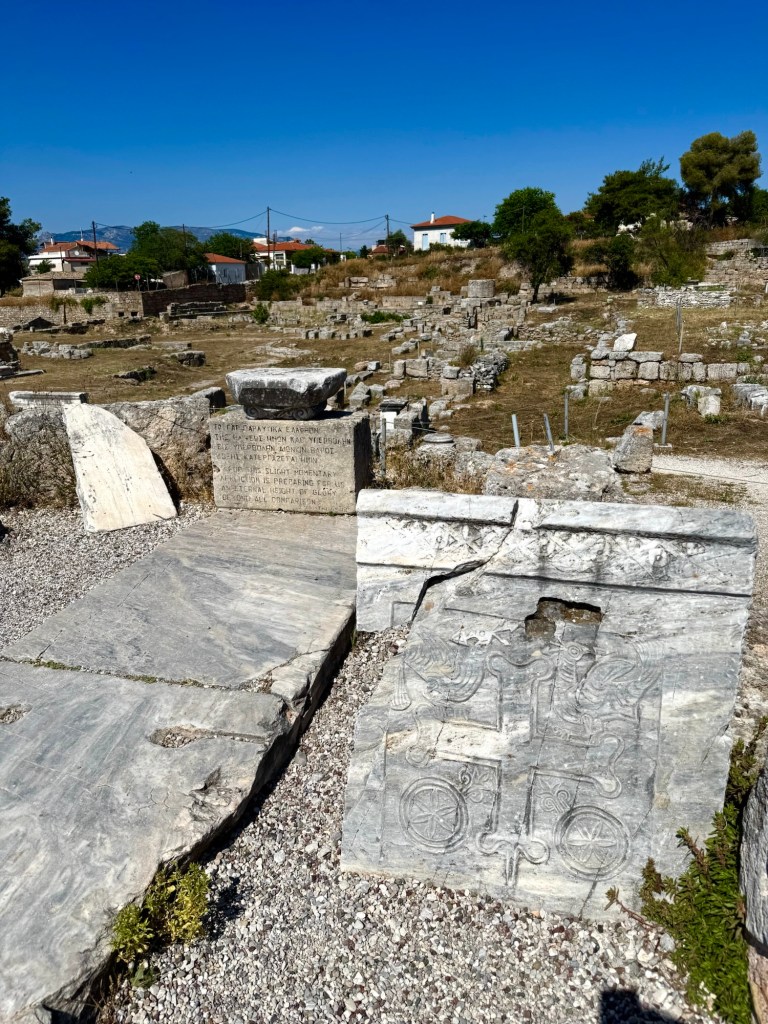

Then head over to the Peirene Fountain, a serene spring wrapped in mythology, it is said to be created from the tears of the nymph Peirene and the place where Bellerophon tamed Pegasus. Just nearby is the Asklepieion, a healing sanctuary dedicated to Asclepius, god of medicine.
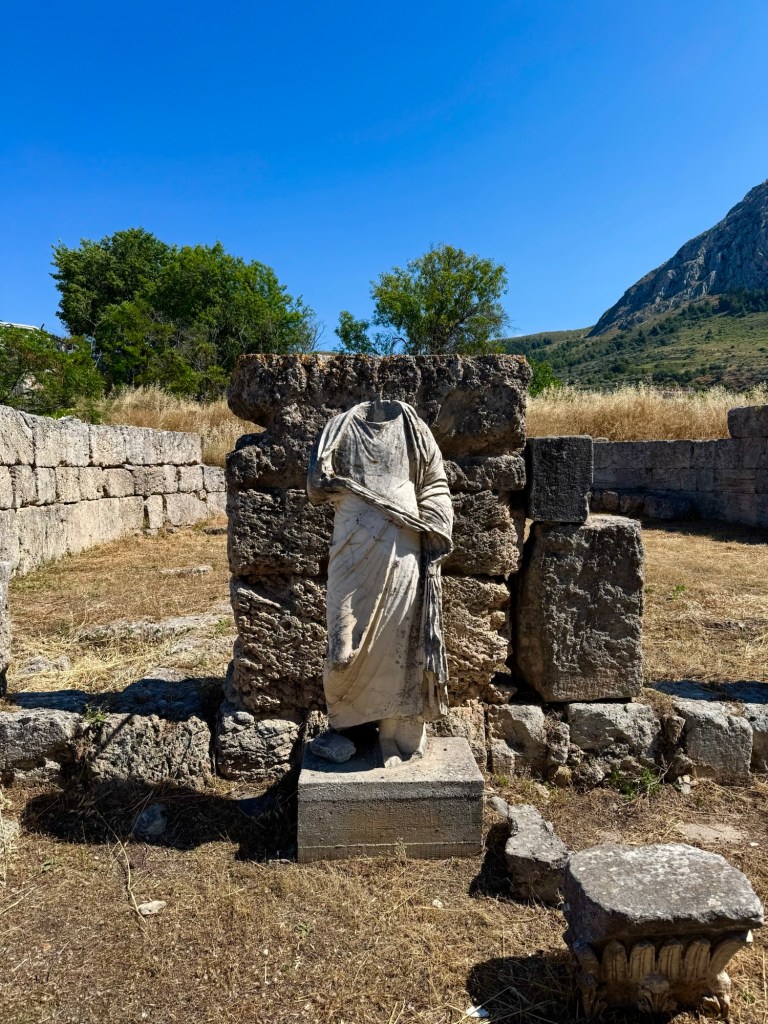
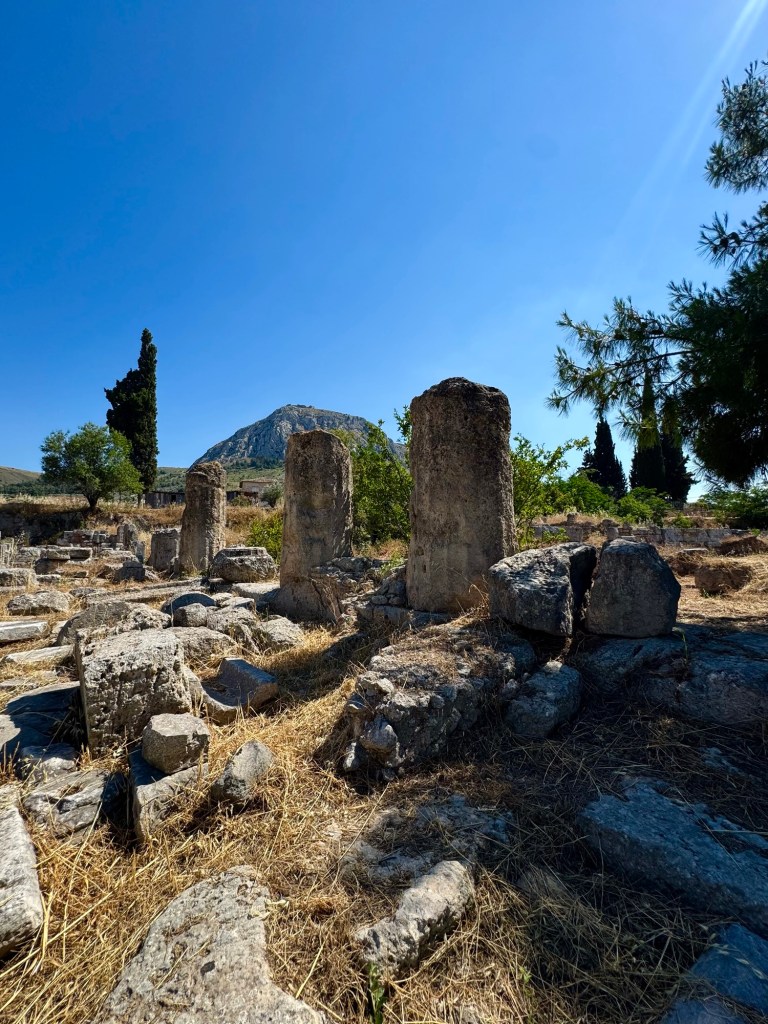
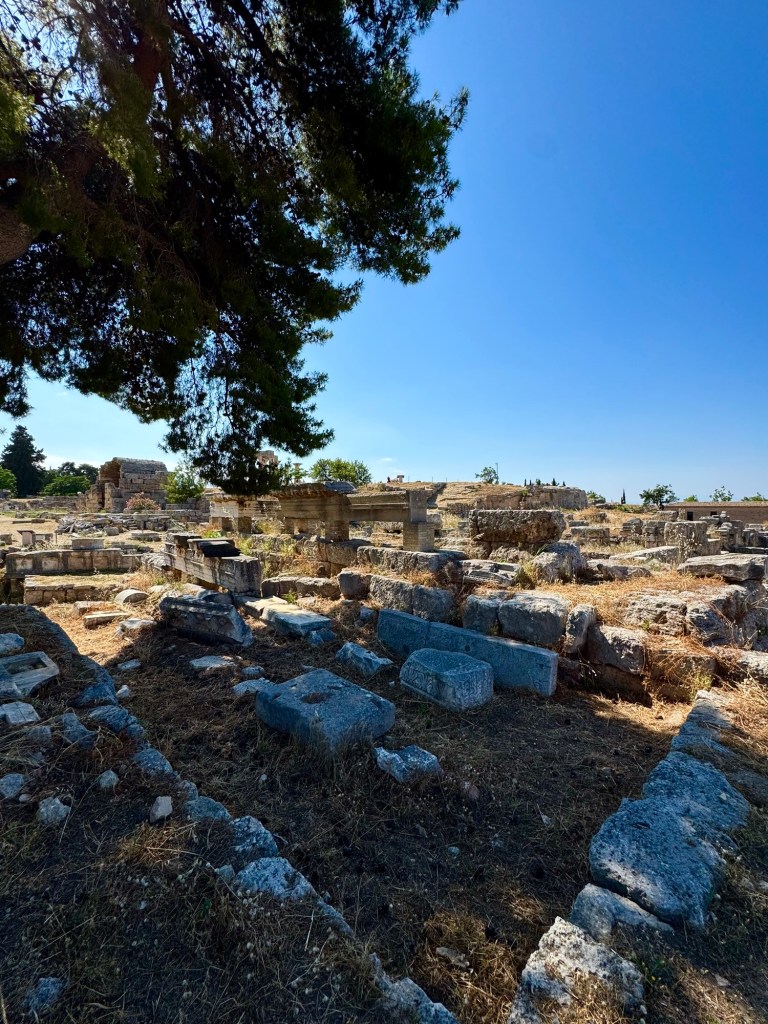
Finish off by looping through the smaller temples and Roman baths, or double back to the museum.
Just outside the bus parking area, behind a fence, are the ruins of Ancient Corinth’s theatre. It wasn’t open when I visited, but hopefully, it is for you.

The Hill of the Gods
If your legs haven’t tapped out yet, there’s Acrocorinth, a massive hilltop fortress just 5 minutes by car (or a sweaty 45-minute uphill trek). It’s one of the most important defensive sites in ancient Greece and was used from the Mycenaean through to Ottoman periods.
At its peak stood the Temple of Aphrodite, rumored by ancient sources to house sacred prostitutes (though scholars still debate how literal that claim was). Whatever the truth, the views from the top are mythic in themselves.
Resting My Laurels For Now
Corinth might have been about myths, markets, and mountain climbs, but my journey through Greece’s ancient heartland isn’t over yet. With my calves still screaming from the Acrocorinth, I’m heading next to a place where the ancient world turned sport into religion. Olympia, birthplace of the Olympic Games. Let’s see if the gods reward stamina.





 Shenanigans Abroad