Tag: travel

  • Egypt – Luxor, East Bank

    Spiritual Heart of The Ancients


    Two Thebes?

    I’ve always known Luxor existed, but for the longest time, I also thought Thebes was somewhere else in Egypt—which, to be fair, is pretty confusing considering there’s also a Thebes in Greece.

    To put it simply: modern-day Thebes still exists in Greece, and Luxor is actually the modern name for the ancient Egyptian city of Thebes. This Thebes (not the Greek one) was a major capital and religious center during the Middle and New Kingdom periods.

    Thebes was known to the ancient Egyptians as Waset, meaning “city of the scepter”. The ruins of that once-glorious city are now nestled within the modern city of Luxor. It’s kind of like how there’s a Richmond in both the US and the UK, a Grenada in the Caribbean and a Granada in Spain. Austria and Australia. Potato, potahto. Ye get it.

    Modern Luxor, like many tourist hotspots in Egypt, seems to have adopted a new religion: tourism. And by tourism, I mean a sacred devotion to hassling visitors and chasing that sweet, sweet foreign currency. Why, you ask? Oh, it’s a whole thing—and I’ll cover it in detail in a separate post on my Egypt Cheat Sheet (coming soon!). So stay tuned, because I know you’re here to validate all those “horror stories.”

    But all jokes aside, Luxor—aka ancient Thebes—is one of the richest historical sites in the world. It was the capital of Upper Egypt during the New Kingdom, a time when the empire was at its peak. This city wasn’t just a political powerhouse—it was the spiritual heart of ancient Egypt. Over its 850-year run as a capital (the third-longest in Egyptian history, by the way), it attracted wealth, power, and monumental architecture. For context: Memphis (again, not the one in Tennessee) comes in second, and Alexandria takes the crown with around 970 years.

    And Luxor didn’t just exist – it was an architectural mic drop, a living, breathing expression of cosmic order and divine authority carved into stone.

    East VS West

    To really understand Luxor, you’ve got to get the lay of the land. The East Bank vs. West Bank of the Nile wasn’t just about geography—it was a spiritual and symbolic divide baked into the city’s very soul.

    In ancient Egyptian belief, the Nile split more than just real estate. The East Bank, where the sun rises, symbolized life and rebirth. It housed grand temples like Karnak and Luxor, dedicated to the gods of the living. Meanwhile, the West Bank, where the sun sets, represented death and the afterlife. This is where you’ll find the Valley of the Kings, the Valley of the Queens, and epic mortuary temples like Queen Hatshepsut’s, carved straight into the cliffs.

    To summarize:

    East Bank = Staying alive.
    West Bank = Another one bites the dust.

    Now that the history download is out of the way, let’s talk East Bank.

    Ancient Thebes’ vibrant, living heart. This was where power, worship, and daily life pulsed with energy. Associated with the rising sun, the East Bank symbolized life, creation, and renewal, this is why temples dedicated to the gods of the living world were built here. It was the stage for public worship, royal propaganda, and rituals that reinforced divine kingship.

    Patchwork Quilt of Power

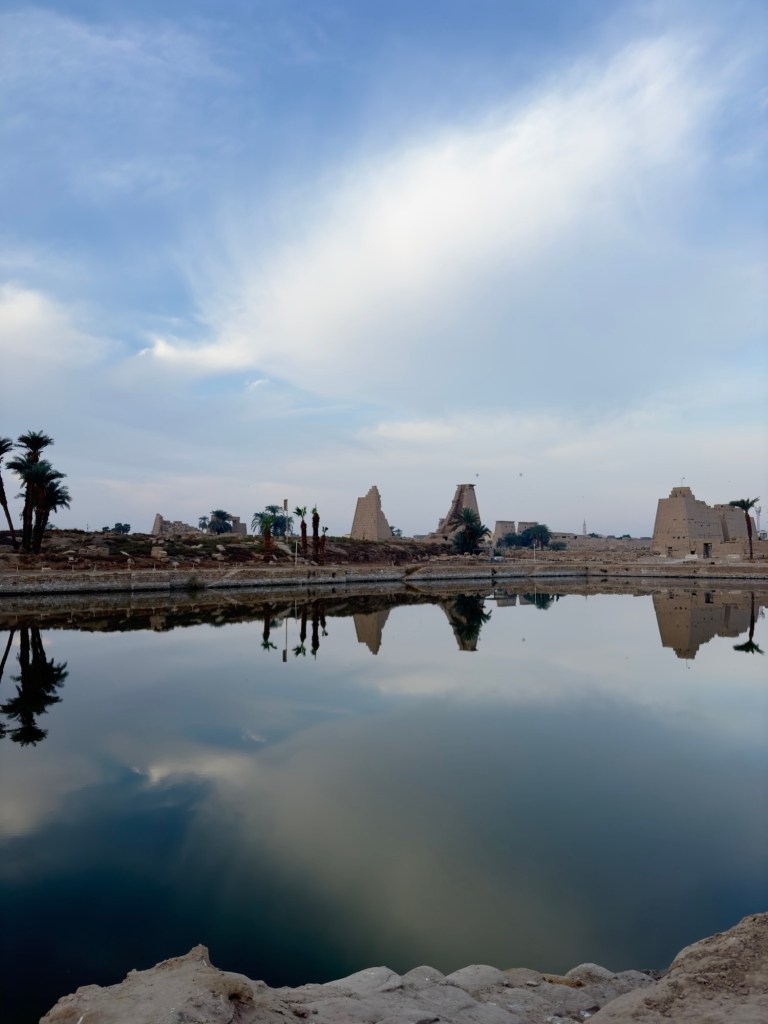
    The Karnak Temple wasn’t just important—it’s legendary. Think of it as the Vatican, Versailles, *insert a national monument you know of here* all rolled into one, but in ancient Egyptian terms. Built over 2,000 years by more than 30 pharaohs, Karnak is the largest religious complex ever built in ancient Egypt. The Hypostyle Hall alone has 134 gigantic columns—some over 20 meters tall—that will make your neck hurt from looking up. Only pharaohs and priests were allowed into its innermost sanctuaries. This was VIP holy ground.
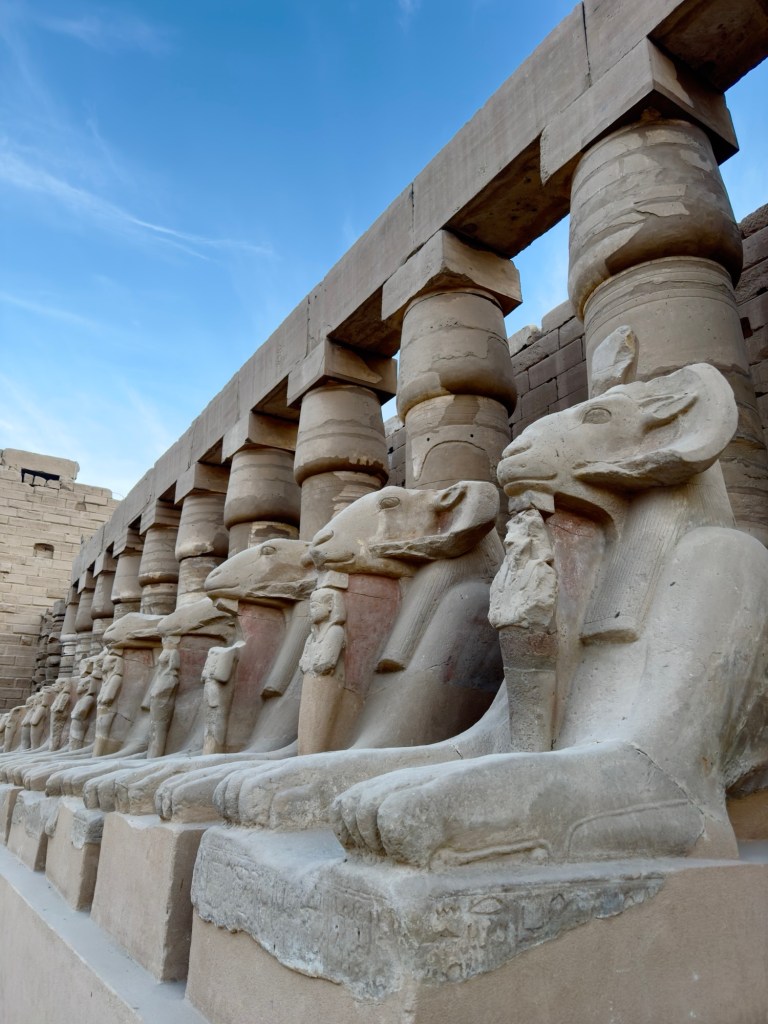
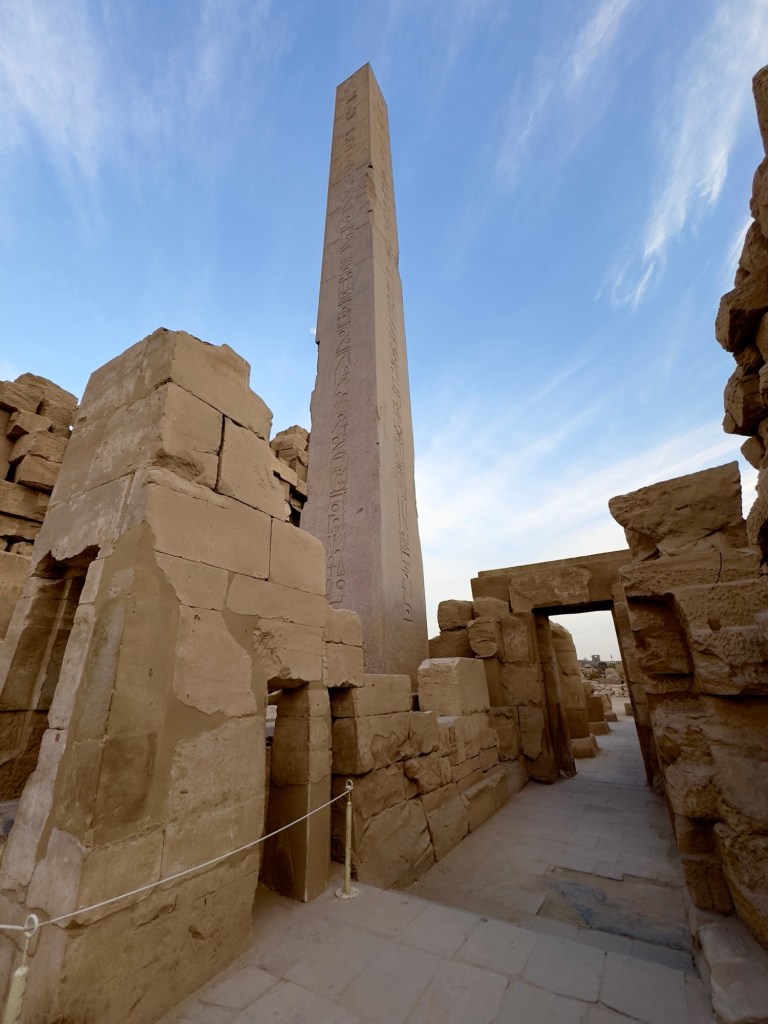
    One of the coolest things about Karnak is how every pharaoh left their mark—kind of like a divine group project. My personal favorite? Pharoah Hatshepsut. Her contributions to Karnak were bold, symbolic, and architecturally impressive—just like her reign. She wasn’t just adding her name to old stones; she was rewriting the narrative of divine kingship and legacy as one of the few female pharaohs in Egyptian history. Ruling as king, not queen—she is often depicted in male regalia, including the pharaoh’s beard. Hatshepsut used Karnak to cement her role as a divine monarch, not just a regent or placeholder, almost to say: “I was chosen by the gods; look at what I built.” Dang, now that’s a woman.

    Unfortunately, her stepson/nephew Thutmose III wasn’t a fan. He went full on petty and tried to erase her from history by walling up her obelisks and defacing her images. The irony? His vandalism actually preserved some of her monuments for us today. Ha. Joke’s on you, Thutmose.

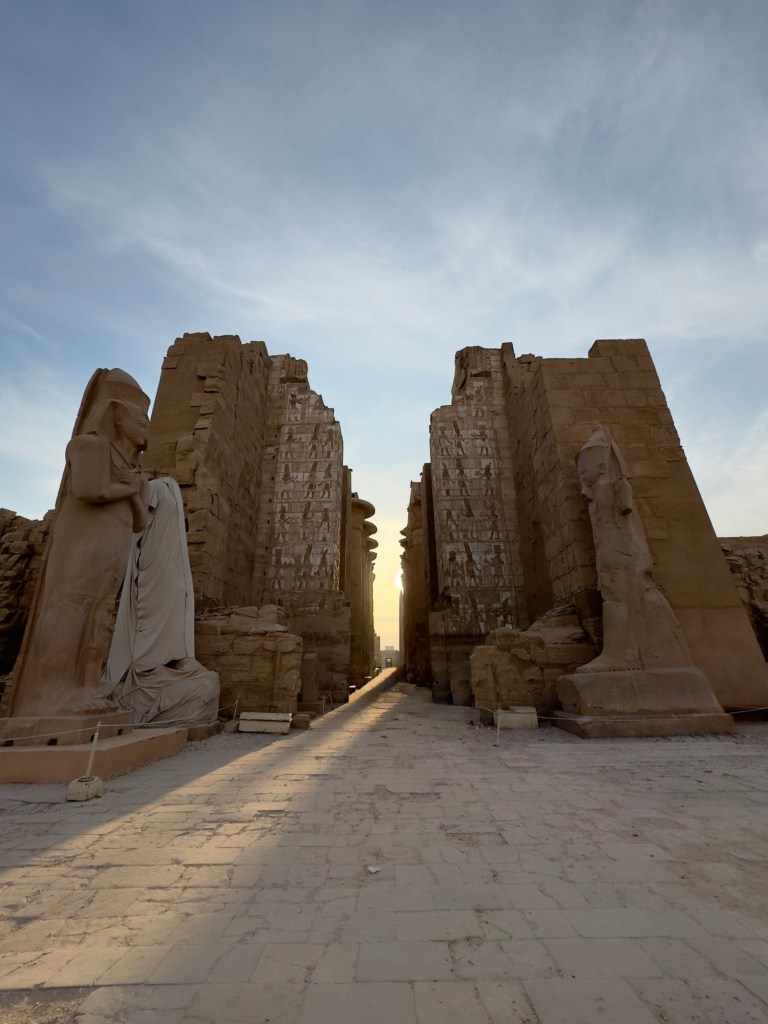
    Even after Egypt’s golden age, Karnak kept evolving. Later rulers added Greek, Roman, and even Nubian touches. It’s an architectural patchwork quilt of power.

    Set aside at least 3–4 hours. Karnak is massive and gets busy fast. Get there at opening (yes, 6 am, we know the drill by now), and you might get the place nearly to yourself. I did, and it felt almost sacred—like I should’ve purified myself before entering. Walking through the Great Hypostyle Hall alone? Pure goosebumps.

    Walk Like an Egyptian (Priest)

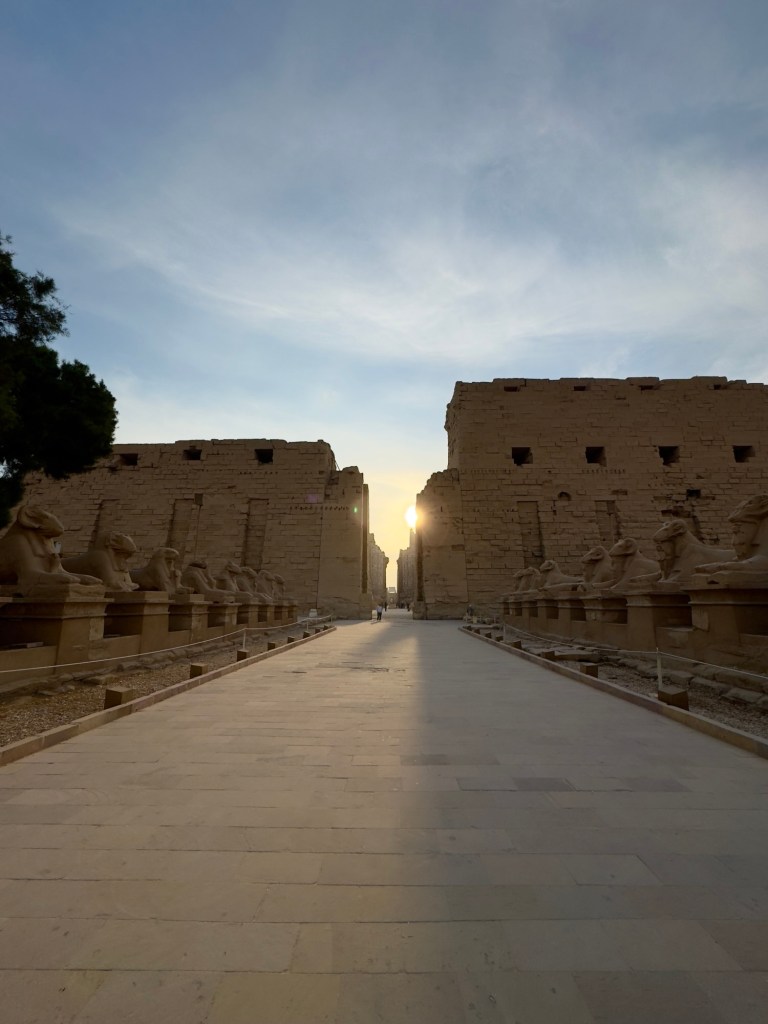
    Leading out the back of Karnak toward Luxor Temple is the legendary Avenue of the Sphinxes. Spanning nearly 3 kilometers and flanked by over a thousand sphinx statues, it connected the two temples and formed the backbone of ancient Thebes’ religious landscape.

    During the annual Opet Festival, priests would carry a statue of Amun-Ra along this sacred route, symbolizing the union of god and king and renewing divine power.
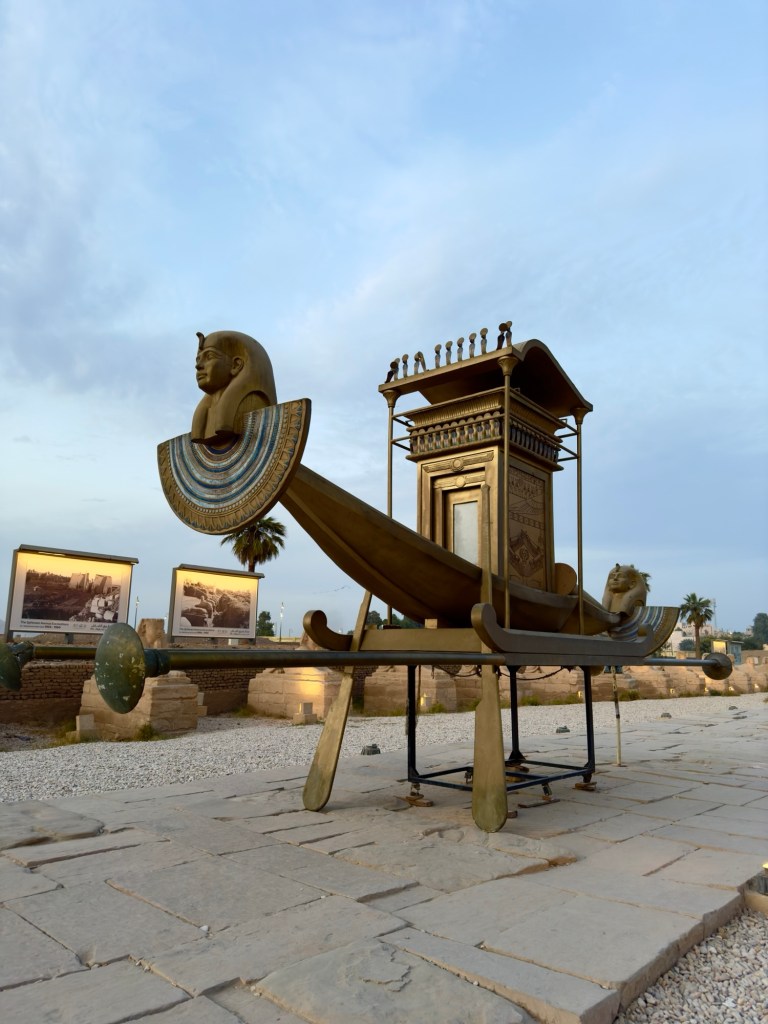
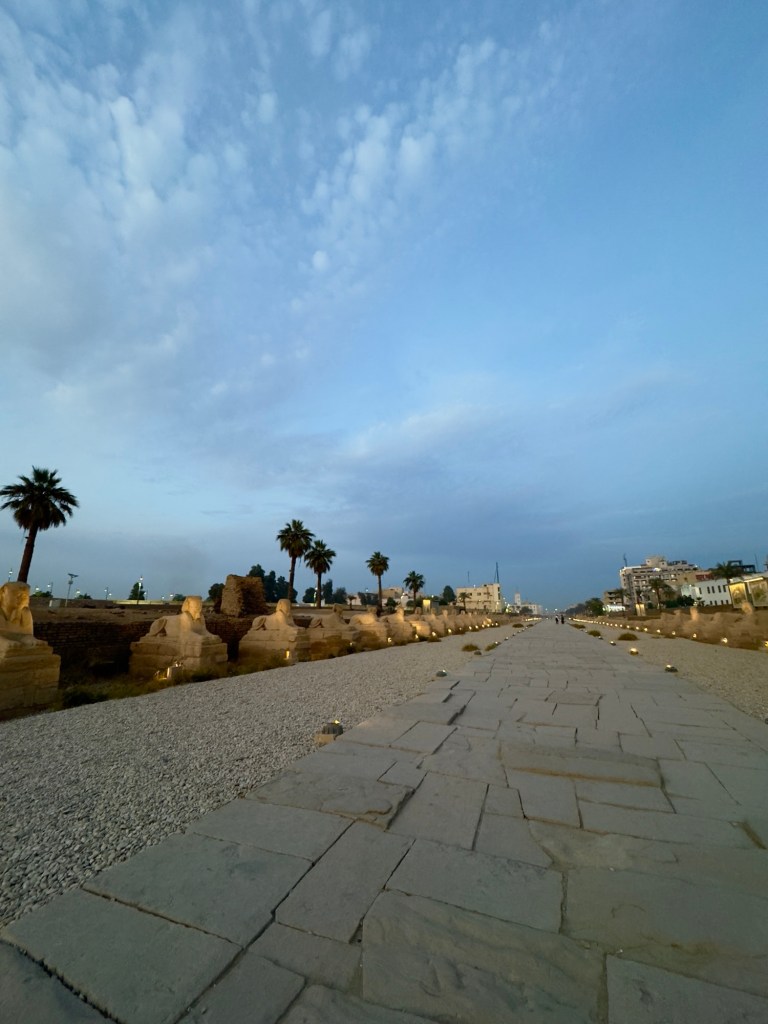
    After decades of excavation and restoration, the avenue was dramatically reopened in 2021. You can now walk the same path once reserved for gods and kings.

    Make sure you have tickets for both Karnak and Luxor Temple before attempting to exit/enter along the avenue, or you’ll be turned away.

    Divine Power Complex

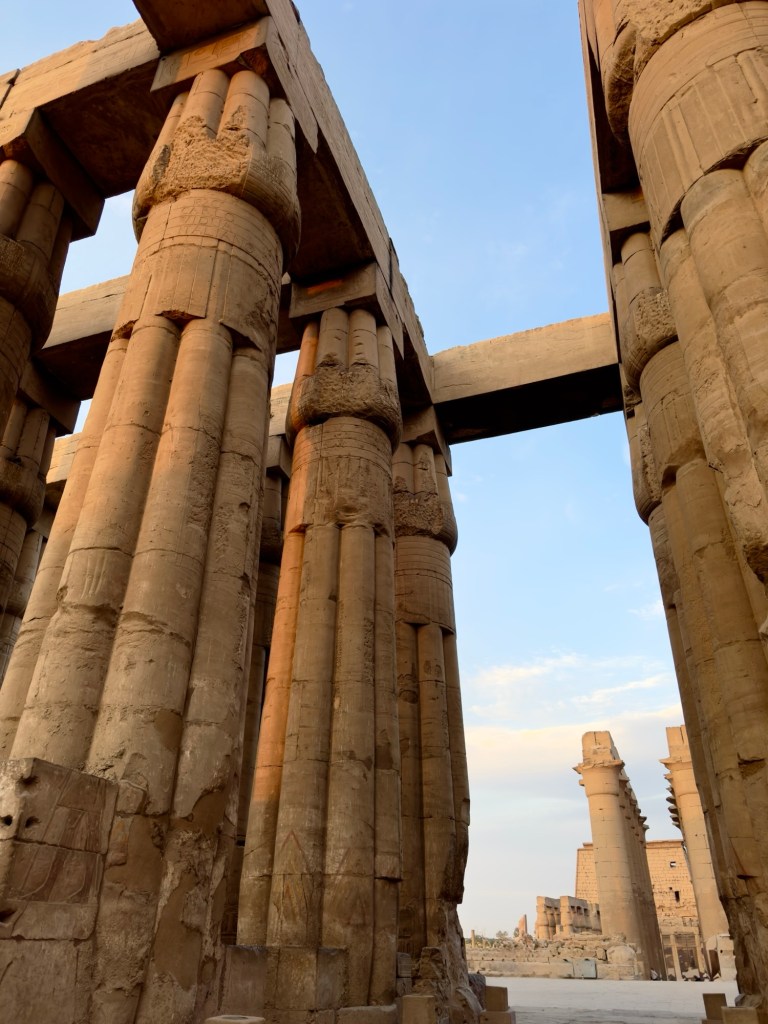
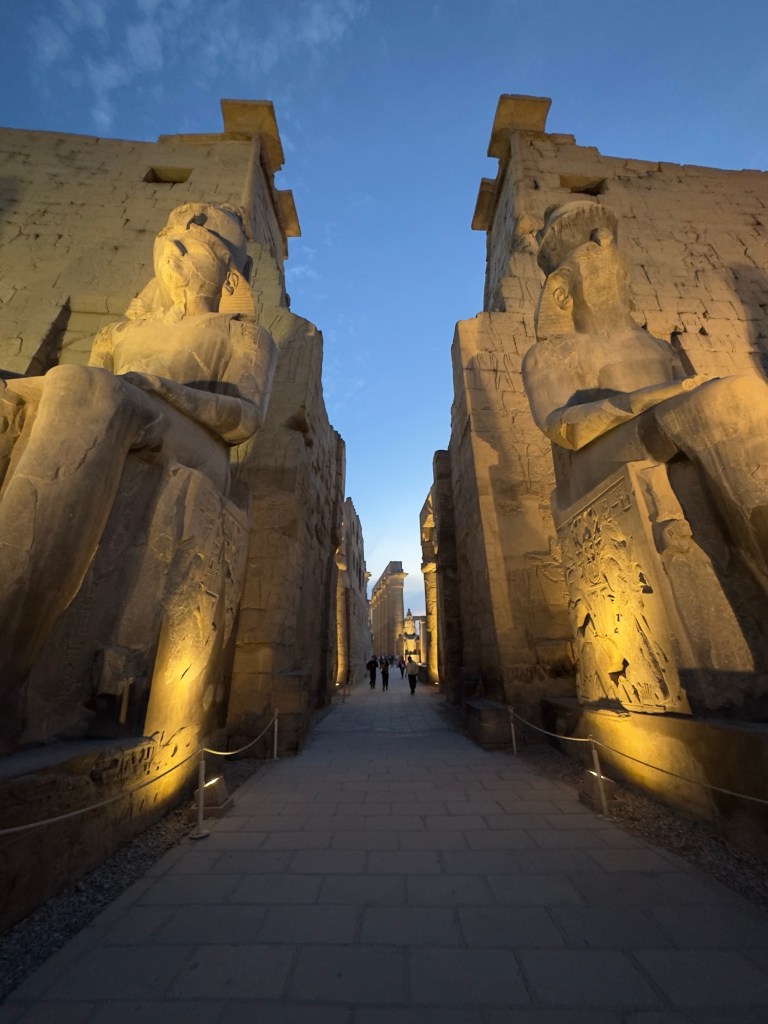
    Luxor Temple is a beautiful blend of grandeur and sacred symbolism. It was built primarily by Amenhotep III and Ramses II, but it’s not dedicated to a specific god—instead, it honors the Royal Ka, or the divine essence of the pharaoh. With its soaring columns, colossal seated statues, and once-matching obelisks (one now stands in Paris smack in the middle of Place de la Concorde), the temple radiates a unique blend of grandeur and sacred symbolism.
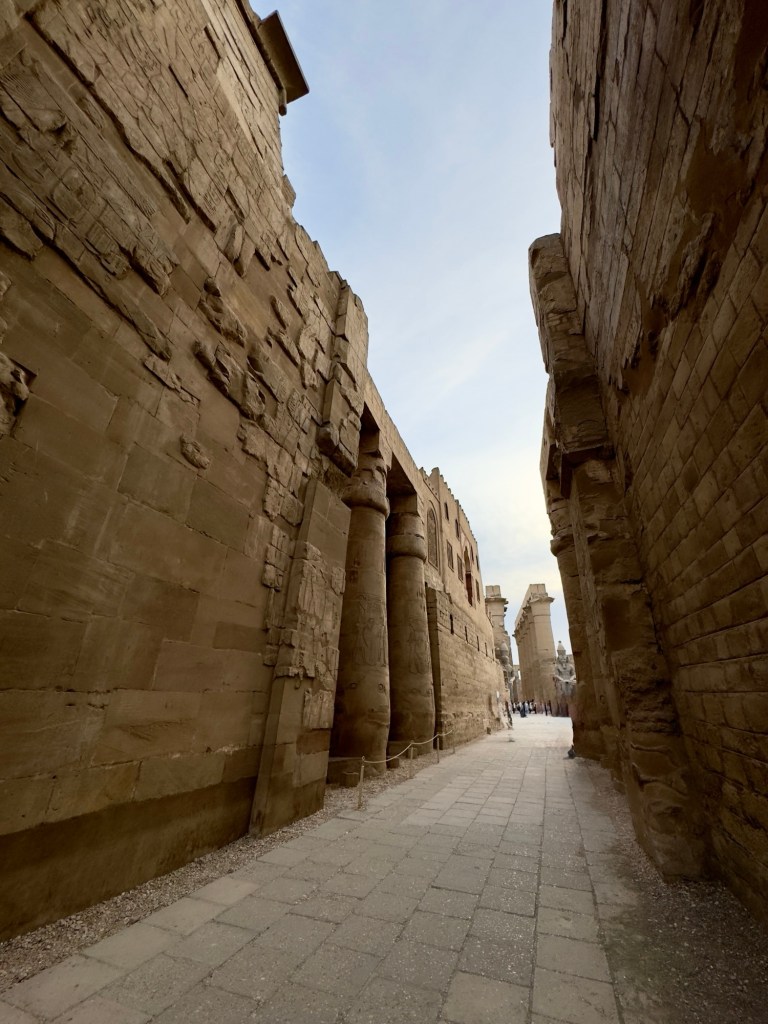
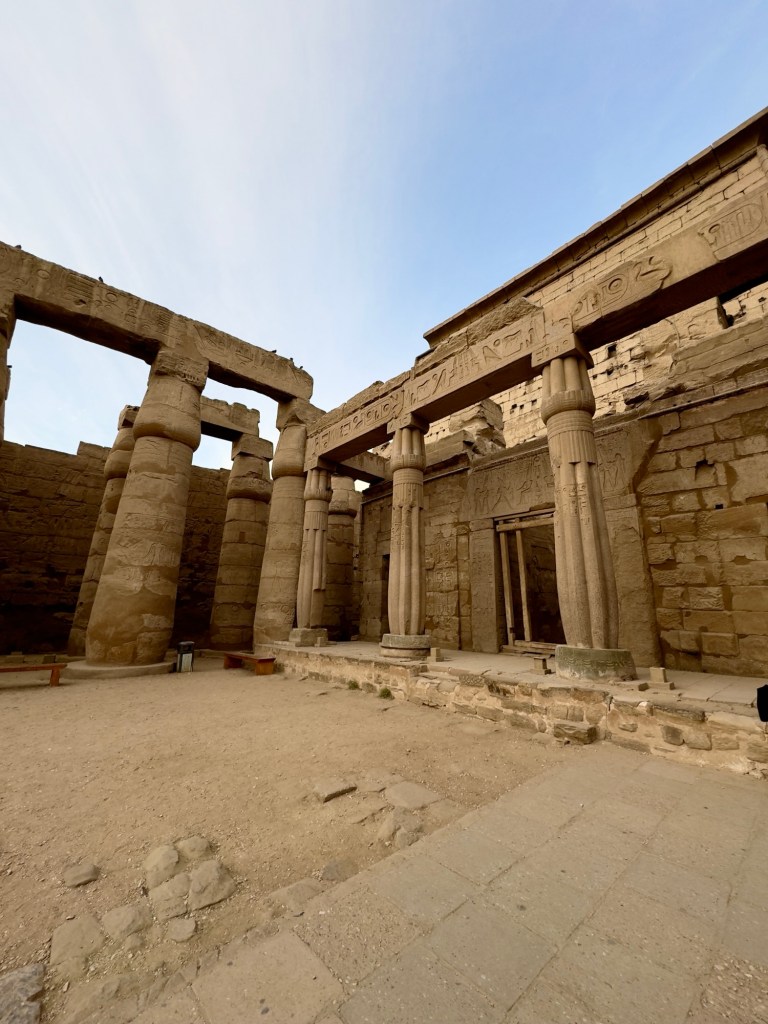
    This temple played a key role in the Opet Festival, where it reinforced the pharaoh’s legitimacy. It even features a birth chamber that illustrates the pharaoh’s divine conception. Talk about self-branding.

    Architecturally, it’s classic New Kingdom style: towering pylons, open courtyards, and intricate reliefs. But over time, layers of history piled on—Greek, Roman, Christian, and Islamic elements all found a home here. Alexander the Great built a shrine inside. The Romans turned part of it into a military camp. A 13th-century mosque still operates within the temple grounds today. That’s over 3,000 years of spiritual real estate, still active.

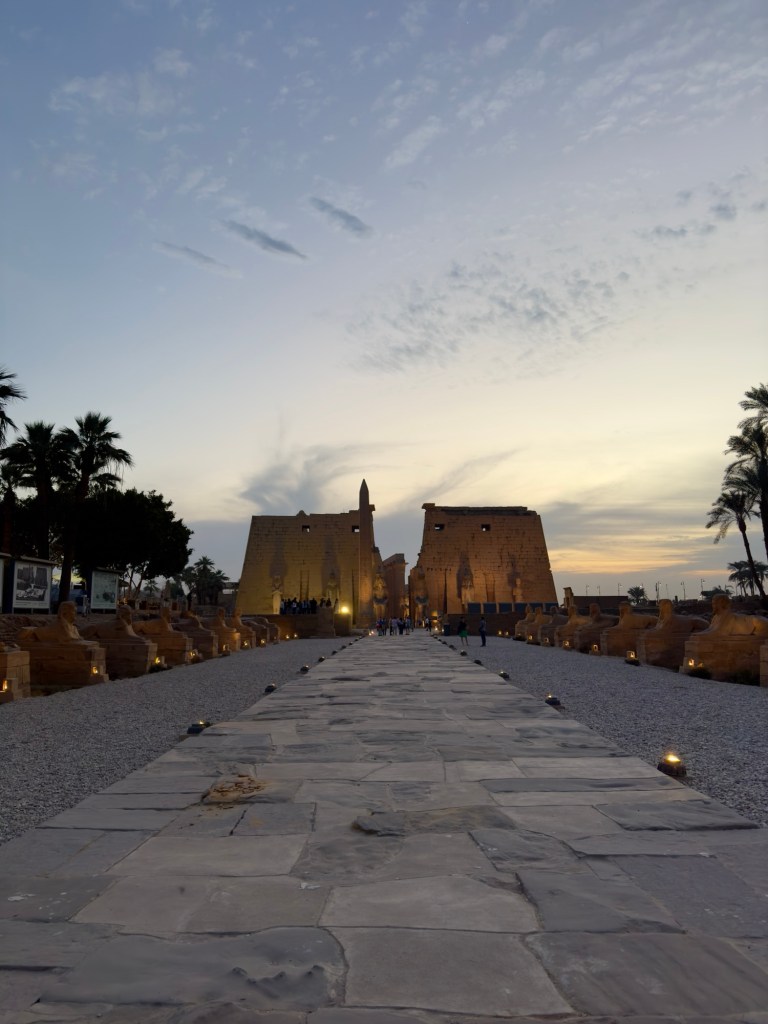
    The Luxor Temple is open until 10 pm, and visiting in the evening offers a noticeably different atmosphere. Soft lighting highlights the architectural details, and some sections are illuminated in a way that mimics candlelight, creating a quiet, immersive setting.

    There’s no strict time limit once you’re inside, so it’s worth planning your visit for the late afternoon. This way, you can experience the temple during daylight, catch the sunset, and see how the space transforms after dark.

    Oh and there’s…

    Also on the East Bank, is the Luxor Museum, and the Mummification Museum.

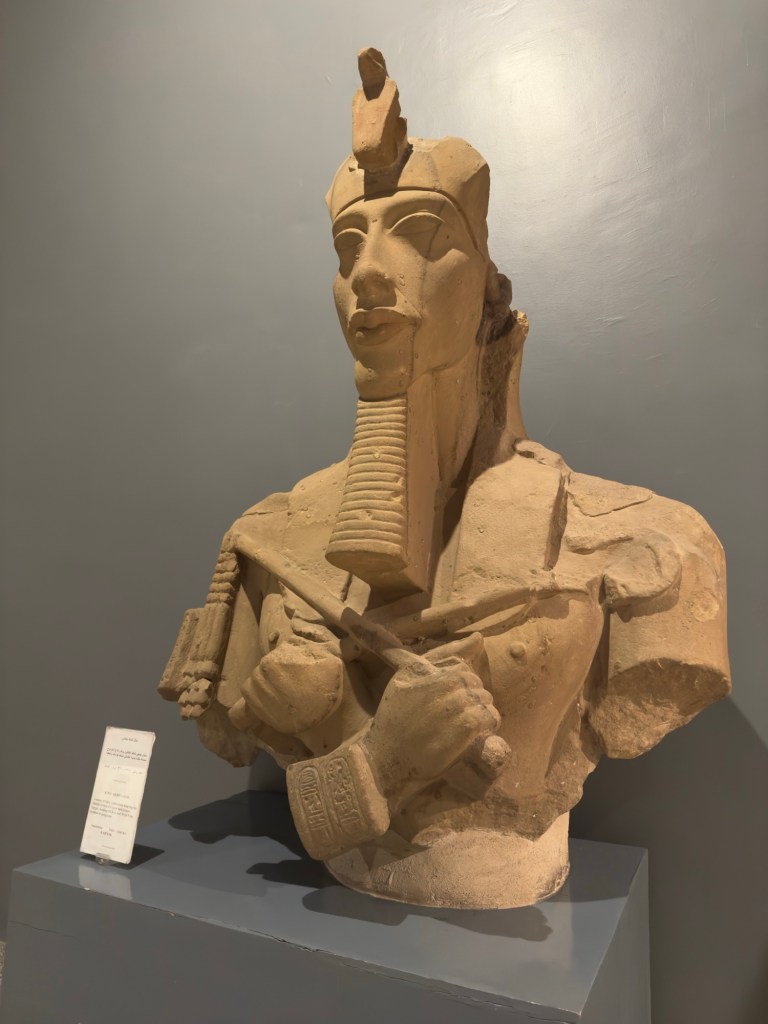
    The Luxor Museum is small in size but rich in carefully curated treasures that bring the story of ancient Thebes vividly to life. It’s located along the Nile Corniche, between Luxor and Karnak Temples, and opens till 8pm. While most of the royal mummies are currently in the Royal Mummies Hall in the The National Museum of Egyptian Civilization in Cairo, the Luxor Museum still houses the royal mummy of Ramses I, it’s well-lit, climate-controlled, and uncluttered, with bilingual labels (Arabic and English) and clear signage which makes visiting accessible for everyone.
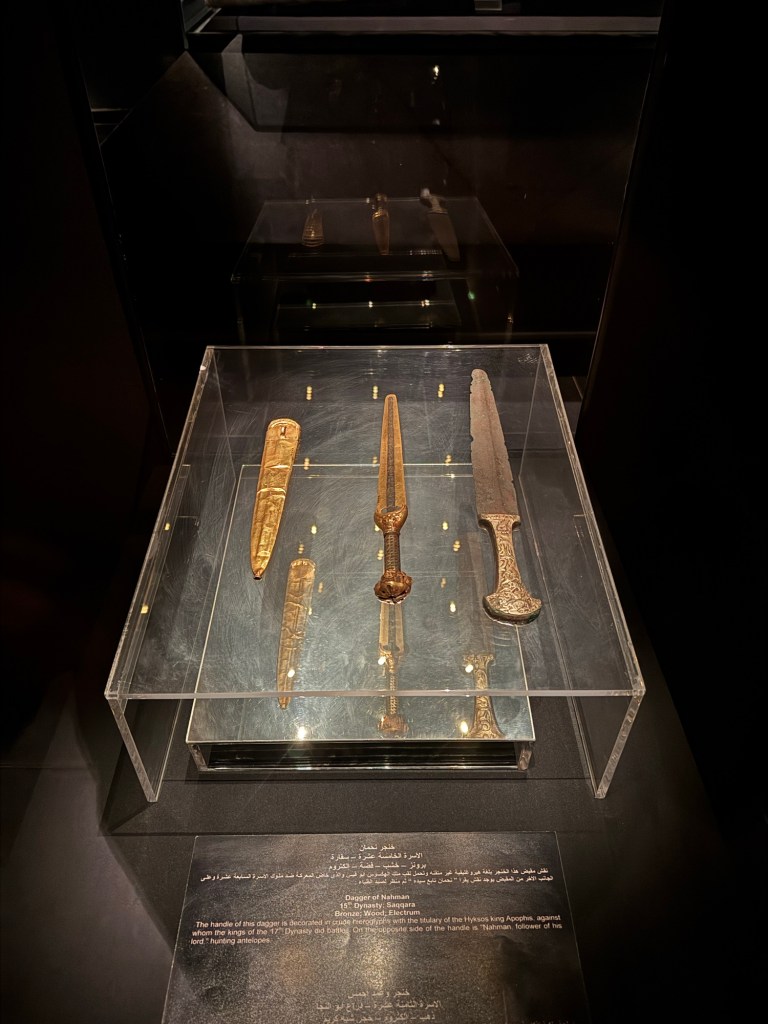
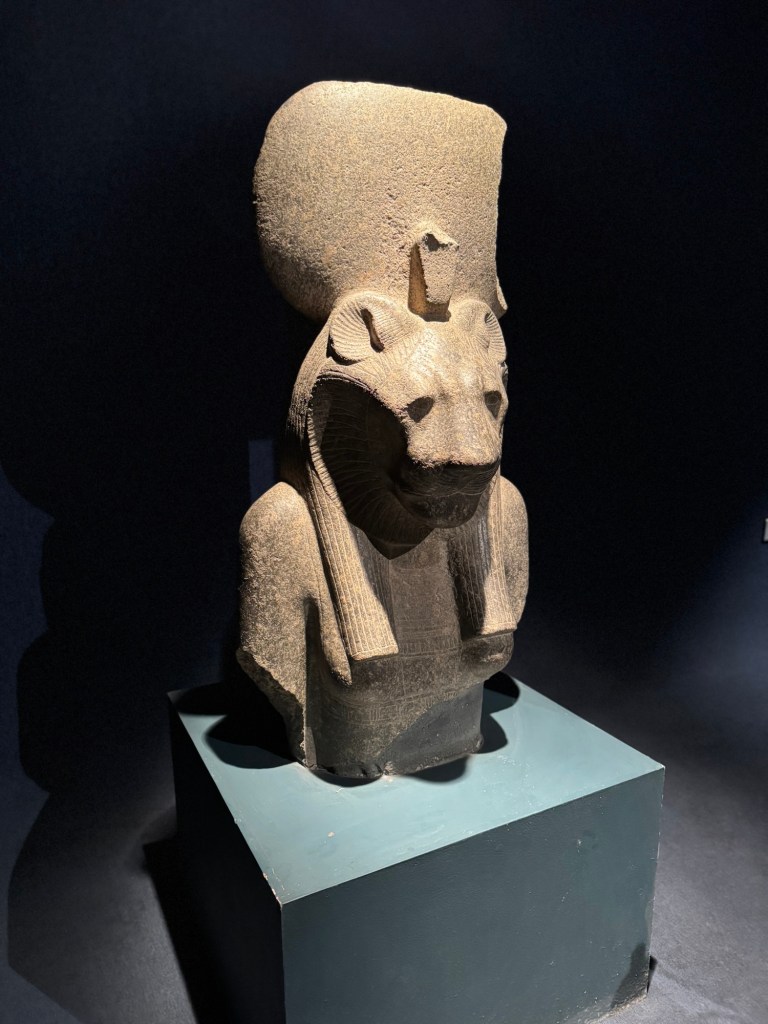
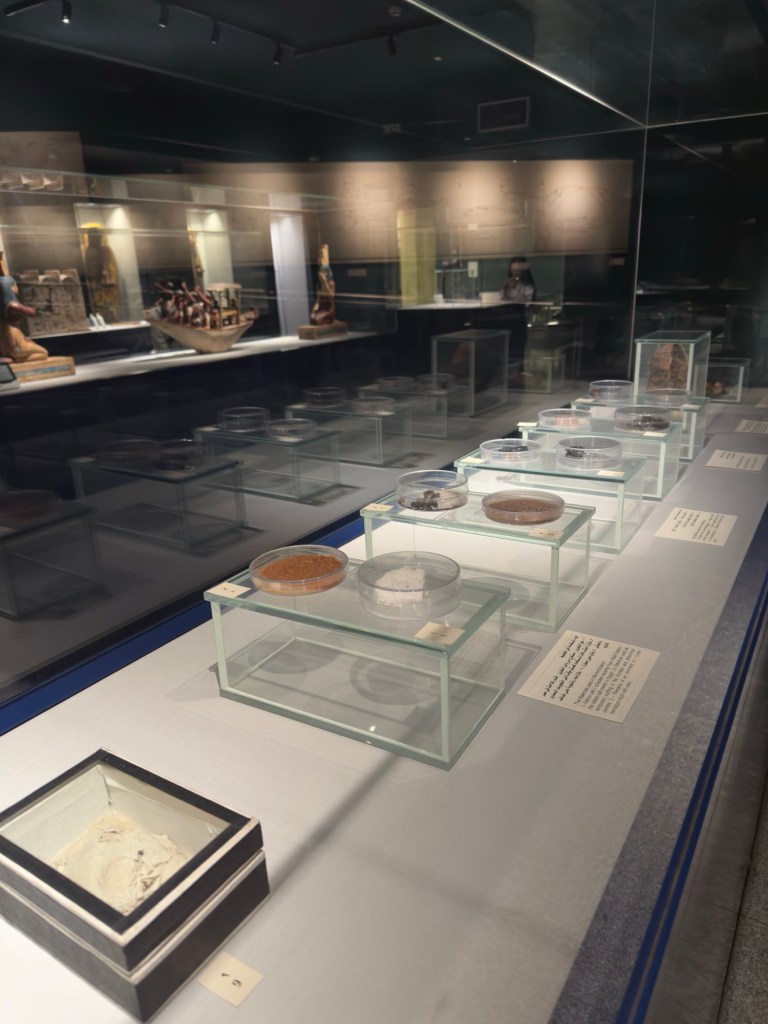
    The Mummification Museum albeit smaller, but delves into great depth about the ancient Egyptian art of preserving the dead. Just north of Luxor Temple, this museum provides an intimate look at the rituals and techniques that ancient Egyptians employed to prepare both humans and animals for the afterlife. It stands as one of the few museums globally dedicated entirely to mummification. So if you’re interested in understanding the spiritual and practical aspects of ancient Egyptian funerary practices, this would be just the place for you, and it also opens till pretty late at night, 10pm.
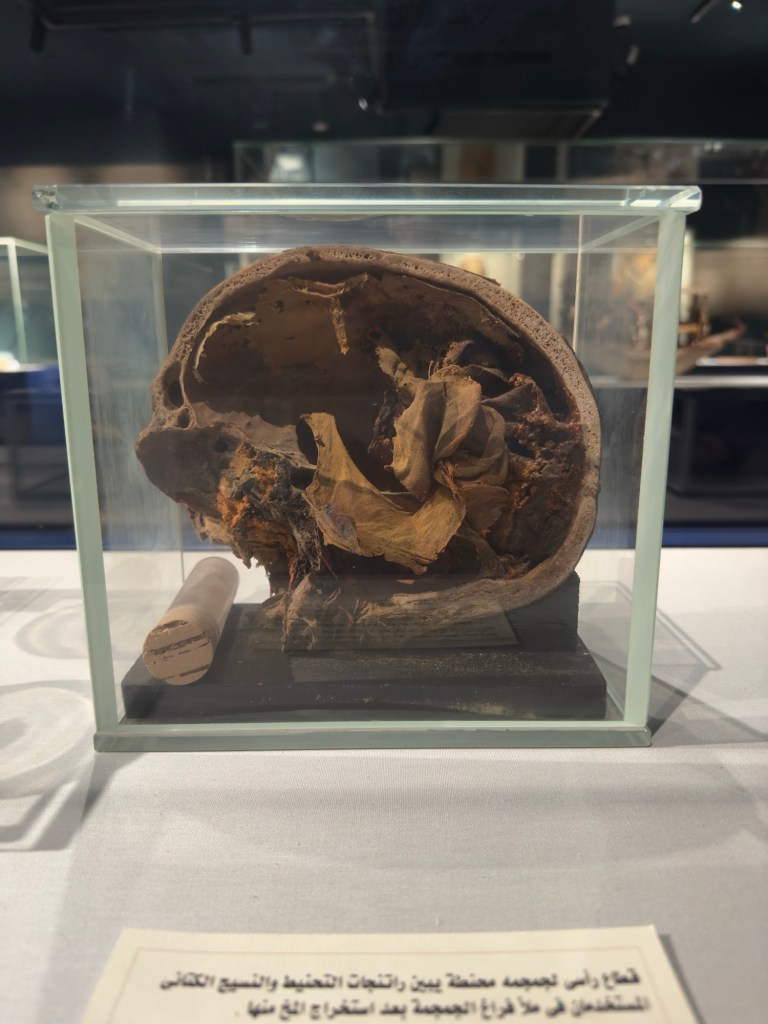
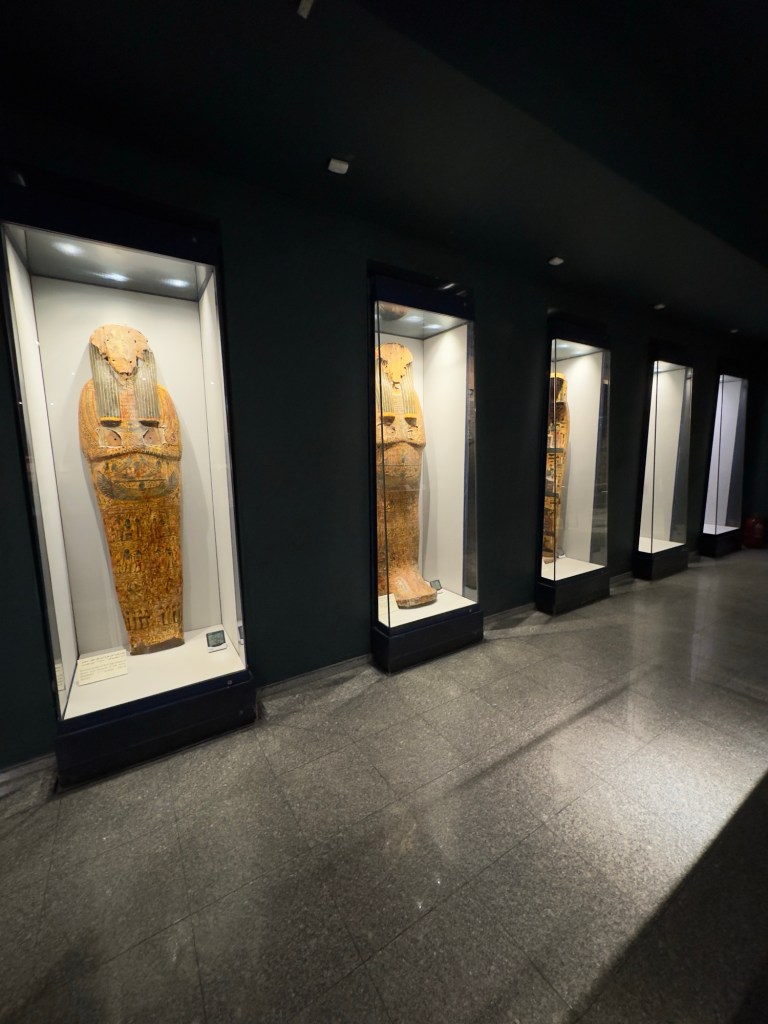
    You can tackle the East Bank in a day. Starting with Karnak, walk through the Avenue of Sphinxes to Luxor Temple, and capped it off with the museums.

    Well, that was the plan… until my car broke down on the way from Aswan during my Edfu, Kom Ombo, Esna Temple tour. So I saw Karnak at night instead—via the famous Sound and Light Show. Which, honestly, was incredibly underwhelming. I ended up going back the next morning at 6 a.m. to redeem the experience.

    And redeemed it was.

    More on the show experience and tips in the Egypt Cheat Sheet, so hang tight and keep an eye out!

    Hello Darkness

    By the end of the day, I was absolutely wrecked—body aching, legs threatening to file a formal complaint, and brain overloaded with 3,000 years of historical grandeur. But spiritually? Fulfilled. Like, glowing-core-memory-unlocked fulfilled. I couldn’t sleep that night—not because of the heat or the questionable hotel mattress—but because my brain wouldn’t shut up imagining what it must’ve looked like back then. However, darkness beaconed, and it was another early start to the next day to redeem myself at Karnak, but most importantly, the Land of the Dead awaits at the West Bank.
  • Egypt – Kom Ombo, Edfu, Esna Temples

    Three Temples, Three Faces


    Aswan -> Luxor

    A little research really does go a long way. When people think “Egypt,” they usually picture the classics—Cairo, Luxor, Alexandria, maybe Sharm el-Sheikh if you’re feeling fancy. You know, the Pyramids, the Valley of the Kings, the ruins of the ancient Library of Alexandria (and its slick modern counterpart), and all that “must-do” tourist checklist stuff. But while I was on one of my highly productive travel planning sessions, I stumbled upon a nifty little map by the Ministry of Tourism and Antiquities. A few enthusiastic clicks and a lot of “oooohs” and “ahhhhhs” later, I had tacked another 6–7 sites onto my already overachieving Excel itinerary.

    It just so happened that three of those spots were directly en route from Aswan to Luxor, and—bless the algorithm—I found a convenient GYG tour that covered all of them. So off we go! First Stop: Kom Ombu temple.

    Sobek Meets Horus

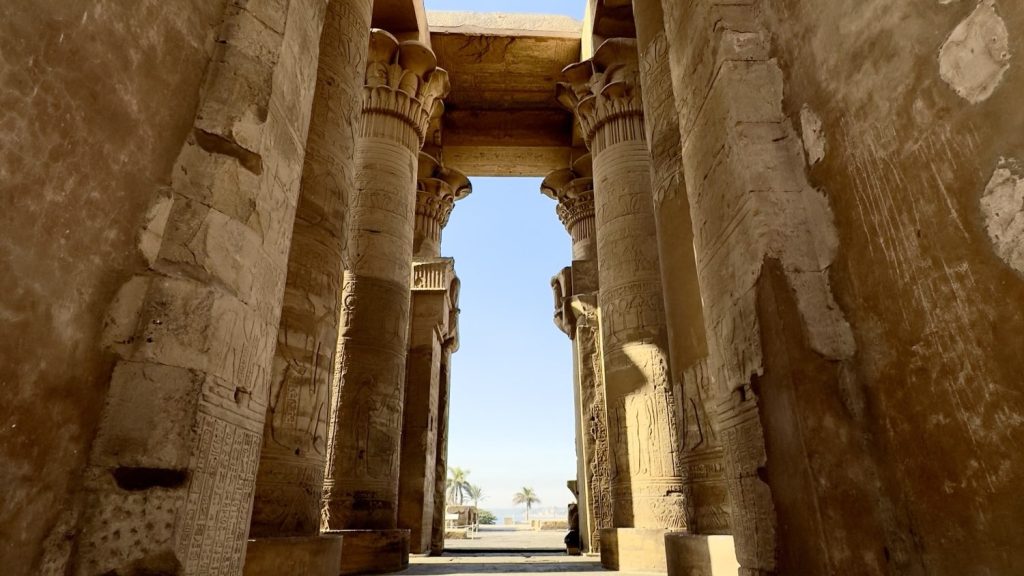
    Set on a bend in the Nile where sacred crocodiles used to sunbathe like it was their private spa, the Temple of Kom Ombo is one of the most beautifully located temples in Egypt. But location aside, what makes this temple stand out is its identity crisis—it’s dedicated to two gods: Sobek, the local crocodile deity, and Haroeris, aka Horus the Elder (yes, there are multiple Horuses. No, I don’t know why either).

    The temple’s twin dedication is reflected in its plan: perfectly symmetrical along the main axis of the temple, there are twin entrances, two linked hypostyle halls with carvings of the two gods on either side, and twin sanctuaries. It is assumed that there were also two priesthoods. The west side of the temple was dedicated to the god Haroeris, and the east half to Sobek, because apparently sharing wasn’t a thing in ancient divine real estate.

    One of the most fascinating features lies on the back wall of the temple: carvings often described as ancient “surgical instruments.” While they may have been part of religious rituals rather than medical procedures, Kom Ombo did serve as a center of healing—arguably the closest equivalent to an ancient hospital. The fact that some of the instruments resemble modern medical tools is, frankly, astonishing.

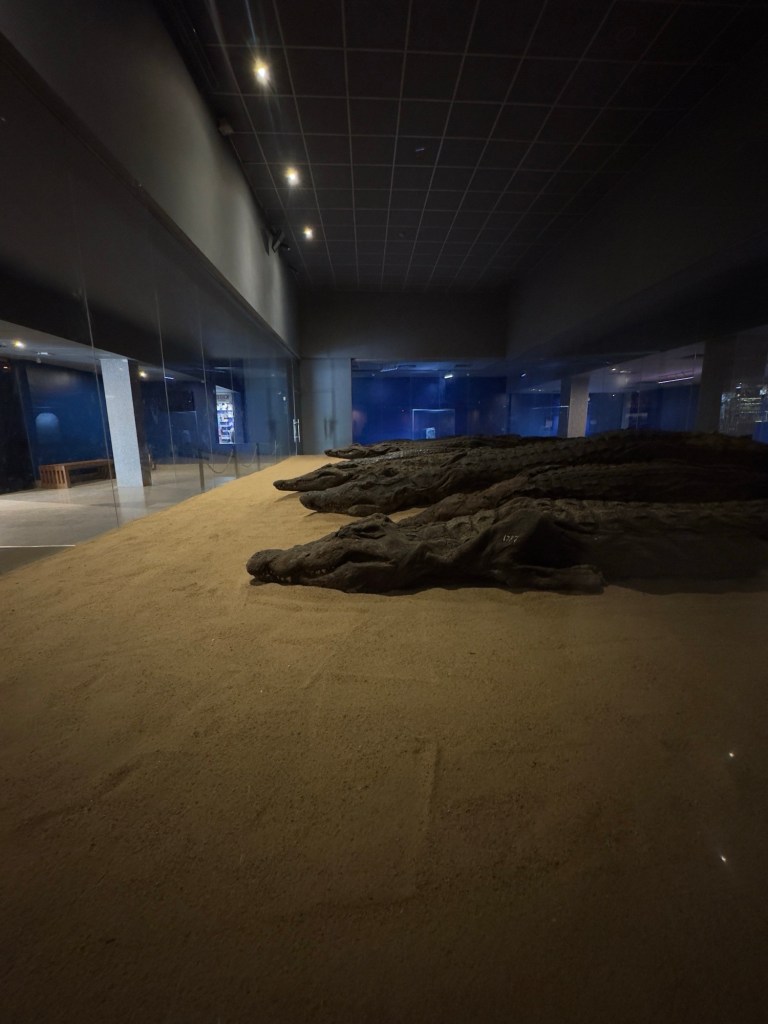
    Just outside the temple, the path leads you to the Crocodile Museum, which is as oddly fascinating as it sounds. It’s home to a collection of mummified crocodiles—because what better way to honor your god than by embalming his real-world cousins for eternity? Bonus: the museum has air conditioning.

    All Hail Horus and War

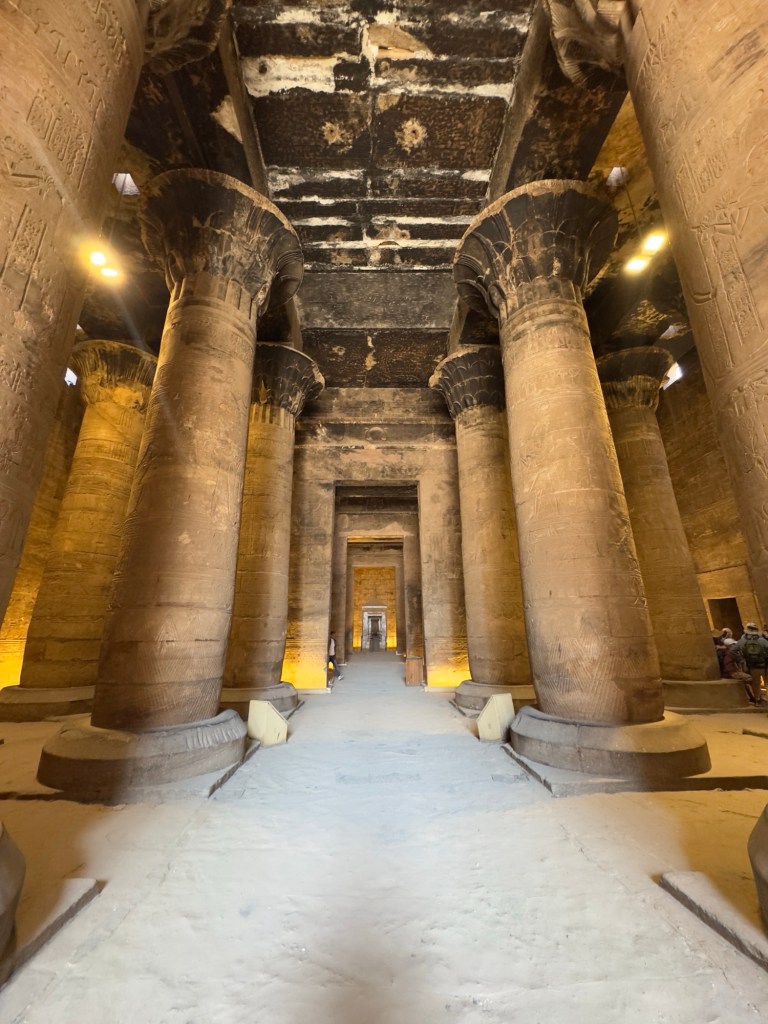
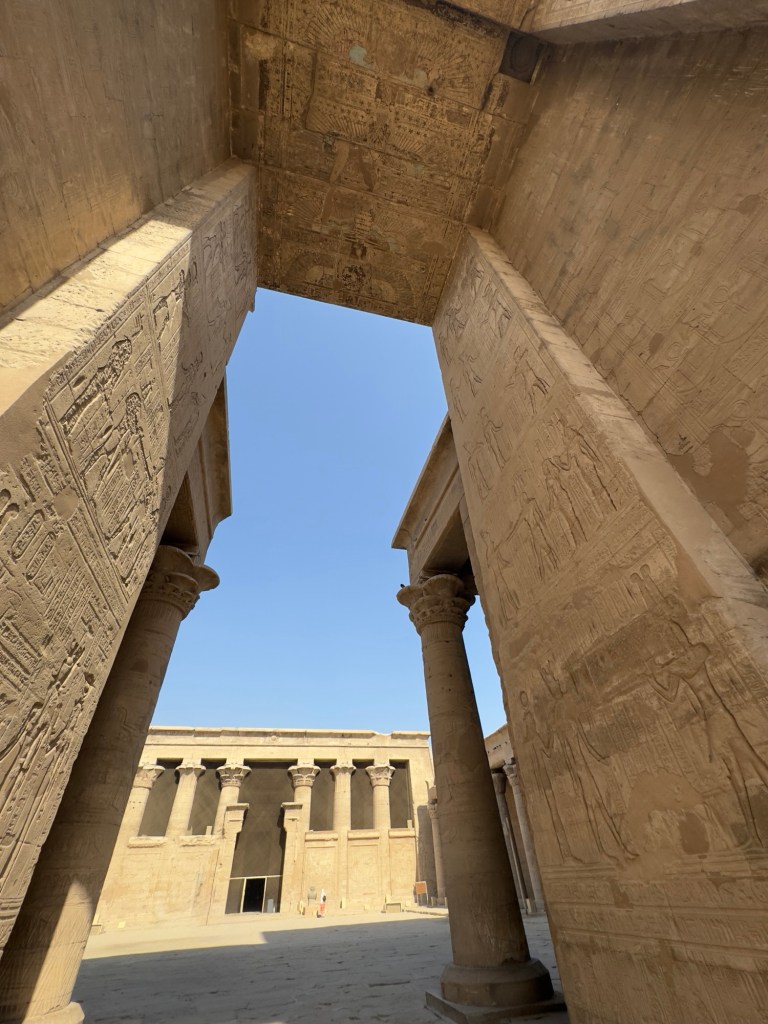
    Roughly an hour’s drive from Kom Ombo lies Edfu, home to one of the best-preserved temples in all of Egypt. Buried beneath layers of sand for centuries, the temple was rediscovered in 1860 by French archaeologist Auguste Mariette, and it remains remarkably intact.

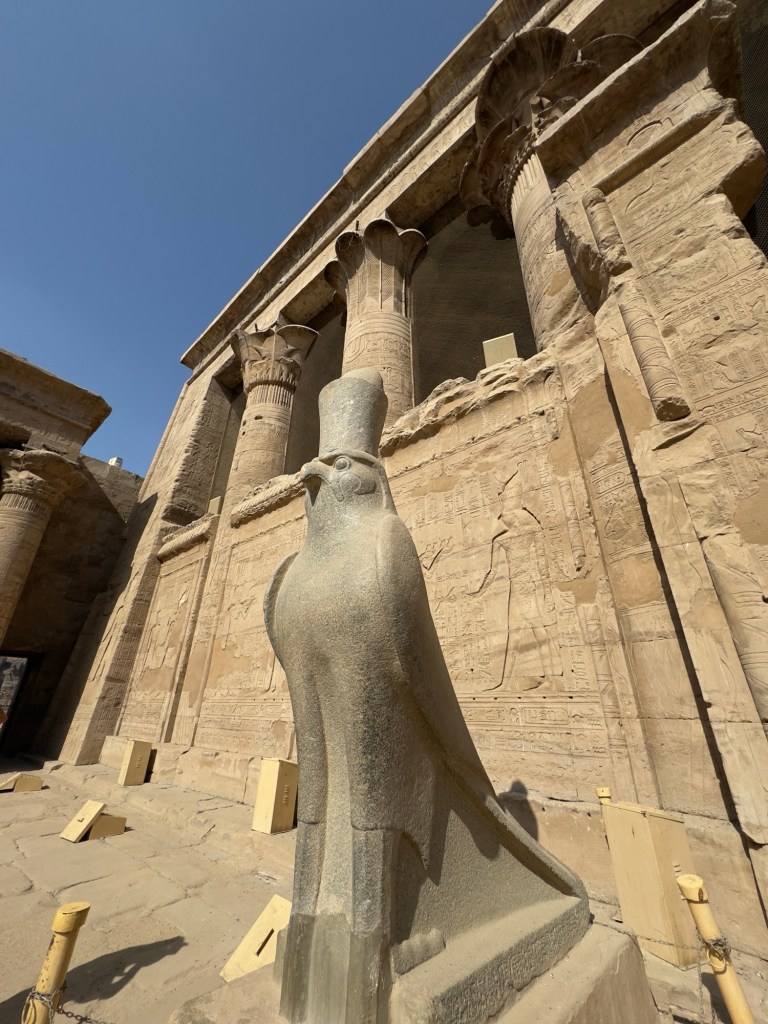
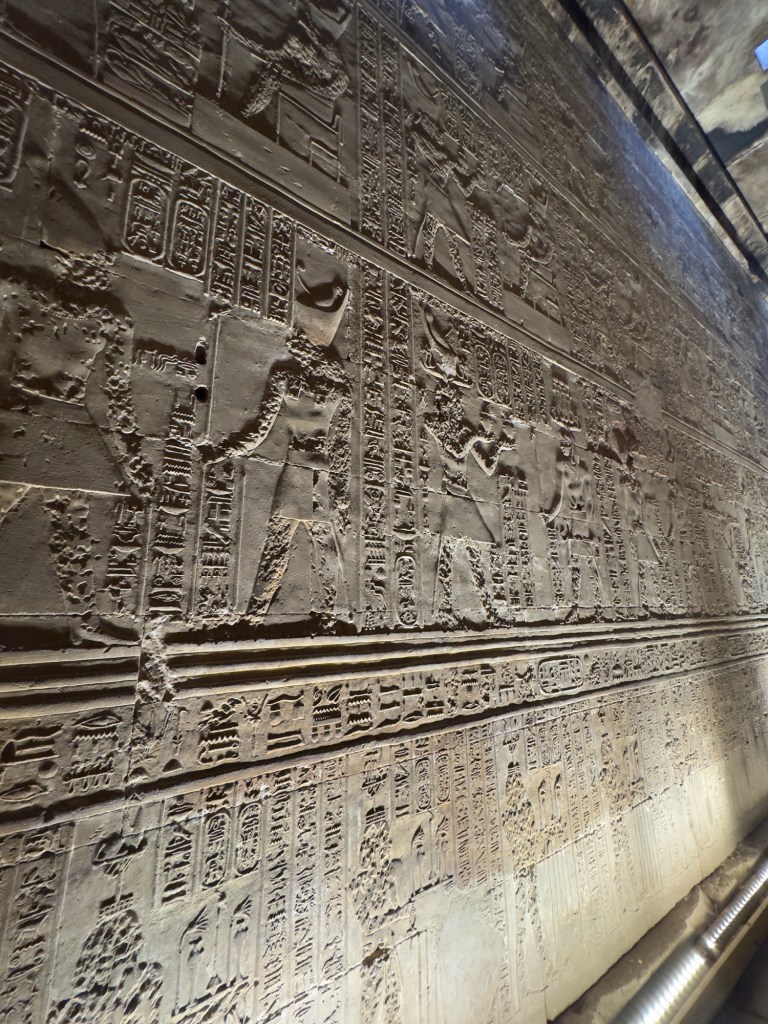
    Even before entering, visitors are met with an impressive façade: a towering pylon flanked by two monumental granite statues of Horus in falcon form. The reliefs on the entrance walls are striking—Ptolemy XII is depicted grasping enemies by the hair in front of Horus, just before delivering a decisive blow. A vivid example of pharaonic propaganda, if ever there was one.

    Inside, one of the standout features is the sanctuary of Horus, which houses a black granite shrine believed to have been donated by Pharaoh Nectanebo II. In front of it stands a replica of the sacred barque, the ceremonial boat used to carry the god’s statue during festivals. (The original now resides in the Louvre, naturally.)

    Edfu exudes a sense of power and triumph, quite different from the healing calm of Kom Ombo. The contrast feels fitting, as the temple was built on the legendary site of Horus’s victory over his rival Seth. With its sheer scale and mythological symbolism, Edfu leaves a lasting impression, on top of the sheer size of the structures, it’s hard not be in awe just standing there.

    Star Maps in Stone

    And then there was Esna. An hour’s drive from Edfu lands you in what can only be described as a chaotic fever dream wrapped in a historical gem. Before we even get to the temple itself, allow me a quick PSA: buy your tickets in advance. The ticket office isn’t anywhere near the main temple entrance. It’s across the street, in a small shack that looks nothing like a place to buy official passes and more like a security checkpoint, tucked just outside a bazaar that feels more like an ambush.

    The “entrance” is marked by a big blue sign that says “Esna City Touristic Bazaars,” which sounds charming until you’re mobbed by enthusiastic vendors who take “interactive shopping” to a whole new level as you walk down the street towards the actual temple entrance. My guide assured me this was a low season experience. I weep for anyone who braves it in peak tourist months.

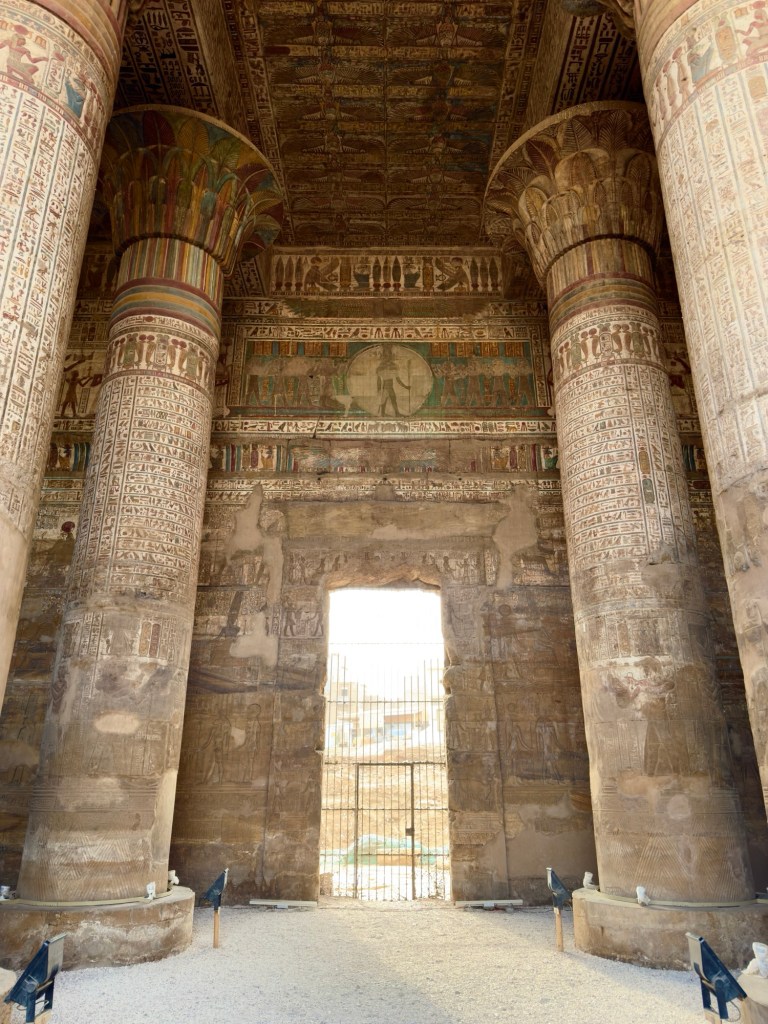
    Security was minimal, and after the majesty of Kom Ombo and Edfu, the temple at first felt rather modest. What remains is a columned hall with 24 pillars—a far cry from the sprawling complexes I had just visited. But Esna quickly proves it deserves its place on the itinerary, this place has its own quiet magic.

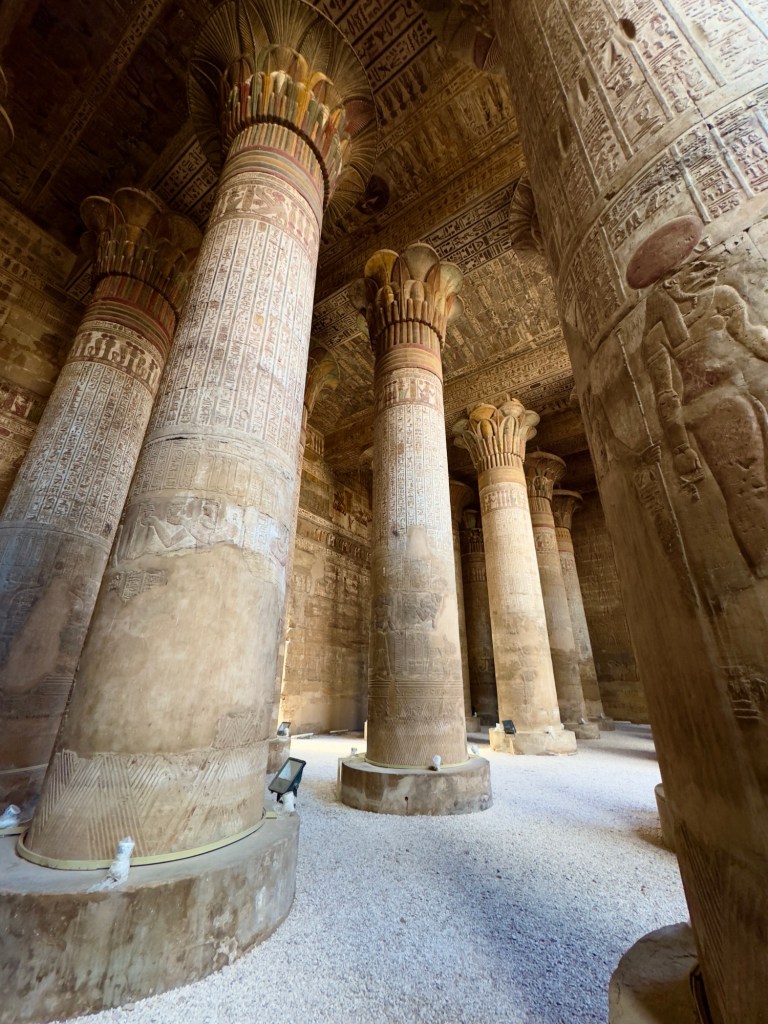
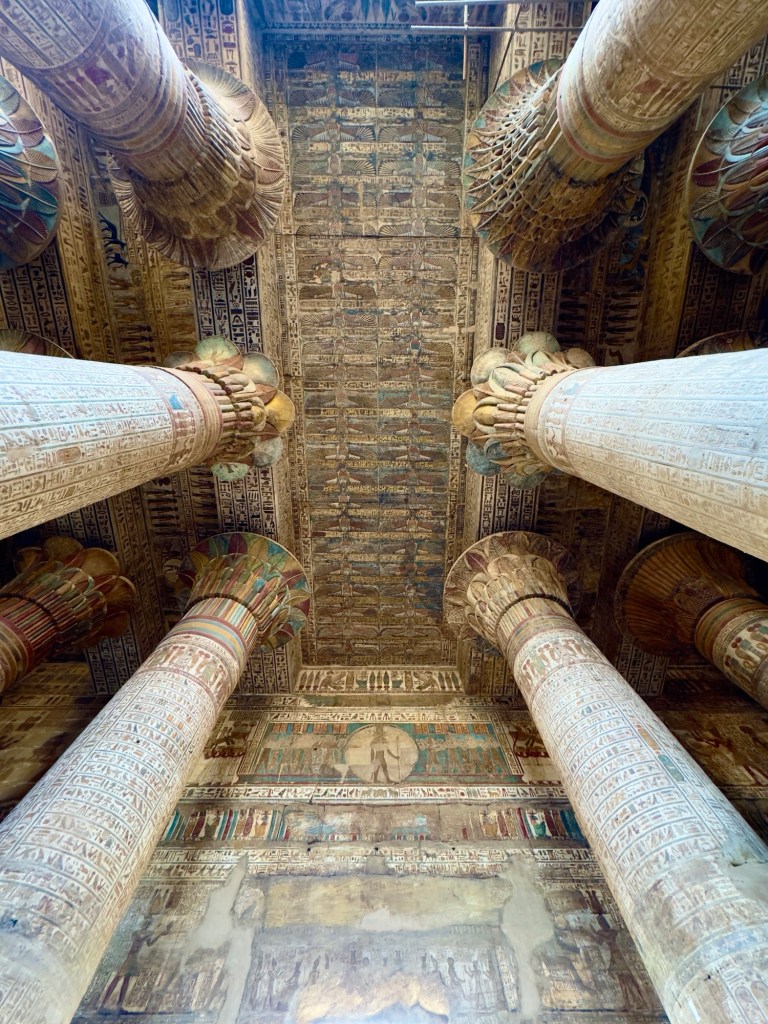
    What makes Esna stand out is its stunning astronomical ceiling, packed with vibrant zodiac signs, constellations, and celestial beings. The hieroglyphs are some of the last ever written in Egypt, dating back to the Roman period, long after most temples had stopped functioning. It’s like walking into the final chapter of Egypt’s religious narrative.

    Recent restoration work has uncovered vibrant original colors beneath centuries of soot and dust, offering a rare glimpse of how these temples may have looked in their prime. While most temples bear the faded scars of time, Esna’s colors are vivid, preserved by layers of grime that accidentally served as protection. It’s a small space, but it carries immense historical and artistic weight.

    The temple is small, and a visit won’t take more than an hour, especially since much of the surrounding complex is still buried under the modern city. The Egyptian government is working to relocate local residents so further excavation can happen. And if this is what they’ve uncovered so far? I can’t wait to see what’s still hiding underground.

    Onward to the Old Capital

    Three temples, three distinct atmospheres, and three remarkable windows into the complexity of ancient Egyptian religion and culture. As the tour came to an end and we continued on to Luxor, I found myself even more excited for what lay ahead. If these were just the stops on the way, I could only imagine what the heart of ancient Thebes had in store.

  • Egypt – Aswan

    The Land of Gold


    Where Am I Again?

    Tucked along the banks of the Nile, Aswan has long been Egypt’s southern gateway. In ancient times, it was the last major stop before reaching the gold-rich lands of Nubia—meaning pharaohs, merchants, and opportunistic invaders alike all passed through, usually with a cartload of ivory, incense, and, most importantly, gold. Because let’s be real, what’s Ancient Egypt without a little gold?

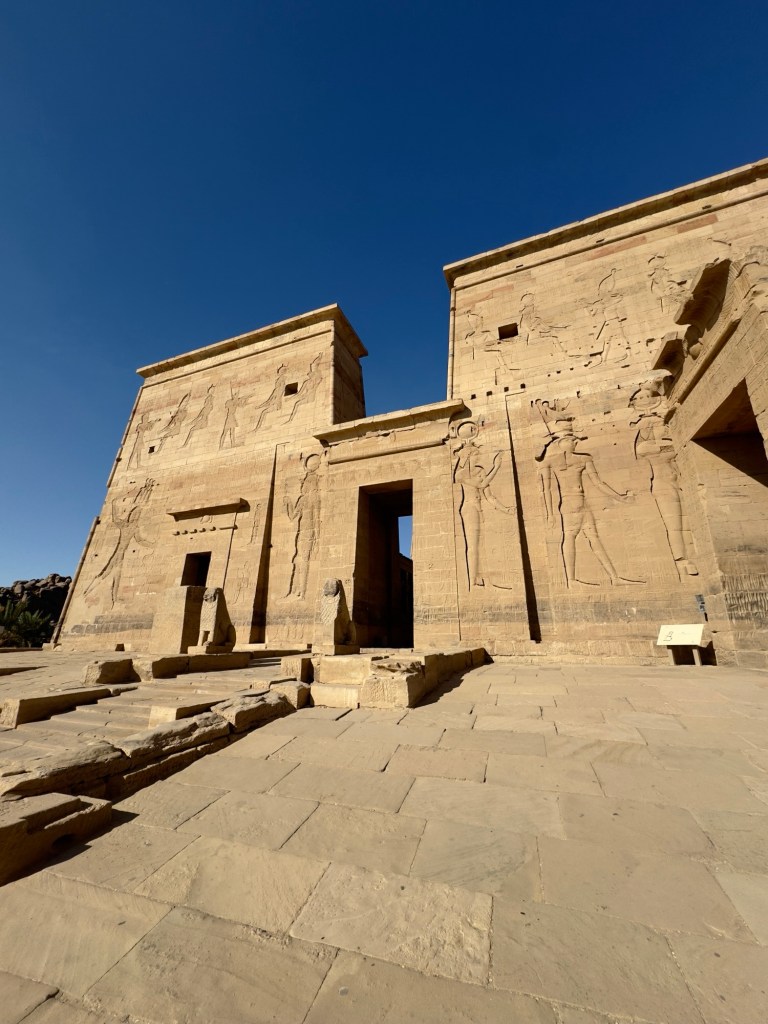
    Today, Aswan remains a place where history feels tangible. The Philae Temple, dedicated to Isis, stands as a testament to devotion and resilience, having been relocated piece by piece to escape rising waters like the Abu Simbel Temples. The Unfinished Obelisk, still embedded in bedrock, offers insight into the craftsmanship of ancient stonemasons. And the massive Aswan High Dam, a modern engineering feat, reshaped Egypt’s landscape much as the pharaohs once did.

    Seeing Aswan in the daylight is a bit of a luxury—one I did not initially have. Arriving at ass o’clock in the morning, then waking up again some 2 hours later at 4 AM for a jaunt to Abu Simbel, meant my first proper view of Aswan was through bleary eyes and dark skies. But once the sun was actually out and I had some too much tea in my system, the city revealed itself in all its colorful glory. Unlike much of Egypt’s architecture, which leans toward muted earth tones, the Nubian villages here explode in vibrant blues, yellows, pinks, and greens. These homes don’t just look good—they reflect a deep cultural heritage that’s been shaped by the Nile for centuries.

    Philae Temple: A Journey Across Time (and Water)

    To reach the Philae Temple, you first need to get to Shellal Marina, about 15 minutes from the city center. Here, a fleet of small motorboats awaits, ready to ferry tourists across the river. The boat fees? Negotiable, of course. Expect an initial price that’s a little on the ambitious side, but with some haggling (or patience for a group to join in), you can get a better deal. Tour groups usually have this ride included, but tipping is still very much expected.

    Now, most will tell you that visiting early in the morning is best to avoid the crowds, allowing for a quieter, more atmospheric experience. I, however, arrived around 1 PM, and it was blissfully empty—turns out, most tour groups were already making their exit. Yay me. Then again i was visiting in one of the low tourist seasons, and was cutting it close to the winter closing hours at 3pm.

    The Legend and Layers of Philae

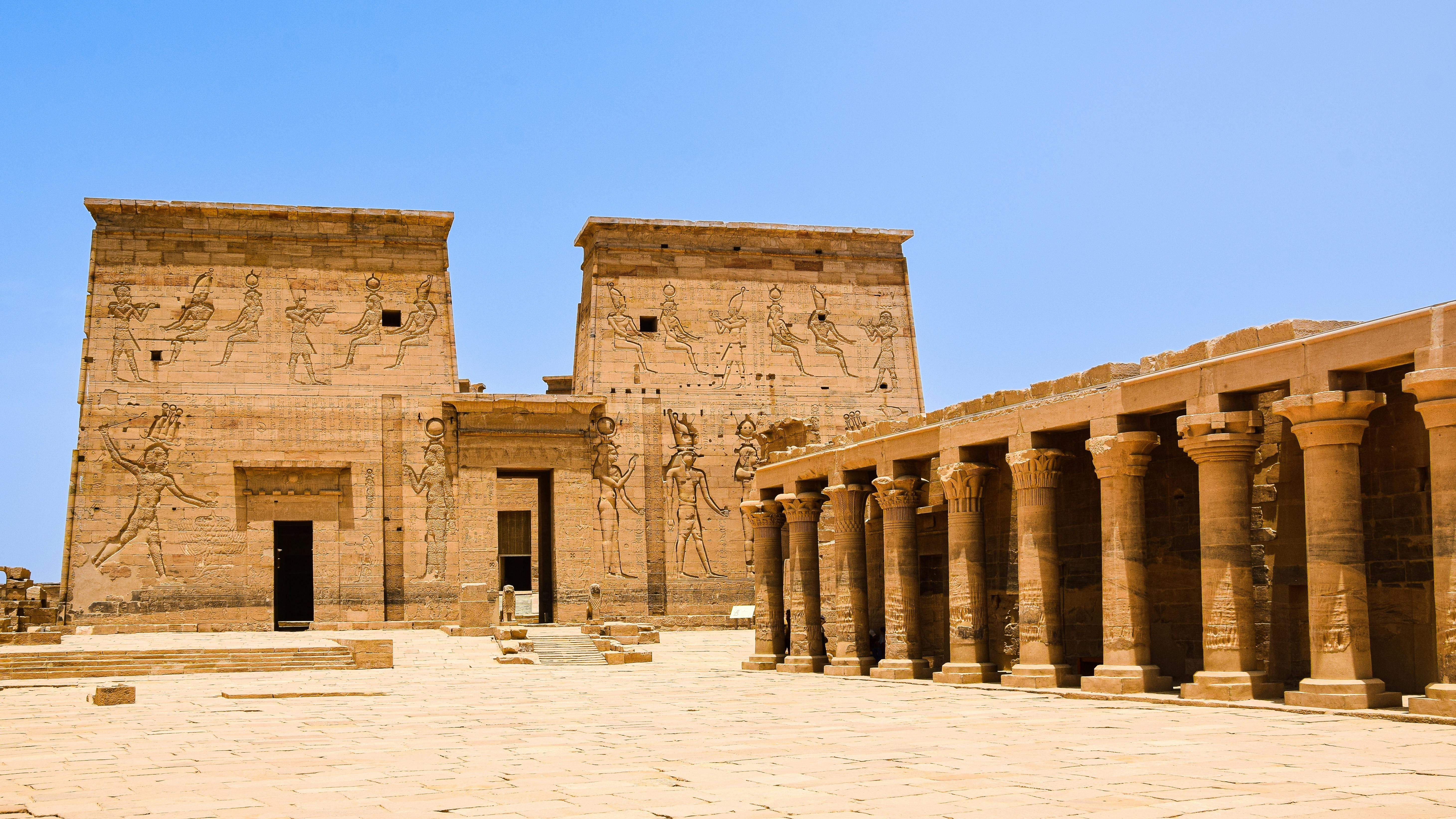
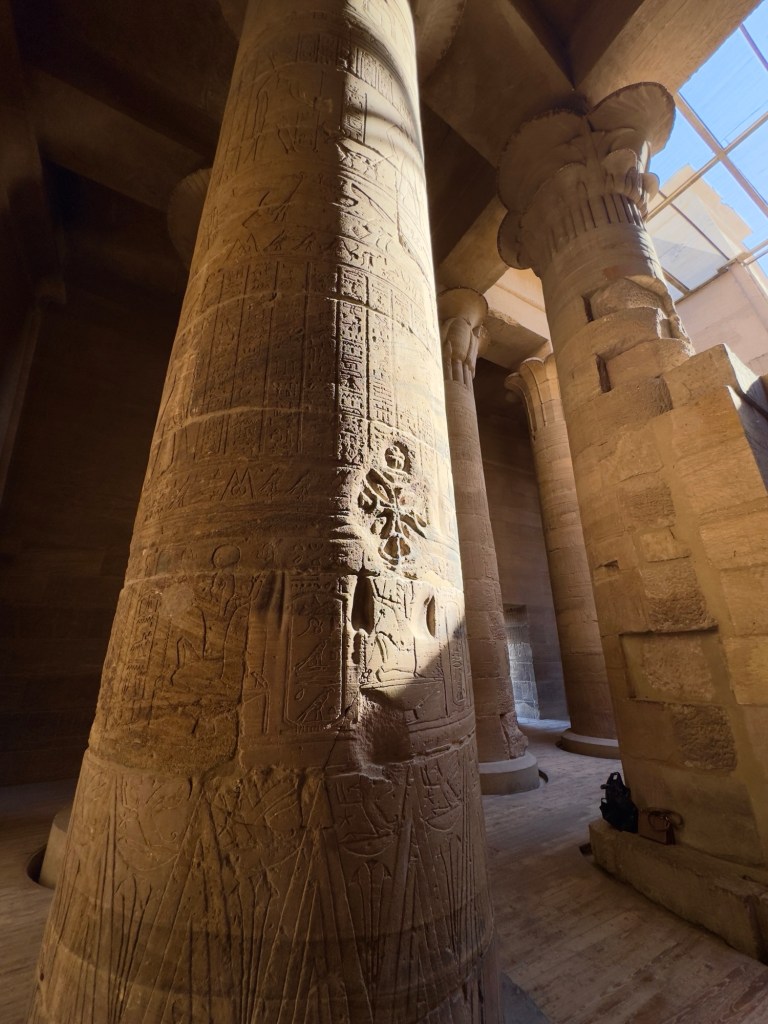
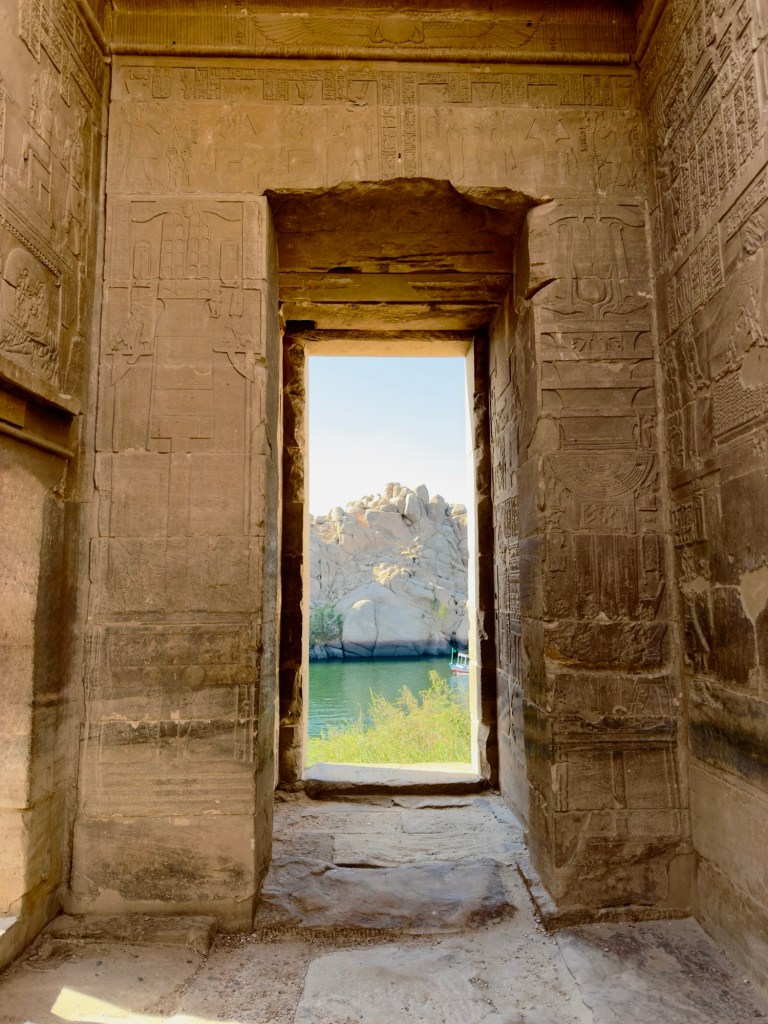
    Together with my guide from GYG, i was led into the mythical Philae Temple. Philae Temple is dedicated to Isis, the goddess of magic and healing. The temple’s design even tells her story—its windows are said to represent pieces of her husband Osiris’s body, which his jealous brother Set had helpfully scattered across Egypt. Nothing says sibling rivalry like dismemberment.

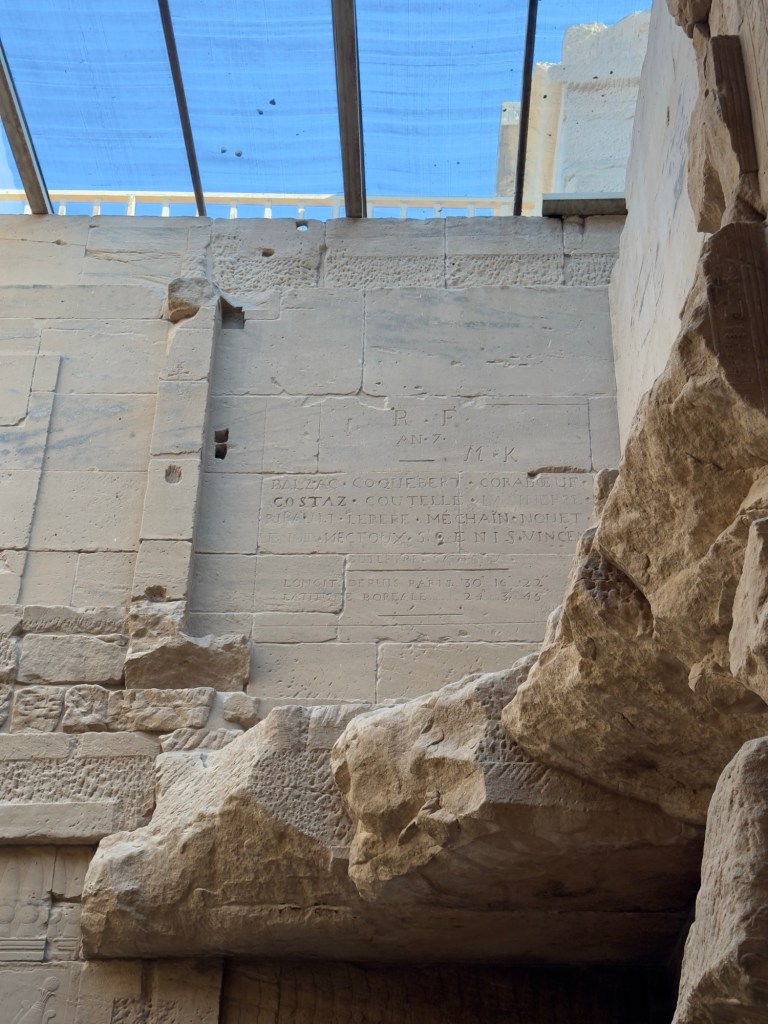
    Beyond mythology, Philae has its fair share of “historical graffiti.” Napoleon’s scholars, who documented (ahem, looted) Egypt, left their mark here, as did early Christians, who repurposed the temple and etched crosses into its walls. You’ll also notice a lot of scratched-out faces—ancient gods defaced in the name of religious transformation. History is nothing if not ironic.

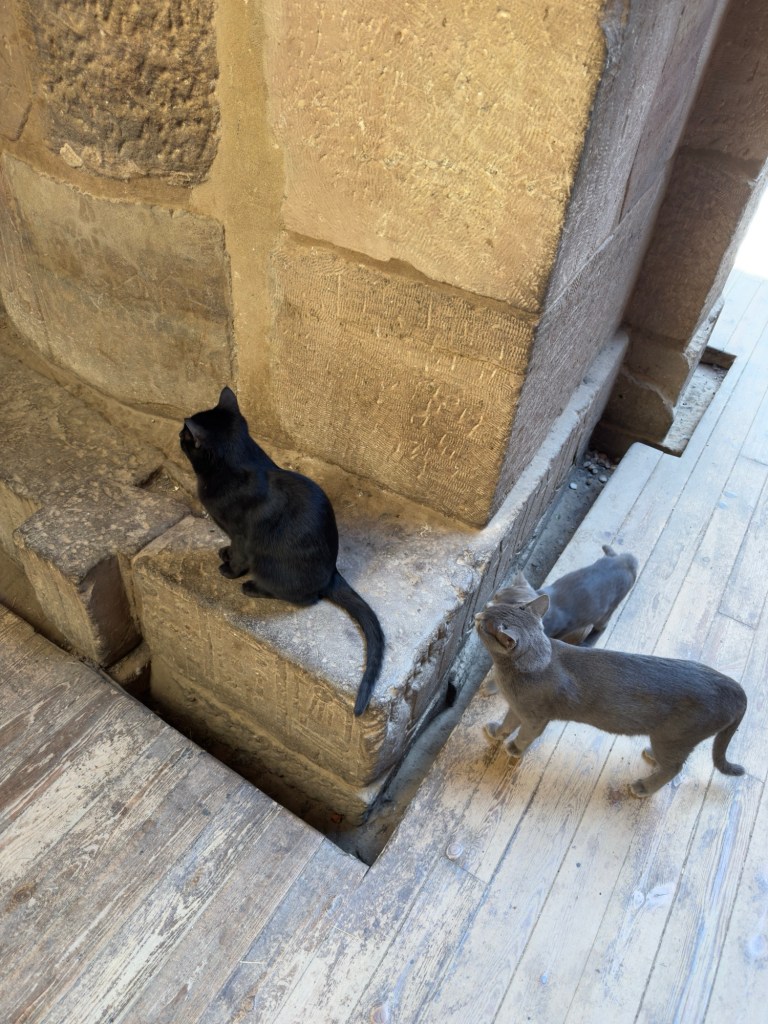
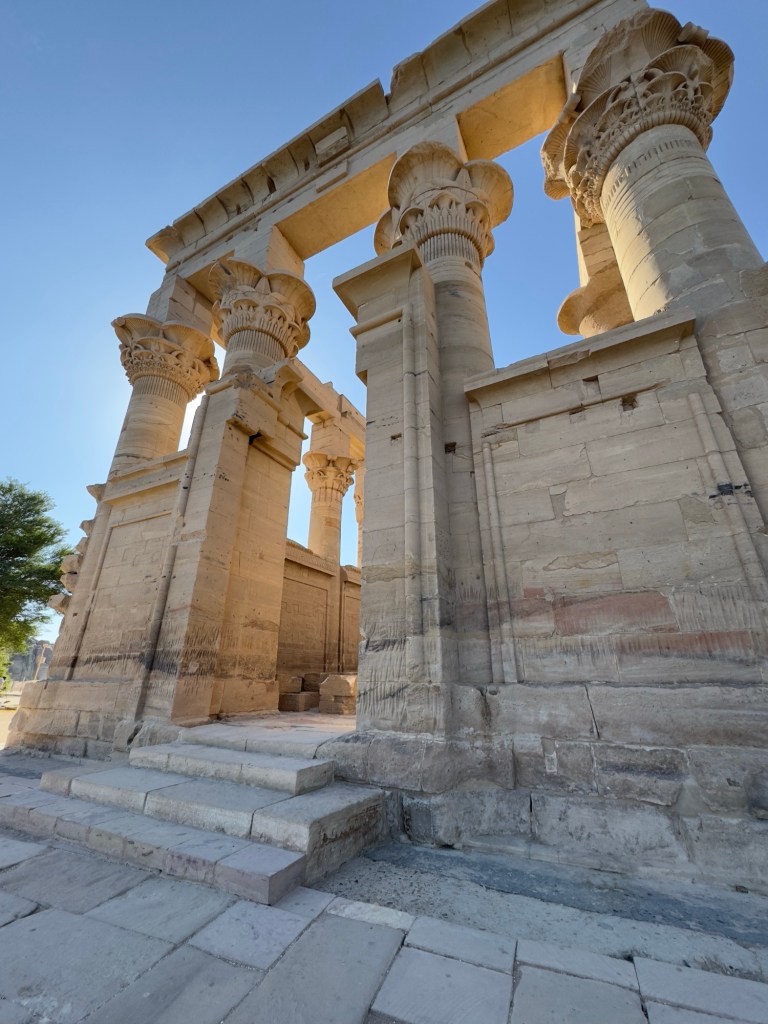
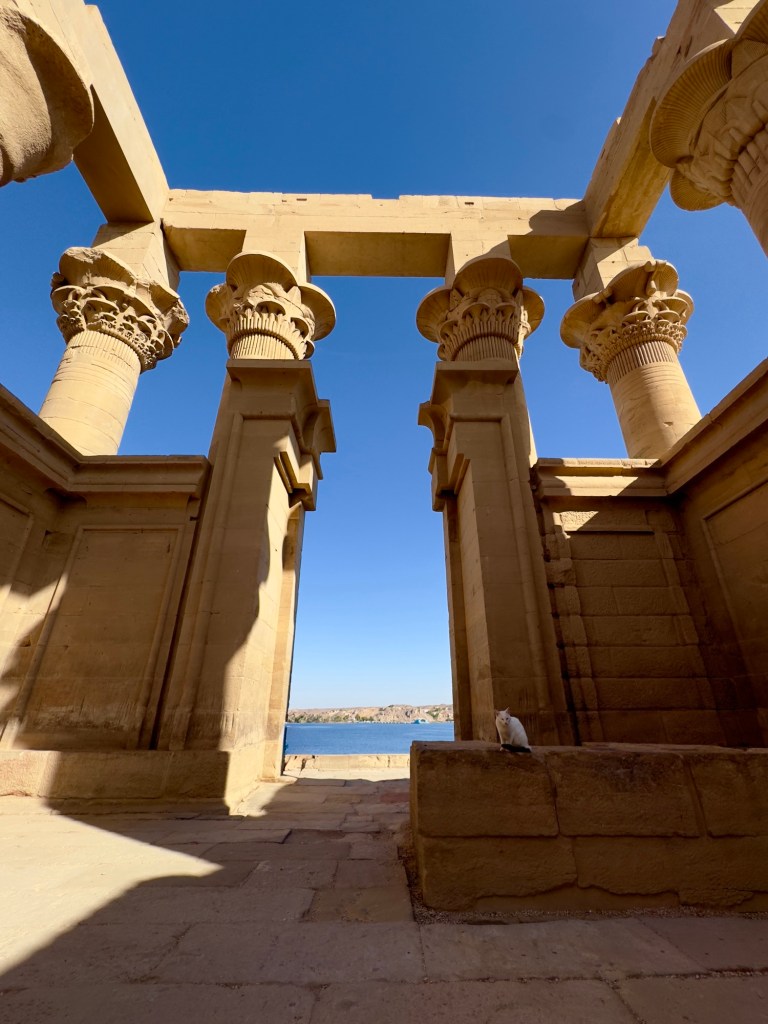
    Philae isn’t just about the temple—it has other impressive structures scattered across the complex, like the Mammisi (Birth House) and Trajan’s Kiosk, also known as “Pharaoh’s Bed.” This picturesque Roman-era pavilion is perfect for dramatic Nile-side photoshoots. And let’s not forget about the actual stars of the visit, guardians of the temple, the ‘pièce de résistance’ – the cats.

    Shut Eye Time, For Now

    Aswan has plenty to offer beyond its temples, with a mix of history, culture, and stunning landscapes. A visit to the Unfinished Obelisk provides a glimpse into ancient Egyptian engineering—it was commissioned during the reign of Queen Hatshepsut but abandoned after an unfortunate crack appeared during construction, proving that even the best-laid plans of pharaohs can go awry. The Nubian Museum is another must-see, offering a deep dive into the vibrant history and culture of the Nubian people, who have called this region home for millennia. If you’re up for a bit of exploration, the Tomb of the Nobles provides a fascinating look at the final resting places of Aswan’s elite, complete with hieroglyphs and stunning views of the Nile. And for a more leisurely experience, a felucca ride at sunset is said to be one of the most serene ways to take in the beauty of the river, or at least that’s what i heard from fellow travelers. I personally couldn’t wait to hop straight into bed rather than onto a boat.

    After a surprisingly delicious seafood dinner at a random restaurant near my hotel, I turned in early. Because, of course, the next day involved yet another early start—this time en route to Luxor, with three pit stops along the way.

    No rest for this history-loving, only has so many ALs in a year, sleep-deprived traveler i guess.

  • Egypt – Abu Simbel

    A Testament of Devotion

    A Rocky Start

    My two week journey into the land of the Pharaohs began from Amman Queen Alia International Airport, and boy did we get off to an amazing start.

    Heavy fog led to a six-hour flight delay, followed by frustrating flight assistance from EgyptAir while trying to rebook my connecting flight from Cairo to Aswan—which, of course, was delayed too. By the time I finally reached my hotel, I was absolutely pooped.

    But I was not about to let all this get in the way of a trip I have literally been dreaming of since I first opened the golden tome of Egyptian History and Myths as a snotty-nosed brat. So, off to bed for a two-hour nap, and I was out of the hotel again at 4 am for a four-hour ride to the Abu Simbel Temples. Why so early? Well, for the same reason I always do—to get there at opening and avoid the crowds. And you bet there’ll be crowds the minute the gates open

    Getting to Abu Simbel

    While the four-hour road trip from Aswan to Abu Simbel is an option, you can also take a flight with EgyptAir, which runs every hour or so from Aswan International Airport to Abu Simbel Airport. The flight takes just 45 minutes, followed by a short taxi ride to the temples. If you prefer to stay closer, there are hotels and resorts nearby, allowing you to arrive the day before and wake up just in time for the temple’s opening. Staying overnight can be costly, but if you’re willing to splurge, it’s definitely an option. Otherwise, many hotels and agencies in Aswan offer bus tours—a cheaper but less flexible alternative.

    As usual, I found my driver through GYG, which has been a lifesaver for trip planning. And when I say planning, I mean the full-on Excel sheet treatment—timestamps, booking details, prices, and even the conversion rate at the time of purchase. Suffice to say, I like planning.

    Favoritism Much Mate?

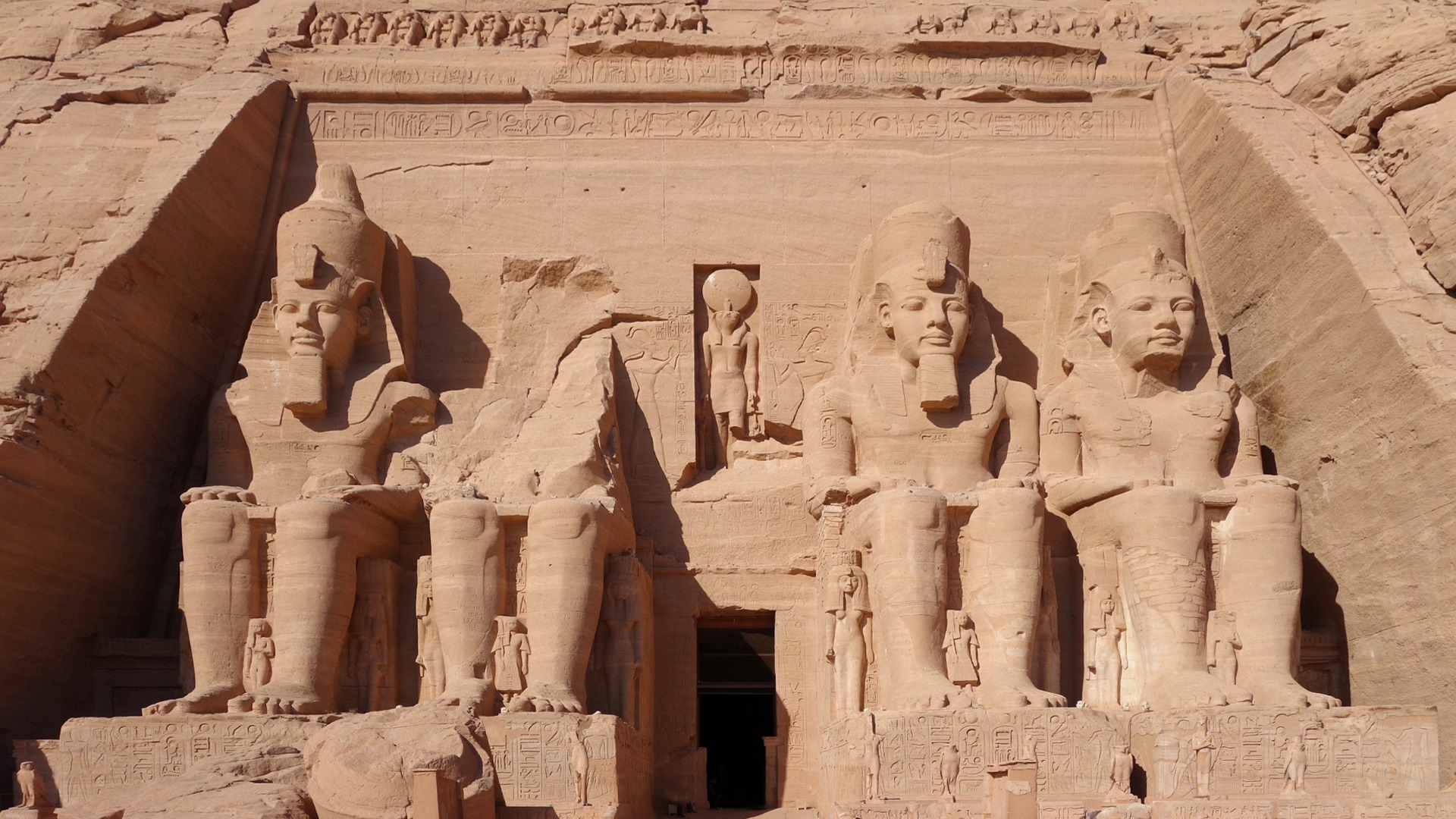
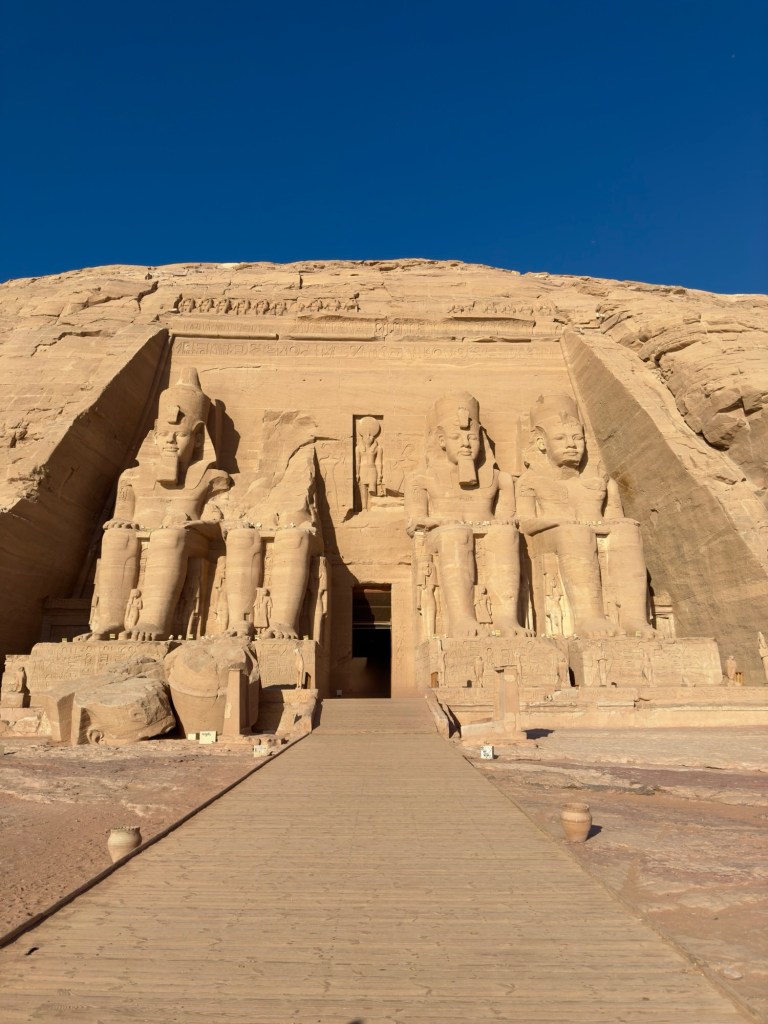
    Four hours on the road and many tea breaks later, I found myself standing before one of the greatest displays of devotion (ahem favoritism ahem) in pharaonic history. Why? Because the Abu Simbel Temples—two massive rock-cut structures in southern Egypt, near the Sudanese border—were built by Pharaoh Ramses II in the 13th century BCE. He dedicated them to himself, the gods, and his Great Royal Wife and queen, Nefertari.

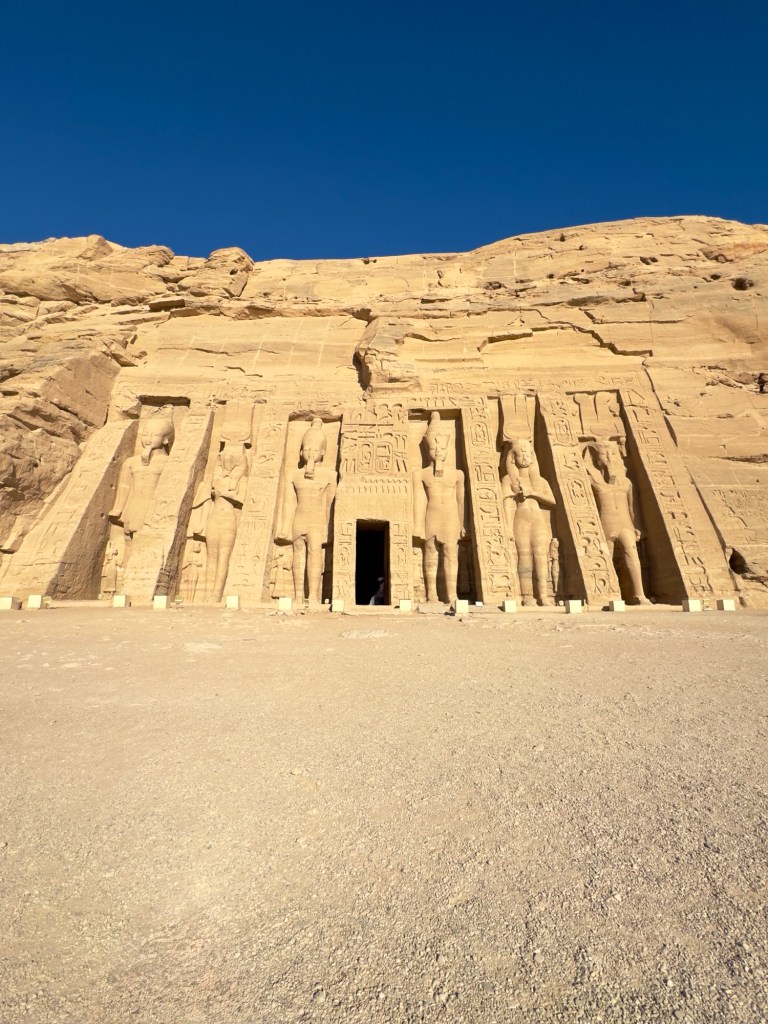
    Despite having around 200 wives and consorts—and well over 100 children—Ramses II built and dedicated a temple to Nefertari alone, honoring her with titles during her lifetime such as Nefertari Meritmut (Beautiful Companion, Beloved of Mut) and The One for Whom the Sun Shines and so on. The Small Temple of Hathor and Nefertari can be found right next to The Great Temple of Ramses II, both located within the Abu Simbel historical site.

    I went without a guide this time but was unintentionally ‘guided’ by a very enthusiastic local Egyptologist—alongside a lovely older couple who more or less adopted me as their unofficial photographer for the day. The history and stories were captivating, but what fascinated me most during his guide was the incredible story behind the relocation of these temples.

    The Great Relocation and Solar Alignment

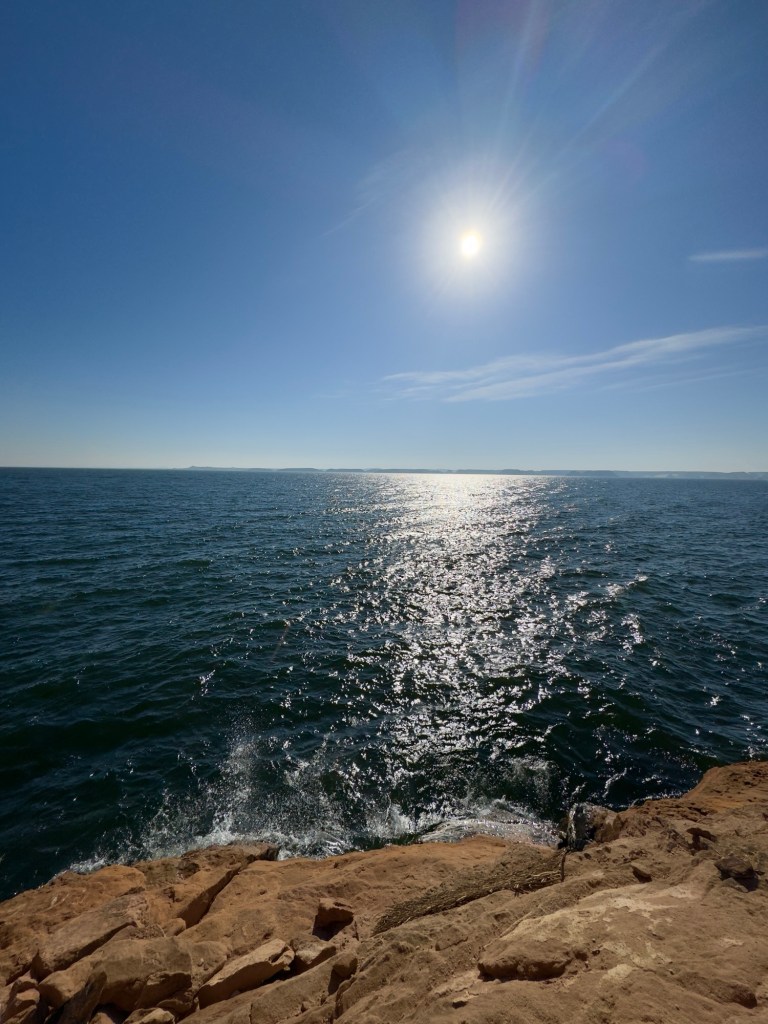
    Imagine watching one of Egypt’s most iconic temples disappear beneath the waters of a massive lake. That was nearly the fate of the Abu Simbel Temples, built by Ramses II over 3,000 years ago. When the Aswan High Dam was constructed in the 1960s, the rising waters of Lake Nasser threatened to submerge these ancient masterpieces forever. In a race against time, UNESCO launched an ambitious project to relocate the temples piece by piece, marking this project as one of the greatest engineering feats in history.

    Between 1964 and 1968, a team of experts carefully cut the temples into over 1,000 massive blocks, each weighing up to 30 tons. These pieces were then moved 65 meters higher and 200 meters back to a new, specially built artificial hill—preserving not just the temples, but also their famous solar alignment phenomenon. The entire project cost around $40 million, but it saved one of Egypt’s most treasured sites from vanishing beneath the water. At the site, you can even occasionally spot small metal studs in the ground or on the walls with a number on it, indicators identifying each piece of the massive 1000 piece megalith puzzle.

    What makes Abu Simbel truly unique is its solar alignment, a stunning event that happens twice a year—on February 22 and October 22. On these mornings, the rising sun shines directly into the Great Temple of Ramses II, illuminating the statues of Amun-Ra, Ra-Horakhty, and Ramses II in the inner sanctuary, while Ptah—the god of the underworld—remains in shadow, symbolizing his eternal darkness.

    Even after the temple’s relocation, engineers preserved this alignment, though the effect now occurs one day later than originally intended. If you plan to witness this phenomenon, my “guide” (or, as I called him, monsieur marketing —he is quite persuasive) advised arriving by 4 AM to secure a good viewing spot for alignment that starts around 5:30–6:00 AM. Tickets for this event have a different price, which you can find and book in advance on the official Egypt Monuments website.

    The Temples

    Guides are only allowed up to the temple entrances, so once inside, you’re left to explore on your own. This is where my photography skills kicked in for the lovely elderly couple as they couldn’t bring in their guide. Guides usually point out key areas via photos or photobooks (which they’ll try to sell you afterward), but inside, you’re free to soak in the grandeur at your own pace.

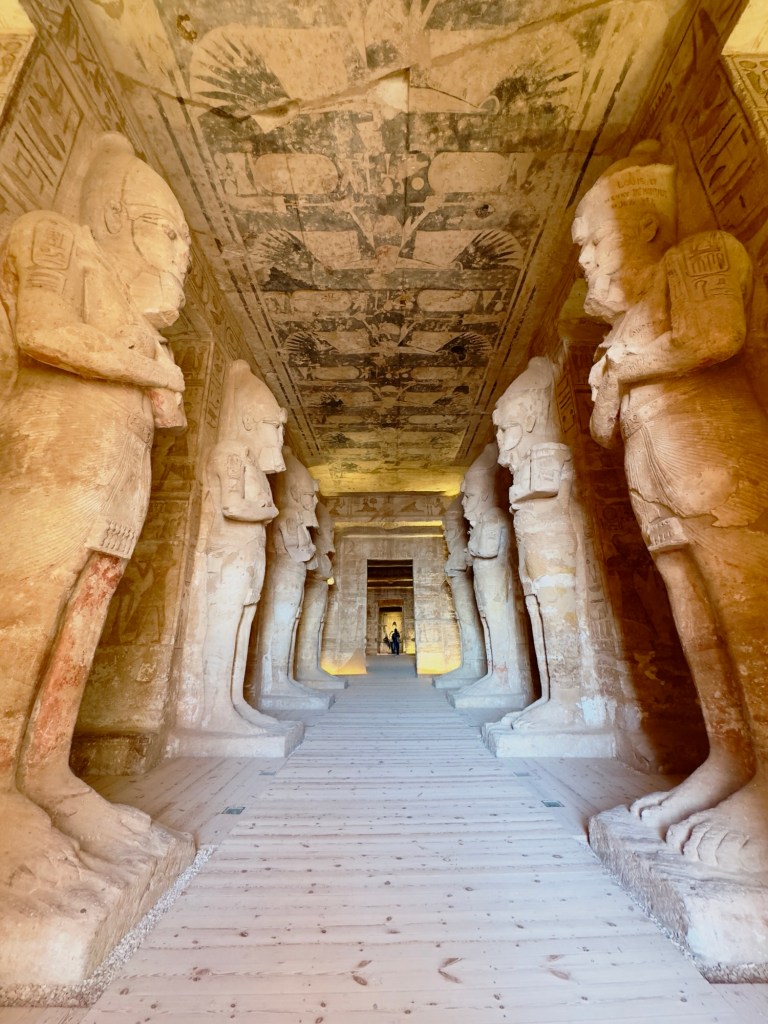
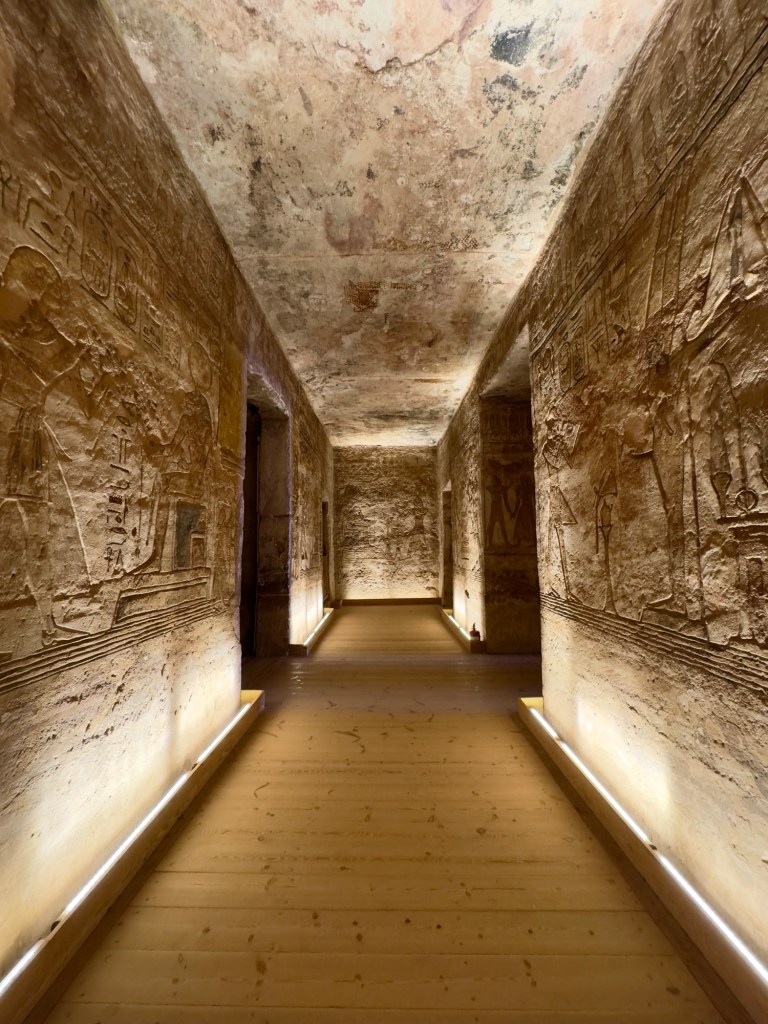
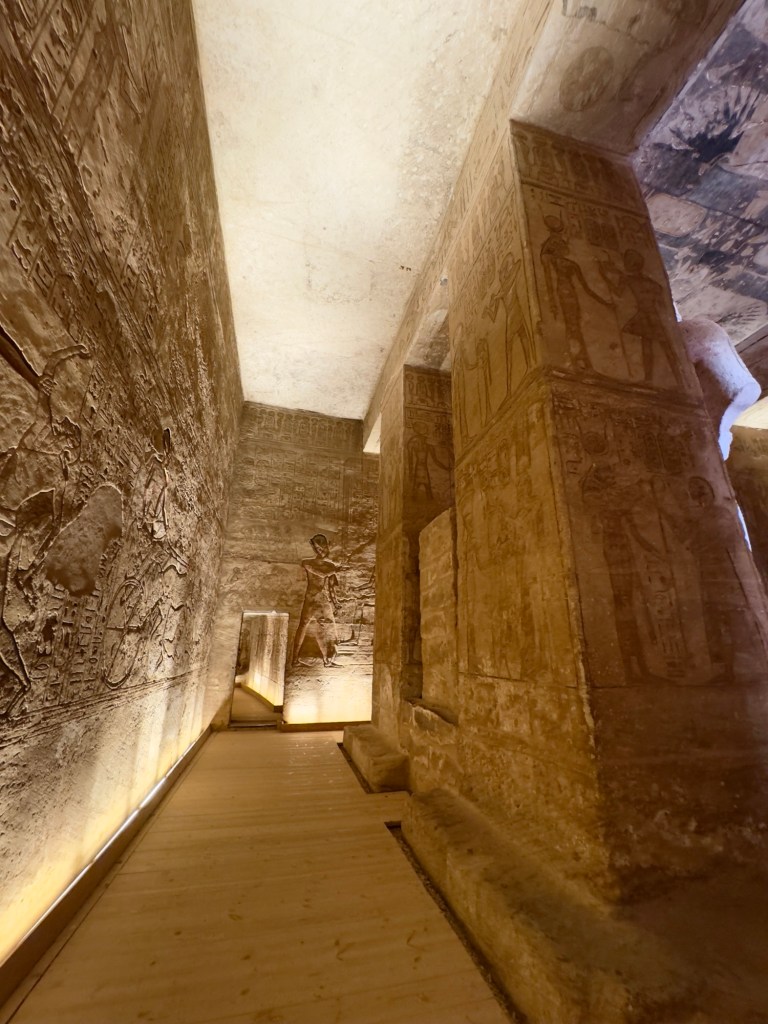
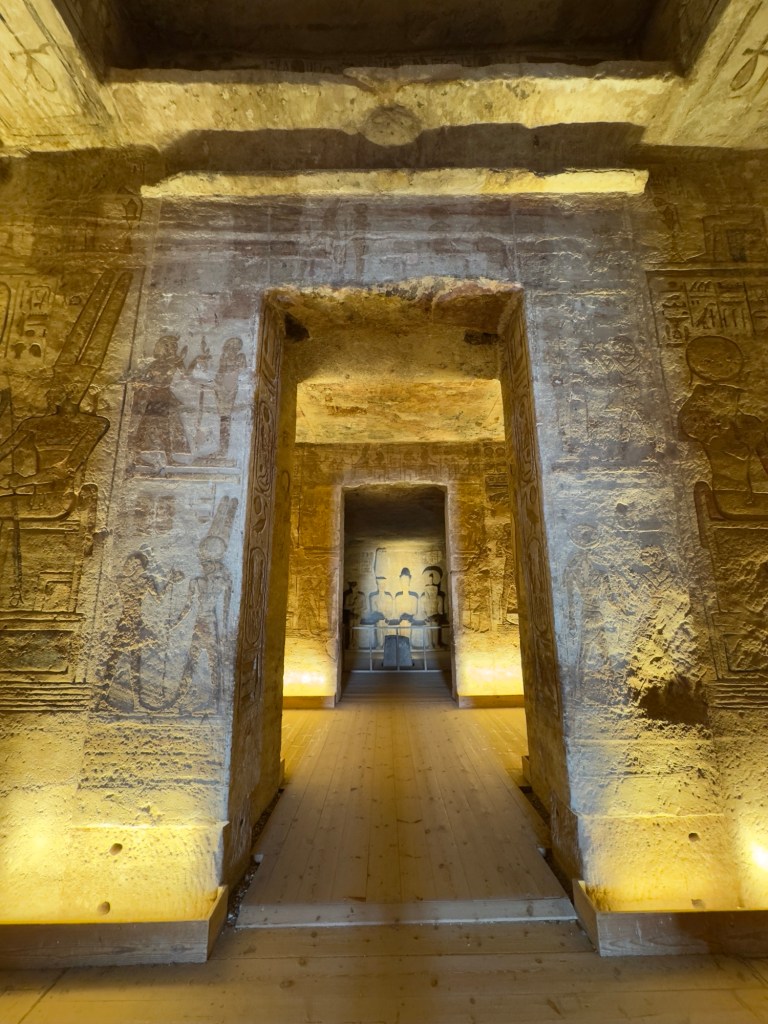
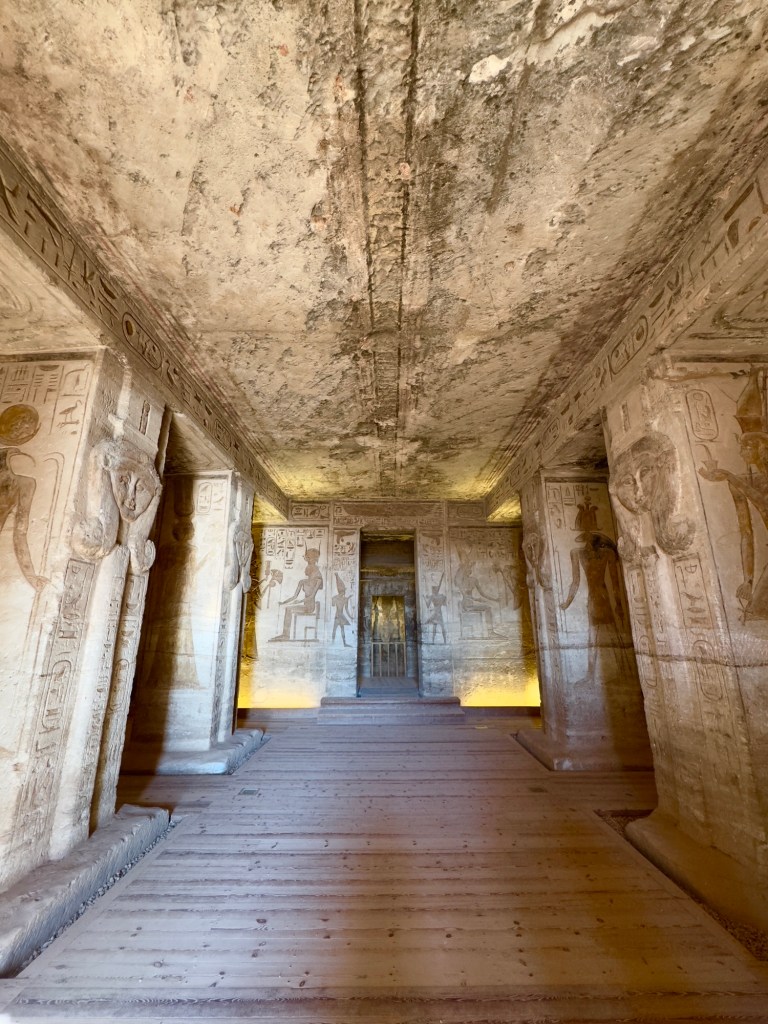
    It is hard to describe the sense of awe or almost reverence that comes upon you the minute you cross the entrance of these temples. Stepping into the Great Temple of Ramses II, you are dwarfed by the four colossal statues of the pharaoh, their gaze unwavering through time. Inside, towering Osirid statues line the vast hall, while the walls pulse with ancient battle scenes, including Ramses’ triumph at Kadesh. Deeper still, the inner sanctuary houses four seated figures—Amun-Ra, Ra-Horakhty, Ramses II, and Ptah. On the days of solar alignment, this is where the sunlight pierces the chamber, illuminating all but Ptah, the god of darkness.

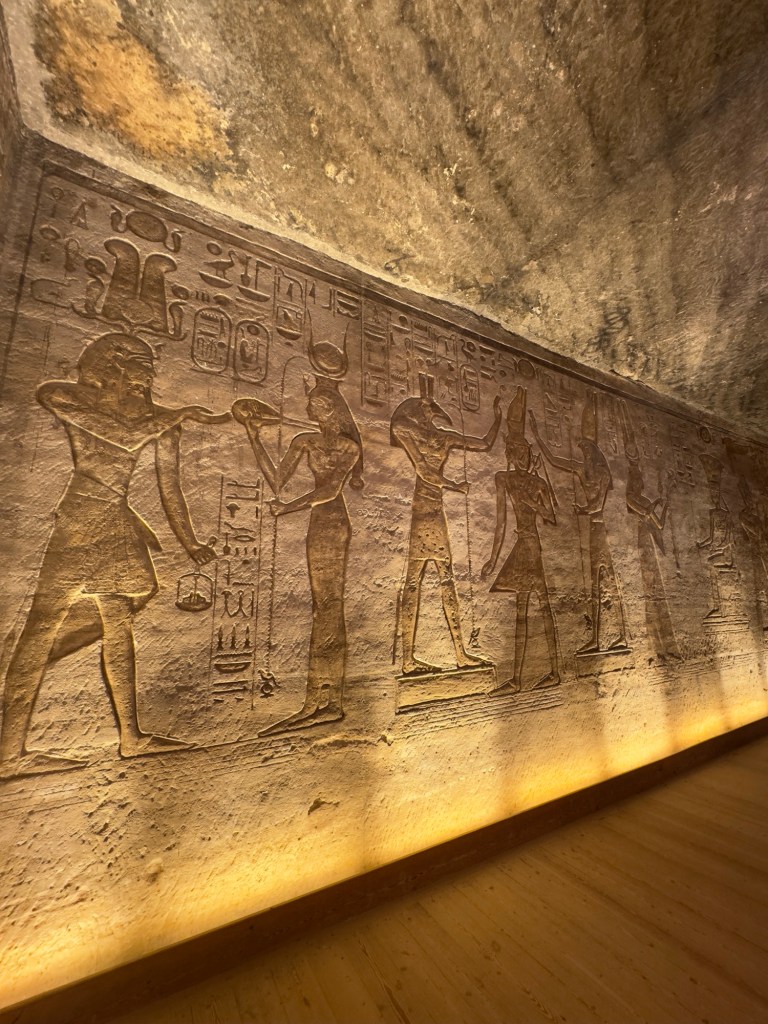
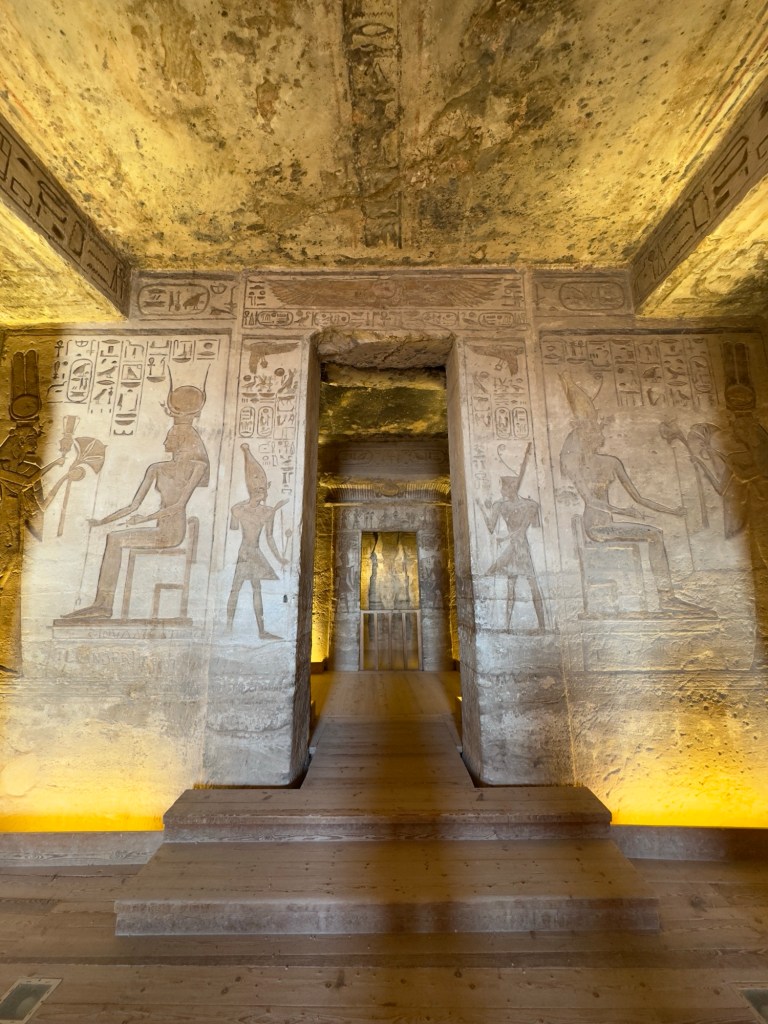
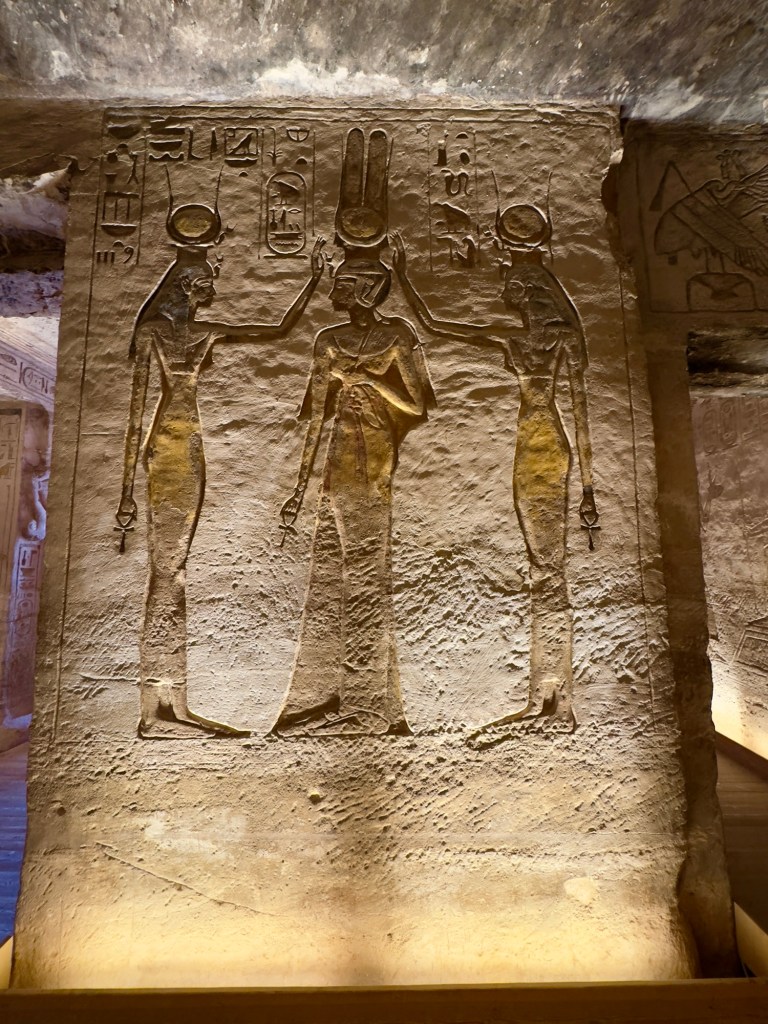
    At the Temple of Nefertari, grace replaces grandeur. The entrance, flanked by six statues of Ramses and his queen, is rare in its equal tribute. Inside, Hathor-headed pillars watch over delicate carvings of Nefertari offering to the gods, her form radiating divine favor. Unlike the Great Temple’s power, this space hums with devotion—both to the gods and to the queen who was loved enough to be immortalized in stone.

    It very hard not to be impressed when you’re physically standing there, just thinking to yourself, “How the heck did they do this back in the day?”.

    The Farewell Gift

    After about two hours of exploring, my unofficial ‘guide’ surprised me with a tip—perhaps for being a good sport and taking great photos of his clients, which I found absolutely hilarious. In return, I tipped him back, considering I had unknowingly been guided by him for most of the visit.

    As a gesture of goodwill, the ‘tip’ was a 1 Egyptian Pound banknote, featuring an image of Abu Simbel Temple on one side. Laughing, he even joked that it was more of a bribe—so the old couple and I would stop bombarding him with questions. Hilarious.

    With that, I left my unexpected tour buddies behind and set off back to Aswan, where the mystical Philae Temple of Isis awaited.

  • Jordan – Umm Qais & Jerash

    Roads that led to Rome

    Is That It?

    It’s one thing to read about the mighty Roman Empire, but it’s another to stand in one of their ancient cities—nearly 4,000 km away from modern-day Rome—and realize just how far they came.

    A little research truly goes a long way. Good ole me would have been content with just exploring Petra and sand cruising through Wadi Rum. But then I wondered—was there more that Jordan had to offer? A quick Google search revealed that Jordan is so much more than just sands and rosy rock-carved buildings.

    During the Hellenistic and Roman periods, Amman was known as Philadelphia, named after Ptolemy II Philadelphus. (Ha, and now, a cream cheese manufacturer has taken up the same name. )

    After the Roman annexation of the Nabataean Kingdom in 106 AD, the province of Arabia Petraea was established, incorporating cities like Petra, Gerasa (Jerash), Gadara (Umm Qais), and Philadelphia (Amman). These cities flourished under Roman rule, leaving behind a rich architectural legacy—grand theaters, temples, and colonnaded streets. Walking through them today makes you wonder what life must have been like in their golden age.

    Now, I’m not usually a “hire a tour” kind of person, but with only one day left in Jordan and two major sites on my list, I figured it was the best option. Luckily, I found a private tour with a driver through GetYourGuide that perfectly fit my itinerary.

    You can drive to these locations yourself. The mountainous roads to Umm Qais can get a little spicy, but overall, the routes are straightforward and safe. Tour groups and buses are also an option. But there’s an option for everyone and budget.

    Umm Qais—A Hilltop Roman Gem

    As with most trips in Jordan, the day started early. After a two-hour car ride, with tea breaks included, I arrived at Umm Qais, where the ancient ruins of Gadara sit atop the mountainous northwest of the country.

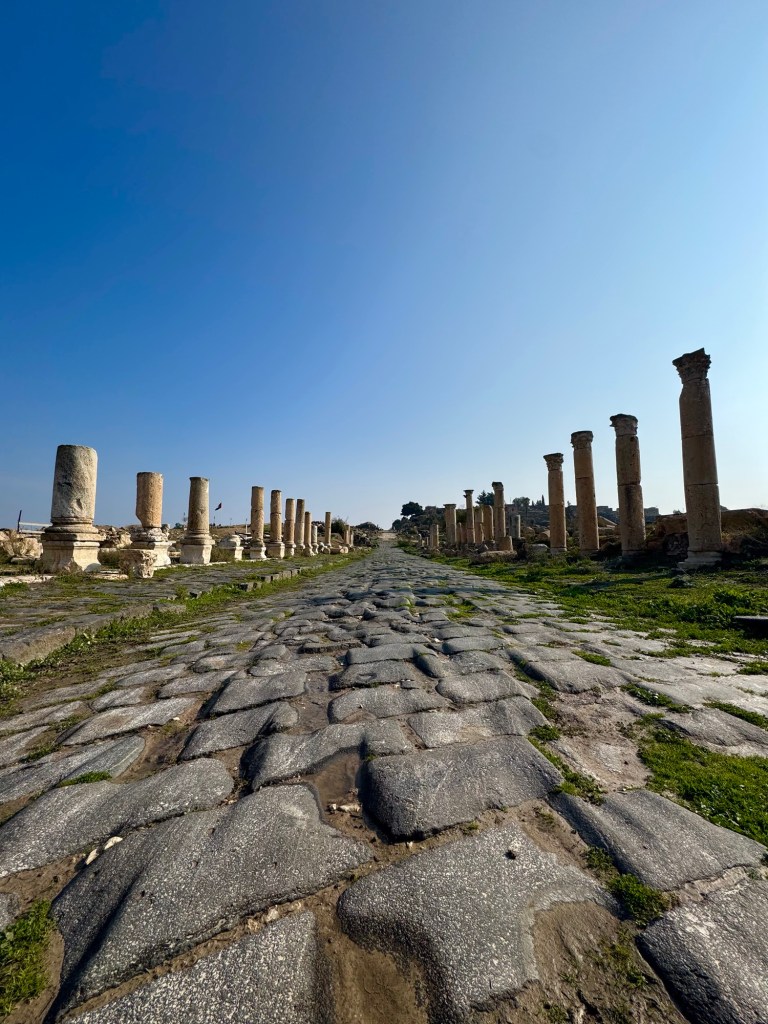
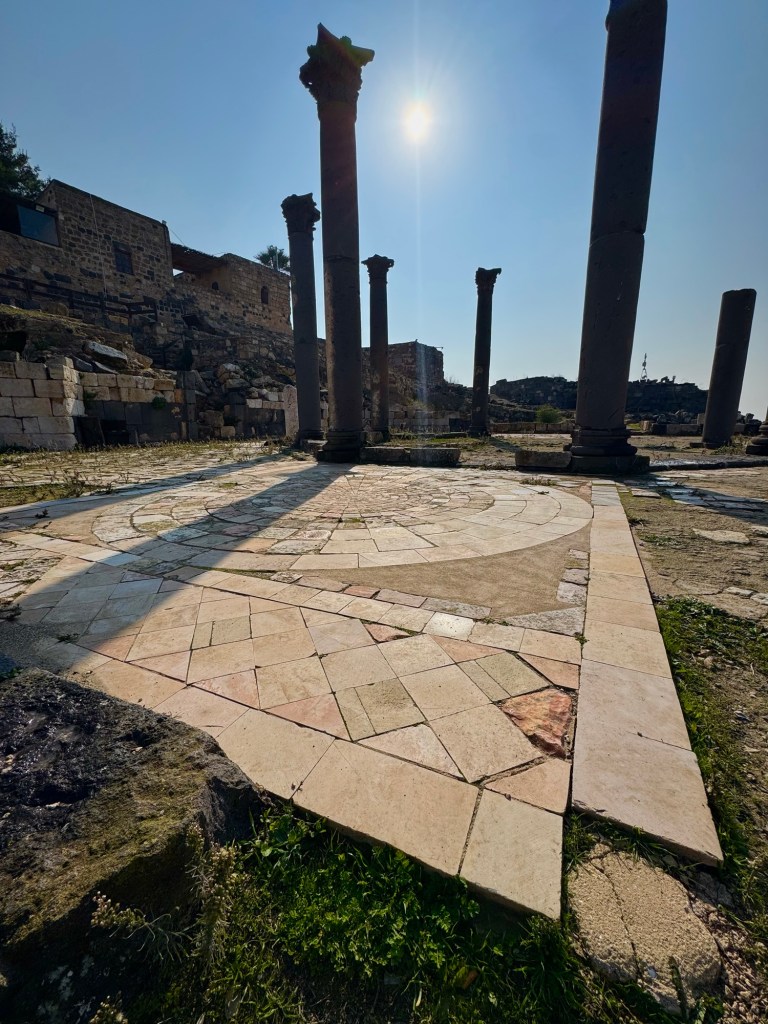
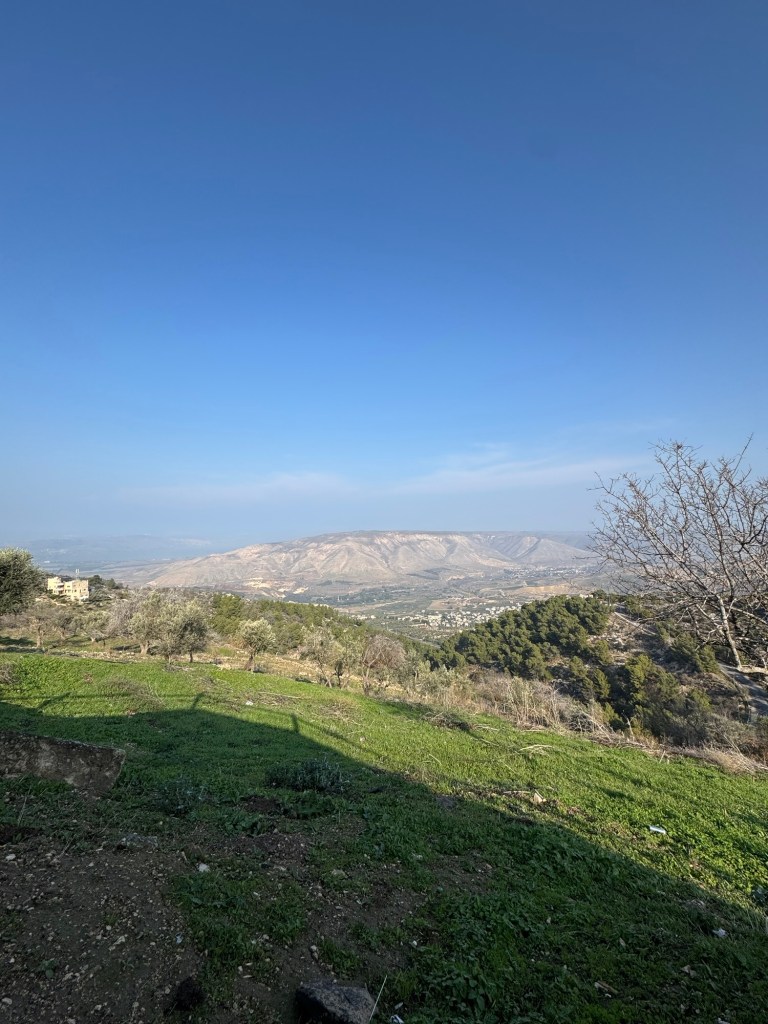
    Thanks to its hilltop location, Umm Qais is the perfect place to soak in breathtaking views of the Jordan Valley, including the Sea of Galilee, the Golan Heights, and parts of Israel and Syria. In its prime, Gadara was a major center of culture, home to classical poets and philosophers. Today, though in ruins, it still boasts an impressive colonnaded street, a vaulted terrace, and two large Roman-style amphitheaters. The site is criminally underrated. It’s a stunning testament to Rome’s reach, even in the farthest corners of its dominion.

    The site includes a temple with shops below it, a nymphaeum, an amphitheater, and a Roman road that once linked it to the rest of the empire. Other highlights include the Mausoleum, Basilica Terrace, and the Thermae. Visiting Umm Qais is covered by the Jordan Pass, but you can also purchase entry tickets for 5 JD per person. Local guides can be found near the ticketing booth if you’re up for some haggling.

    My local guide, included in my tour, provided fascinating insights into the city’s history and its strategic importance in both ancient and modern times. That said, the site is well-mapped with clear signage, so exploring independently is entirely doable. I’d recommend setting aside at least two hours to take it all in.

    Jerash—The “Pompeii of the East”

    From Umm Qais, you can opt to visit Ajloun Castle, a 12th-century Ayyubid fortress built to defend against Crusader attacks. It’s just 40 minutes away and is also covered by the Jordan Pass. However, I had my sights set on another Roman marvel—Jerash.

    After an hour-long tour of Umm Qais and some free time to explore, I reunited with my driver and headed straight to Jerash. Just an hour’s drive from Umm Qais, Jerash is one of Jordan’s most significant historical sites, offering a remarkably well-preserved look at Roman civilization outside of Italy.

    Often called the “Pompeii of the East,” Jerash flourished under Roman rule in the 2nd and 3rd centuries AD. Even today, archaeologists continue to uncover new discoveries, keeping this site an ever-evolving historical wonder.

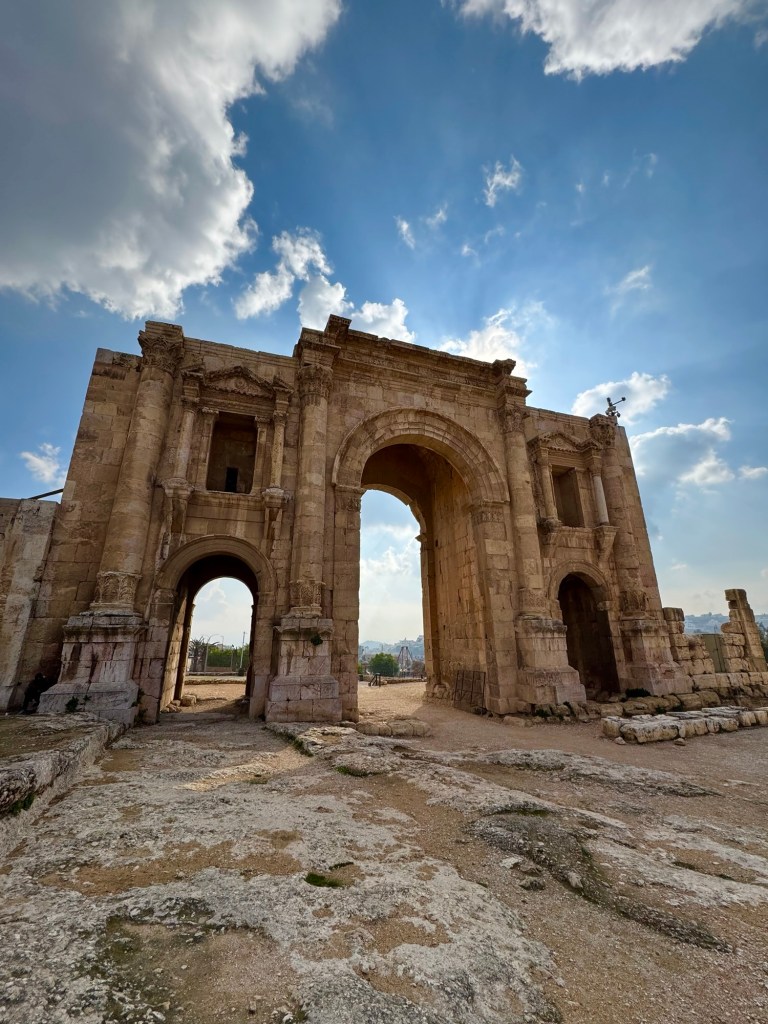
    Before even entering the ticketed area, I was greeted by Hadrian’s Arch, a massive triumphal arch built in 129 AD to commemorate Emperor Hadrian’s visit to the city. Just beyond it lies the Hippodrome, a vast sports arena that once held 15,000 spectators, where chariot races and gladiator battles entertained the crowds. I later learned that the Hippodrome still hosts re-enactments of Roman chariot races and military drills—an experience that I, unfortunately, missed. I guess that just gives me another reason to come back.
    Jerash is vast, and with little signage, it can feel overwhelming. Hiring a guide for around 20 JD is well worth it. Guides are available at the ticket checkpoint and offer tours in various languages, including English, French, German, Mandarin, and Japanese.
    I had some fun watching them guess which language I preferred before finally settling on good ole English, because my French and Mandarin would have embarrassed me beyond repair seeing that they spoke it more fluently than me. Shame on me, my cow, and family.

    Walking Through Time

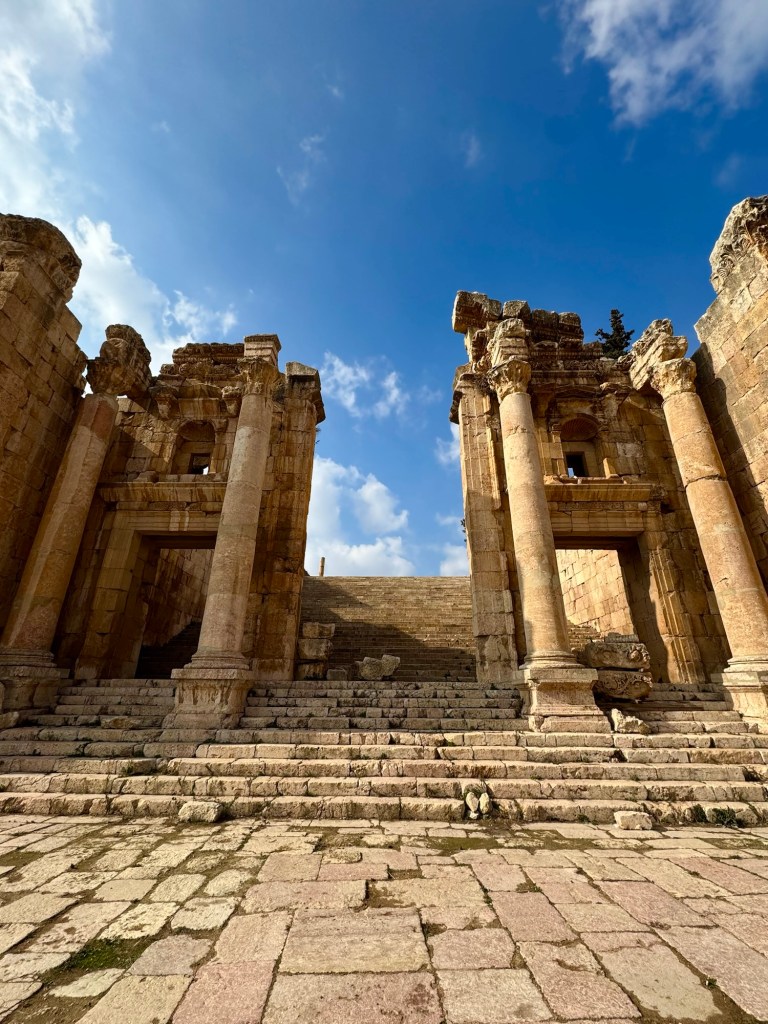
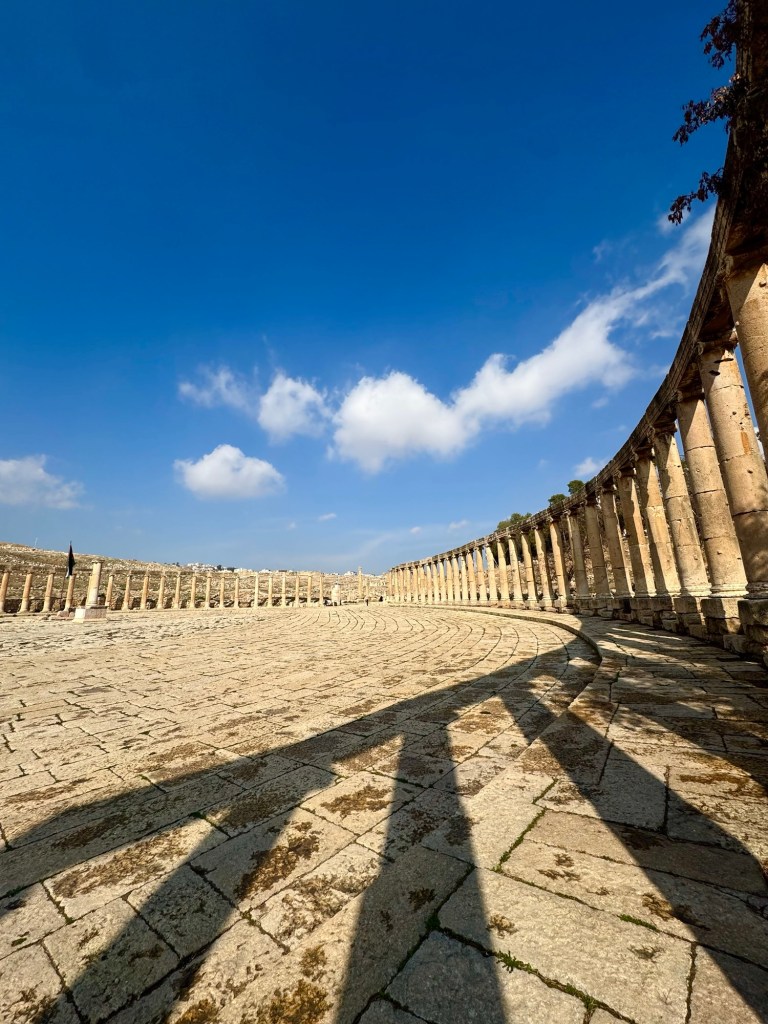
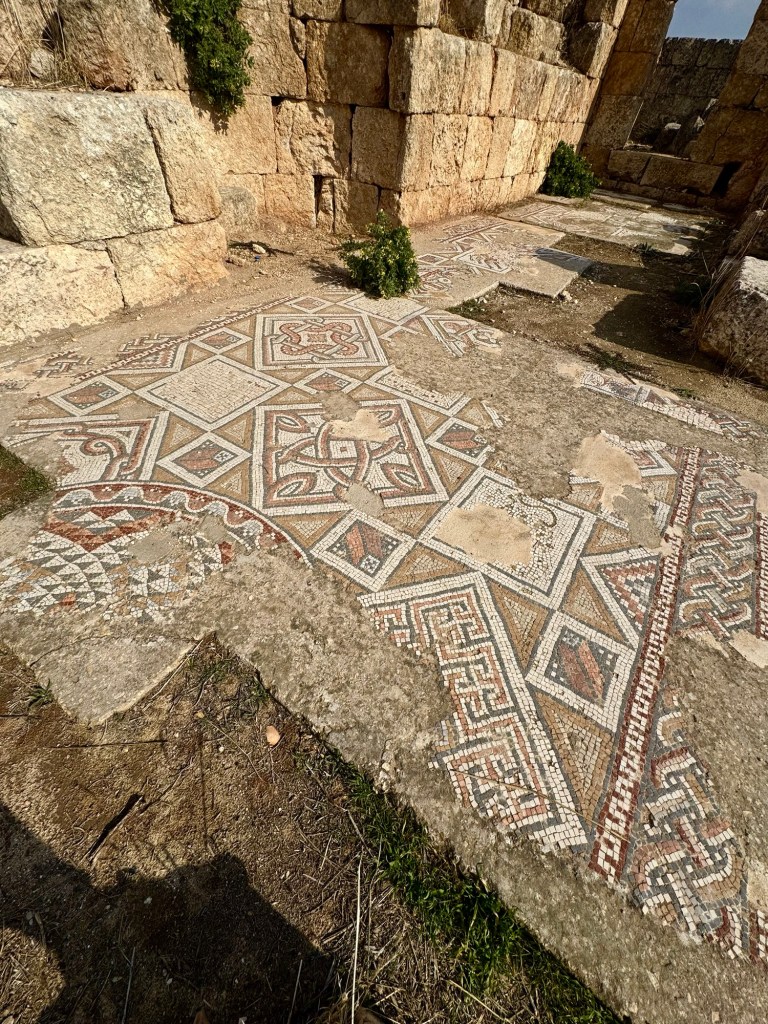
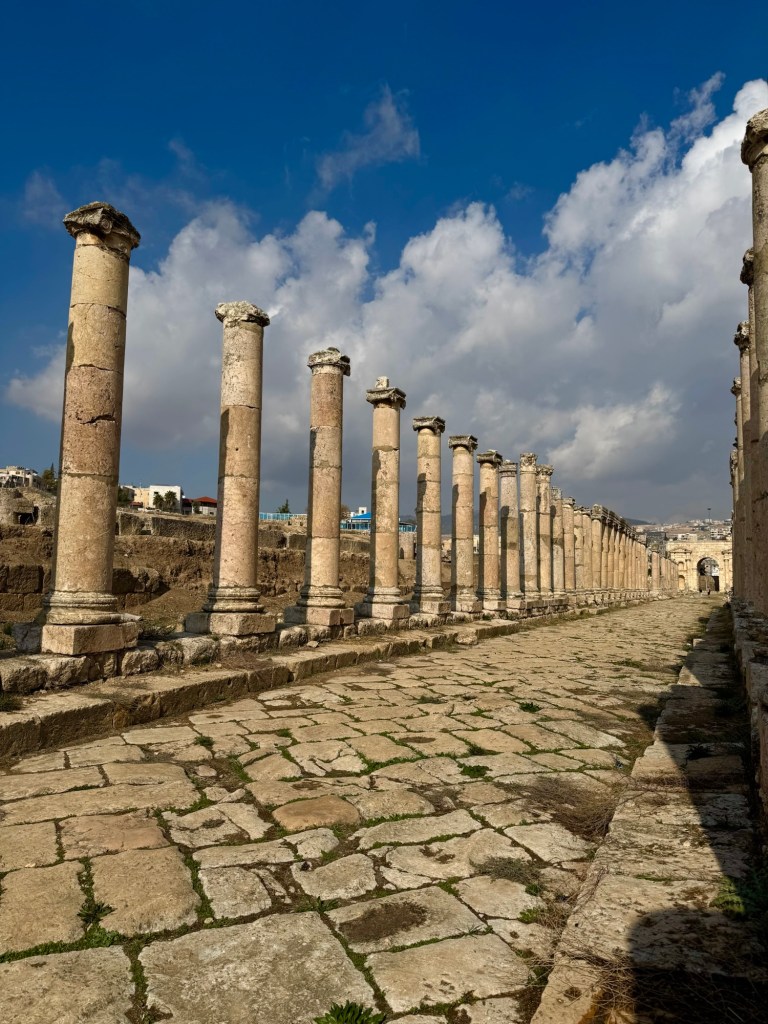
    My fantastic guide, Anas—and you know he’s amazing if I remembered his name (I am notoriously bad at remembering names)—began the tour through the South Gate, the grand entrance to this remarkably preserved city. From there, we walked into the Oval Plaza, a vast, colonnaded open space that felt like the heart of ancient Jerash. The wide, stone-paved Cardo Maximus stretched ahead, its surface still bearing the grooves left by Roman chariots. We passed the Macellum, once a bustling marketplace, before arriving at the Nymphaeum—a beautifully adorned public fountain and my personal favorite site in Jerash.

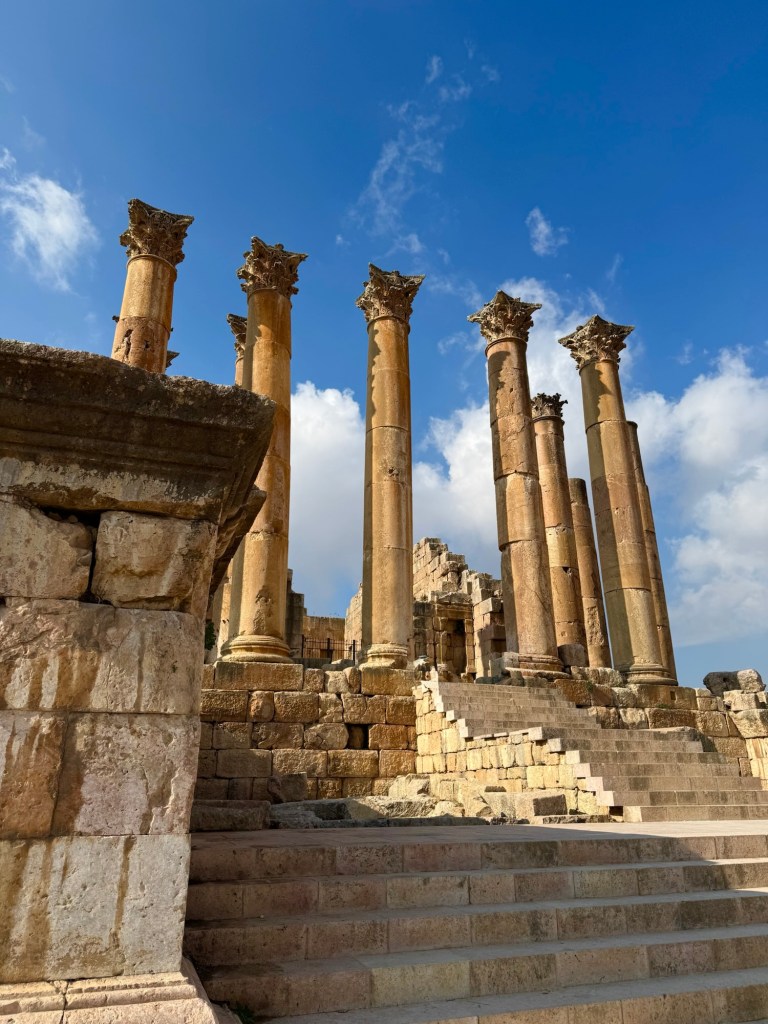
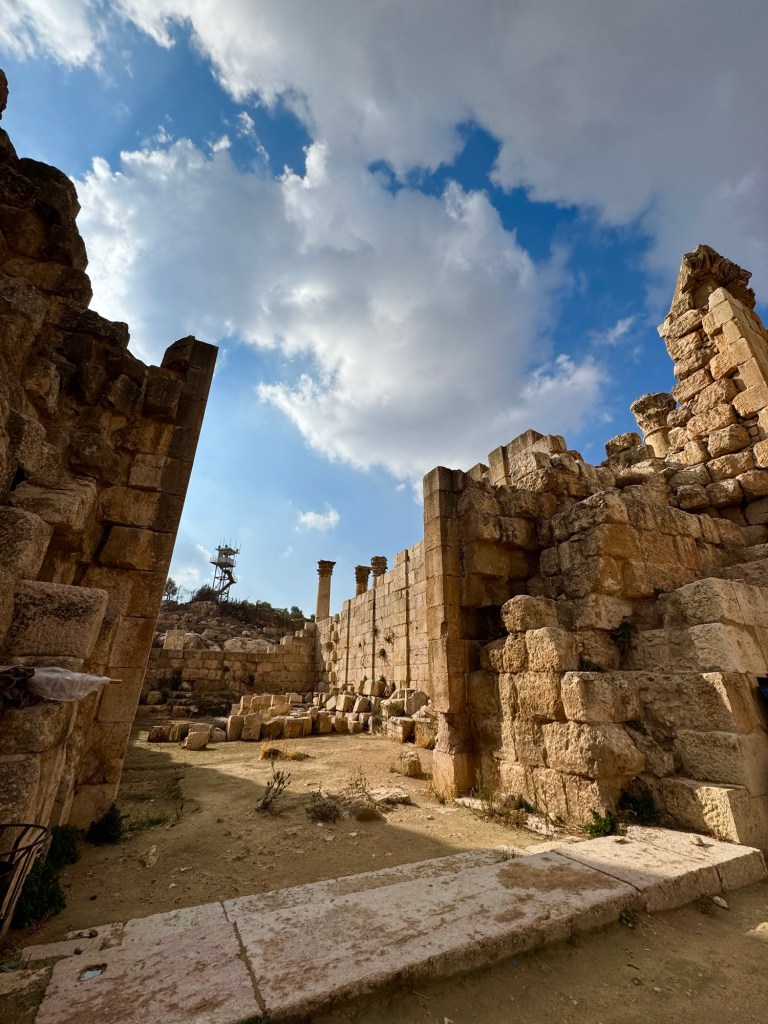
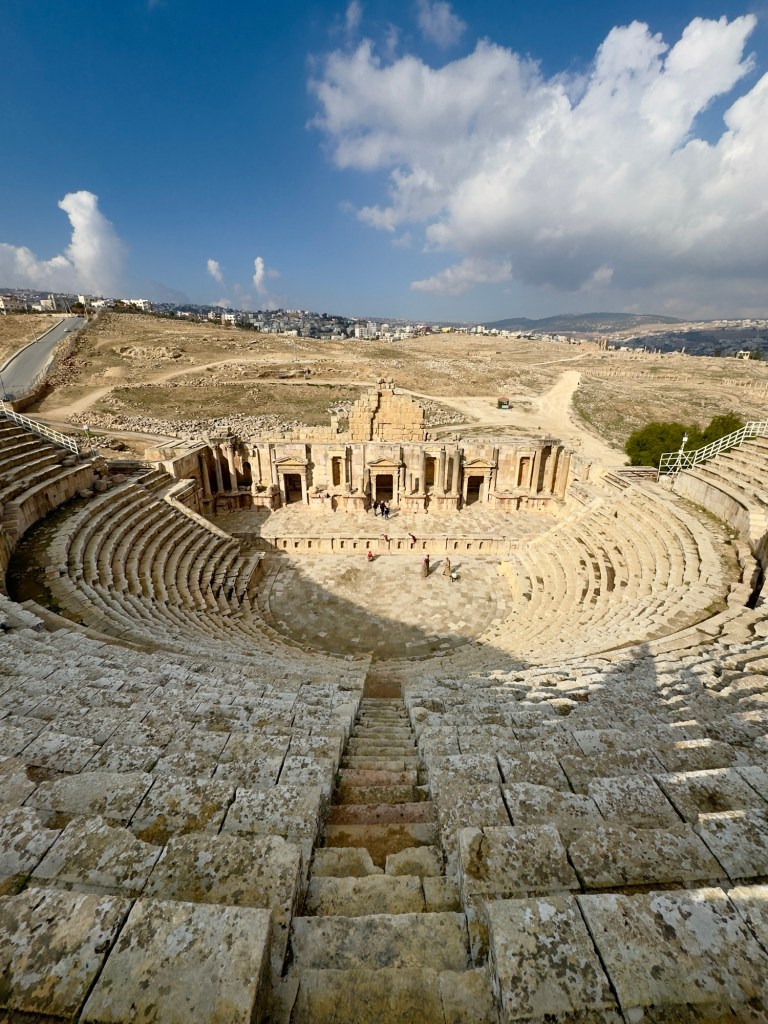
    The tour continued uphill to the Temple of Artemis, dedicated to the city’s patron goddess. The towering Corinthian columns still stand as a testament to Roman engineering. From there, we explored the North Theater, the Church of SS Cosmas and Damian, and finally the South Theater, where, to my surprise, Jordanian bagpipers were playing. Yes, bagpipes in Jerash—it’s a thing.

    We concluded the tour at the Temple of Zeus, perched on a hill with breathtaking panoramic views of the ruins below. It was the perfect finale, showcasing Jerash’s blend of history, architecture, and stunning landscapes. As the sun dipped lower, I made my way back to the visitor center, then to my driver, and finally back to Amman.

    Farewell?

    Standing atop the Temple of Zeus, I took one last look at the ancient city below. I had just traced the footsteps of Roman citizens in a place that still feels alive with history.

    It’s surreal to find such a well-preserved Roman city in the heart of the Middle East—a place I never expected to hold such strong ties to the empire I admire. It’s a reminder that history is full of surprises, waiting to be uncovered.

    Now, with the dust of Jerash still clinging to my shoes, I turn my sights to my next destination: Egypt—another land of ancient wonders, where pharaohs and pyramids will tell stories of a different kind.