The City of Legends
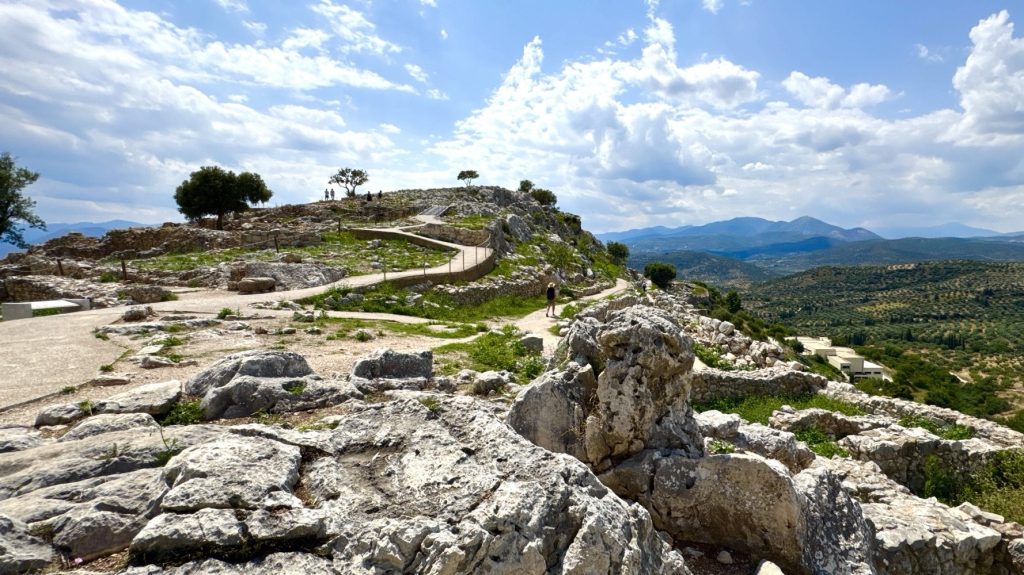
The Golden Era
Mycenae, the land where ancient kings ruled, and murder was a family tradition.
If Knossos was all about labyrinths, bulls, and gods with boundary issues, then Mycenae is where things take a darker, bloodier turn — welcome to the land of tragic royalty, great dynasties, and some of the oldest stone walls you’ll ever lay eyes on.
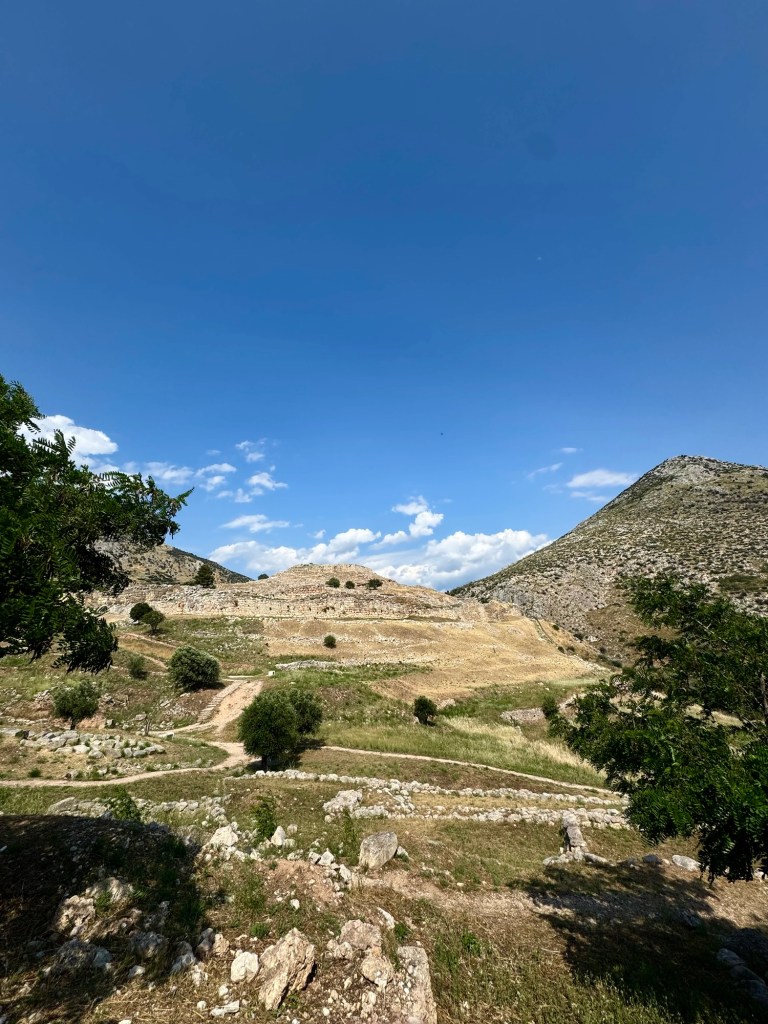
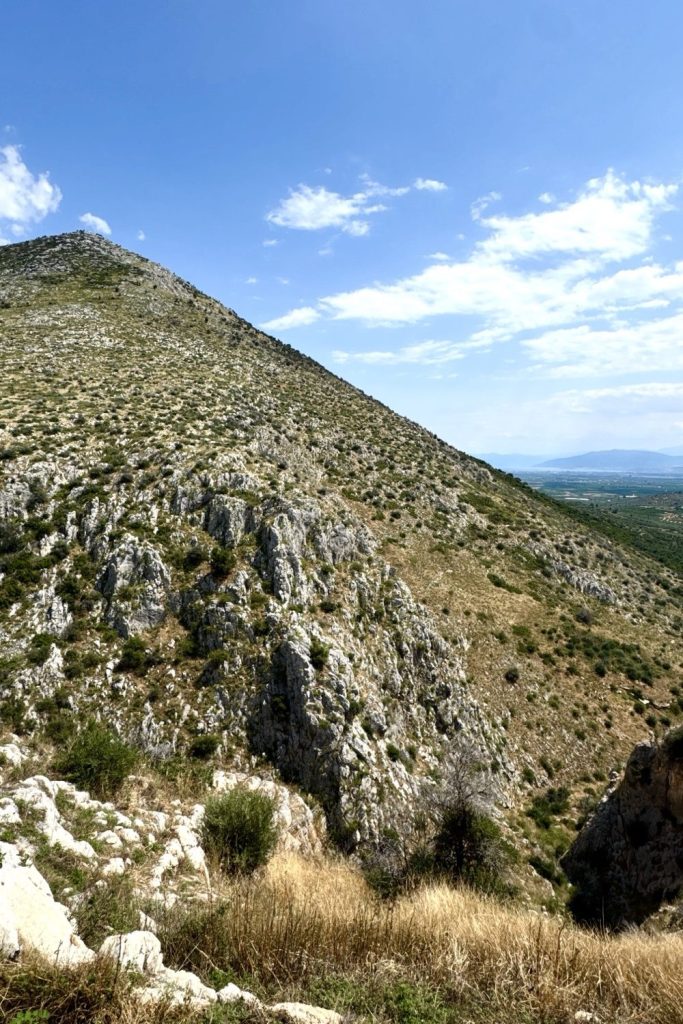
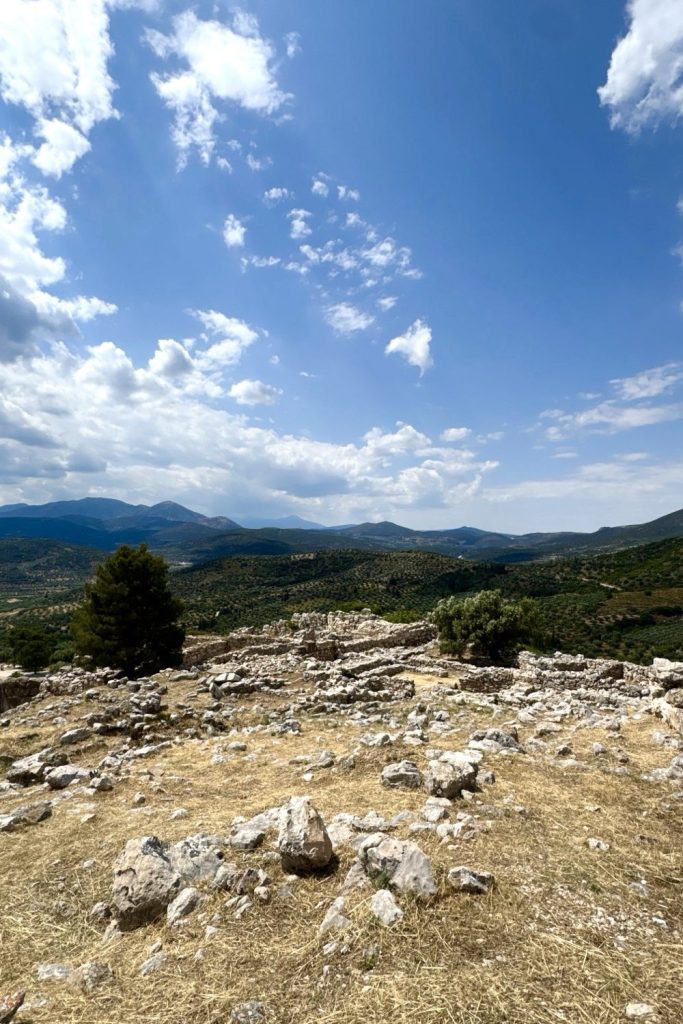
Tucked away in the northeastern Peloponnese, the archaeological site of Mycenae is perched dramatically on a hill, surrounded by mountains, with epic views that make your legs feel tired just by looking up.
This is also where epics like The Iliad and The Odyssey kick off, with the Mycenaean King Agamemnon — a man famous for launching a thousand ships… and then getting murdered in his bathtub. Humor and bloodshed. Greek myths in a nutshell.
The Way There
Getting here is relatively easy. Ish. Depending on your mode of transport and where you’re coming from.
If you’re renting or driving a car, congratulations, you’ve got 70% of your transportation logistics sorted. Google Maps will have your back.
If you’re relying on public transport, I got you.
Coming from Athens? First, head to the bus terminal at Kifisou (KTEA Kifisou) — just search that in Maps. You can take the X93 bus from the airport or the metro to get there. Once there, look for the corner of the interchange with buses to Nafplio.
Bus tickets to Nafplio are not bought at the main ticketing area, but if you get lost, head there and one of the nice ladies behind the booth will point you to the right booth number.
A one-way ticket from Athens to Nafplio is €14.30, but if you tell them you’re getting off at Fichti, it’s a little cheaper. Tickets can be bought online, but with the many KTEL sites (each handling a different part of Greece), it’s honestly easier to buy in person. I’ve had zero issues doing that while gallivanting around the country.
Still, it helps to check schedules in advance, so here’s a handy link for it.
There are no direct buses to the Mycenae site itself, so getting off at Fichti, the next town over, is your best bet.
The ride takes around 2–3 hours, and you’ll be dropped off at a “bus station”, which is actually just a local tobacco shop/mini-mart that moonlights as a transport hub.
From here, you’ve got two options: walk two hours, or take a cab.
If you’ve got time to kill and energy to spare, the walk isn’t bad. It’s scenic, the locals are friendly, and while there’s barely any shade, it’s mainly flat — until the final 30–40 minutes. That’s where the incline begins, as the ancients didn’t play around when choosing high ground for military and legitimacy. Safe to say, they never skipped leg day.
The easy way out? It’s literally across the street of the bus station. There are always two to three cabs parked outside, ready to take you to the site. I opted to brave it on foot, so I can’t say how much it costs, but several drivers honked at me mid-hike offering rides, so you’ll likely find help if you change your mind halfway.
Treasury or Tomb?
Before you even hit the main ruins, swing by the Treasury of Atreus — a.k.a. the Tomb of Agamemnon (historians and archeologists are still arguing over that one). It’s included in your entry ticket and located just 10 minutes from the main site.
This massive tholos tomb is one of the best-preserved examples from the Mycenaean civilization. And while there’s no hard evidence it belonged to Agamemnon or Atreus, the grandeur fits the legend. These names, like many things in archaeology, were inherited more from tradition and imagination than proof.
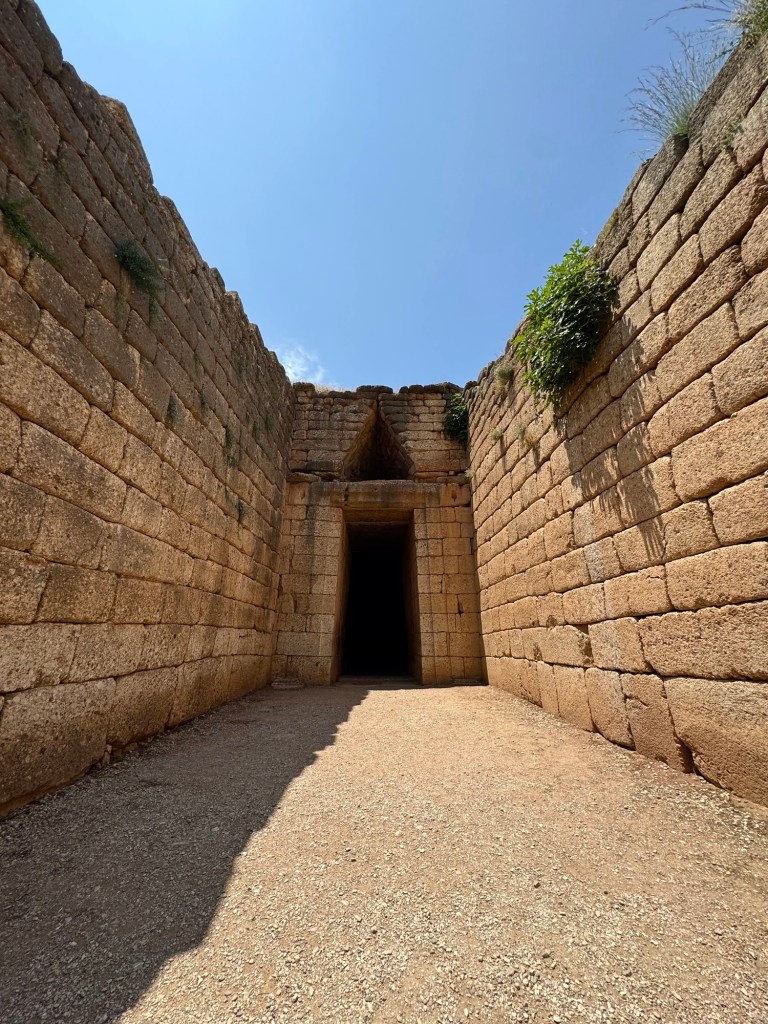
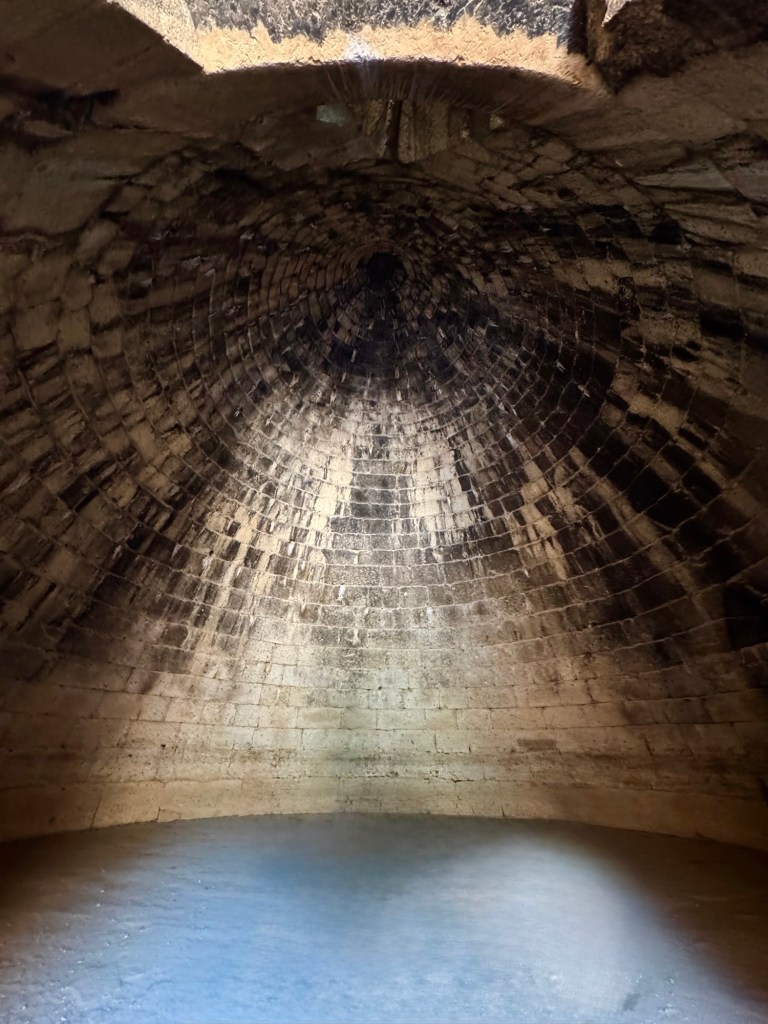

Still, the engineering is impressive, and its symmetry and scale may have influenced later Greek architecture. Early visitors believed it stored gold — hence “treasury” — likely inspired by Homer’s tales of Agamemnon’s wealth. It’s long since been looted, but its sheer presence is stunning.
The City of Blood and Stone
The actual city of Mycenae is a legend both in myth and reality. It was one of the most powerful centers of the Late Bronze Age and gave its name to the entire Mycenaean civilization, which laid the groundwork for classical Greek culture.
Mycenae dominated mainland Greece and traded far across the eastern Mediterranean, reaching as far as Egypt, Anatolia, and the Levant. Even by Homer’s time, the city was already in ruins, yet its legacy loomed large as the fabled home of King Agamemnon.
You might remember Agamemnon as the guy who led the Greeks to Troy in The Iliad to avenge the abduction of Helen by Paris. While his role in myth is legendary, his actual existence remains unproven.
While his existence in myth is significant, his actual existence is not exactly proven yet. Despite German archaeologist, Heinrich Schliemann (the same dude that dug up Troy) , claiming to have found Agamemnon’s tomb at Mycenae and famously unearthed the gold “Mask of Agamemnon” ( on display in the National Archeological Museum of Athens and replica displayed in the Mycenae Archeological Museum), the tomb and mask however predate the supposed time of the Trojan War by about 300 years or so, making the attribution symbolic, not literal.
But we all love a good story don’t we? So let’s just assume for now that he did indeed exist.
But back to the actual city, or what’s left of it.
There isn’t much left of the actual “city,” just fragments and foundations scattered across the hilltop. But the scale of the site helps you visualize just how grand it once was.

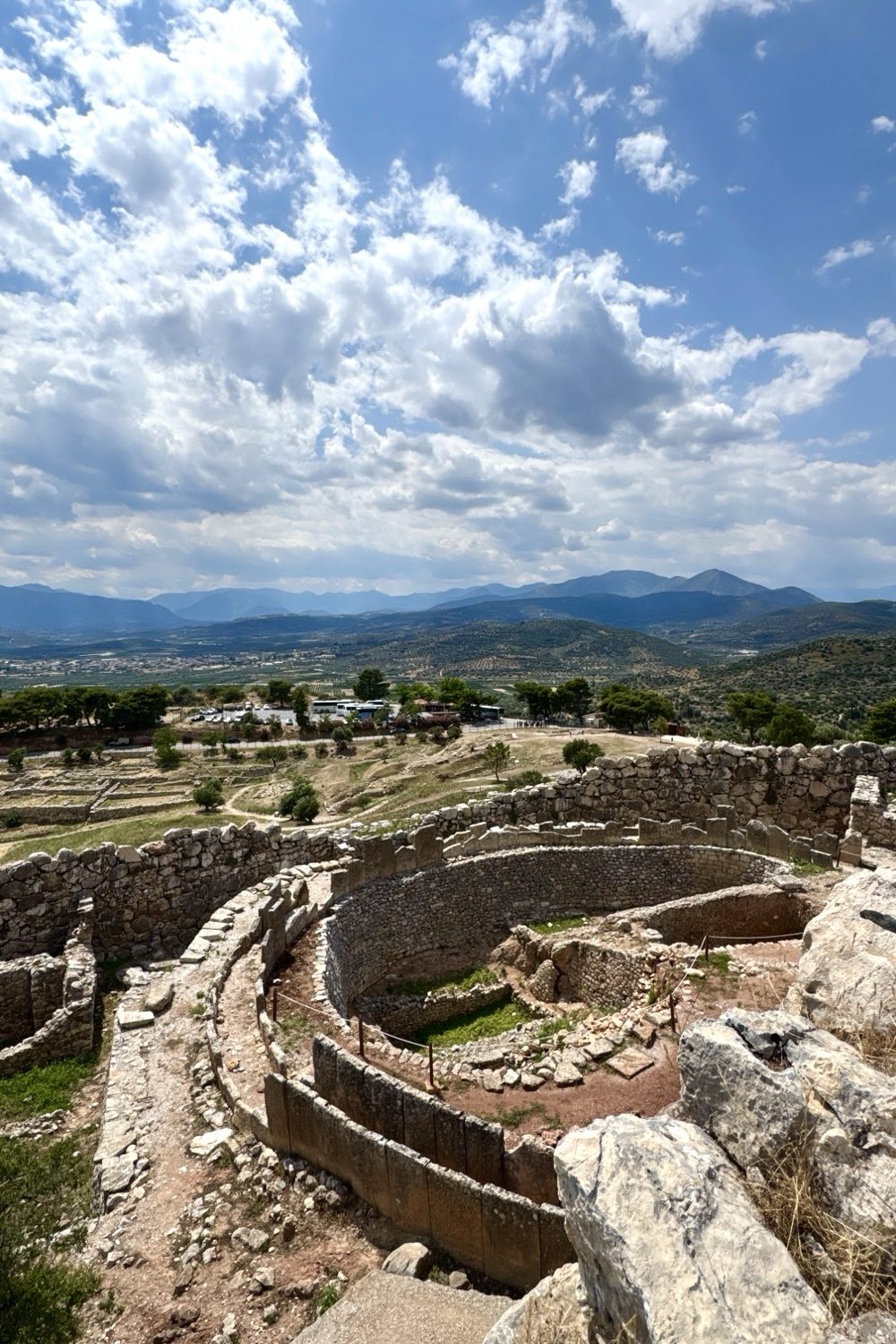

Your journey begins at the Lion Gate, Mycenae’s iconic entrance. Above it looms the oldest known monumental sculpture in mainland Europe — two lions flanking a column.
From there, you’re surrounded by Cyclopean walls — enormous stone fortifications so massive the Greeks later believed only giants (Cyclopes) could have built them.
You’ll wander through ruins of temples, administrative centers, and what remains of the royal palace complex. There’s even a staircase descending into an ancient cistern, partially accessible if you’re feeling adventurous.
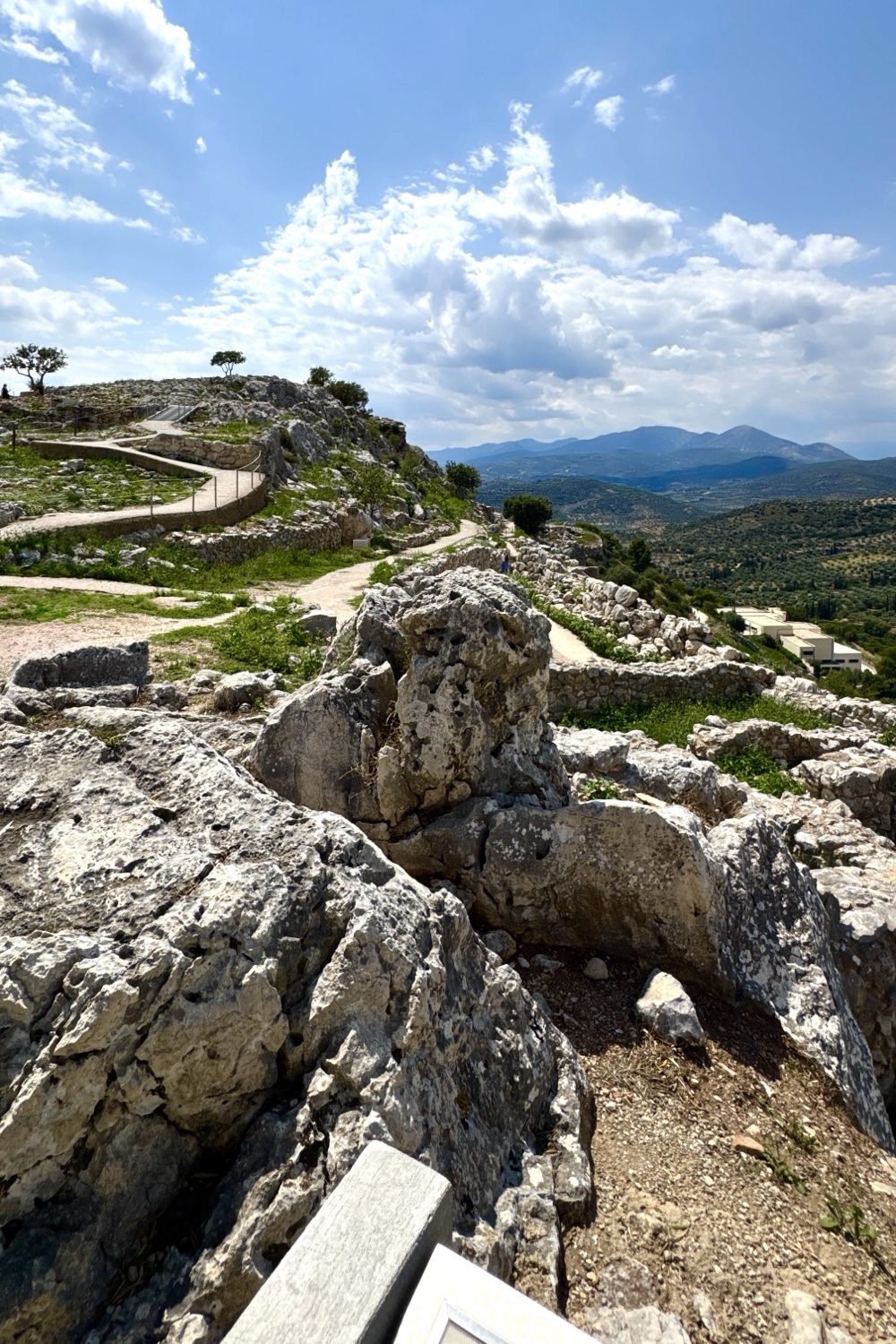
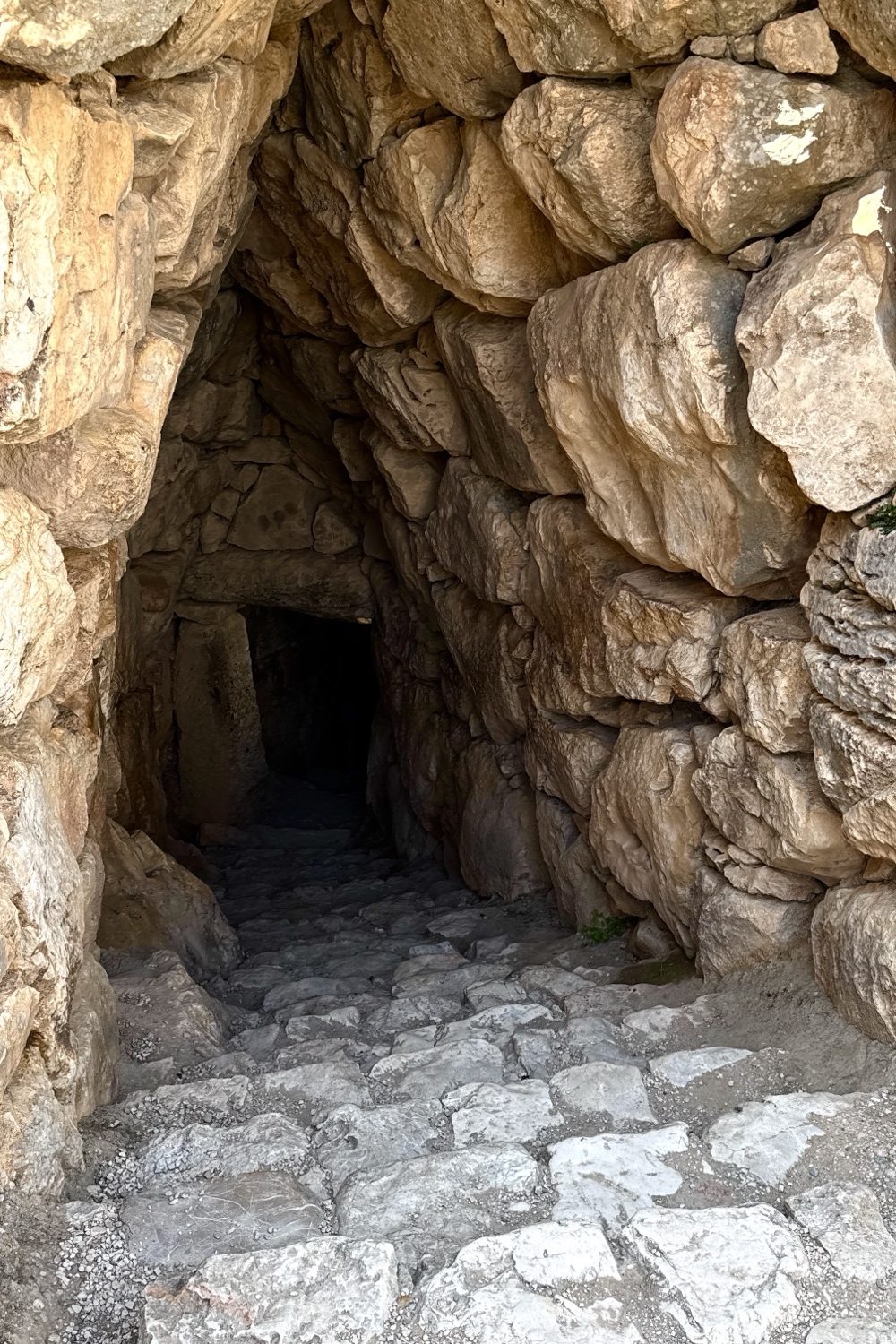
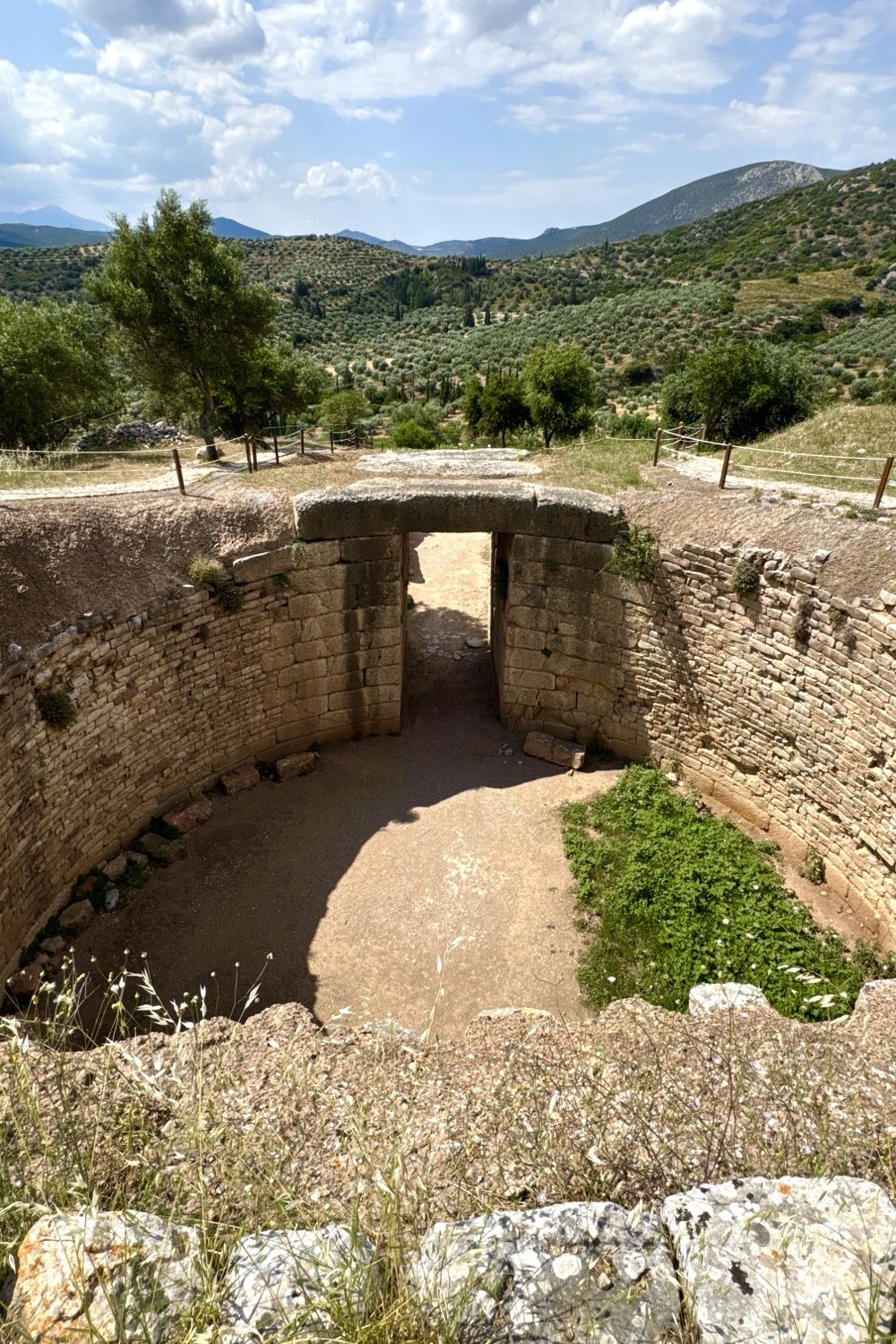
Don’t miss the Tomb of Clytemnestra, another impressive beehive tomb associated with the legendary queen (again, more tradition than confirmed fact).
Before heading out, stop by the Archaeological Museum near the entrance. It houses excavated finds from across the site and helps piece together the story — mythological and historical — of this ancient powerhouse.
The Way Back
Now for us public transport laddies, here’s how you get back.
If you took a cab to the site, you’ll likely need to call one back — they don’t usually wait around the entrance. There’s a sign with a phone number at the entrance so you can call for a cab, or better yet, grab a business card from your original driver and arrange a pickup time.
I didn’t do this. I walked back the whole way. My feet are still recovering.
Once you’re back at the Fichti tobacco shop/bus station, you can purchase a return ticket to Nafplio or Athens from there. Just check the schedule ahead of time — buses come every hour or two. Miss it, and you’ll be waiting around for the next hour or so for the next one, if there is one.
Also, you must flag the bus down. They don’t stop unless you signal. Don’t be me. I watched mine roll past like a scene from a Greek tragedy and had to wait another 1.5 hours for the next one.
If you’re not sure when you’re heading back, opt for an open return ticket. It’s a bit more expensive but saves you the hassle of buying another ticket later.
The buses are generally on time, affordable, and honestly, a pretty reliable way to get around Greece and all its cities.
From Fichti, you can either continue on to Nafplio, which i did, or head back to Athens. If you’ve got time, you could even squeeze in a detour to Corinth — both the city and the ancient site — on your way back. But that’s a tale for another post and time.
For now, it was off the Nafplio to reset and seek healing from the abuse i put my feet through, who knows, i might just find it in the lands of ancient Epidaurus where i’m headed next.


Leave a Reply