Tag: athens

  • Greece – Olympia

    Birthplace of the Games

    The Starting Line

    Every four years, the whole world rallies together to celebrate the pinnacle of sports: the Olympics. It’s a spectacle, a celebration, and a competition all rolled into an international gyros that is the modern Games.

    Although modeled after the ancient Games of Olympia, the original Games couldn’t be more different.

    The first Olympic Games were held here in honor of Zeus. Held every four years, the Games at Olympia were a national event that attracted participants and spectators from all over the Greek world, including colonies in what we now call Italy and Turkey. Tens of thousands would make the difficult pilgrimage to attend. Some sources say as many as 40,000 people gathered for the event.

    The Olympic Games were one of the four Panhellenic Games of ancient Greece. The other three were: the Pythian Games in Delphi (dedicated to Apollo), the Nemean Games in Argos (also in honor of Zeus, though there are some that attribute the institution of the Nemean Games to Heracles after he had slain the Nemean lion), and the Isthmian Games in Corinth (for Poseidon).

    The modern Games feature up to 30 sports, over 40 if you count the summer and winter versions. The ancient Games started with a single footrace and eventually expanded to include up to 18 events by the Classical period, ranging from footraces and wrestling to equestrian and field sports.

    The ancient Games continued until around 393–394 AD, when Roman Emperor Theodosius I banned them, seeing them as part of a “pagan cult/practice.” The Olympic flame wouldn’t reignite until 1896, when Athens hosted the first modern Games after a 1,500-year hiatus, sparking a revival of the ancient tradition that continues today.

    But Games aside, Olympia wasn’t your typical bustling Greek city-state like Athens or Corinth. It was never a political powerhouse. Rather, it functioned as a sacred sanctuary complex in the rural Peloponnesus. What made Olympia exceptional wasn’t its population or military, but its role as a Panhellenic religious center.

    At its heart, Olympia was a sanctuary devoted to Zeus, king of the gods. The centerpiece was the Altis, a sacred grove packed with temples, treasuries, altars, and monumental sculptures. Over time, Olympia grew to include athletic and artistic spaces too: stoas, workshops, baths, and of course, the stadium. Despite all this, it had no permanent population — more like a permanent festival ground than a living city.

    These days, modern Olympia is a quaint town of fewer than 1,000 residents. Tourism and hospitality are the main industries, and the main street is lined with international flags, family-run hotels, cozy tavernas, and shops selling everything from local honey to olive oil to handmade crafts.

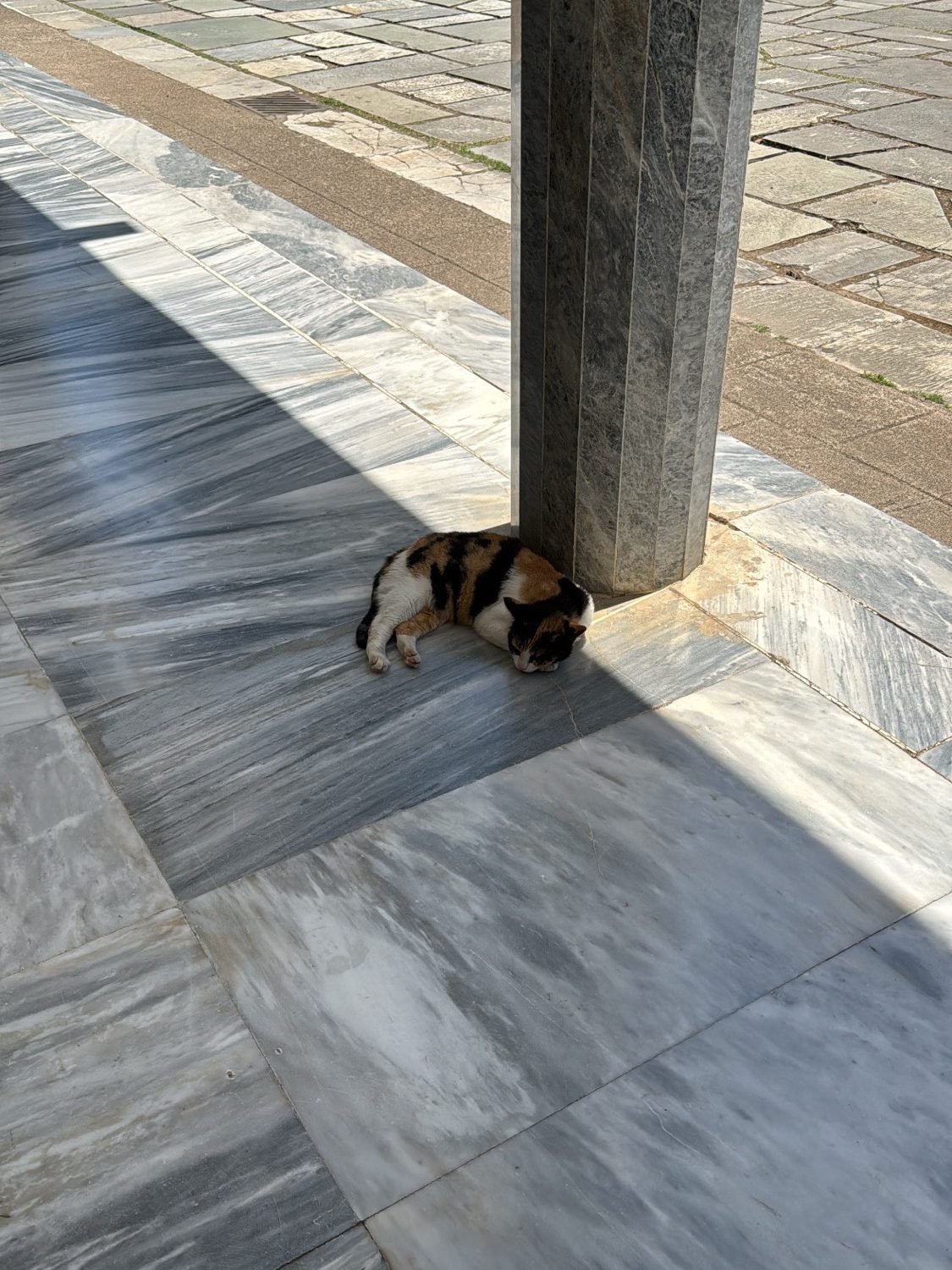
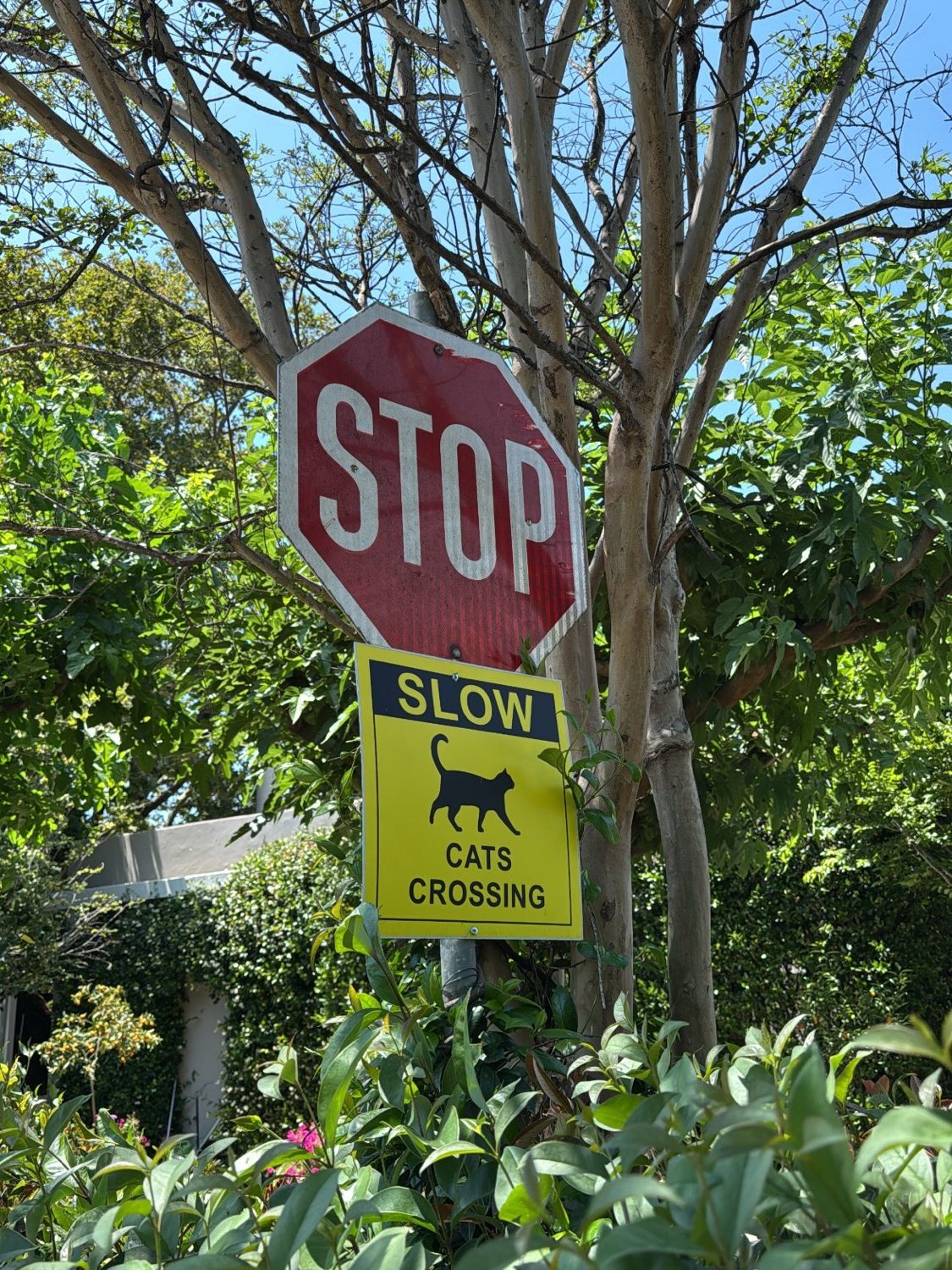
    If you’re visiting during the off-season, and by that I mean not during the Olympic torch-lighting ceremony, Olympia feels like a quiet respite from Greece’s busier tourist hubs despite being one itself. It’s peaceful, slow-paced, and if you’re lucky, you might be joined by a few stray animal companions on your stroll through town.
    Ready, Set…

    So let’s triple-jump right into how to get here.

    As always, the most convenient method is by car. But it’s not a short or easy drive, you’d be cutting across the entire country in 4.5 hours, and much of the road after the highway is a narrow one-lane road.

    You could make the trip part way by flight by arriving in Kalamata Airport and taking a bus or renting a car from there. But just note that the Kalamata airport mainly operates in summer and does not remain open throughout the year.

    There are tour groups offering day trips to Olympia from Athens, but most are quite pricey, so if you’re traveling on a budget, this may not be the move.

    For public transport, it’s a combo of bus and/or train. First, we gotta get to Pyrgos.

    KTEL Ileias runs regular buses from Athens (and Isthmus) to Pyrgos every hour or so. Tickets cost around €22–23, and the journey takes about 4–5 hours. The bus stops for a break midway, but I recommend packing snacks and visiting the bathroom before you board. Here’s the link for the schedule.

    Once in Pyrgos, you’ve got three options to reach Olympia: taxi, bus, or train.

    Buses run from Pyrgos to Olympia every 30 minutes to an hour, for just €2.30.

    Alternatively, you can take the train from either Pyrgos or Katakolo (a nearby port city). Trains only run 3–4 times a day and mostly in summer, so check the official site before committing.

    I actually took both, bus in, train out, and honestly, for €2, the train was quick, efficient, and surprisingly scenic.

    Technically, a day trip to Olympia from Athens is possible, but I wouldn’t recommend it. Between the long journeys there and back, site visits, and museum hopping, and making sure you don’t miss the last bus, trying to do it all in one day is a recipe for burnout.

    If you’re coming from closer cities like Kalamata or Katakolo, or if you’re driving, a day trip is totally doable. As other than the museums and the archeological site of Olympia, taking a nice stroll through the main street or city and maybe having a meal, there really isn’t much else to do in Olympia.

    …Go!

    Admission to the ancient site is €20, and it’s well worth it. That ticket gets you into the Archaeological Museum of Olympia and the Museum of the History of the Olympic Games of Antiquity. So don’t toss your ticket!
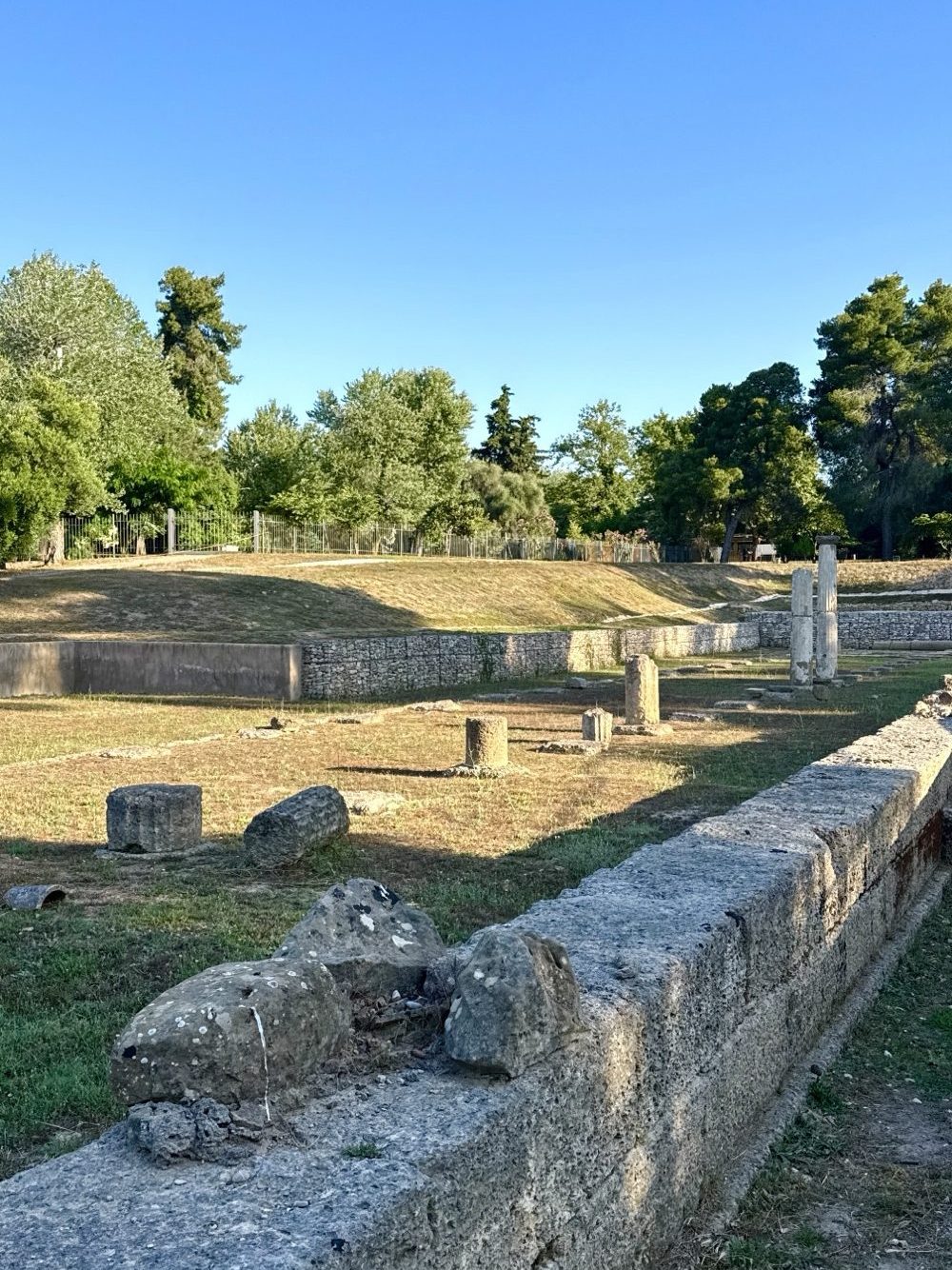
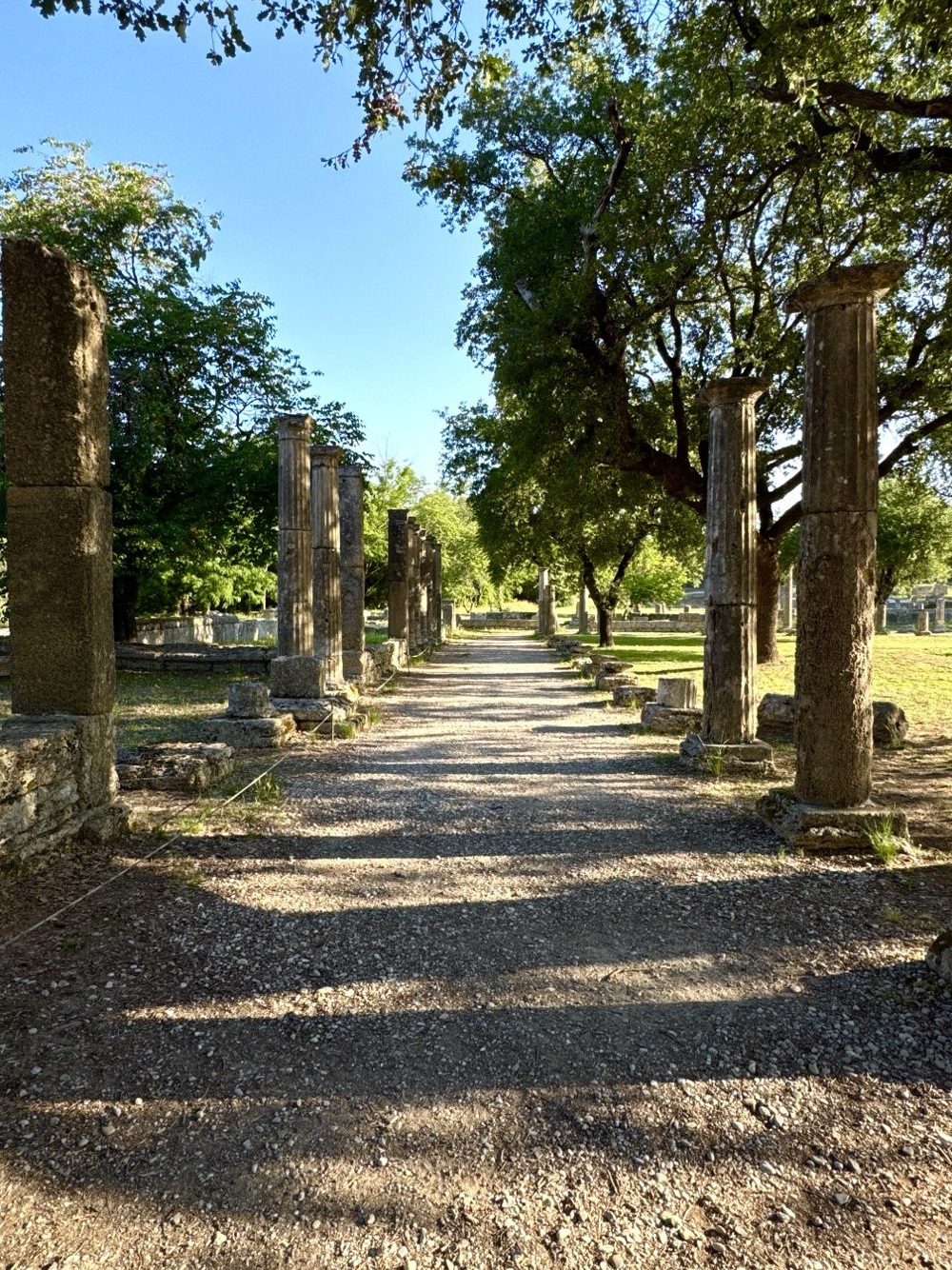
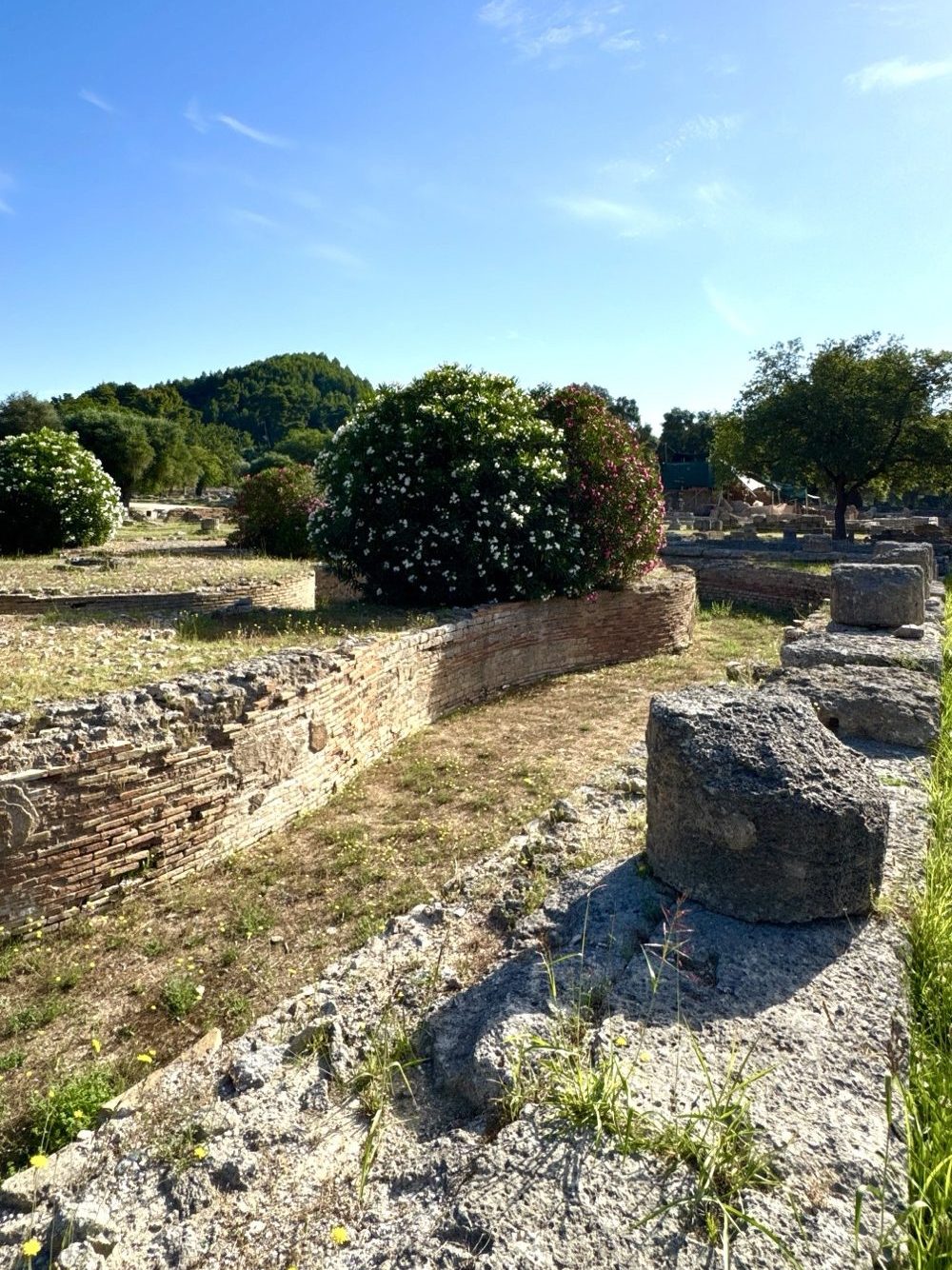
    Once inside the main gate, you’ll pass the Gymnasium and stroll into the ancient athletic and social quarters. Step inside the Leonidaion, which once housed VIPs during the Games. You can wander through the ruins at your leisure, respectfully, of course. (Seriously, why do people always want to climb ancient stuff?)
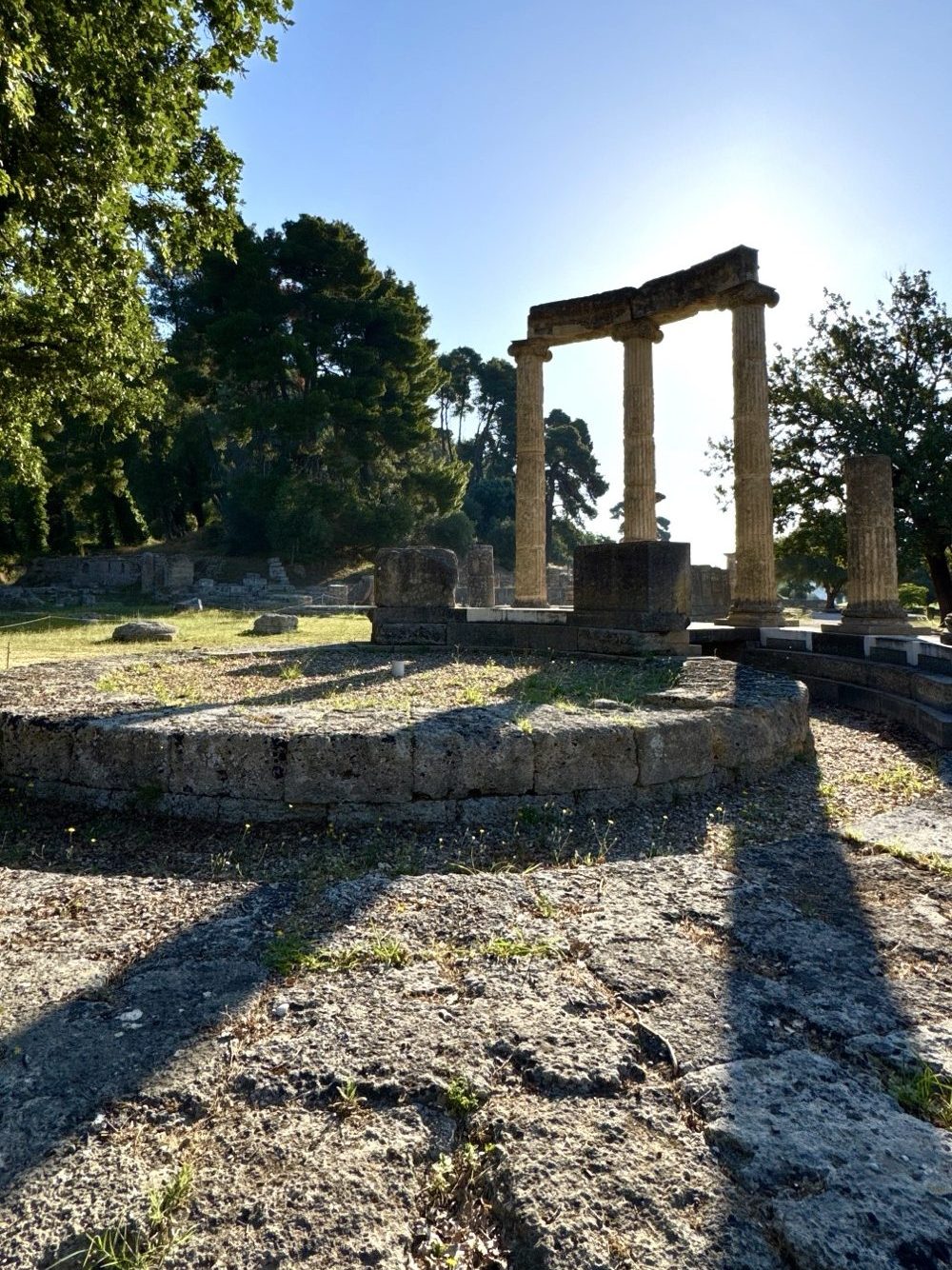
    Don’t miss the Philippeion, a circular monument built by Philip II of Macedon, and the workshop of Phidias, where he sculpted the massive statue of Zeus.

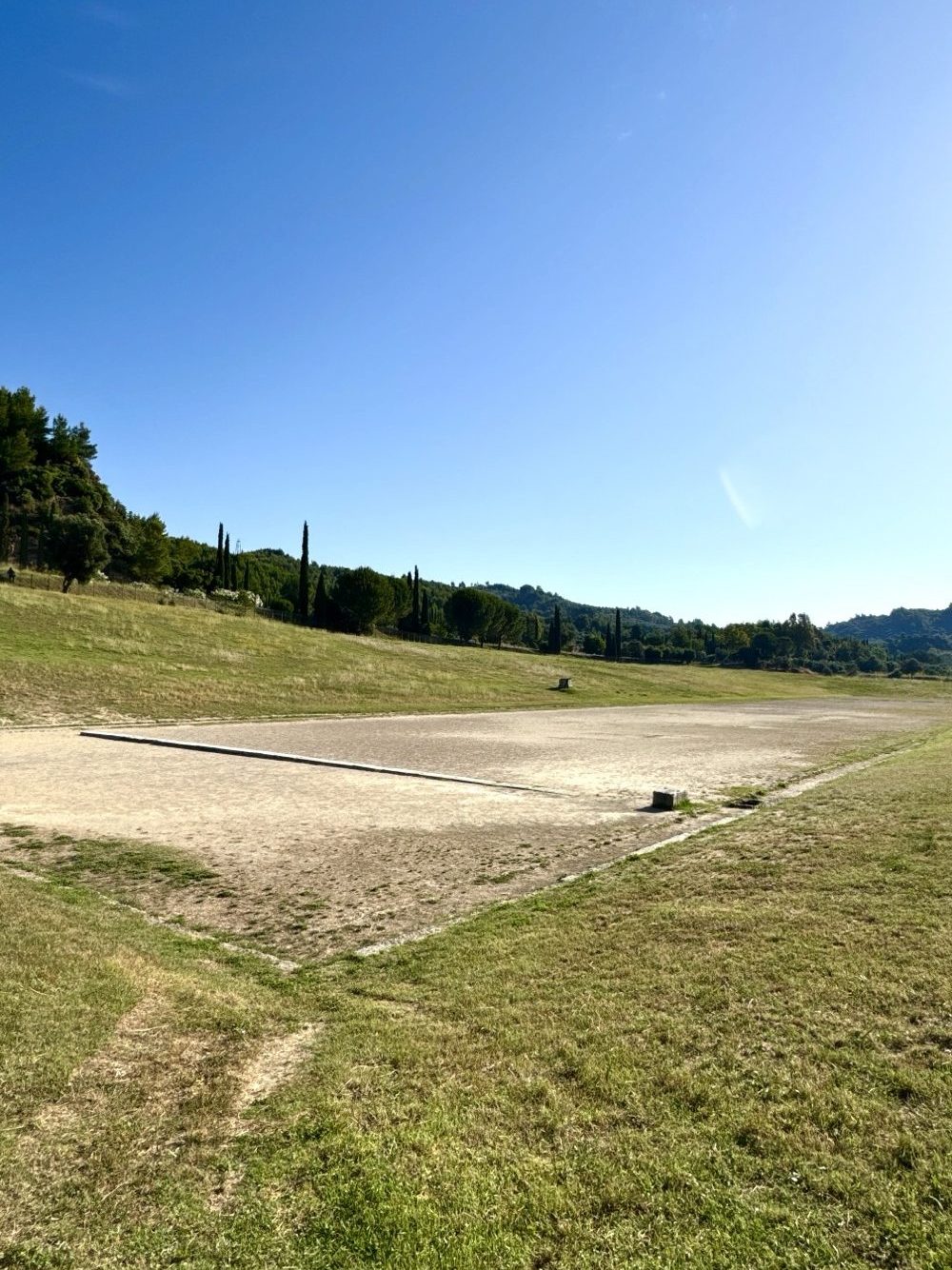
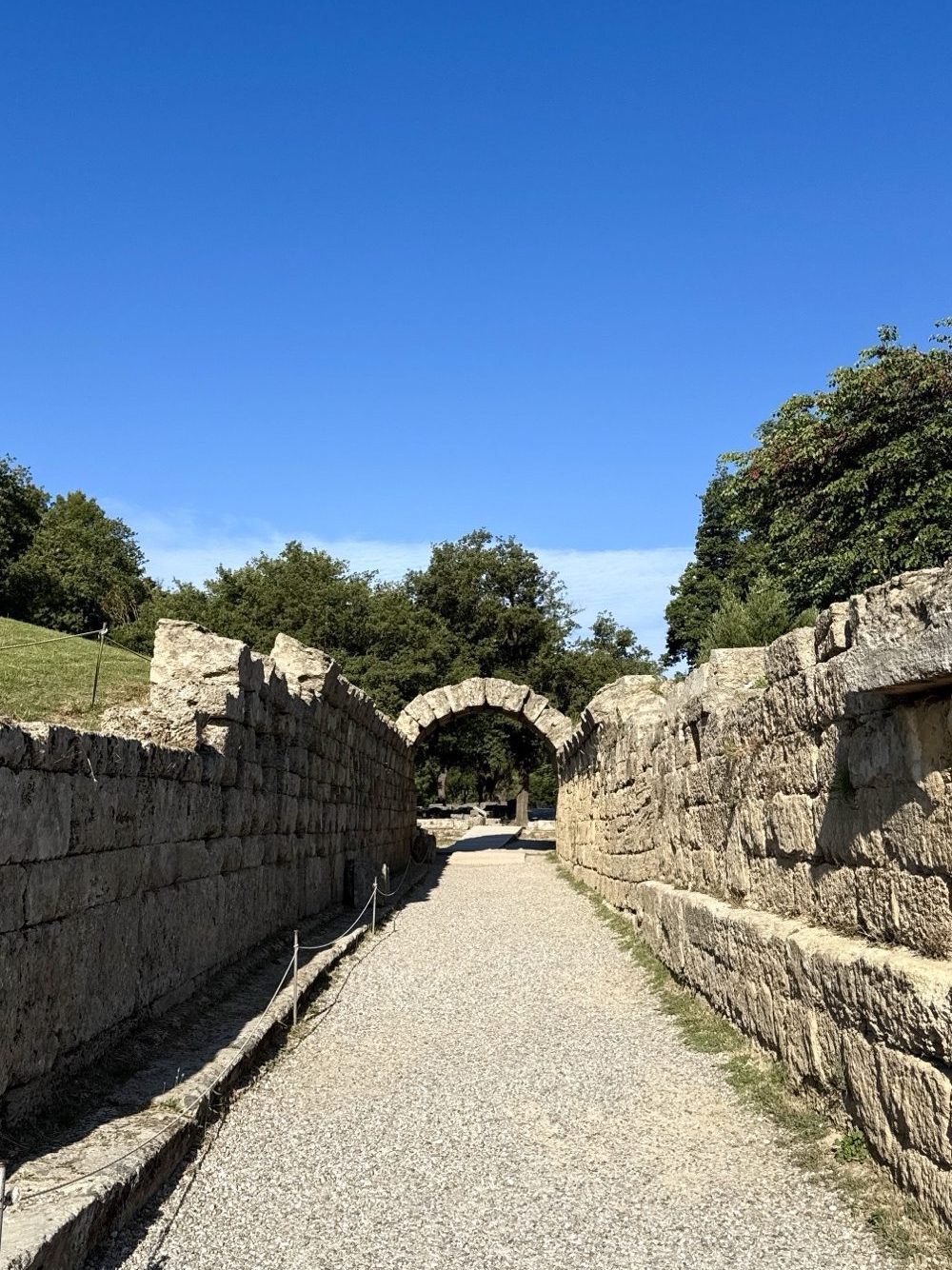
    Then head toward the ancient Stadium where up to 40,000 spectators once gathered. Walk through the vaulted Krypte archway and step onto the original track. It’s surreal, and brings out something oddly competitive inside of you. If you’re with friends, now’s the time to challenge someone to a race. Stone starting blocks with carved grooves still mark the lanes.
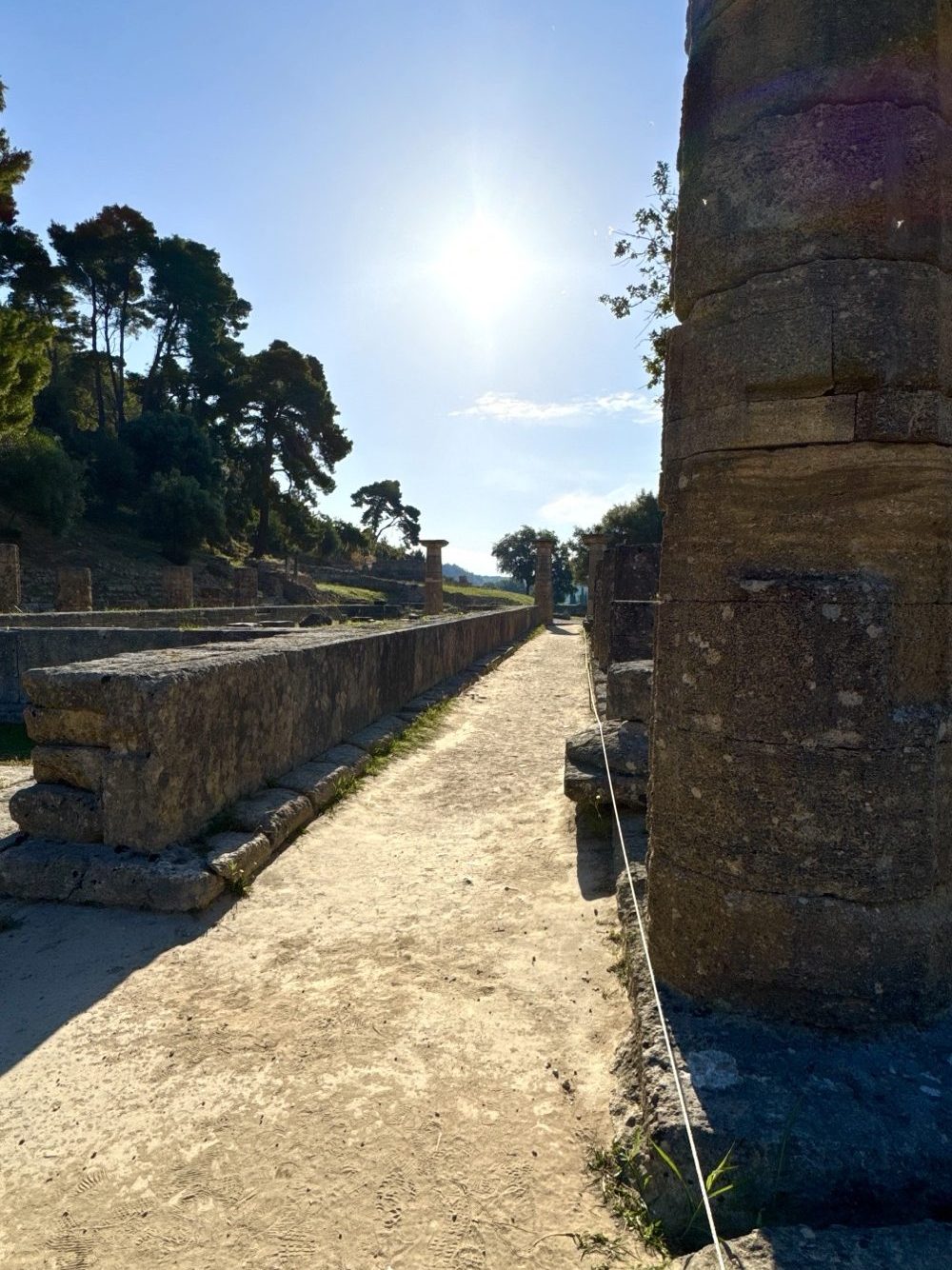
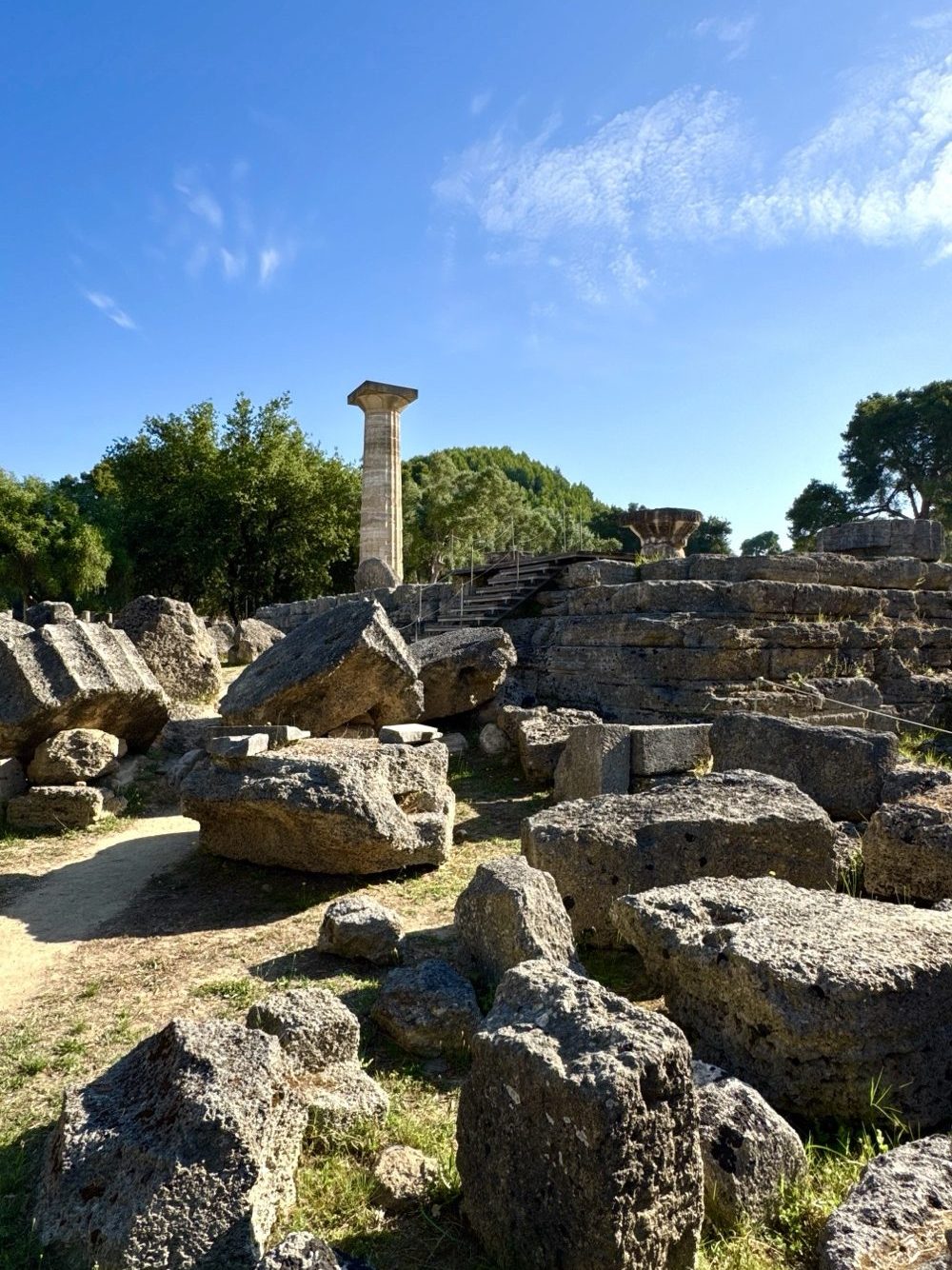
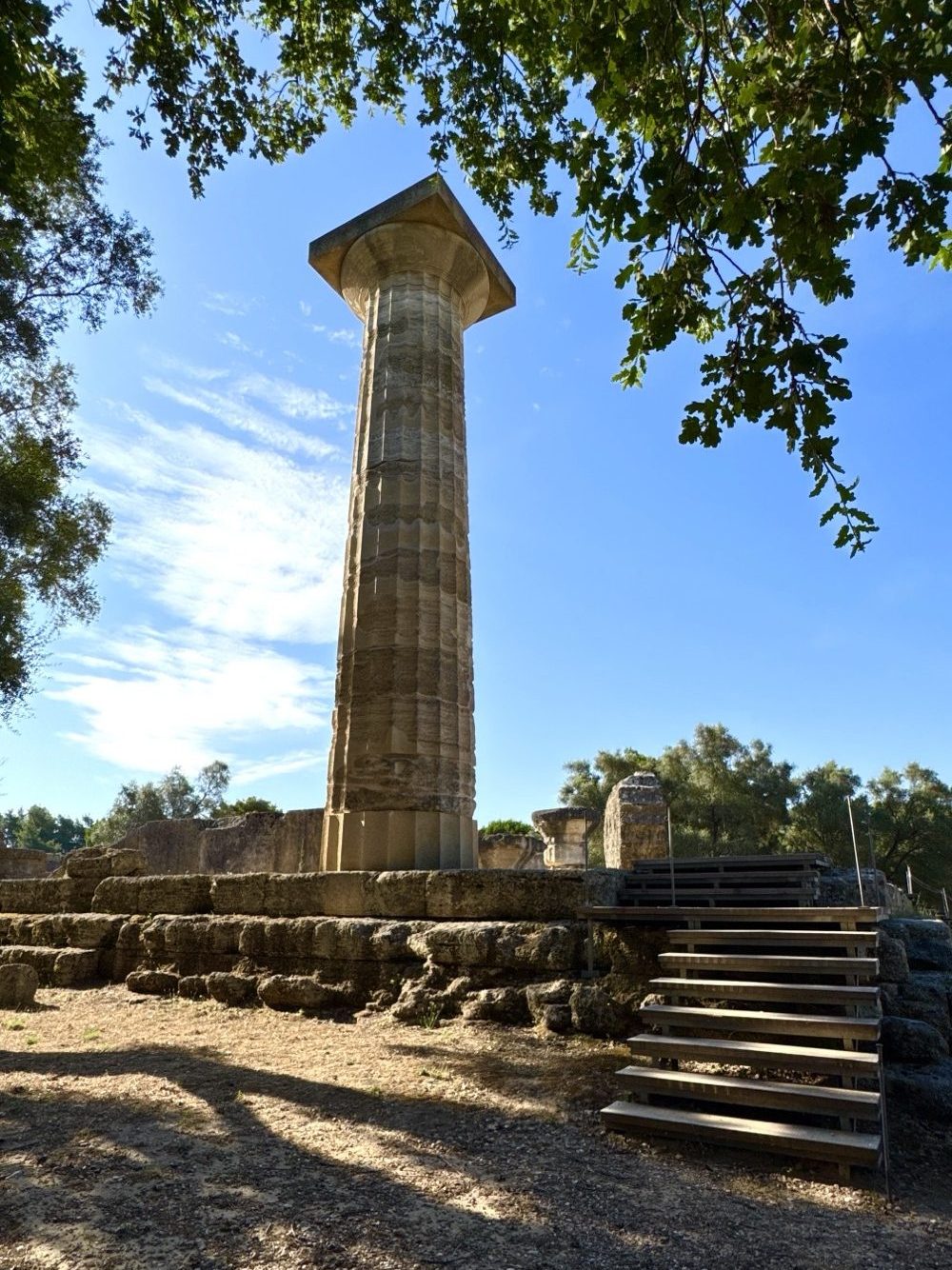
    Next, head into the Altis, the sacred heart of Olympia. You’ll pass the remains of the Temple of Zeus, once home to the famed gold-and-ivory statue of Zeus (one of the Seven Wonders of the Ancient World), and the older Temple of Hera, where the Olympic flame is still lit every four years.

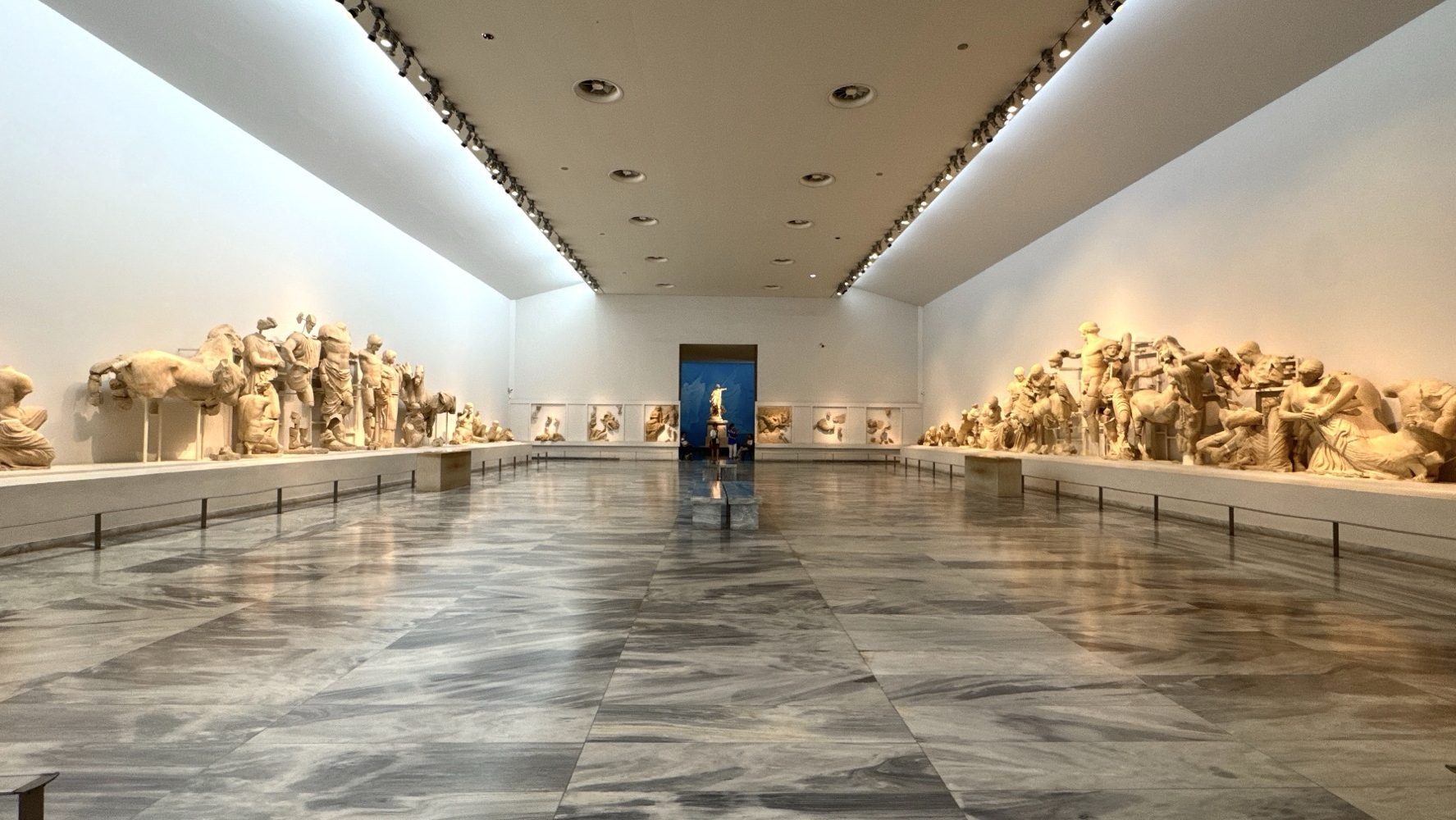
    Just 10 minutes away is the Archaeological Museum of Olympia, an absolute must. This place houses artifacts that span Olympia’s entire timeline, from prehistoric days to the Roman era.

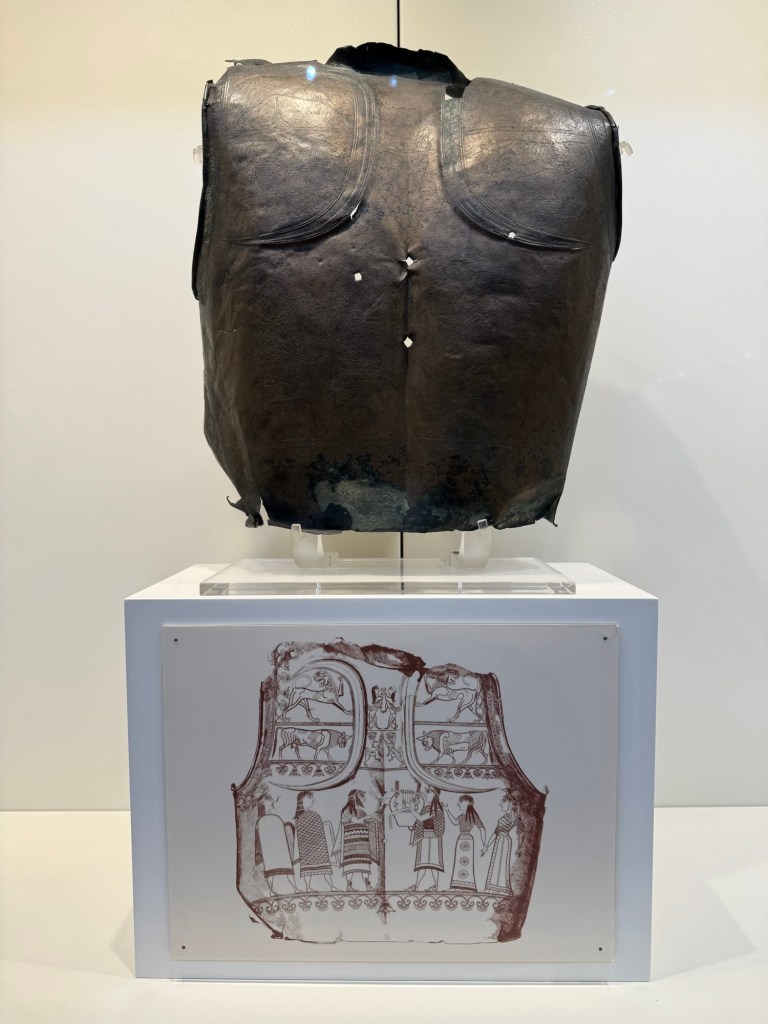
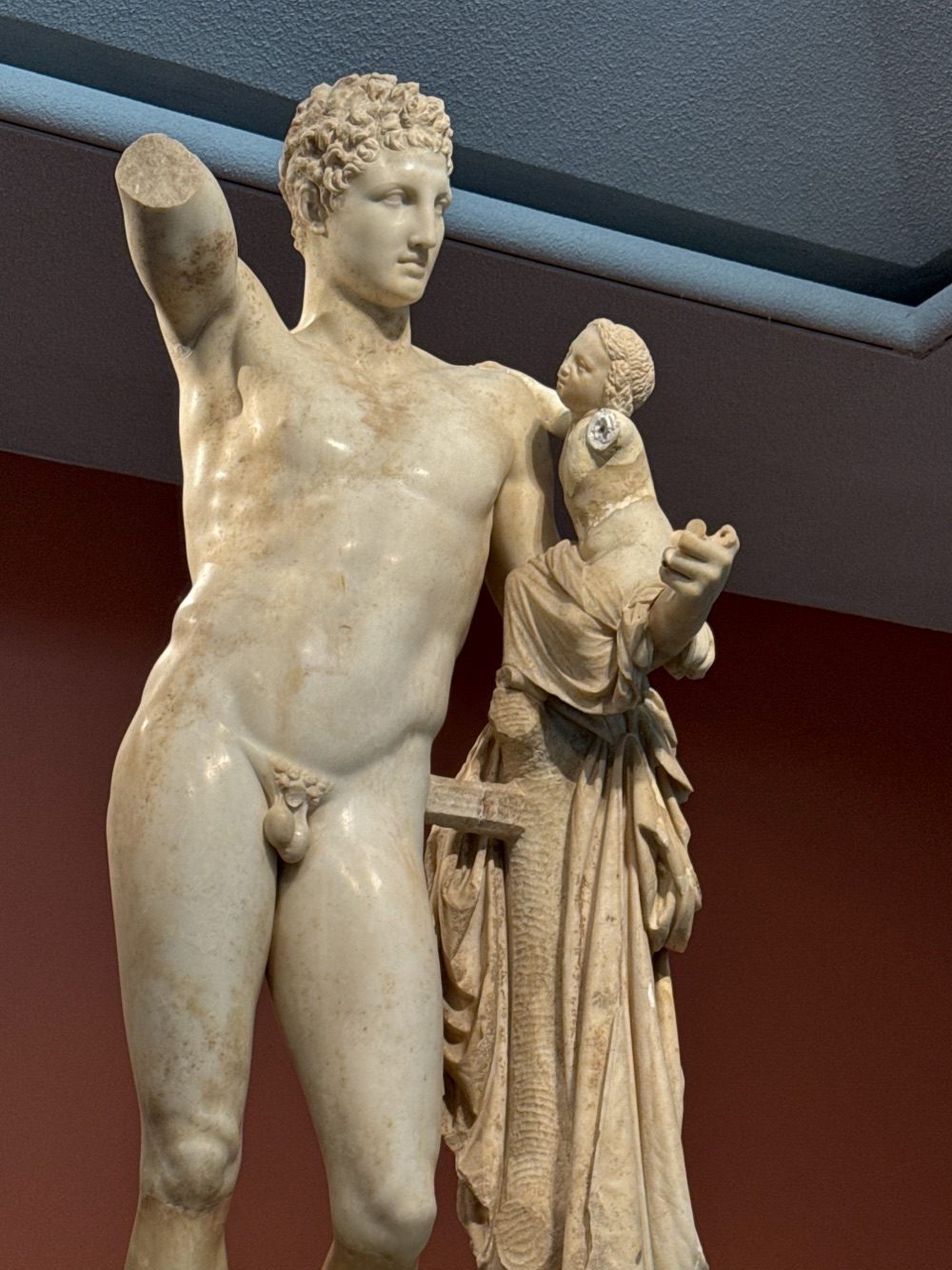
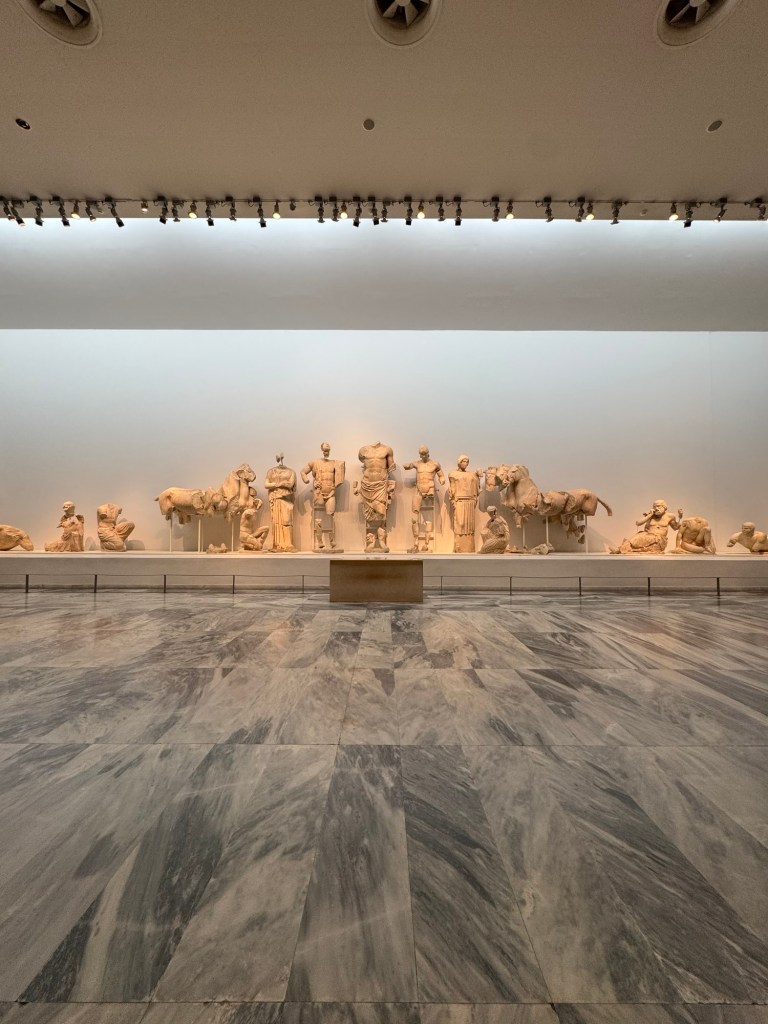
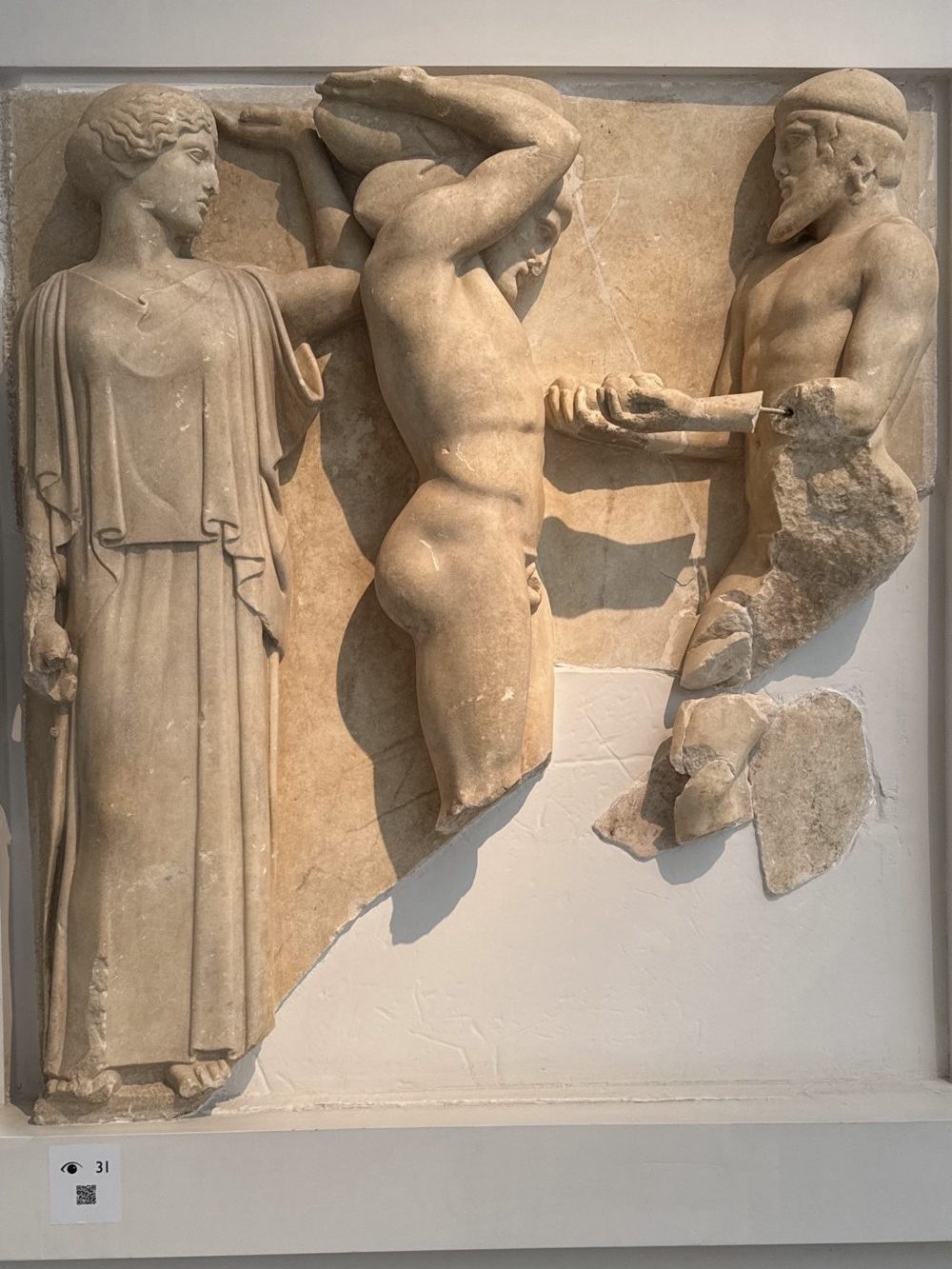
    The museum’s crown jewel is Hermes of Praxiteles, a marble statue of Hermes holding infant Dionysus, praised for its grace and lifelike quality. You’ll also find the massive sculptural groups from the Temple of Zeus: pediments and metopes depicting the chariot race of Pelops and Oinomaos, the battle of Lapiths and Centaurs, and the Labors of Heracles. They’re displayed dramatically in their own dedicated room.

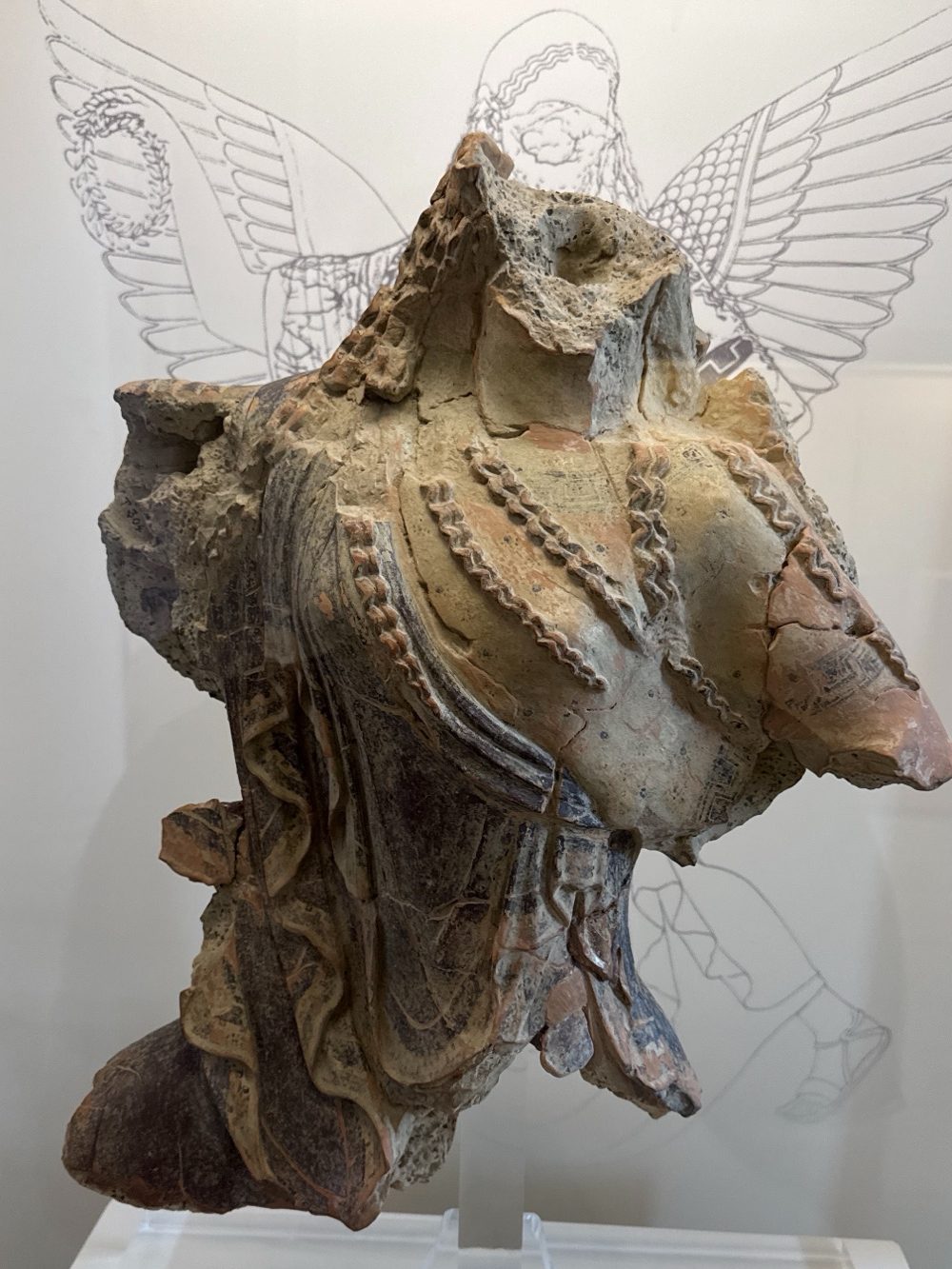
    Near the exit, don’t miss the 2.1-meter-tall marble statue of Nike, goddess of victory, commemorating a military win around 421 BCE.

    The museum is well-labeled in Greek, English, and German, thanks in part to the German archaeological team who began excavations under a treaty with Greece, giving them exclusive rights to work on the site.
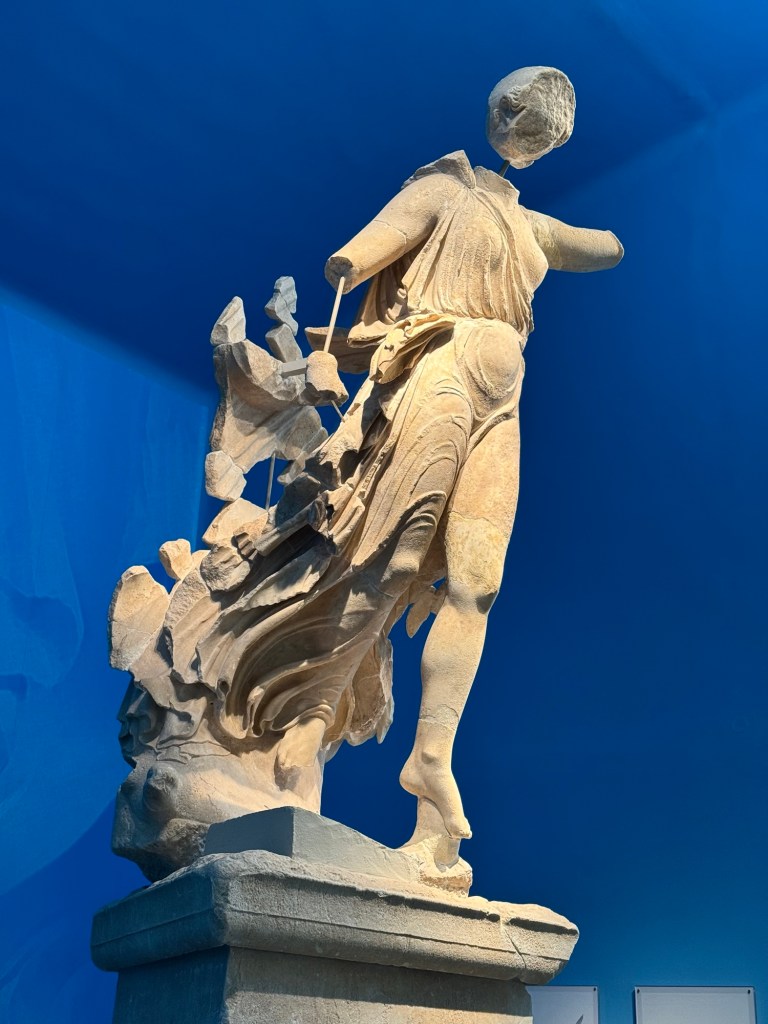
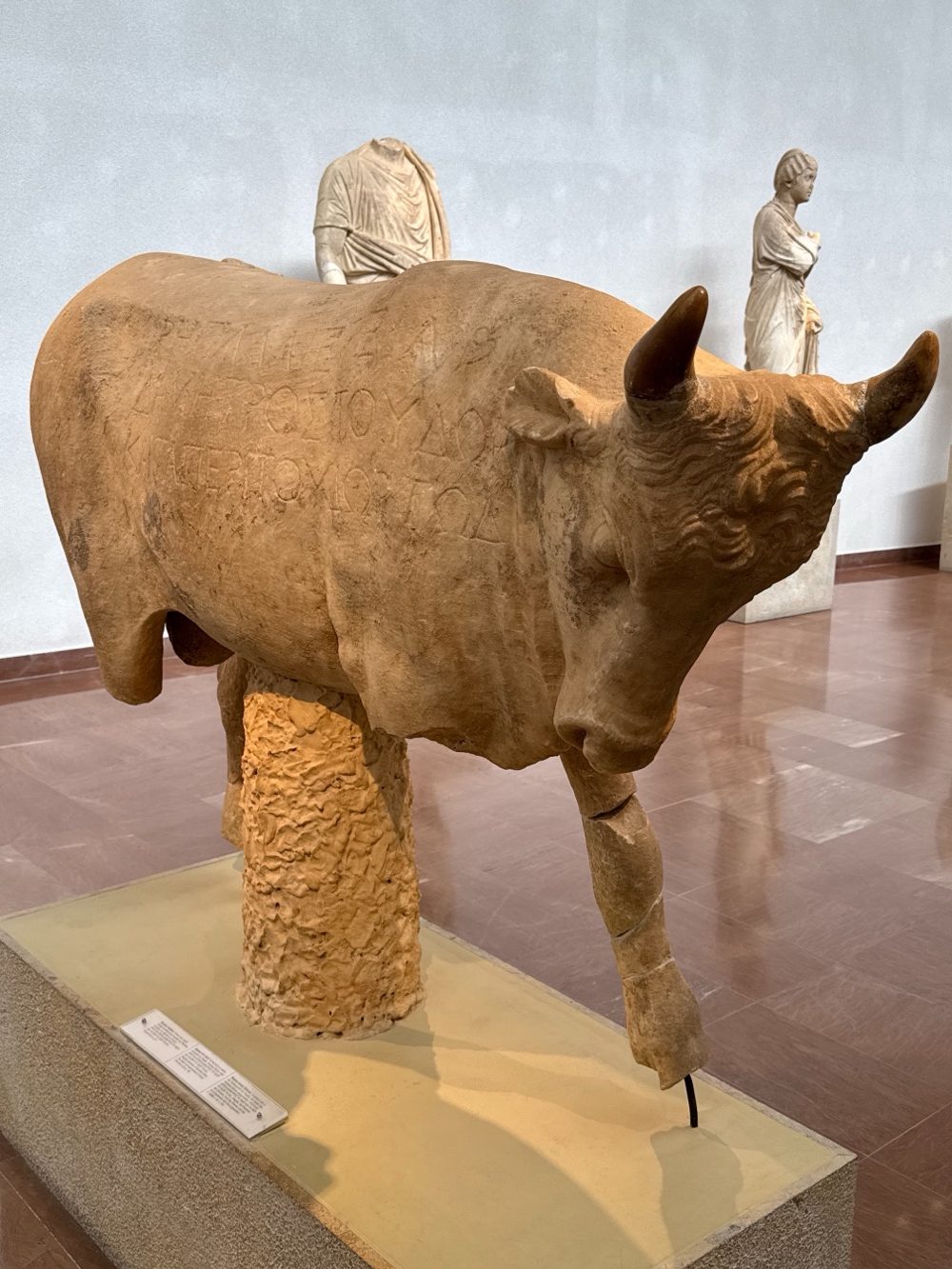
    The layout is intuitive, moving chronologically from Olympia’s earliest history through to its Classical and Roman heights.

    And then there’s one more must-visit spot — the Museum of the History of the Olympic Games of Antiquity. Bit of a mouthful, but incredibly worth it. About 15 minutes from the site, this museum focuses entirely on the origin, evolution, and significance of the ancient Olympic Games.
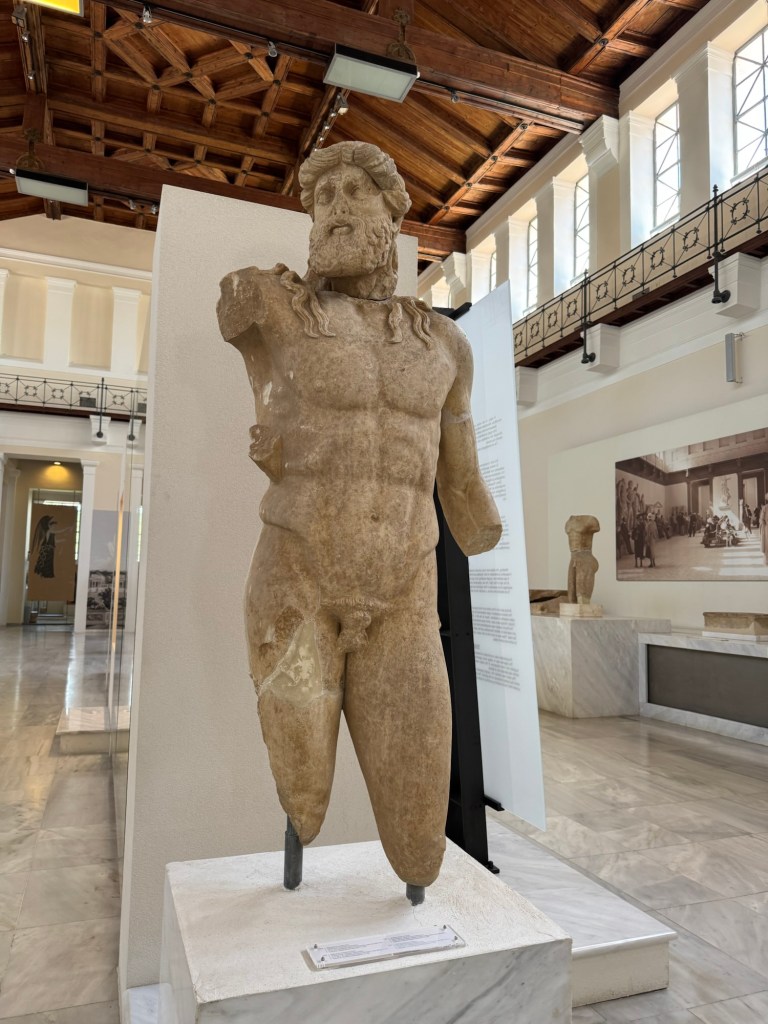
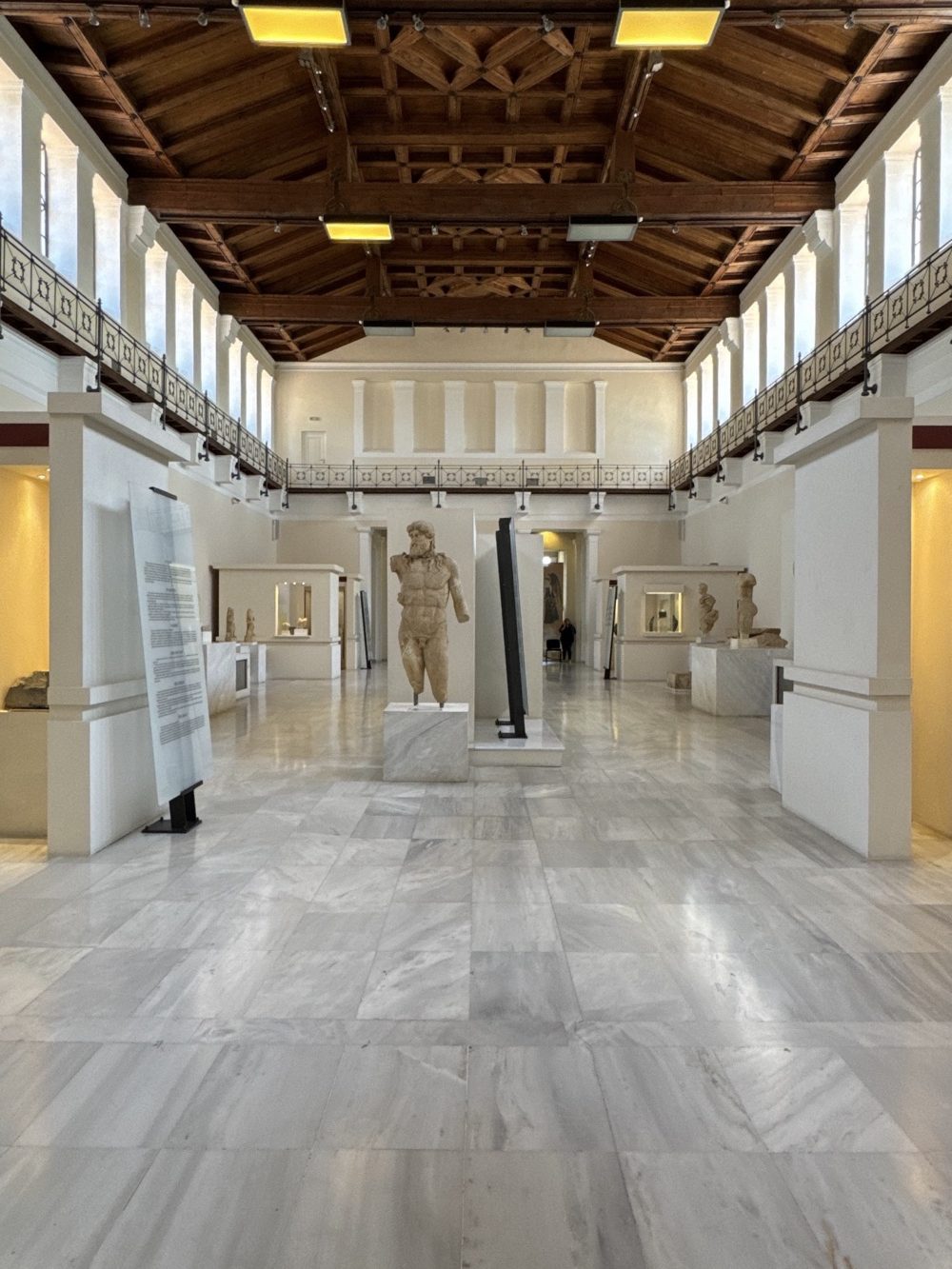
    Here, you’ll find everything: competition breakdowns, game evolution, athlete diets, gymnasium life, victory dedications, and more. While the Archaeological Museum tells the story of Olympia the sanctuary, this museum tells the story of Olympia the Games and the people.

    The Finish Line?

    And just like that, my torch-lit time in Olympia comes to an end. My skin is lobster red, my phone is brimming with pictures of ruins and relics, and I may or may not have raced some very competitive tourists at the ancient stadium. (I lost, of course, but I’m never one to back down when a glove’s been thrown.)

    But there’s no rest for the curious, next stop: Thessaloniki. I’ll be diving into the world of Macedonian kings, starting with Pella, Alexander the Great’s hometown, and Aigai, where his father, Philip II, was buried in royal splendor. Let’s see if the north holds secrets as grand as the south.
  • Greece – Corinth

    Debauchery and Divinity


    Another Uphill…

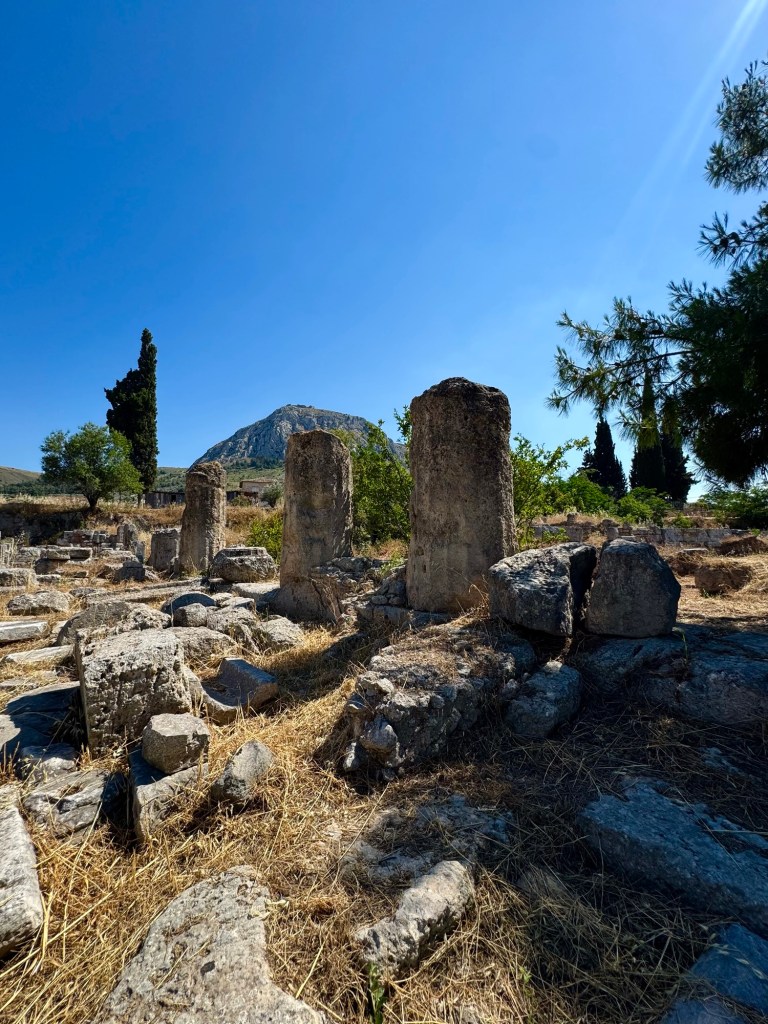
    Located along a narrow stretch of land known as the Isthmus of Corinth lies the mighty remnants of the Ancient City of Corinth.

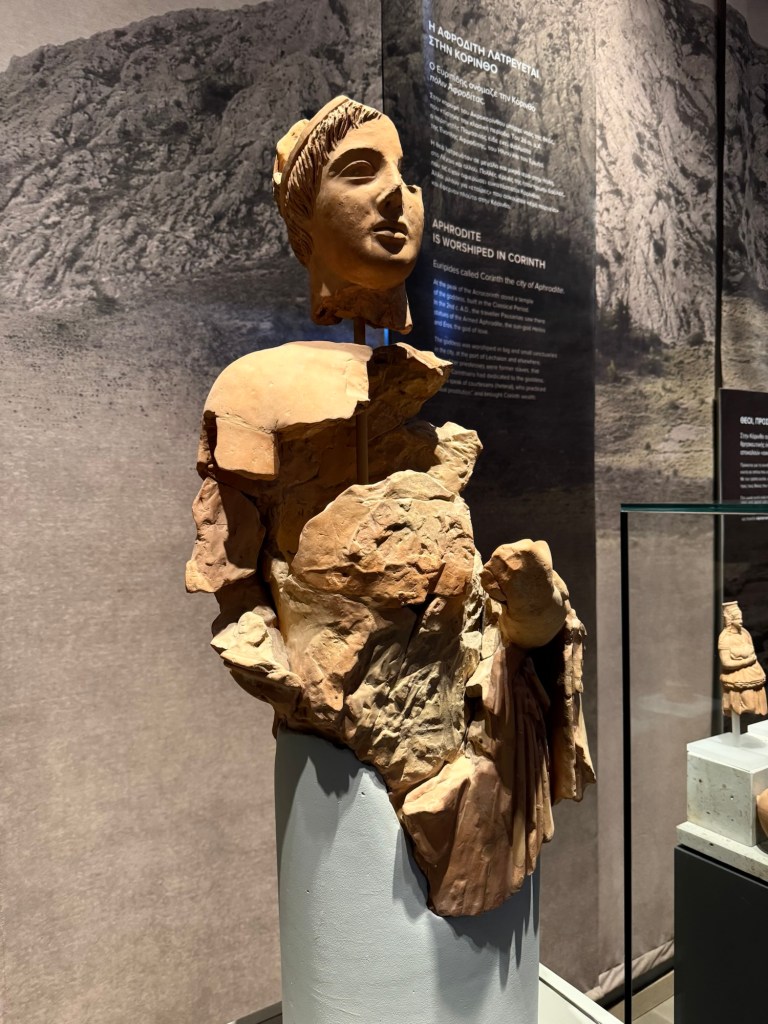
    Much like its other famous cousins, the Ancient City of Corinth has it fair share of myths and legends. It was supposedly founded by Sisyphus, the dude doomed to eternally roll a boulder uphill in the Underworld. It’s where Jason and Medea settled after their whole Golden Fleece fiasco, and where Bellerophon tamed Pegasus before slaying the Chimera. The goddess Aphrodite was also highly revered here, with Corinth serving as a major cult center in her honor, which gave the city quite the reputation for indulgence and debauchery in antiquity.

    In real life, Ancient Corinth was one of the wealthiest and most powerful city-states in Greece. By the time the Bronze Age rolled in, it had grown into a Mycenaean stronghold and founded colonies of its own. Thanks to its strategic location between the Aegean and Ionian Seas, Corinth was both a commercial giant and a cultural hub from the Archaic through Roman periods.

    These days, the ancient ruins watch over modern Corinth like a weathered sentinel in the hills. The city itself feels almost island-like, hugged on three sides by the gulf, clean beaches, parks, and mountain-backed shores surround a quaint little town where Pegasus-themed cafés dot the streets. While not as lively as other cities, it’s definitely worth a pit stop if you’re already heading to the ruins.

    Just a quick PSA though, The modern city and the ancient archaeological site are not the same location. They’re at least 8 km apart. Don’t assume you can just rock up in town and stroll over to the ruins. You will regret it.

    The Journey There

    The most obvious and straightforward option is by car. I’ll let Google-sensei handle that for you.

    Plenty of tour companies also organize day trips from Athens to Corinth, often bundled with Mycenae, Epidaurus, or a boat ride through the Corinth Canal.

    If you’re going the public transport route, here’s how:

    You can take the direct train from Athens to Corinth, operated by Hellenic Train. A return trip costs €13.60, and a one-way is €8.50. After arriving at the station, your best bet is to take a taxi to Ancient Corinth (it’s about 6 km from the station). If you’re feeling extra brave and have steel-calves, renting a bike or walking is technically possible — but know it’s not a quick stroll.

    You can also take a bus. KTEL Kifisos in Athens also run regular buses to Isthmus every hour or so. Located on the same route to get to Nafplio, the trip takes about 1.5 hours.

    Here is the link for the KTEL website so you can check out the schedule or buy your tickets online. While it is technically stated on the website that they do have direct buses to the main city of Corinth, it was unavailable when i checked in person at the ticketing booth. So it’s always prudent to check with the bus operators on site before purchasing your tickets.
    When you alight at Isthmus, there will be another bus stop right in front of the main building/shack that’ll take you into the main city of Corinth, and from there it’s the same story as before, cab, bike, or good old fashioned hiking,

    Alternatively, you can hail a cab from the Isthmus Bus station to take you straight to the city/ancient site and skip the whole going into the main city if your onAnother option is the KTEL bus from Athens Kifisos station to Isthmus, which departs hourly. This is the same route used to get to Nafplio. The trip takes about 1.5 hours.

    From Isthmus, you’ve got a few options, you can catch a connecting bus into modern city of Corinth, then cab/bike/walk to the ruins, or skip the city entirely and take a taxi straight to the archaeological site.

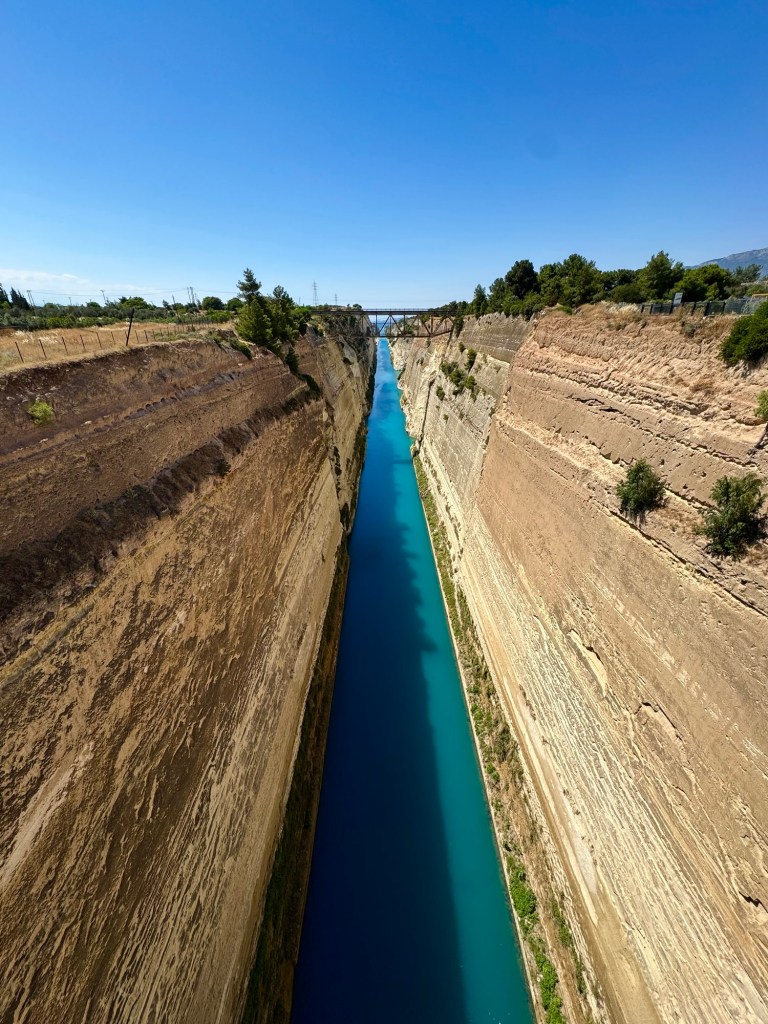
    And if you’re stopping at Isthmus, don’t miss the Corinth Canal, located just a 5–10 minute walk from the station. Cross the road and follow the bridge over the gorge. The rusted metal grating underfoot, the dizzying drop into a chasm of blue, it’s surprisingly dramatic for something that’s just casually located under a fairly nondescript bridge,

    I lucked out. A group of Spanish tourists who got off the same bus as me were heading to the ruins and kindly let me hitch a ride in their cab. Smooth 15-minute ride. No regrets. And judging by the incline of that road, boi, if you’re walking, prepare to sacrifice your legs to the gods.

    It was not till later in my trip that i started to see similarities with all of these ancient sites and ruins. Uphill is one of them. Which i mostly understood that it was for defensive purposes, or better access to water and resources. Understanding is one thing. Accepting it is another. I believe my calves and thighs have never forgiven me.

    The Ancient City

    Entrance is €15. Students and EU residents may be eligible to a reduced price ticket, so remember to bring your student card or identification. The ticket includes a visit to the Archeological Museum of Ancient Corinth which is located on site right next to the main entrance.

    The museum hold findings and restorations from the site of Ancient Corinth and nearby sites. It provides a chronological journey of Corinth’s 7,000-year history, from its prehistoric roots to Roman and Byzantine transformations, with interactive displays, and thematic groupings to illuminate daily life, trade, war, religion, and public ceremonies in ancient Corinth.

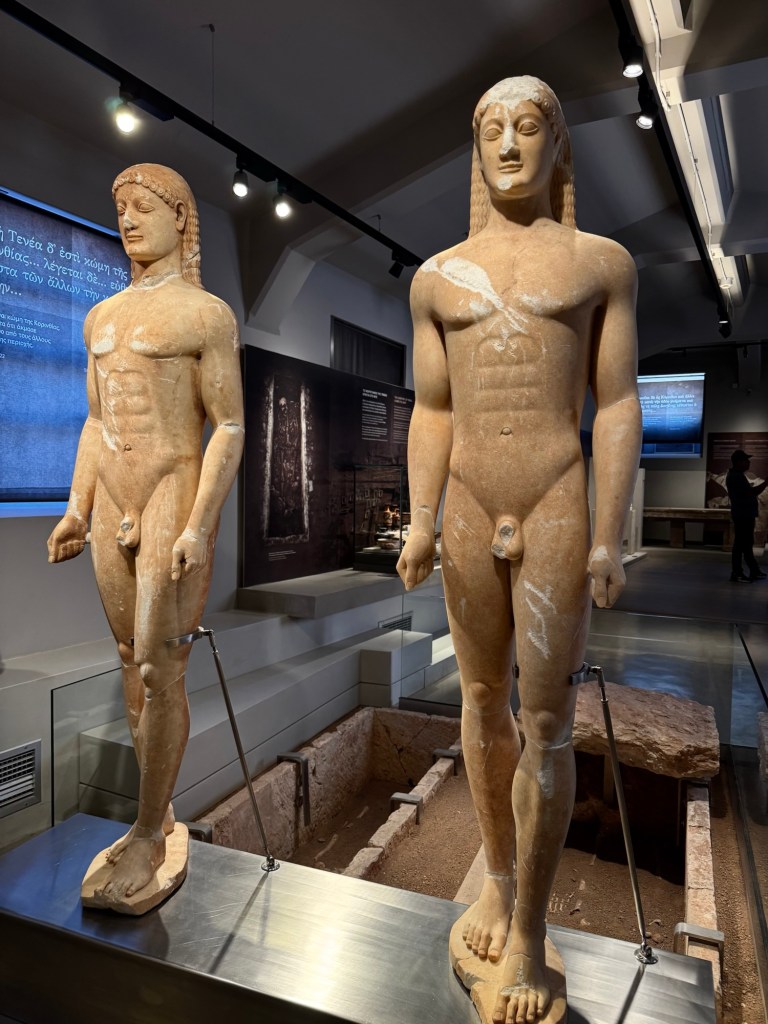
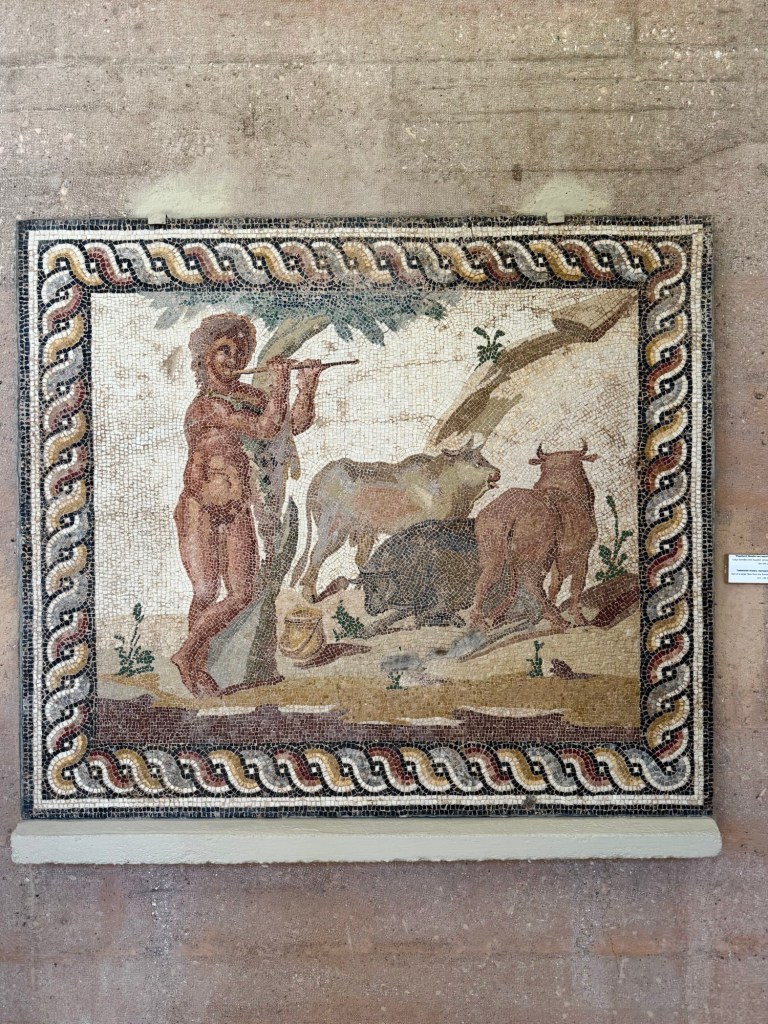
    Highlights to look out for are the Roman mosaics, and Twin Kouroi (a style of free standing ancient greek sculpture prominent in the Archaic period of greek history), and the Asklepieion votives.

    Also, practical tip: use the toilet before venturing too far. The only restrooms are near the museum.

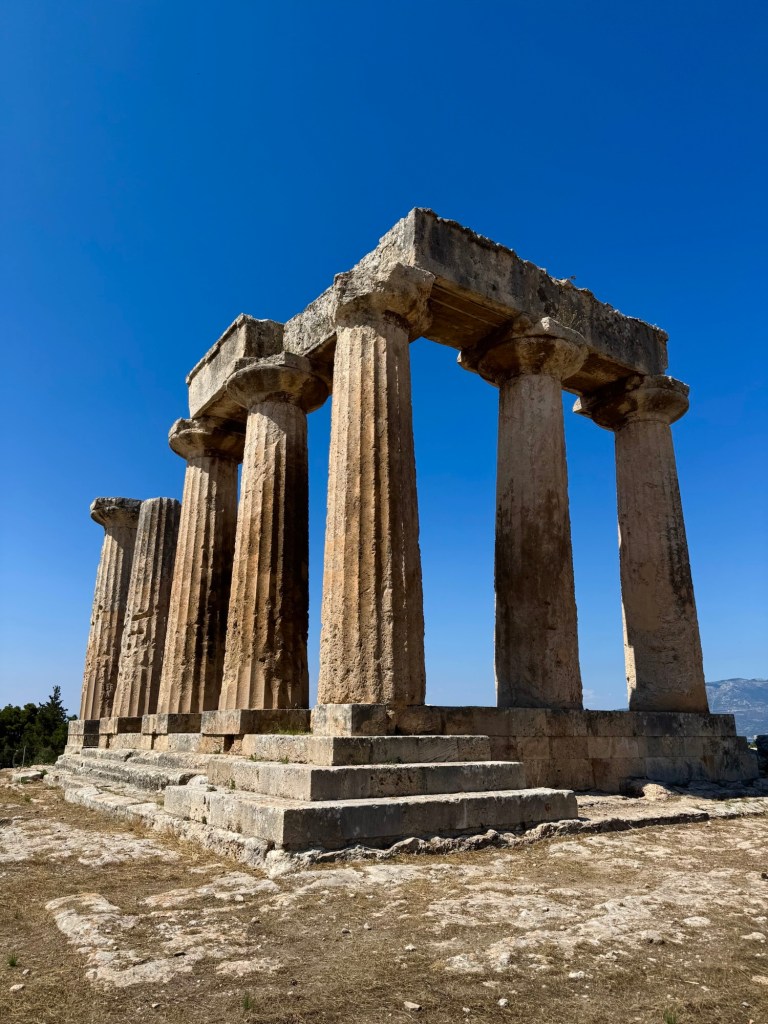
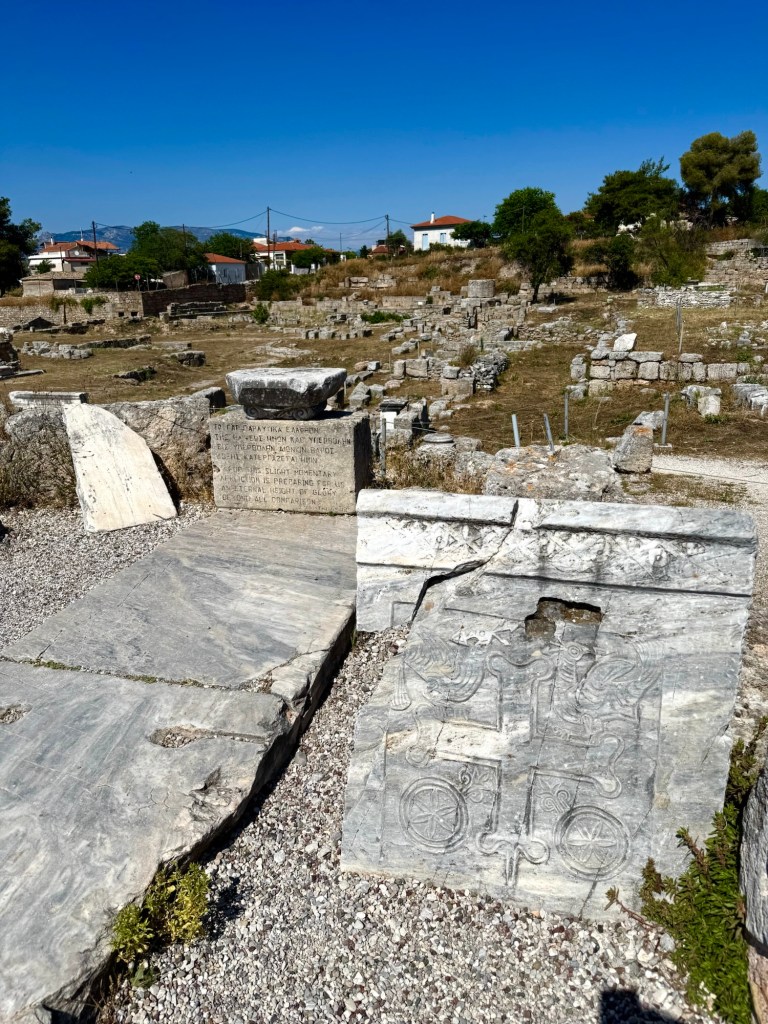
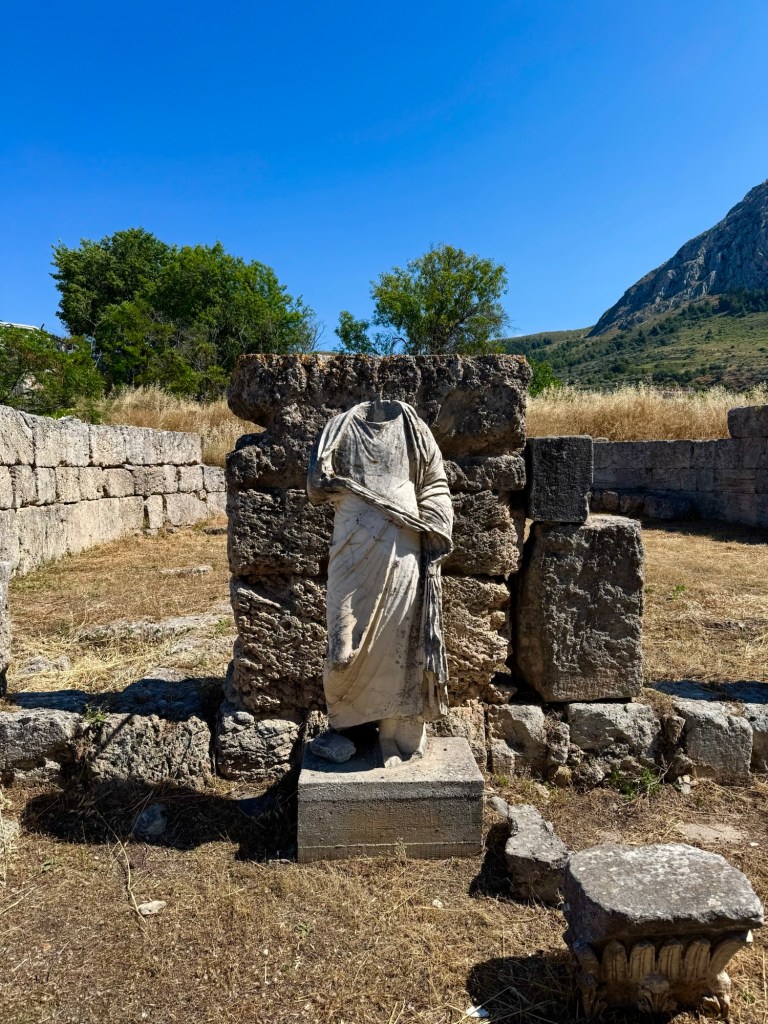
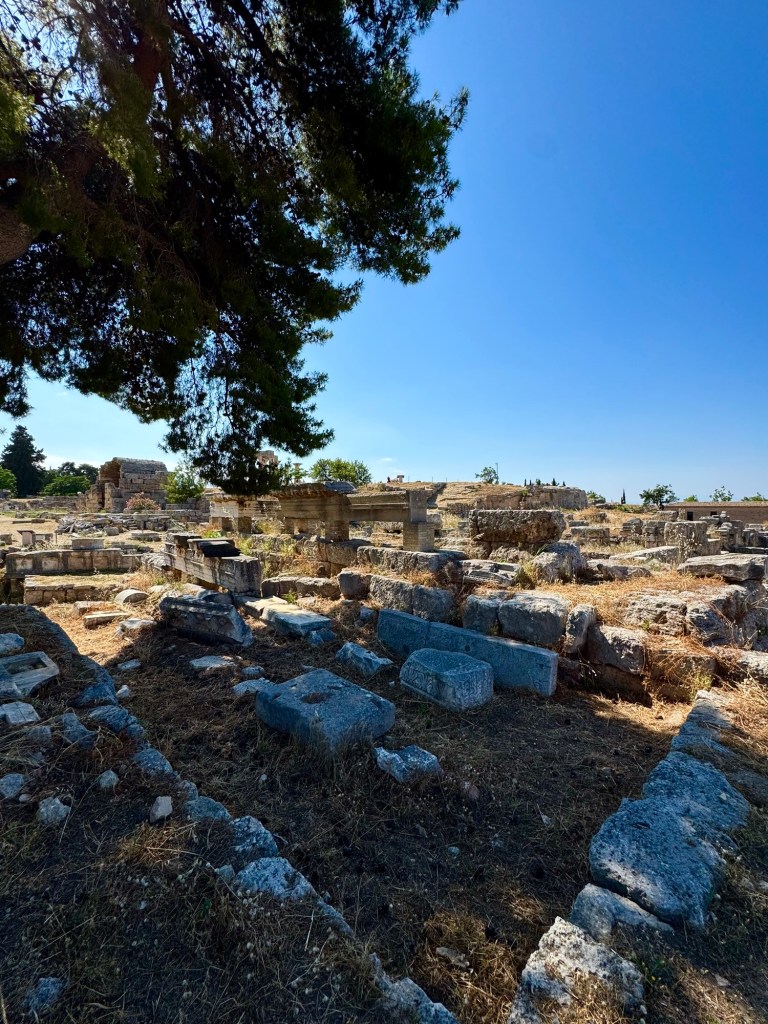
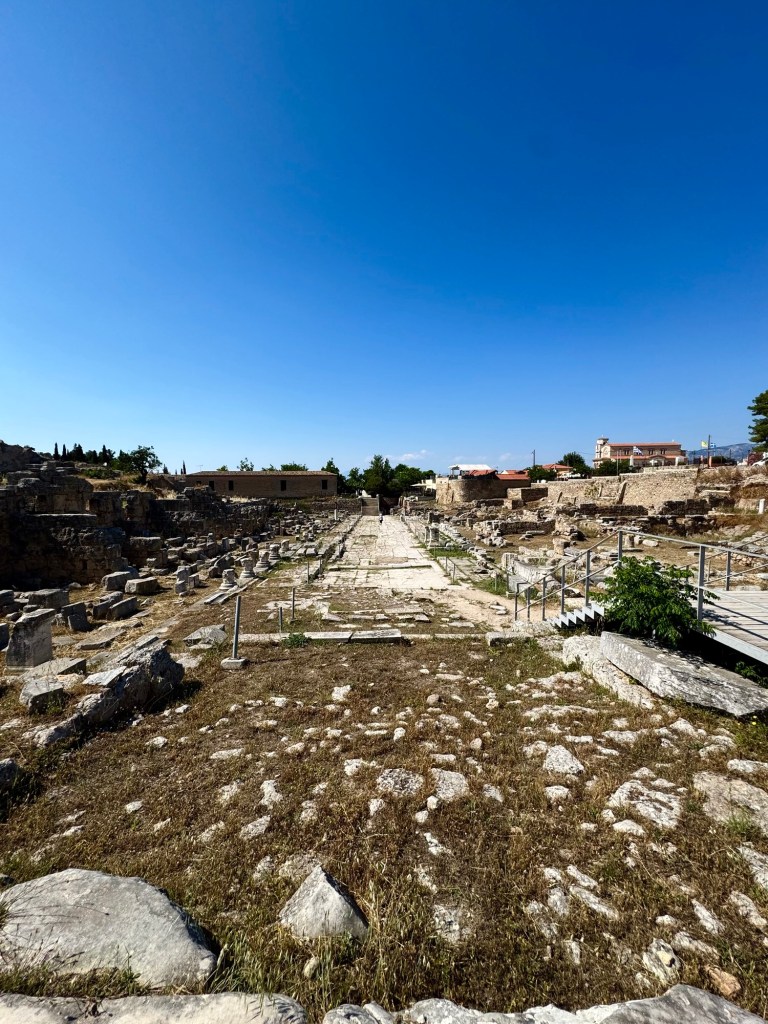
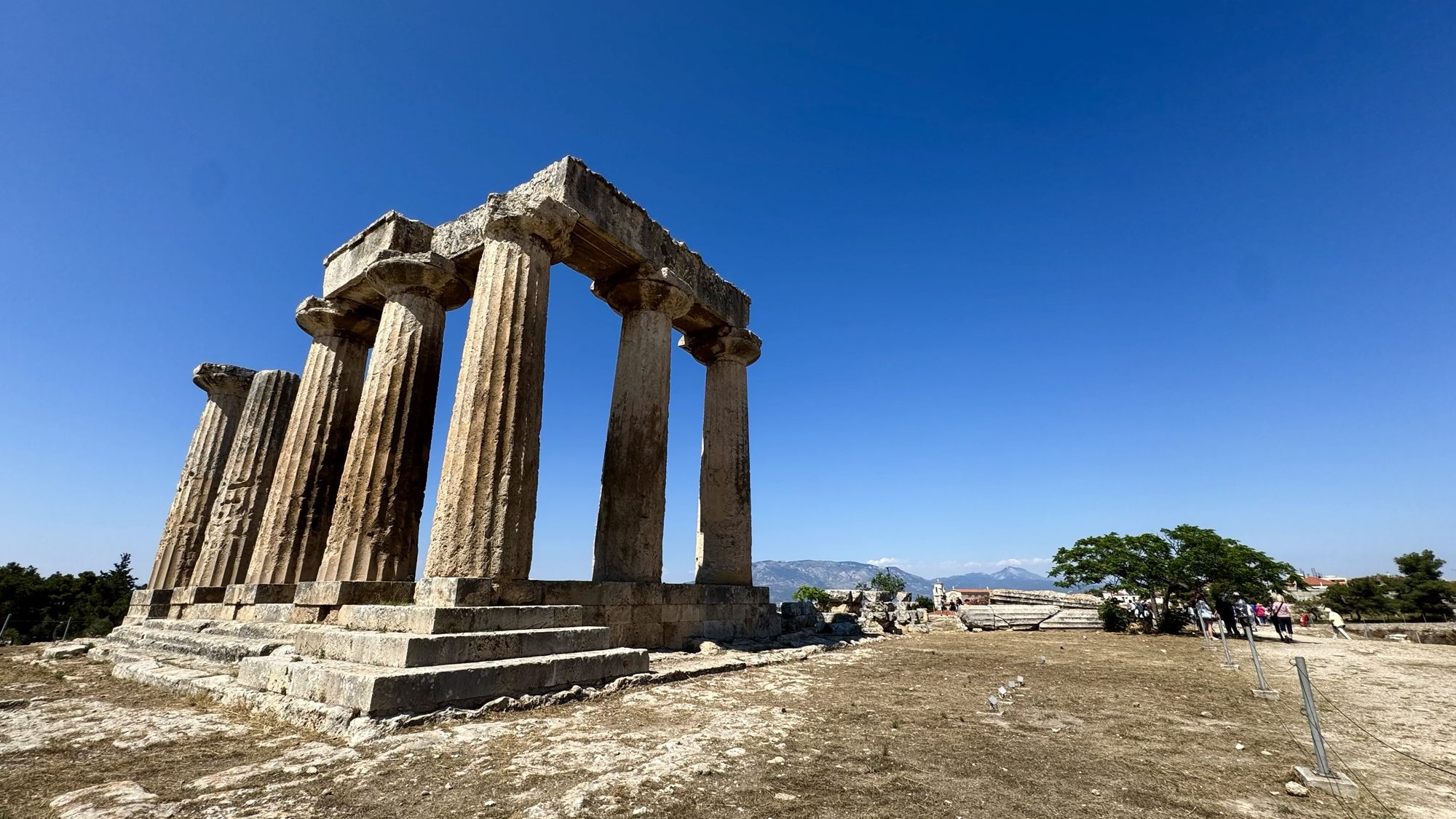
    Start your visit at the Temple of Apollo, one of the oldest surviving Doric temples on mainland Greece. From there, the site opens up to the Roman Agora, once a buzzing marketplace full of merchants and politicking. Wander down Lechaion Road, lined with ruins of shops and fountains, and pause at the Bema, where the Apostle Paul supposedly preached to the Corinthians.

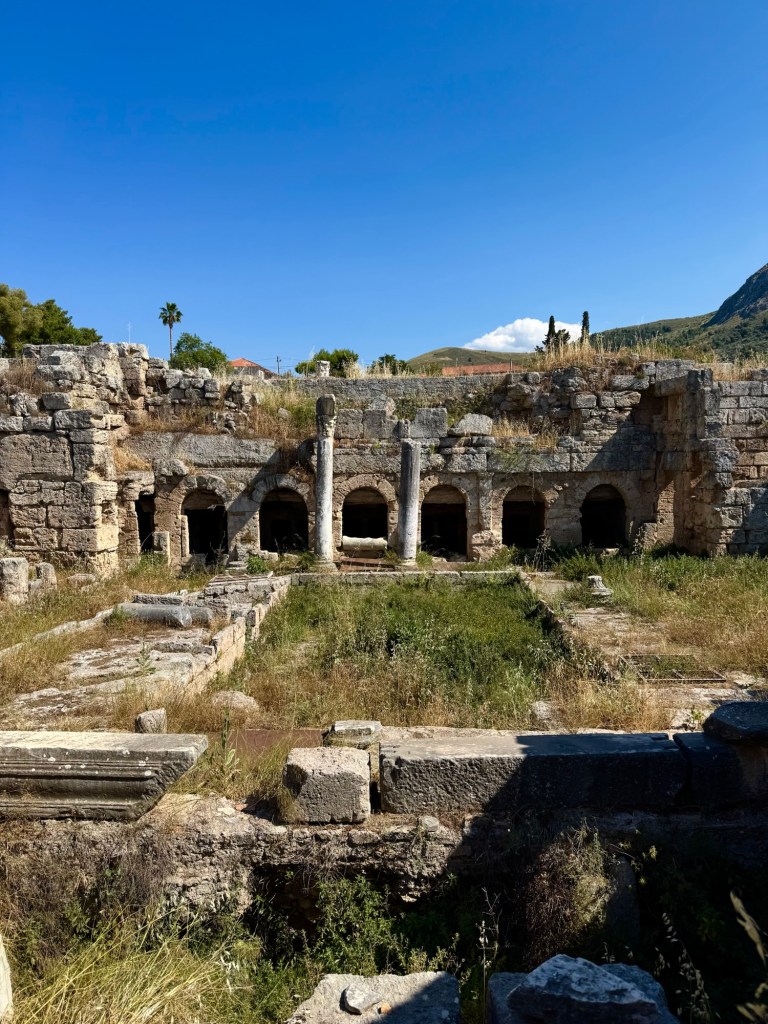
    Then head over to the Peirene Fountain, a serene spring wrapped in mythology, it is said to be created from the tears of the nymph Peirene and the place where Bellerophon tamed Pegasus. Just nearby is the Asklepieion, a healing sanctuary dedicated to Asclepius, god of medicine.

    Finish off by looping through the smaller temples and Roman baths, or double back to the museum.

    Just outside the bus parking area, behind a fence, are the ruins of Ancient Corinth’s theatre. It wasn’t open when I visited, but hopefully, it is for you.

    The Hill of the Gods

    If your legs haven’t tapped out yet, there’s Acrocorinth, a massive hilltop fortress just 5 minutes by car (or a sweaty 45-minute uphill trek). It’s one of the most important defensive sites in ancient Greece and was used from the Mycenaean through to Ottoman periods.

    At its peak stood the Temple of Aphrodite, rumored by ancient sources to house sacred prostitutes (though scholars still debate how literal that claim was). Whatever the truth, the views from the top are mythic in themselves.

    Resting My Laurels For Now

    Corinth might have been about myths, markets, and mountain climbs, but my journey through Greece’s ancient heartland isn’t over yet. With my calves still screaming from the Acrocorinth, I’m heading next to a place where the ancient world turned sport into religion. Olympia, birthplace of the Olympic Games. Let’s see if the gods reward stamina.

  • Greece – Epidaurus

    Healing and Theatrics


    Theatre Isn’t Dead

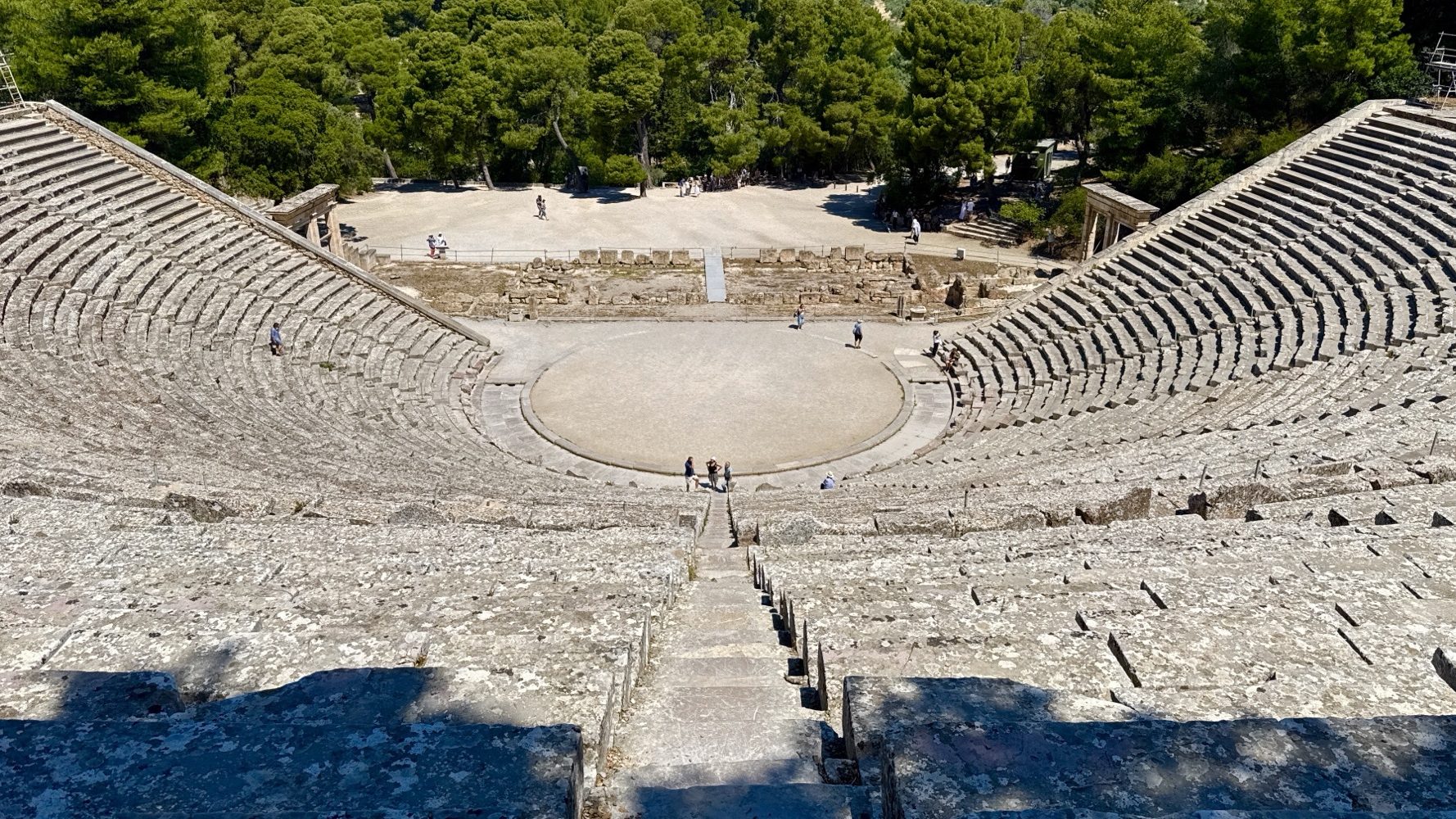
    Epidaurus (or Epidavros — this will come in handy in a bit) is one of the most important archaeological sites in Greece, famed not only for its sacred healing sanctuary dedicated to Asclepius, the god of medicine, but also for its magnificent ancient theatre. If there’s a staple in every Greek or Roman ruin, it’s gotta be a theatre. And boi, is this one a stunner — not necessarily because it’s astonishingly well preserved (though it is), but for its near-perfect acoustics.

    That’s one of the reasons this particular theatre is still in use today during the annual Epidaurus Festival, which runs through July and August, hosting both modern and classical performances.

    Since we’re already on the topic of the Epidaurus Festival, let’s dive right into how to get there.

    If you’re visiting during festival season, you’re in luck. Regular buses run from various parts of the country (Athens, Isthmos, Nafplio, Tolo, and Archaea Epidavros) to and from the site.

    There’s a full timetable and everything you need to know right here.

    The Epidaurus Festival is Greece’s most prominent cultural event, and one of the oldest performing arts festivals in Europe (since 1955). The Athens & Epidaurus Festival hosts world-class theatre, dance, and music performances every year — both in Athens and right here at the Ancient Theatre.

    If you have the chance to catch one of these shows during festival season, it comes highly recommended by literally everybody I’ve talked to, locals and guides alike. Here’s a link to the main site.

    However, if you’re not visiting during festival season, there are still options. Public transport-wise, you’ve got two main routes: via Nafplio, or Nafplio-Ligourio.

    The Way There (and Back)

    From Nafplio, buses only go to and from Epidaurus twice a day, so plan carefully. Miss your return ride and you might just be stuck among the ruins. A round trip is €6.40.

    Alternatively, you can take a bus from Nafplio to Lygourio, the next town over from the site, and grab a cab the rest of the way — or even spend the night if you want a head start the next morning.

    Bus schedules can be found here.

    I’ve already covered how to get to Nafplio from Athens in my Mycenae post, so pop over there for the details.

    The Original Surround Sound

    As you can probably tell by now, Epidaurus is famous for its theatre. But that’s not all it offers.
    The Sanctuary of Asclepius at Epidaurus was the most celebrated healing center in the classical world. People came from across the Mediterranean seeking cures, treatments, or divine visions in the Abaton, a sacred sleeping hall where the god would appear in dreams.

    Inscriptions found at the site record miracle cures, blind people seeing, the lame walking. How true are these stories? No one really knows. But it’s the blend of myth, faith, and medicine that makes history so deliciously messy and fascinating.

    Originally a small, inhabited town, Epidaurus first centered its worship around Apollo Maleatas, before shifting focus to the cult of Asclepius, his son. As the site’s reputation grew, so did its infrastructure: temples, theatres, stadiums, gymnasiums, roads, markets, guesthouses. It basically became a city built around healing.

    Today, outside of the theatre, much of the sanctuary is a game of imagination. There’s a lot to see, but most of it lies in quiet ruin.

    Entry is €20, which you can purchase online or at the entrance. (If you’re under 18 and non-EU or under 25 and from the EU, you may be entitled to free admission.)

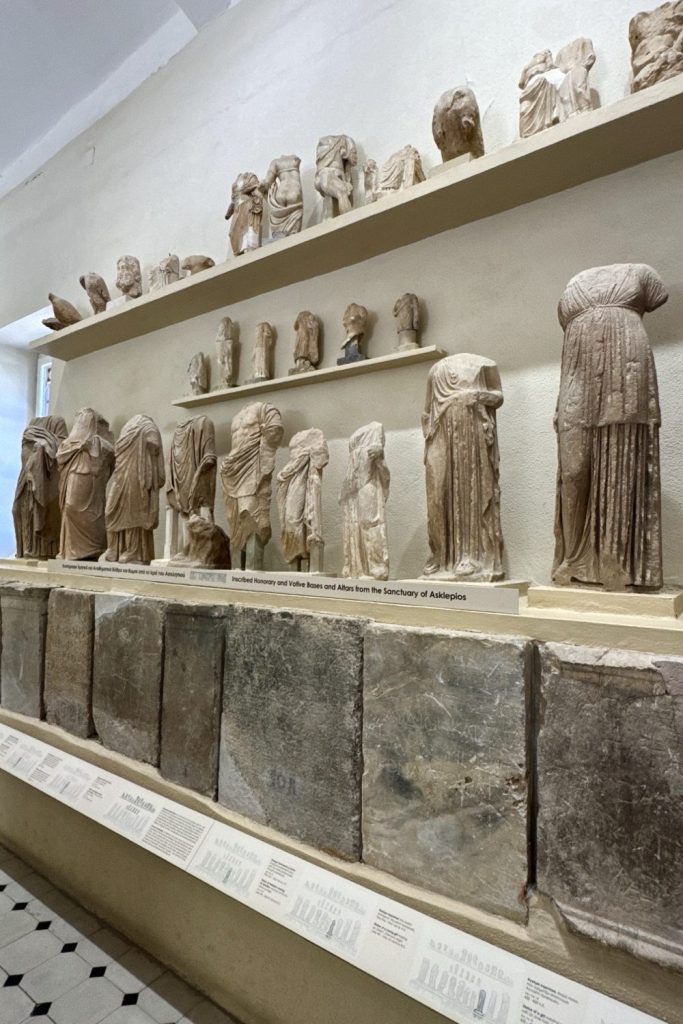
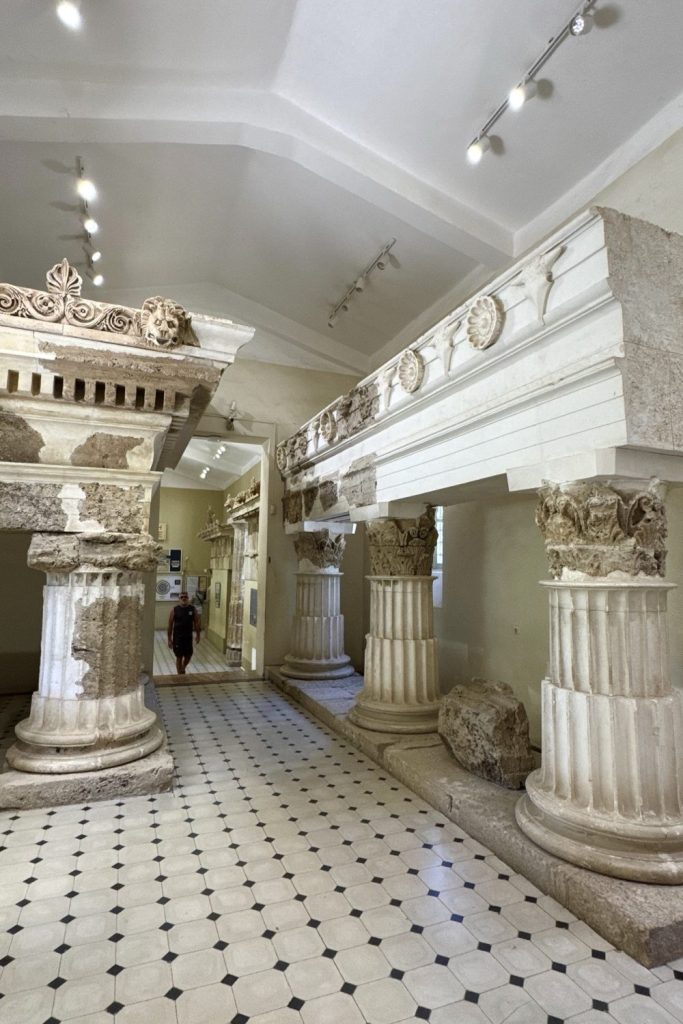
    Start at the Archaeological Museum of Epidaurus, located right at the entrance. It’s not flashy, but it’s informative — statues, friezes, and artifacts that give much-needed context before heading into the site.

    If you’re there early enough, you might get to test the theatre’s famous acoustics all by yourself. I, however, arrived around 11:30 AM thanks to the earliest bus from Nafplio being at 10:30 AM — right at peak tour group hour.

    So there I was, trudging up the stone steps behind a human conga line of folks hollering from center stage. Mildly annoying? Yes. But hey, the acoustics really are as good as they say.

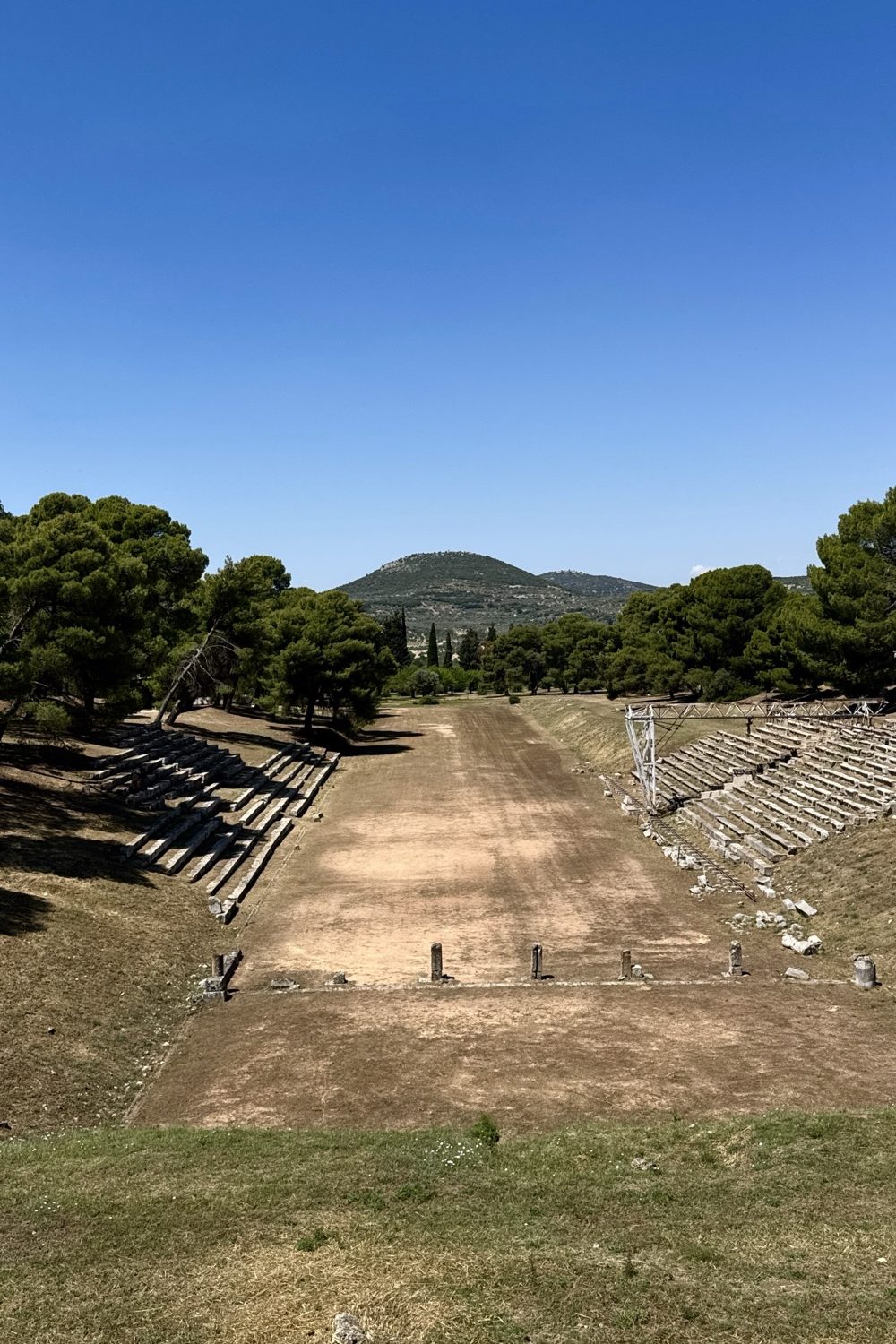
    Beyond the theatre, you’ll find a footpath leading to the Stadium, nestled quietly among the trees. You can walk the original track, admire the stone seating, and pretend you’re about to run the ancient equivalent of a 5K.

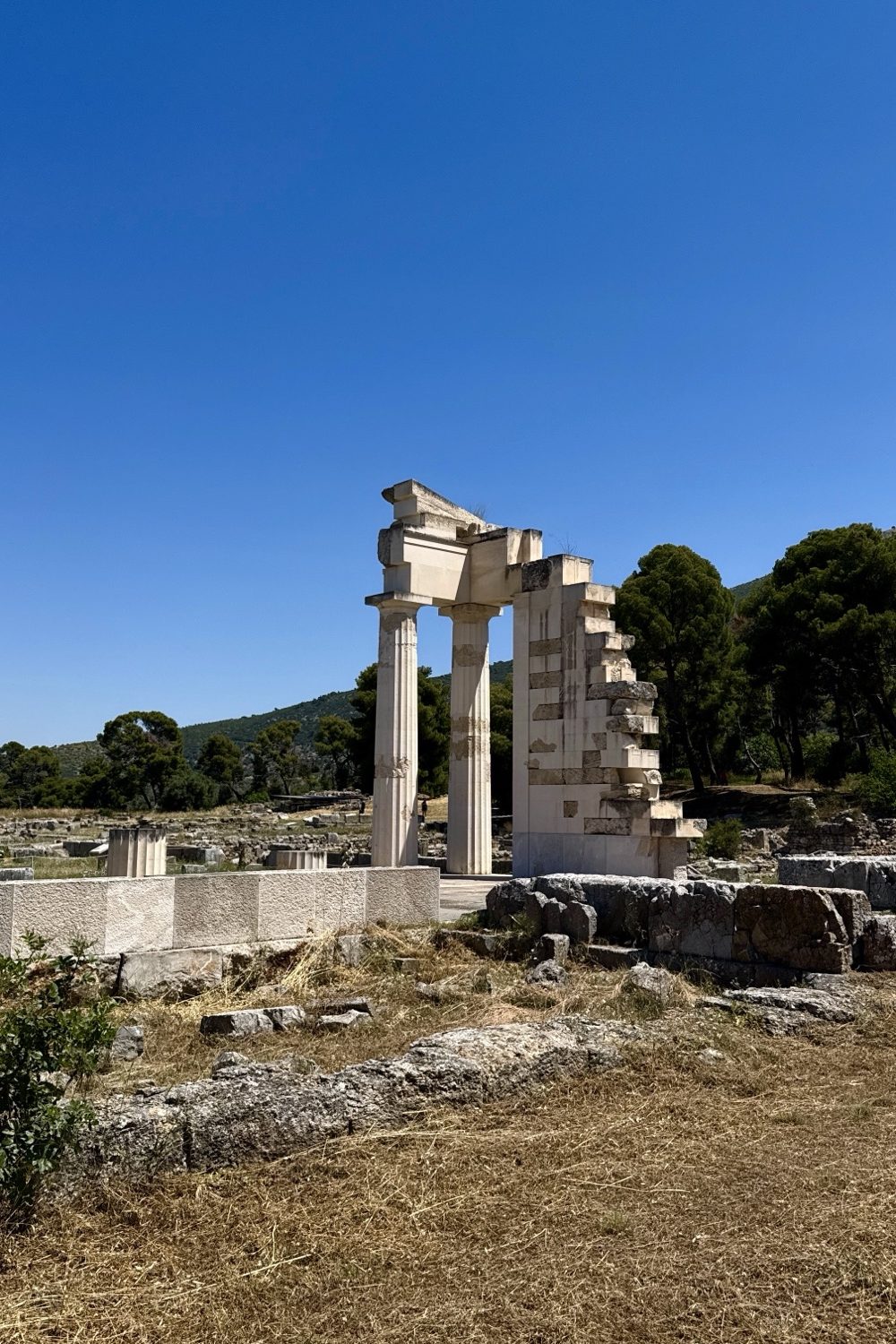
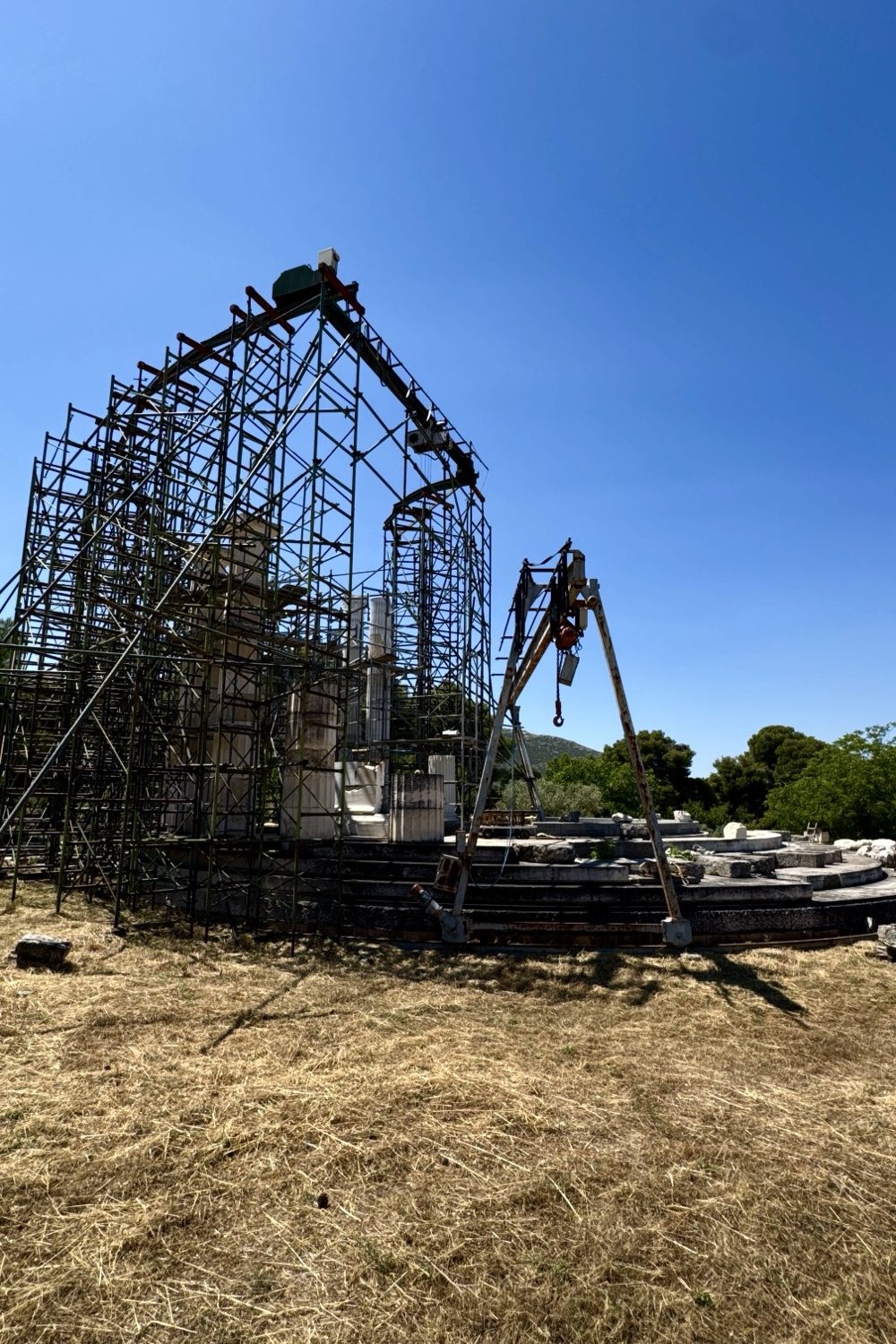
    Back on the main trail, you’ll reach the heart of the Sanctuary of Asclepius and the partially restored Tholos (which was undergoing renovations when I visited). From here, you can also see the Abaton, and descend into its cool, shaded corners to read more about the rituals and healing practices that made this place famous.

    The site is well-marked with signs and maps — a guide isn’t strictly necessary unless you’re a history buff who wants every juicy detail.

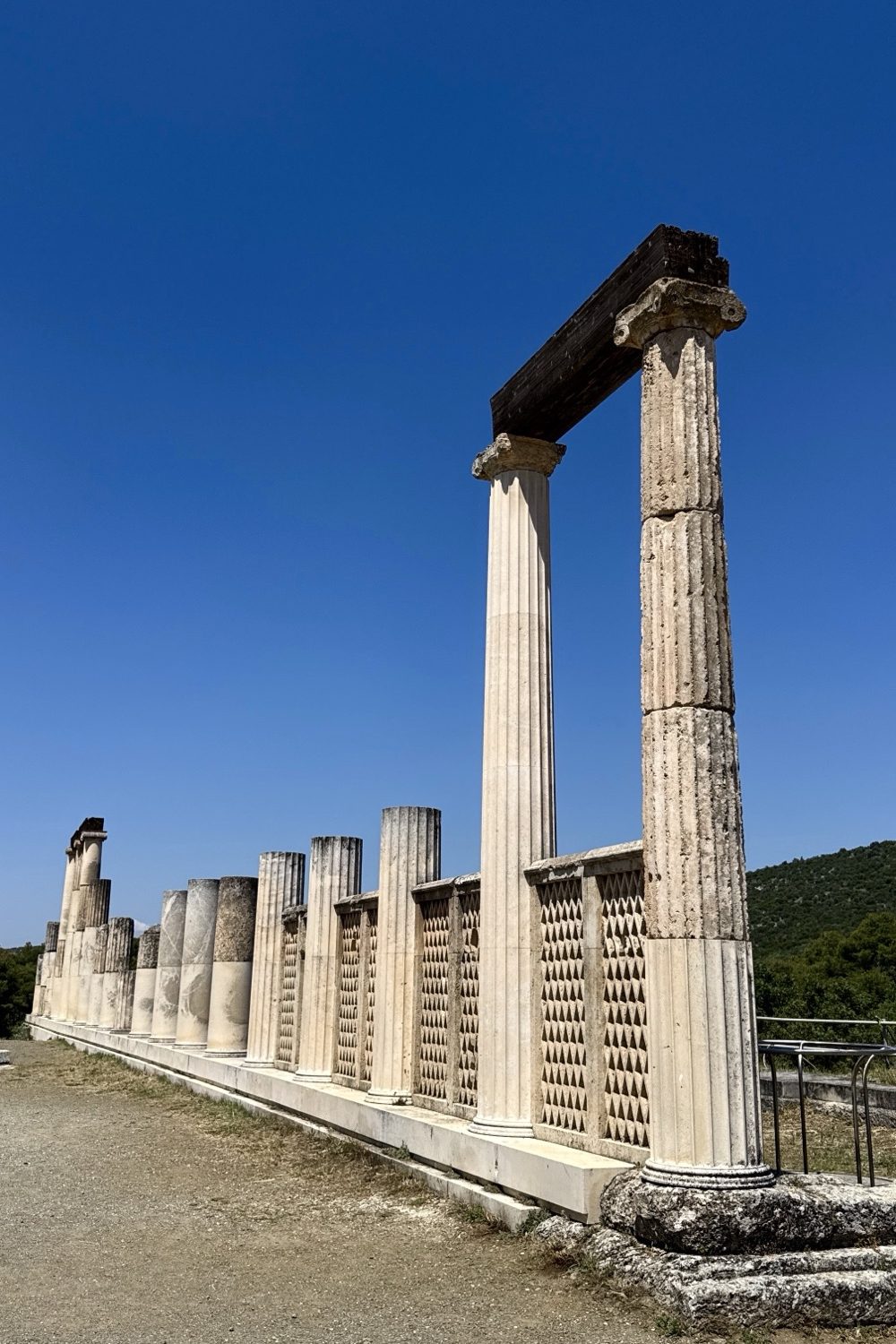
    Continue exploring and you’ll find the remains of the Temple of Artemis, Roman baths, the Katagogion (guesthouses), and the Odeon (a small Roman theatre). While some are just foundation outlines, there are helpful info panels that paint a vivid mental picture.

    Half-Day Done, What’s Next?

    If you’re going by public transport, I highly recommend getting to Nafplio the day before and catching the first bus to Epidaurus at 10:30 AM. You’ll arrive around 11-11:30, explore the main highlights — museum, theatre, sanctuary, Tholos, Abaton — and then either hop back on the 12:30 PM bus or stay longer and catch the 3:00 PM one.

    Epidaurus makes a great half-day trip from Nafplio, especially if you’re piecing together ancient Greece one dusty stone at a time. For the other half? Explore Nafplio — the former capital of modern Greece, bursting with hidden gems and seaside charm, or just lounge on one of its nearby beaches.

    But if you’re me, overly ambitious, mildly chaotic, and finds comfort in ruins cause my life is in ruins, then you’d probably already on the next bus toward Corinth.

    Stay tuned 😉

  • Greece – Mycenae

    The City of Legends


    The Golden Era

    Mycenae, the land where ancient kings ruled, and murder was a family tradition.

    If Knossos was all about labyrinths, bulls, and gods with boundary issues, then Mycenae is where things take a darker, bloodier turn — welcome to the land of tragic royalty, great dynasties, and some of the oldest stone walls you’ll ever lay eyes on.

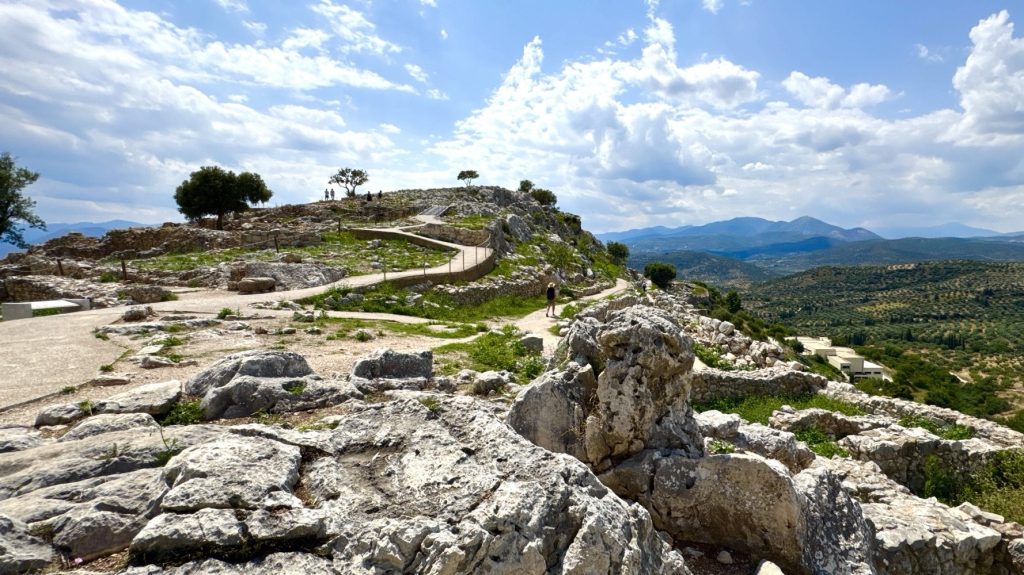
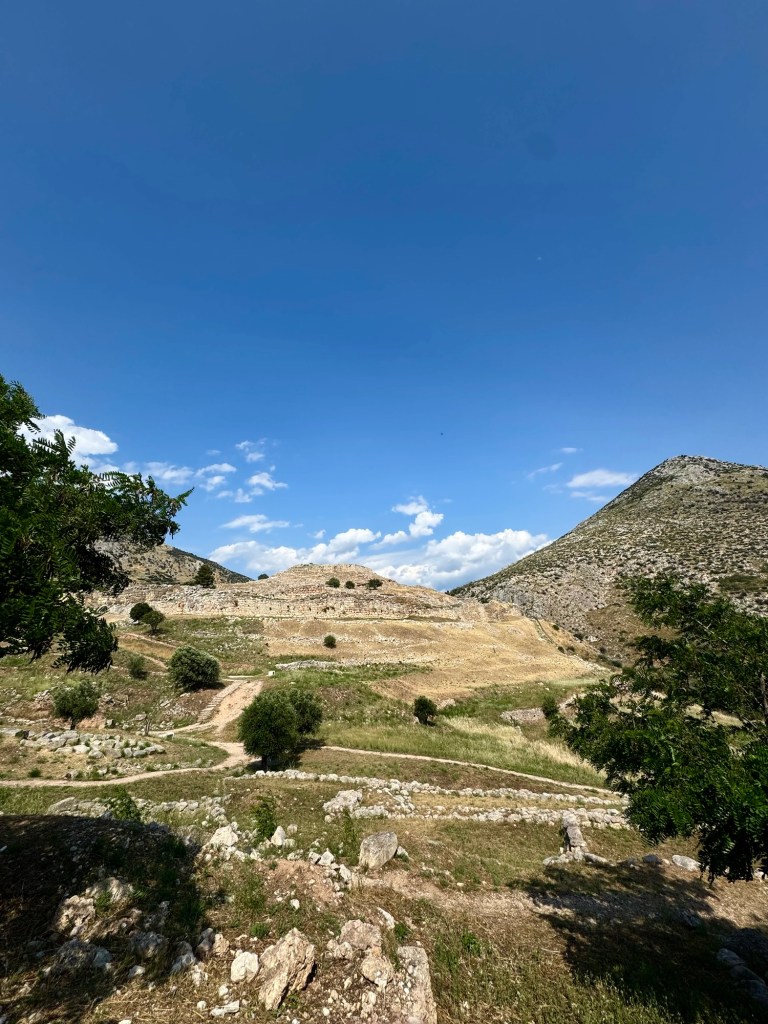
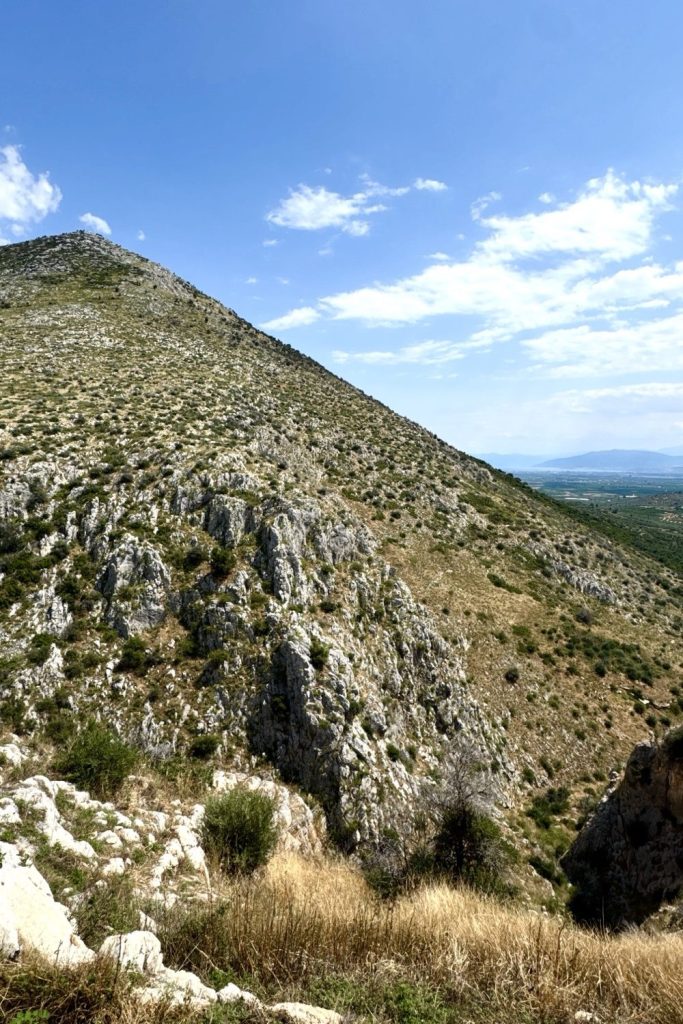
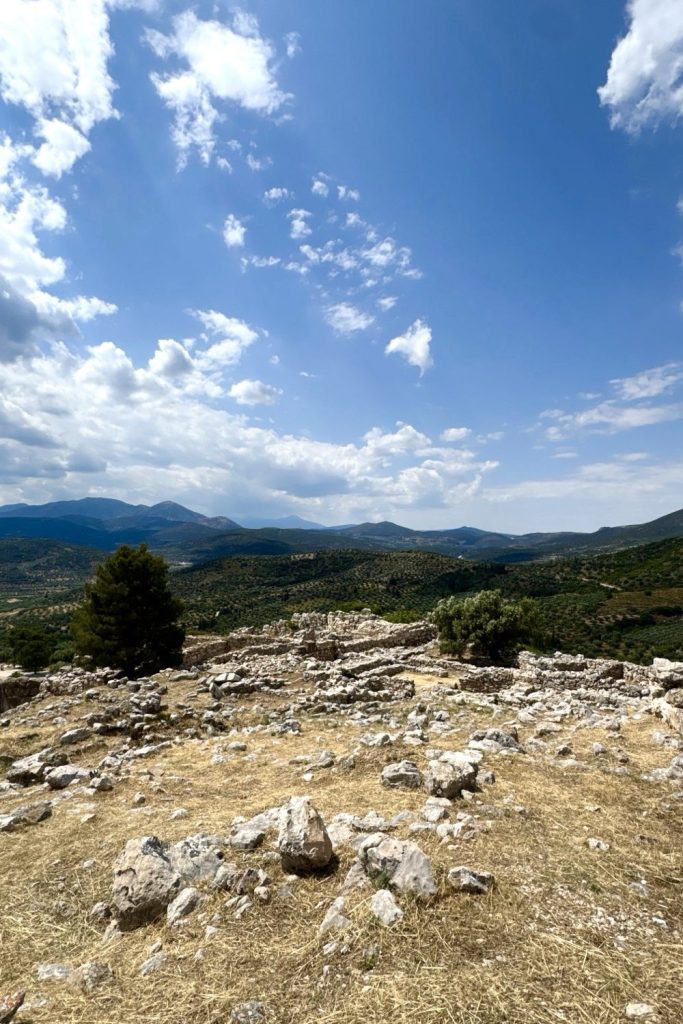
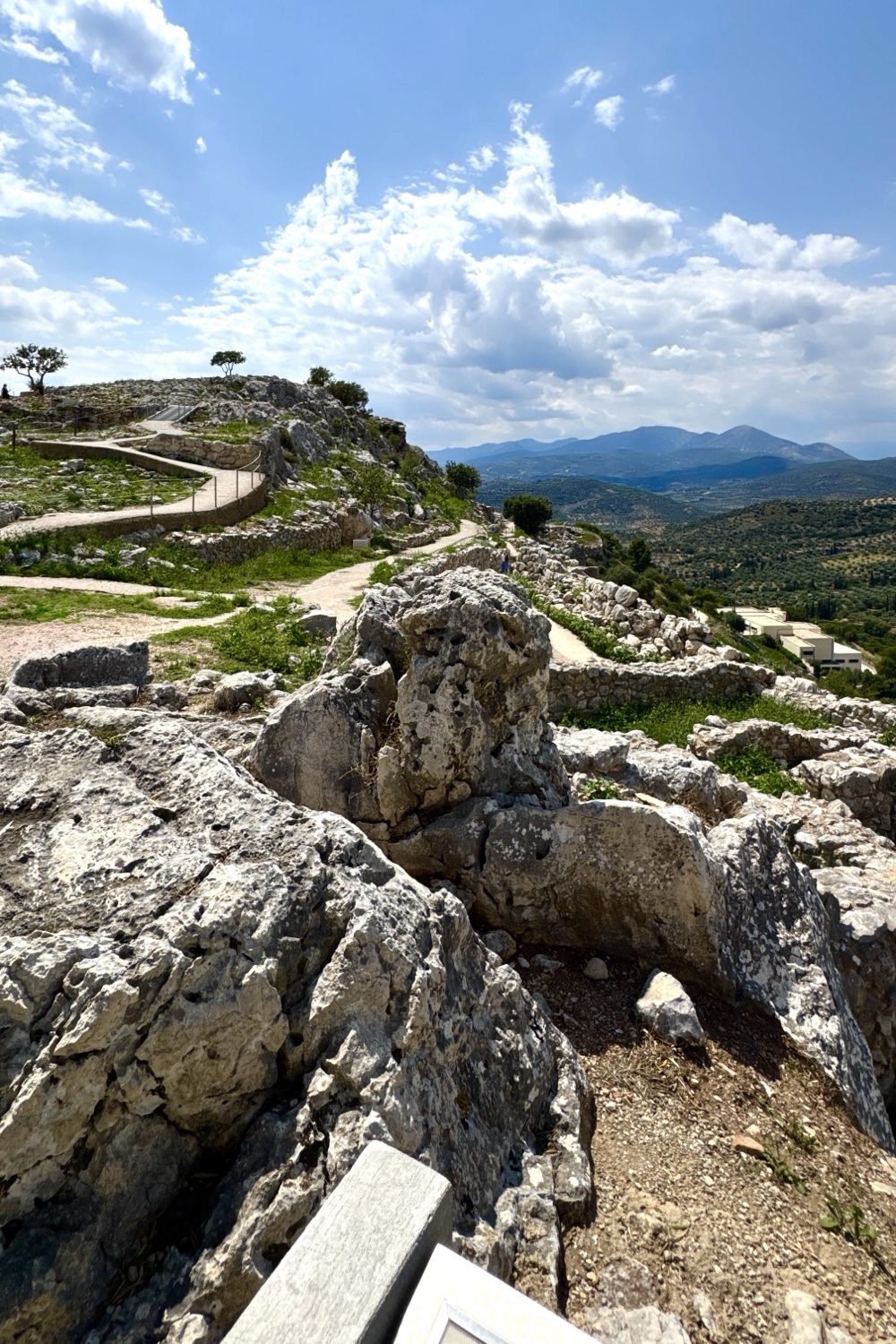
    Tucked away in the northeastern Peloponnese, the archaeological site of Mycenae is perched dramatically on a hill, surrounded by mountains, with epic views that make your legs feel tired just by looking up.

    This is also where epics like The Iliad and The Odyssey kick off, with the Mycenaean King Agamemnon — a man famous for launching a thousand ships… and then getting murdered in his bathtub. Humor and bloodshed. Greek myths in a nutshell.

    The Way There

    Getting here is relatively easy. Ish. Depending on your mode of transport and where you’re coming from.

    If you’re renting or driving a car, congratulations, you’ve got 70% of your transportation logistics sorted. Google Maps will have your back.

    If you’re relying on public transport, I got you.

    Coming from Athens? First, head to the bus terminal at Kifisou (KTEA Kifisou) — just search that in Maps. You can take the X93 bus from the airport or the metro to get there. Once there, look for the corner of the interchange with buses to Nafplio.

    Bus tickets to Nafplio are not bought at the main ticketing area, but if you get lost, head there and one of the nice ladies behind the booth will point you to the right booth number.

    A one-way ticket from Athens to Nafplio is €14.30, but if you tell them you’re getting off at Fichti, it’s a little cheaper. Tickets can be bought online, but with the many KTEL sites (each handling a different part of Greece), it’s honestly easier to buy in person. I’ve had zero issues doing that while gallivanting around the country.

    Still, it helps to check schedules in advance, so here’s a handy link for it.

    There are no direct buses to the Mycenae site itself, so getting off at Fichti, the next town over, is your best bet.

    The ride takes around 2–3 hours, and you’ll be dropped off at a “bus station”, which is actually just a local tobacco shop/mini-mart that moonlights as a transport hub.

    From here, you’ve got two options: walk two hours, or take a cab.

    If you’ve got time to kill and energy to spare, the walk isn’t bad. It’s scenic, the locals are friendly, and while there’s barely any shade, it’s mainly flat — until the final 30–40 minutes. That’s where the incline begins, as the ancients didn’t play around when choosing high ground for military and legitimacy. Safe to say, they never skipped leg day.

    The easy way out? It’s literally across the street of the bus station. There are always two to three cabs parked outside, ready to take you to the site. I opted to brave it on foot, so I can’t say how much it costs, but several drivers honked at me mid-hike offering rides, so you’ll likely find help if you change your mind halfway.

    Treasury or Tomb?

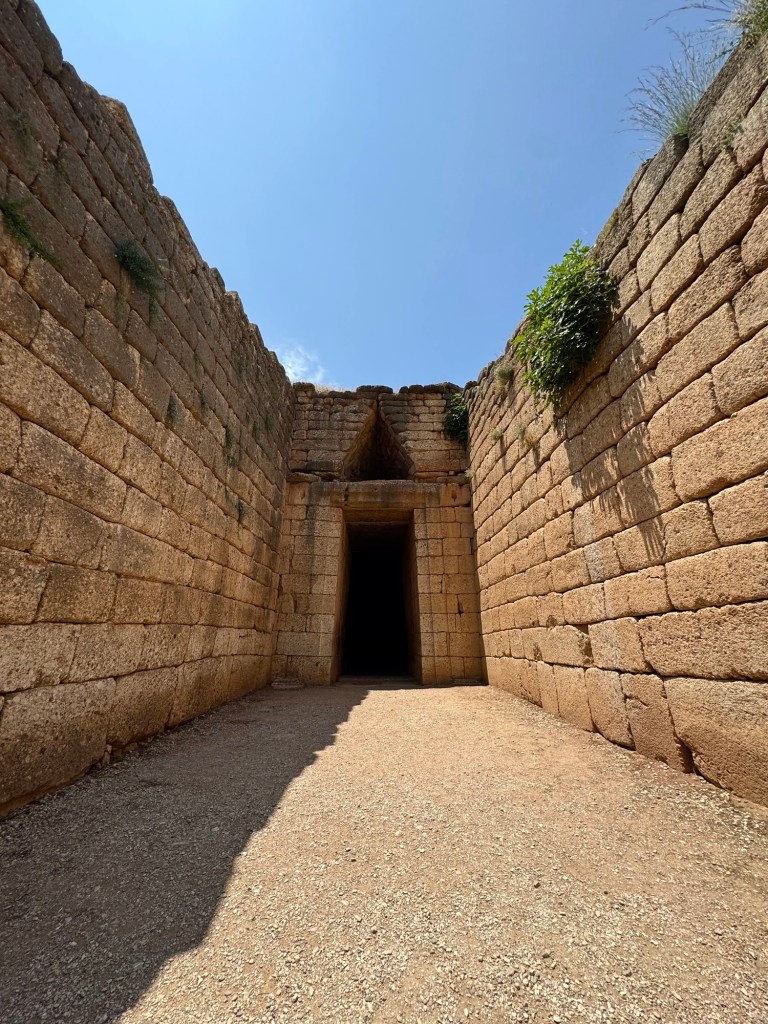
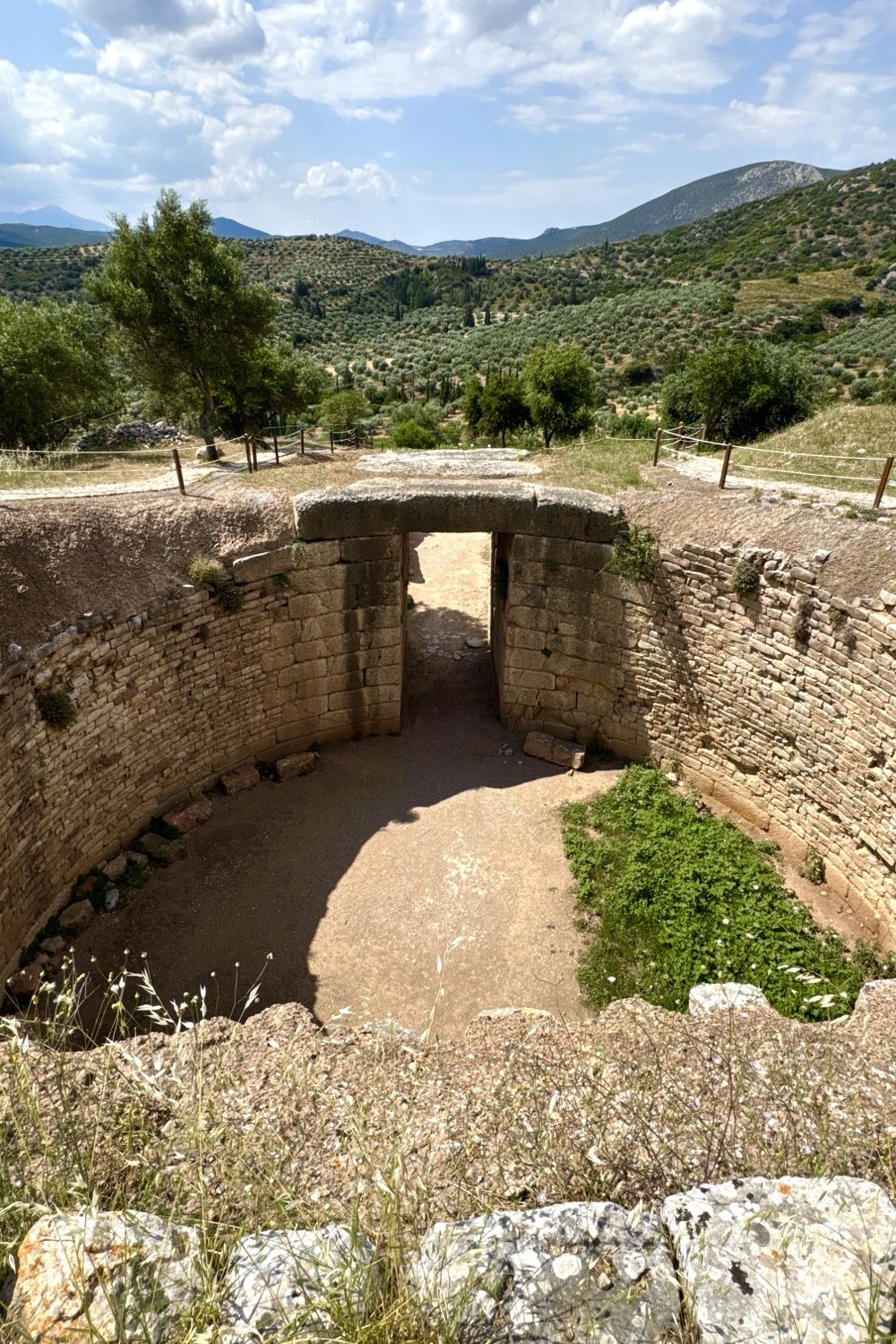
    Before you even hit the main ruins, swing by the Treasury of Atreus — a.k.a. the Tomb of Agamemnon (historians and archeologists are still arguing over that one). It’s included in your entry ticket and located just 10 minutes from the main site.

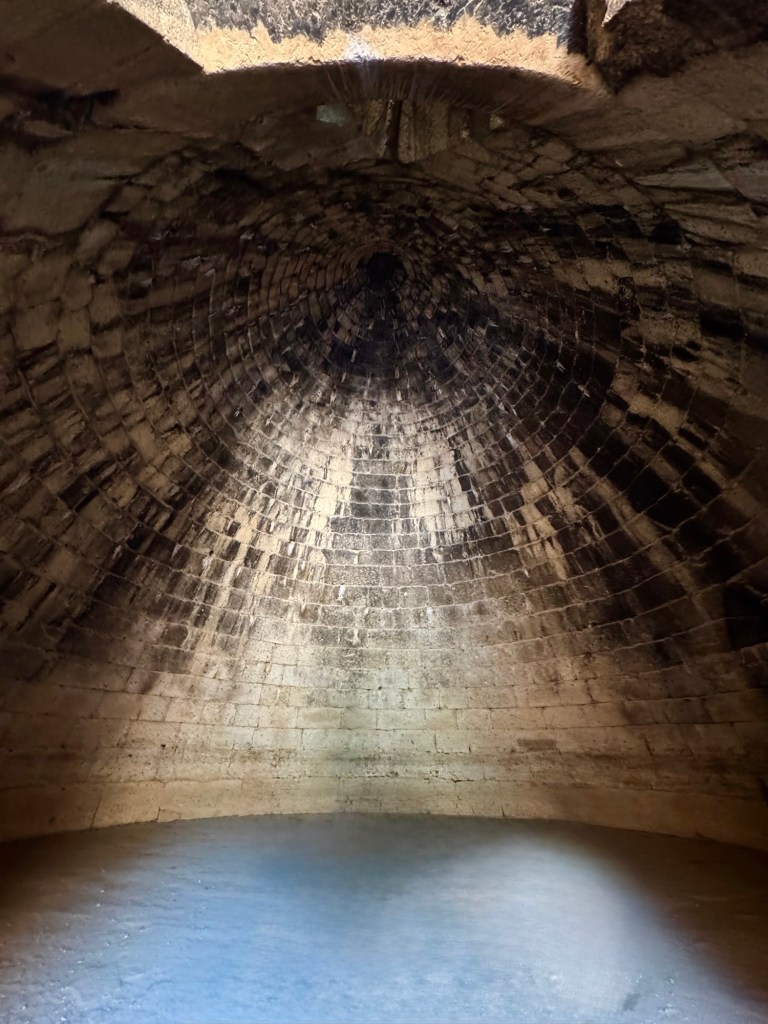
    This massive tholos tomb is one of the best-preserved examples from the Mycenaean civilization. And while there’s no hard evidence it belonged to Agamemnon or Atreus, the grandeur fits the legend. These names, like many things in archaeology, were inherited more from tradition and imagination than proof.

    Still, the engineering is impressive, and its symmetry and scale may have influenced later Greek architecture. Early visitors believed it stored gold — hence “treasury” — likely inspired by Homer’s tales of Agamemnon’s wealth. It’s long since been looted, but its sheer presence is stunning.

    The City of Blood and Stone

    The actual city of Mycenae is a legend both in myth and reality. It was one of the most powerful centers of the Late Bronze Age and gave its name to the entire Mycenaean civilization, which laid the groundwork for classical Greek culture.

    Mycenae dominated mainland Greece and traded far across the eastern Mediterranean, reaching as far as Egypt, Anatolia, and the Levant. Even by Homer’s time, the city was already in ruins, yet its legacy loomed large as the fabled home of King Agamemnon.

    You might remember Agamemnon as the guy who led the Greeks to Troy in The Iliad to avenge the abduction of Helen by Paris. While his role in myth is legendary, his actual existence remains unproven.

    While his existence in myth is significant, his actual existence is not exactly proven yet. Despite German archaeologist, Heinrich Schliemann (the same dude that dug up Troy) , claiming to have found Agamemnon’s tomb at Mycenae and famously unearthed the gold “Mask of Agamemnon” ( on display in the National Archeological Museum of Athens and replica displayed in the Mycenae Archeological Museum), the tomb and mask however predate the supposed time of the Trojan War by about 300 years or so, making the attribution symbolic, not literal.

    But we all love a good story don’t we? So let’s just assume for now that he did indeed exist.

    But back to the actual city, or what’s left of it.

    There isn’t much left of the actual “city,” just fragments and foundations scattered across the hilltop. But the scale of the site helps you visualize just how grand it once was.

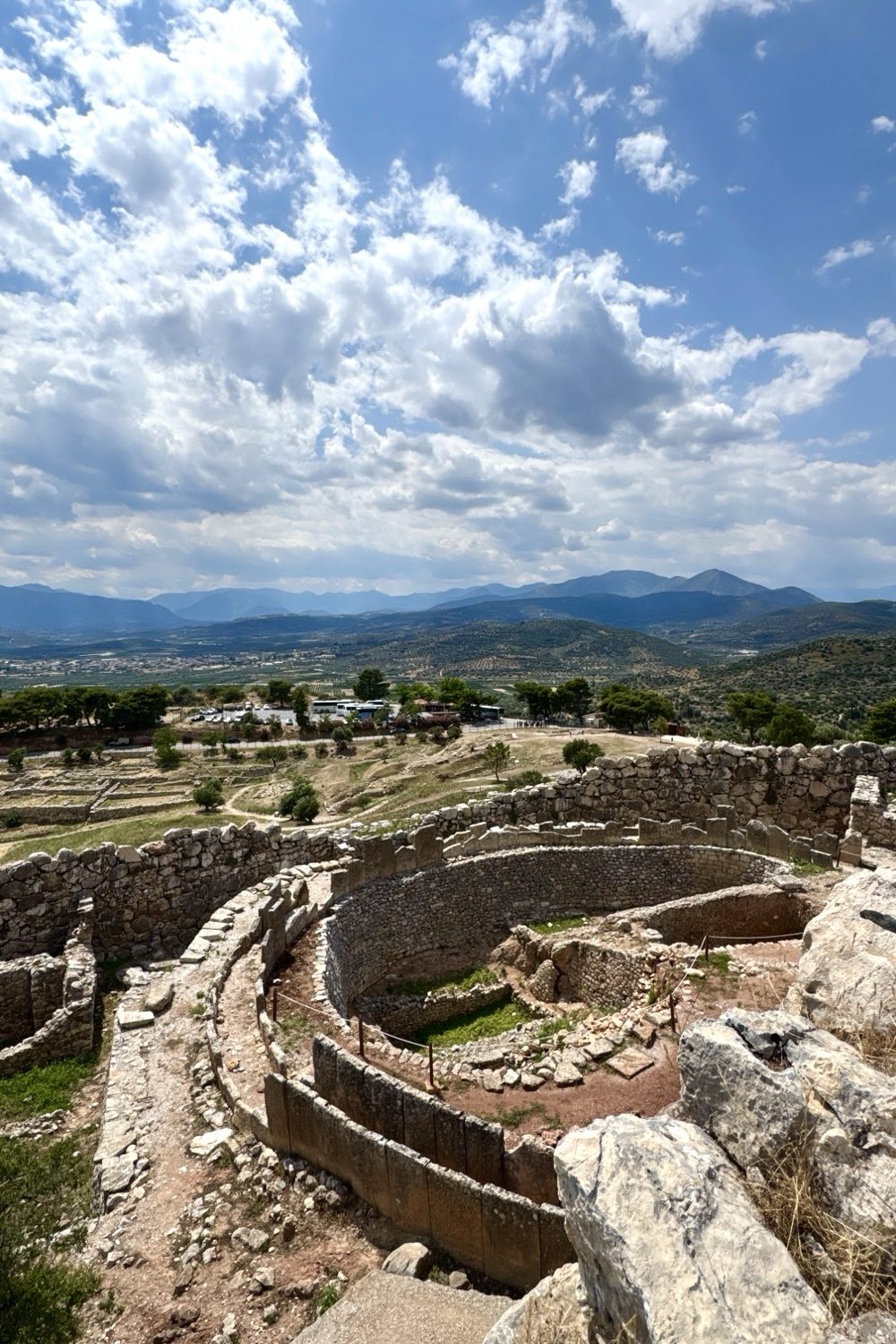
    Your journey begins at the Lion Gate, Mycenae’s iconic entrance. Above it looms the oldest known monumental sculpture in mainland Europe — two lions flanking a column.

    From there, you’re surrounded by Cyclopean walls — enormous stone fortifications so massive the Greeks later believed only giants (Cyclopes) could have built them.

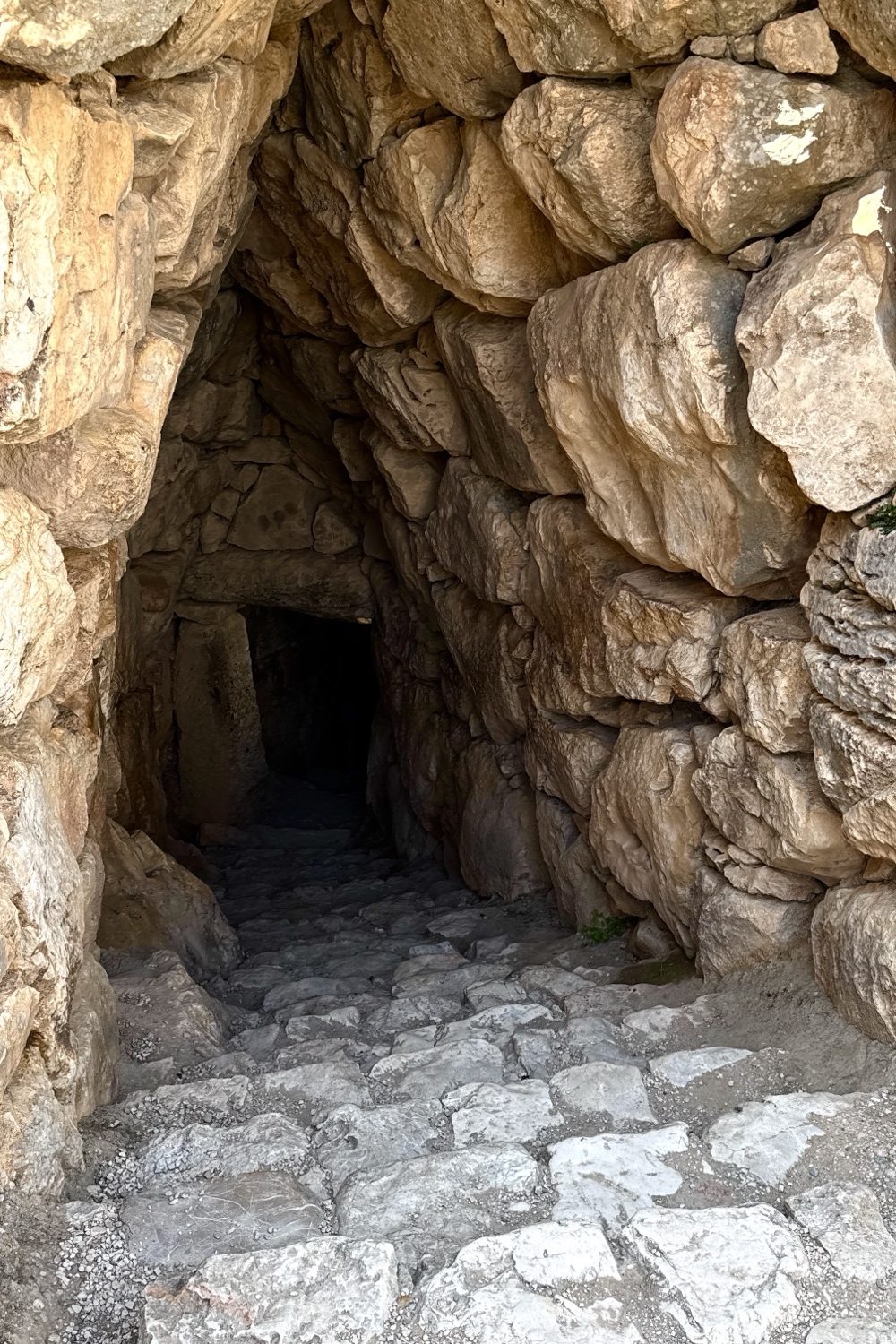
    You’ll wander through ruins of temples, administrative centers, and what remains of the royal palace complex. There’s even a staircase descending into an ancient cistern, partially accessible if you’re feeling adventurous.

    Don’t miss the Tomb of Clytemnestra, another impressive beehive tomb associated with the legendary queen (again, more tradition than confirmed fact).

    Before heading out, stop by the Archaeological Museum near the entrance. It houses excavated finds from across the site and helps piece together the story — mythological and historical — of this ancient powerhouse.

    The Way Back

    Now for us public transport laddies, here’s how you get back.

    If you took a cab to the site, you’ll likely need to call one back — they don’t usually wait around the entrance. There’s a sign with a phone number at the entrance so you can call for a cab, or better yet, grab a business card from your original driver and arrange a pickup time.

    I didn’t do this. I walked back the whole way. My feet are still recovering.

    Once you’re back at the Fichti tobacco shop/bus station, you can purchase a return ticket to Nafplio or Athens from there. Just check the schedule ahead of time — buses come every hour or two. Miss it, and you’ll be waiting around for the next hour or so for the next one, if there is one.

    Also, you must flag the bus down. They don’t stop unless you signal. Don’t be me. I watched mine roll past like a scene from a Greek tragedy and had to wait another 1.5 hours for the next one.

    If you’re not sure when you’re heading back, opt for an open return ticket. It’s a bit more expensive but saves you the hassle of buying another ticket later.

    The buses are generally on time, affordable, and honestly, a pretty reliable way to get around Greece and all its cities.

    From Fichti, you can either continue on to Nafplio, which i did, or head back to Athens. If you’ve got time, you could even squeeze in a detour to Corinth — both the city and the ancient site — on your way back. But that’s a tale for another post and time.

    For now, it was off the Nafplio to reset and seek healing from the abuse i put my feet through, who knows, i might just find it in the lands of ancient Epidaurus where i’m headed next.