Healing and Theatrics
Theatre Isn’t Dead
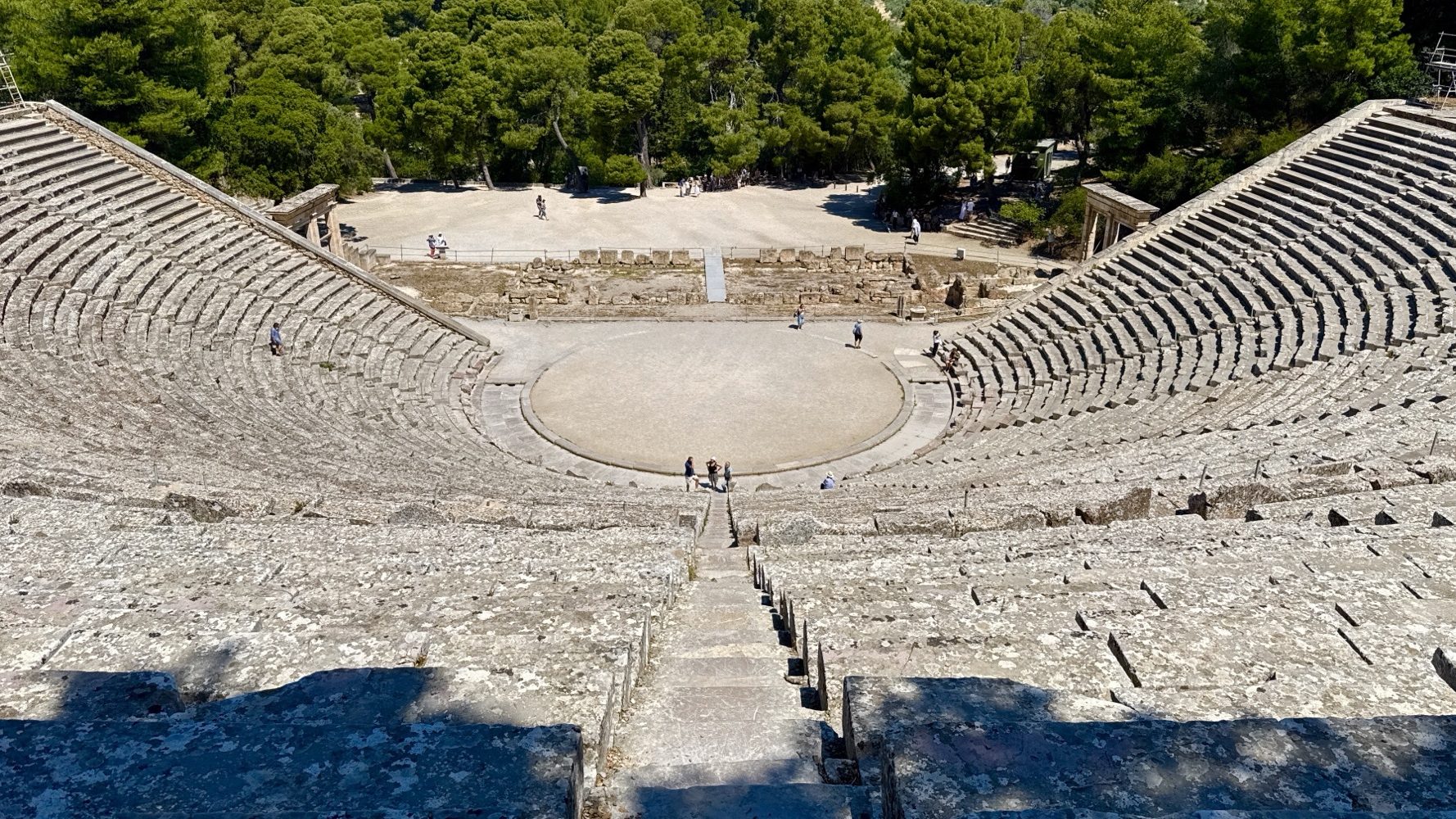
Epidaurus (or Epidavros — this will come in handy in a bit) is one of the most important archaeological sites in Greece, famed not only for its sacred healing sanctuary dedicated to Asclepius, the god of medicine, but also for its magnificent ancient theatre. If there’s a staple in every Greek or Roman ruin, it’s gotta be a theatre. And boi, is this one a stunner — not necessarily because it’s astonishingly well preserved (though it is), but for its near-perfect acoustics.
That’s one of the reasons this particular theatre is still in use today during the annual Epidaurus Festival, which runs through July and August, hosting both modern and classical performances.
Since we’re already on the topic of the Epidaurus Festival, let’s dive right into how to get there.
If you’re visiting during festival season, you’re in luck. Regular buses run from various parts of the country (Athens, Isthmos, Nafplio, Tolo, and Archaea Epidavros) to and from the site.
There’s a full timetable and everything you need to know right here.
The Epidaurus Festival is Greece’s most prominent cultural event, and one of the oldest performing arts festivals in Europe (since 1955). The Athens & Epidaurus Festival hosts world-class theatre, dance, and music performances every year — both in Athens and right here at the Ancient Theatre.
If you have the chance to catch one of these shows during festival season, it comes highly recommended by literally everybody I’ve talked to, locals and guides alike. Here’s a link to the main site.
However, if you’re not visiting during festival season, there are still options. Public transport-wise, you’ve got two main routes: via Nafplio, or Nafplio-Ligourio.
The Way There (and Back)
From Nafplio, buses only go to and from Epidaurus twice a day, so plan carefully. Miss your return ride and you might just be stuck among the ruins. A round trip is €6.40.
Alternatively, you can take a bus from Nafplio to Lygourio, the next town over from the site, and grab a cab the rest of the way — or even spend the night if you want a head start the next morning.
Bus schedules can be found here.
I’ve already covered how to get to Nafplio from Athens in my Mycenae post, so pop over there for the details.
The Original Surround Sound
As you can probably tell by now, Epidaurus is famous for its theatre. But that’s not all it offers.
The Sanctuary of Asclepius at Epidaurus was the most celebrated healing center in the classical world. People came from across the Mediterranean seeking cures, treatments, or divine visions in the Abaton, a sacred sleeping hall where the god would appear in dreams.
Inscriptions found at the site record miracle cures, blind people seeing, the lame walking. How true are these stories? No one really knows. But it’s the blend of myth, faith, and medicine that makes history so deliciously messy and fascinating.
Originally a small, inhabited town, Epidaurus first centered its worship around Apollo Maleatas, before shifting focus to the cult of Asclepius, his son. As the site’s reputation grew, so did its infrastructure: temples, theatres, stadiums, gymnasiums, roads, markets, guesthouses. It basically became a city built around healing.
Today, outside of the theatre, much of the sanctuary is a game of imagination. There’s a lot to see, but most of it lies in quiet ruin.
Entry is €20, which you can purchase online or at the entrance. (If you’re under 18 and non-EU or under 25 and from the EU, you may be entitled to free admission.)

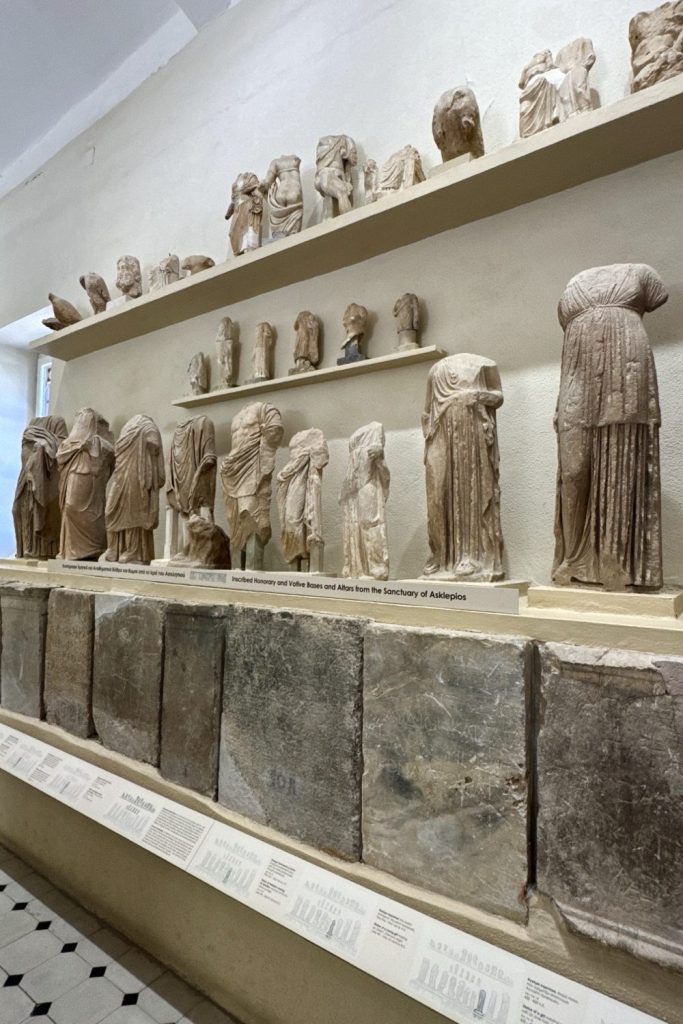
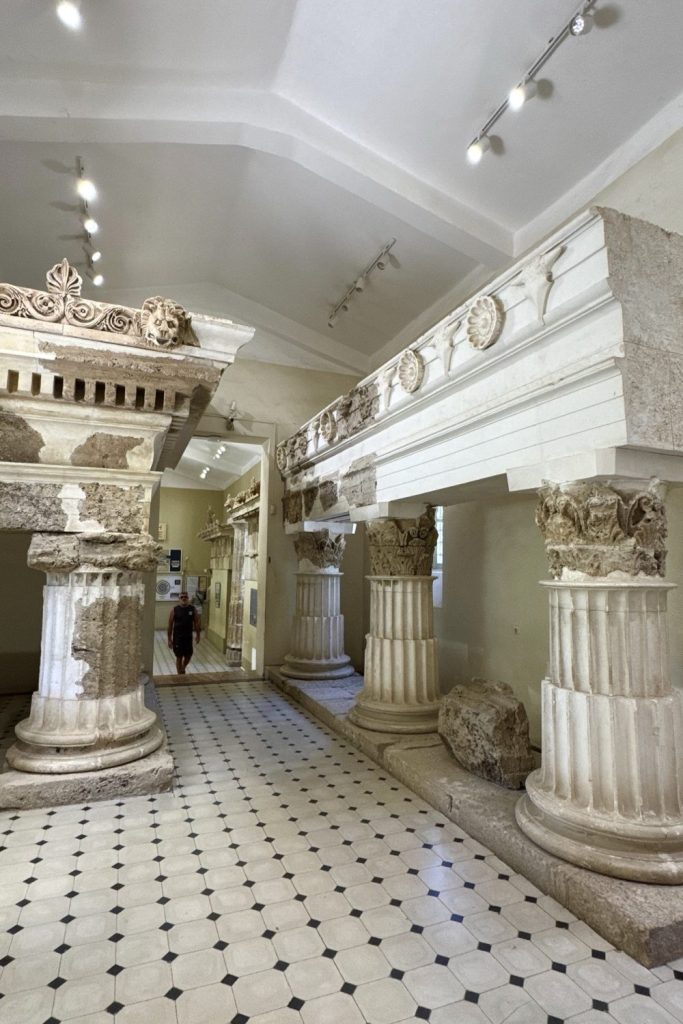
Start at the Archaeological Museum of Epidaurus, located right at the entrance. It’s not flashy, but it’s informative — statues, friezes, and artifacts that give much-needed context before heading into the site.
If you’re there early enough, you might get to test the theatre’s famous acoustics all by yourself. I, however, arrived around 11:30 AM thanks to the earliest bus from Nafplio being at 10:30 AM — right at peak tour group hour.
So there I was, trudging up the stone steps behind a human conga line of folks hollering from center stage. Mildly annoying? Yes. But hey, the acoustics really are as good as they say.


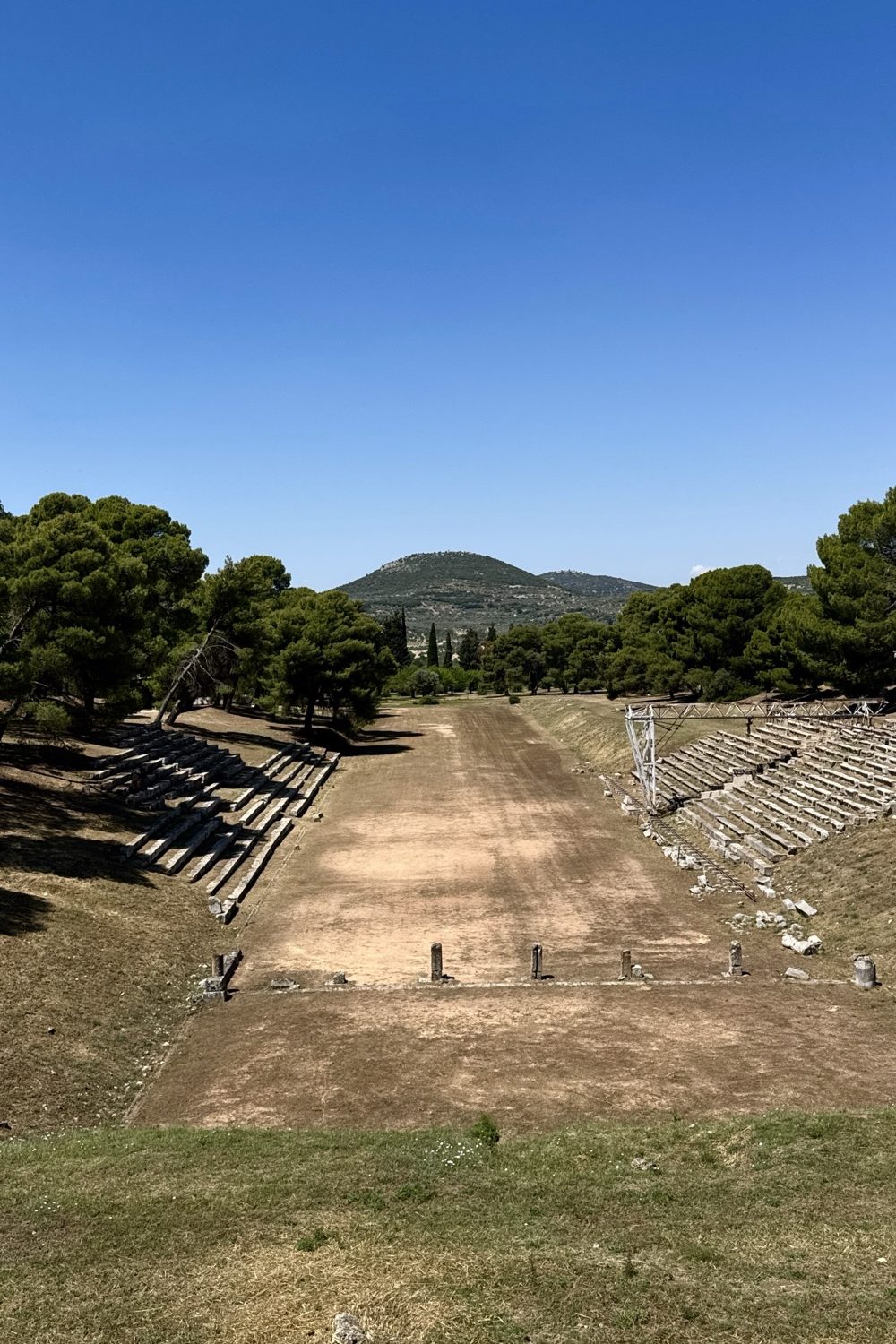
Beyond the theatre, you’ll find a footpath leading to the Stadium, nestled quietly among the trees. You can walk the original track, admire the stone seating, and pretend you’re about to run the ancient equivalent of a 5K.
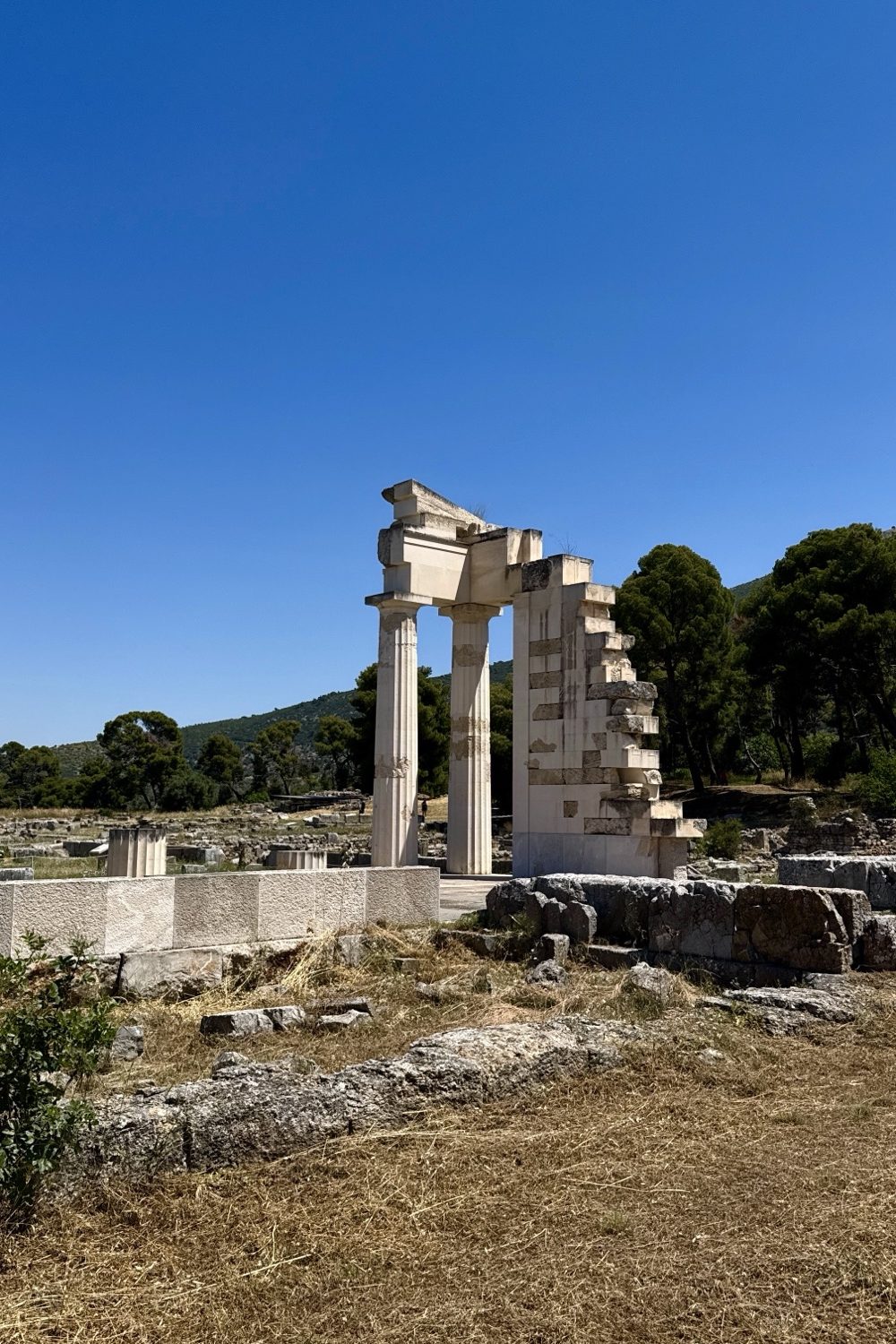

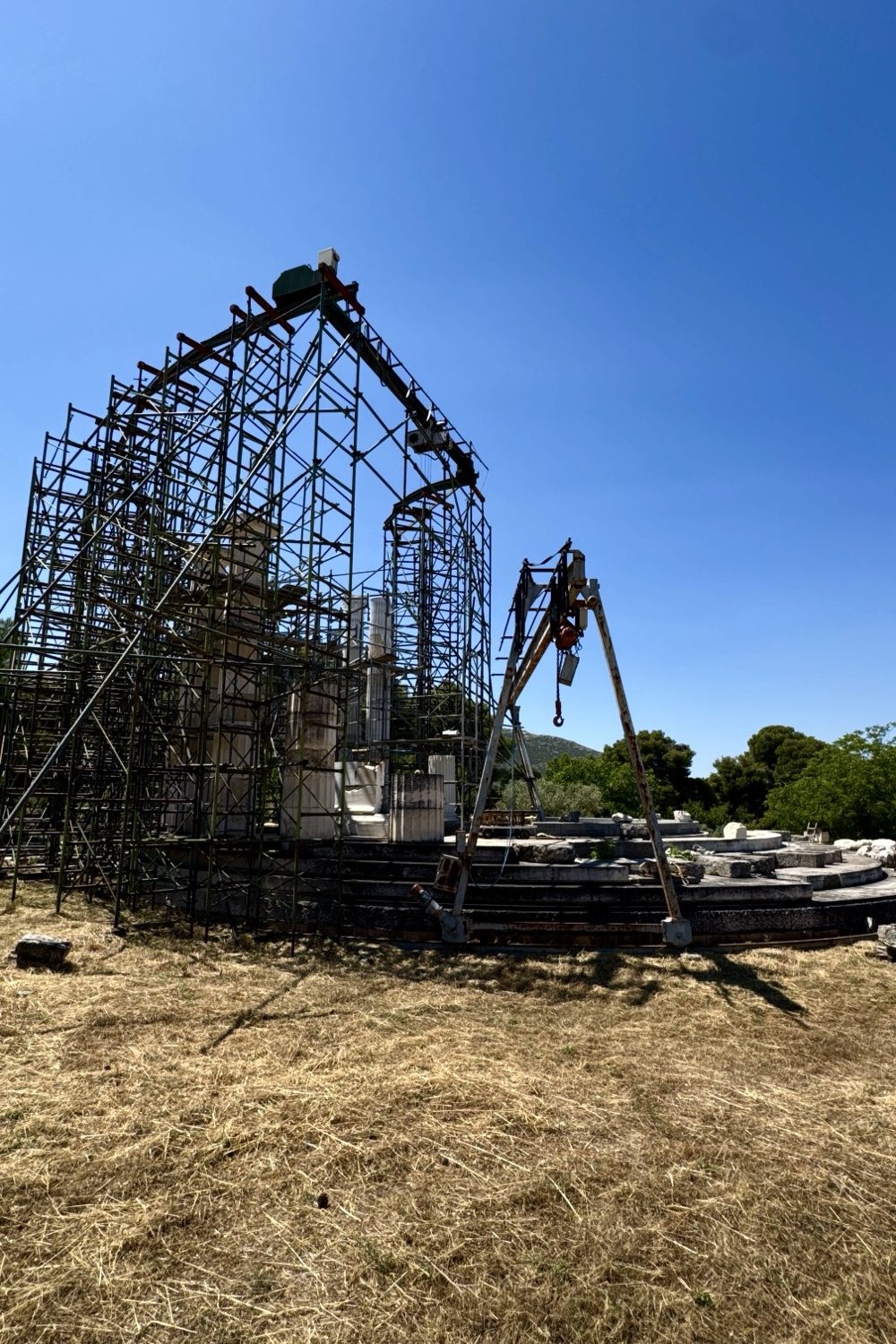
Back on the main trail, you’ll reach the heart of the Sanctuary of Asclepius and the partially restored Tholos (which was undergoing renovations when I visited). From here, you can also see the Abaton, and descend into its cool, shaded corners to read more about the rituals and healing practices that made this place famous.
The site is well-marked with signs and maps — a guide isn’t strictly necessary unless you’re a history buff who wants every juicy detail.
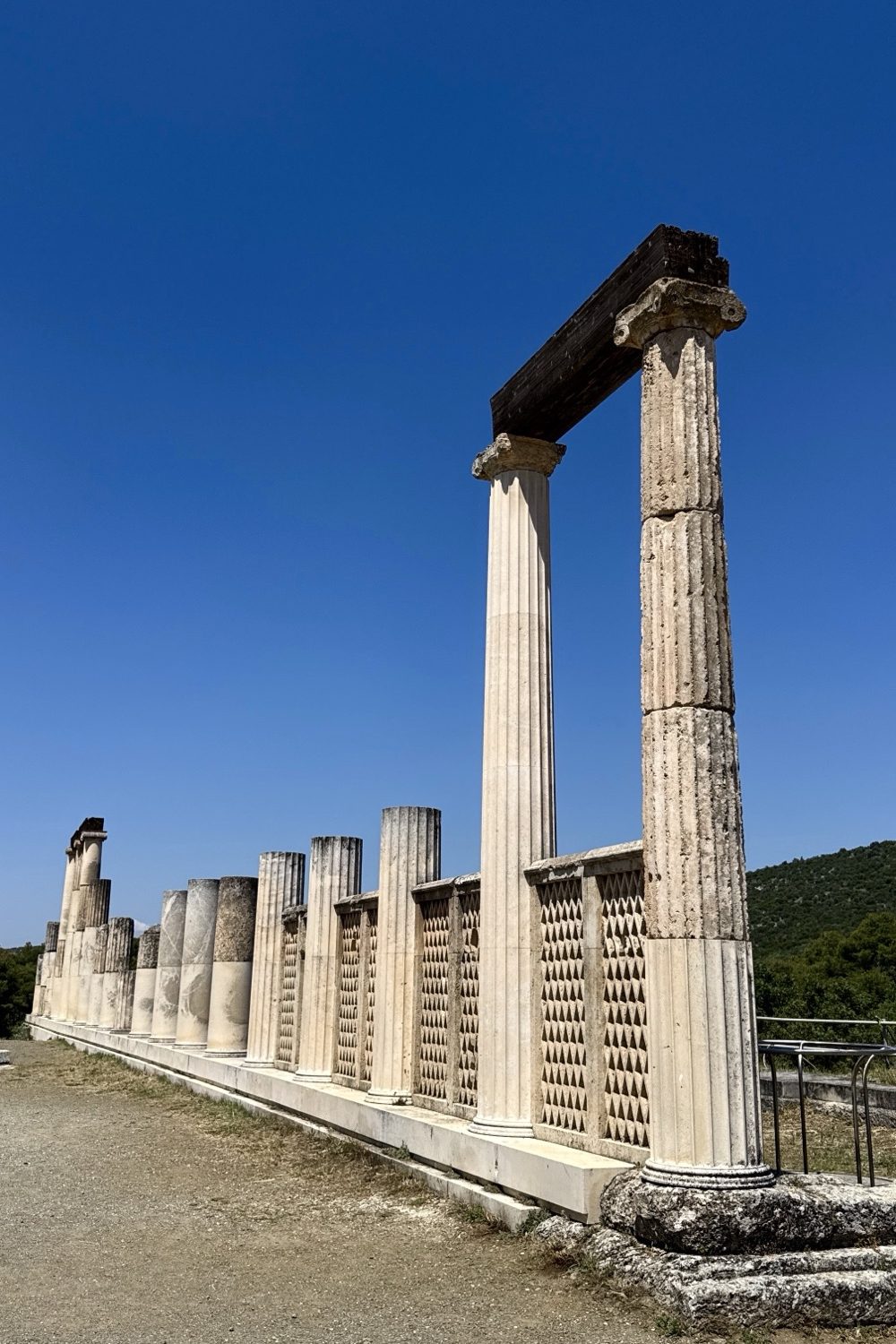

Continue exploring and you’ll find the remains of the Temple of Artemis, Roman baths, the Katagogion (guesthouses), and the Odeon (a small Roman theatre). While some are just foundation outlines, there are helpful info panels that paint a vivid mental picture.
Half-Day Done, What’s Next?
If you’re going by public transport, I highly recommend getting to Nafplio the day before and catching the first bus to Epidaurus at 10:30 AM. You’ll arrive around 11-11:30, explore the main highlights — museum, theatre, sanctuary, Tholos, Abaton — and then either hop back on the 12:30 PM bus or stay longer and catch the 3:00 PM one.
Epidaurus makes a great half-day trip from Nafplio, especially if you’re piecing together ancient Greece one dusty stone at a time. For the other half? Explore Nafplio — the former capital of modern Greece, bursting with hidden gems and seaside charm, or just lounge on one of its nearby beaches.
But if you’re me, overly ambitious, mildly chaotic, and finds comfort in ruins cause my life is in ruins, then you’d probably already on the next bus toward Corinth.
Stay tuned 😉







 Shenanigans Abroad