I’ve done it so you don’t have to.
The Juicy Deets
And just like that, my time in Egypt has come to an end.
It was chaotic. It was mythical. It was sometimes mildly terrifying. It was everything I hoped for, and absolutely nothing I expected.
But before I wrap up this sand-swept saga, I know most of you are probably here for a couple of reasons — either you’re planning your own trip to this golden dustbowl, bored and scrolling, or just morbidly curious to see if all those horror stories floating around Instagram and Reddit are actually true.
And boi did writing this take some time — there’s just so much to unload.
Well, here’s a handy, brutally honest, no-filter Cheat Sheet of everything you may need to know before packing your bags and heading to the land of pharaohs and feluccas.
Getting In
Let’s start with how you actually get in the country.
Always check your country’s entry requirements. Everyone’s different. Some nationalities are exempt from needing a visa and can enter Egypt for up to 90 days visa-free. Most, though, will need a tourist visa, which you can easily get on arrival at Cairo International Airport for a 30-day stay.
It costs $25 USD (or the equivalent in EUR or GBP), and you can buy it at any of the visa counters in the arrival hall. Pro tip: if you see a long line, just wander to another counter. There are several.
Once you get your visa sticker, don’t stick it in your passport. Let the border officer do it for you.
Also, make sure to have a pen handy on your flight — you’ll be given an arrival card to fill out, which you’ll need to hand over with your passport.
Now, speaking of border security… anyone else have a weird experience here?
I did everything right — visa, arrival card, smile ready — and yet the officer stamped my passport, called her supervisor, and told me to wait off to the side. She kept my passport and kept processing other passengers. I wasn’t alone — another guy from the US (of Egyptian descent, mind you) got pulled aside too.
Eventually, with no supervisor in sight, she closed the line, took us both to what I can only describe as the Border Patrol Upper Management corner, and handed our passports over. The guy there took a 1-second glance and just waved us off. That was it. Bizarre.
Even weirder — the same thing happened again when I was leaving Cairo.
If anyone knows what’s up with that, feel free to sound off in the comments, because Google had nothing.
Anyways, moving on.
Let’s Talk Money
Egypt’s official currency is the Egyptian Pound (EGP), but USD, EUR, and GBP are also widely accepted — sometimes even preferred.
Keep cash on you at all times. Tipping isn’t optional in Egypt — it’s oxygen. Whether it’s the toilet paper guardian in a public restroom or the train porter who insists on grabbing your bag, expect to tip for everything.
That said, don’t use coins or $1 bills for tipping. They can’t be exchanged in Egypt, so unless you want to burden someone with literal useless money, stick to crisp $5s or $10s. Fresh, unblemished notes are key.
Alternatively, tip in EGP — just use a currency converter and tip the local equivalent of what you’d give in dollars. It’s the thought that counts, and trust me, a little goes a long way.
Most physical ticket booths now only accept card payments, not cash. That includes big sites like the Valley of the Kings and Giza Plateau. Some sites have self-service kiosks — but don’t count on them. Half the time they’re out of service or offline.
I highly recommend that you just purchase your tickets in person, or via authorised proxies.
On the topic of proxies…
Scam or No Scam?
The answer to this question relies heavily on your common sense. Website looks shady? Nope. Asking for too many details? Nope. A package deal that seems too good to be true? Absolutely nope.
You’ve probably heard me mention GetYourGuide before — and nope, this isn’t sponsored (but hey, if anyone from their PR team is reading, hit me up wink wink). I used them for about 70% of this trip.
Here’s a tip: if you find an activity you like, don’t book it right away. Instead, look up the provider. Most of them have their own websites, and 9 times out of 10, the prices are lower there, with fewer hidden add-ons.
Still, if you do book direct, remember: you’re fully responsible. No customer service backup if things go sideways. Personally, I only booked direct twice — both times for private car hires in Luxor (Uber doesn’t operate there). Otherwise, I stuck with the app for the added protection.
Above all else: read the reviews. Fellow travelers will always spill the tea.
Example: I booked a tour to Saqqara and Memphis on GYG. No mention in the itinerary about stopping at papyrus, perfume, and carpet shops — but lo and behold, we were dropped at every single one. I definitely should’ve read the reviews more carefully.
Other scams to look out for:
Local ‘guides’ – If a “friendly local” offers to show you the way around a site, near popular sites like the Egyptian Museum or the Pyramids, know that you’re being led into a private tour you didn’t ask for — and will 100% be charged for. Book your tours through trusted agencies, your hotel, or online platforms with reviews. Verify that the guide has proper credentials before starting a tour.
The “photo fee” scam – Some guards will let you take photos in restricted areas — and then demand a bribe after. If it says no photos, no photos.
Camel/Horse Ride Scams – At the Pyramids of Giza, camel handlers offer rides at what seems like a bargain price. However, once you’re on the camel, they’ll demand extra money to let you off, turning your cheap ride into a costly ordeal. Always agree on the total price, including the return trip, before mounting the camel. Stick to official tour operators when possible.
Papyrus/Spice Shop/Perfume Shop Scam – You may be invited into a shop by a local, and even sometimes your own guide, who wants to show you the “best” perfumes or spices in Egypt. Once inside, you’ll be pressured into buying products at inflated prices, and some might not be genuine, under the very unbelievable guise of ‘we’re not trying to get you to buy anything’.
Fake Tourist Police – This i actually experienced, and dodged a bullet when my guide swept me away. Someone posing as a tourist police officer may approach you and demand to inspect your passport, belongings, or to check your ticket. After this fake inspection, they may ask for a bribe to return your items, and that’s when you know you just got punked. So always ask to see official identification, and avoid handing over important documents. When in doubt, find an actual police office, better yet, call 126, the official tourist police hotline.
Restaurant Bill Scam – In some tourist-heavy restaurants, especially in areas like Downtown Cairo, the bill might include inflated charges, hidden fees, or additional items that you didn’t order. Review the bill carefully before paying and ask for clarification on any unfamiliar charges. It’s a good idea to ask about taxes or service fees in advance. Typical charges you will see on most bills are a 12% service charge and a 14% VAT charge. An additional tip is technically optional, but most servers will expect you to leave the change.
Taxi Scams – Taxi drivers may refuse to use the meter, claiming it’s broken, or they may charge you in foreign currencies rather than Egyptian pounds, resulting in a much higher fare. Another tactic is to take unnecessarily long routes to increase the fare. Use ride-hailing apps like UBER where prices are transparent and set in advance. If you take a street taxi, ensure the driver uses the meter or agree on a price before starting the ride.
While i understand that this may paint the country and it’s people in a rather bad light, and that there are many Egyptians that are genuinely kind, it’s still wise to be remain cautious. and to always remember, not all of them are doing so out of malicious intentions, they are simply trying to make a living. Well, some of them at least.
Since we’re talking about people.
Hey you, I’m Talking to YOU!
If you go to Egypt, you will get hassled. Vendors will yell, follow you, grab at you, or shove merchandise in your face. I’ve had people physically stop me from getting into my Uber. I’ve been yelled at, insulted by literal children, stalked back to my hotel, and chased down alleys for not buying trinkets.
It comes with the territory.
My advice? Be firm, not confrontational. Say no. Walk away. Don’t feed into the reaction — it’s what they want. If it gets dicey, call 126 — the tourist police hotline. Just mentioning it is often enough to get people to back off.
Sound and Light Show
If you’re considering one of those “Sound and Light” shows at Karnak or the Pyramids — here’s my two cents:
Great concept, awful execution.
If you’ve read my post on the East Bank of Luxor, you’d know that i had mixed feelings about it.
At Karnak, you’re led through the temple like a herd of lost souls, stopping at each section for a projector show that honestly reminded me of those overhead projectors from school. Except now, they’re casting pixelated pharaohs on 3000-year-old walls.
The music is… dated. The narration is… overly dramatic. And the whole thing feels more like a bad Disney ride than a tribute to ancient history.
All and all, it was very underwhelming for $20 USD, and kinda takes away from the whole experience and majesty of the temple itself. In my opinion, they should’ve just lit up the temple like they do at the Luxor Temple, creating an ambience for exploration in a different light rather than making a spectacle of it.
Rather than showcasing the grandeur that is the temple, i felt like that they’ve instead made a glorified spectacle of it. What a shame, since i went back the next day at opening and saw what Karnak really looked like beyond the flashy lights and music.
But hey — if you’ve been to the shows at other sites, drop your thoughts in the comments. Maybe Karnak was just having a bad day?
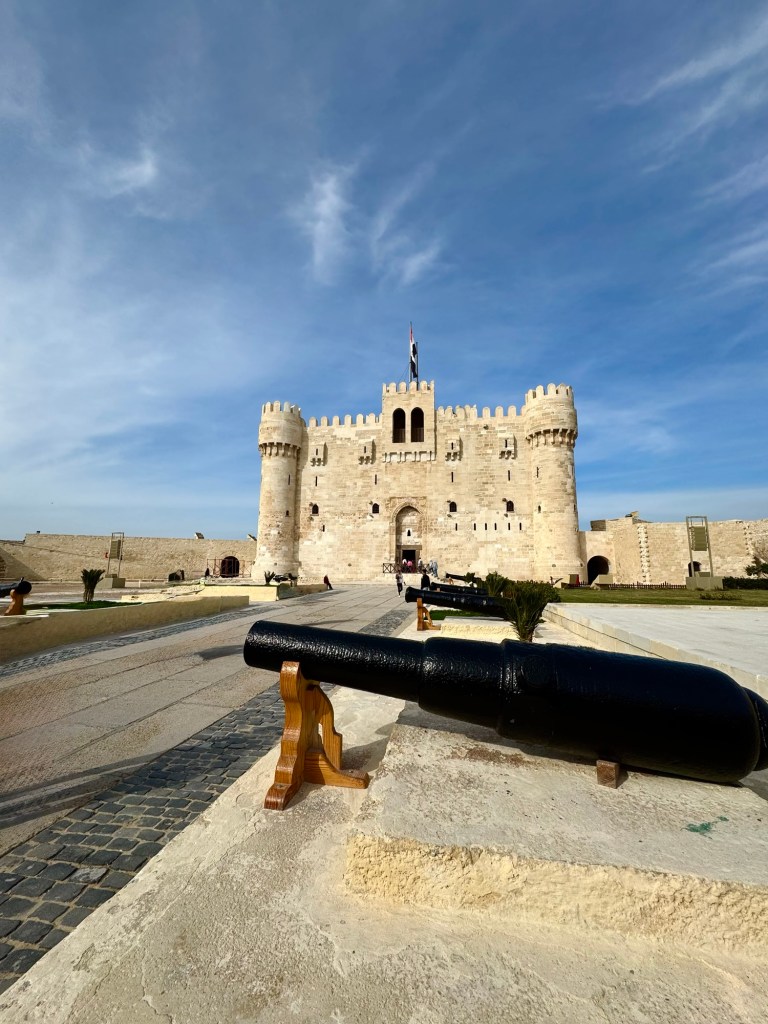
Otherwise the Sound and Light show is great if you wish to fully explore Egypt’s sights for the entire day, or for people who are tight on time. Currently the shows are only offered at the Giza Pyramids, Abu Simbel, Edfu Temple, Qaitbay Citadel, Philae Temple and Karnak Temple, and you can book your tickets via this website.
Cairo and Luxor Pass
Before stepping foot into the sun-scorched temples of Egypt, you’re going to be hit with one of life’s great travel questions: Should I get the Cairo or Luxor Pass? Or both? Or neither? Or sell a kidney and just pay full price at the gates?
Don’t worry. I did the research and the emotional math for you, so you don’t have to.
Let’s break it down:
The Cairo Pass
• Costs $100 USD
• Valid for 5 days
• Gets you into: Giza Pyramids, Egyptian Museum, Citadel, Coptic Cairo, Islamic Cairo, and other museums/archaeological sites within Greater Cairo.
Is it worth it? Honestly, not really — unless you plan to cram in a lot of sites over five days or want to revisit the Giza Plateau or Egyptian Museum multiple times (which the pass allows). Most travelers will hit the major sites once, and individually priced tickets for those tend to total far less than $100.
Also note: The Cairo Pass does NOT include the Grand Egyptian Museum, which, when it’s fully operational, will be one of the biggest draws. For that reason alone, the value of this pass is kind of hit-or-miss depending on your travel style and what’s open at the time of your visit.
The Luxor Pass
• Comes in two flavors:
• Standard: $100 USD (excludes Seti I & Nefertari)
• Premium: $200 USD (includes everything)
• Valid for 5 days
• Gets you into: Valley of the Kings (standard tombs, plus Tutankhamun and Ramesses V & VI with Premium) Valley of the Queens, Mortuary Temple of Hatshepsut, Medinet Habu, Ramesseum, Deir el-Medina (Valley of the Artisans), Tombs of the Nobles, Temple of Seti I, Howard Carter House, Karnak Temple, Luxor Temple, Luxor Museum, Mummification Museum
Is it worth it?
If you’re planning to hit both East and West Bank sites over 2+ days, and especially if you want to enter multiple tombs, this one can absolutely pay for itself. Individually, entrance fees can rack up fast — especially if you’re planning to visit both Tutankhamun’s tomb and Seti I, which are some of the most expensive tickets on the list.
Let’s break down some math:
As of January 2025, visiting most of the sites I listed — excluding Seti I — would cost around 4,950 EGP (~$97 USD). If you’re including Seti I (currently 2,000 EGP), the total goes up to 6,950 EGP (~$137 USD).
So the Premium Pass at $200 only makes sense if you’re hitting absolutely everything, including the high-value tombs. If not, the Standard Pass may cover most of your needs while still saving a bit of cash and time.
If you do choose to buy the passes though, and you’re really feeling up to do a full 100% achievements unlocked walkthrough of Cairo and Luxor. Here’s what you have to do.
You need: your passport, a copy of your passport, a passport-sized photo to be placed on the permit, and cash in USD/EUR (fresh notes of course).
You can purchase these passes from ticket counters at these archaeological sites and museums: The Egyptian Museum in Tahrir , Giza- Great Pyramids, Salah al-Din al-Ayyubi Citadel, Qaitbay Citadel in Alexandria, Karnak Temple, Valley of the Kings.
As i personally didn’t buy the passes, all these information were found online either via the official Egyptian Ministry of Tourism and Antiquities site, or information found online, and may or may not be slightly dated, official sites are not the best at updated information.
And as far as i can tell, to some who have bought these passes, there were a few i saw at the ticket counters encountering problems with the staff not recognizing these passes. I guess it’s still a new-ish concept.
These passes are non-transferable, non-refundable, and time-limited, so plan wisely if you buy them.
Here and There
Transportation around Egypt differ from city to city.
Uber is available in Alexandria, Cairo, and Giza, which makes getting around incredibly easy and straightforward. Public transport like buses and trains is also available, while the trains are reliable and get the job done, they’re often about the same price as an Uber. As for public buses… let’s just say, getting on one made me feel like I was being tossed around on the back of a jeep in the deserts of Wadi Rum all over again. If you value your sanity, just take the Uber.
Surprisingly, Uber doesn’t operate in Luxor or Aswan, and as far as I could tell, the local minibuses were the only form of public transport. That said, the literal armada of taxis at your disposal makes getting from place to place fairly easy—if you’ve got your negotiation pants on.
In Luxor, aside from Karnak and Luxor Temples and the museums, most other sites are located across the river on the West Bank. If you can drive, great—that solves most of your problems, assuming you’re brave enough to face the infamous Egyptian traffic.
If not, you’ve got a few options: tour buses, taxis, or hiring a private driver for the day. While a driver can get pricey, if you’re planning to visit both banks of Luxor, or Abu Simbel from Aswan without joining a group tour, it’s a viable option that gives you flexibility and control over your schedule.
There are also overnight trains running between Cairo, Luxor, and Aswan, and frequent daytime trains between Cairo and Alexandria.
Getting train tickets is straightforward—but not from a kiosk. If you’re buying tickets from Ramses Station in Cairo, head to the second floor on the left side of the building, where the tourist ticketing office is located. Fares are different for tourists, and if you’re caught with a local ticket, you’re gonna get fined. Don’t risk it.
Getting to smaller or in-between destinations like Saqqara, Memphis, Dendera, or Abydos can be a little trickier. The easiest way is to join a day tour—plenty of local vendors offer trips from the nearest big city. Otherwise, your only real alternative is hiring a private driver, or finding a cab willing to drive you into another city, for the right price that is.
One of the most popular options I’ve come across is the Nile Cruise Tour. It’s a great choice for anyone wanting to visit both major cities and smaller historical sites, since many of Egypt’s ancient landmarks are naturally clustered along the Nile—for both symbolic and geographical reasons.
These cruises function a bit like a hop-on, hop-off bus tour, but on water. They typically include accommodation, meals, and often a guide, making them a convenient all-in-one package. So if you’re not in the mood to plan every detail of your itinerary, book one of these and just sit back and enjoy. You’ll get to live out your fantasy as the passenger prince or princess of your own royal Nile procession.
Final Thoughts
So we’ve come to the end of this post, sharing my do’s and don’t so you do and don’ts. I’m fairly sure there might be something i’ve missed, but most of the important stuff’s here.
Egypt will push your patience, test your endurance, and melt your face off by 9AM. But it will also blow your mind and socks off. Again. And again. And again.
You’ll stand in temples older than language, crawl into the tombs of literal gods, sip tea while watching the Nile glide by like it has for millennia. And you’ll leave knowing that even if some sites didn’t quite live up to their mythical reputation (looking at you, Alexandria), the experience as a whole is unforgettable, for reason’s both good and bad.
If there’s anything i missed, or something you’re curious about, feel free to drop a comment below, i’d love to help you on your adventures and questions!
So here’s to Egypt: land of sun, sand, scams, and persistent vendors.



















 Shenanigans Abroad