Tag: travel

  • Greece – Epidaurus

    Healing and Theatrics


    Theatre Isn’t Dead

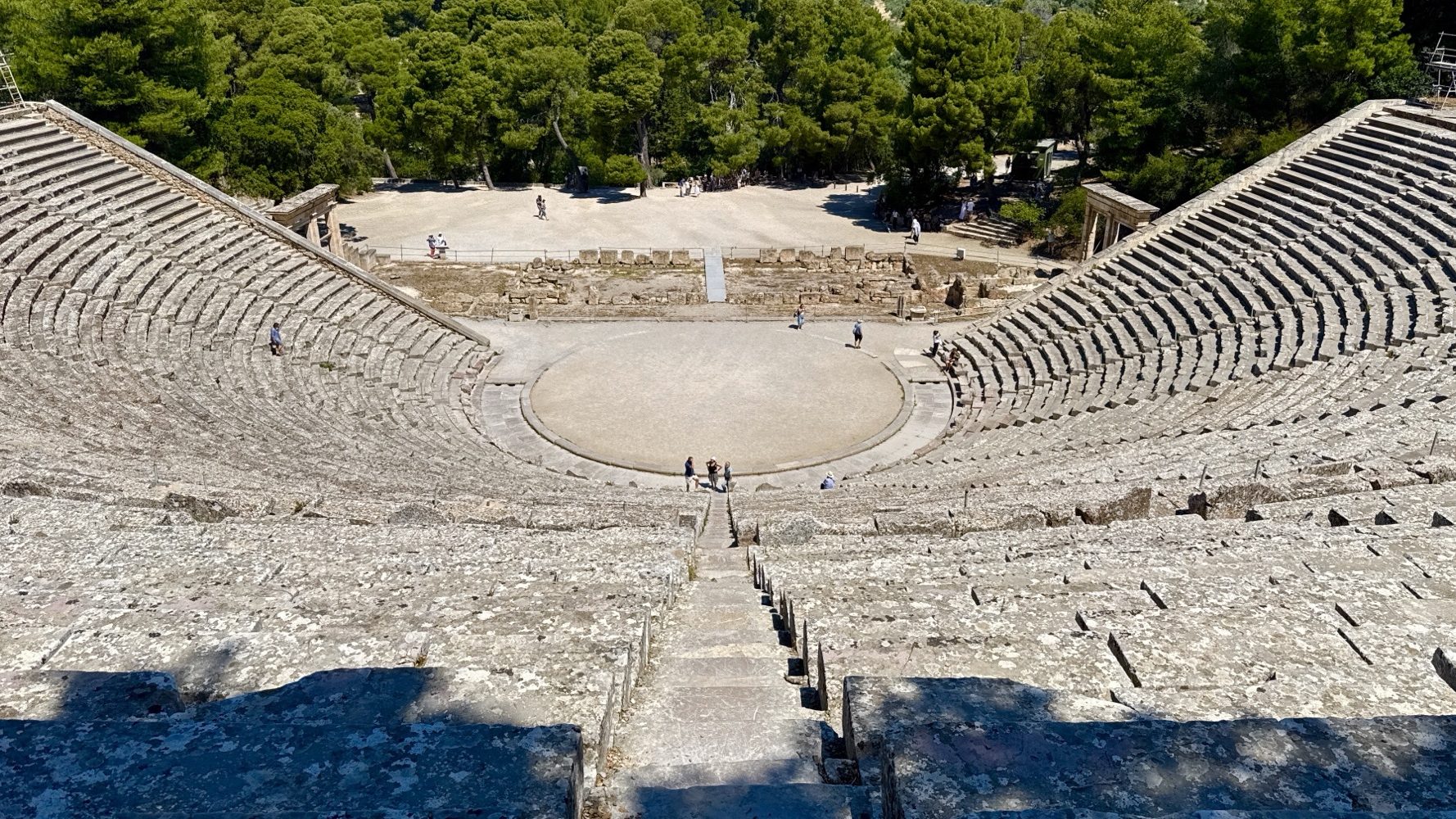
    Epidaurus (or Epidavros — this will come in handy in a bit) is one of the most important archaeological sites in Greece, famed not only for its sacred healing sanctuary dedicated to Asclepius, the god of medicine, but also for its magnificent ancient theatre. If there’s a staple in every Greek or Roman ruin, it’s gotta be a theatre. And boi, is this one a stunner — not necessarily because it’s astonishingly well preserved (though it is), but for its near-perfect acoustics.

    That’s one of the reasons this particular theatre is still in use today during the annual Epidaurus Festival, which runs through July and August, hosting both modern and classical performances.

    Since we’re already on the topic of the Epidaurus Festival, let’s dive right into how to get there.

    If you’re visiting during festival season, you’re in luck. Regular buses run from various parts of the country (Athens, Isthmos, Nafplio, Tolo, and Archaea Epidavros) to and from the site.

    There’s a full timetable and everything you need to know right here.

    The Epidaurus Festival is Greece’s most prominent cultural event, and one of the oldest performing arts festivals in Europe (since 1955). The Athens & Epidaurus Festival hosts world-class theatre, dance, and music performances every year — both in Athens and right here at the Ancient Theatre.

    If you have the chance to catch one of these shows during festival season, it comes highly recommended by literally everybody I’ve talked to, locals and guides alike. Here’s a link to the main site.

    However, if you’re not visiting during festival season, there are still options. Public transport-wise, you’ve got two main routes: via Nafplio, or Nafplio-Ligourio.

    The Way There (and Back)

    From Nafplio, buses only go to and from Epidaurus twice a day, so plan carefully. Miss your return ride and you might just be stuck among the ruins. A round trip is €6.40.

    Alternatively, you can take a bus from Nafplio to Lygourio, the next town over from the site, and grab a cab the rest of the way — or even spend the night if you want a head start the next morning.

    Bus schedules can be found here.

    I’ve already covered how to get to Nafplio from Athens in my Mycenae post, so pop over there for the details.

    The Original Surround Sound

    As you can probably tell by now, Epidaurus is famous for its theatre. But that’s not all it offers.
    The Sanctuary of Asclepius at Epidaurus was the most celebrated healing center in the classical world. People came from across the Mediterranean seeking cures, treatments, or divine visions in the Abaton, a sacred sleeping hall where the god would appear in dreams.

    Inscriptions found at the site record miracle cures, blind people seeing, the lame walking. How true are these stories? No one really knows. But it’s the blend of myth, faith, and medicine that makes history so deliciously messy and fascinating.

    Originally a small, inhabited town, Epidaurus first centered its worship around Apollo Maleatas, before shifting focus to the cult of Asclepius, his son. As the site’s reputation grew, so did its infrastructure: temples, theatres, stadiums, gymnasiums, roads, markets, guesthouses. It basically became a city built around healing.

    Today, outside of the theatre, much of the sanctuary is a game of imagination. There’s a lot to see, but most of it lies in quiet ruin.

    Entry is €20, which you can purchase online or at the entrance. (If you’re under 18 and non-EU or under 25 and from the EU, you may be entitled to free admission.)

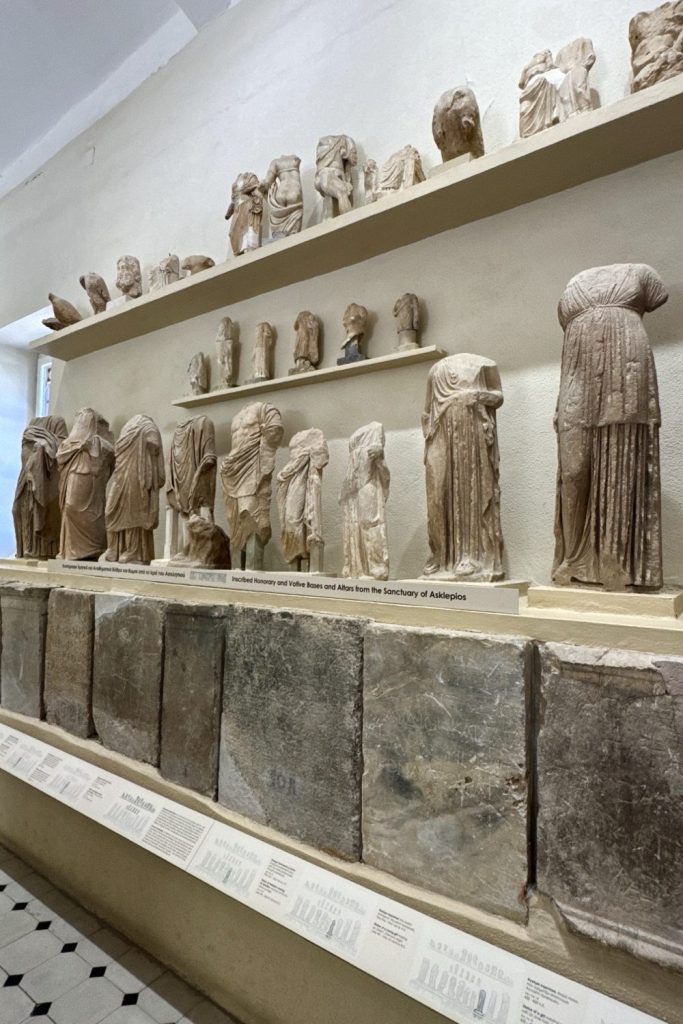
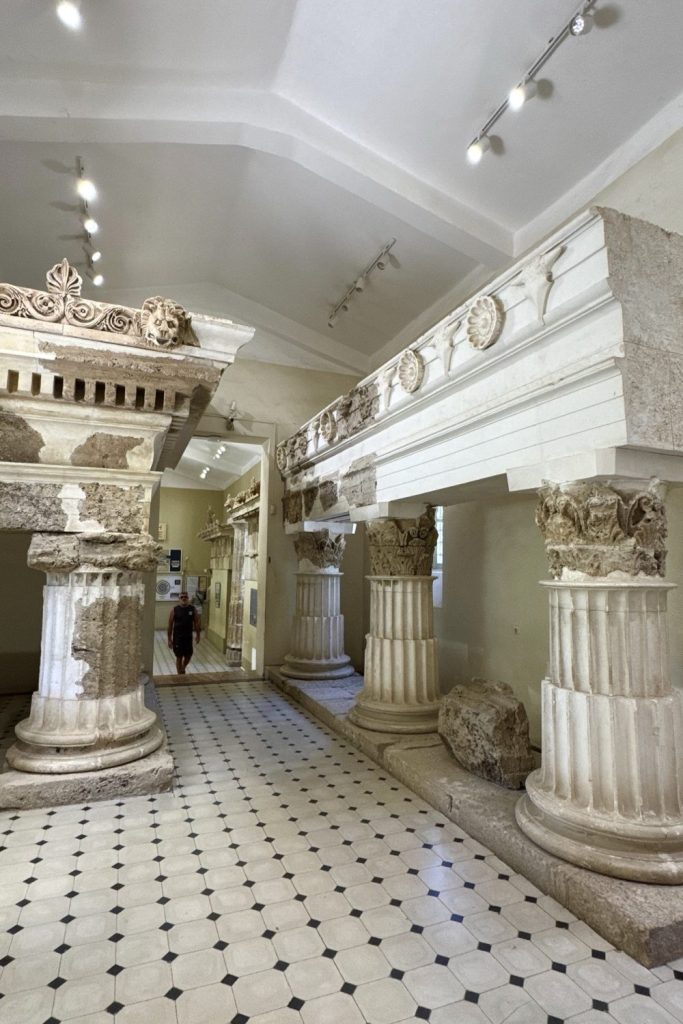
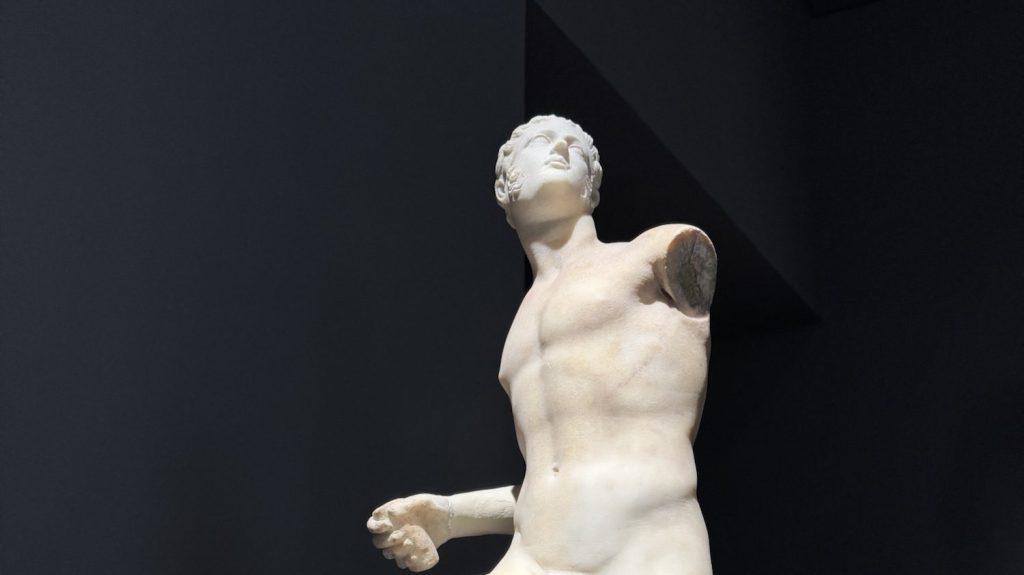
    Start at the Archaeological Museum of Epidaurus, located right at the entrance. It’s not flashy, but it’s informative — statues, friezes, and artifacts that give much-needed context before heading into the site.

    If you’re there early enough, you might get to test the theatre’s famous acoustics all by yourself. I, however, arrived around 11:30 AM thanks to the earliest bus from Nafplio being at 10:30 AM — right at peak tour group hour.

    So there I was, trudging up the stone steps behind a human conga line of folks hollering from center stage. Mildly annoying? Yes. But hey, the acoustics really are as good as they say.

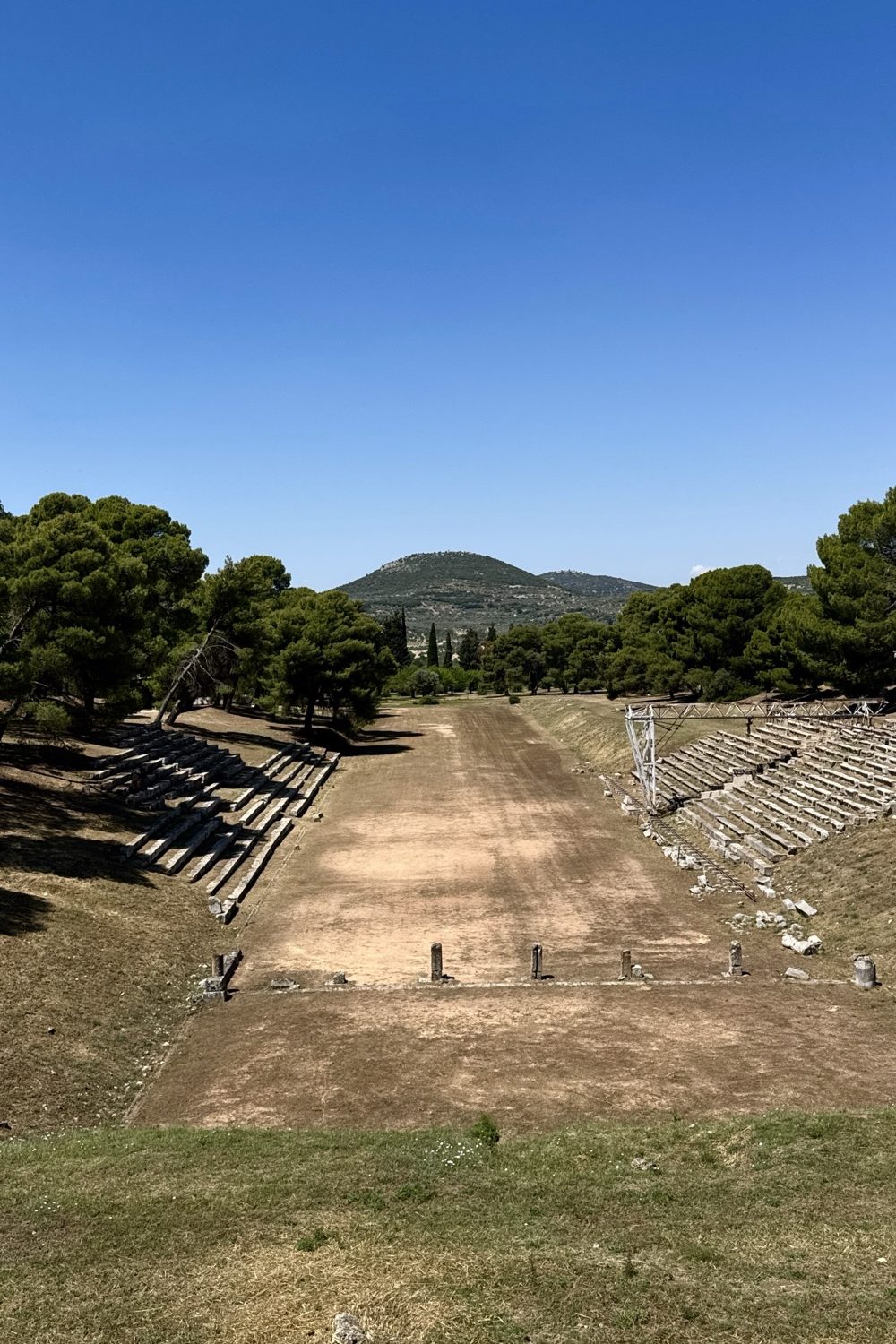
    Beyond the theatre, you’ll find a footpath leading to the Stadium, nestled quietly among the trees. You can walk the original track, admire the stone seating, and pretend you’re about to run the ancient equivalent of a 5K.

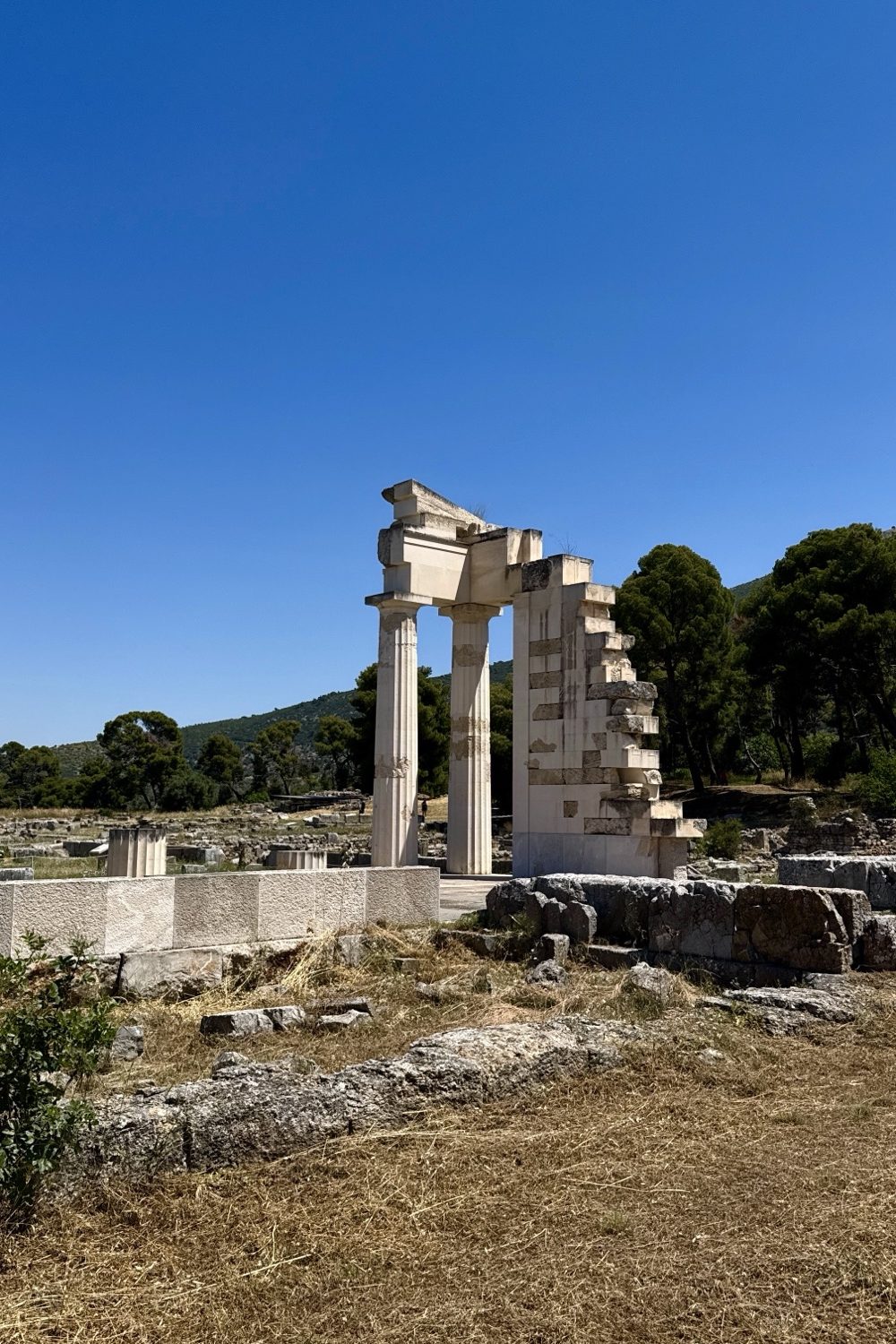
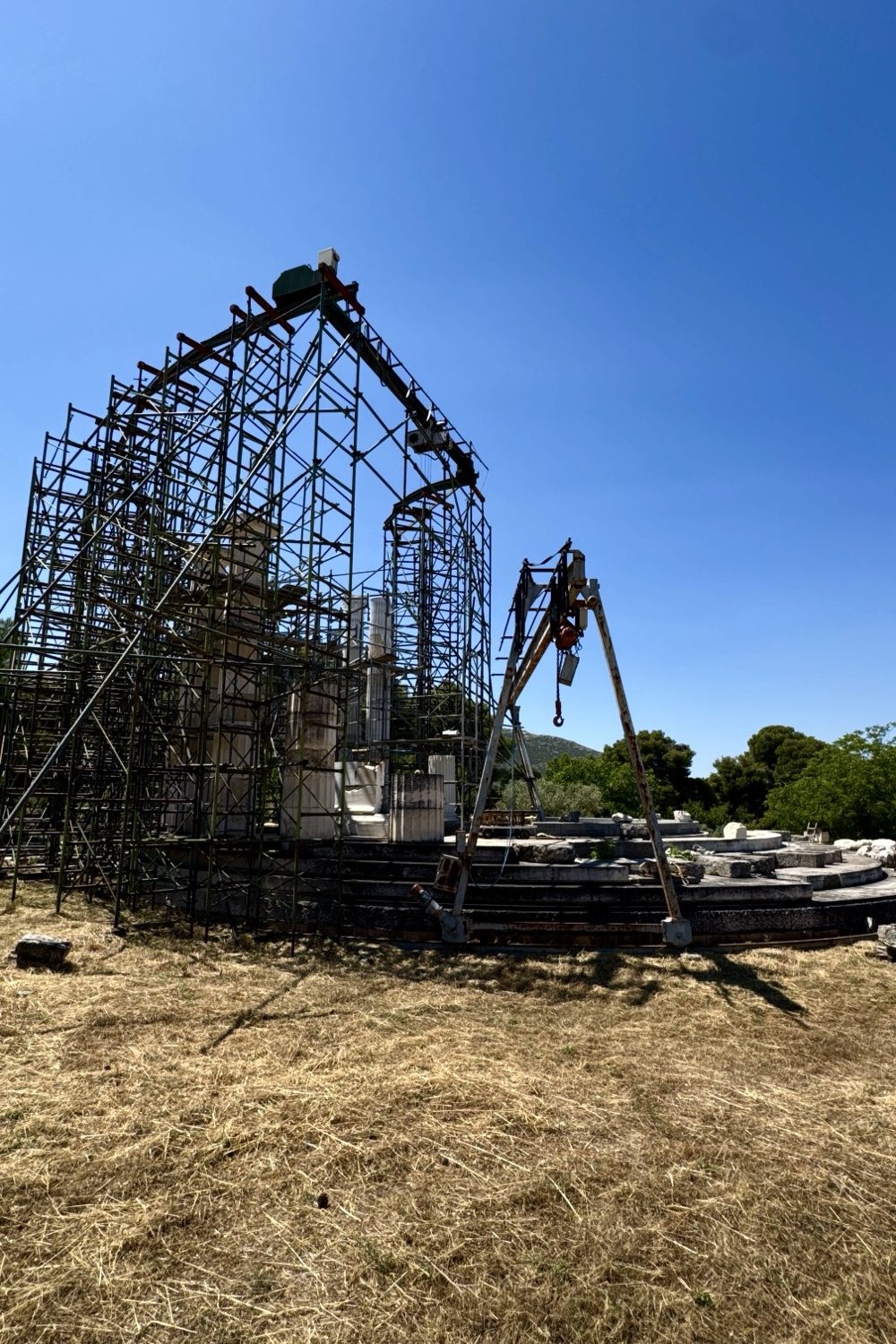
    Back on the main trail, you’ll reach the heart of the Sanctuary of Asclepius and the partially restored Tholos (which was undergoing renovations when I visited). From here, you can also see the Abaton, and descend into its cool, shaded corners to read more about the rituals and healing practices that made this place famous.

    The site is well-marked with signs and maps — a guide isn’t strictly necessary unless you’re a history buff who wants every juicy detail.

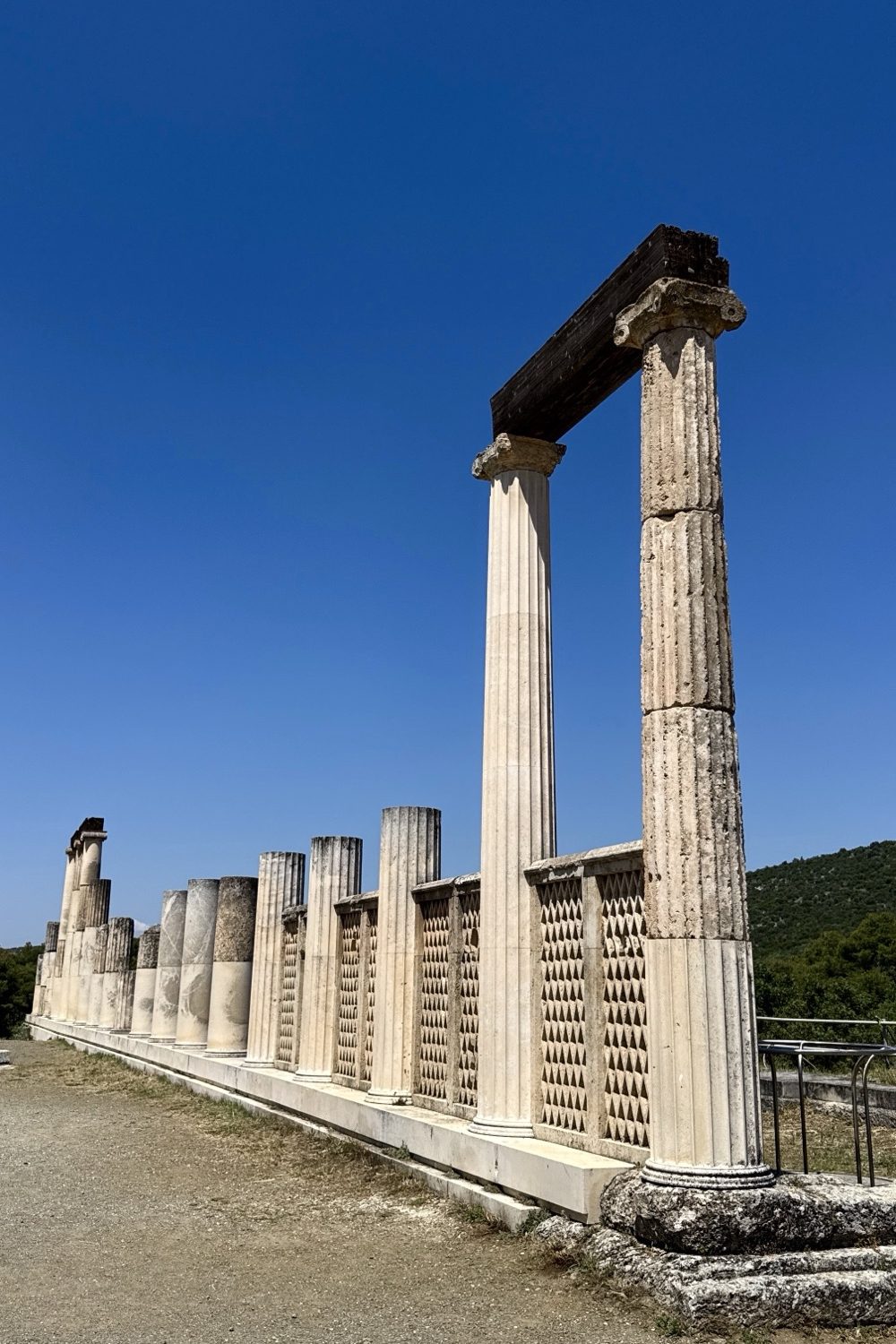
    Continue exploring and you’ll find the remains of the Temple of Artemis, Roman baths, the Katagogion (guesthouses), and the Odeon (a small Roman theatre). While some are just foundation outlines, there are helpful info panels that paint a vivid mental picture.

    Half-Day Done, What’s Next?

    If you’re going by public transport, I highly recommend getting to Nafplio the day before and catching the first bus to Epidaurus at 10:30 AM. You’ll arrive around 11-11:30, explore the main highlights — museum, theatre, sanctuary, Tholos, Abaton — and then either hop back on the 12:30 PM bus or stay longer and catch the 3:00 PM one.

    Epidaurus makes a great half-day trip from Nafplio, especially if you’re piecing together ancient Greece one dusty stone at a time. For the other half? Explore Nafplio — the former capital of modern Greece, bursting with hidden gems and seaside charm, or just lounge on one of its nearby beaches.

    But if you’re me, overly ambitious, mildly chaotic, and finds comfort in ruins cause my life is in ruins, then you’d probably already on the next bus toward Corinth.

    Stay tuned 😉

  • Greece – Mycenae

    The City of Legends


    The Golden Era

    Mycenae, the land where ancient kings ruled, and murder was a family tradition.

    If Knossos was all about labyrinths, bulls, and gods with boundary issues, then Mycenae is where things take a darker, bloodier turn — welcome to the land of tragic royalty, great dynasties, and some of the oldest stone walls you’ll ever lay eyes on.

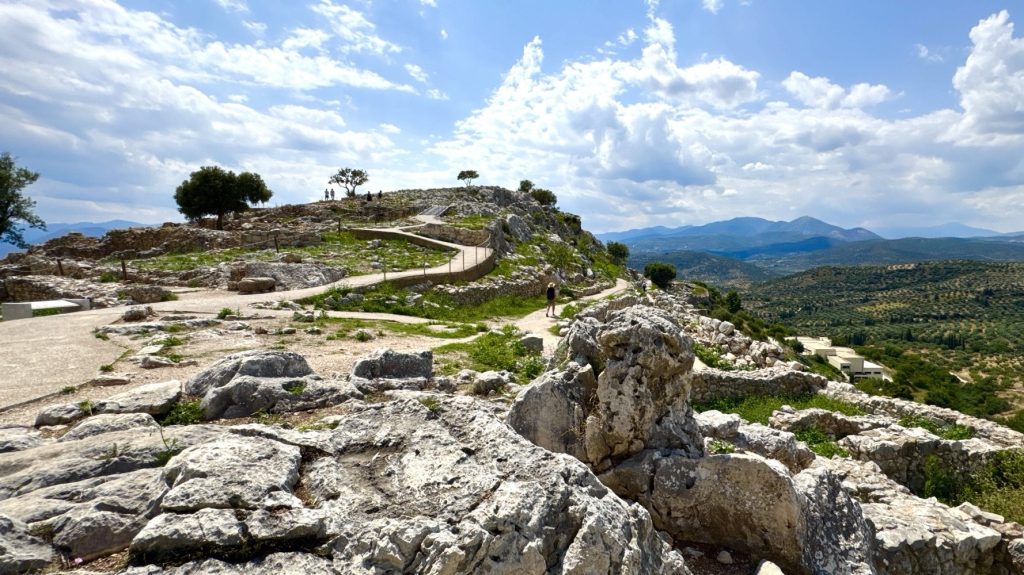
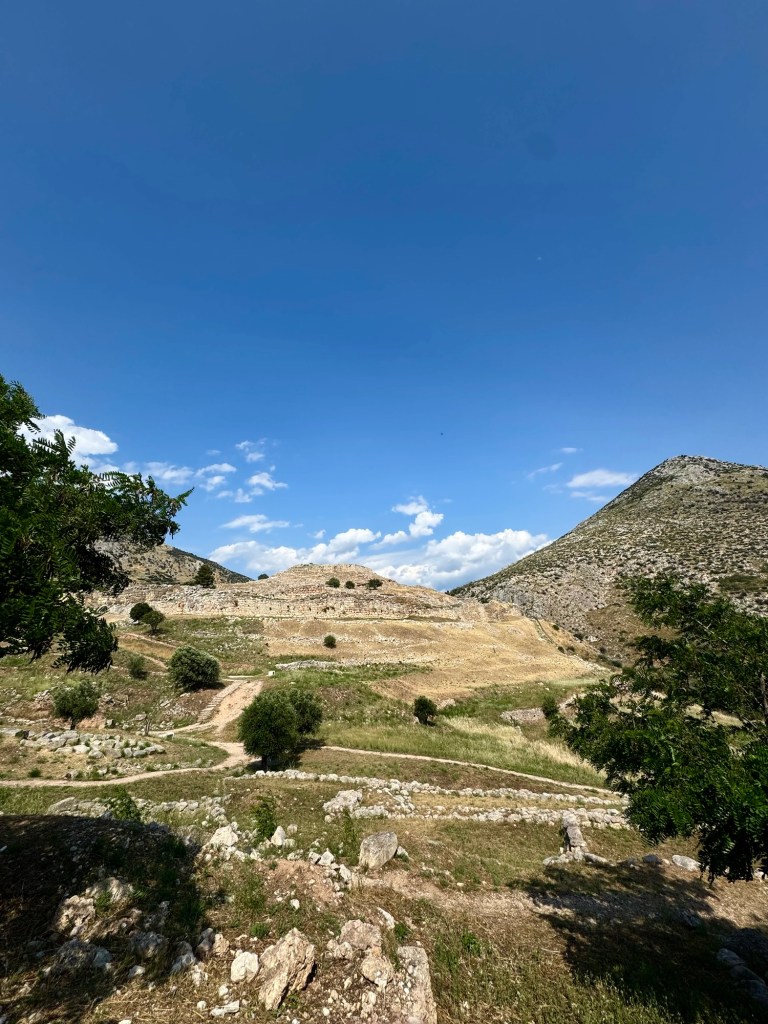
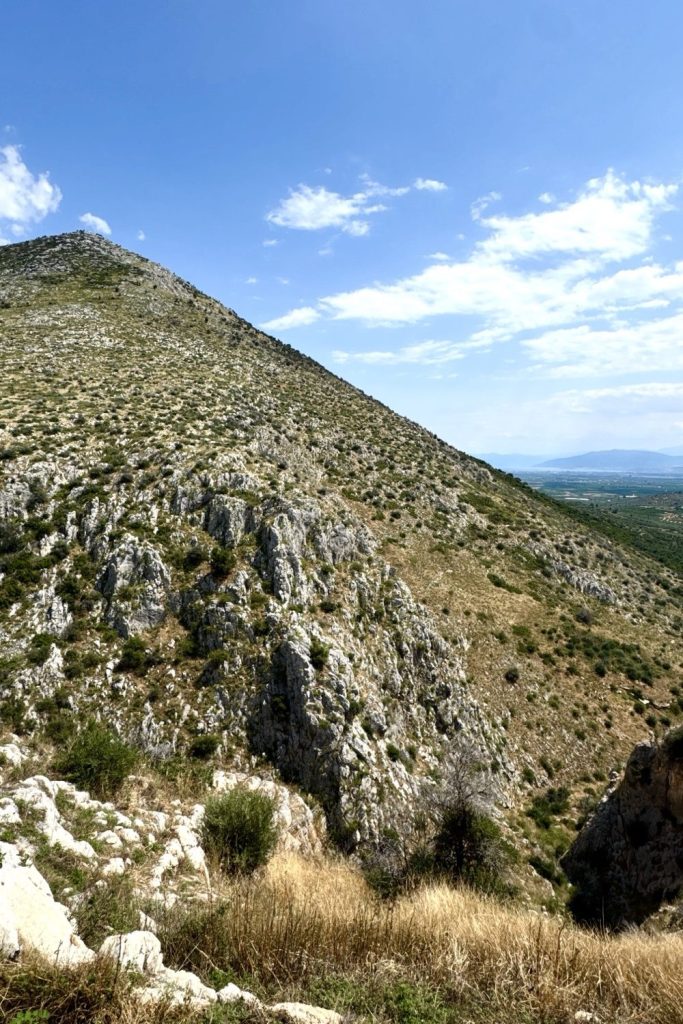
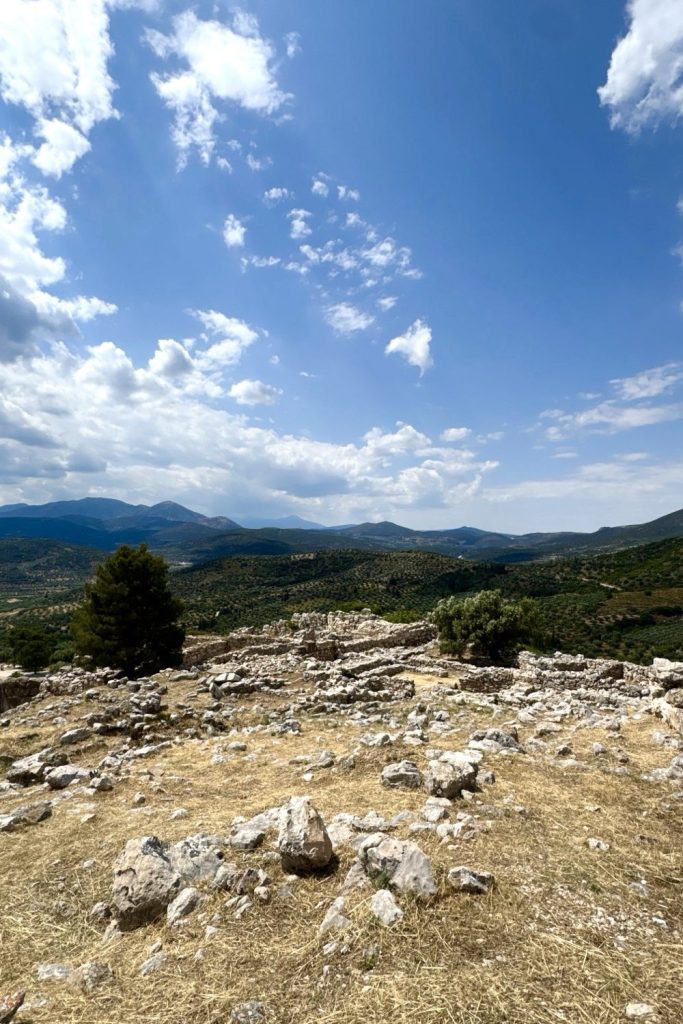
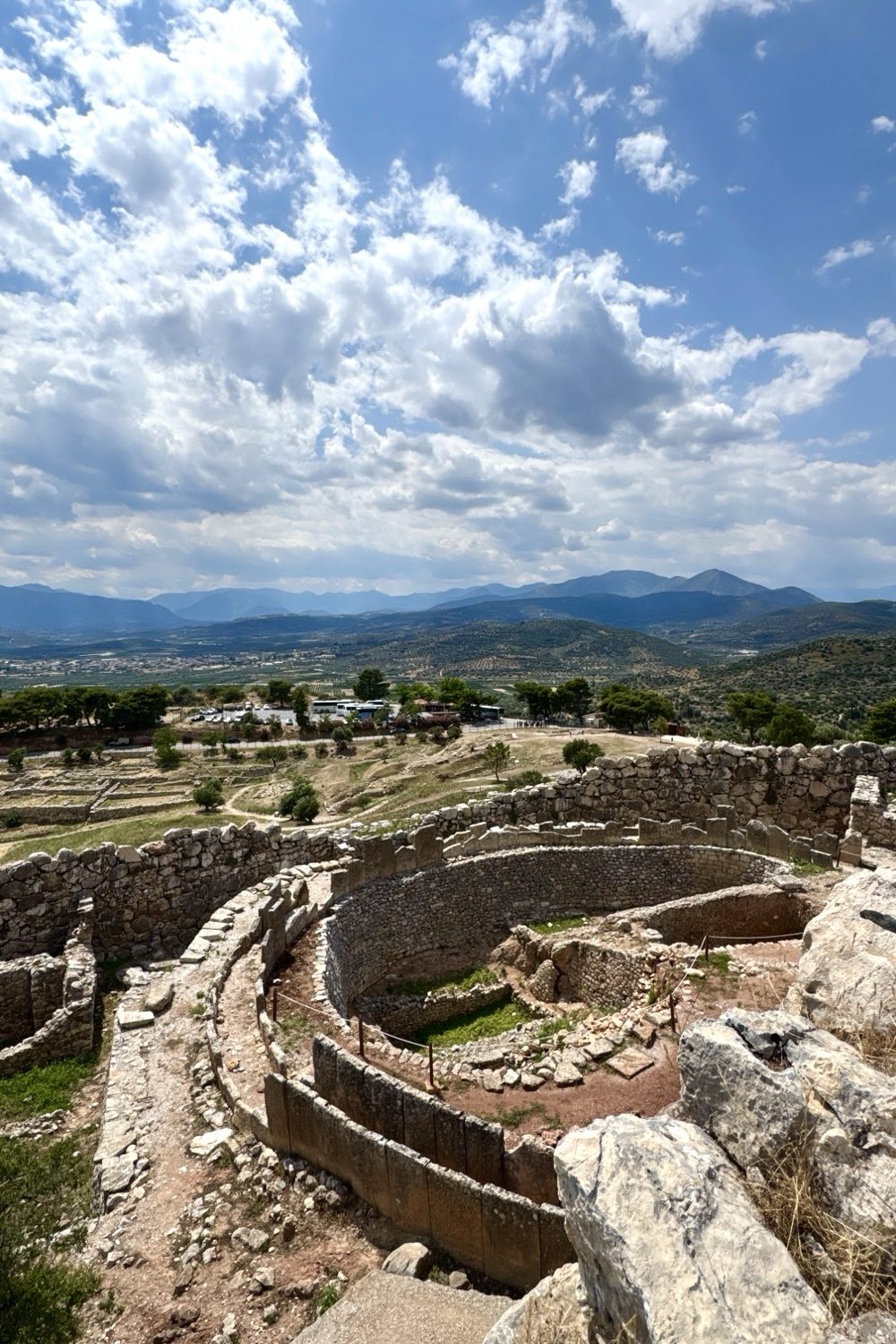
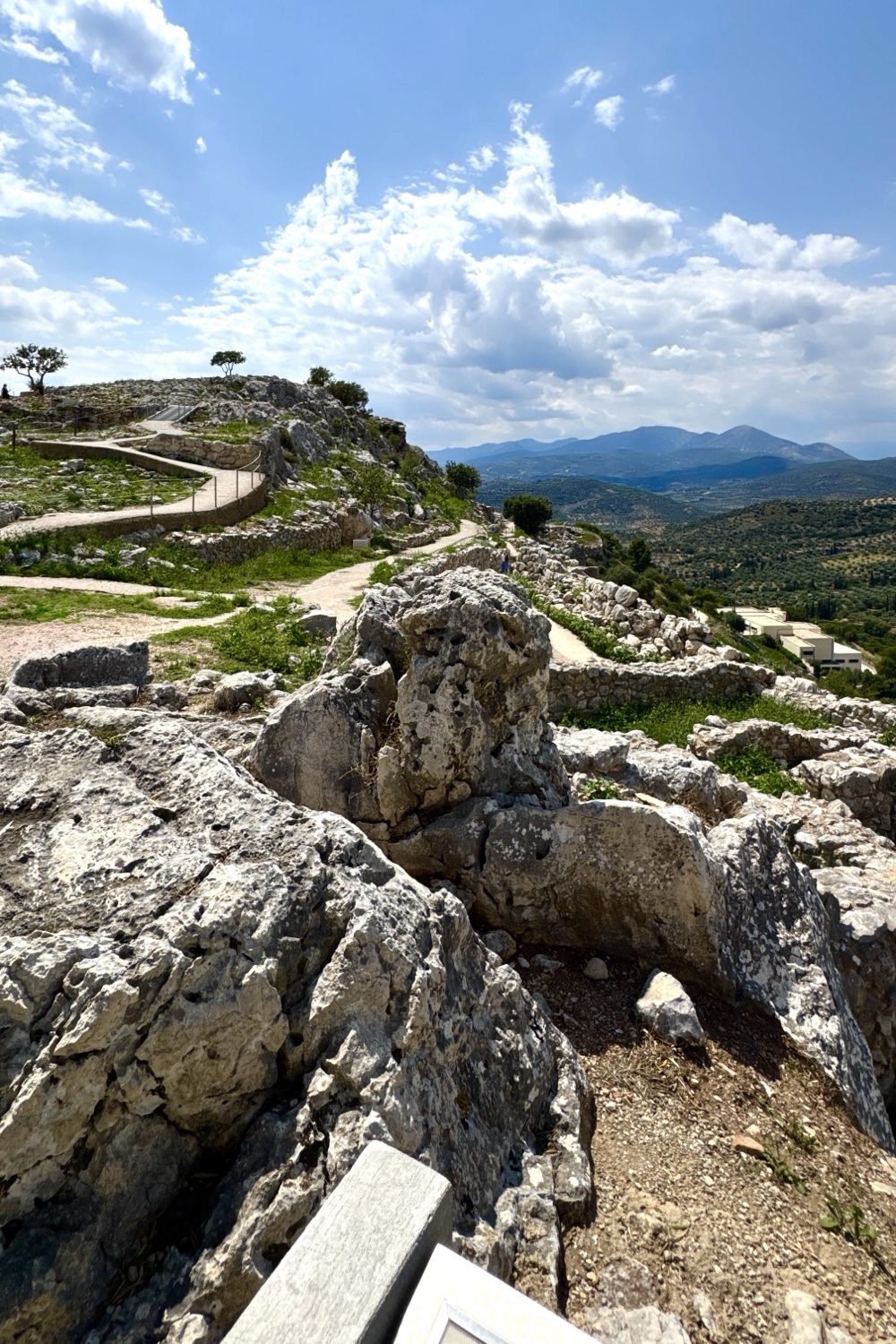
    Tucked away in the northeastern Peloponnese, the archaeological site of Mycenae is perched dramatically on a hill, surrounded by mountains, with epic views that make your legs feel tired just by looking up.

    This is also where epics like The Iliad and The Odyssey kick off, with the Mycenaean King Agamemnon — a man famous for launching a thousand ships… and then getting murdered in his bathtub. Humor and bloodshed. Greek myths in a nutshell.

    The Way There

    Getting here is relatively easy. Ish. Depending on your mode of transport and where you’re coming from.

    If you’re renting or driving a car, congratulations, you’ve got 70% of your transportation logistics sorted. Google Maps will have your back.

    If you’re relying on public transport, I got you.

    Coming from Athens? First, head to the bus terminal at Kifisou (KTEA Kifisou) — just search that in Maps. You can take the X93 bus from the airport or the metro to get there. Once there, look for the corner of the interchange with buses to Nafplio.

    Bus tickets to Nafplio are not bought at the main ticketing area, but if you get lost, head there and one of the nice ladies behind the booth will point you to the right booth number.

    A one-way ticket from Athens to Nafplio is €14.30, but if you tell them you’re getting off at Fichti, it’s a little cheaper. Tickets can be bought online, but with the many KTEL sites (each handling a different part of Greece), it’s honestly easier to buy in person. I’ve had zero issues doing that while gallivanting around the country.

    Still, it helps to check schedules in advance, so here’s a handy link for it.

    There are no direct buses to the Mycenae site itself, so getting off at Fichti, the next town over, is your best bet.

    The ride takes around 2–3 hours, and you’ll be dropped off at a “bus station”, which is actually just a local tobacco shop/mini-mart that moonlights as a transport hub.

    From here, you’ve got two options: walk two hours, or take a cab.

    If you’ve got time to kill and energy to spare, the walk isn’t bad. It’s scenic, the locals are friendly, and while there’s barely any shade, it’s mainly flat — until the final 30–40 minutes. That’s where the incline begins, as the ancients didn’t play around when choosing high ground for military and legitimacy. Safe to say, they never skipped leg day.

    The easy way out? It’s literally across the street of the bus station. There are always two to three cabs parked outside, ready to take you to the site. I opted to brave it on foot, so I can’t say how much it costs, but several drivers honked at me mid-hike offering rides, so you’ll likely find help if you change your mind halfway.

    Treasury or Tomb?

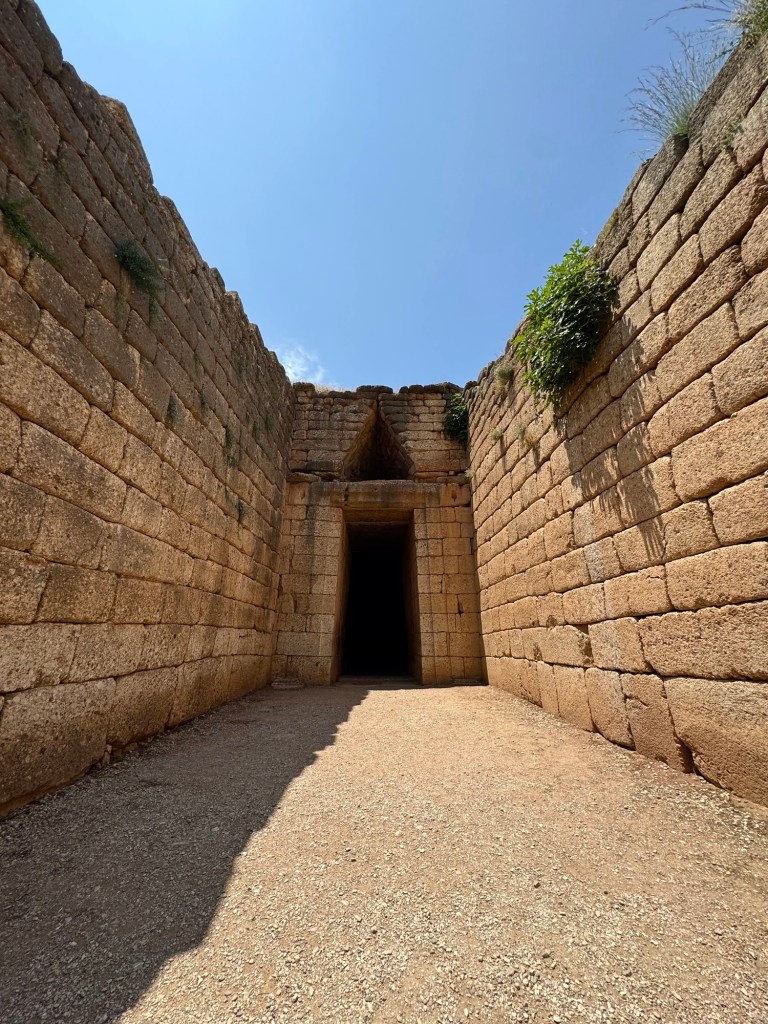
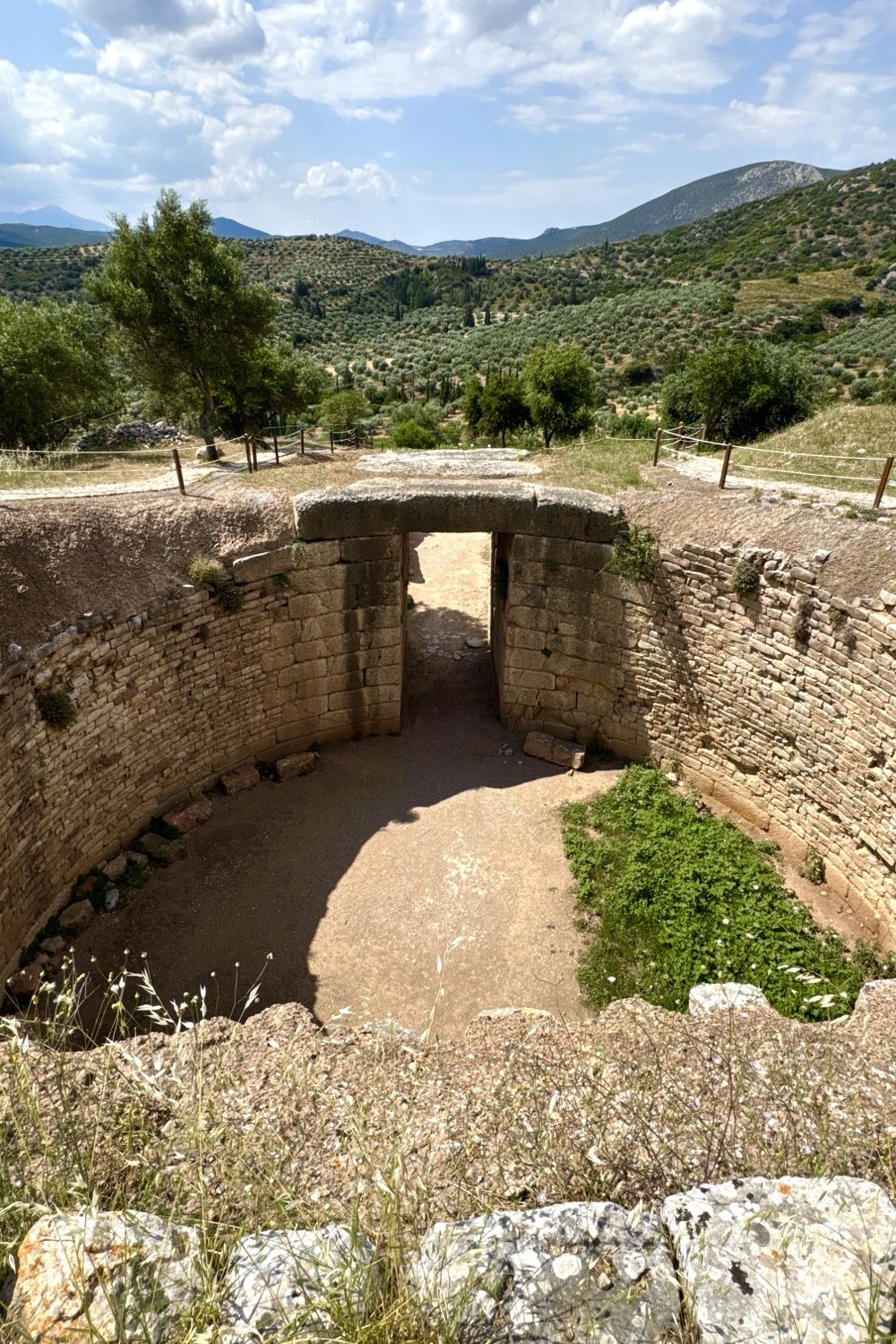
    Before you even hit the main ruins, swing by the Treasury of Atreus — a.k.a. the Tomb of Agamemnon (historians and archeologists are still arguing over that one). It’s included in your entry ticket and located just 10 minutes from the main site.

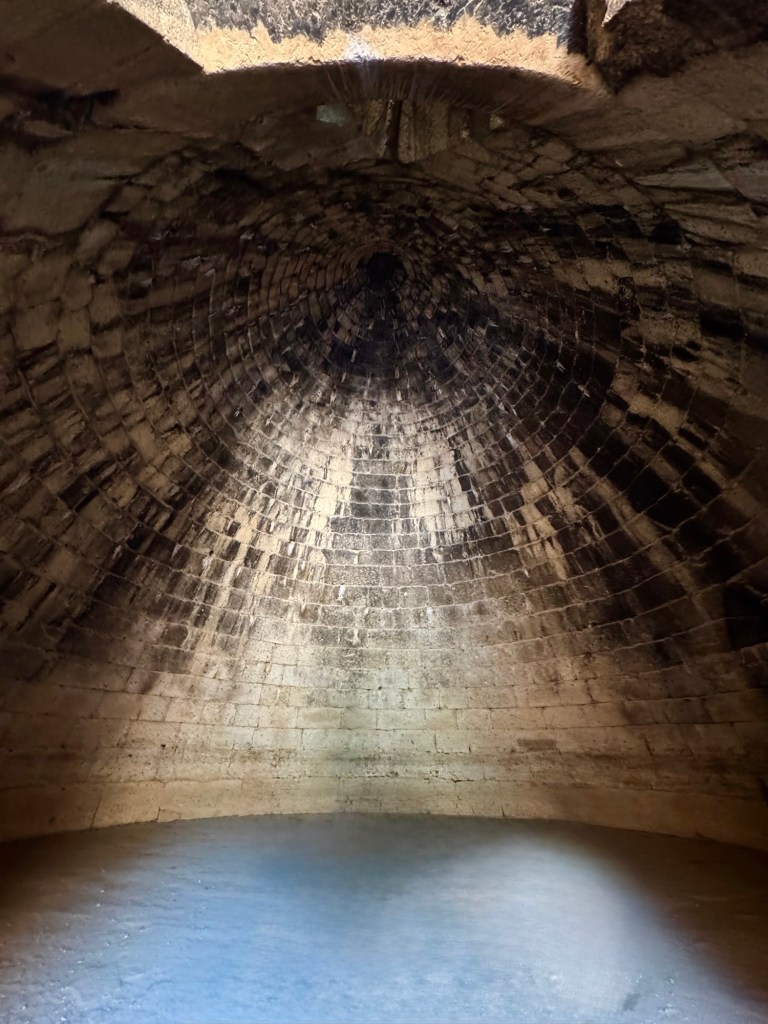
    This massive tholos tomb is one of the best-preserved examples from the Mycenaean civilization. And while there’s no hard evidence it belonged to Agamemnon or Atreus, the grandeur fits the legend. These names, like many things in archaeology, were inherited more from tradition and imagination than proof.

    Still, the engineering is impressive, and its symmetry and scale may have influenced later Greek architecture. Early visitors believed it stored gold — hence “treasury” — likely inspired by Homer’s tales of Agamemnon’s wealth. It’s long since been looted, but its sheer presence is stunning.

    The City of Blood and Stone

    The actual city of Mycenae is a legend both in myth and reality. It was one of the most powerful centers of the Late Bronze Age and gave its name to the entire Mycenaean civilization, which laid the groundwork for classical Greek culture.

    Mycenae dominated mainland Greece and traded far across the eastern Mediterranean, reaching as far as Egypt, Anatolia, and the Levant. Even by Homer’s time, the city was already in ruins, yet its legacy loomed large as the fabled home of King Agamemnon.

    You might remember Agamemnon as the guy who led the Greeks to Troy in The Iliad to avenge the abduction of Helen by Paris. While his role in myth is legendary, his actual existence remains unproven.

    While his existence in myth is significant, his actual existence is not exactly proven yet. Despite German archaeologist, Heinrich Schliemann (the same dude that dug up Troy) , claiming to have found Agamemnon’s tomb at Mycenae and famously unearthed the gold “Mask of Agamemnon” ( on display in the National Archeological Museum of Athens and replica displayed in the Mycenae Archeological Museum), the tomb and mask however predate the supposed time of the Trojan War by about 300 years or so, making the attribution symbolic, not literal.

    But we all love a good story don’t we? So let’s just assume for now that he did indeed exist.

    But back to the actual city, or what’s left of it.

    There isn’t much left of the actual “city,” just fragments and foundations scattered across the hilltop. But the scale of the site helps you visualize just how grand it once was.

    Your journey begins at the Lion Gate, Mycenae’s iconic entrance. Above it looms the oldest known monumental sculpture in mainland Europe — two lions flanking a column.

    From there, you’re surrounded by Cyclopean walls — enormous stone fortifications so massive the Greeks later believed only giants (Cyclopes) could have built them.

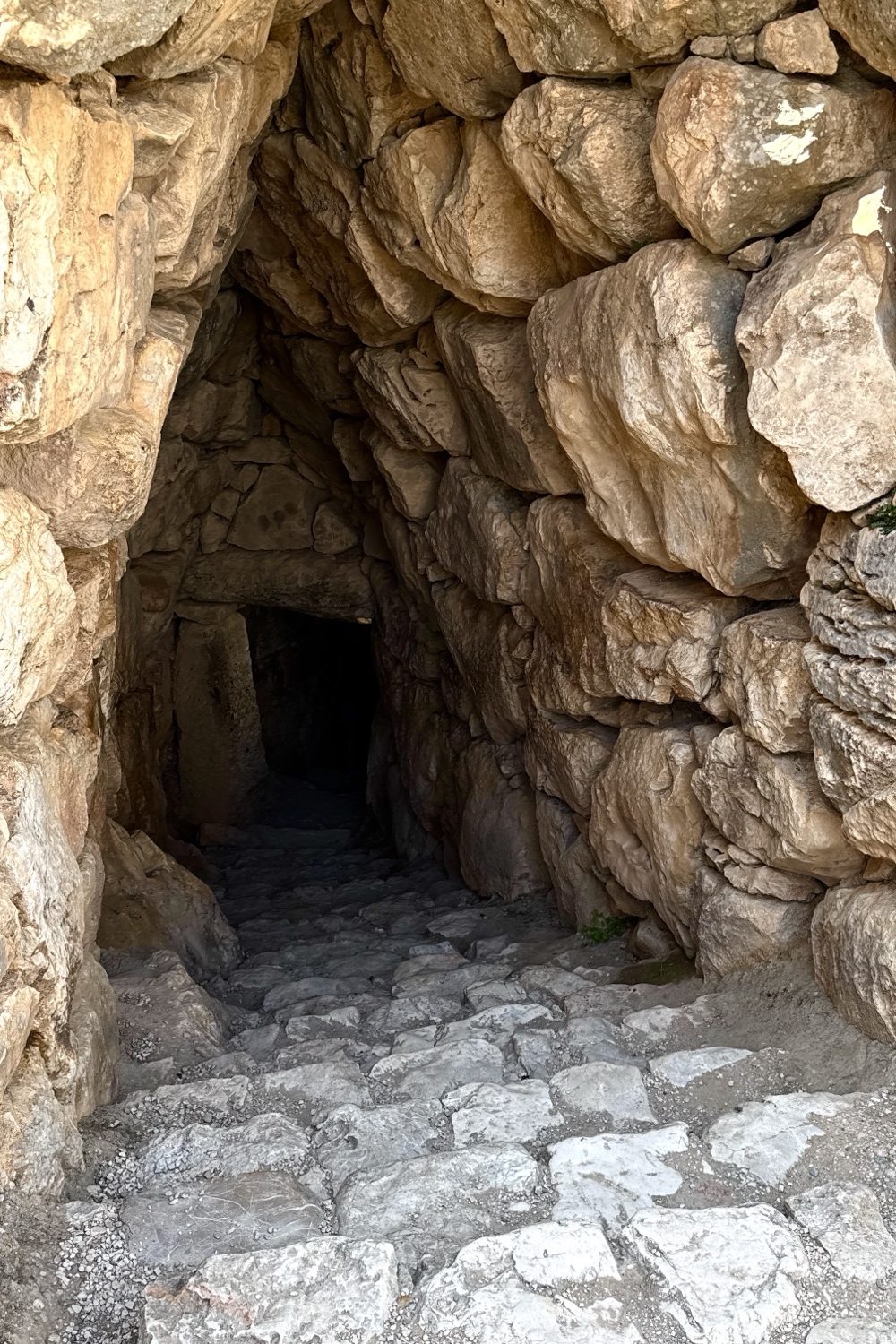
    You’ll wander through ruins of temples, administrative centers, and what remains of the royal palace complex. There’s even a staircase descending into an ancient cistern, partially accessible if you’re feeling adventurous.

    Don’t miss the Tomb of Clytemnestra, another impressive beehive tomb associated with the legendary queen (again, more tradition than confirmed fact).

    Before heading out, stop by the Archaeological Museum near the entrance. It houses excavated finds from across the site and helps piece together the story — mythological and historical — of this ancient powerhouse.

    The Way Back

    Now for us public transport laddies, here’s how you get back.

    If you took a cab to the site, you’ll likely need to call one back — they don’t usually wait around the entrance. There’s a sign with a phone number at the entrance so you can call for a cab, or better yet, grab a business card from your original driver and arrange a pickup time.

    I didn’t do this. I walked back the whole way. My feet are still recovering.

    Once you’re back at the Fichti tobacco shop/bus station, you can purchase a return ticket to Nafplio or Athens from there. Just check the schedule ahead of time — buses come every hour or two. Miss it, and you’ll be waiting around for the next hour or so for the next one, if there is one.

    Also, you must flag the bus down. They don’t stop unless you signal. Don’t be me. I watched mine roll past like a scene from a Greek tragedy and had to wait another 1.5 hours for the next one.

    If you’re not sure when you’re heading back, opt for an open return ticket. It’s a bit more expensive but saves you the hassle of buying another ticket later.

    The buses are generally on time, affordable, and honestly, a pretty reliable way to get around Greece and all its cities.

    From Fichti, you can either continue on to Nafplio, which i did, or head back to Athens. If you’ve got time, you could even squeeze in a detour to Corinth — both the city and the ancient site — on your way back. But that’s a tale for another post and time.

    For now, it was off the Nafplio to reset and seek healing from the abuse i put my feet through, who knows, i might just find it in the lands of ancient Epidaurus where i’m headed next.

  • Greece – Heraklion, Crete

    Bulls and Kings


    A New Odyssey

    Setting off on a new adventure — this time to the land (or lands) of cerulean blue seas, Olympic beginnings, and epic myths: Greece.

    Well, first to Heraklion, specifically. Ironically, the cheapest flight from where I was happened to land on this island instead of Athens.

    Which kind of worked out for me, since the Palace of Knossos is just around the corner. How convenient.

    Getting here was simple enough. I had a direct flight to Nikos Kazantzakis Airport (HER) in Heraklion. Since it landed after midnight, I hopped onto a local bus and checked into my hostel for the night.

    Till 4 hours later that is. Yes, I’m back with my sleep-deprived adventures. If you’ve read my posts before, you’ll know I’m a fan of getting to archaeological sites or museums right at opening — to avoid the crowds and, in this case, the summer sun too.

    The Greek summer sun is ruthless. Less than an hour under its death rays, and conveniently forgetting my sunscreen at the hostel, I was cooked like a ready-to-eat lobster. And I arrived in June, peak summer season. Joy.

    Fortunately, getting to the site is as straightforward as hopping onto a local bus. Tickets can be purchased both onboard and at self-service kiosks, but it’s cheaper at the kiosk. A roundtrip ticket from the bus driver is €5, but only €3.60 at the kiosk. The journey takes about 30–40 minutes.

    The entrance to the Archaeological Site of Knossos is just a 5-minute walk from the bus stop, and the entrance fee costs £20.

    The Palace, The King, and The Bull

    The Archaeological Site of Knossos, also known as the Palace of Knossos, is deeply intertwined with Greek mythology, especially stories about King Minos, the Minotaur, and the Labyrinth.

    To those not familiar with this particular lore, here’s a bite-sized version: King Minos was said to be a powerful king of Crete and the son of Zeus and Europa. To become king of Crete, he competed with his brothers, backed by the god Poseidon, who sent him a bull as a sign of favor. That bull was supposed to be sacrificed to honor Poseidon once Minos became king — but he didn’t, because the bull was too pretty and he wanted to keep it. So, in typical Greek god fashion, it was time for revenge. Poseidon, with the help of Aphrodite, made Minos’s wife, Pasiphaë, fall in love with the bull and do the nasty with it,

    And that was how the Minotaur was born. So Minos had Daedalus construct the Labyrinth to contain the creature. This leads to the story of Daedalus and how his son, Icarus, flew too close to the sun, as well as the tale of Theseus slaying the Minotaur with Ariadne’s help. But those are stories for another time.

    Much of these tales appear in Homer’s Iliad and Odyssey, both really intriguing reads. But if you’re not the reading type, luck’s on your side, because The Odyssey is getting the Hollywood treatment, set to release in 2026, and hopefully stays somewhat true to the source material with its star-studded cast.

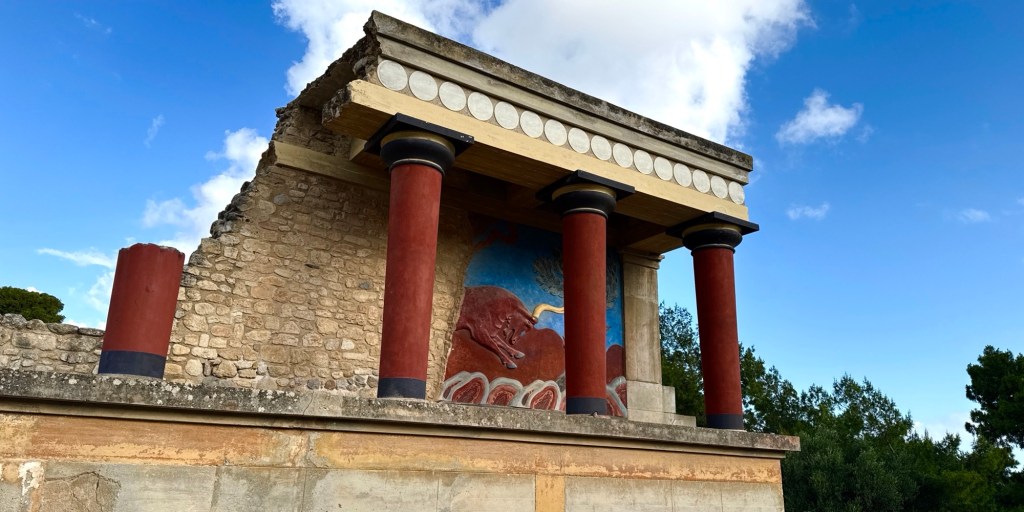
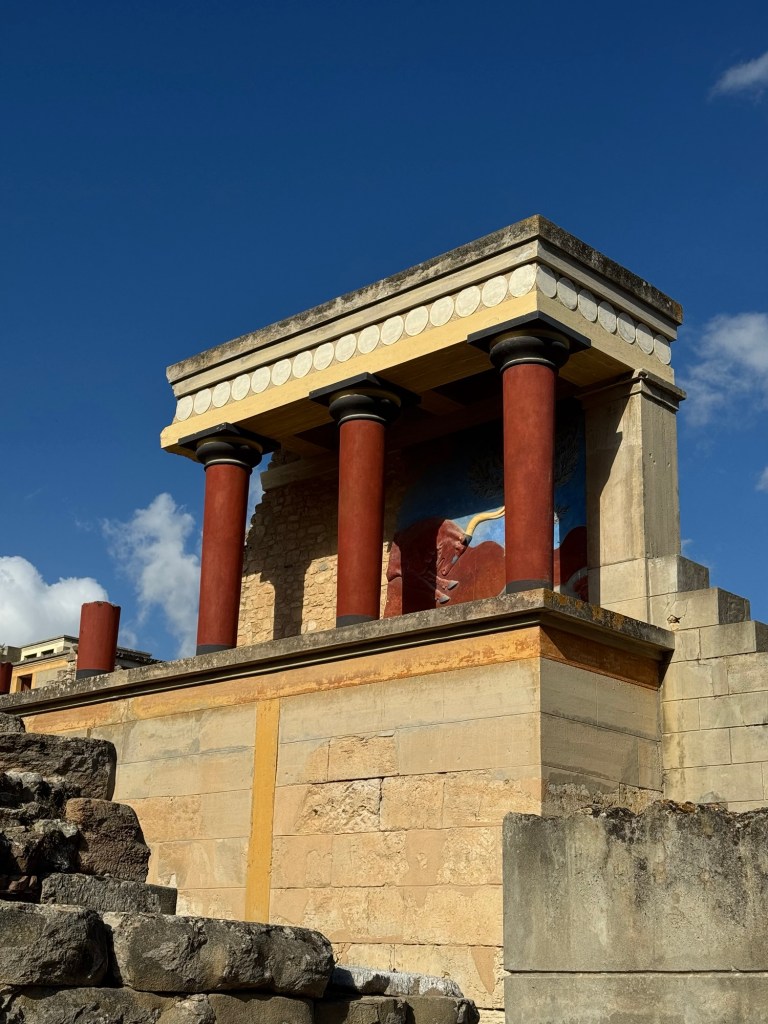
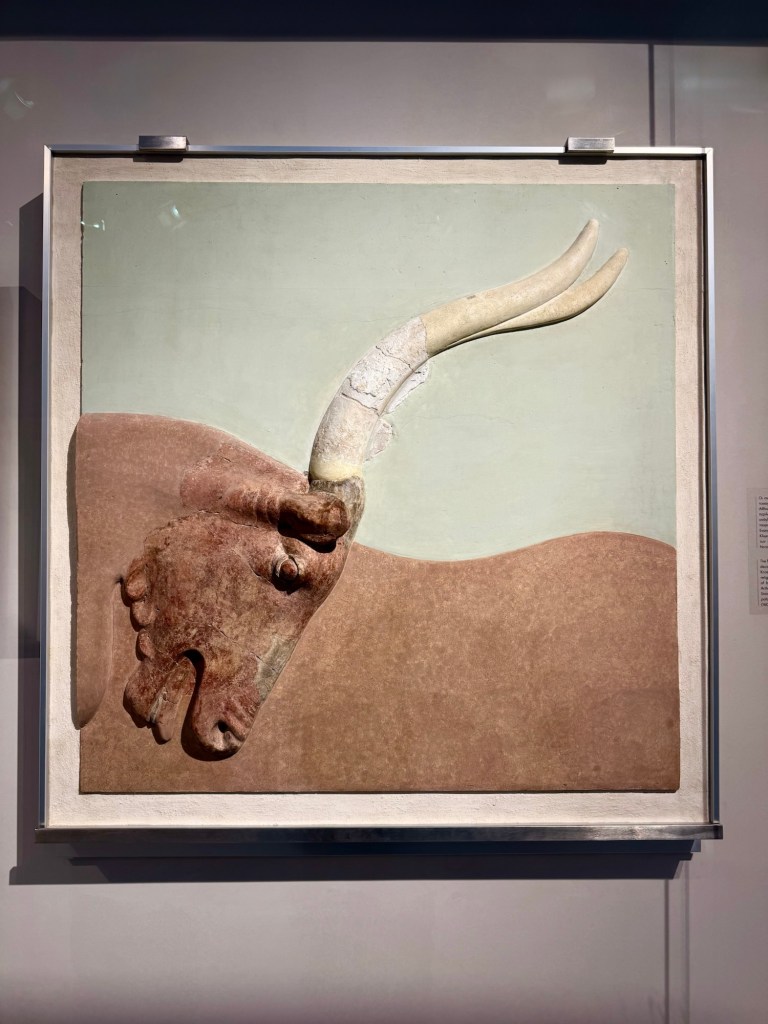
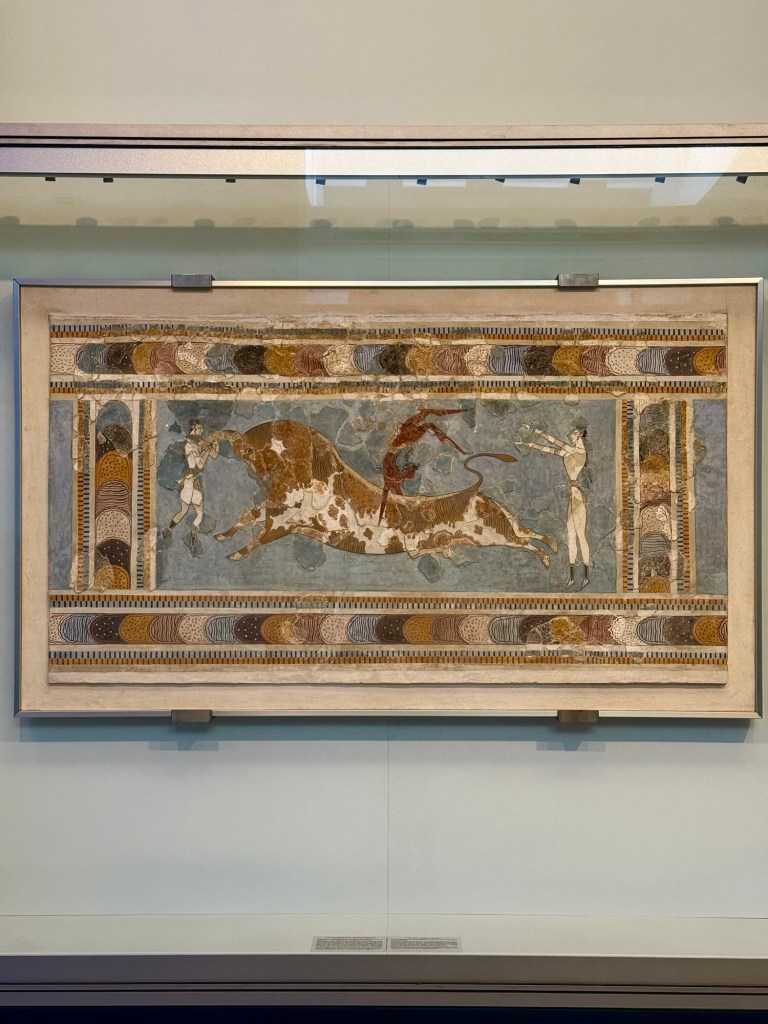
    While King Minos’s existence is debatable, the Palace of Knossos is a legend in its own right. With its maze-like layout, bull motifs, and sacred symbolism, it likely inspired the myths. Frescoes depicting bull-leaping ceremonies hint at the cultural reverence of the bull — and possibly at the myth of the Minotaur.

    The name “Minoan” itself was coined by Sir Arthur Evans, the British archaeologist who excavated the site. We still don’t know what the Minoans actually called themselves.

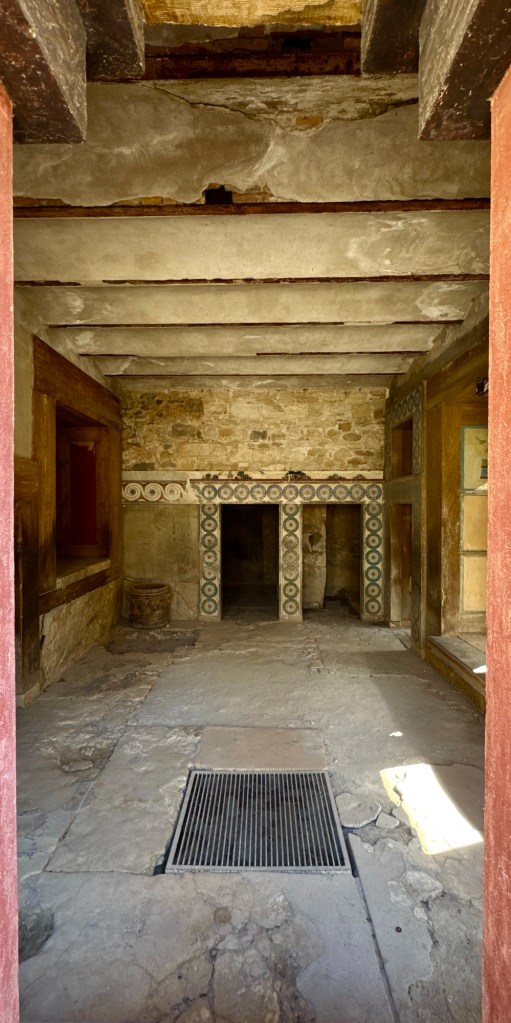
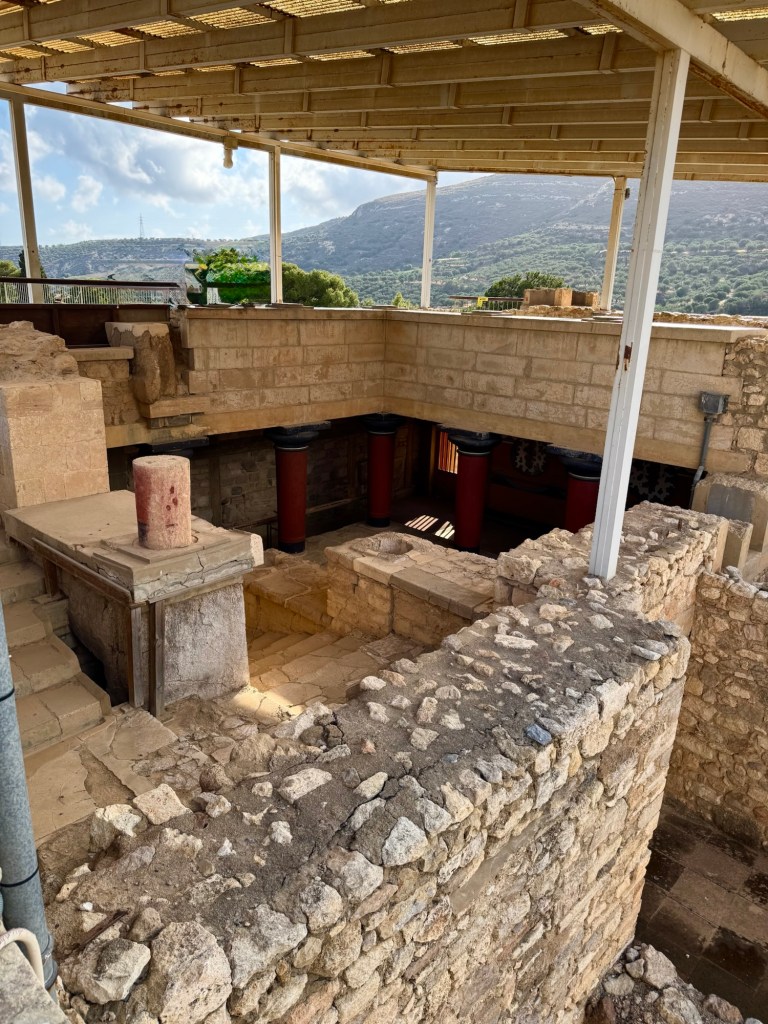
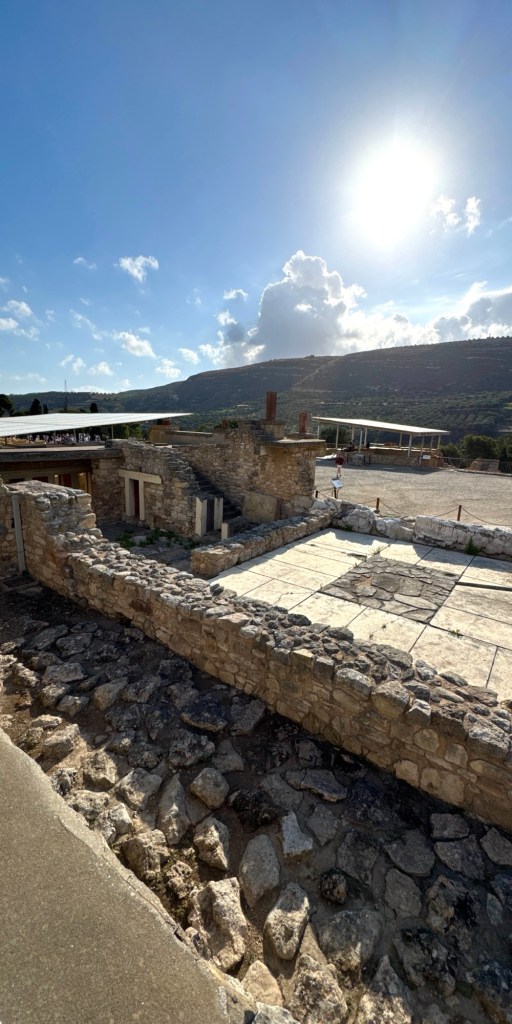
    The site itself is a sprawling, multi-story complex with over 1,000 rooms, intricate corridors, and advanced features such as indoor plumbing, drainage, colorful frescoes, storage pithoi jars, courtyards, roads and workshops.

    Restoration or Reinvention?

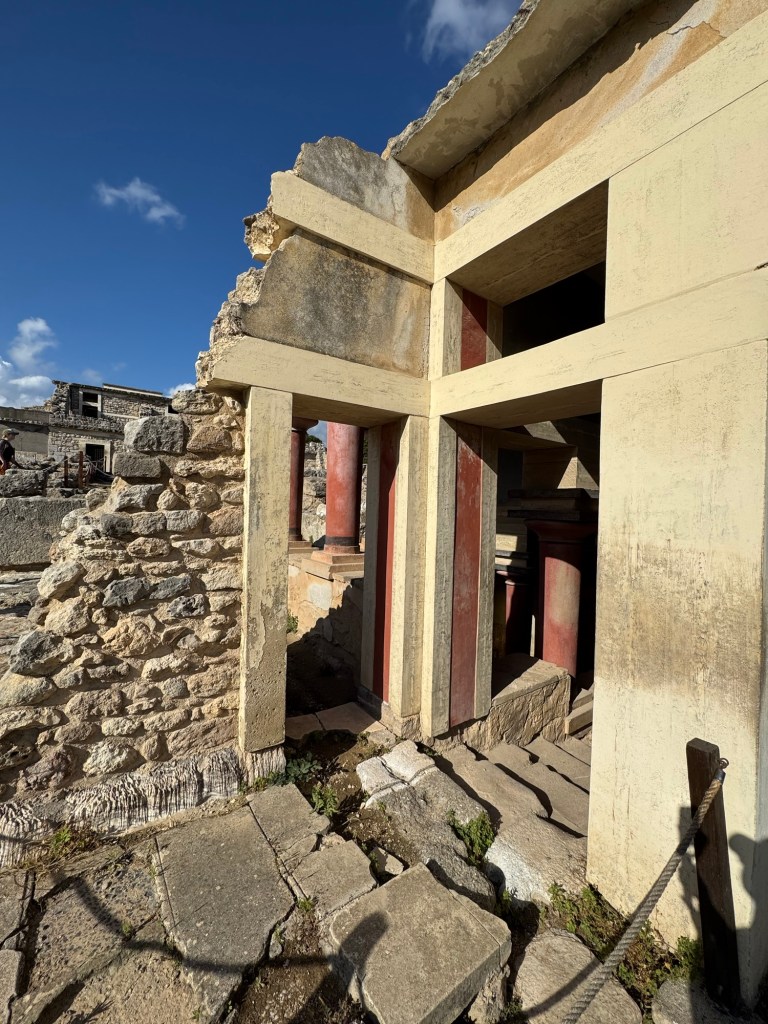
    Evans excavated Knossos between 1900 and 1931, and then undertook a bold, and controversial, restoration project. Instead of leaving ruins as-is, he rebuilt parts of the palace using reinforced concrete, commissioning artists to recreate frescoes and architectural elements based on his interpretation of what Knossos should have looked like.

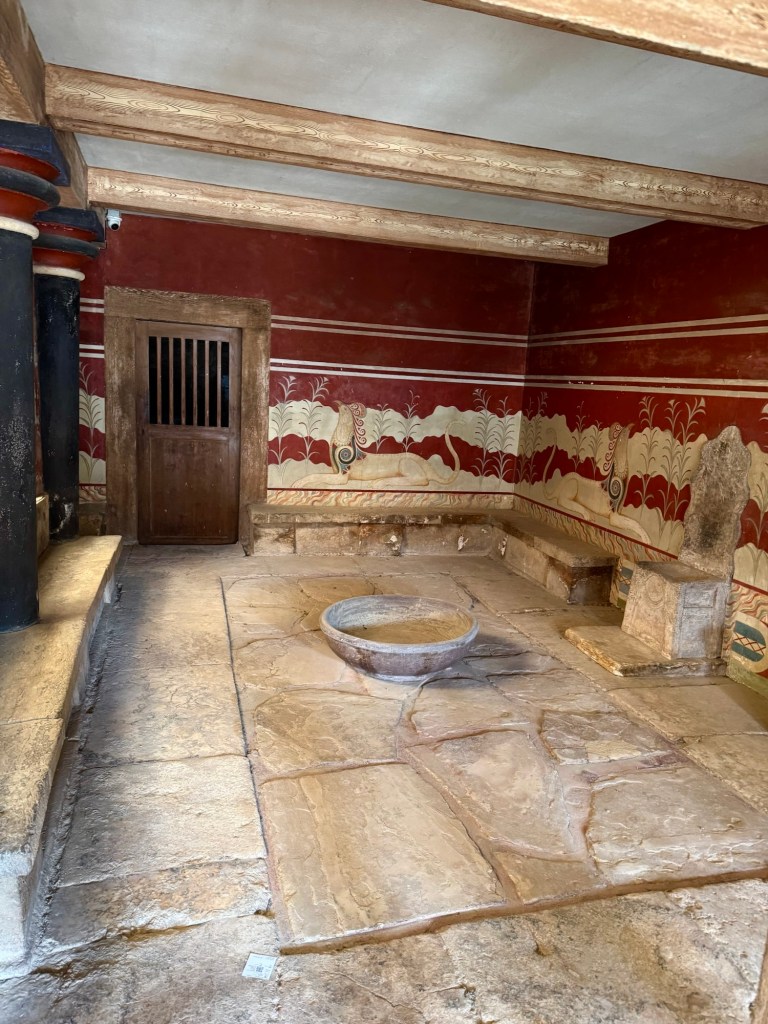
    Some of the most iconic reconstructions include the Grand Staircase, the Throne Room, and frescoes like the Prince of the Lilies and Bull-Leaping Scene. The signature red-painted columns you see today? Yep, also part of Evans’ vision.

    But here’s the issue: a lot of these reconstructions were hypothetical, sometimes based on mere fragments. And once concrete was used, the original structures were gone for good — meaning future archaeologists couldn’t re-examine untouched remains.

    That said, Evans’s vision has shaped how we see Minoan civilization. His reconstructions are both preservation and projection — and a major reason Knossos is as famous, or infamous, as it is today.

    The Visit

    The site is massive and slightly chaotic — in a charming way. Depending on your pace, expect to spend 1 to 2 hours here. The layout definitely fits the “labyrinth” description, but if you stick to the main paths, you won’t need Ariadne’s thread, just follow the tour groups (there are lots).

    There are info plaques scattered around and guides available at the entrance if you want the full narrative. But it does get crowded fast, especially in summer, and the narrow paths can get claustrophobic. I recommend arriving at opening or at least two hours before closing.

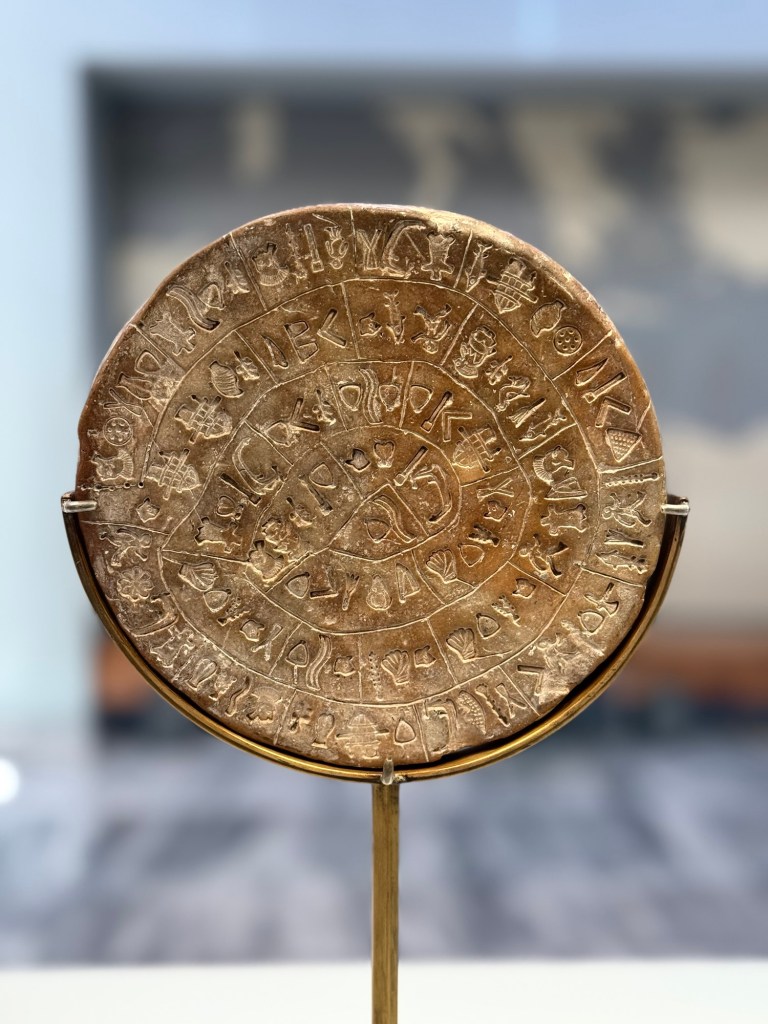
    A visit to the Knossos Palace is not complete without a visit to the Heraklion Archaeological Museum, where most of the excavated artifacts are. The museum is the world’s leading institution for Minoan civilization, and brings together thousands of artifacts spanning over 5,500 years of Cretan history , from the Neolithic era through the Roman period, with a special emphasis on the Minoan Bronze Age.

    The museum houses the most comprehensive collection of Minoan artifacts anywhere in the world, many of them excavated from Knossos, Phaistos, Malia, Zakros, and other Minoan palatial sites across Crete.

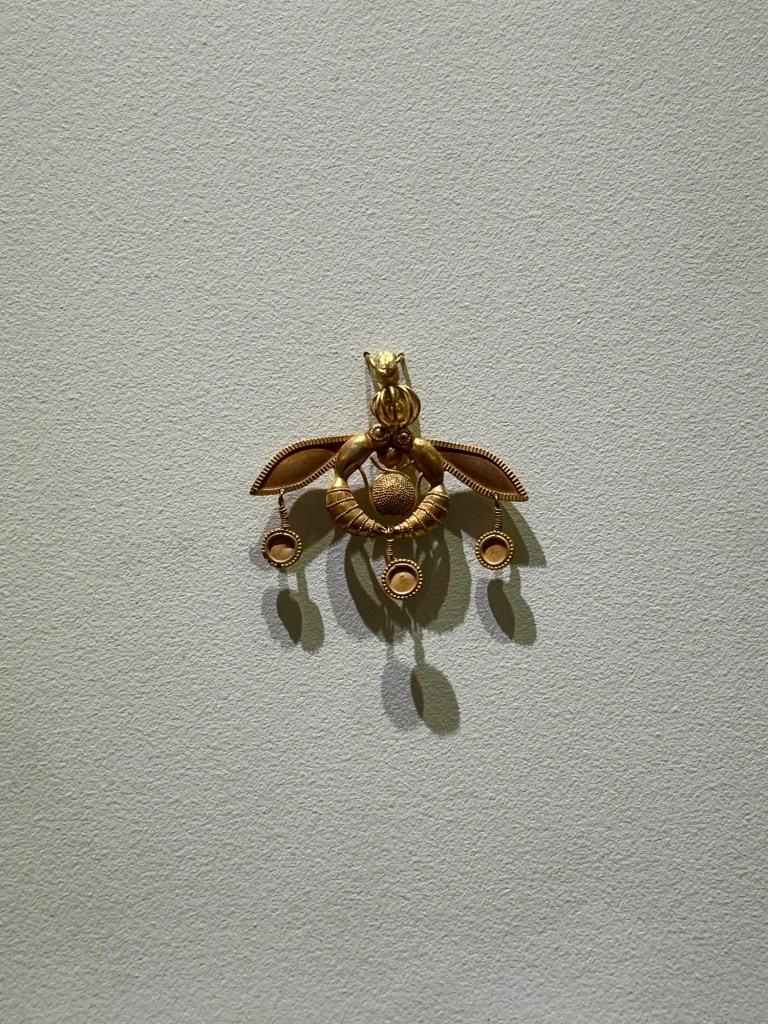
    Some highlights of the museum include the frescos from the Knossos Palace, Linear A and B tablets, the Bee Pendant from Malia and so on, for me it was the scaled down reconstruction of the Knossos Palace near the entrance. Probably the clearest visualization of how sprawling and advanced this place truly was, it is impressive to think such structures were made some 4000 years ago, and still inspires architecture and art till this day.

    The museum also features a myth vs. history section, connecting Greek lore with archaeological reality, along with a full breakdown of King Minos’s legendary family tree. It’s insightful, well-laid-out, and doesn’t drown you in text. An absolute must after seeing the palace itself.

    So, whether you’re here for the history, the mythology, or just Season 15 Episode 215 of the Greek gods behaving badly, Knossos doesn’t disappoint. It’s one thing to read about ancient kings, divine grudges, and monstrous offspring, it’s another to walk the same labyrinthine paths that may have inspired them. Standing amid the crumbling walls, frescoes, and echoing corridors, it’s easy to see how legend and reality blurred into one timeless tale. And honestly, in a world where bulls can father monsters and palaces double as mazes, who’s to say where myth ends and history begins?

  • Egypt – The Cheat Sheet

    I’ve done it so you don’t have to.


    The Juicy Deets

    And just like that, my time in Egypt has come to an end.

    It was chaotic. It was mythical. It was sometimes mildly terrifying. It was everything I hoped for, and absolutely nothing I expected.

    But before I wrap up this sand-swept saga, I know most of you are probably here for a couple of reasons — either you’re planning your own trip to this golden dustbowl, bored and scrolling, or just morbidly curious to see if all those horror stories floating around Instagram and Reddit are actually true.

    And boi did writing this take some time — there’s just so much to unload.

    Well, here’s a handy, brutally honest, no-filter Cheat Sheet of everything you may need to know before packing your bags and heading to the land of pharaohs and feluccas.

    Getting In

    Let’s start with how you actually get in the country.

    Always check your country’s entry requirements. Everyone’s different. Some nationalities are exempt from needing a visa and can enter Egypt for up to 90 days visa-free. Most, though, will need a tourist visa, which you can easily get on arrival at Cairo International Airport for a 30-day stay.

    It costs $25 USD (or the equivalent in EUR or GBP), and you can buy it at any of the visa counters in the arrival hall. Pro tip: if you see a long line, just wander to another counter. There are several.

    Once you get your visa sticker, don’t stick it in your passport. Let the border officer do it for you.

    Also, make sure to have a pen handy on your flight — you’ll be given an arrival card to fill out, which you’ll need to hand over with your passport.

    Now, speaking of border security… anyone else have a weird experience here?

    I did everything right — visa, arrival card, smile ready — and yet the officer stamped my passport, called her supervisor, and told me to wait off to the side. She kept my passport and kept processing other passengers. I wasn’t alone — another guy from the US (of Egyptian descent, mind you) got pulled aside too.

    Eventually, with no supervisor in sight, she closed the line, took us both to what I can only describe as the Border Patrol Upper Management corner, and handed our passports over. The guy there took a 1-second glance and just waved us off. That was it. Bizarre.

    Even weirder — the same thing happened again when I was leaving Cairo.

    If anyone knows what’s up with that, feel free to sound off in the comments, because Google had nothing.

    Anyways, moving on.

    Let’s Talk Money

    Egypt’s official currency is the Egyptian Pound (EGP), but USD, EUR, and GBP are also widely accepted — sometimes even preferred.

    Keep cash on you at all times. Tipping isn’t optional in Egypt — it’s oxygen. Whether it’s the toilet paper guardian in a public restroom or the train porter who insists on grabbing your bag, expect to tip for everything.

    That said, don’t use coins or $1 bills for tipping. They can’t be exchanged in Egypt, so unless you want to burden someone with literal useless money, stick to crisp $5s or $10s. Fresh, unblemished notes are key.

    Alternatively, tip in EGP — just use a currency converter and tip the local equivalent of what you’d give in dollars. It’s the thought that counts, and trust me, a little goes a long way.

    Most physical ticket booths now only accept card payments, not cash. That includes big sites like the Valley of the Kings and Giza Plateau. Some sites have self-service kiosks — but don’t count on them. Half the time they’re out of service or offline.

    I highly recommend that you just purchase your tickets in person, or via authorised proxies.

    On the topic of proxies…

    Scam or No Scam?

    The answer to this question relies heavily on your common sense. Website looks shady? Nope. Asking for too many details? Nope. A package deal that seems too good to be true? Absolutely nope.

    You’ve probably heard me mention GetYourGuide before — and nope, this isn’t sponsored (but hey, if anyone from their PR team is reading, hit me up wink wink). I used them for about 70% of this trip.

    Here’s a tip: if you find an activity you like, don’t book it right away. Instead, look up the provider. Most of them have their own websites, and 9 times out of 10, the prices are lower there, with fewer hidden add-ons.

    Still, if you do book direct, remember: you’re fully responsible. No customer service backup if things go sideways. Personally, I only booked direct twice — both times for private car hires in Luxor (Uber doesn’t operate there). Otherwise, I stuck with the app for the added protection.

    Above all else: read the reviews. Fellow travelers will always spill the tea.

    Example: I booked a tour to Saqqara and Memphis on GYG. No mention in the itinerary about stopping at papyrus, perfume, and carpet shops — but lo and behold, we were dropped at every single one. I definitely should’ve read the reviews more carefully.

    Other scams to look out for:

    Local ‘guides’ – If a “friendly local” offers to show you the way around a site, near popular sites like the Egyptian Museum or the Pyramids, know that you’re being led into a private tour you didn’t ask for — and will 100% be charged for. Book your tours through trusted agencies, your hotel, or online platforms with reviews. Verify that the guide has proper credentials before starting a tour.

    The “photo fee” scam – Some guards will let you take photos in restricted areas — and then demand a bribe after. If it says no photos, no photos.

    Camel/Horse Ride Scams – At the Pyramids of Giza, camel handlers offer rides at what seems like a bargain price. However, once you’re on the camel, they’ll demand extra money to let you off, turning your cheap ride into a costly ordeal. Always agree on the total price, including the return trip, before mounting the camel. Stick to official tour operators when possible.

    Papyrus/Spice Shop/Perfume Shop Scam – You may be invited into a shop by a local, and even sometimes your own guide, who wants to show you the “best” perfumes or spices in Egypt. Once inside, you’ll be pressured into buying products at inflated prices, and some might not be genuine, under the very unbelievable guise of ‘we’re not trying to get you to buy anything’.

    Fake Tourist Police – This i actually experienced, and dodged a bullet when my guide swept me away. Someone posing as a tourist police officer may approach you and demand to inspect your passport, belongings, or to check your ticket. After this fake inspection, they may ask for a bribe to return your items, and that’s when you know you just got punked. So always ask to see official identification, and avoid handing over important documents. When in doubt, find an actual police office, better yet, call 126, the official tourist police hotline.

    Restaurant Bill Scam – In some tourist-heavy restaurants, especially in areas like Downtown Cairo, the bill might include inflated charges, hidden fees, or additional items that you didn’t order. Review the bill carefully before paying and ask for clarification on any unfamiliar charges. It’s a good idea to ask about taxes or service fees in advance. Typical charges you will see on most bills are a 12% service charge and a 14% VAT charge. An additional tip is technically optional, but most servers will expect you to leave the change.

    Taxi Scams – Taxi drivers may refuse to use the meter, claiming it’s broken, or they may charge you in foreign currencies rather than Egyptian pounds, resulting in a much higher fare. Another tactic is to take unnecessarily long routes to increase the fare. Use ride-hailing apps like UBER where prices are transparent and set in advance. If you take a street taxi, ensure the driver uses the meter or agree on a price before starting the ride.

    While i understand that this may paint the country and it’s people in a rather bad light, and that there are many Egyptians that are genuinely kind, it’s still wise to be remain cautious. and to always remember, not all of them are doing so out of malicious intentions, they are simply trying to make a living. Well, some of them at least.

    Since we’re talking about people.

    Hey you, I’m Talking to YOU!

    If you go to Egypt, you will get hassled. Vendors will yell, follow you, grab at you, or shove merchandise in your face. I’ve had people physically stop me from getting into my Uber. I’ve been yelled at, insulted by literal children, stalked back to my hotel, and chased down alleys for not buying trinkets.

    It comes with the territory.

    My advice? Be firm, not confrontational. Say no. Walk away. Don’t feed into the reaction — it’s what they want. If it gets dicey, call 126 — the tourist police hotline. Just mentioning it is often enough to get people to back off.

    Sound and Light Show

    If you’re considering one of those “Sound and Light” shows at Karnak or the Pyramids — here’s my two cents:

    Great concept, awful execution.

    If you’ve read my post on the East Bank of Luxor, you’d know that i had mixed feelings about it.

    At Karnak, you’re led through the temple like a herd of lost souls, stopping at each section for a projector show that honestly reminded me of those overhead projectors from school. Except now, they’re casting pixelated pharaohs on 3000-year-old walls.

    The music is… dated. The narration is… overly dramatic. And the whole thing feels more like a bad Disney ride than a tribute to ancient history.

    All and all, it was very underwhelming for $20 USD, and kinda takes away from the whole experience and majesty of the temple itself. In my opinion, they should’ve just lit up the temple like they do at the Luxor Temple, creating an ambience for exploration in a different light rather than making a spectacle of it.

    Rather than showcasing the grandeur that is the temple, i felt like that they’ve instead made a glorified spectacle of it. What a shame, since i went back the next day at opening and saw what Karnak really looked like beyond the flashy lights and music.

    But hey — if you’ve been to the shows at other sites, drop your thoughts in the comments. Maybe Karnak was just having a bad day?

    Otherwise the Sound and Light show is great if you wish to fully explore Egypt’s sights for the entire day, or for people who are tight on time. Currently the shows are only offered at the Giza Pyramids, Abu Simbel, Edfu Temple, Qaitbay Citadel, Philae Temple and Karnak Temple, and you can book your tickets via this website.

    Cairo and Luxor Pass

    Before stepping foot into the sun-scorched temples of Egypt, you’re going to be hit with one of life’s great travel questions: Should I get the Cairo or Luxor Pass? Or both? Or neither? Or sell a kidney and just pay full price at the gates?

    Don’t worry. I did the research and the emotional math for you, so you don’t have to.

    Let’s break it down:

    The Cairo Pass
    • Costs $100 USD
    • Valid for 5 days
    • Gets you into: Giza Pyramids, Egyptian Museum, Citadel, Coptic Cairo, Islamic Cairo, and other museums/archaeological sites within Greater Cairo.

    Is it worth it? Honestly, not really — unless you plan to cram in a lot of sites over five days or want to revisit the Giza Plateau or Egyptian Museum multiple times (which the pass allows). Most travelers will hit the major sites once, and individually priced tickets for those tend to total far less than $100.

    Also note: The Cairo Pass does NOT include the Grand Egyptian Museum, which, when it’s fully operational, will be one of the biggest draws. For that reason alone, the value of this pass is kind of hit-or-miss depending on your travel style and what’s open at the time of your visit.

    The Luxor Pass
    • Comes in two flavors:
    • Standard: $100 USD (excludes Seti I & Nefertari)
    • Premium: $200 USD (includes everything)
    • Valid for 5 days
    • Gets you into: Valley of the Kings (standard tombs, plus Tutankhamun and Ramesses V & VI with Premium) Valley of the Queens, Mortuary Temple of Hatshepsut, Medinet Habu, Ramesseum, Deir el-Medina (Valley of the Artisans), Tombs of the Nobles, Temple of Seti I, Howard Carter House, Karnak Temple, Luxor Temple, Luxor Museum, Mummification Museum

    Is it worth it?

    If you’re planning to hit both East and West Bank sites over 2+ days, and especially if you want to enter multiple tombs, this one can absolutely pay for itself. Individually, entrance fees can rack up fast — especially if you’re planning to visit both Tutankhamun’s tomb and Seti I, which are some of the most expensive tickets on the list.

    Let’s break down some math:

    As of January 2025, visiting most of the sites I listed — excluding Seti I — would cost around 4,950 EGP (~$97 USD). If you’re including Seti I (currently 2,000 EGP), the total goes up to 6,950 EGP (~$137 USD).

    So the Premium Pass at $200 only makes sense if you’re hitting absolutely everything, including the high-value tombs. If not, the Standard Pass may cover most of your needs while still saving a bit of cash and time.

    If you do choose to buy the passes though, and you’re really feeling up to do a full 100% achievements unlocked walkthrough of Cairo and Luxor. Here’s what you have to do.

    You need: your passport, a copy of your passport, a passport-sized photo to be placed on the permit, and cash in USD/EUR (fresh notes of course).

    You can purchase these passes from ticket counters at these archaeological sites and museums: The Egyptian Museum in Tahrir , Giza- Great Pyramids, Salah al-Din al-Ayyubi Citadel, Qaitbay Citadel in Alexandria, Karnak Temple, Valley of the Kings.

    As i personally didn’t buy the passes, all these information were found online either via the official Egyptian Ministry of Tourism and Antiquities site, or information found online, and may or may not be slightly dated, official sites are not the best at updated information.

    And as far as i can tell, to some who have bought these passes, there were a few i saw at the ticket counters encountering problems with the staff not recognizing these passes. I guess it’s still a new-ish concept.

    These passes are non-transferable, non-refundable, and time-limited, so plan wisely if you buy them.

    Here and There

    Transportation around Egypt differ from city to city.

    Uber is available in Alexandria, Cairo, and Giza, which makes getting around incredibly easy and straightforward. Public transport like buses and trains is also available, while the trains are reliable and get the job done, they’re often about the same price as an Uber. As for public buses… let’s just say, getting on one made me feel like I was being tossed around on the back of a jeep in the deserts of Wadi Rum all over again. If you value your sanity, just take the Uber.

    Surprisingly, Uber doesn’t operate in Luxor or Aswan, and as far as I could tell, the local minibuses were the only form of public transport. That said, the literal armada of taxis at your disposal makes getting from place to place fairly easy—if you’ve got your negotiation pants on.

    In Luxor, aside from Karnak and Luxor Temples and the museums, most other sites are located across the river on the West Bank. If you can drive, great—that solves most of your problems, assuming you’re brave enough to face the infamous Egyptian traffic.

    If not, you’ve got a few options: tour buses, taxis, or hiring a private driver for the day. While a driver can get pricey, if you’re planning to visit both banks of Luxor, or Abu Simbel from Aswan without joining a group tour, it’s a viable option that gives you flexibility and control over your schedule.

    There are also overnight trains running between Cairo, Luxor, and Aswan, and frequent daytime trains between Cairo and Alexandria.

    Getting train tickets is straightforward—but not from a kiosk. If you’re buying tickets from Ramses Station in Cairo, head to the second floor on the left side of the building, where the tourist ticketing office is located. Fares are different for tourists, and if you’re caught with a local ticket, you’re gonna get fined. Don’t risk it.

    Getting to smaller or in-between destinations like Saqqara, Memphis, Dendera, or Abydos can be a little trickier. The easiest way is to join a day tour—plenty of local vendors offer trips from the nearest big city. Otherwise, your only real alternative is hiring a private driver, or finding a cab willing to drive you into another city, for the right price that is.

    One of the most popular options I’ve come across is the Nile Cruise Tour. It’s a great choice for anyone wanting to visit both major cities and smaller historical sites, since many of Egypt’s ancient landmarks are naturally clustered along the Nile—for both symbolic and geographical reasons.

    These cruises function a bit like a hop-on, hop-off bus tour, but on water. They typically include accommodation, meals, and often a guide, making them a convenient all-in-one package. So if you’re not in the mood to plan every detail of your itinerary, book one of these and just sit back and enjoy. You’ll get to live out your fantasy as the passenger prince or princess of your own royal Nile procession.

    Final Thoughts

    So we’ve come to the end of this post, sharing my do’s and don’t so you do and don’ts. I’m fairly sure there might be something i’ve missed, but most of the important stuff’s here.

    Egypt will push your patience, test your endurance, and melt your face off by 9AM. But it will also blow your mind and socks off. Again. And again. And again.

    You’ll stand in temples older than language, crawl into the tombs of literal gods, sip tea while watching the Nile glide by like it has for millennia. And you’ll leave knowing that even if some sites didn’t quite live up to their mythical reputation (looking at you, Alexandria), the experience as a whole is unforgettable, for reason’s both good and bad.

    If there’s anything i missed, or something you’re curious about, feel free to drop a comment below, i’d love to help you on your adventures and questions!

    So here’s to Egypt: land of sun, sand, scams, and persistent vendors.
  • Egypt – Alexandria

    Rebirth from Flames


    Echoes of Greatness

    Alexandria is not your typical stop when visiting Egypt. There are no pyramids here, no flashy temples or dramatic descents into tombs. But what it lacks in typical Egyptian flair, it more than makes up for with legacy.

    As the name suggests, the city was founded by Alexander the Great. It became a major center of Hellenistic civilization, replacing Memphis as Egypt’s capital during the reign of the Ptolemaic pharaohs — including Cleopatra, who reigned generations after Alexander. Alexandria remained the capital for almost a millennium, surviving Roman and Eastern Roman rule until the Muslim conquest of Egypt in 641 AD, when the capital shifted to Fustat (which would later be absorbed into Cairo).

    Best known for the Lighthouse of Alexandria (Pharos), one of the Seven Wonders of the Ancient World, and the Great Library of Alexandria, it’s now more known for its beaches, a smattering of Greco-Roman ruins, and an impressive population density.

    Royal Jewelry Museum

    The city exploration kicked off at the Royal Jewelry Museum.

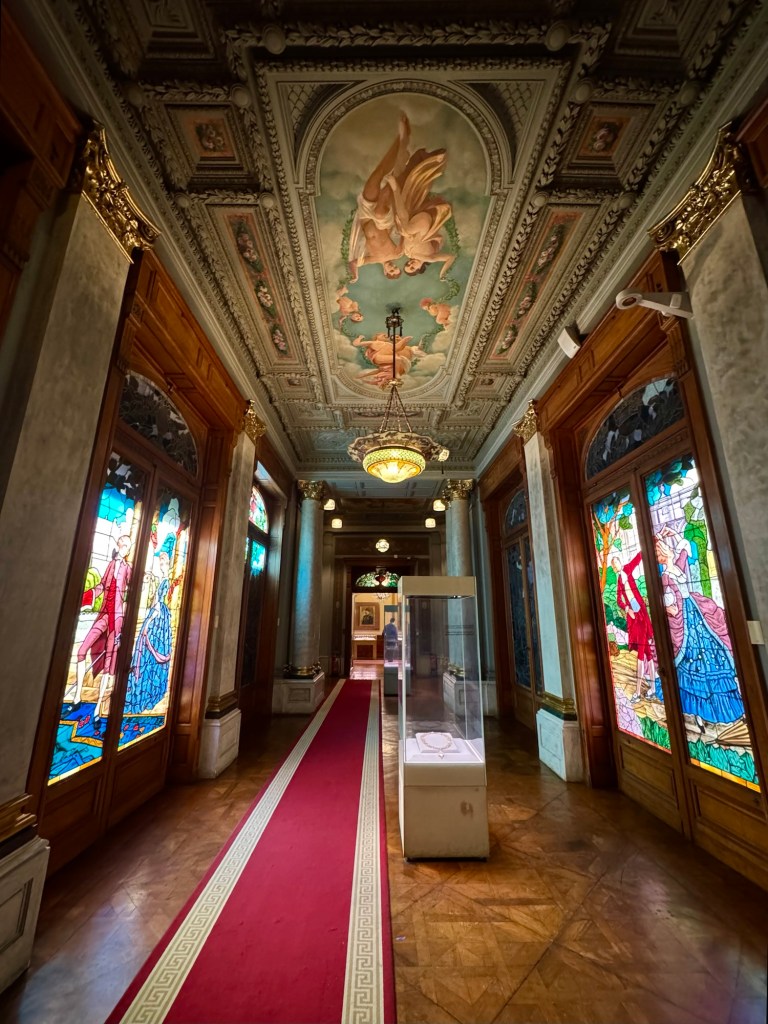
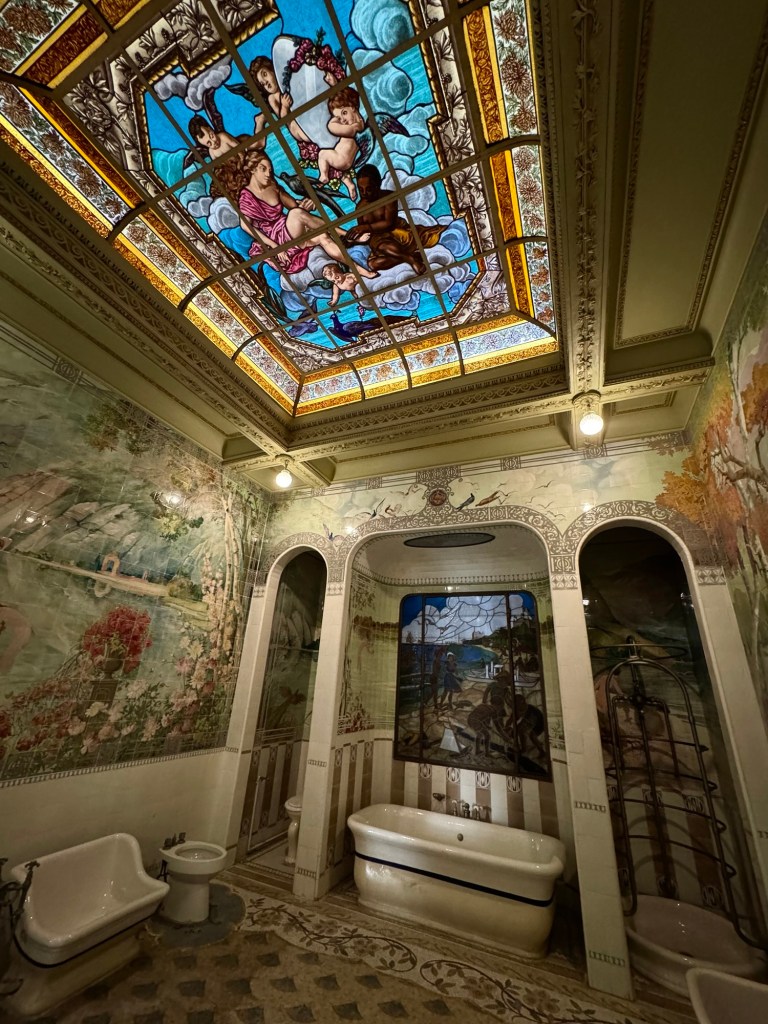
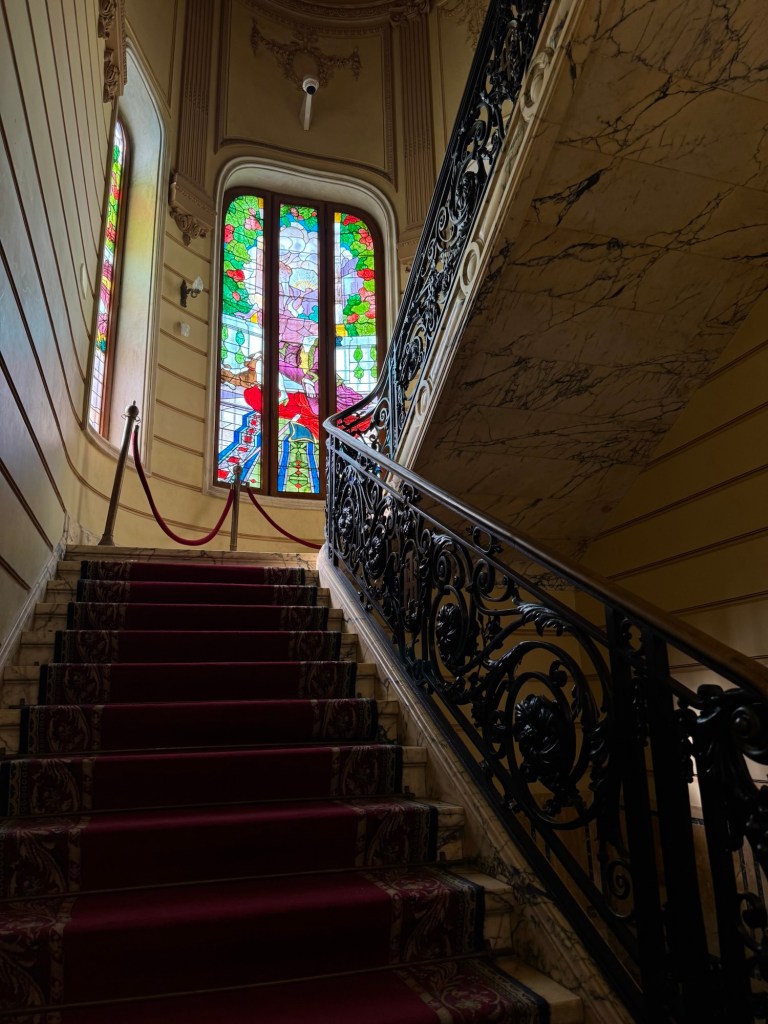
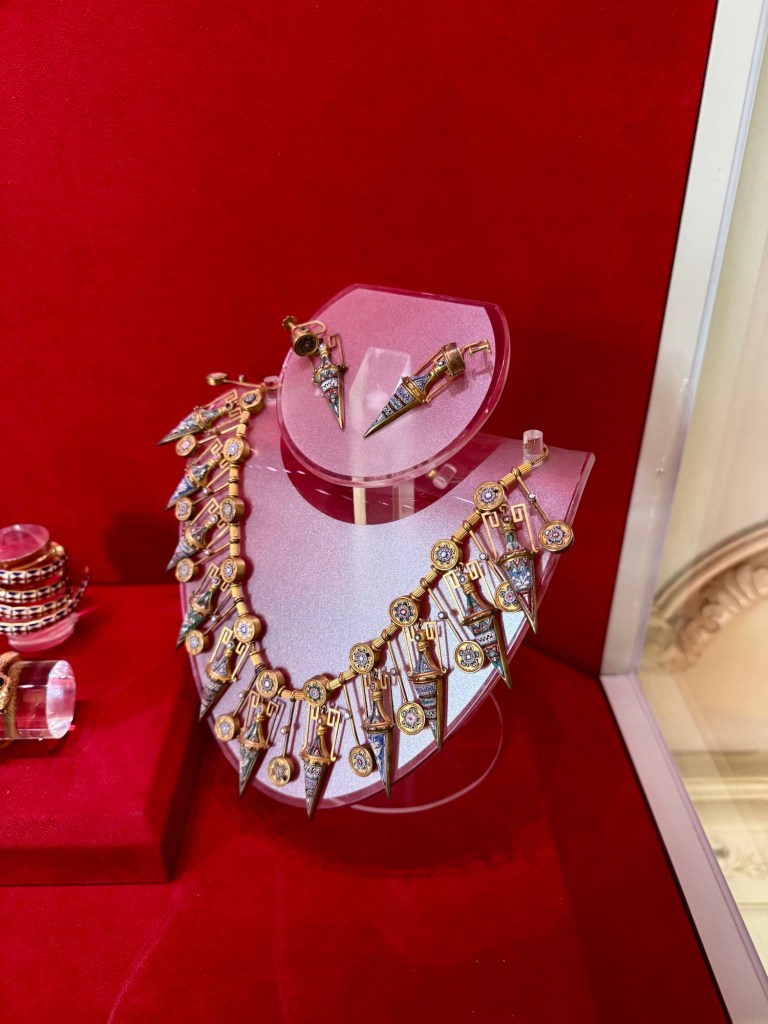
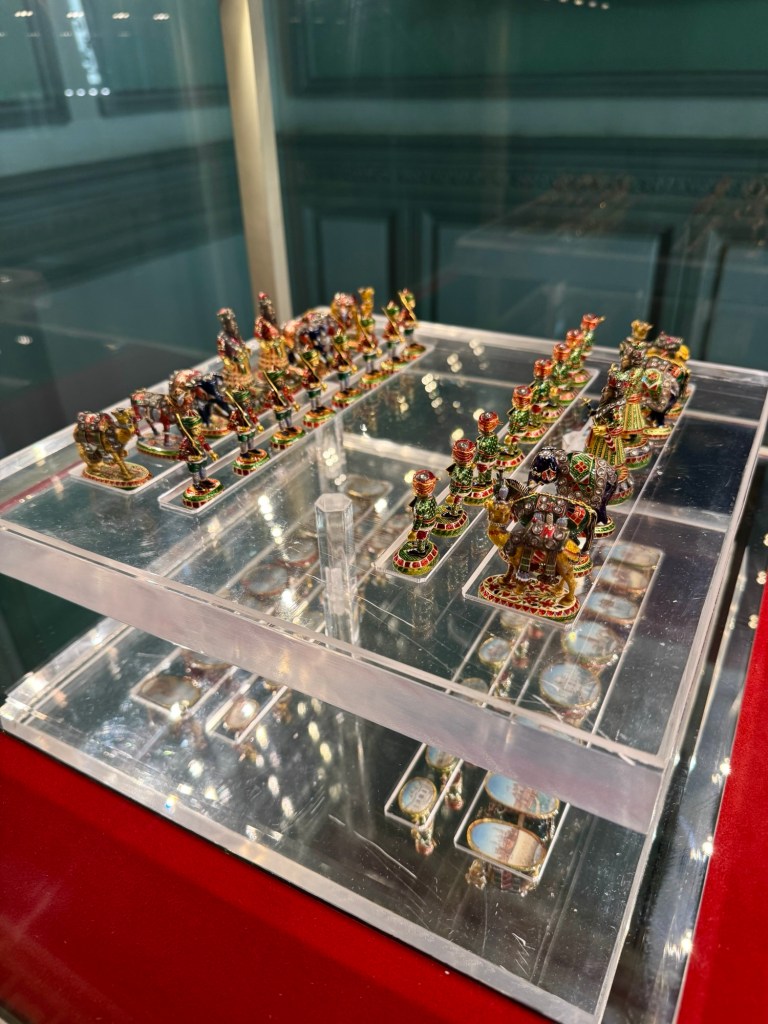
    Housed in the former palace of Princess Fatma Al-Zahra’, the museum holds the opulent spoils and personal adornments of the Muhammad Ali dynasty, who ruled Egypt for nearly 150 years from 1805 to 1952. 1952 movement.

    The building itself is one of the highlights of the visit, so you’re provided with fancy scrubs for your shoes upon entry. Every room is dressed to impress: Italian-style stained glass, gilded mirrors, and actual royal jewels in glass cases as far as the eye can see. Tiaras, jeweled snuff boxes, diamond-encrusted swords, and enough gold to spark a minor coup. In one of the rooms, a scene from the Odyssey – The Slaying of the Suitors, is painted onto the walls, each wall section with a different scene painted onto it.

    It’s a compact visit — less than an hour — but feels like a glittering escape into a different world. A hidden gem, pun intended.

    Catacombs of Kom el Shoqafa

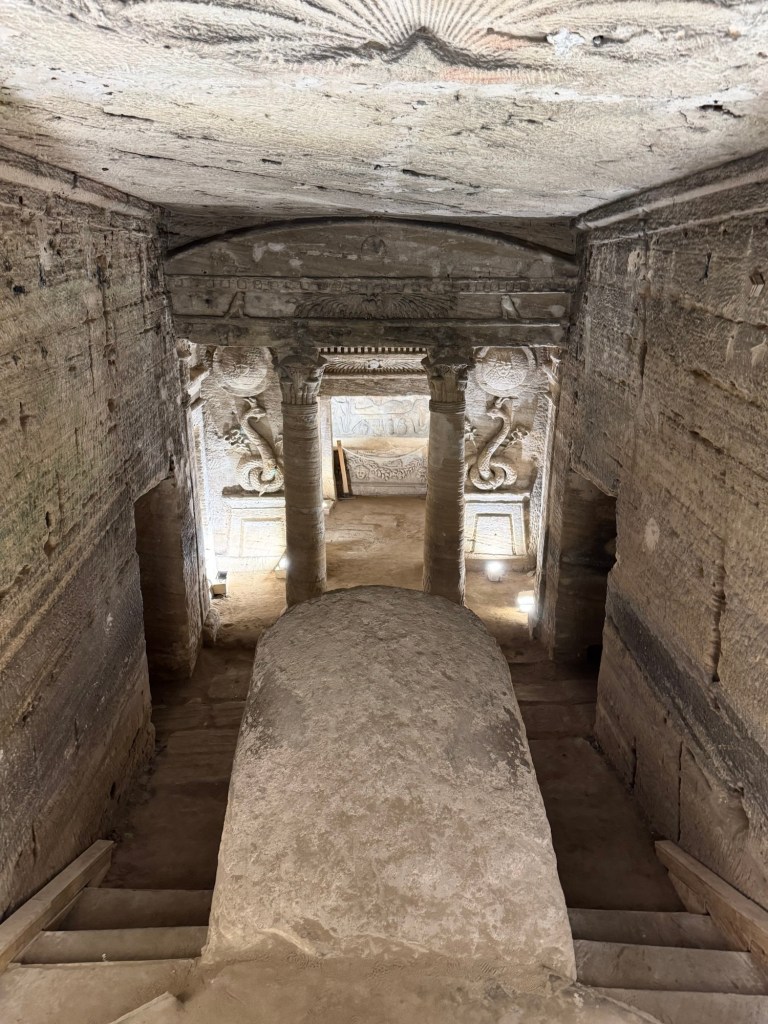
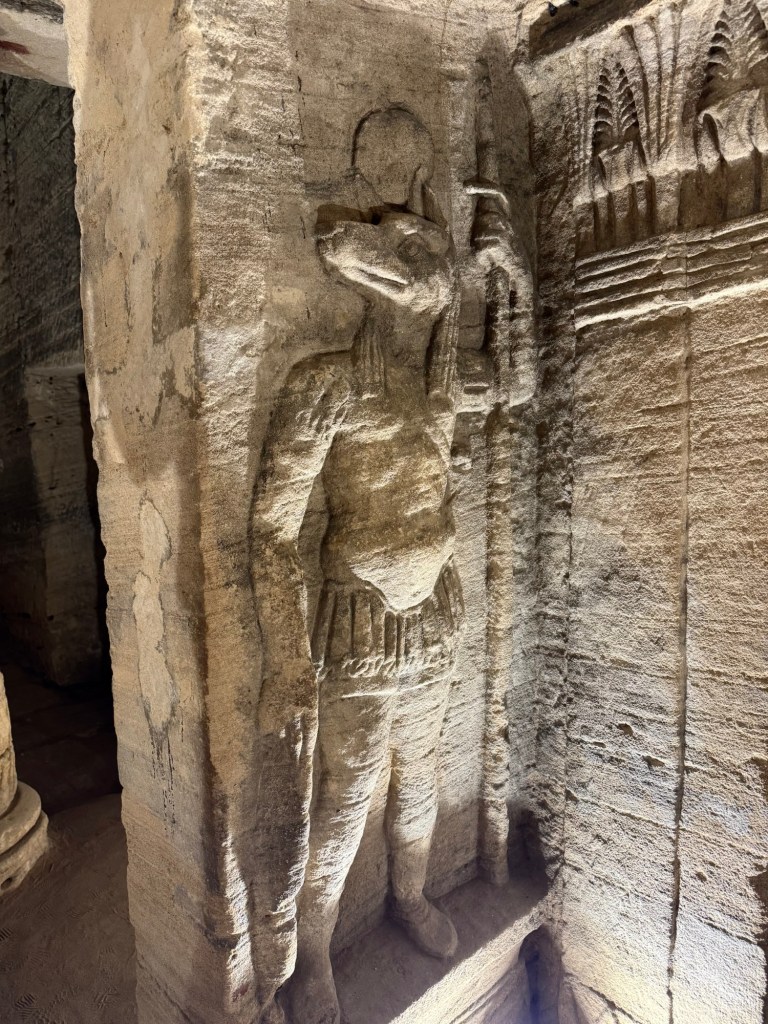
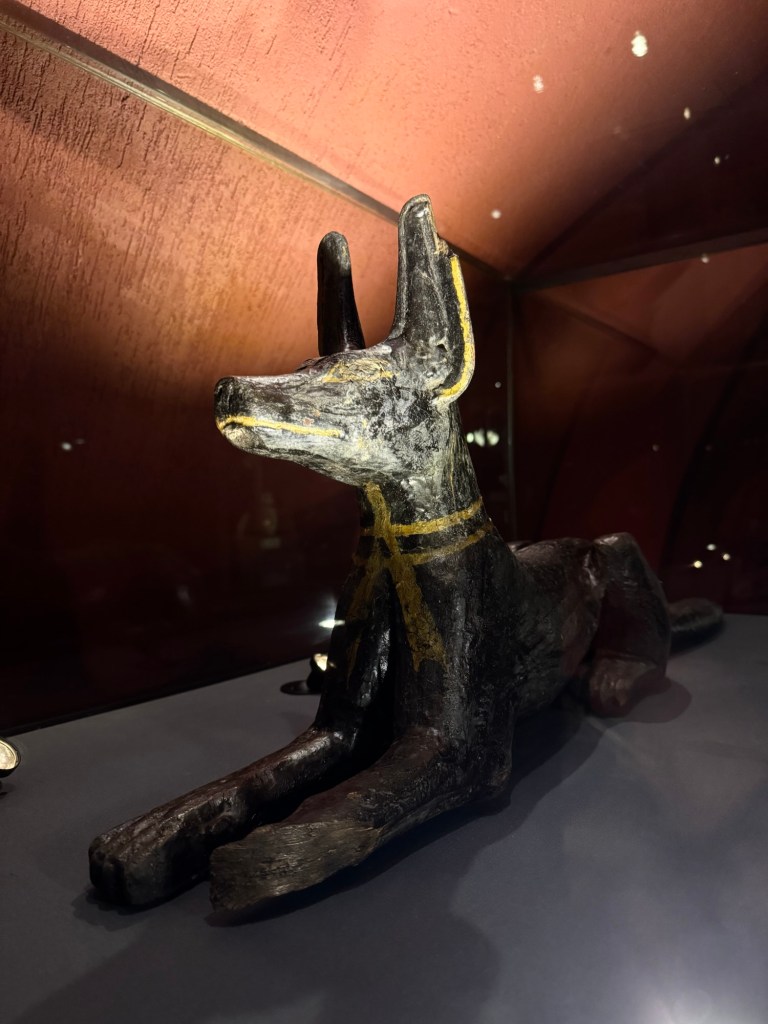
    Carved straight into bedrock, this necropolis is a mashup of Egyptian, Greek, and Roman funerary art — a visual identity crisis, but make it ancient and fabulous. You’ve got Anubis in Roman armor, Medusa on sarcophagi, and a spiral staircase that feels like a descent into the underworld (because, well, it kind of is).

    In the central tomb, bearded serpents flank the vestibule, while Medusa-headed shields protect the entry. And tucked inside are statues of Sobek and Anubis flexing Roman centurion gear — straight out of the second century AD, when “the old faiths began to merge and melt” (shoutout to Forster).

    It’s damp. It’s eerie. It’s the kind of place where you half-expect a mummy to tap your shoulder and ask for directions. But it’s probably just another tourist, lost in the labyrinth.

    Scattered around the premises are bits and pieces of excavated relics and items of antiquity, laid bare on the ground in the sun just as it is, most of the are un-labeled and you’ve no clue what you’re looking at other than the fact that it’s a piece of history and also a prime kitty nap spot.

    Serapeum of Alexandria

    Just a few minutes away sits the Serapeum of Alexandria smack in the middle of a rather dilapidated area of Alexandria.

    Mostly ruins now— but once upon a time, it was home to the Temple of Serapis, a Greco-Egyptian god dreamed up to unite Hellenistic and Egyptian belief systems. Unfortunately, the temple met its doom when early Christians showed up with sledgehammers and no chill.

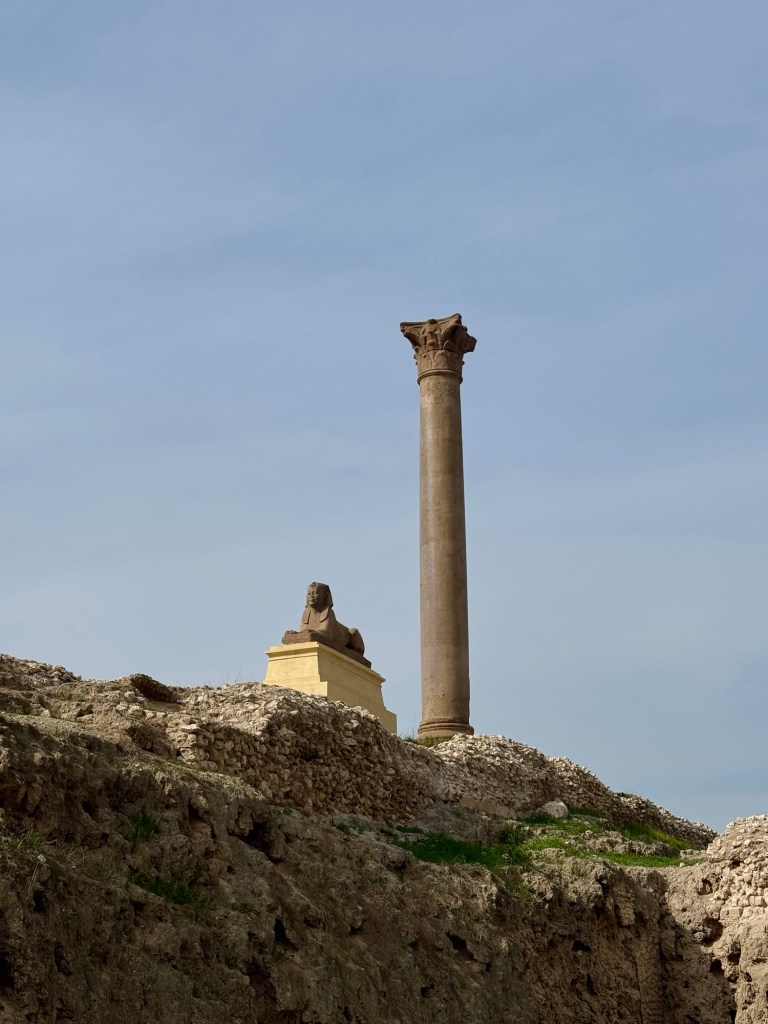
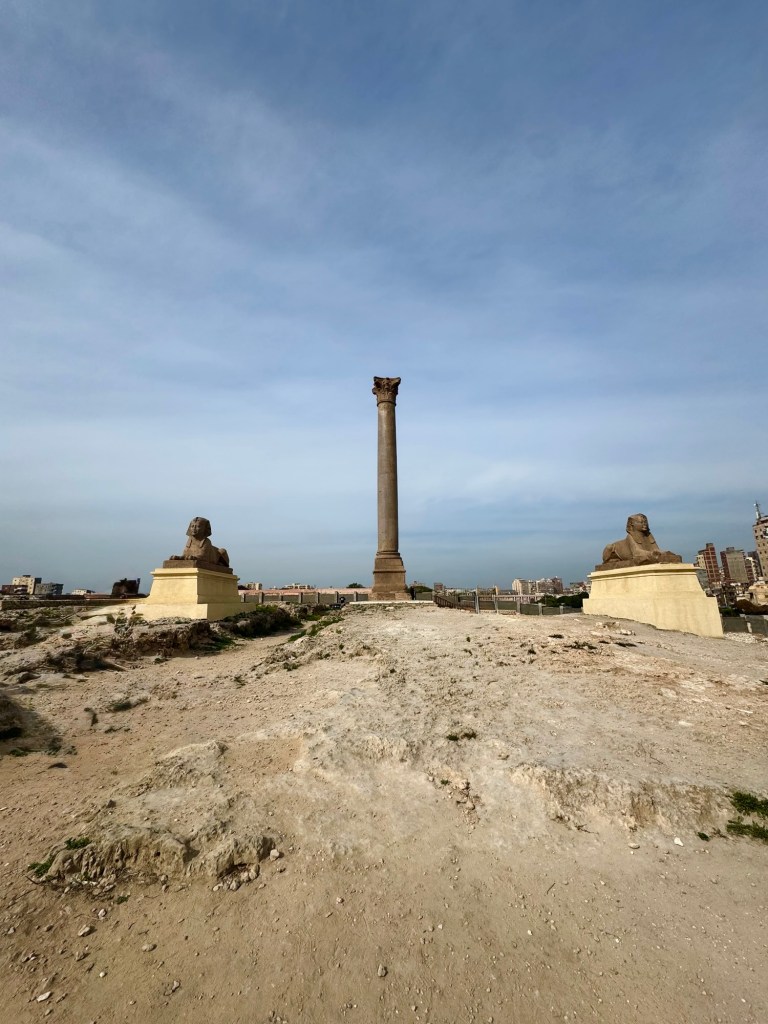
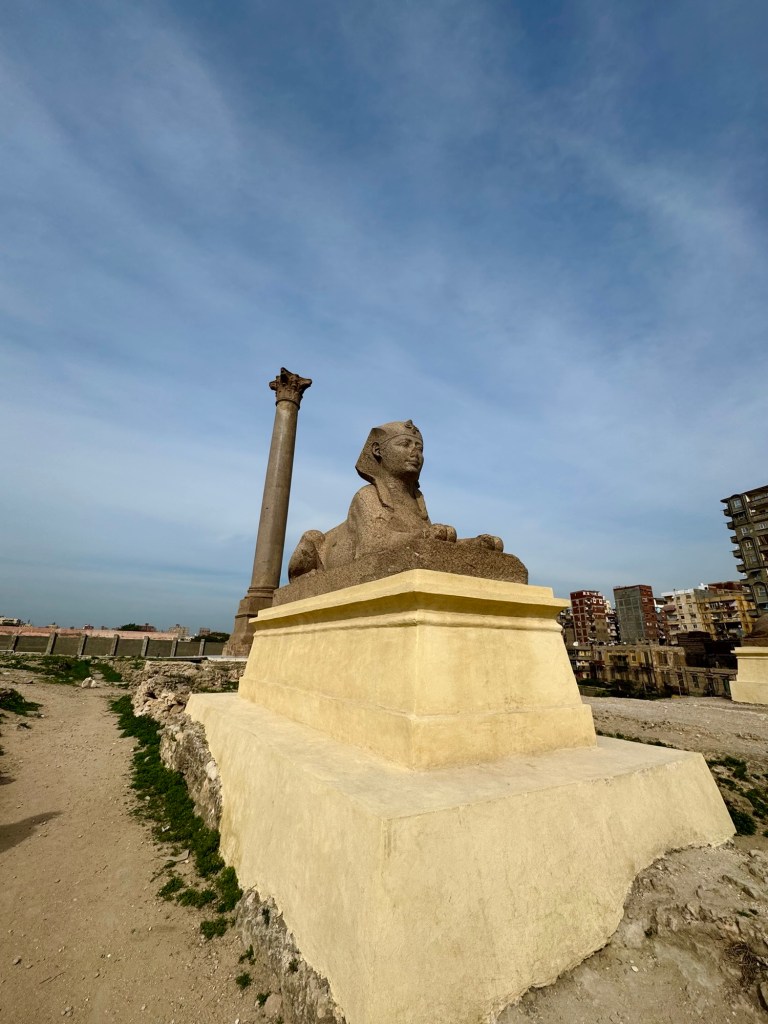
    Now, all that remains is Pompey’s Pillar — a solitary, towering column that looks like it should be muttering, “You should’ve seen the other guy.” and two forlorn sphinxes stand by like old security guards who’ve seen some things. The site is humble, yes — but still quietly monumental.

    Qaitbay Citadel

    Desperate for air that wasn’t just 80% car exhaust, I made my way to the Qaitbay Citadel.

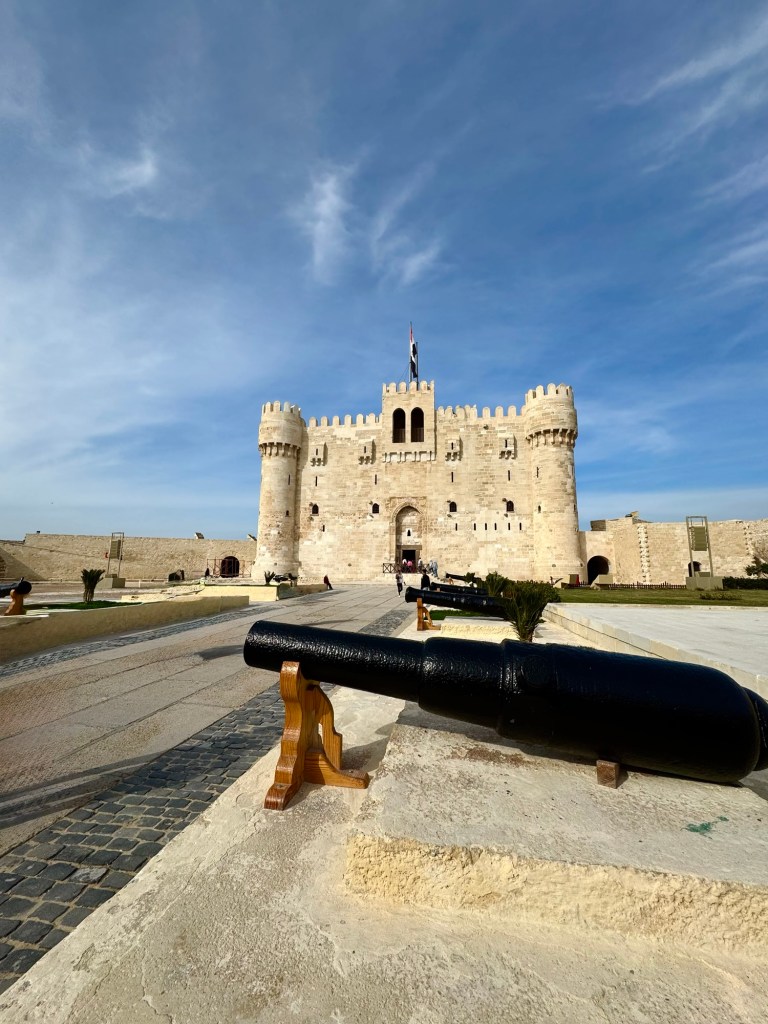
    Built in 1477 CE by Sultan Al-Ashraf Qaitbay (a Mamluk sultan with a coastal defense fixation), the fortress was constructed on the ruins of the Lighthouse of Alexandria — that Lighthouse. One of the Seven Wonders of the Ancient World, reduced to rubble by a series of earthquakes between the 10th and 14th centuries, then salvaged to build this very fortress. Sustainability at its best.

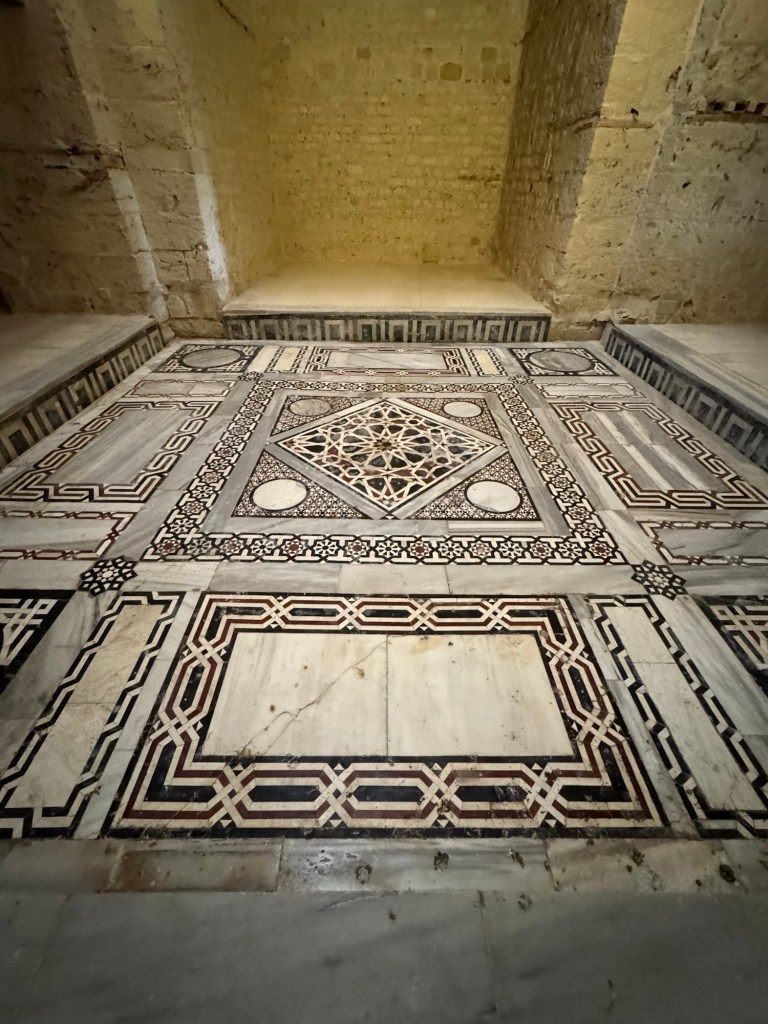
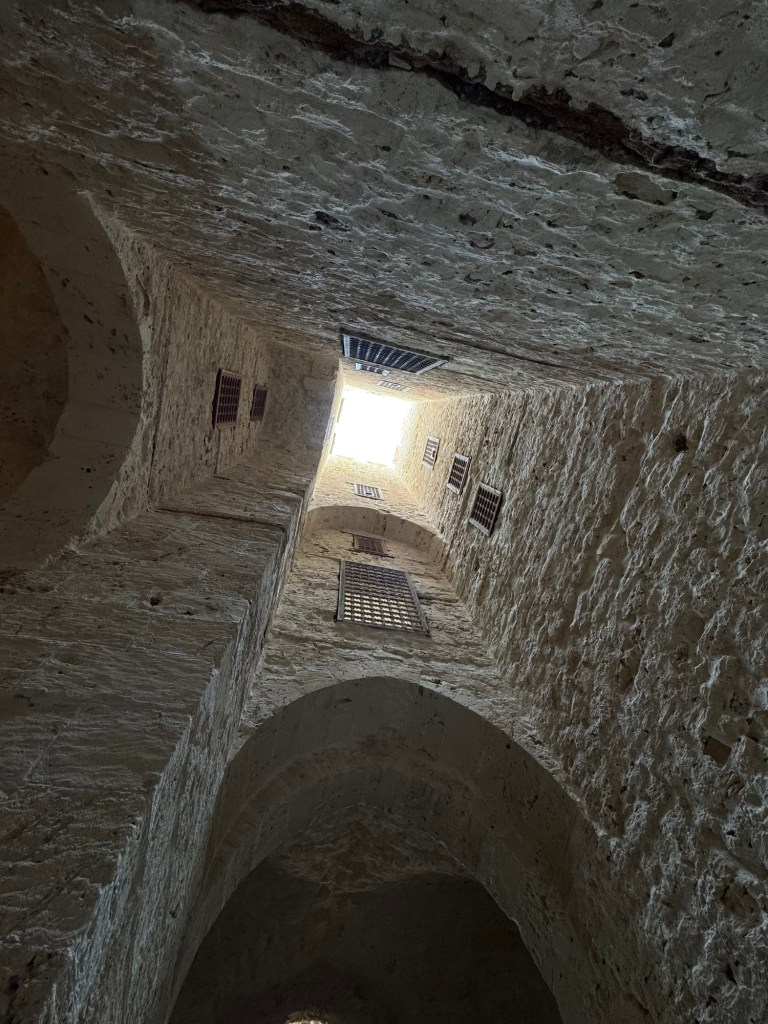
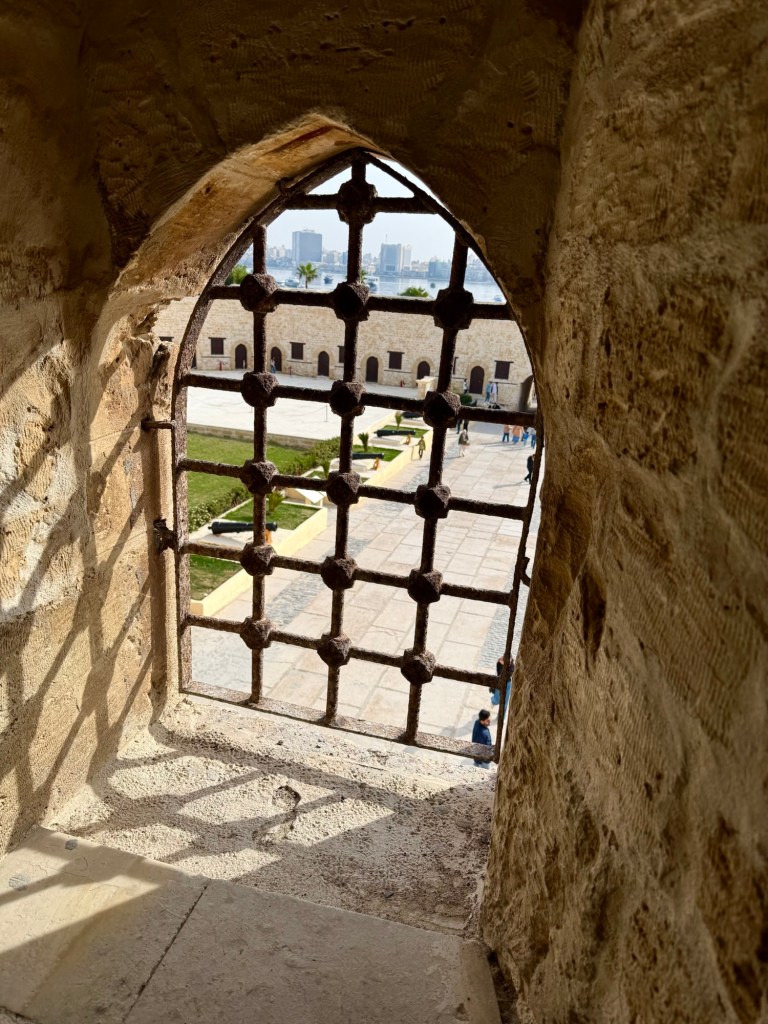
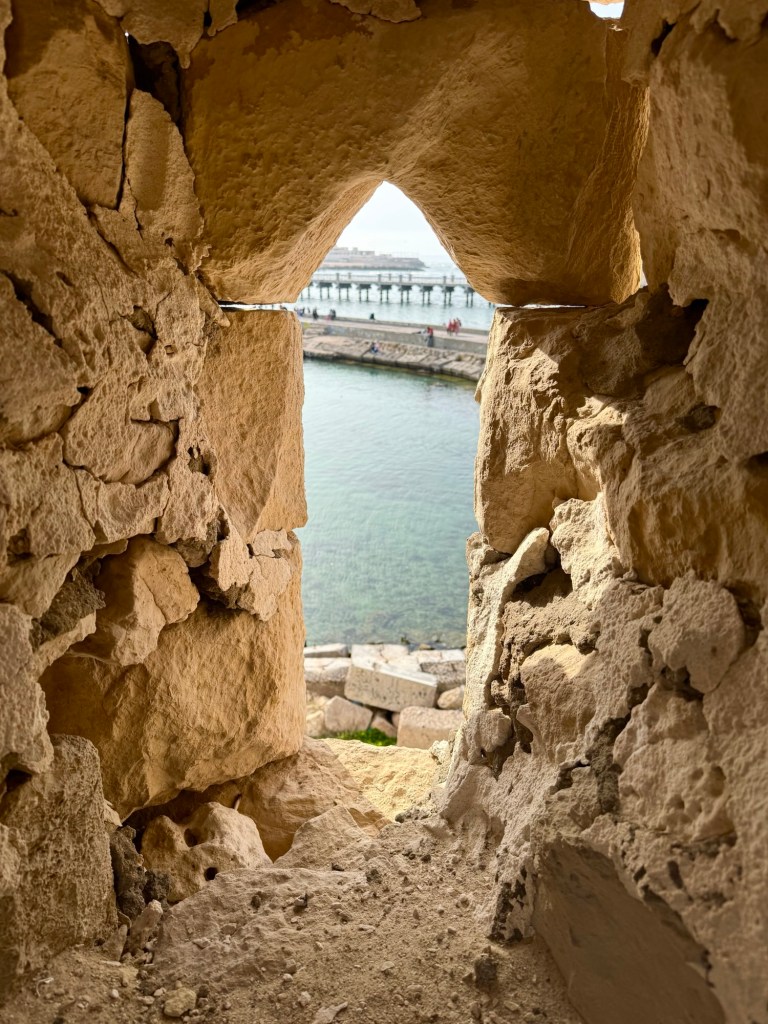
    Inside: arched ceilings, winding corridors, and sea-framed windows that look like oil paintings. Outside: flocks of battle-hardened seagulls who will fight you for snacks or pride. It’s equal parts Instagrammable and a battle of wits, man vs bird.

    You’ll find old cannons, panoramic sea views, and enough echoey chambers to start your own historical podcast. Some of the stones still bear ancient inscriptions — a mashup of Pharaonic ambition and Islamic military genius.

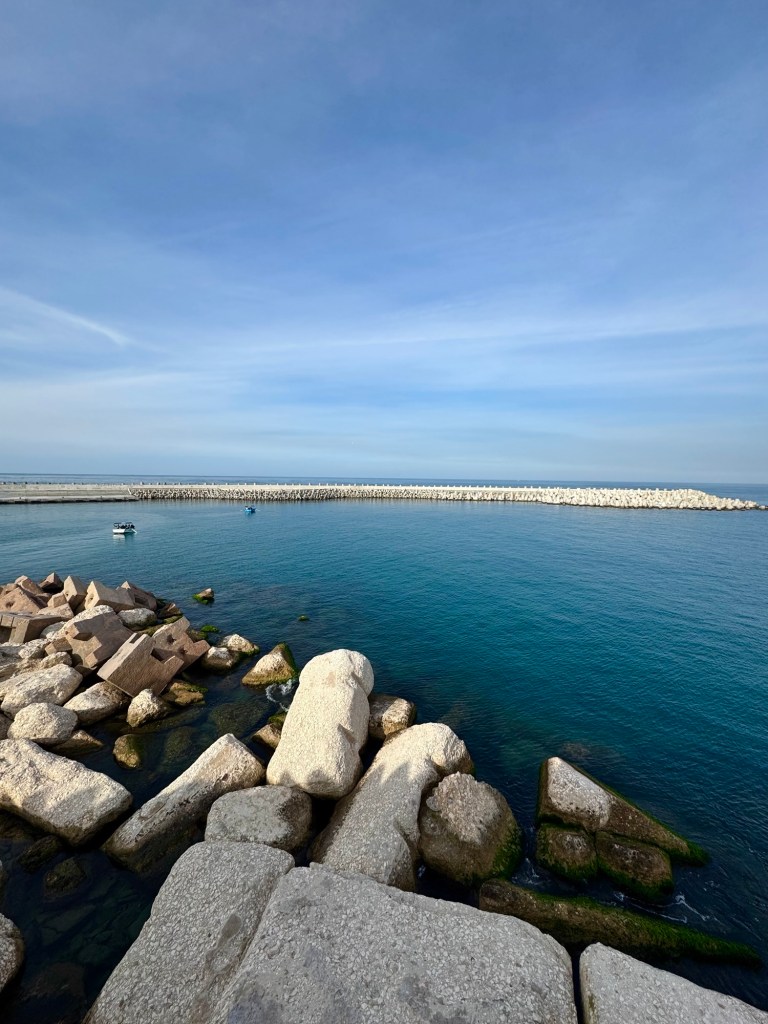
    Situated far from the city, it is also one of the places you can actually catch a whiff of a sea breeze, which is a shame, as even on the beaches it smelled like L’eau Exhaust.

    Alexandria National Museum

    Next up is the fairly underrated Alexandria National Museum.

    Tucked inside a restored Italianate mansion, the Alexandria National Museum is a quick, one-stop shop if you want a compact crash course in the city’s layered history.

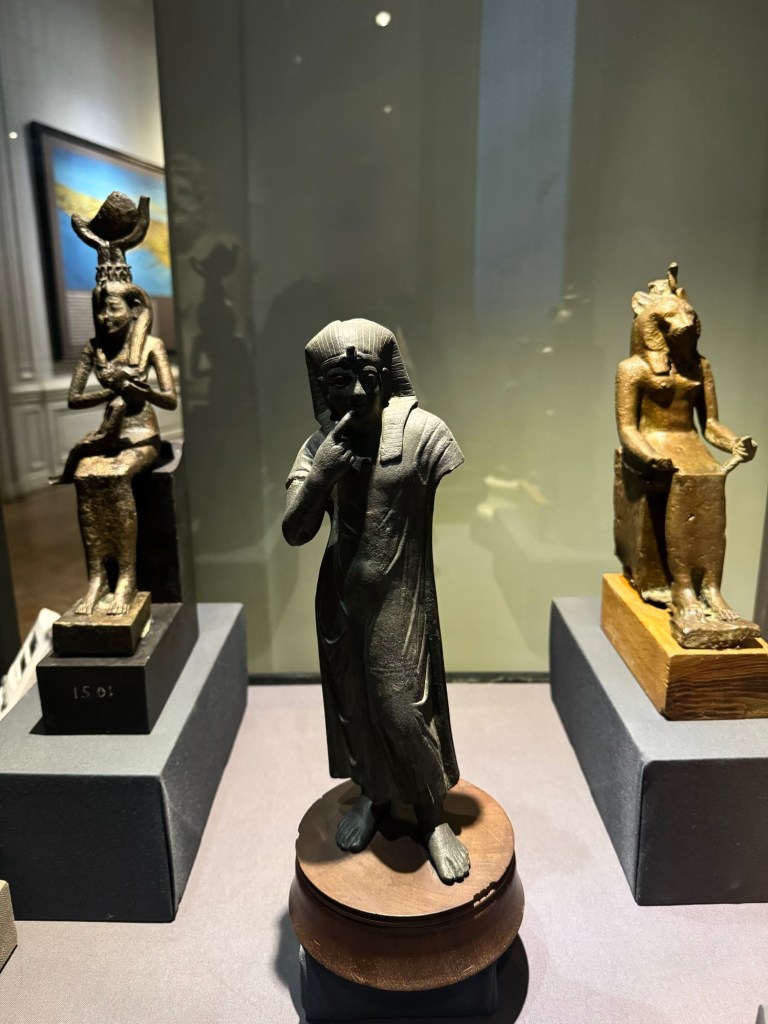
    Spread across three floors, the museum takes you through Alexandria’s chaotic, beautiful timeline — from Pharaonic gods to Roman emperors, Coptic saints to Islamic scholars. It’s far less overwhelming than Cairo’s mega-museums, with just the right amount of artifacts to spark curiosity without triggering museum fatigue.

    The highlight for me? A slightly ‘hidden’ crypt that leads into a mock tomb down in the cellar. Just when you think you can’t go lower than the basement (where the Ancient Egyptian section is), a walk toward the back reveals a shadowy entrance that takes you even further underground — into a room filled with Egyptian afterlife relics, and yes, a mummy too.

    Greco-Roman Museum

    The true highlight of the trip though, for me at least, was the Greco-Roman Museum.

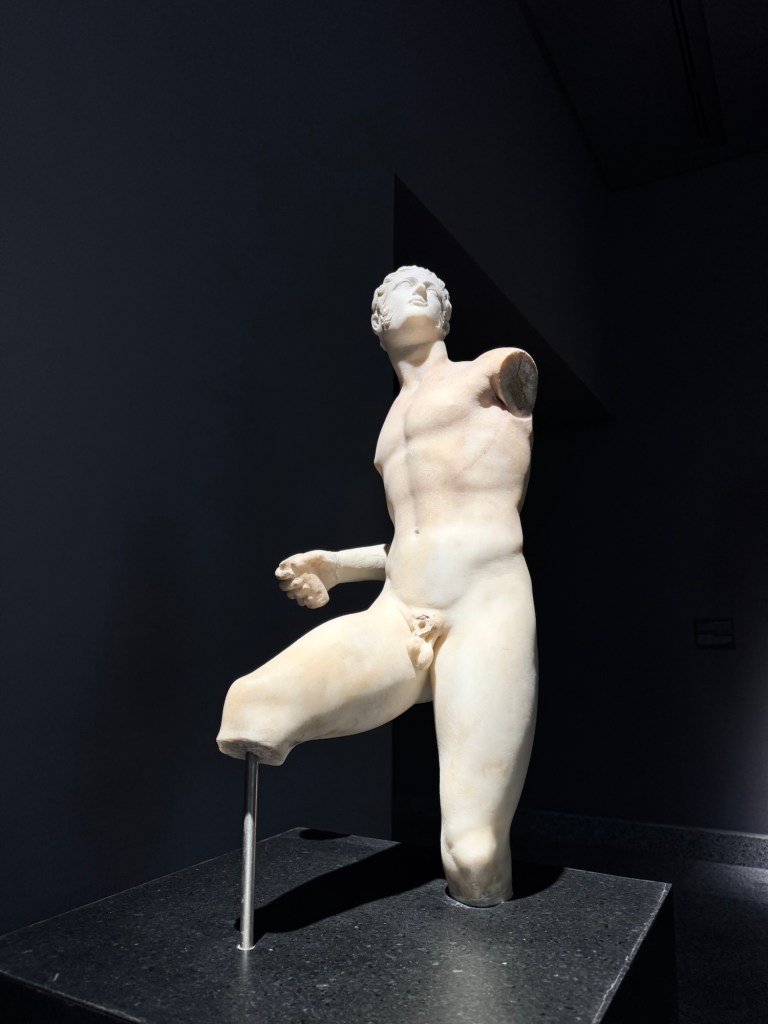
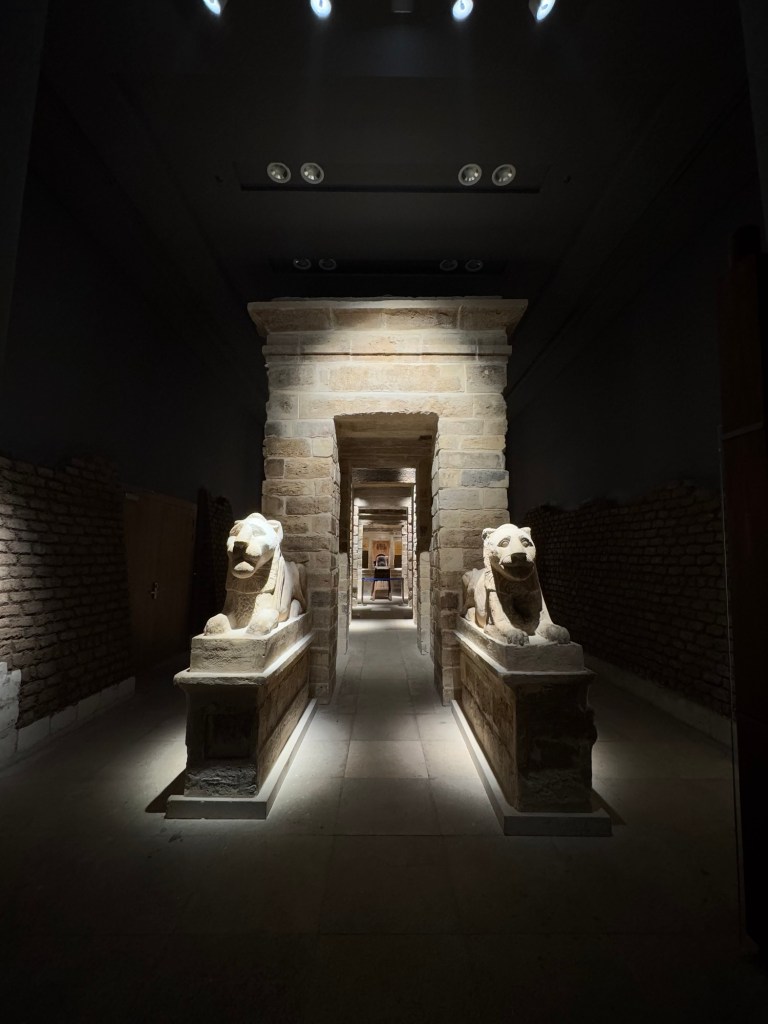
    Freshly restored and reopened after being shuttered for over 18 years, this museum is an absolute stunner. Every hallway is moody, every artifact in it’s own little spotlight, well organized and very informative with just the right amount of information scattered strategically around on little plaques or fully blown up on the walls.
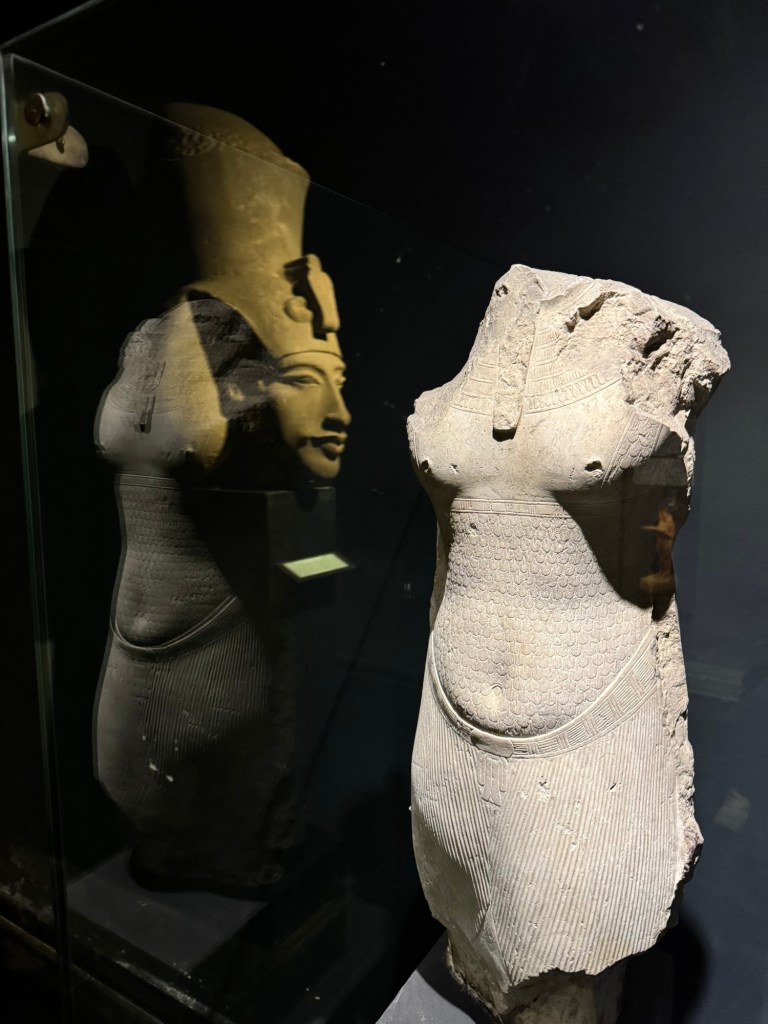
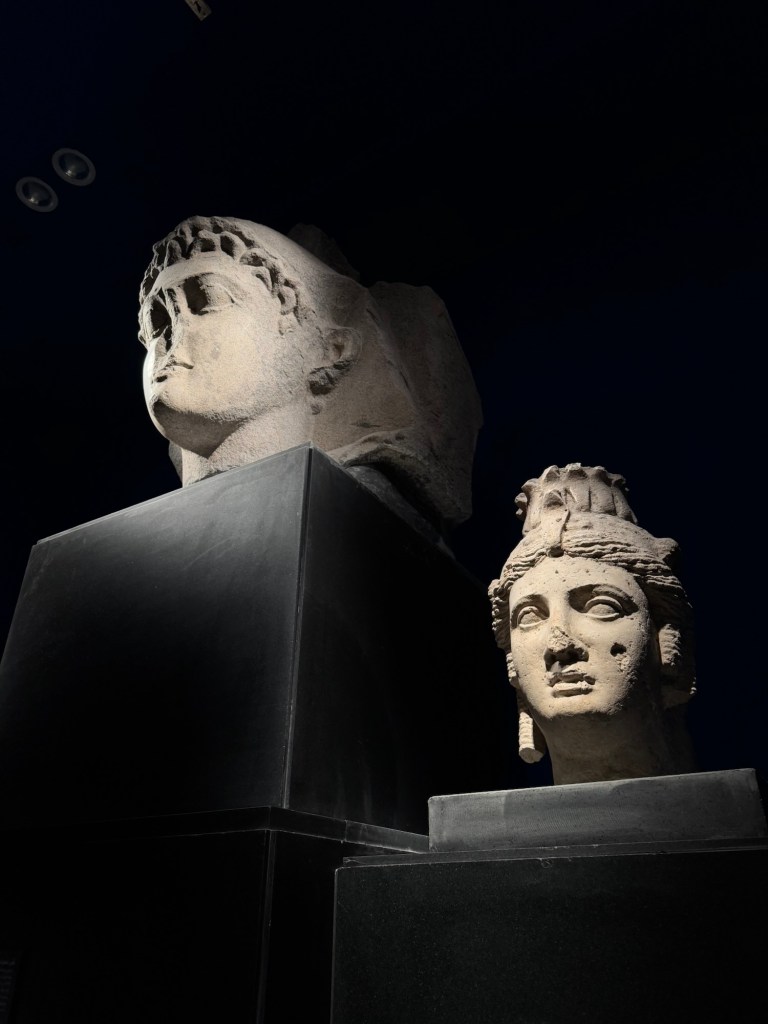
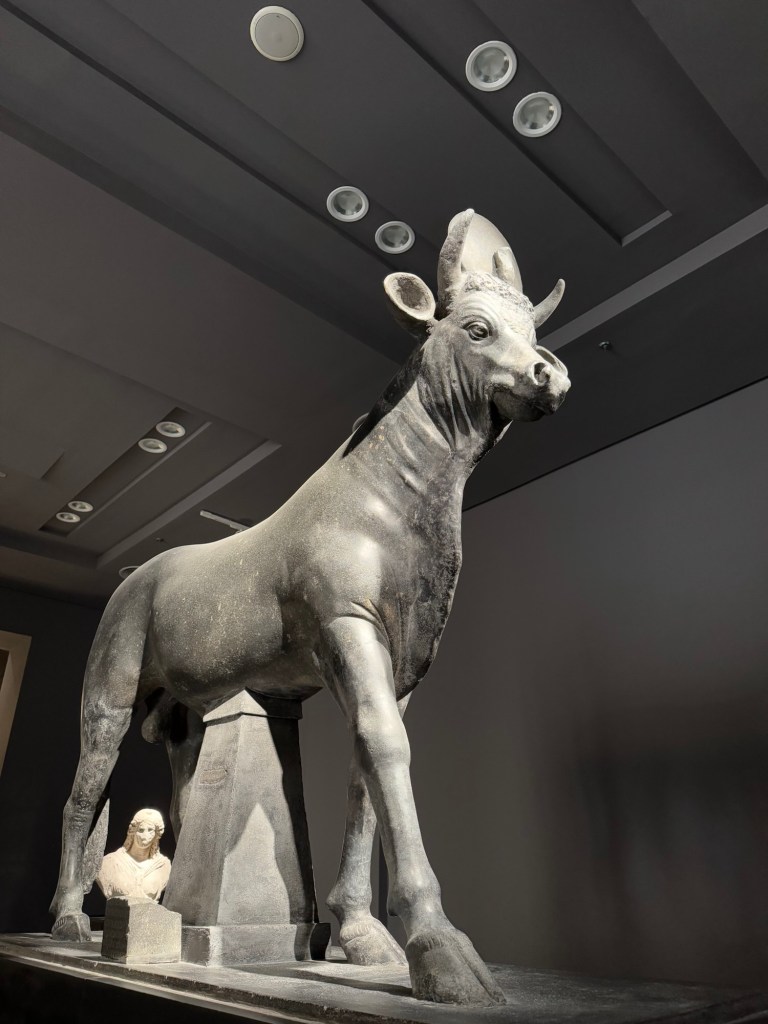
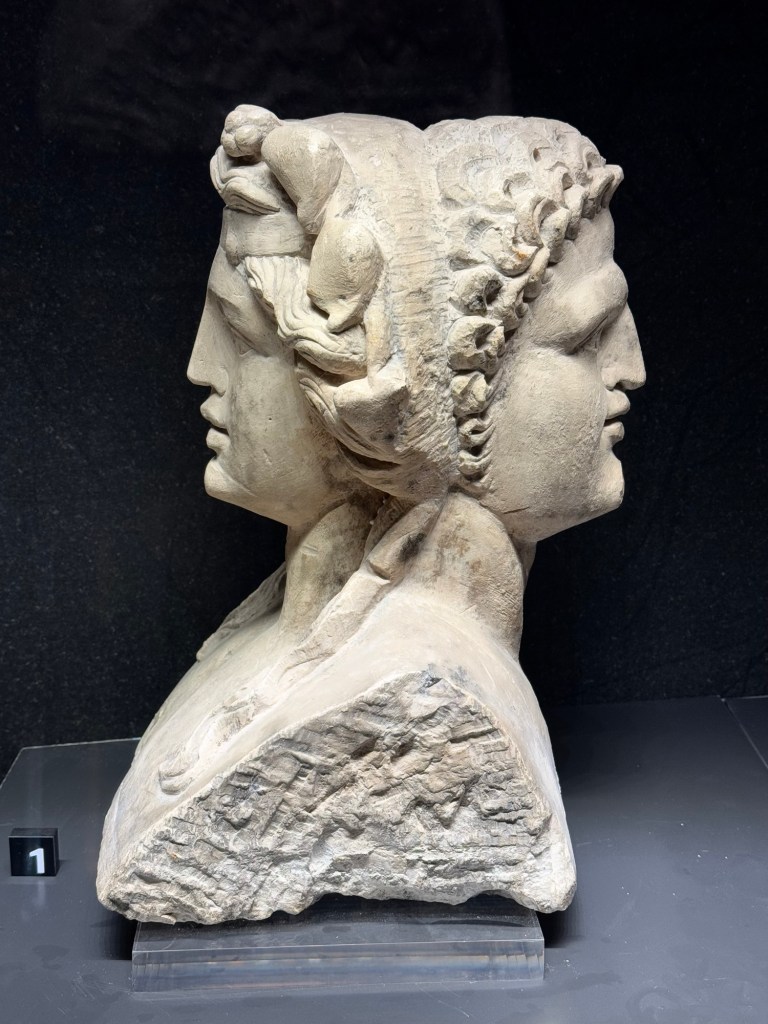
    It holds the only surviving portrait of Cleopatra and her father Ptolemy XII Auletes, a treasure trove of Alexander the Great busts and relics, a towering basalt statue of the Apis Bull, and so much more. Each room feels like it was lovingly designed to guide you through the layered, tangled story of Alexandria’s past.
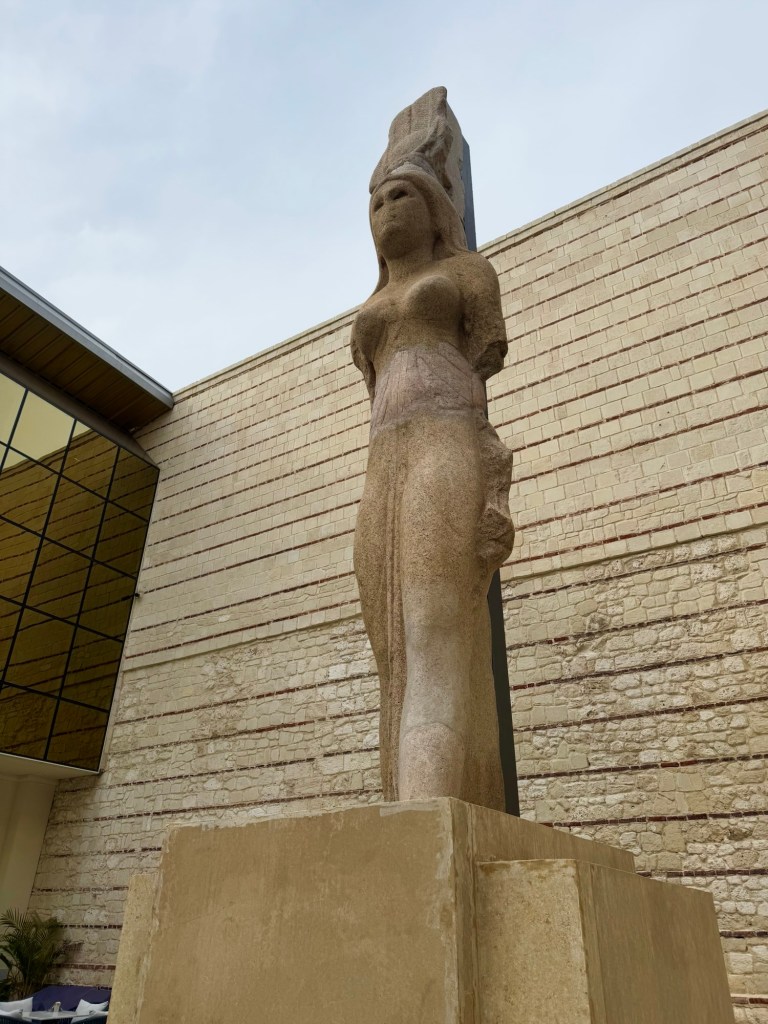
    And just before you leave, you’re led into the courtyard, where an 11-metre-tall statue of a Ptolemaic queen in the form of Isis now stands in the sun after centuries underwater. She’s regal. She’s back. And she deserves her moment.

    If you’re only doing one museum in Alexandria, make it this one.

    Bibliotheca Alexandrina

    The last stop on my Alexandria adventure: the Bibliotheca Alexandrina.

    Opened in 2002, this sleek modern marvel stands where the legendary Great Library of Alexandria once reigned — a temple of knowledge that supposedly held the wisdom of the ancient world before being lost to fire, war, and very bad planning.

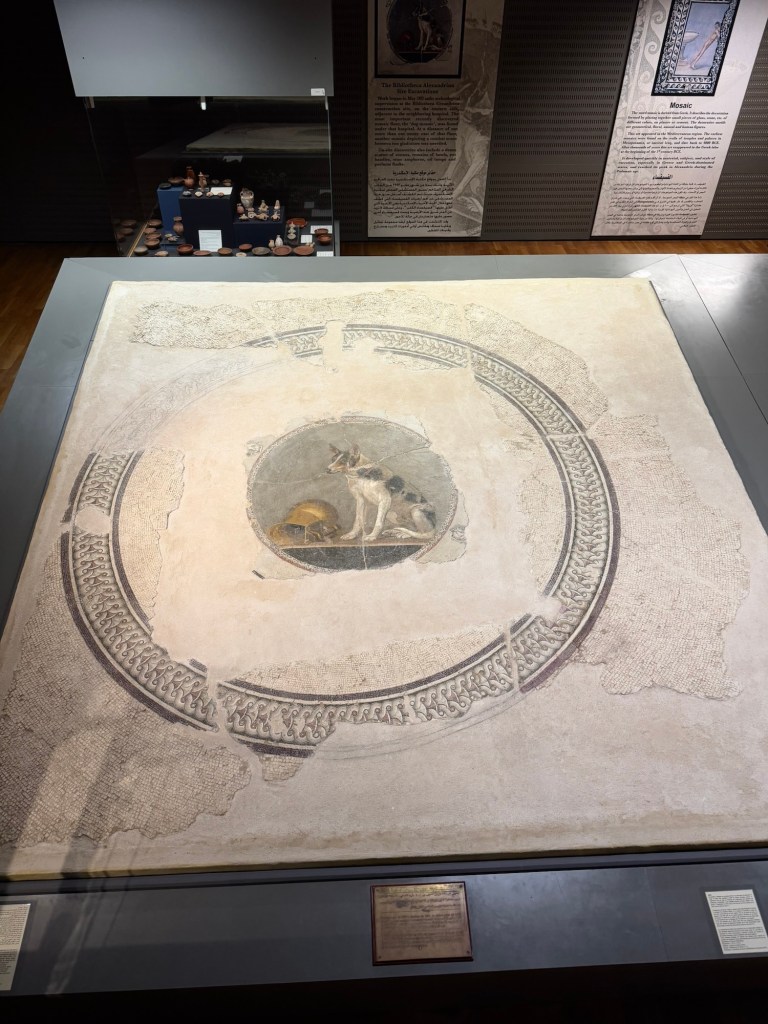
    Inside, it’s part archive, part museum, part every student’s dream or nightmare. The library houses millions of books in multiple languages, with capacity for over 8 million volumes. You’ll find exhibitions on science, literature, Islamic manuscripts, and the Archaeological Museum in the basement—a quiet gem of a space housing artifacts found during the library’s construction.

    To visit the library is free – only if you’re a student. To us non-studious plebs a ticket is required, and the ticket booth is located by the main street outside the library. You easily miss it, it looks more like a bus stop than a ticket booth, so keep your eyes peeled.

    Reflections from Memory and Myth

    I’ll be honest — I arrived in Alexandria with high expectations. I wanted to feel the weight of its mythic past, to sense echoes of the great library and the glowing beacon of Pharos. And while it still has charm, and museums that absolutely deliver, it’s hard not to feel a tinge of loss. Alexandria today isn’t the Alexandria of legends. But maybe that’s the point — to seek the remnants, not the ruins. To piece together stories from the stones.

    With this, I wrapped up my Egypt trip. It had its ups and downs, and yes, I still hold a personal vendetta against EgyptAir. But it was everything — and nothing — I expected. Chaotic. Exhilarating. Unforgettable.

    A culmination of 20 years of once lost childhood dreams about golden sands and gods, now grounded in reality — flawed, dusty, luminous.

    Here’s to closing one chapter. And to the next story just waiting to be written.

    Just one encore left, time to get cranking on that Egypt Cheat Sheet i promised. So stay tuned, adventurers!